Body Lotion Buying Guide: How to Choose for Your Skin Type
Learn how to choose a body lotion based on skin type, dryness, texture preference, climate, ingredients and when you plan to apply it.
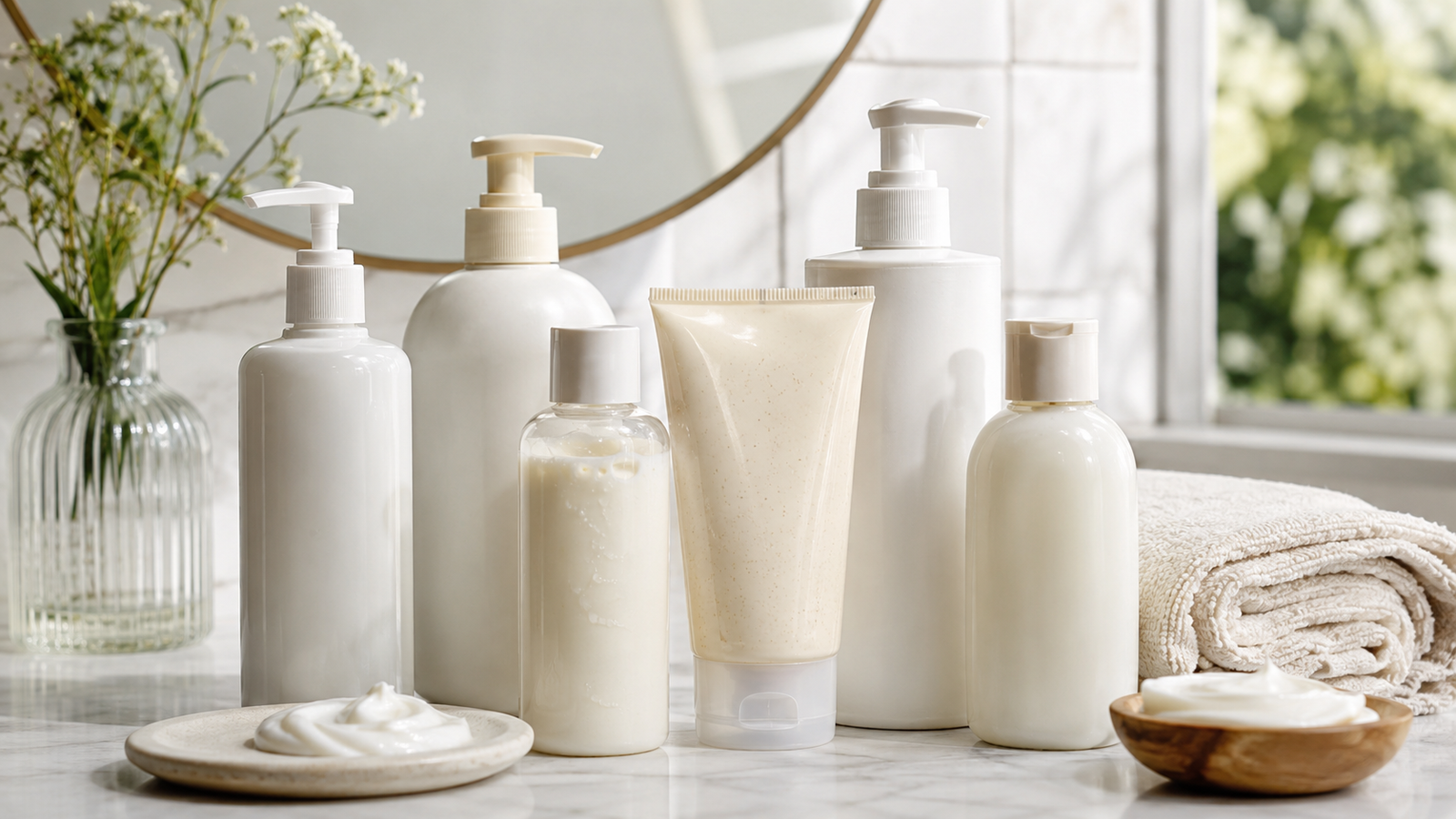
Body lotion seems simple until you compare how differently formulas can behave.
Some lotions disappear into the skin in seconds and feel almost weightless. Others are thick, occlusive and designed for very dry areas. Some focus on fragrance and sensory appeal. Others include ingredients such as ceramides, urea, lactic acid or petrolatum for more targeted dryness and roughness.
That means the useful question is not:
“Which body lotion is best?”
It is:
“What level of moisturization does my skin need, and what texture will I actually use consistently?”
The richest product is not automatically the best one. A very heavy cream may be excellent for dry shins in winter but unpleasant over the entire body in humid weather. A lightweight lotion may be comfortable enough to use every day but not sufficient for very dry, rough skin.
The right body lotion should match your skin type, climate, level of dryness, fragrance preference and the areas where you plan to use it.
What Does a Body Lotion Actually Do?
Body moisturizers generally work through a combination of three broad ingredient groups:
Humectants
Humectants help attract and hold water in the skin.
Common examples include:
- glycerin;
- hyaluronic-acid-related ingredients;
- urea;
- propylene glycol;
- panthenol.
Emollients
Emollients help smooth and soften the skin surface.
They may include:
- plant oils;
- fatty alcohols;
- squalane;
- esters;
- butters.
Occlusive Ingredients
Occlusives help reduce water loss by forming a more protective layer over the skin.
Examples may include:
- petrolatum;
- mineral oil;
- heavier oils;
- wax-like ingredients.
Most good body moisturizers use a combination rather than relying on only one category.
The balance between them determines how light, rich or protective the lotion feels.
Start With Your Skin Type
Normal Skin
If your body skin rarely feels:
- tight;
- itchy;
- flaky;
- rough;
you may not need an extremely rich moisturizer.
A lightweight lotion can provide enough hydration while remaining comfortable in everyday use.
Prioritize:
- easy spreadability;
- quick absorption;
- comfortable finish;
- fragrance preference;
- value.
Mildly Dry Skin
If your skin sometimes feels tight or slightly rough, especially after showering, look for a standard moisturizing lotion with:
- humectants;
- emollients;
- moderate richness.
Regular application is often more important than buying the richest available product.
Very Dry Skin
Very dry skin may benefit from:
- richer lotions;
- body creams;
- more occlusive ingredients;
- formulas designed for barrier support.
These can be particularly useful on:
- shins;
- elbows;
- knees;
- hands.
You may not need the same richness everywhere.
Sensitive-Feeling Skin
If your skin reacts easily, prioritize:
- fragrance-free or low-fragrance formulas;
- simpler formulations;
- gentle moisturization;
- fewer unnecessary active ingredients.
Do not assume “natural” or botanical products are automatically gentler.
Essential oils and plant extracts can also irritate some people.
Lotion vs Cream vs Body Butter
These categories mainly differ in texture and richness.
Lightweight Lotion
Usually:
- easier to spread;
- faster to absorb;
- less greasy.
It works well for:
- normal skin;
- mild dryness;
- humid weather;
- daytime use.
Rich Lotion or Body Cream
A cream generally feels heavier and provides more persistent moisturization.
It can be useful for:
- dry skin;
- cold weather;
- rough areas;
- nighttime use.
Body Butter
Body butters are usually very rich.
They can work well on:
- elbows;
- knees;
- feet;
- extremely dry patches.
They may feel unnecessarily heavy when used full-body in warm weather.
Gel or Gel-Lotion
These products are typically lighter and refreshing.
They may be good for:
- humid climates;
- normal skin;
- people who dislike cream residue.
But they may not provide enough occlusion for very dry skin.
Choose According to Your Level of Dryness
A practical starting point:
| Skin situation | Lotion direction |
|---|---|
| Normal skin | Lightweight lotion |
| Mild dryness | Standard moisturizer |
| Very dry skin | Rich lotion or cream |
| Rough elbows/knees | Targeted richer cream |
| Sensitive-feeling skin | Fragrance-free simple moisturizer |
| Hot/humid climate | Lightweight lotion or gel |
| Dry/cool climate | Richer cream |
| Rough texture | Lotion with appropriate active ingredients |
What Ingredients Should You Look For?
You do not need every trendy ingredient in one formula.
Several well-established ingredient types can provide effective moisturization.
Glycerin
Glycerin is one of the most common humectants in moisturizers.
It helps support hydration and can work well in both lightweight and rich formulas.
A lotion does not need an exotic ingredient to be effective if it has a good moisturizing base.
Ceramides
Ceramides are naturally present in the skin barrier.
Products containing ceramides are often marketed for:
- dry skin;
- sensitive skin;
- barrier support.
They can be useful, but a body lotion does not need ceramides to moisturize effectively.
Look at the overall formula.
Hyaluronic Acid
Hyaluronic acid is a humectant that can help attract water.
It is popular in facial skincare and increasingly common in body lotions.
Its presence can be useful, but it does not automatically make a lotion superior.
Body moisturization generally depends on the entire formula, including emollients and occlusives.
Urea
Urea can be particularly useful for:
- very dry skin;
- rough texture;
- thickened areas.
At lower concentrations, it mainly acts as a moisturizer.
At higher concentrations, it may also help soften rough skin.
It can sting on:
- cracked skin;
- freshly shaved skin;
- irritated areas.
Follow the product directions.
Lactic Acid
Lactic acid can combine moisturization with gentle exfoliation.
It may help with:
- rough skin;
- uneven texture;
- dry, flaky areas.
However, it may cause irritation if overused.
Avoid layering several strong exfoliating body products at the same time.
Salicylic Acid
Salicylic acid can help with:
- rough texture;
- clogged pores;
- some forms of bumpy skin.
It is best chosen for a specific concern rather than routine hydration.
Petrolatum
Petrolatum is a highly effective occlusive ingredient.
It can be especially helpful for:
- severely dry skin;
- cracked areas;
- elbows;
- knees;
- feet.
Some people dislike its greasy feel over large areas.
In that case, it can be used selectively.
Mineral Oil
Mineral oil is an effective emollient and occlusive-support ingredient.
It is not inferior simply because it is not botanical.
It can provide:
- softness;
- reduced water loss;
- smooth application.
Shea Butter and Plant Oils
Ingredients such as:
- shea butter;
- coconut oil;
- sunflower oil;
- almond oil;
- squalane;
can improve softness and richness.
But the presence of several plant oils does not automatically mean the product moisturizes better.
Again, the complete formula matters.
Fragrance
Fragrance is optional.
If you enjoy scented lotion and your skin tolerates it, that is a legitimate reason to choose one.
However, fragrance is not a moisturization benefit.
If you have:
- sensitive skin;
- irritation;
- eczema-prone areas;
a fragrance-free formula may be more practical.
How Climate Should Influence Your Choice
Climate can change how a moisturizer feels dramatically.
Hot and Humid Weather
In humid conditions, heavy creams may feel:
- sticky;
- sweaty;
- uncomfortable.
A lighter lotion or gel-lotion may be easier to use consistently.
If a thick cream makes you skip moisturizer altogether, it is not the right everyday choice.
Air-Conditioned Environments
Even in hot climates, prolonged air conditioning can make skin feel dry.
A medium-weight lotion may provide better comfort than the lightest gel.
Cool or Dry Weather
When humidity drops, skin may lose water more easily.
Richer creams and more occlusive formulas become more useful.
It is completely reasonable to use different body lotions at different times of year.
When Should You Apply Body Lotion?
One of the best times is shortly after bathing.
After showering:
- gently pat the skin;
- leave it slightly damp;
- apply lotion before all surface moisture evaporates.
This can help trap more water in the skin.
You can also reapply to dry areas throughout the day.
Hands and shins may need more frequent moisturization than the torso.
Do You Need Body Lotion Every Day?
Not everyone needs full-body moisturizer daily.
But regular use can be helpful if your skin tends to:
- feel dry;
- become rough;
- flake;
- itch after bathing.
Consistency is usually more important than occasional intensive application.
A modest lotion used daily may give better results than an expensive body butter used once every two weeks.
How Much Body Lotion Should You Use?
Use enough to create a thin, comfortable layer over the skin.
You should not need to leave a visibly thick coating.
If your skin feels extremely greasy for a long time after application:
- reduce the amount;
- use a lighter formula;
- reserve the rich cream for dry areas.
Different body areas may need different quantities.
Should You Use the Same Lotion Everywhere?
Not necessarily.
Your:
- chest;
- arms;
- legs;
- elbows;
- feet;
can have different levels of dryness.
A useful approach is:
- lightweight lotion over most of the body;
- richer cream on very dry areas.
This can give better comfort and value than using an expensive rich cream everywhere.
Body Lotion After Shaving
Freshly shaved skin can be more sensitive.
Immediately after shaving, consider:
- fragrance-free lotion;
- simple moisturizer;
- avoiding strong acids.
Products containing:
- lactic acid;
- salicylic acid;
- strong fragrance;
may sting more on freshly shaved skin.
If it burns repeatedly, do not assume that means the product is working.
Body Lotion for Rough or Bumpy Skin
If dryness is accompanied by rough texture, a targeted lotion may be more useful than a simple moisturizer.
Ingredients such as:
- urea;
- lactic acid;
- salicylic acid;
may help.
Introduce them gradually.
If the skin becomes:
- red;
- sore;
- irritated;
reduce frequency.
Persistent rough or inflamed skin may need a different approach than stronger cosmetic exfoliation.
Body Lotion for Very Dry Areas
Areas such as:
- elbows;
- knees;
- heels;
- hands;
may need more occlusion.
Consider:
- richer cream;
- balm;
- petrolatum-containing product.
You can apply a normal lotion first and use a richer product over particularly dry areas if necessary.
Body Lotion and Sunscreen
Body lotion and sunscreen have different jobs.
If you moisturize exposed skin during the day:
- apply body lotion;
- allow it to settle;
- apply sunscreen adequately over exposed areas.
Do not rely on ordinary body lotion as sun protection unless it is specifically formulated and labeled with appropriate SPF.
Daytime vs Nighttime Lotion
You do not necessarily need separate products.
But different textures may be convenient.
Daytime
You may prefer:
- lightweight formula;
- quick absorption;
- less residue.
Nighttime
You may tolerate:
- richer cream;
- more occlusive finish.
If one product works comfortably both day and night, there is no need to buy two.
Body Lotion and Fragrance Layering
Scented body lotion can be used as part of a fragrance routine.
However, if you use:
- fragranced body wash;
- scented lotion;
- body mist;
- perfume;
the combined fragrance can become strong.
For sensitive skin, an unscented lotion can be a flexible base.
It allows you to use fragrance separately without increasing exposure across every product.
Packaging: Pump, Tube or Jar?
Packaging affects convenience.
Pump Bottles
Useful for:
- large body areas;
- daily use;
- predictable dosing.
They are often the most practical format for regular body lotion.
Tubes
Good for:
- controlled use;
- travel;
- targeted application.
Jars
Common for richer creams and body butters.
They are easy to scoop but involve repeated finger contact.
Packaging does not determine quality, but a product that is easy to dispense is more likely to be used consistently.
What Should You Avoid When Choosing Body Lotion?
Avoid Choosing the Thickest Product Automatically
Very dry skin may benefit from rich formulas.
Normal skin does not need to be coated heavily to be well moisturized.
Avoid Buying Only for a Trending Ingredient
A lotion does not become dramatically better simply because it contains:
- hyaluronic acid;
- ceramides;
- niacinamide;
- shea butter.
Evaluate the complete formulation.
Avoid Strong Fragrance on Irritated Skin
Fragrance may be enjoyable on comfortable skin.
It is less useful when the skin is already irritated.
Avoid Layering Too Many Exfoliating Products
If your body lotion contains acids, do not automatically combine it with:
- exfoliating scrub;
- acid body wash;
- exfoliating gloves.
More exfoliation can create more irritation.
Avoid Expecting Lotion to Treat a Skin Disease
Body lotion can support dryness and barrier comfort.
Persistent:
- rashes;
- severe itching;
- cracking;
- oozing;
- inflamed patches;
may need professional assessment.
Separate Dry Skin From a Skin Condition
Ordinary dryness often improves with:
- regular moisturization;
- gentler bathing;
- better climate management.
But if symptoms are severe or persistent, repeatedly changing lotions may not address the real issue.
A cosmetic moisturizer can support the skin, but it cannot diagnose or treat every condition.
How to Compare Value for Money
Body lotion is used over a large surface area, so size matters.
Compare:
- price;
- bottle volume;
- price per 100 ml;
- number of pumps required per use;
- application frequency.
For example:
A 200 ml bottle costing ₹350 equals:
₹175 per 100 ml
A 400 ml bottle costing ₹550 equals:
₹137.50 per 100 ml
The larger bottle offers better unit value if both formulas suit your skin.
Cost Per Use Matters Too
A rich formula may require less product.
A very lightweight lotion may need more generous application.
So price per 100 ml is useful but not perfect.
Consider how long the bottle actually lasts.
Do Not Buy Huge Packs Before Testing
A large pump bottle may provide excellent value.
But if:
- fragrance bothers you;
- the lotion feels sticky;
- your skin reacts;
the saving disappears.
Try a smaller size first when practical.
Common Body Lotion Buying Mistakes
Choosing by Skin Type but Ignoring Climate
A product can work beautifully in winter and feel terrible in summer.
Adjust texture when necessary.
Applying Only When Skin Is Already Flaky
Regular moisturization is generally easier than waiting for severe dryness.
Using Too Little
A thin application is enough, but applying only a tiny spot to a large area may not provide meaningful coverage.
Using Too Much
If your clothing sticks to your skin long after application, you may be overapplying.
Assuming Expensive Means Better
Effective moisturizers are available across many price ranges.
Focus on:
- formula;
- texture;
- quantity;
- consistency of use.
Ignoring Pack Size
Two lotions at similar prices can provide very different value.
Always compare quantity.
Quick Body Lotion Decision Guide
| Your priority | What to look for |
|---|---|
| Normal skin | Lightweight everyday lotion |
| Mild dryness | Standard lotion with humectants/emollients |
| Very dry skin | Rich cream with stronger occlusion |
| Sensitive-feeling skin | Fragrance-free simple formula |
| Rough texture | Urea/lactic acid/salicylic acid where appropriate |
| Hot weather | Fast-absorbing lightweight lotion |
| Dry winter | Richer cream |
| Dry elbows/knees | Targeted heavy cream or balm |
| Budget/value | Compare price per 100 ml |
Before You Buy: Final Checklist
Ask yourself:
- Is my skin normal, mildly dry or very dry?
- Does my skin become itchy or tight after showering?
- Do I want fragrance?
- Do I live in a humid or dry climate?
- Do I prefer a quick-drying or rich finish?
- Do I need simple moisturization or roughness-targeting ingredients?
- Will I use it full-body or only on dry areas?
- How often will I apply it?
- What is the bottle size?
- What is the price per 100 ml?
- Is the packaging convenient enough for daily use?
- Am I likely to use this product consistently?
Frequently Asked Questions
Is body lotion necessary every day?
Not for everyone, but daily application can be useful if your skin regularly feels dry or tight.
Is body cream better than lotion?
Not universally. Cream is richer, while lotion is lighter. Choose according to your skin and climate.
Can I use body lotion on my face?
It is usually better to use a moisturizer formulated for facial skin, especially if you are acne-prone or sensitive.
Is body lotion good for dry skin?
Yes. Regular moisturization is one of the most practical ways to improve ordinary dryness.
Should I apply lotion to wet skin?
Slightly damp skin after bathing is an excellent time to apply moisturizer.
Can I use body lotion after shaving?
Yes. A simple, low-fragrance formula is often more comfortable immediately after shaving.
Is scented lotion bad for skin?
Not automatically. Many people tolerate fragrance well. Sensitive or irritated skin may prefer fragrance-free products.
Can body lotion remove rough bumps?
A simple lotion can improve dryness, while products containing ingredients such as urea, lactic acid or salicylic acid may be more useful for rough texture.
Can I use body lotion twice a day?
Yes, if your skin needs it.
Should I use a different body lotion in winter?
You can. Many people prefer richer formulas during cooler or drier weather.
Is petrolatum bad for skin?
No. Petrolatum is an effective occlusive moisturizer and can be particularly useful for very dry areas.
How do I know if a lotion is too heavy?
Signs can include:
- prolonged stickiness;
- greasy clothing;
- uncomfortable residue;
- clogged-feeling skin in some areas.
Use less or switch to a lighter formula.
Can body lotion treat eczema?
Moisturizer can support dry, eczema-prone skin, but eczema is a medical condition and may require appropriate treatment. Persistent or severe symptoms should be evaluated professionally.
The Physical Glow Takeaway
Choose body lotion according to how dry your skin actually is, what climate you live in and what texture you will use consistently.
Normal or mildly dry skin often needs only a lightweight everyday lotion. Very dry skin may benefit from richer creams and more occlusive ingredients, while rough areas may need targeted formulas containing ingredients such as urea or exfoliating acids.
Fragrance is optional, expensive does not automatically mean more effective, and a large bottle is only good value if the formula suits your skin.
Apply moisturizer regularly—especially after bathing—and consider using different textures for different areas rather than forcing one product to do everything.
The best body lotion is ultimately the one that provides enough hydration and comfort without becoming so heavy, sticky or complicated that you stop using it.