Body Wash Buying Guide: How to Choose for Your Skin and Routine
Learn how to choose a body wash based on skin feel, cleansing strength, fragrance preference, texture, routine and how often you shower.
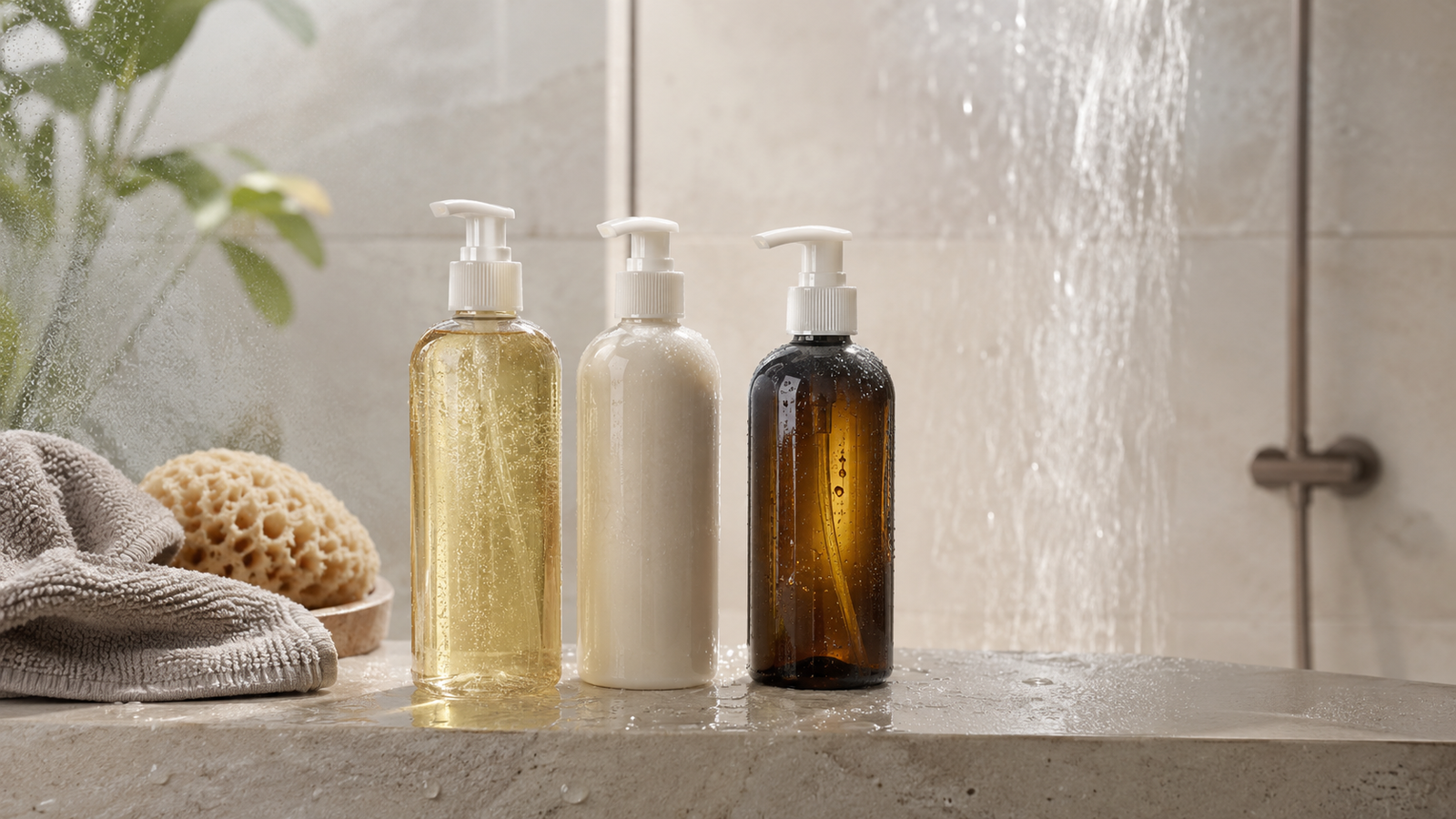
Body wash is one of the most frequently used personal-care products, yet it is often chosen almost entirely by fragrance, packaging or how much foam it produces.
That can work if your skin is naturally comfortable and you simply want a pleasant shower experience. But if your skin tends to feel dry, tight, itchy, rough or irritated after bathing, the cleanser you use can make a noticeable difference.
The useful question is not:
“Which body wash smells best?”
It is:
“How much cleansing does my skin actually need, and what type of formula will leave it clean without making it unnecessarily dry or uncomfortable?”
A body wash used every day should fit your skin type, shower frequency, climate, activity level and any specific concern such as body acne, rough texture or sensitivity.
This guide explains what to look for, what to avoid and how to choose a body wash that fits your routine rather than simply following marketing claims.
What Does a Body Wash Actually Do?
The basic function of a body wash is to remove:
- sweat;
- excess oil;
- dirt;
- environmental residue;
- odour-causing residue;
- sunscreen;
- some body-care product buildup.
It does this mainly through surfactants.
Surfactants help water interact with oils and debris so they can be rinsed away from the skin.
The challenge is balance.
A cleanser needs to clean effectively without removing so much surface oil that the skin becomes:
- tight;
- itchy;
- flaky;
- uncomfortable.
The strongest cleanser is therefore not automatically the best cleanser.
For everyday use, the goal is usually:
adequate cleansing + comfortable skin afterwards.
Start With How Your Skin Feels After Showering
One of the easiest ways to evaluate a body wash is to pay attention to your skin 10–20 minutes after rinsing.
Normal or Comfortable Skin
If your skin generally feels:
- comfortable;
- smooth;
- not tight;
- not itchy;
you have relatively broad flexibility.
You can choose based on:
- fragrance;
- texture;
- lather;
- packaging;
- price;
- shower experience.
There is no need to buy an extremely rich moisturizing wash if a lighter cleanser already works well for you.
Dry Skin
Dry skin often feels:
- tight after bathing;
- flaky;
- rough;
- itchy;
- uncomfortable in colder or drier weather.
A milder, creamier body wash may suit you better.
Look for:
- gentle cleansing;
- humectants;
- emollients;
- creamy textures;
- lower fragrance if your skin is also sensitive.
Also consider the rest of your shower routine.
Very hot water and long showers can make dryness worse even if your body wash is relatively mild.
Sensitive-Feeling Skin
If your skin reacts easily, prioritize simplicity.
Consider:
- fragrance-free or low-fragrance formulas;
- mild cleansing;
- fewer unnecessary botanical extracts;
- products designed for sensitive skin.
But do not assume the word “sensitive” guarantees suitability.
Individual reactions vary.
If you have a history of irritation, introduce new products cautiously.
Oily or Sweat-Prone Skin
If you live in a hot climate, exercise frequently or sweat heavily, you may prefer a cleanser with:
- good rinse-off;
- gel texture;
- effective cleansing;
- fresh skin feel.
That does not mean you need the strongest body wash available.
Over-cleansing does not stop the body from sweating.
Choose enough cleansing to remove sweat and residue without leaving the skin irritated.
Body Wash Textures: Which Type Should You Choose?
Texture can influence both cleansing and how the product feels during use.
Gel Body Wash
Gel formulas often:
- spread easily;
- lather well;
- rinse quickly;
- feel fresh.
They can work particularly well for:
- normal skin;
- oily-feeling skin;
- hot weather;
- post-workout showers.
However, some gel cleansers are stronger than others.
Do not assume every transparent gel will be drying.
Cream Body Wash
Cream washes are often designed for:
- dry skin;
- sensitive-feeling skin;
- people who dislike a stripped after-feel.
They may contain more:
- emollients;
- fatty ingredients;
- conditioning agents.
The skin may feel softer after rinsing.
The trade-off is that some people prefer the cleaner rinse of a gel.
Shower Oil or Oil-Based Cleanser
Shower oils can be useful for very dry skin.
They often provide a more emollient cleansing experience.
They may suit:
- dry legs;
- winter routines;
- skin that becomes tight after normal cleansers.
They are not automatically necessary for everyone.
If your skin is naturally comfortable and you dislike residue, a lighter cleanser may be more practical.
Exfoliating Body Wash
These may contain:
- acids;
- exfoliating particles;
- enzymes;
- other texture-focused ingredients.
They are best chosen for a specific reason rather than used automatically every day.
Exfoliating too frequently can contribute to:
- irritation;
- dryness;
- sensitivity.
What Should You Look for in a Body Wash Formula?
You do not need to memorize cosmetic chemistry.
Several broad ingredient groups are enough to help you understand what a formula is trying to do.
Surfactants
Surfactants are the cleansing ingredients.
Different combinations can create very different cleansing strengths.
You may see terms such as:
- sodium laureth sulfate;
- sodium lauryl sulfate;
- cocamidopropyl betaine;
- glucosides;
- isethionates;
- sarcosinates.
It is not useful to judge the entire product from one surfactant alone.
The complete surfactant system determines how the cleanser behaves.
Instead, use the ingredient list together with the real-world result.
If your skin consistently feels:
- tight;
- itchy;
- uncomfortable;
after using a product, the cleansing system may be too strong for your routine.
Humectants
Humectants help attract and hold water.
Common examples include:
- glycerin;
- propylene glycol;
- panthenol;
- hyaluronic-acid-related ingredients.
They can support a more comfortable skin feel.
However, a product is not automatically highly moisturizing simply because the label highlights one humectant.
The entire formulation matters.
Emollients
Emollient ingredients can improve softness.
They may include:
- oils;
- fatty alcohols;
- esters;
- conditioning lipids.
These are especially common in creamier body washes.
They may be helpful for dry skin.
Fragrance
Fragrance is often one of the main reasons people choose a body wash.
There is nothing wrong with that if your skin tolerates it.
But fragrance is a sensory feature, not a cleansing or moisturizing benefit.
If you experience:
- irritation;
- itching;
- redness;
consider trying a fragrance-free or lower-fragrance product.
Botanical Extracts
Body washes often contain ingredients such as:
- aloe;
- green tea;
- chamomile;
- fruit extracts;
- herbal extracts.
These can contribute to product positioning, but do not assume the number of botanical ingredients determines quality.
Because body wash is rinsed off relatively quickly, the overall cleanser formulation matters more than a long list of highlighted extracts.
Active Ingredients
Some body washes contain ingredients aimed at specific concerns.
Examples may include:
- salicylic acid;
- benzoyl peroxide;
- exfoliating acids.
These are not necessary for ordinary daily cleansing.
Choose them only when you have a matching concern.
Body Wash for Body Acne
If you experience breakouts on areas such as:
- back;
- shoulders;
- chest;
a body wash containing an appropriate acne-focused ingredient may be useful.
Salicylic Acid
Salicylic acid can help with:
- clogged pores;
- rough texture;
- some forms of body breakouts.
Because wash-off products have limited contact time, results may be gradual.
Follow product directions.
Benzoyl Peroxide
Benzoyl peroxide is used in acne-focused cleansers.
It can be effective but may also:
- dry the skin;
- irritate some users;
- bleach towels and clothing.
Introduce it carefully and follow the instructions.
If body acne is:
- painful;
- widespread;
- persistent;
- scarring;
professional treatment may be more appropriate than repeatedly changing body washes.
Body Wash for Rough or Bumpy Skin
If your concern is rough texture, you may see body washes containing:
- salicylic acid;
- lactic acid;
- glycolic acid.
These can help exfoliate the skin surface.
However, more exfoliation is not always better.
If you also use:
- exfoliating body lotion;
- scrub;
- body peel;
adding another active cleanser can become excessive.
A wash-off exfoliant may be enough for some people, while others may get better results from a leave-on body product because it stays in contact with the skin longer.
How Much Lather Do You Need?
A common misconception is:
more foam = better cleansing
That is not necessarily true.
Foam mainly affects the sensory experience.
A low-foaming cleanser can still remove sweat and oil effectively.
Likewise, an extremely foamy product is not necessarily better.
Judge cleansing by:
- how your skin feels;
- whether residue is removed;
- whether the product rinses cleanly.
Do You Need to Scrub Your Skin to Get Clean?
For ordinary cleansing, usually not.
Your hands are enough for routine body washing.
Some people enjoy using:
- washcloths;
- body sponges;
- loofahs.
These can help distribute product but also add friction.
Aggressive scrubbing can irritate:
- dry skin;
- sensitive skin;
- acne-prone areas.
If you use a reusable sponge or washcloth:
- rinse it thoroughly;
- allow it to dry;
- wash or replace it regularly.
Avoid combining a rough scrubbing tool with strong exfoliating body wash unless your skin clearly tolerates it.
Do You Need to Wash Every Part of the Body Equally?
Not necessarily.
Areas that commonly need deliberate cleansing include:
- underarms;
- feet;
- groin;
- areas with heavy sweating;
- areas covered with sunscreen or body products.
Other areas may require gentler cleansing, especially if your skin is dry.
This does not mean avoiding hygiene.
It means matching cleansing intensity to actual need rather than assuming every part of the body must be scrubbed aggressively at every shower.
Shower Frequency Matters
Your ideal body wash can change depending on how often you shower.
Once-Daily Shower
Most people can use a comfortable everyday cleanser that suits their skin type.
Multiple Showers Per Day
If you shower:
- after exercise;
- after commuting;
- because of heat;
- twice daily;
a very strong cleanser every time may become unnecessarily drying.
You may prefer:
- mild body wash for routine showers;
- more thorough cleansing when needed.
Water Temperature Matters Too
Very hot water can contribute to:
- dryness;
- tightness;
- irritation.
If your skin is dry, switching to a gentler body wash while continuing very long, extremely hot showers may produce only limited improvement.
Try:
- warm rather than very hot water;
- shorter shower duration.
Often, these changes help as much as changing the cleanser.
Body Wash in Hot and Humid Weather
In warmer climates, you may prefer:
- gel textures;
- quicker rinse-off;
- fresher fragrance;
- lighter after-feel.
If you sweat heavily, you may shower more frequently, which makes cleanser mildness particularly important.
A strong product twice daily can be more drying than a moderate cleanser used consistently.
Body Wash in Dry or Cool Weather
Dry climates and cooler weather may increase:
- flaking;
- tightness;
- itch.
You may prefer:
- cream cleanser;
- shower oil;
- fragrance-free body wash;
- more emollient formula.
Following the shower with body lotion becomes especially important.
Hard Water and Body Wash
Hard water can change how cleansers:
- lather;
- rinse;
- feel on the skin.
Some people find their skin feels drier in hard-water areas.
If this happens, using more cleanser simply to produce foam may make things worse.
Use only enough product to clean effectively.
Sunscreen and Heavy Body Products
If you use:
- body sunscreen;
- body oil;
- rich moisturizer;
- water-resistant products;
you may need slightly more thorough cleansing at the end of the day.
Focus on effective removal rather than aggressive scrubbing.
If one shower is not removing a heavy water-resistant product adequately, consider:
- slightly more cleanser;
- careful massage;
- sufficient rinse time.
What Should You Avoid When Choosing Body Wash?
Avoid Choosing Only by Fragrance
Fragrance can make the shower enjoyable, but it should not be the only factor if your skin becomes dry or irritated.
Avoid Assuming Squeaky-Clean Skin Is Healthier
A very tight, squeaky feel can indicate that the cleansing experience is too aggressive.
Clean skin should still feel comfortable.
Avoid Buying the Strongest Cleanser for Sweat
Sweat is normal.
You need to remove it, not strip the skin.
Avoid Overusing Exfoliating Ingredients
A body wash with acids does not need to be combined with:
- daily scrub;
- exfoliating gloves;
- strong body lotion;
unless your skin tolerates the routine well.
Avoid Assuming “Natural” Means Gentler
Plant-derived fragrances and essential oils can also irritate skin.
Avoid Using Body Wash to Treat Every Skin Concern
A cleanser has relatively short contact with the skin.
Some concerns require leave-on treatment or professional advice.
Body Wash and Sensitive Skin
If your skin is sensitive, start simple.
Consider:
- fragrance-free formula;
- mild cleansing system;
- fewer unnecessary actives;
- warm rather than hot water.
If the skin is already irritated, introducing an exfoliating or highly fragranced body wash may make the situation worse.
Persistent rashes, burning or severe itching should not simply be managed by switching cosmetics indefinitely.
Body Wash After Exercise
After exercise, the main goals are usually:
- removing sweat;
- removing body odour;
- washing away sunscreen;
- cleaning areas where clothing traps moisture.
A moderate cleanser is often enough.
You do not necessarily need a heavily medicated or extremely strong body wash after every workout.
Body Wash After Shaving
Freshly shaved skin can be more reactive.
Immediately after shaving, avoid unnecessarily:
- strong fragrance;
- aggressive acids;
- heavy scrubbing.
A mild wash followed by an appropriate moisturizer is often more comfortable.
If an active body wash consistently stings after shaving, use it at a different time.
Can Body Wash Replace Soap?
Both categories can cleanse effectively.
The important distinction is formulation, not whether the product is a bar or liquid.
Some bar cleansers are mild.
Some body washes are harsh.
Choose according to:
- ingredients;
- skin feel;
- convenience.
Liquid body wash is not automatically superior.
How to Compare Body Wash Value
Because body wash is used over a large surface area, quantity matters.
Compare:
- bottle size;
- purchase price;
- price per 100 ml;
- amount dispensed per shower;
- shower frequency.
For example:
A 250 ml bottle costing ₹300 equals:
₹120 per 100 ml
A 500 ml bottle costing ₹450 equals:
₹90 per 100 ml
The larger bottle provides better unit value if both formulas suit you equally well.
But do not buy the biggest available bottle before confirming your skin likes the product.
Pump Bottles vs Flip-Top Packaging
Packaging influences how much product you use.
Pumps
Advantages:
- convenient;
- predictable dosing;
- useful in the shower.
Disadvantage:
A large pump can encourage overuse.
Flip-Top Bottles
Advantages:
- simple;
- inexpensive;
- easy to travel with.
Disadvantage:
It is easier to squeeze out more than necessary.
Packaging should allow practical dosing without waste.
Common Body Wash Buying Mistakes
Buying Only by Scent
A fragrance you enjoy is useful, but not if the formula repeatedly leaves your skin uncomfortable.
Assuming More Foam Means Cleaner Skin
Foam is not a direct measure of cleansing quality.
Using Too Much Product
Using twice as much body wash does not necessarily make you twice as clean.
It simply increases:
- cost;
- rinsing;
- potential dryness.
Scrubbing Too Hard
Cleanliness does not require friction until the skin turns red.
Using Active Cleansers Without a Concern
Acid or acne-focused body washes are useful when needed, but unnecessary for normal comfortable skin.
Ignoring Post-Shower Moisturizer
If you have dry skin, body lotion after bathing may make more difference than repeatedly switching cleansers.
Buying a Huge Pack Before Testing the Product
Value disappears if you stop using the product because it irritates your skin.
Quick Body Wash Decision Guide
| Your priority | What to consider |
|---|---|
| Normal skin | Comfortable gel or cream wash |
| Dry skin | Mild cream wash or shower oil |
| Sensitive-feeling skin | Fragrance-free or low-fragrance mild cleanser |
| Hot/humid climate | Lightweight gel with comfortable cleansing |
| Frequent showers | Mild everyday cleanser |
| Body acne | Appropriate active cleanser such as salicylic acid or benzoyl peroxide |
| Rough skin | Controlled exfoliating formula |
| Strong fragrance preference | Choose scent only if skin tolerates it |
| Value | Compare price per 100 ml and amount used |
Before You Buy: Final Checklist
Ask yourself:
- Does my skin usually feel dry, normal or oily?
- Does it feel tight after showering?
- How often do I shower?
- Do I live in a hot, humid or dry environment?
- Do I use body sunscreen regularly?
- Do I want fragrance?
- Is my skin sensitive?
- Do I actually need an active ingredient?
- Do I use exfoliating products elsewhere in my routine?
- How large is the bottle?
- What is the price per 100 ml?
- Does the packaging help me control the amount?
- Will I realistically enjoy using it every day?
Frequently Asked Questions
Is body wash better than soap?
Not automatically. Both can be formulated gently or aggressively. Choose based on formulation and how your skin feels after cleansing.
Can I use body wash every day?
Yes. Choose a formula that is appropriate for frequent cleansing and does not leave your skin uncomfortable.
Is body wash good for dry skin?
It can be. Look for a mild, creamier or more emollient cleanser and avoid excessively hot showers.
Can body wash help body acne?
Some active body washes containing ingredients such as salicylic acid or benzoyl peroxide can support an acne routine.
Should body wash contain fragrance?
That is a personal preference. Fragrance is unnecessary for cleansing and may irritate sensitive skin.
Does more lather clean better?
No. Lather is primarily a sensory characteristic and is not a direct measure of cleansing ability.
Can body wash remove sunscreen?
Most can remove ordinary body sunscreen with adequate cleansing. Water-resistant formulas may require more thorough washing.
Should I use a loofah?
It is optional. Hands are sufficient for routine cleansing. If you use a loofah or sponge, keep it clean and avoid aggressive scrubbing.
How much body wash should I use?
Usually a small amount is enough to cleanse the necessary areas. Using excessive product does not improve hygiene proportionally.
Can I use exfoliating body wash every day?
That depends on the formulation and your skin tolerance. Many people do not need daily exfoliation.
Is fragrance-free body wash better for sensitive skin?
It is often a sensible starting point because it removes one potential irritant, although individual sensitivity varies.
Why does my skin feel tight after showering?
Possible contributors include:
- strong cleanser;
- very hot water;
- long showers;
- dry climate;
- inadequate moisturization.
Evaluate the whole routine rather than only the body wash.
The Physical Glow Takeaway
Choose body wash by balancing effective cleansing with skin comfort.
Normal skin has broad flexibility, while dry or sensitive-feeling skin usually benefits from milder cleansing and less fragrance. If you shower frequently because of exercise, heat or commuting, a comfortable everyday cleanser is generally more practical than using the strongest possible formula several times a day.
Active ingredients such as salicylic acid or benzoyl peroxide can be useful when you have a specific concern, but they should not be added automatically to every routine. Likewise, heavy foam, strong fragrance and a squeaky-clean finish do not necessarily mean a product cleans better.
Pay attention to how your skin feels after bathing, use warm rather than excessively hot water, avoid unnecessary scrubbing and compare value using actual bottle size and cost per 100 ml.
The right body wash should leave you clean, comfortable and ready for the next step in your routine—not tight, irritated or stripped.