Cleansing Balm Emulsification: A Step-by-Step Rinse Checklist
Learn why cleansing balm changes from an oily texture to a milky rinse, how to add water gradually, and what to check around the hairline before following with a gentle cleanser.
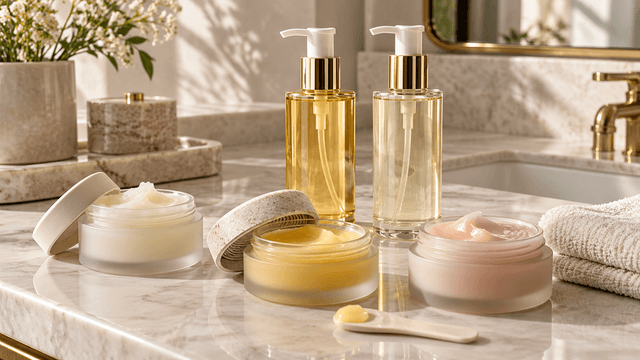
Cleansing balm is one of the most convenient ways to remove sunscreen, makeup, and excess facial oil. However, applying the balm is only half the process. Knowing how to rinse it properly is equally important.
The key step is cleansing balm emulsification—the process in which an oil-based balm mixes with water and becomes easier to rinse away.
If your cleansing balm leaves a greasy film, feels difficult to remove, or seems to collect around your hairline, you may need to adjust how you emulsify and rinse it.
This guide explains how cleansing balm emulsification works, the correct application sequence, common mistakes, and how to determine whether your face is properly cleansed without unnecessary scrubbing.
What Is Cleansing Balm Emulsification?
Most cleansing balms begin as a thick, solid, or semi-solid formula containing oils, emollients, and cleansing ingredients.
When you massage the balm onto dry skin, its oil-based ingredients help dissolve or loosen substances such as:
- Foundation and concealer
- Everyday sunscreen
- Water-resistant makeup
- Excess sebum
- Oil-based impurities
However, water alone does not easily mix with ordinary oil.
This is where emulsifiers become important.
Emulsifiers are ingredients that help oil and water form a mixture that can be rinsed away more easily. Many cleansing balms contain emulsifying agents specifically for this purpose.
When you introduce a little water and continue massaging, the balm often changes from a transparent or oily texture into a cloudy, milky mixture.
That change is called emulsification.
The important distinction: Emulsification helps the loosened makeup, sunscreen, and oil disperse into rinse water. It does not automatically guarantee that every trace of product has been removed.
The final rinse remains essential.
Why Proper Emulsification Matters
Using a cleansing balm without properly emulsifying it may leave more residue on your skin.
This happens because the product has loosened makeup and oily impurities, but the mixture has not been sufficiently dispersed and rinsed away.
Proper emulsification can help with several practical concerns.
1. Easier removal of sunscreen and makeup
Many complexion products contain oils, waxes, pigments, and film-forming ingredients.
Cleansing balms are designed to loosen these materials. Emulsification then helps the mixture rinse away.
This can be particularly useful when removing a full face of makeup or several layers of sunscreen.
2. Less need for aggressive rubbing
When makeup is difficult to remove, it can be tempting to scrub the skin repeatedly or use a rough cloth.
Allowing the balm to work as directed and emulsifying it thoroughly may reduce the need for excessive friction.
3. A more comfortable cleansing experience
A well-rinsed balm should generally leave the skin feeling clean and comfortable.
It should not require repeated washing until the skin feels unusually tight or squeaky.
However, the final skin feel depends on the specific formulation. Some balms are intentionally more conditioning than others.
4. Better attention to commonly missed areas
The jawline, sides of the nose, eyebrows, and hairline are easy to overlook.
A deliberate emulsification and rinsing routine encourages you to clean these areas rather than concentrating only on the cheeks.
How to Emulsify Cleansing Balm: Step-by-Step Guide
Although individual product instructions may vary, the following method works as a general starting point for cleansing balms designed to be used on dry skin.
Step 1: Start with clean, dry hands
Wash your hands and dry them before handling the balm.
If the product comes in a jar, use its supplied spatula or clean, dry fingers to take out the recommended quantity.
Avoid introducing water into the container.
Water entering a balm jar can affect the product’s texture and may introduce contamination.
Close the lid after dispensing.
Step 2: Apply the balm to dry skin
Most traditional cleansing balms work best when first applied to a dry face.
Place the balm on your fingertips and distribute it across your forehead, cheeks, nose, and chin.
The balm should soften or spread as you massage it.
Do not immediately add water unless the product instructions specifically require it.
Starting with dry skin allows the oil-based cleansing phase to interact with makeup, sunscreen, and other oily substances.
Step 3: Massage gently across the face
Using your fingertips, move the balm across your skin with light, controlled motions.
Pay attention to:
- The sides of your nose
- Areas covered with foundation
- The chin and jawline
- Sunscreen around the hairline
- Makeup around the eyebrows
There is no need to apply significant pressure.
Follow the massage duration recommended by the manufacturer. Longer massage sessions do not necessarily produce better cleansing.
If you are removing eye makeup, first confirm that the balm is suitable for use around the eyes. Keep your eyes closed, avoid direct eye contact, and do not rub aggressively.
Step 4: Add a small amount of lukewarm water
This is the most important part of cleansing balm emulsification.
Wet your fingertips with a little lukewarm water.
Gently massage the damp fingertips over the balm already spread across your face.
You may notice the formula becoming:
- Cloudier
- More fluid
- Milky or creamy
- Easier to spread with water
These changes indicate that water is interacting with the formulation.
Not every cleansing balm produces an equally visible milky appearance. Follow its directions rather than judging effectiveness by colour alone.
Step 5: Continue emulsifying where needed
If the balm still feels heavily oily, add another small amount of water and continue gently distributing it.
Work across the forehead, cheeks, jawline, and nose.
Do not forget the outer edges of the face.
The objective is to help the balm disperse into the water before the final rinse.
Avoid adding large quantities of water immediately if doing so makes it difficult to massage the product evenly.
Step 6: Rinse thoroughly
Use comfortable lukewarm water to remove the emulsified balm.
Rinse carefully around:
- The hairline
- Eyebrows
- Sides of the nose
- Jawline
- Chin
- Areas near the ears
These locations can retain traces of cleanser, especially if makeup or sunscreen has collected there during the day.
Avoid very hot water, which can be uncomfortable and irritating.
Continue rinsing until the product is removed according to its directions.
Step 7: Check your skin before continuing
After rinsing, assess how your skin feels.
A properly rinsed balm should not leave thick, sticky, or obvious makeup residue.
However, a slight conditioned feeling is not necessarily a problem.
Some formulas contain emollients that intentionally leave the skin feeling soft.
If you notice stubborn residue, review your rinsing technique before immediately reaching for a stronger cleanser.
Step 8: Pat dry or follow with another cleanser
If your cleansing routine is complete, gently pat your face with a clean towel.
If you prefer double cleansing, follow with a suitable water-based facial cleanser.
Avoid rubbing your face dry.
For dry or sensitive skin, pay attention to whether using two cleansers leaves the skin uncomfortable.
The Correct Order of Cleansing Balm Application
A simple way to remember the process is:
Dry hands → Dry face → Apply balm → Massage gently → Add water → Emulsify → Rinse thoroughly → Optional second cleanse
The specific product label should always take priority.
For example, certain cleansing products marketed as balms may have different application or removal instructions.
Common Cleansing Balm Mistakes to Avoid
Mistake 1: Applying water too early
Traditional cleansing balms are generally designed to begin their cleansing action on dry skin.
Introducing water immediately can change the texture before the balm has been distributed across makeup and sunscreen.
Better approach: Apply and massage as directed before adding water.
Mistake 2: Skipping emulsification
Some people massage the balm over their face and immediately splash it with water.
While certain formulations rinse away easily, deliberately emulsifying a traditional cleansing balm can make removal more consistent.
Better approach: Use damp fingertips to turn the oily layer into a more rinseable mixture before the final wash.
Mistake 3: Using too much balm
Applying a very large amount can make rinsing unnecessarily difficult.
It also wastes product.
Better approach: Begin with the manufacturer’s suggested quantity and adjust only if you genuinely need more coverage.
Mistake 4: Scrubbing around the nose and eyes
The skin around the eyes is delicate, and vigorous rubbing can cause discomfort.
The sides of the nose may also become irritated if repeatedly scrubbed.
Better approach: Allow the cleansing formula to work with gentle contact rather than pressure.
Mistake 5: Forgetting the hairline
Makeup and sunscreen frequently extend to the outer edges of the face.
If you rinse only the central areas, product may remain near the roots of your hair.
Better approach: Keep hair away from your face and rinse the hairline deliberately.
Mistake 6: Treating tight skin as proof of cleanliness
A tight or squeaky feeling does not necessarily indicate superior cleansing.
It can suggest that your routine is too aggressive for your skin.
Better approach: Aim for a comfortable finish rather than repeatedly washing until every trace of softness disappears.
Why Does Cleansing Balm Sometimes Leave a Greasy Film?
A greasy finish does not always mean the product is unsuitable.
Several factors can contribute.
Incomplete emulsification
If you apply too little water during the emulsifying stage, the formula may remain concentrated.
Try introducing water gradually and distributing the mixture before rinsing.
Incomplete rinsing
The balm may have emulsified correctly, but residue can remain in facial contours or near the hairline.
Pay extra attention to these areas.
Using too much product
An unnecessarily thick layer may take more effort to remove.
Reduce the quantity to the amount suggested on the label.
Differences between formulations
Cleansing balms do not all behave identically.
Some are designed to leave a more conditioning after-feel, while others rinse more cleanly.
A softer finish is not automatically evidence of leftover dirt.
Product incompatibility
If your skin repeatedly becomes irritated, uncomfortable, or visibly red after using a particular balm, the formulation may not suit you.
Stop using a product that causes irritation. Seek advice from a qualified healthcare professional if a reaction is severe or persistent.
Is Double Cleansing Necessary After Using a Cleansing Balm?
Double cleansing generally involves two stages:
- An oil-based cleanser, such as a cleansing balm or cleansing oil.
- A gentle water-based cleanser.
The first stage helps remove makeup, sunscreen, and oily substances.
The second stage can remove remaining cleanser and other impurities.
However, double cleansing is optional.
You may find it useful when wearing substantial makeup, heavy sunscreen, or long-wearing complexion products.
On the other hand, a single cleansing balm may be sufficient if it removes your products effectively and your skin remains comfortable.
For sensitive or dry skin, unnecessary additional cleansing can sometimes cause irritation.
The goal is effective, gentle cleansing—not using the maximum number of products.
Cleansing Balm vs Cleansing Oil: Does Emulsification Work Differently?
Both cleansing balms and cleansing oils can be formulated with emulsifiers.
Their main difference is usually their starting texture.
| Cleansing balm | Cleansing oil |
|---|---|
| Starts as a solid or semi-solid | Starts as a liquid |
| Softens or melts during application | Spreads immediately |
| Often packaged in a jar or tube | Often packaged in a pump bottle |
| May turn milky when water is added | May also turn milky when water is added |
The ability to emulsify depends on the formulation, not simply whether the cleanser begins as a solid or liquid.
Neither category is automatically better for every skin type.
How to Tell Whether Your Cleansing Balm Has Rinsed Off Properly
Instead of relying on a single visual sign, check the overall result.
Your skin should generally feel:
- Free from obvious makeup deposits
- Comfortable rather than painfully tight
- Without thick or sticky patches of balm
- Free from noticeable residue around the jaw and hairline
If long-wear eye makeup remains, use an eye-safe removal product as directed rather than scrubbing repeatedly.
If your skin feels irritated, avoid continuing to cleanse aggressively.
One important point: a milky appearance indicates emulsification, not guaranteed complete removal.
The rinsing stage still matters.
Cleansing Balm Hygiene and Storage
A good cleansing routine also involves keeping the product in suitable condition.
Keep water out of the container
Avoid dipping wet fingers into the jar.
If your balm includes a spatula, keep it clean and dry between uses.
Store the balm away from excessive heat
Heat may soften or alter the texture of certain balm formulations.
Store the product according to the manufacturer’s instructions.
Close the lid after use
Leaving the container open unnecessarily can expose the product to dust and moisture.
Check for unexpected changes
If a balm develops an unusual smell, visible contamination, or an unexpected change in appearance, discontinue use and check its expiry or manufacturer guidance.
Do not add water or other ingredients to restore a product that has changed.
Frequently Asked Questions
1. What does it mean when a cleansing balm turns milky?
The milky appearance generally indicates that water is mixing with the balm through the action of emulsifying ingredients.
It helps the oil-based cleanser disperse and rinse away.
2. Can I use cleansing balm without emulsifying it?
Follow the manufacturer’s directions.
For a balm designed to emulsify, introducing water before rinsing is an important part of its intended cleansing process.
Skipping this stage may make removal less effective or less comfortable.
3. How much water should I use to emulsify a cleansing balm?
Begin with a small amount on your fingertips.
Add more gradually if necessary.
The precise quantity depends on the formulation and the amount of balm used.
4. How long should I massage cleansing balm?
Follow the product’s instructions.
A gentle, thorough application is generally preferable to prolonged or vigorous massage.
If your skin becomes irritated, stop rather than continuing to rub.
5. Should I use hot or cold water to remove cleansing balm?
Comfortable lukewarm water is a practical choice.
Very hot water can be irritating, especially for sensitive skin.
6. Why does my cleansing balm still feel oily after adding water?
Possible explanations include incomplete emulsification, excess product, insufficient rinsing, or the balm’s intentionally conditioning formulation.
Try reviewing the recommended amount and rinsing technique.
7. Can cleansing balm remove waterproof mascara?
Some cleansing balms are formulated for waterproof or water-resistant makeup, but effectiveness varies.
Only use a product near the eyes if its instructions permit that use.
For stubborn mascara, a dedicated eye-makeup remover may be more appropriate.
8. Can I use cleansing balm every day?
Many cleansing balms are intended for daily use.
However, frequency should depend on your skin’s response, the specific product, and how much cleansing you need.
If your skin becomes dry or irritated, reconsider the routine.
9. Does cleansing balm emulsification prevent acne?
Emulsification helps the cleanser rinse away, but it does not guarantee acne prevention.
Acne has multiple contributing factors, and no single cleansing technique can prevent every breakout.
10. Do I need a face wash after a cleansing balm?
Not always.
If the balm rinses thoroughly and your skin feels comfortable, another cleanser may be unnecessary.
A gentle second cleanser can be useful when removing substantial makeup or if residue remains.
Final Cleansing Balm Emulsification Checklist
Before finishing your routine, make sure you have:
- Followed the balm’s application instructions
- Started with clean hands
- Massaged the product gently without scrubbing
- Added water as directed to emulsify
- Rinsed the entire face thoroughly
- Checked the nose, eyebrows, jawline, and hairline
- Avoided excessive washing or very hot water
- Kept water out of the product container
- Considered a second cleanser only when needed
Final Thoughts
Cleansing balm emulsification is a simple step that can make a meaningful difference in how easily a cleanser rinses away.
The technique does not require expensive accessories, aggressive massage, or an unnecessarily complicated skincare routine.
Start with the amount recommended on the packaging, gently loosen makeup and sunscreen, introduce water gradually, and rinse thoroughly.
Most importantly, pay attention to how your skin responds.
The best cleansing routine is one that removes what needs to be removed while leaving your skin comfortable.
Physical Glow editorial note: This article provides general skincare information and does not replace personalized dermatological advice. Product instructions and individual skin sensitivity should guide use.