Deodorant Buying Guide: How to Choose for Everyday Use
Learn how to choose a deodorant by comparing format, fragrance, skin comfort, sweat and odour needs, application preference and everyday convenience.
Deodorant is an everyday product, but the category is more complicated than it first appears.
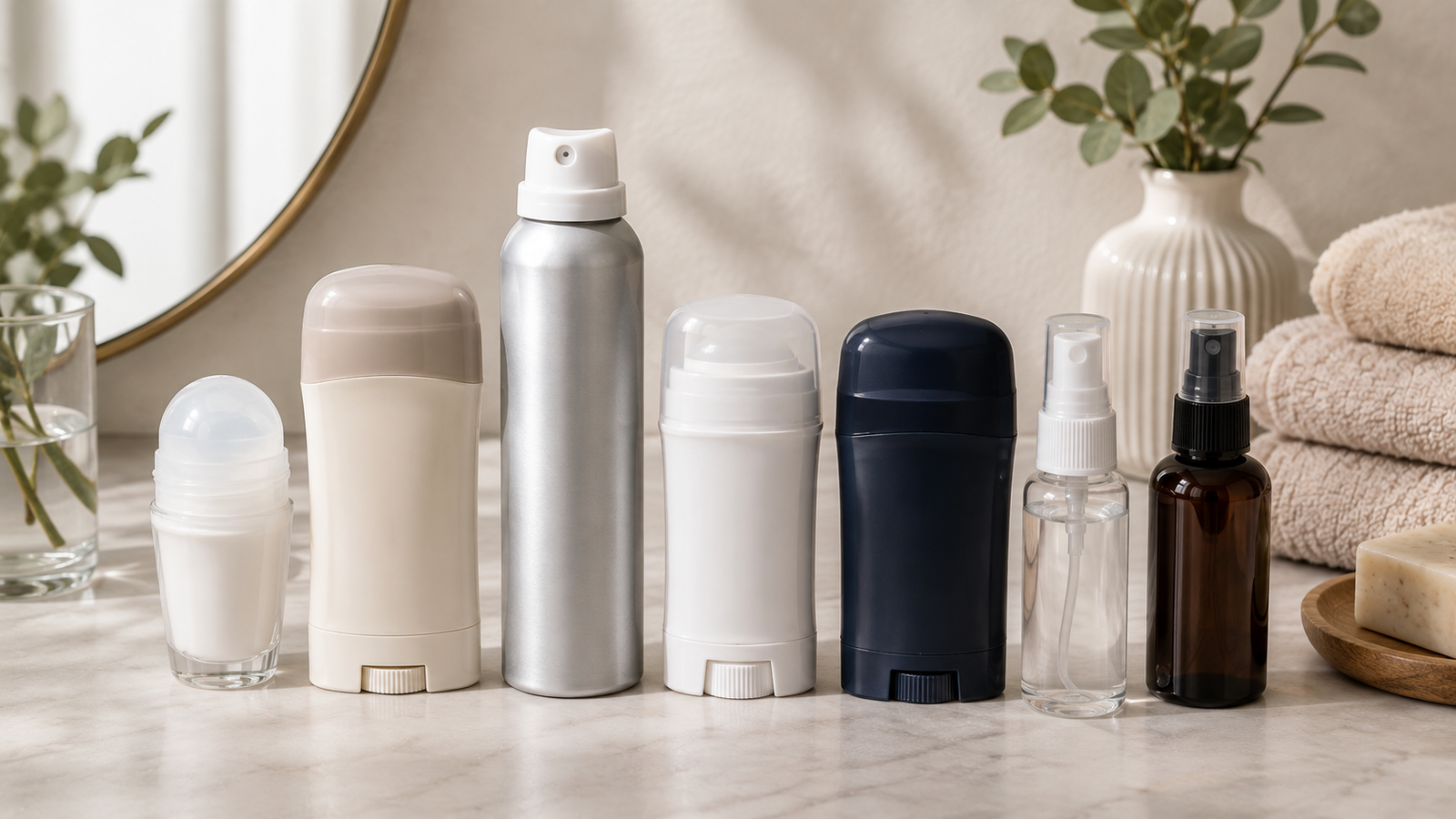
Some products are designed mainly to reduce odour. Others are antiperspirants that also reduce sweating. Roll-ons, sticks, sprays, creams and gels can all work differently, and a format that feels convenient for one person may feel sticky, irritating or ineffective for another.
That is why the useful question is not:
“Which deodorant smells the best?”
It is:
“Do I mainly want odour control, sweat reduction, skin comfort or convenience—and which format gives me that without irritation or unnecessary residue?”
Choosing correctly starts with understanding what deodorant and antiperspirant actually do, then matching the formula and format to your routine, skin sensitivity, climate and activity level.
This guide explains what to look for, what to avoid and how to choose a deodorant that fits everyday life.
Deodorant vs Antiperspirant
These terms are often used interchangeably, but they describe different primary functions.
Deodorant
Deodorant is mainly designed to control or reduce body odour.
It may work through:
- fragrance;
- ingredients that help limit odour-causing bacteria;
- absorbent ingredients;
- other odour-control systems.
It does not necessarily reduce how much you sweat.
Antiperspirant
Antiperspirant is designed to reduce sweating in the area where it is applied.
It commonly uses aluminium-based salts that temporarily reduce sweat flow.
Many products combine both functions.
So a product may act as:
deodorant + antiperspirant
If your main concern is wetness rather than odour alone, make sure the product actually provides antiperspirant protection.
Start With Your Main Concern
Odour Control
If you do not mind sweating but want to reduce underarm odour, a deodorant may be enough.
Look for:
- reliable odour control;
- comfortable fragrance level;
- format you enjoy using;
- good skin tolerance.
There is no reason to automatically choose antiperspirant if sweat itself is not a concern.
Sweat Reduction
If underarm wetness bothers you, choose an antiperspirant.
This may be more useful if you experience:
- visible sweat patches;
- discomfort in warm weather;
- frequent sweating during work;
- heavy sweating during exercise.
Follow the application directions carefully because some antiperspirants work best when applied to clean, dry skin and allowed time to set.
Both Odour and Sweat
Many mainstream products are designed to provide both.
This is often the most practical everyday choice for people who want one product rather than separate solutions.
Sensitive or Easily Irritated Underarms
If your underarms often:
- sting;
- itch;
- become red;
- feel sore after shaving;
prioritize comfort over fragrance intensity.
Look for:
- lower fragrance;
- fragrance-free options;
- simpler formulas;
- formats that do not sting your skin.
Why Does Body Odour Happen?
Fresh sweat itself is not always strongly odorous.
Odour develops partly because sweat interacts with bacteria present on the skin.
The amount and intensity can vary depending on:
- activity level;
- climate;
- clothing;
- personal biology;
- stress;
- diet;
- hygiene routine.
This is why one deodorant can work well for one person but not for another.
The goal is not to eliminate all sweating.
Sweating is a normal body function.
The goal is simply to make the underarm area more comfortable and manageable.
Understand the Main Deodorant Formats
Format affects:
- application;
- drying time;
- residue;
- portability;
- skin feel.
Roll-On Deodorant
Roll-ons apply liquid directly to the skin.
They can be useful because they provide controlled, even coverage.
Advantages:
- easy dosing;
- compact;
- targeted application;
- often affordable.
Potential drawbacks:
- can feel wet initially;
- may require drying time before dressing.
Roll-ons are a practical everyday option if you do not mind waiting a short time before putting on clothes.
Stick Deodorant
Sticks apply a solid product directly to the underarm.
Advantages:
- quick application;
- generally fast-drying;
- convenient for travel;
- minimal mess.
Potential drawbacks:
- some formulas can leave white residue;
- may feel waxy or heavy.
If clothing marks bother you, look for clear-stick or residue-minimizing formulas.
Aerosol Spray
Aerosol sprays provide broad coverage quickly.
Advantages:
- fast application;
- dry feel;
- useful after exercise;
- no direct skin contact with the applicator.
Potential drawbacks:
- fragrance can feel strong;
- spray can be inhaled if used carelessly;
- requires good ventilation;
- can be less precise.
Use aerosols in a well-ventilated area and avoid spraying near the face.
Pump Spray
Pump sprays provide liquid deodorant without aerosol propellant.
Advantages:
- controlled spray;
- lightweight;
- compact.
Potential drawbacks:
- may feel wetter than aerosol;
- drying time varies.
Cream or Balm Deodorant
Cream deodorants are applied with:
- fingers;
- applicator;
- small spatula.
Advantages:
- precise application;
- can feel conditioning;
- may suit users who dislike sprays.
Potential drawbacks:
- less convenient;
- requires hand contact;
- easier to overapply.
Gel Deodorant
Gels often dry clear and may be designed to reduce visible residue.
They can work well if you dislike:
- white marks;
- powdery finishes.
However, some gels feel sticky until fully dry.
Choose According to Your Skin Sensitivity
Underarm skin is exposed to:
- shaving;
- sweat;
- friction;
- fragrance;
- clothing.
That makes it easier to irritate than many people realize.
If your underarms are sensitive, consider:
- low-fragrance products;
- fragrance-free options;
- simple formulas;
- less aggressive shaving.
Deodorant After Shaving
Freshly shaved skin can be more reactive.
Small cuts or micro-irritation can make deodorant sting.
If this happens:
- wait before applying;
- choose a gentler formula;
- avoid strong fragrance;
- avoid heavily alcohol-based products if they irritate you.
Repeated stinging is not something you need to tolerate.
Fragrance: How Much Do You Need?
Fragrance can be one of the most enjoyable parts of deodorant.
But it is not the same thing as odour control.
A very strong fragrance may:
- clash with perfume;
- irritate sensitive skin;
- feel overwhelming in hot weather.
If you already wear perfume or body spray, a mild or neutral deodorant may fit your routine better.
Should You Choose Fragrance-Free?
Fragrance-free can be a useful choice if you:
- have sensitive skin;
- dislike scented products;
- use perfume separately;
- experience irritation from fragranced deodorants.
Fragrance-free does not automatically mean more effective, but it can simplify the formula.
What About Aluminium?
Aluminium salts are widely used in antiperspirants because they help reduce sweat.
If sweat reduction is your main goal, aluminium-based antiperspirants are the category designed for that purpose.
Some consumers prefer aluminium-free products.
That is a personal preference.
But understand the practical difference:
aluminium-free deodorant generally targets odour rather than sweat reduction.
Do not buy an aluminium-free deodorant expecting the same level of antiperspirant performance.
“Natural” Deodorants: What Should You Know?
Natural-positioned deodorants may use ingredients such as:
- baking soda;
- starches;
- essential oils;
- mineral salts;
- plant extracts.
Some people enjoy them and find them effective.
Others experience irritation.
Baking Soda
Baking soda can help with odour control but may irritate sensitive skin in some formulations.
If you experience:
- redness;
- itching;
- burning;
stop using it.
Essential Oils
Essential oils may contribute fragrance and product identity.
They can also irritate some users.
Plant-derived does not automatically mean gentle.
Deodorant for Hot and Humid Weather
In hot weather, you may want:
- reliable odour control;
- quick drying;
- strong sweat management;
- minimal residue.
Antiperspirant may be more useful if wetness bothers you.
Sprays and lighter roll-ons can also feel more comfortable in heat than heavy creams.
Deodorant for Exercise
Exercise produces more sweat, so think about what you need before and after training.
You may prefer:
- antiperspirant for sweat reduction;
- deodorant for odour control;
- spray format for convenience.
However, deodorant does not replace washing after a workout.
Applying more fragrance over accumulated sweat is not the same as cleaning the skin.
Deodorant for Office and Everyday Use
For ordinary workdays, priorities may be:
- moderate odour control;
- quick drying;
- minimal clothing marks;
- comfortable fragrance;
- reliable all-day use.
You may not need the strongest sports formula.
A comfortable product you use consistently can be more practical.
Clinical-Strength Antiperspirants
Some products are marketed as:
- clinical strength;
- extra strength;
- maximum protection.
These are aimed at people who want stronger sweat control.
They may use:
- higher active concentration;
- different delivery systems;
- specific application schedules.
Follow the product directions carefully.
More frequent application does not always improve results.
If sweating is:
- unusually heavy;
- sudden in onset;
- occurring at night;
- interfering significantly with daily life;
professional evaluation may be appropriate.
When Should You Apply Deodorant?
This depends on the product.
For standard deodorant:
- clean, dry underarms are usually ideal.
For antiperspirant:
some formulas work best when applied when the sweat glands are less active, often at night.
Always follow the specific instructions.
Dry Skin Before Application
Applying to dry underarms helps many formulas:
- spread evenly;
- stay in place;
- reduce dilution by sweat.
Avoid applying immediately after a shower if the area is still very wet.
How Much Deodorant Should You Use?
More is not always better.
For roll-ons:
- a few passes are usually enough.
For sticks:
- apply an even layer.
For sprays:
- follow the recommended distance and duration.
Applying excessive product can cause:
- residue;
- stickiness;
- fragrance overload;
- waste.
Can You Reapply During the Day?
Yes, if needed.
But reapplication works best on:
- relatively clean;
- dry skin.
If you have been sweating heavily, wiping or washing the area first can give a better result than layering more product.
Deodorant and Clothing Marks
White marks or residue can be frustrating.
They are more common with:
- certain sticks;
- powders;
- some antiperspirants.
To reduce transfer:
- let the product dry before dressing;
- use the recommended amount;
- consider clear gel or residue-minimizing formats.
Dark Clothing
If you regularly wear dark clothing, this may become an important buying criterion.
Look for products marketed around:
- invisible finish;
- anti-white-mark performance.
Do not assume those claims are perfect, but they can help narrow your options.
Clothing Can Affect Odour Too
Sometimes the problem is not only deodorant performance.
Certain fabrics, especially synthetic workout clothing, can retain odour.
If a shirt smells soon after putting it on despite good hygiene:
- wash workout clothing promptly;
- follow garment-care directions;
- avoid leaving damp clothing in a bag;
- allow deodorant to dry before dressing.
Changing deodorant alone may not solve odour retained in fabric.
Deodorant and Underarm Pigmentation
Deodorant is sometimes blamed for all underarm darkening.
But underarm pigmentation can be influenced by:
- friction;
- shaving;
- irritation;
- genetics;
- skin tone.
If a product repeatedly irritates the area, that irritation may contribute to visible darkening over time.
Choose a gentler formula if you experience persistent burning or rash.
Avoid aggressive DIY methods such as:
- lemon juice;
- harsh scrubbing;
- repeated baking soda;
- strong acids on irritated skin.
What Should You Avoid When Choosing Deodorant?
Avoid Confusing Odour Control With Sweat Control
If wetness is your concern, choose antiperspirant.
Switching between different deodorant-only formats may not solve the problem.
Avoid Choosing Only by Fragrance
Strong fragrance can make a product smell impressive without necessarily giving better odour control.
Avoid Ignoring Irritation
Repeated stinging, itching or redness is a reason to reconsider the product.
Avoid Applying to Broken Skin
Do not apply deodorant over:
- cuts;
- razor irritation;
- damaged skin.
Avoid Assuming Natural Means Non-Irritating
Natural formulas can still contain irritating ingredients.
Avoid Overapplying
More product can increase:
- residue;
- stickiness;
- fragrance intensity.
Avoid Using Deodorant to Mask Persistent Unusual Odour
A sudden or persistent change in body odour may have causes beyond ordinary hygiene.
If it is significant or unexplained, consider medical advice.
Patch Testing a New Deodorant
If you have reacted to products before, introduce a new deodorant cautiously.
You can apply a small amount to one area and observe the response over several days.
This is particularly useful with:
- strongly fragranced formulas;
- essential oils;
- baking soda;
- unfamiliar active ingredients.
Patch testing cannot guarantee that irritation will never occur, but it can help reduce surprises.
Deodorant for Teenagers or First-Time Users
For first-time users, simplicity is often best.
Choose based on:
- mild odour control;
- comfortable fragrance;
- easy application;
- skin tolerance.
There is no need to start with the strongest available formula unless excessive sweating is actually a concern.
Deodorant for Sensitive Skin
A practical starting point includes:
- fragrance-free or lightly fragranced product;
- gentle roll-on or stick;
- avoiding immediate post-shave application.
Do not assume all “sensitive” products will work for everyone.
Deodorant for Travel
For travel, consider:
- compact size;
- secure cap;
- spill resistance;
- airline restrictions.
Sticks and small roll-ons are often convenient.
Aerosol rules may vary depending on transport and baggage regulations.
How to Compare Deodorant Value
Different formats are difficult to compare directly.
A 150 ml spray and 50 ml roll-on may last similar lengths of time depending on application.
Consider:
- purchase price;
- container size;
- amount used each time;
- frequency of reapplication;
- how long the product actually lasts.
Cost Per Use Matters
A low-cost product is not necessarily cheaper if you need to reapply it constantly.
Similarly, an expensive antiperspirant may be good value if:
- you use little;
- it performs all day;
- it reduces the need for additional products.
Packaging Matters
Roll-On Packaging
Should:
- dispense evenly;
- not leak;
- feel smooth.
Stick Packaging
Should:
- twist reliably;
- protect the product;
- avoid breaking.
Spray Packaging
Should provide:
- even spray;
- good nozzle control;
- secure cap.
Poor packaging can make an otherwise good deodorant frustrating to use.
Common Deodorant Buying Mistakes
Buying Deodorant When You Actually Need Antiperspirant
This is probably the biggest category mistake.
If the problem is wetness, choose the correct function.
Switching Fragrance Instead of Function
Changing from one scented deodorant to another may not help if neither reduces sweat.
Choosing the Strongest Product Automatically
Not everyone needs clinical-strength antiperspirant.
Use the level of protection that matches your routine.
Applying Too Soon After Shaving
This can make otherwise tolerable products sting.
Ignoring Drying Time
If you dress immediately after roll-on application, you may experience:
- clothing transfer;
- stickiness.
Buying Only From Marketplace Ratings
Ratings can provide context, but individual sweat levels, fragrance preferences and skin sensitivity vary greatly.
Quick Deodorant Decision Guide
| Your priority | What to look for |
|---|---|
| Odour control | Deodorant |
| Sweat reduction | Antiperspirant |
| Both | Combined deodorant + antiperspirant |
| Sensitive skin | Low-fragrance/simple formula |
| Quick drying | Stick, aerosol or fast-dry gel |
| Controlled application | Roll-on or stick |
| Gym use | Reliable odour/sweat protection |
| Dark clothing | Low-residue or clear formula |
| Strong fragrance preference | Scented deodorant if tolerated |
| Travel | Compact, leak-resistant packaging |
Before You Buy: Final Checklist
Ask yourself:
- Is my main concern odour, sweat or both?
- Do I actually need an antiperspirant?
- Which format do I prefer: roll-on, stick, spray, gel or cream?
- Does my skin become irritated easily?
- Do I shave my underarms regularly?
- Do I want fragrance?
- Do I need a quick-drying product?
- Do clothing marks bother me?
- Will I use it for office, exercise or both?
- How often do I need to reapply?
- Is the pack size good value?
- Does the product solve the actual problem I have?
Frequently Asked Questions
Does deodorant stop sweating?
Not necessarily. Antiperspirants are designed to reduce sweat. Deodorants mainly target odour.
Is antiperspirant the same as deodorant?
No, although many products combine both functions.
Is aluminium-free deodorant better?
Not universally. It is a preference. Aluminium-free products generally do not provide the same sweat-reduction function as antiperspirants.
Can deodorant cause irritation?
Yes. Fragrance, shaving, alcohol, essential oils and other ingredients can irritate some people.
Why does deodorant sting after shaving?
Fresh shaving can leave tiny cuts and increased sensitivity. Waiting before application or choosing a gentler formula may help.
Is spray deodorant better than roll-on?
Neither is universally better. Spray dries quickly, while roll-on offers more controlled application.
How long should deodorant last?
That depends on formulation, activity level and climate. Claims such as 24- or 48-hour protection should be interpreted as product positioning rather than a guarantee that every person will experience identical performance.
Can I use deodorant twice a day?
Yes, if needed. Reapply to clean or relatively dry skin where possible.
Should deodorant be applied at night?
Some antiperspirants are specifically recommended for nighttime application. Follow the product directions.
Can deodorant darken underarms?
Irritation and friction can contribute to pigmentation in some people. If a product consistently burns or causes rash, switch to a gentler option.
Are natural deodorants safer?
Not automatically. Natural formulas may still contain potential irritants such as essential oils or baking soda.
Can deodorant replace showering?
No. Deodorant supports odour control but does not replace routine cleansing.
The Physical Glow Takeaway
Choose deodorant according to function first, then format and fragrance.
If odour is your main concern, a deodorant may be enough. If underarm wetness bothers you, choose an antiperspirant or combined deodorant-antiperspirant product. Roll-ons, sticks, sprays, gels and creams can all work well; the best format is the one that fits your routine and skin comfort.
If your underarms are sensitive or freshly shaved, prioritize gentler formulas and lower fragrance rather than choosing the strongest product available. Allow the product to dry before dressing, use only the amount you need and do not ignore repeated irritation.
Most importantly, remember that deodorant is an everyday comfort product. The right one should provide reliable odour or sweat control without making your skin, clothing or routine more complicated than necessary.