Hair Oil Bottle Storage: Heat, Light and Dispenser Hygiene
Hair-oil bottles may be kept for months and handled with oily hands. Learn how to reduce light and heat exposure, clean droppers or caps and check for unusual changes before use.
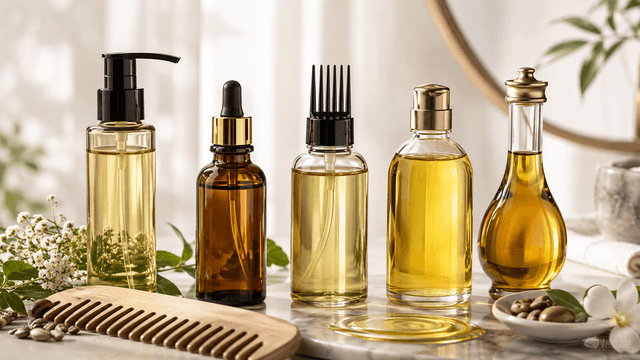
Hair oils are a familiar part of many haircare routines. From coconut and almond oil to castor oil and rosemary-based blends, these products are commonly used before washing, on hair lengths, or as part of a scalp-care routine.
However, buying a suitable hair oil is only one part of using it responsibly.
How you store the bottle, handle the dispenser, and protect the product from heat, light, moisture, and contamination can influence its condition over time.
A bottle left open in a humid bathroom may be exposed to different conditions from one stored in a closed cupboard. Similarly, a dropper repeatedly touching the scalp may introduce unwanted material into the container.
Good hair oil storage involves three essential habits: maintaining dispenser hygiene, protecting the oil from unsuitable environmental conditions, and checking the product for changes before use.
This guide explains how to store different hair oil formats, keep pumps and droppers clean, recognize potential deterioration, and avoid common storage mistakes.
Why Proper Hair Oil Storage Matters
Hair oils contain ingredients that can change over time, particularly when exposed to unsuitable storage conditions.
Many plant-derived oils contain fatty acids that can undergo oxidation.
Oxidation is a chemical process that may gradually affect an oil’s smell, composition, and quality.
The speed of deterioration varies depending on several factors, including:
- The type of oil
- Its fatty acid composition
- The presence of antioxidants
- Exposure to oxygen
- Storage temperature
- Exposure to light
- Packaging materials
- The complete formulation
- Whether the product has been opened
Not every hair oil behaves identically.
For example, an oil containing a high proportion of certain unsaturated fatty acids may behave differently from a more oxidation-resistant formulation.
Commercial hair oils may also include stabilizing ingredients, fragrances, or antioxidants that influence their storage requirements.
Therefore, there is no single storage rule or shelf-life estimate that applies equally to every hair oil.
The manufacturer’s instructions should always be your starting point.
What Happens When Hair Oil Is Stored Incorrectly?
Improper storage can create several problems.
Some are related to the oil itself, while others involve packaging or contamination.
1. Oxidation
When susceptible oil components react with oxygen, their chemical composition can change.
This may eventually produce an unpleasant smell or other signs of deterioration.
Oxidation can occur gradually even when the bottle appears normal.
Closing the container properly and avoiding unnecessary heat and light can help limit conditions that accelerate deterioration.
2. Changes in Texture
Some oils naturally become thicker or more solid at lower temperatures.
Others remain liquid across a wider temperature range.
A texture change is not automatically evidence that an oil has spoiled.
However, unexpected separation, sediment, or consistency changes should be evaluated against the manufacturer’s guidance.
3. Fragrance Changes
Hair oils may contain naturally occurring aromatic compounds or added fragrance ingredients.
Their smell can change as the formulation ages.
A noticeable rancid or otherwise unusual odor is a reason to stop using the product until its condition has been assessed.
4. Contamination
Contamination can occur when dirt, water, or other unwanted materials enter the container.
Common sources include:
- Wet hands
- Unclean droppers
- Direct contact between the dispenser and the scalp
- Dirty bottle openings
- Improperly cleaned refillable containers
- Adding other ingredients to the original product
Oil-based products do not all present the same microbial risks, and contamination risk depends on the formulation.
However, keeping packaging clean and dry is a sensible precaution.
5. Packaging Problems
Leaking caps, damaged pumps, or cracked containers can expose the product to unsuitable conditions.
A leaking hair oil bottle can also stain surrounding surfaces and attract dirt.
Inspecting the container regularly is part of good product care.
The Best Place to Store Hair Oil
For many commercial hair oils, a cool, dry location away from direct sunlight is a practical choice.
However, storage requirements should always follow the manufacturer’s label.
Choose a Stable Temperature
Avoid exposing the bottle to repeated temperature extremes.
For example, storing hair oil near a hot window may subject it to substantial temperature changes during the day.
A closed cupboard in a reasonably temperature-stable room is often more suitable.
Keep Away From Direct Sunlight
Sunlight can contribute to the deterioration of certain light-sensitive ingredients.
Even when a bottle is made from tinted plastic or amber glass, it is sensible to follow the product’s storage guidance.
Opaque packaging can help reduce light exposure, but it does not eliminate every storage concern.
Avoid Unnecessary Moisture
Bathrooms can become humid, particularly when hot showers are used frequently.
A sealed commercial oil may tolerate ordinary bathroom storage, depending on its formulation and packaging.
However, keeping bottles away from direct splashes and standing water helps reduce avoidable contamination.
Store Bottles Upright
Upright storage can help reduce leakage, particularly for pump bottles, flip-top caps, and droppers.
Some products may specify other storage arrangements.
Follow their instructions.
Keep Caps Securely Closed
A loose cap may allow air, dust, or moisture to enter the bottle.
Close the dispenser or lid immediately after use.
This small habit can help maintain the product’s intended storage conditions.
Is It Safe to Store Hair Oil in the Bathroom?
Many people keep hair oil beside shampoo, conditioner, and other grooming products.
This is convenient, but the bathroom environment deserves consideration.
Bathrooms may experience:
- High humidity
- Frequent temperature changes
- Water splashes
- Wet countertops
- Limited ventilation
- Repeated handling with damp hands
These conditions do not automatically make bathroom storage unsafe.
However, they can increase the importance of keeping containers tightly closed and avoiding direct water exposure.
When Bathroom Storage May Be Practical
A properly sealed bottle kept inside a dry cabinet may be suitable if the product label permits ordinary room-temperature storage.
When Another Location May Be Better
Consider storing the oil elsewhere if:
- The bottle is routinely exposed to shower water.
- The bathroom becomes extremely hot or humid.
- The dispenser frequently remains wet.
- The product instructions specify a dry storage location.
- The bottle is regularly left uncapped.
A bedroom dressing-table drawer or closed cupboard may provide a more consistent environment.
The main objective is not to avoid bathrooms entirely. It is to avoid unnecessary exposure to heat, water, and contamination.
Understanding Hair Oil Packaging Types
Hair oils are sold in several packaging formats.
Each format requires slightly different handling.
1. Screw-Cap Bottles
Screw-cap bottles are common for coconut oil, almond oil, and traditional hair oils.
Their main advantage is simple construction.
However, the opening may become oily during pouring.
After use:
- Wipe external residue with a suitable clean material.
- Check that the cap and threads are free from excessive buildup.
- Close the cap securely.
- Store the bottle upright.
Avoid touching the bottle opening directly to your scalp or hands during application.
2. Pump Bottles
Pump dispensers allow users to release oil without pouring directly from the container.
They can be convenient for everyday haircare.
However, oil may collect around the pump opening.
This residue can attract dust and make the dispenser sticky.
Clean visible external residue according to the manufacturer’s instructions.
Avoid forcing water into the pump mechanism.
3. Dropper Bottles
Dropper packaging is often used for scalp oils and concentrated blends.
It can support targeted dispensing along hair partings.
However, the dropper tip may come close to the skin.
Avoid unnecessary contact between the dropper and the scalp, hair, fingers, or other surfaces.
Return the dropper to the bottle promptly after dispensing.
4. Flip-Top Bottles
Flip-top caps can make it easy to dispense oil in small amounts.
Check whether the opening closes properly after every use.
A damaged hinge or poorly sealed opening may lead to leaks.
5. Roll-On Applicators
Some scalp or hairline products use roll-on packaging.
These applicators intentionally contact the skin.
Follow the manufacturer’s hygiene instructions, avoid sharing the product, and discontinue use if the applicator or formula shows concerning changes.
6. Jars and Wide-Mouth Containers
Some oils, particularly coconut-based products, are sold in jars.
Wide openings can make it easier to remove solidified oil.
However, they also require careful handling.
Use clean, dry utensils or hands as directed, and avoid introducing shower water into the container.
How to Keep Hair Oil Droppers Hygienic
Droppers are useful for precise application, but they can introduce contamination if handled carelessly.
A simple routine helps keep them in suitable condition.
Step 1: Begin With Clean Hands
Wash and dry your hands before using the oil.
This reduces the likelihood of transferring dirt or unwanted material to the dispenser.
Step 2: Open the Bottle Carefully
Remove the dropper without allowing its tip to touch the bathroom counter or other surfaces.
Keep the bottle stable and upright.
Step 3: Dispense Without Touching the Scalp
Hold the dropper above the intended area, following the product’s application instructions.
Avoid scraping the tip against the scalp or dragging it through the hair.
This is especially important when a dropper will return to the original container.
Step 4: Avoid Touching the Tip With Your Fingers
If excess oil remains on the dropper, do not wipe the tip using unwashed fingers.
Follow the product’s guidance for handling and cleaning.
Step 5: Return the Dropper Promptly
Place the dropper back into the bottle without setting it down on an unclean surface.
Step 6: Close Securely
Tighten the cap according to the packaging design.
Avoid overtightening fragile glass components.
Step 7: Inspect for Damage
Check for a cracked glass pipette, loose bulb, damaged cap, or unexpected leakage.
Do not continue using a broken dropper.
Should a Hair Oil Dropper Touch Your Scalp?
For a conventional dropper that returns to the product bottle, avoiding contact is generally a sensible hygiene practice.
A dropper touching the scalp can collect oils, skin flakes, and other materials.
Returning it to the container may introduce those materials into the remaining product.
Instead, dispense the recommended amount without touching the scalp directly.
However, some products use specialized applicator tips designed for skin contact.
For those products, follow the manufacturer’s directions rather than applying a universal rule.
Do not attempt to modify the applicator or use an unapproved replacement.
How to Clean a Hair Oil Pump Dispenser
Pump dispensers can develop visible oil buildup around their openings.
Cleaning should focus on accessible external residue unless the manufacturer specifies a more extensive method.
Step 1: Inspect the Pump
Look for dried or sticky oil around the nozzle.
Check whether the pump dispenses normally.
Step 2: Close or Lock the Pump if Possible
Some pumps include a locking mechanism.
Use it according to the packaging instructions.
Step 3: Wipe External Residue
Gently remove oil from the outside of the nozzle using a suitable clean, dry cloth.
Avoid pushing residue into the pump.
Step 4: Check the Bottle Neck
Oil can collect around the area where the pump connects to the bottle.
Wipe external buildup carefully.
Step 5: Avoid Pouring Water Into the Pump
Do not flush a commercial oil pump with water unless the manufacturer specifically instructs you to do so.
Water may enter the remaining product or interfere with the dispenser.
Step 6: Check for Leaks
If oil continues leaking from a closed dispenser, inspect the packaging.
Contact the manufacturer when necessary.
Do not continue using packaging that is cracked or cannot be sealed properly.
Hair Oil Bottle Hygiene: Common Sources of Contamination
Product contamination is not always visible.
Many problems arise from ordinary handling habits.
Wet Fingers
Dipping wet fingers into a wide-mouth oil container can introduce water.
Use clean, dry hands or a suitable dry utensil.
Shared Applicators
Sharing scalp applicators may transfer skin material between users.
For products that contact the scalp directly, individual use is preferable.
Dirty Countertops
Placing droppers or caps on wet or dirty surfaces creates unnecessary contact with contaminants.
Use a clean, dry area during application.
Mixing Multiple Oils in the Original Bottle
Adding another oil, fragrance, or homemade ingredient changes the original formulation.
It may also affect stability and product safety.
Unless a manufacturer specifically permits mixing, avoid modifying the contents of a commercial bottle.
Returning Unused Oil
If you pour too much oil into your palm or a separate bowl, do not return the leftover portion to the original container.
It may have contacted your hands or other surfaces.
Instead, dispense smaller amounts initially to reduce waste.
Leaving Bottles Open
An open bottle is more exposed to dust, air, and accidental splashes.
Close the container as soon as practical.
Does Hair Oil Expire?
Yes. Hair oils can deteriorate over time, and commercial hair oil products generally have a stated expiry date, shelf life, or period-after-opening guidance where applicable.
The usable life depends on the specific formulation and storage conditions.
A pure single-ingredient oil may behave differently from a blend containing multiple botanical extracts, fragrance ingredients, and other additives.
Do not assume that an oil remains safe indefinitely simply because it does not contain water.
Expiry Date vs Period After Opening
These two terms describe different aspects of product use.
Expiry date: The date through which the manufacturer indicates the product should remain suitable under specified storage conditions.
Period after opening: Where provided, the recommended period of use after the container is first opened.
The presence and format of these markings depend on the product and applicable labelling requirements.
Follow whichever relevant guidance applies to the product.
Why Opening the Bottle Matters
Opening exposes the contents to air and creates opportunities for handling-related contamination.
Repeated opening may increase these exposures.
However, the actual effect depends on the packaging and formulation.
Should You Use Hair Oil After Its Expiry Date?
It is best to follow the manufacturer’s expiry guidance.
A product that looks or smells normal may still have changed in ways that cannot be detected easily.
Do not rely only on appearance to override the labelled expiry date.
How to Identify Potentially Rancid Hair Oil
Rancidity is associated with chemical changes in fats and oils, particularly oxidation or certain other degradation processes.
Not all changes are easy to identify at home.
However, several observations may indicate that a product should no longer be used.
1. An Unusual Odor
An unexpected sharp, stale, sour, or otherwise unpleasant odor may indicate deterioration.
Compare the smell with how the product normally behaves.
Do not assume that every strong-smelling hair oil is rancid.
Some herbal blends naturally have distinctive aromas.
2. Unexpected Colour Changes
A noticeable change in colour may be concerning, particularly if accompanied by another change.
However, botanical formulations can have natural colour variation.
Check with the manufacturer if unsure.
3. Unexpected Separation
Some oil blends may naturally settle or separate.
Other products are designed to remain uniform.
Follow the label’s instructions, including any recommendation to shake before use.
If an unexpected separation develops, do not attempt to restore the product by adding ingredients.
4. Unusual Sediment or Particles
Certain botanical oils may contain expected suspended material.
However, unexpected particles or suspicious growth should not be ignored.
5. Changed Texture
A product that becomes unusually sticky, thick, or otherwise different from its normal state may require closer attention.
Remember that temperature can affect texture without necessarily causing spoilage.
6. Skin Irritation After Previously Comfortable Use
If a familiar oil begins causing irritation, discontinue use and investigate.
Irritation alone does not prove the oil has spoiled, but it is a reason not to continue applying it without consideration.
Never taste hair oil to determine whether it has deteriorated.
Is Solidified Coconut Oil Spoiled?
Not necessarily.
Coconut oil can change between liquid and solid states as its temperature changes.
This is a normal physical property of the oil.
A bottle that becomes cloudy or solid in a cooler room is not automatically spoiled.
Similarly, liquefaction in warmer conditions does not by itself indicate deterioration.
However, extreme heat and poor storage conditions can still affect product quality.
What Should You Do if Coconut Oil Solidifies?
Follow the manufacturer’s instructions.
If gentle warming is permitted, avoid overheating the container.
Do not place a sealed bottle directly over a flame.
Do not use a microwave unless the manufacturer specifically confirms that the packaging and product are suitable.
Avoid repeatedly exposing oil to unnecessarily high temperatures.
Does Solidification Affect Every Hair Oil?
No.
Different oils have different physical properties.
Almond, castor, coconut, and blended hair oils may behave differently at the same temperature.
Do not judge all oils according to how coconut oil behaves.
Does Refrigerating Hair Oil Help?
Refrigeration is not universally necessary or preferable.
Some oils may become cloudy, thick, or solid when refrigerated.
Certain products may also have specific storage requirements that make refrigeration unsuitable.
For most commercial hair oils, the manufacturer’s storage instructions should determine whether refrigeration is appropriate.
When Refrigeration May Be Recommended
Some specialized oils or formulations may require cooler storage conditions.
If the label specifies refrigeration, follow that guidance.
When Refrigeration May Be Inconvenient
Cold storage can make certain oils difficult to dispense.
A thickened product may not flow easily through a narrow pump or dropper.
Repeated temperature changes may also be undesirable for particular formulations.
Can You Refrigerate Hair Oil After Opening?
Only when appropriate for the specific product.
Do not assume refrigeration automatically extends its safe usable life beyond the manufacturer’s stated guidance.
How Indian Weather Can Affect Hair Oil Storage
India experiences a wide range of temperatures and humidity conditions.
Storage that works well in one season may need greater attention during another.
Summer Heat
High temperatures can affect the condition of certain oils over time.
Avoid leaving bottles:
- On sunny windowsills
- Inside parked cars
- Near cooking appliances
- Beside heaters
- In locations exposed to direct afternoon sunlight
A shaded, temperature-stable cupboard is often a practical choice.
Monsoon Humidity
During humid weather, bathrooms and storage areas may remain damp for longer periods.
Focus on keeping packaging closed and preventing water from entering the container.
Wipe external moisture from the bottle when necessary.
Winter Conditions
Certain oils may thicken or solidify in cooler weather.
Do not immediately assume the product has expired.
Check whether the change matches the oil’s normal physical properties.
Air-Conditioned Rooms
A relatively stable indoor temperature may provide convenient storage conditions for many products.
However, direct airflow, condensation, and the manufacturer’s instructions should still be considered.
Glass vs Plastic Hair Oil Bottles
Packaging material can influence convenience, weight, durability, and certain storage considerations.
Neither glass nor plastic is automatically the best choice for every formulation.
| Feature | Glass bottle | Plastic bottle |
|---|---|---|
| Weight | Usually heavier | Usually lighter |
| Breakage | Can shatter if dropped | Often more impact-resistant |
| Light protection | Depends on colour and opacity | Depends on colour and opacity |
| Travel convenience | May require extra protection | Often easier to carry |
| Chemical compatibility | Depends on container and closure | Depends on plastic type and formulation |
| Dispenser options | Droppers, caps, pumps | Caps, pumps, nozzles |
The suitability of packaging depends on the complete container system, including seals, caps, and material compatibility.
Are Amber Glass Bottles Better?
Amber glass can reduce exposure to certain wavelengths of light.
This may be useful for light-sensitive formulations.
However, amber packaging does not eliminate the effects of heat, oxygen, or contamination.
It should not be treated as a guarantee of extended shelf life.
Are Plastic Bottles Unsafe?
No.
Appropriate cosmetic-grade plastic packaging can be suitable for many hair oil formulations.
The important consideration is whether the packaging has been selected and tested for the intended contents.
Do not transfer a product into an arbitrary household plastic bottle without considering compatibility and hygiene.
Should You Transfer Hair Oil Into a Smaller Bottle?
Decanting hair oil into a travel-size container may be convenient, but it introduces handling and storage considerations.
A transfer can expose the product to air, new packaging materials, and possible contamination.
When Decanting May Be Useful
A small bottle may be easier to carry during travel or keep in a gym bag.
However, a manufacturer’s travel-size version may be preferable when available.
Choose Compatible Packaging
Use a container intended for cosmetic oils.
Avoid reusing food or chemical containers.
The container should close securely and be compatible with the formulation.
Clean and Dry the Container Correctly
If using a reusable bottle, follow its cleaning instructions.
It must be completely dry before oil is added.
Residual water can alter the contents.
Transfer Only What You Need
Avoid repeatedly moving the same oil between multiple containers.
Each transfer creates another opportunity for unwanted exposure.
Label the Container Clearly
Record the product name and relevant expiry information.
Do not rely on memory when storing several similar-looking oils.
Avoid Mixing Old and New Products
Do not top up a bottle containing unknown or deteriorated residue.
Follow the container’s cleaning requirements before reuse.
Be Careful With Essential-Oil Blends
Concentrated essential oils may be incompatible with certain packaging materials.
Do not assume a bottle suitable for ordinary carrier oil is appropriate for every concentrated aromatic product.
How to Store Different Types of Hair Oils
Different oil categories may require different considerations.
Coconut Oil
Coconut oil can solidify in cooler conditions.
This change is usually physical rather than proof of spoilage.
Store according to the product instructions and avoid unnecessary extreme heat.
Almond Oil
Almond oil contains unsaturated fatty acids that may undergo oxidation.
Protecting it from excess heat, light, and air exposure is sensible.
Follow the labelled expiry date and storage guidance.
Castor Oil
Castor oil has a naturally thick texture.
Its viscosity can make dispensing from certain pumps or droppers less convenient.
Do not add water to thin it.
Avoid using excessive heat to force it into a more liquid state.
Rosemary-Based Hair Oils
Rosemary-based hair oils vary substantially.
Some are ready-to-use blends containing rosemary extracts or appropriately diluted essential oil.
Others may be concentrated essential-oil products requiring dilution.
These categories must not be confused.
Concentrated rosemary essential oil should not be applied to the scalp undiluted unless a qualified professional and the product instructions specifically support that use.
Follow the product’s dilution, storage, and safety guidance.
Bhringraj and Other Herbal Oil Blends
Herbal hair oils may contain multiple plant extracts and carrier oils.
Storage requirements depend on the complete formulation.
Do not assume a particular shelf life solely because the product is described as herbal or traditional.
Blended Hair Serums and Oils
Some products marketed as hair oils include silicones, esters, fragrances, or other cosmetic ingredients.
Their storage needs may differ from those of pure plant-derived oils.
Treat the finished product as its own formulation and follow the label.
Can You Add Essential Oils to a Commercial Hair Oil Bottle?
It is generally better not to alter the original commercial formulation.
Adding an essential oil may change:
- Ingredient concentration
- Fragrance intensity
- Irritation potential
- Packaging compatibility
- Product stability
- The manufacturer’s intended usage
Essential oils are concentrated substances and can cause contact irritation or allergic reactions.
Do not assume that adding a few drops is automatically safe.
If you want to use an essential-oil blend, choose an appropriately formulated product or obtain qualified guidance regarding safe dilution and suitability.
Avoid experimenting with concentrated essential oils on an irritated or damaged scalp.
Can You Store Homemade Hair Oils the Same Way?
Homemade preparations introduce additional uncertainty because they usually have not undergone the same stability and preservation testing as commercial products.
For example, placing fresh herbs, water-containing ingredients, or other materials into oil can introduce contamination risks.
Do not assume that homemade hair oil is shelf-stable because it contains oil.
Why Homemade Infusions Need Caution
Fresh botanical ingredients may contain moisture.
Improper preparation and storage can allow unwanted microbial growth or deterioration.
Heating or filtering an infusion at home does not automatically guarantee safety.
Avoid Guessing Shelf Life
Do not assign an arbitrary expiry period to a homemade mixture without appropriate evidence.
Do Not Store Questionable Mixtures
If a homemade product develops an unusual smell, visible contamination, or other concerning changes, discard it.
Do not attempt to rescue it by adding fragrance or heating it again.
For routine haircare, a properly manufactured commercial product with clear ingredients and storage instructions may provide more predictable handling.
Hair Oil Storage During Travel
Travel can expose products to heat, pressure changes, and rough handling.
A simple packing routine can reduce leakage and contamination.
Check the Cap Before Packing
Make sure the bottle closes properly.
Inspect for cracks or damaged seals.
Keep the Bottle Upright When Practical
A small travel organizer can help hold bottles in position.
Use a Protective Pouch
Pack oil bottles separately from clothing, electronics, and important documents.
A secondary leak-resistant pouch may contain accidental spills, but it is not a substitute for a properly sealed bottle.
Avoid Leaving Oil in a Hot Vehicle
Cars can become very hot when parked in sunlight.
Do not leave cosmetic oils exposed to unnecessary heat.
Avoid Direct Applicator Contact
Travel does not eliminate the need for clean hands and dispenser hygiene.
Follow Airline Rules
Carry-on liquid restrictions vary by route, airport, and security authority.
Check the applicable rules before flying.
Check the Product After Travel
Inspect the bottle for leakage, damage, or unexpected changes before using it again.
How to Organize a Hair Oil Storage Area
A small dedicated storage space can make daily handling easier.
You do not need expensive organizers.
A practical setup may include:
- A clean, dry shelf
- A washable tray for bottles
- Adequate space to keep containers upright
- A separate area for clean applicators
- Protection from direct sunlight
- Easy access to expiry labels
Keep Oils Away From Unnecessary Clutter
Crowded shelves increase the chance of bottles being knocked over.
Allow enough space to handle each container safely.
Separate Hair Oils From Cleaning Chemicals
Avoid storing cosmetic products next to household cleaning agents where spills or accidental mix-ups are possible.
Keep Products Out of Children’s Reach
Some hair oils contain fragrances or essential oils that are not intended for ingestion.
Store products securely according to their safety instructions.
Maintain Visibility of Expiry Dates
Do not cover expiry information with decorative labels unless you preserve it elsewhere.
Rotate Products Sensibly
If you own several hair oils, use them according to their expiry and period-after-opening guidance.
Avoid repeatedly purchasing new bottles while older ones remain unused.
Common Hair Oil Storage Mistakes
Mistake 1: Leaving the Bottle in Direct Sunlight
Prolonged sunlight exposure may accelerate changes in certain formulations.
Better approach: Store the bottle in a shaded location as directed.
Mistake 2: Keeping the Cap Loose
A loose cap increases opportunities for air exposure, dust, and accidental spills.
Better approach: Close the bottle securely after every use.
Mistake 3: Touching the Dropper to the Scalp
A conventional dropper may collect material from the skin.
Better approach: Dispense without unnecessary contact unless the applicator is designed for it.
Mistake 4: Returning Unused Oil
Oil poured into a hand or bowl may have been exposed to contamination.
Better approach: Dispense smaller amounts and do not return leftovers.
Mistake 5: Adding Water to Thick Oil
Water does not reliably mix with ordinary oil and may introduce contamination.
Better approach: Follow the manufacturer’s instructions for handling thickened products.
Mistake 6: Ignoring the Expiry Date
A normal appearance does not prove that a product remains suitable indefinitely.
Better approach: Follow the labelled expiry guidance.
Mistake 7: Mixing Several Oils in One Bottle
Combining formulations may affect their intended properties.
Better approach: Keep commercial products in their original containers unless mixing is expressly permitted.
Mistake 8: Cleaning Pumps With Excess Water
Water can accidentally enter the bottle.
Better approach: Clean accessible external areas according to the packaging instructions.
Mistake 9: Using Damaged Packaging
A cracked bottle or leaking pump may expose the product to unwanted conditions.
Better approach: Stop using damaged packaging and contact the manufacturer when appropriate.
Mistake 10: Assuming Natural Oils Cannot Spoil
Plant-derived oils can deteriorate.
Better approach: Treat natural and commercial oils with appropriate storage care.
Does Proper Storage Improve Hair Growth?
Proper storage helps maintain the product’s intended condition.
It does not automatically make a hair oil more effective at growing hair.
Hair growth depends on numerous biological factors.
Some products may have evidence supporting specific uses, while others are primarily cosmetic.
Storage practices cannot transform a cosmetic oil into a clinically established hair-loss treatment.
Be cautious of claims suggesting that refrigeration, sunlight exposure, or special bottle materials can independently activate hair-growth benefits.
If you experience persistent thinning, sudden shedding, or patchy hair loss, seek professional assessment.
Hair Oil Hygiene for Sensitive Scalps
People with sensitive or irritated scalps may need to take additional precautions.
Avoid Sharing Applicators
Personal applicators reduce unnecessary contact with other people’s scalp oils and skin material.
Do Not Apply Oils to Infected or Broken Skin Without Guidance
Certain oils or fragrances may worsen irritation.
If you have an active scalp infection, open wounds, or significant inflammation, consult a healthcare professional before applying a new product.
Check for Fragrance Sensitivity
Some hair oils contain essential oils or added fragrance.
These ingredients can cause irritation or allergic contact dermatitis in susceptible individuals.
Stop Using Products That Cause Reactions
Persistent itching, burning, swelling, or redness should not be dismissed as evidence that an oil is working.
Discontinue the suspected product and seek appropriate advice.
Avoid Using a Deteriorated Product
If the oil has an unusual odor, appears contaminated, or has exceeded its labelled usable period, do not continue applying it simply to avoid waste.
Frequently Asked Questions
1. What is the best way to store hair oil?
For many products, a cool, dry location away from direct sunlight is appropriate.
However, always follow the manufacturer’s storage instructions.
2. Can I keep hair oil in the bathroom?
It may be acceptable for a properly sealed product if the label permits it.
Avoid direct water exposure, excessive heat, and persistent dampness.
3. Does hair oil need to be refrigerated?
Not usually unless the manufacturer recommends refrigeration.
Some oils may thicken or solidify at low temperatures.
4. Can hair oil go bad?
Yes.
Hair oils can deteriorate through oxidation, contamination, or other changes.
Follow expiry guidance and discontinue products showing concerning changes.
5. How can I tell if hair oil is rancid?
An unexpected rancid odor or other unusual changes may indicate deterioration.
However, appearance and smell alone cannot reliably establish product safety.
6. Is solid coconut oil spoiled?
Not necessarily.
Coconut oil naturally solidifies at lower temperatures.
This physical change does not automatically indicate spoilage.
7. Should I keep hair oil in a glass bottle?
Glass may be suitable for some formulations, but compatible cosmetic-grade plastic can also be appropriate.
The complete packaging design and manufacturer’s instructions matter.
8. Are amber bottles better for hair oils?
Amber packaging can reduce certain light exposures.
However, it does not eliminate oxidation, heat-related changes, or contamination risks.
9. Can a hair oil dropper touch my scalp?
For conventional droppers that return to the container, avoiding direct scalp contact is a sensible hygiene practice.
Follow specific instructions for applicators designed to touch the scalp.
10. How should I clean a hair oil pump?
Remove accessible external residue according to the manufacturer’s instructions.
Avoid introducing water into the dispenser or product bottle.
11. Can I add water to thick hair oil?
Do not add water unless the product instructions explicitly permit it.
Doing so can alter the formulation and introduce contamination concerns.
12. Can I combine two different hair oils in one bottle?
Mixing finished commercial products may change their stability and intended use.
Avoid altering original formulations without appropriate guidance.
13. Does hair oil expire after opening?
Opening may affect a product’s recommended period of use.
Follow the expiry date and period-after-opening guidance where provided.
14. Can I use expired hair oil if it smells normal?
It is best to follow the labelled expiry guidance.
A normal smell does not guarantee that a product remains suitable.
15. Can I transfer hair oil into a travel bottle?
Yes, if appropriate for the product, but use clean, dry, compatible packaging and preserve relevant product identification and expiry details.
16. Should I wash a hair oil dropper after every use?
Follow the manufacturer’s instructions.
Avoid introducing water or cleaning chemicals into the original product.
17. Can sunlight damage hair oil?
Light exposure can contribute to changes in certain oils and ingredients.
Store the product away from direct sunlight when recommended.
18. Can I warm coconut oil before use?
Some coconut oils may be gently warmed according to their instructions.
Avoid overheating, open flames, or unsafe heating methods.
19. Is homemade hair oil shelf-stable?
Not automatically.
Homemade preparations can have uncertain stability and contamination risks, especially when water-containing ingredients are involved.
20. Does a dirty dispenser affect product quality?
An unclean dispenser can introduce unwanted material or make application less reliable.
Good dispenser hygiene reduces avoidable handling-related problems.
Final Hair Oil Storage Checklist
Before storing or using your hair oil, check the following:
- Read the manufacturer’s storage instructions.
- Keep the bottle away from direct sunlight when recommended.
- Avoid unnecessary heat exposure.
- Store the bottle upright when appropriate.
- Close the cap securely after use.
- Keep water out of the container.
- Use clean, dry hands during application.
- Avoid unnecessary dropper contact with the scalp.
- Clean visible pump or nozzle residue appropriately.
- Do not return unused oil to the original bottle.
- Avoid adding homemade ingredients or water.
- Check the expiry date and period-after-opening guidance.
- Inspect the bottle for cracks or leaks.
- Monitor the product for unexpected changes.
- Use suitable packaging when traveling.
- Keep products away from children and pets.
- Discontinue oils that appear contaminated or cause irritation.
Final Thoughts
Hair oil storage is an easily overlooked part of a good haircare routine.
Many people spend time comparing oils and choosing ingredients but pay less attention to how the product is handled after opening.
Yet simple practices can help maintain the condition of the product throughout its intended usable life.
Keep bottles securely closed, avoid unnecessary heat and direct sunlight, maintain clean dispensers, and prevent water or other materials from entering the container.
For dropper bottles, avoid unnecessary contact between the applicator and the scalp.
For pump bottles, remove visible external residue without introducing water into the mechanism.
It is equally important to understand that hair oils do not all behave the same way.
Coconut oil may solidify in cooler conditions, while certain unsaturated oils may be more sensitive to oxidation.
Herbal blends, essential-oil formulations, and commercial hair serums can have different storage requirements.
For this reason, product-specific instructions should always take priority over general advice.
The best hair oil storage routine is simple: protect the formula, keep the applicator hygienic, follow expiry guidance, and avoid unnecessary contamination.
These habits can make haircare more convenient while reducing preventable product waste and handling problems.
Physical Glow editorial note: This article provides general cosmetic storage and haircare information. Storage requirements vary by oil composition, packaging, and formulation. Follow product-specific instructions and consult a qualified dermatologist for persistent scalp irritation, suspected allergic reactions, or unexplained hair loss.