Hair Oil Buying Guide: How to Choose for Your Hair and Scalp
Learn how to choose a hair oil by considering your hair and scalp needs, oil texture, ingredients, application method, wash routine and personal preferences.
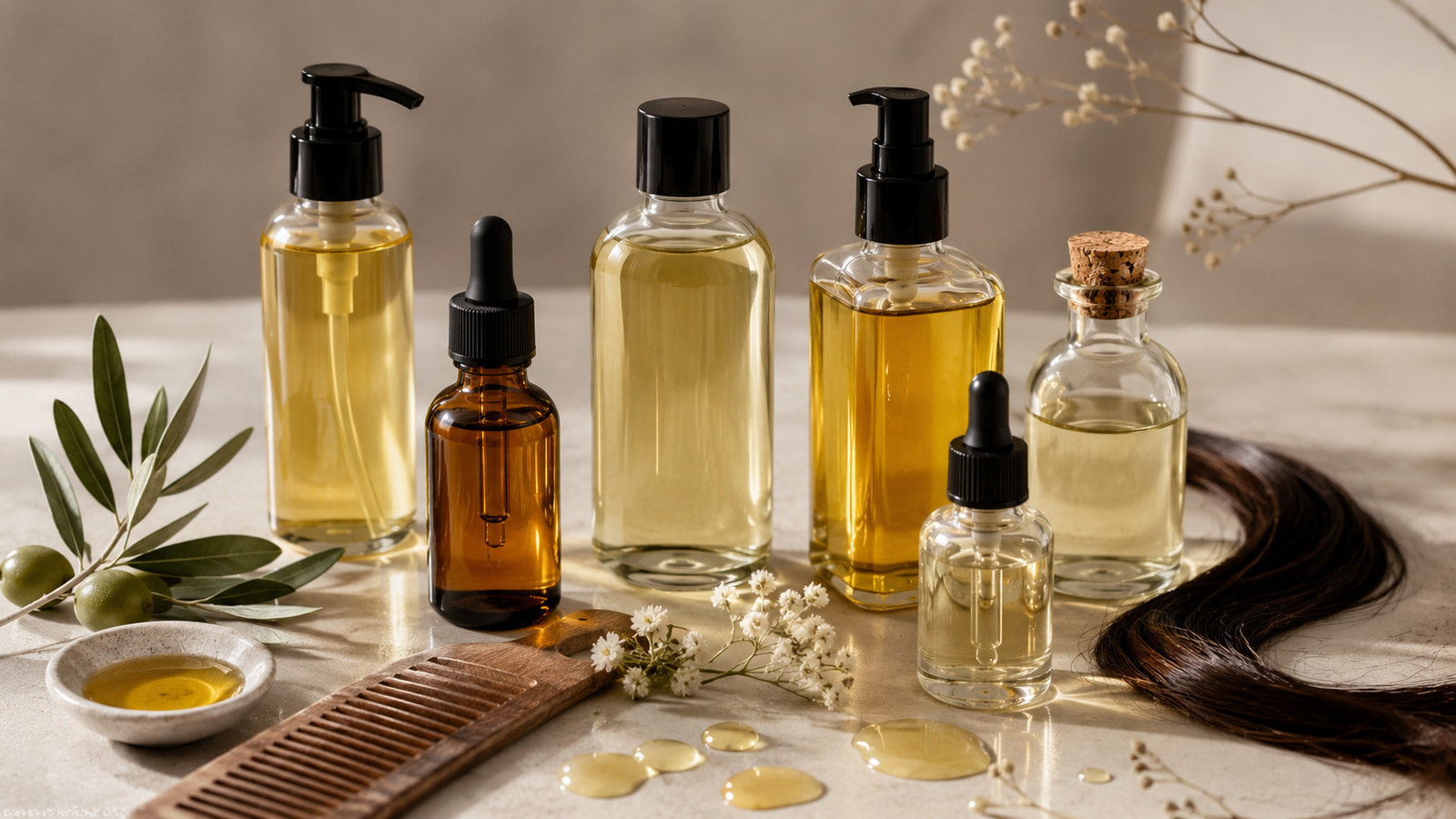
Hair oil is one of the oldest and most familiar parts of a haircare routine, particularly in India. Yet choosing one has become surprisingly complicated.
A single shelf can contain coconut oils, herbal blends, Ayurvedic-positioned oils, lightweight finishing oils, rosemary blends, amla oils, argan oils and products promising everything from softer hair to reduced hair fall.
The problem is that “hair oil” is not one single type of product.
One person may use oil before shampooing. Another may massage it into the scalp. Someone else may apply only a few drops to dry ends after styling.
Those are very different uses, and the best product for one may be completely unsuitable for another.
The most useful question is therefore not:
“Which hair oil is best?”
It is:
“Where will I use the oil, what do I want it to do, and what texture will fit my hair, scalp and washing routine?”
This guide explains how to make that decision without relying only on ingredient trends, traditional claims or marketing promises.
First Decide How You Want to Use Hair Oil
Before comparing brands or ingredients, decide what role the oil will play in your routine.
Pre-Shampoo Oiling
This is one of the most practical ways to use hair oil.
Oil is applied to the hair before washing and then removed with shampoo.
People may use it to:
- reduce the rough feeling that can follow shampooing;
- make dry lengths feel softer;
- improve manageability;
- reduce friction during washing;
- support a traditional haircare routine.
For pre-shampoo use, the important characteristics are:
- how easily the oil spreads;
- how much you need;
- whether it feels excessively heavy;
- how easily your normal shampoo removes it.
A very thick oil may work well for coarse hair but require too much cleansing for fine hair.
If you regularly need several aggressive shampoo rounds to remove your oil, you may be applying too much or using a formula that is unnecessarily heavy for your hair.
Scalp Massage
Many people associate hair oil with scalp massage.
A healthy scalp may tolerate occasional oiling comfortably, and massage itself can be relaxing.
However, the scalp is skin, and not every scalp condition improves with oil.
If your scalp is:
- persistently itchy;
- inflamed;
- very flaky;
- affected by recurrent dandruff;
- sore;
- developing unexplained patches of hair loss;
adding more oil is not automatically the right solution.
In those situations, appropriate scalp care or professional assessment can be more useful than repeatedly changing cosmetic oils.
Applying Oil to Dry Ends
A small amount of oil can also work as a finishing product.
Used carefully on the ends, it may:
- increase shine;
- smooth roughness;
- reduce friction;
- make dry ends feel softer;
- control some flyaways.
For this use, lighter formulas are usually easier to control.
A traditional heavy pre-wash oil can be used, but it is much easier to accidentally apply too much.
Overnight Oiling
Leaving oil on overnight is common in traditional routines, but it is not a requirement for every product.
If applying an oil for one or two hours gives you the result you want, there is no universal reason it must remain on your hair all night.
Long overnight application can also transfer oil to:
- your face;
- pillowcase;
- neck;
- forehead.
That may matter if your skin is acne-prone or easily irritated.
Choose the duration based on comfort and results rather than assuming that more time always means more benefit.
Understand the Main Types of Hair Oil
Different hair oils can behave very differently even when they make similar claims.
Single-Oil Products
These contain one main oil or a very simple formulation.
Examples may include:
- coconut oil;
- sesame oil;
- almond oil;
- mineral oil.
Single-oil products can be:
- easy to understand;
- inexpensive;
- practical for pre-shampoo use.
The trade-off is that they may not have the elegant texture or fragrance of a cosmetic blend.
Multi-Oil Blends
These combine several oils and may also contain:
- botanical extracts;
- herbs;
- fragrance;
- vitamins;
- conditioning ingredients.
A blend can provide a more pleasant texture or sensory experience, but more oils do not automatically mean better performance.
A formula containing ten botanical ingredients is not inherently superior to one containing two well-chosen ingredients.
Lightweight Cosmetic Oils
These are usually designed to spread easily and leave less residue.
They may combine:
- plant oils;
- lightweight emollients;
- silicones;
- esters.
These products are often easier to use after washing or as a finishing step.
Someone who dislikes traditional heavy oiling may prefer this format.
Herbal or Ayurvedic-Positioned Hair Oils
These remain very popular and may contain combinations of:
- amla;
- bhringraj;
- brahmi;
- herbs;
- botanical extracts;
- carrier oils.
They can fit well into a traditional routine, but the presence of many herbs should not automatically be interpreted as evidence that the product will treat hair loss or scalp disease.
Evaluate them using the same practical criteria as any other product:
- complete formula;
- fragrance;
- texture;
- application;
- washability;
- price;
- intended use.
What Ingredients Should You Look for?
The ingredient list can help, but it should be interpreted in context.
Coconut Oil
Coconut oil is widely used for pre-shampoo hair oiling.
It has particular affinity for the hair fibre compared with many oils and can work well for people who like richer traditional oiling.
It may suit:
- dry lengths;
- coarse hair;
- pre-wash routines.
However, it can feel heavy on:
- fine hair;
- low-density hair;
- hair that becomes greasy quickly.
You do not need to saturate the hair for coconut oil to be useful.
Argan Oil
Argan oil is common in modern finishing oils and serum-oil blends.
It is often used for:
- shine;
- softness;
- smoothing.
But do not judge a product just because “argan oil” is written prominently on the front.
The final feel depends on the entire formulation.
Two argan-oil products can have completely different textures.
Jojoba, Sunflower and Other Plant Oils
Many plant oils can provide emollient benefits and help improve the feel of the hair.
The practical distinction is often not which oil sounds most premium but:
- how rich the formula is;
- how easily it spreads;
- whether it leaves residue;
- whether it fits your wash routine.
Mineral Oil
Mineral oil is sometimes avoided simply because it is not botanical.
That does not make it inherently inferior.
It is an effective emollient and can:
- reduce friction;
- add shine;
- improve smoothness.
If your priority is function rather than botanical positioning, a mineral-oil-containing formula can be perfectly reasonable.
Essential Oils
Hair oils may contain essential oils such as:
- rosemary;
- lavender;
- peppermint.
These can contribute fragrance and product identity.
However, essential oils are concentrated aromatic ingredients and may irritate some scalps.
Do not assume that because an ingredient is plant-derived it is automatically suitable for sensitive skin.
Herbal Extracts
Treat herbal extracts as supporting formulation information rather than proof of dramatic claims.
The ingredient list alone rarely tells you:
- how concentrated the extract is;
- how it was prepared;
- whether the final product has been studied;
- whether the claimed benefit applies to the finished formula.
Choose According to Your Hair Type
The correct oil is often determined by weight tolerance.
| Hair type or situation | Practical starting point |
|---|---|
| Fine hair | Lightweight oil, small amount |
| Thick hair | Medium or richer oil |
| Coarse/dry hair | Richer oil with good spreadability |
| Curly/textured hair | Pre-wash or finishing use depending on routine |
| Oily roots + dry lengths | Apply mainly to lengths |
| Chemically treated hair | Conditioning pre-wash oil may improve manageability |
| Hair easily weighed down | Minimal amount, lighter formula |
These are guidelines rather than fixed rules.
Fine Hair
Fine hair can become greasy or flat very quickly.
Look for:
- lighter oils;
- controlled-dose packaging;
- formulas intended for finishing;
- smaller amounts.
For pre-wash use, concentrate the oil on the lengths rather than heavily saturating the scalp.
Thick or Coarse Hair
Thicker strands often tolerate richer oils better.
You may prefer:
- coconut-based oils;
- thicker blends;
- richer finishing oils.
The amount can also be slightly higher because more surface area needs to be coated.
Curly and Textured Hair
Oil can be useful as:
- a pre-shampoo treatment;
- a finishing step;
- part of a layered styling routine.
It should not automatically replace leave-in conditioner or styling products.
A possible routine is:
leave-in conditioner → curl styling product → small amount of oil on dry ends
Oily Scalp With Dry Lengths
You do not have to oil the scalp simply because you use hair oil.
Apply the product mainly:
- below ear level;
- to the driest sections;
- to the ends.
This gives you conditioning benefits without adding unnecessary oil to already oily roots.
Hair Porosity and Oil Choice
Hair porosity is frequently used online to recommend particular oils.
The concept itself can be useful, but home “float tests” are not a reliable way to diagnose exactly what product you need.
Surface tension, product residue and strand condition can all affect the result.
Instead, observe how your hair behaves.
If products seem to sit on the surface and your hair becomes coated easily:
- use less oil;
- choose a lighter texture.
If your lengths absorb conditioning products quickly and still feel rough:
- a richer pre-wash oil may be useful;
- focus more product on the ends.
Chemically treated hair can even behave differently along the same strand.
Use porosity as a practical observation rather than a label you must diagnose perfectly.
Hair Oil and Dandruff
This is an important distinction.
Dandruff is not simply another name for a dry scalp.
Persistent dandruff can involve scalp biology that is not corrected by adding oil.
Some people actually find that heavy scalp oiling makes their dandruff feel:
- greasier;
- itchier;
- more uncomfortable.
If dandruff is a recurring concern, prioritize an appropriate anti-dandruff shampoo or scalp-care approach.
Hair oil can remain a separate cosmetic step for the lengths if you enjoy it.
Seek professional advice if you have:
- severe itching;
- significant redness;
- sores;
- thick scaling;
- unexplained hair loss.
What About Hair-Fall Oils?
Many hair oils are marketed for:
- hair fall;
- stronger roots;
- thicker hair;
- hair growth.
These claims need to be interpreted carefully.
Hair shedding can occur for many reasons, including:
- genetics;
- nutritional factors;
- hormonal changes;
- illness;
- stress;
- medications;
- scalp conditions;
- hair breakage.
A cosmetic oil may improve lubrication of the hair fibre and reduce roughness or mechanical damage, but that is different from treating the biological cause of persistent hair loss.
Do not rely on a hair oil alone if you are experiencing:
- sudden shedding;
- visible thinning;
- widening part;
- patchy loss;
- scalp symptoms.
How Much Hair Oil Should You Use?
More oil does not necessarily create better results.
Use enough to coat the areas you want to treat without making removal difficult.
For a pre-shampoo routine:
- start with a small quantity;
- spread it between your palms;
- work through the lengths;
- add more only where needed.
For scalp massage, use enough to give your fingertips some slip.
You do not need to completely soak the scalp.
For finishing dry hair, begin with only a few drops.
How Long Should You Leave Hair Oil On?
There is no universal ideal time.
Depending on the oil and your routine:
- 30 minutes;
- one hour;
- a few hours;
may be sufficient before washing.
Overnight application is optional.
Longer does not automatically mean better.
Follow the manufacturer’s directions where available and pay attention to how easily your hair and scalp tolerate the product.
How Often Should You Oil Your Hair?
Frequency depends on:
- hair type;
- wash frequency;
- scalp condition;
- amount used;
- reason for oiling.
Some people prefer oil before every wash.
Others may use it:
- once weekly;
- occasionally;
- only on dry ends.
If frequent oiling causes:
- buildup;
- excessive shampooing;
- greasy scalp;
- irritation;
reduce the frequency.
The routine should make the hair easier to manage, not create more work.
Build the Oil Around Your Shampoo Routine
This is one of the most important practical rules.
An oiling routine should not force you to use unnecessarily harsh cleansing.
If you repeatedly need:
- very strong shampoo;
- hot water;
- several rounds of shampoo;
to remove the oil, reconsider the amount or formula.
The entire cycle matters:
oil → shampoo → conditioner → drying
If the finished hair feels:
- softer;
- easier to detangle;
- more manageable;
the oil is fitting the routine.
If it feels:
- coated before washing;
- stripped after shampooing;
- dry again after drying;
the routine is working against itself.
Can Hair Oil Replace Conditioner?
Usually not completely.
Oil can improve lubrication and softness, but conditioner provides a different type of conditioning system.
A balanced routine may include:
- pre-shampoo oil;
- shampoo;
- conditioner;
- optional leave-in or finishing product.
You do not need all of these every time.
But using oil before shampoo does not automatically mean rinse-out conditioner becomes unnecessary.
Hair Oil vs Hair Serum
These categories overlap but usually serve slightly different purposes.
Hair Oil
Often better for:
- pre-wash routines;
- scalp massage;
- richer conditioning;
- very dry ends.
Hair Serum
Often better for:
- frizz control;
- shine;
- styling;
- light finishing;
- reducing flyaways.
Modern serum-oil hybrids can provide elements of both.
Choose based on function, not product name.
Packaging Matters More Than You Think
Hair oil can be easy to overapply.
A wide-neck bottle can turn an inexpensive product into a messy routine.
Useful packaging includes:
- pumps;
- narrow nozzles;
- droppers.
These allow better control.
Packaging becomes especially important when using oil after washing because a few drops may be enough.
Good dose control can improve value by reducing waste.
What Should You Avoid When Choosing Hair Oil?
Avoid Buying Only for One Trending Ingredient
Rosemary, amla, bhringraj or argan oil may be useful ingredients, but a single ingredient does not tell you how the finished product performs.
Evaluate the whole formulation.
Avoid Assuming More Herbs Mean Better Results
A product listing 20 or 30 botanical extracts is not automatically more effective than a simpler oil.
The number of ingredients is not a quality score.
Avoid Very Heavy Oils if Your Hair Becomes Flat Easily
Fine hair can still benefit from oil, but choose a lighter formula or use less.
Avoid Using Cosmetic Oil as a Medical Treatment
Hair oil should not be expected to diagnose or treat:
- persistent hair loss;
- scalp inflammation;
- significant dandruff;
- alopecia.
Avoid Excessive Scalp Oiling
If your scalp becomes:
- greasy;
- itchy;
- uncomfortable;
reduce or stop scalp application.
You can still use oil on your lengths.
Avoid Buying Only From Marketplace Ratings
Customer ratings can provide some useful context, but they do not tell you whether the oil is appropriate for your hair type and use.
How to Compare Hair Oil Value
Hair oils come in very different bottle sizes.
A fair comparison should consider:
- price;
- quantity;
- price per 100 ml;
- amount used each time;
- frequency of use.
For example:
A 100 ml oil costing ₹300 may appear cheaper than a 200 ml oil costing ₹450.
But normalized:
- ₹300 / 100 ml;
- ₹225 / 100 ml.
The larger product may offer better value.
However, compare products intended for similar purposes.
A 50 ml premium finishing oil is not necessarily competing directly with a 300 ml traditional pre-wash oil.
Common Hair Oil Buying Mistakes
Choosing Only by Hair Concern
“Dry hair” is too broad.
Fine dry hair may need a lighter product than thick coarse dry hair.
Using Too Much Oil
More oil usually means:
- more residue;
- more shampoo;
- more difficulty rinsing.
Start small.
Applying Oil Everywhere Automatically
Your scalp, lengths and ends can have different needs.
Treat them separately.
Assuming Expensive Means Better
Premium packaging or botanical positioning does not necessarily mean the product will perform better for your routine.
Ignoring Fragrance
Many traditional and herbal oils can have strong fragrance.
If you dislike persistent scent, check reviews and product descriptions before buying.
Expecting Hair Growth From a Cosmetic Oil
Hair-growth claims should be interpreted cautiously.
If growth or significant shedding is your primary concern, evaluate that separately.
Quick Hair Oil Decision Guide
| Your priority | What to look for |
|---|---|
| Pre-shampoo conditioning | Easy-spreading oil that washes out comfortably |
| Fine hair | Lightweight oil, small quantity |
| Thick/coarse hair | Richer oil with good slip |
| Dry ends | Finishing oil or serum-oil blend |
| Oily scalp | Length-only application |
| Traditional oiling | Simple oil or herbal blend based on preference |
| Sensitive scalp | Simpler, lower-fragrance formula |
| Dandruff-prone scalp | Avoid relying on oil as treatment |
| Value | Compare ₹ per 100 ml and amount per use |
Before You Buy: Final Checklist
Ask yourself:
- Will I use the oil on my scalp, lengths or ends?
- Is it mainly for pre-shampoo use or finishing?
- Is my hair fine, medium or coarse?
- How easily does my hair become greasy?
- Do I tolerate strong fragrance?
- Can my normal shampoo remove this oil comfortably?
- Am I expecting cosmetic conditioning or trying to solve hair loss?
- How much oil will I use each time?
- What is the price per 100 ml?
- Does the packaging allow controlled dosing?
- Will this product make my routine simpler or more complicated?
If you can answer these questions, choosing between different hair oils becomes much easier.
Frequently Asked Questions
Is coconut oil the best hair oil?
Coconut oil is a useful and popular option, especially for pre-shampoo use, but it is not universally best. Hair texture, amount used, wash routine and personal preference matter.
Can hair oil make hair grow faster?
A cosmetic oil may reduce friction and improve the feel of hair, but it should not automatically be expected to increase the biological rate of hair growth.
Is hair oil good for hair fall?
It may reduce some breakage by improving lubrication, but persistent shedding or thinning can have many causes and should not be treated with oil alone.
Can I oil an oily scalp?
You can, but it may not be necessary. If scalp oiling makes your hair greasier, itchier or more uncomfortable, apply oil only to the lengths.
Is overnight oiling necessary?
No. It is a routine preference rather than a universal requirement.
Can I use hair oil after washing?
Yes. Use a very small amount on the ends and choose a formula light enough for leave-in use.
How often should I oil my hair?
There is no fixed rule. Use it according to your wash schedule, hair condition and how your scalp responds.
Should I apply oil to wet or dry hair?
Pre-shampoo oils are usually used on dry or slightly damp hair, while finishing oils are typically applied sparingly to dry or damp lengths. Follow the product directions.
Is herbal hair oil better than plain coconut oil?
Not automatically. Herbal blends can be enjoyable and may have different textures or sensory benefits, but more ingredients do not guarantee better performance.
Can oil cure dandruff?
Hair oil should not be considered a dandruff treatment. Persistent dandruff usually needs appropriate scalp care.
Does rosemary oil help hair growth?
Rosemary is frequently promoted for hair-growth support, but a commercial product containing rosemary does not automatically have the same composition or evidence as a specifically studied preparation. Product concentration, formulation and intended use matter.
Can I use hair oil and serum together?
Yes. For example, you might use oil before shampooing and serum after styling. Avoid layering large amounts of both on the finished hair unless your hair tolerates it.
The Physical Glow Takeaway
Choose hair oil according to how you plan to use it first, then match its richness to your hair and scalp.
A traditional oil can work well before shampooing, while a lighter cosmetic oil may be more practical for finishing dry ends. Fine hair generally needs smaller amounts and lighter textures; coarse or very dry hair may tolerate richer formulas. Scalp oiling is optional and should not be treated as a universal solution for dandruff, irritation or hair loss.
Compare the complete formula rather than buying for one fashionable oil or a long list of herbs. Consider fragrance, packaging, washability and price per 100 ml, and remember that a good oiling routine should make your hair easier—not harder—to manage.
The best hair oil is ultimately the one that fits comfortably into the entire wash and styling routine without excessive buildup, unnecessary cleansing or unrealistic expectations.