Hair Serum Buying Guide: How to Choose for Frizz, Smoothness and Shine
Learn how to choose a hair serum based on frizz control, smoothness, shine, heat styling, texture and how you prefer to use it in your routine.
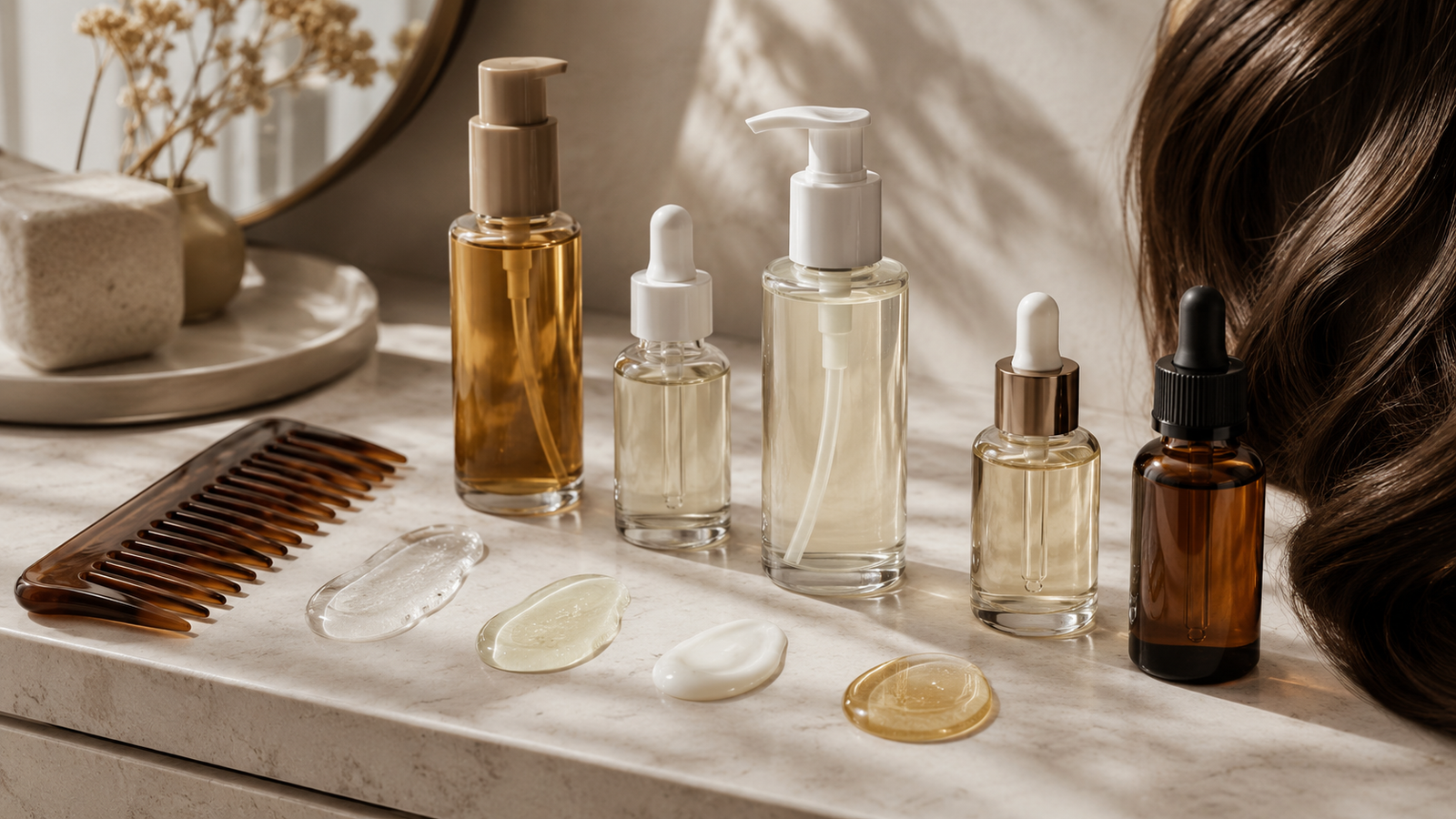
Hair serum can look like a simple category until you start comparing products. Some formulas are designed mainly to smooth frizz and add shine. Others focus on detangling, protecting the hair during heat styling, making dry ends feel softer, or helping thick and coarse hair look more polished.
That means the most useful question is not simply, “Which hair serum is best?”
A better question is:
What do you need the serum to do, and what type of formula will give you that result without making your hair feel heavy, greasy or coated?
A lightweight serum that works well on fine, straight hair may do very little for thick, coarse or highly textured hair. At the same time, a rich smoothing formula that feels excellent on dry lengths may flatten fine hair within minutes.
The right choice depends on your hair texture, your main concern, how often you style your hair, how easily it becomes weighed down, and where the serum will fit into the rest of your routine.
This guide explains how to choose a hair serum based on those practical factors rather than relying only on marketing claims.
What Does a Hair Serum Actually Do?
Most traditional hair serums are designed primarily to improve the surface feel and appearance of the hair fibre.
Depending on the formulation, a serum may help:
- reduce visible frizz;
- smooth the surface of the hair;
- add shine;
- improve slip;
- reduce friction between strands;
- make detangling easier;
- improve the appearance of dry or rough ends;
- control flyaways;
- make styled hair look more polished;
- provide heat protection when specifically formulated for it.
Hair serums commonly contain silicones, lightweight emollients, conditioning ingredients, oils or combinations of these.
They work mainly by coating or conditioning the hair surface.
This distinction matters because a cosmetic hair serum should not automatically be treated as a treatment for hair growth, scalp disorders or persistent hair loss.
A serum can make damaged hair look and feel smoother, but it cannot restore severely damaged hair to its original undamaged state.
Start With the Problem You Want the Serum to Solve
Before comparing ingredients or brands, identify the main reason you want a serum.
Trying to find one product that does everything often leads to buying a formula that is unnecessarily complicated or too heavy.
For Frizz Control
If frizz is your main concern, look for a serum designed to create a smooth, even film over the hair.
Anti-frizz products often use combinations of:
- silicones;
- conditioning polymers;
- lightweight oils;
- emollients;
- film-forming ingredients.
The most important practical question is whether the serum gives enough smoothing to control flyaways without making your hair greasy.
Fine frizzy hair and thick frizzy hair generally need very different amounts of product.
For Smoothness and Shine
If your hair looks dull or feels rough, a smoothing serum can improve how light reflects from the hair surface.
This can make the hair appear healthier and more polished.
Fine hair usually benefits from a lightweight formula that spreads easily.
Coarse, dry or chemically treated hair may tolerate a richer product that leaves a more noticeable conditioning film.
For Dry Ends
Dry ends often benefit from a small amount of serum because the product can reduce friction and temporarily improve softness.
If your ends are very dry or coarse, you may prefer:
- a richer serum;
- a serum-oil hybrid;
- a lightweight finishing oil.
However, remember that a serum cannot permanently repair split ends.
It may temporarily make them look smoother, but trimming is ultimately required to remove split ends.
For Heat Styling
This is one of the most important distinctions when choosing a serum.
Do not assume that every hair serum is a heat protectant.
A serum may make the hair feel smoother while blow-drying or straightening without necessarily being designed to reduce thermal damage.
If you regularly use:
- hair dryers;
- straighteners;
- curling irons;
- heated brushes;
look specifically for a product that clearly states that it provides heat protection.
Also check:
- whether it should be applied to damp or dry hair;
- how much should be used;
- what temperature range the manufacturer claims protection for, if stated.
For Detangling
Some serums provide enough slip to make combing easier after washing.
However, if detangling is your primary problem, compare the serum with a leave-in conditioner.
A leave-in conditioner may provide more meaningful conditioning, especially for:
- curly hair;
- dry hair;
- chemically processed hair;
- hair that tangles easily.
A serum can then be used as a finishing step.
Choose the Right Serum Weight for Your Hair
One of the most important characteristics of a serum is its weight.
You can have two products with similar claims that behave completely differently because one is extremely lightweight while the other leaves a richer coating.
A practical starting point is:
| Hair type or need | Serum direction to consider |
|---|---|
| Fine hair | Lightweight serum, minimal residue |
| Straight hair | Light to medium texture |
| Wavy hair | Lightweight smoothing serum |
| Thick hair | Medium or richer smoothing formula |
| Coarse hair | Richer serum with stronger slip |
| Curly hair | Medium-rich serum, often layered over leave-in |
| Dry/damaged hair | Conditioning serum with good slip |
| Oily roots + dry ends | Apply lightweight serum only to lengths and ends |
These are guidelines rather than strict rules.
Hair density, porosity, climate and styling routine can change what works.
Fine Hair
Fine hair usually becomes weighed down more easily.
Look for:
- lightweight textures;
- fast-spreading formulas;
- minimal residue;
- controlled pump packaging.
Avoid assuming that fine hair needs no serum.
Fine strands can still become frizzy or damaged. The difference is usually the amount and richness of the formula required.
Start with a very small quantity.
Thick or Coarse Hair
Thicker and coarser hair can usually tolerate more conditioning.
You may prefer formulas containing:
- richer emollients;
- silicones;
- conditioning ingredients;
- lightweight oils.
The goal should still be smoothness without a sticky or greasy finish.
Curly and Textured Hair
A serum is often best used as part of a layered routine.
For example:
leave-in conditioner → curl product → serum or oil where needed
The serum may help:
- control frizz;
- reduce friction;
- smooth dry ends;
- add shine.
Do not expect a serum alone to replace the moisture and styling support that textured hair may require.
What Should You Look for in the Formula?
You do not need to memorize a long ingredient dictionary.
It is more useful to understand the general role of the major ingredient groups.
Silicones
Silicones are extremely common in hair serums.
They are often used because they can:
- improve slip;
- reduce friction;
- smooth the hair surface;
- reduce static;
- add shine;
- improve manageability.
Examples may include different forms of dimethicone, amodimethicone or volatile silicones.
Silicones are not automatically harmful or undesirable.
If a silicone-containing serum gives you the finish you want and washes out comfortably within your routine, there is no reason to reject it purely because another product advertises itself as silicone-free.
The practical issue is buildup.
If repeated application leaves your hair:
- dull;
- heavy;
- coated;
- difficult to wash;
reduce the amount or frequency of use and make sure your shampoo removes styling residue effectively.
Oils and Emollients
Many serums contain oils such as:
- argan oil;
- coconut oil;
- sunflower oil;
- jojoba oil;
- other plant oils.
Others may contain synthetic or naturally derived emollients that create a similar smoothing effect.
Do not judge the product by the highlighted oil alone.
A bottle advertised as “argan serum” may contain only a small amount of argan oil while the overall performance comes from the complete formula.
What matters more is:
- how heavy it feels;
- how easily it spreads;
- whether it leaves residue;
- how your hair looks after drying.
Conditioning Ingredients
Conditioning agents can help improve:
- softness;
- detangling;
- smoothness;
- manageability.
These are particularly useful in products designed for damaged, coarse or frizz-prone hair.
Film-Forming Ingredients
Some serums contain ingredients designed to form a flexible layer over the hair.
These can help with:
- humidity resistance;
- frizz control;
- styling longevity;
- smoother appearance.
They can be particularly useful if your hair becomes frizzy soon after styling.
Fragrance
Hair serums frequently contain noticeable fragrance because they remain on the hair.
For some readers, that is part of the appeal.
For others, strong fragrance can be irritating or simply unpleasant.
If you are sensitive to fragrance, check:
- whether the product is strongly scented;
- whether the scent lasts for several hours;
- whether you already use fragranced shampoo, conditioner or styling products.
Silicone-Free Hair Serums
Silicone-free formulas can work well, particularly for people who prefer them or dislike the feel of traditional silicone serums.
These products may rely on:
- oils;
- esters;
- conditioning agents;
- other emollients.
However:
silicone-free does not automatically mean lighter, cleaner, healthier or better.
Some silicone-free serums can actually feel heavier because they rely more heavily on oils.
Choose according to how the finished formula behaves on your hair.
Hair Serum vs Hair Oil
These categories overlap, but they are not always interchangeable.
Hair serum
Usually emphasizes:
- smoothing;
- shine;
- frizz control;
- slip;
- styling;
- finishing.
Hair oil
May be used for:
- pre-shampoo oiling;
- scalp massage;
- richer conditioning of lengths;
- finishing dry ends.
Some modern products sit between the categories and behave like serum-oil hybrids.
Choose by use rather than terminology.
If you want something to apply before shampooing, a traditional oil may make more sense.
If you want a lightweight finishing product after washing, a serum may be easier to control.
Hair Serum vs Leave-In Conditioner
This distinction is also important.
Leave-in conditioner
Usually provides:
- moisture;
- conditioning;
- detangling;
- softness;
- preparation for styling.
Serum
Usually emphasizes:
- smoothing;
- shine;
- frizz reduction;
- surface conditioning;
- finishing.
For dry or textured hair, you may use both.
For example:
- leave-in conditioner on damp hair;
- heat protectant if required;
- styling product;
- small amount of serum after drying.
But you do not need every step if one or two products already provide the result you want.
Do You Need a Heat-Protecting Serum?
If you use heat frequently, heat protection deserves separate consideration.
Look for explicit claims such as:
- heat protection;
- thermal protection;
- blow-dry protection;
- heat styling protection.
Do not infer heat protection simply because the product says:
- smooth;
- repair;
- anti-frizz;
- shine.
Those are separate claims.
Even when using a heat protectant, minimizing excessive temperature and repeated passes over the same section remains important.
How Much Hair Serum Should You Use?
Overapplication is probably the most common serum mistake.
Start with less than you think you need.
A rough starting point might be:
- short/fine hair: less than one full pump;
- medium hair: approximately one pump;
- longer/thicker hair: one to two pumps;
- very thick/coarse hair: gradually add more if required.
Pump sizes vary, so these are not universal measurements.
The best strategy is:
start small → distribute → inspect → add only where needed
Rub the product between your palms before applying.
Concentrate it on:
- mid-lengths;
- ends;
- flyaway areas.
Avoid applying large amounts directly to the roots unless the product is specifically designed for scalp or root use.
Should You Apply Hair Serum to Damp or Dry Hair?
Many serums can be used either way, but the purpose changes.
On Damp Hair
Useful for:
- detangling;
- reducing friction;
- smoothing;
- preparing for blow-drying;
- distributing product evenly.
On Dry Hair
Useful for:
- controlling flyaways;
- polishing the finished style;
- adding shine;
- smoothing dry ends.
Some people use a small amount at both stages.
Follow the manufacturer’s directions, especially if the serum includes heat-protection claims.
Can Hair Serum Be Used Every Day?
Yes, if your hair tolerates it.
There is no universal requirement to use serum daily.
Frequency depends on:
- how often you wash your hair;
- whether you restyle between washes;
- how much frizz you experience;
- whether the formula builds up;
- how much product you use.
If your hair becomes gradually heavier or duller between washes, reduce the amount or frequency.
Choose According to Your Routine
If You Want a Minimal Routine
Choose one versatile serum that gives you:
- smoothing;
- manageable shine;
- light frizz control.
Avoid products that require complicated layering if simplicity is the priority.
If You Blow-Dry Frequently
Look for:
- explicit heat protection;
- good slip;
- lightweight smoothing;
- easy distribution on damp hair.
A serum that is too heavy can make blow-drying slower or leave the roots flat.
If You Straighten or Curl Frequently
Thermal protection becomes more important.
You may prefer:
- dedicated heat-protecting serum;
- lightweight formula;
- separate finishing serum after styling if needed.
Avoid repeatedly applying thick oil immediately before very hot tools unless the product is specifically designed for that purpose.
If You Have Oily Roots and Dry Ends
This is very common.
Keep serum away from the scalp.
Apply mainly:
- below ear level;
- to dry ends;
- to frizz-prone areas.
This gives the benefits of smoothing without making the roots look greasy.
If You Have Chemically Treated Hair
Bleaching, colouring, straightening and other chemical processes can increase roughness and breakage.
A serum can improve:
- slip;
- manageability;
- shine;
- smoothness.
But it should complement—not replace—a good conditioning and heat-protection routine.
What Should You Avoid When Choosing a Hair Serum?
Avoid Buying Only for the Hero Ingredient
A product may highlight:
- argan oil;
- keratin;
- vitamin E;
- coconut oil;
- botanical extracts.
That tells you very little about the actual performance of the final formulation.
Look at the complete product.
Avoid Assuming More Oils Mean Better Conditioning
Very oil-heavy formulas can become difficult to manage on fine hair.
More ingredients are not automatically better.
Avoid Assuming Shine Means Repair
A serum can dramatically improve shine while mainly working on the hair surface.
That cosmetic benefit is useful, but it should not be confused with permanent structural repair.
Avoid Using Serum to Treat Hair Loss
A traditional smoothing serum is not a treatment for:
- persistent hair shedding;
- thinning;
- alopecia;
- scalp inflammation.
If those are your main concerns, you need a different type of product or appropriate professional guidance.
Avoid Applying Too Much
If your serum consistently makes the hair greasy, try reducing the quantity before deciding the product itself is unsuitable.
Avoid Expecting One Product to Do Everything
A serum may not replace:
- conditioner;
- leave-in conditioner;
- heat protectant;
- styling cream;
- scalp treatment.
Choose products according to their actual function.
How to Judge Value for Money
Hair serums often come in relatively small bottles, so the shelf price alone can be misleading.
Compare:
- bottle size;
- price per 100 ml;
- number of pumps needed per application;
- frequency of use;
- whether the product replaces another styling step.
For example, a 50 ml serum may appear cheaper but require several pumps per use.
A 100 ml serum costing more upfront may last substantially longer.
At the same time, a highly concentrated serum can be good value even in a smaller bottle.
Cost per use is often more useful than purchase price alone.
Packaging Matters More Than It Seems
Serum is a product where dose control is important.
Useful packaging includes:
- controlled pumps;
- narrow dispensing openings;
- secure caps.
Poor packaging can lead to:
- overapplication;
- spills;
- wasted product.
A pump that dispenses a predictable amount can make a serum easier to use consistently.
Common Hair Serum Buying Mistakes
Choosing Only by “Dry Hair” or “Frizzy Hair”
Those labels are too broad.
Fine frizzy hair and coarse frizzy hair usually need different textures.
Buying the Richest Formula for Damaged Hair
Damaged hair can still be fine.
If the serum makes your hair flat, a lighter formula may give better overall results even if it sounds less “intensive.”
Ignoring the Rest of the Routine
If you already use:
- rich conditioner;
- mask;
- leave-in cream;
- oil;
adding a heavy serum may simply create buildup.
Applying Serum to the Roots
Most smoothing serums are better used on the lengths and ends.
Using Too Much Before Heat Styling
More product does not equal more protection.
Follow the instructions for heat-protecting products.
Buying Based Only on Marketplace Ratings
Customer ratings can be useful as one supporting signal, but they do not tell you whether the formula is appropriate for your particular hair type.
Quick Decision Guide
| Your priority | What to look for |
|---|---|
| Fine hair | Lightweight, low-residue serum |
| Thick/coarse hair | Richer smoothing formula |
| Frizz | Film-forming/smoothing formula |
| Shine | Lightweight surface-smoothing ingredients |
| Dry ends | More conditioning serum or serum-oil hybrid |
| Heat styling | Explicit thermal-protection claim |
| Oily roots | Length-only application |
| Curly/textured hair | Serum that layers comfortably over leave-in/styling products |
| Minimal routine | Multipurpose lightweight smoothing serum |
Before You Buy: Final Checklist
Ask yourself:
- What is my main concern?
- Is my hair fine, medium or coarse?
- How easily does it become weighed down?
- Do I primarily want frizz control, shine, detangling or heat protection?
- Will I use the serum on damp hair, dry hair or both?
- Does it explicitly provide heat protection if I need it?
- Do I prefer silicone-based or silicone-free products for a practical reason?
- Is the fragrance suitable for me?
- How large is the bottle?
- How much will I need each time?
- Does the price make sense per 100 ml and per use?
- Does this product duplicate another product already in my routine?
If you can answer these questions, you can usually narrow your options substantially.
Frequently Asked Questions
Is hair serum good for frizzy hair?
It can be. Smoothing serums can reduce the appearance of frizz and improve slip, particularly when the formula is matched to the weight and texture of your hair.
Is hair serum good for dry hair?
Yes, especially for improving the feel of dry lengths and ends. Very dry hair may also require conditioner, mask or leave-in conditioning rather than relying on serum alone.
Does hair serum cause hair fall?
A conventional hair-length serum should not be expected to cause hair loss simply because it is a serum. However, avoid excessive pulling during application and stop using any product that causes scalp irritation. Persistent shedding should be evaluated separately.
Can I use serum on my scalp?
Only if the product is specifically designed for scalp application. Traditional smoothing serums are generally intended for the hair lengths.
Can serum repair split ends?
It can temporarily smooth their appearance, but it cannot permanently restore split hair fibres. Trimming is ultimately required.
Is silicone-free hair serum better?
Not inherently. Both silicone-based and silicone-free formulas can work well. Choose according to texture, performance, buildup and your cleansing routine.
Is hair oil better than serum?
They serve overlapping but different purposes. Oils are commonly used for pre-shampoo treatments or richer conditioning, while serums are generally easier to use for smoothing and finishing.
Can I use serum after every wash?
Yes, if your hair benefits from it and the product does not create excessive buildup.
Should I use serum before or after blow-drying?
That depends on the product. Heat-protecting serums may be applied before blow-drying, while finishing serums may be used afterwards. Follow the specific directions.
How do I know if my serum is too heavy?
Common signs include:
- flat roots;
- greasy-looking lengths;
- strands clumping together;
- dullness;
- hair feeling coated soon after application.
Try using less before replacing the product.
The Physical Glow Takeaway
The best hair serum is not necessarily the richest, most expensive or most heavily advertised one. It is the formula that matches your hair’s weight tolerance and solves the problem you actually want to address.
Fine hair generally benefits from lightweight textures and small quantities. Thick, coarse or very dry hair can often tolerate richer smoothing formulas. If heat styling is part of your routine, verify heat protection rather than assuming every serum provides it. Apply the product mainly to the lengths and ends, start with a small amount, and judge value by bottle size and cost per use rather than price alone.
A well-chosen serum should make your hair easier to manage, smoother and more polished without making the rest of your routine more complicated.