How to Choose Mascara for Length, Volume and Waterproof Wear
Learn how brush shape, formula, buildability and waterproof wear affect mascara performance for length, volume and everyday definition.
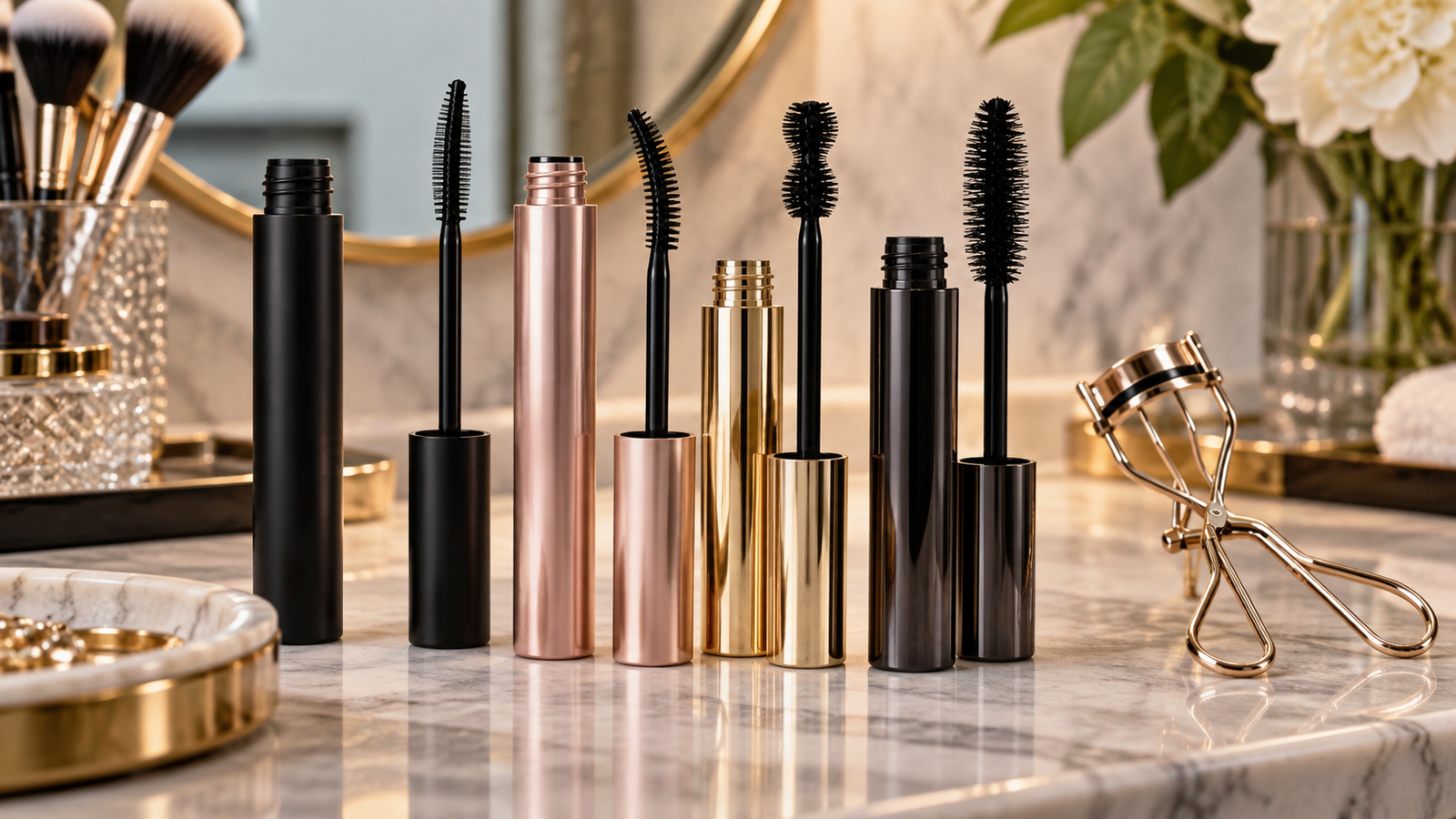
Mascara can make a noticeable difference to the eyes with very little product, but choosing the right one is not as simple as picking the darkest formula.
Different mascaras are designed to emphasise different effects:
- length
- volume
- separation
- curl
- definition
- waterproof wear
The wand shape matters too. A slim brush can reach shorter lashes more easily, while a dense or hourglass-shaped brush may deposit more product for a fuller look.
The best mascara is therefore the one that matches the result you want and the way you prefer to apply and remove it.
This guide explains how to choose mascara based on formula, brush design, lash type, wear conditions and removal.
What Does Mascara Actually Do?
Mascara coats the eyelashes to make them appear:
- darker
- thicker
- longer
- more defined
- more lifted
Different formulas achieve these effects in different ways.
Some are lightweight and designed to separate lashes.
Others are thicker and designed to build volume.
Waterproof formulas focus more on durability.
Understanding these differences makes it easier to choose the right product.
The Main Types of Mascara
Lengthening Mascara
Lengthening mascaras are designed to make lashes appear longer.
They often use:
- thinner formulas
- narrow brushes
- separated bristles
- fibres or film-forming ingredients in some products
These formulas are useful if your natural lashes are reasonably dense but you want more visible length.
Volumising Mascara
Volumising mascaras are designed to make lashes look fuller and thicker.
They often have:
- dense brushes
- thicker formulas
- larger wands
These can work well for:
- sparse-looking lashes
- evening makeup
- dramatic eye looks
The downside is that thick formulas can clump more easily if too much is applied.
Defining Mascara
Defining mascara focuses on separation rather than maximum drama.
It can be useful for:
- natural makeup
- short lashes
- everyday wear
- people who dislike clumping
These formulas often use more precise brushes.
Curling Mascara
Curling mascaras are intended to help lashes maintain a lifted appearance.
They may work well with an eyelash curler.
However, mascara alone cannot permanently change lash shape.
Waterproof Mascara
Waterproof mascara is designed to resist:
- water
- humidity
- tears
- sweat
It is useful for:
- weddings
- humid weather
- long outdoor days
- workouts
- situations where eye watering is common
However, it is usually harder to remove than regular mascara.
Tubing Mascara
Tubing mascaras form small polymer tubes around individual lashes.
They are generally known for:
- reduced smudging
- easier removal with warm water
- lightweight definition
They can be useful for people who regularly experience mascara transfer under the eyes.
Regular vs Waterproof Mascara
This is one of the most important choices.
Regular Mascara
Advantages:
- easier removal
- often softer on lashes during removal
- wide range of finishes
- practical for everyday use
Disadvantages:
- may smudge more easily
- less resistant to water or humidity
Waterproof Mascara
Advantages:
- better resistance to moisture
- useful for long wear
- often holds curl well
Disadvantages:
- harder to remove
- may require oil-based remover
- repeated aggressive removal can stress lashes
Waterproof is not automatically better.
Choose it because you need the durability.
How Mascara Brush Shape Affects the Result
The wand can matter almost as much as the formula.
Slim Brush
A slim brush can be useful for:
- short lashes
- lower lashes
- precise application
- inner and outer corners
It usually provides more control.
Thick Brush
A thick brush deposits more product.
It is commonly used for:
- volume
- dramatic looks
- thicker lash appearance
It can be harder to use on very short lashes.
Curved Brush
A curved brush can help:
- follow the lash line
- lift lashes
- emphasise curl
It can be useful when you want a more lifted effect.
Hourglass Brush
An hourglass brush has wider ends and a narrower centre.
It is often designed to create:
- volume
- fuller outer lashes
- more dramatic shape
Tapered Brush
A tapered brush becomes narrower toward the tip.
It can help reach:
- inner corner lashes
- shorter lashes
- smaller areas
This makes it a versatile option.
Comb-Style Brush
Comb-like brushes are designed for:
- separation
- definition
- reducing clumps
They may be useful if you prefer a cleaner lash look.
How to Choose Mascara Based on Your Natural Lashes
Short Lashes
Look for:
- slim wand
- lengthening formula
- tapered brush
- good separation
Very large brushes may be harder to control.
Sparse Lashes
Look for:
- volumising formula
- dense brush
- buildable texture
Apply in thin layers rather than one heavy coat.
Straight Lashes
Consider:
- curling mascara
- curved brush
- eyelash curler
- waterproof formula if it helps hold curl for you
Curl lashes before applying mascara.
Fine Lashes
Heavy mascara can weigh down fine lashes.
Look for:
- lightweight formula
- defining brush
- buildable coverage
Long Lashes
If your lashes are already long, you may prefer:
- defining mascara
- volumising mascara
- separation-focused brush
The priority may be fullness rather than length.
How to Choose Mascara for Length
If length is your main goal, look for:
- narrow brush
- tapered tip
- separated bristles
- lightweight formula
- fibre or film-forming technology where available
Apply from root to tip.
Focus on pulling upward rather than repeatedly loading the lash with product.
How to Choose Mascara for Volume
If volume is your main goal, look for:
- dense brush
- thicker formula
- buildable pigment
- wide or hourglass wand
Start at the lash roots.
A gentle side-to-side movement at the base can help distribute product before pulling upward.
Avoid applying too many coats after the first layers have fully dried.
How to Choose Mascara for Natural Definition
For natural makeup, look for:
- slim or comb-style brush
- lighter formula
- controlled pigment
- good separation
One coat may be enough.
The goal is to make lashes more visible without creating an obviously heavy finish.
How to Choose Mascara for Waterproof Wear
Waterproof mascara is useful when you expect:
- humidity
- rain
- tears
- sweating
- long wear
However, check whether you actually need it every day.
If your normal mascara already performs well, a waterproof version may add unnecessary removal effort.
Brown vs Black Mascara
Black Mascara
Black mascara creates:
- stronger contrast
- more dramatic definition
- a classic eye makeup look
It works well for most makeup styles.
Brown Mascara
Brown mascara creates:
- softer definition
- more natural contrast
- understated daytime makeup
It can be especially useful if black mascara feels too intense.
How Many Coats of Mascara Should You Use?
There is no fixed number.
A practical approach is:
One Coat
Best for:
- natural makeup
- light definition
- quick routines
Two Coats
Best for:
- more volume
- stronger length
- everyday dramatic makeup
Three or More Coats
This can create a very bold effect, but it also increases the chance of:
- clumping
- stiffness
- flaking
Build gradually.
How to Apply Mascara Correctly
A simple method:
- Curl lashes first if you use an eyelash curler.
- Remove excess mascara from the wand if necessary.
- Place the brush near the roots.
- Move slightly side to side.
- Pull upward through the lashes.
- Repeat only where more product is needed.
- Use the tip of the wand for shorter lashes.
Do not pump the wand repeatedly inside the tube.
That can introduce more air into the product and may cause it to dry faster.
Should You Curl Lashes Before or After Mascara?
Curl lashes before applying mascara.
Curling lashes after mascara has dried can increase the risk of:
- sticking
- breakage
- pulling
Use gentle pressure with the curler.
Why Does Mascara Clump?
Clumping commonly happens because of:
- too much product on the brush
- thick formula
- too many coats
- applying a new coat after the previous one has fully dried
- old mascara
You can reduce clumping by:
- wiping excess from the wand
- applying thinner coats
- working while the formula is still flexible
Why Does Mascara Smudge Under the Eyes?
Common causes include:
- oily skin around the eyes
- watery eyes
- humidity
- mascara touching the skin
- creamy concealer or eye products
- formula not suited to your wear conditions
Possible solutions include:
- lightly setting the under-eye area
- choosing tubing mascara
- trying waterproof mascara
- using less product on lower lashes
Why Does Mascara Flake?
Flaking can happen when:
- the formula becomes too dry
- too many coats are applied
- mascara is old
- the product does not remain flexible
Replace mascara when the texture changes noticeably.
Why Does Mascara Transfer to the Eyelid?
This often happens when:
- lashes touch the upper lid
- skin becomes oily
- formula has not fully dried
- the mascara is not resistant enough for your conditions
Using a smaller amount and allowing it to set may help.
Mascara for Lower Lashes
Lower lashes usually need more control.
Look for:
- slim brush
- tapered tip
- light formula
Use a small amount.
Heavy lower-lash mascara can smudge more easily.
Can You Layer Different Mascaras?
Yes.
Some people layer:
- lengthening mascara first
- volumising mascara second
This can combine effects.
However, too many layers can create clumping.
If one mascara already gives the effect you want, layering may be unnecessary.
Mascara Primer: Is It Necessary?
Mascara primer is designed to create an additional base before mascara.
It may help with:
- volume
- length
- grip
But it is optional.
Most people can achieve good results with mascara alone.
How to Remove Mascara Safely
Removal matters because aggressive rubbing can damage lashes.
For regular mascara:
- use a suitable eye makeup remover
- allow remover to sit briefly
- wipe gently
For waterproof mascara:
- use an oil-based or waterproof-compatible remover if appropriate
- allow the remover time to dissolve the formula
- avoid pulling at the lashes
The goal is to dissolve mascara rather than scrub it away.
Common Mascara Mistakes
Pumping the Wand
This can introduce air into the tube.
Applying Too Many Coats
More coats can quickly lead to clumping.
Curling After Mascara
This may increase the risk of lash breakage.
Keeping Mascara Too Long
Mascara is used close to the eyes and should be replaced regularly according to product and hygiene guidance.
Sharing Mascara
Eye makeup should not be shared because of hygiene concerns.
Adding Water to Dry Mascara
Do not dilute mascara with water.
Replace the product instead.
Mascara and Eye Sensitivity
If you have sensitive eyes, look for formulas that you tolerate well.
Stop using mascara if you experience:
- persistent burning
- swelling
- redness
- unusual eye irritation
If symptoms continue after removing the product, seek appropriate medical advice.
How Often Should Mascara Be Replaced?
Mascara generally has a shorter useful life after opening than many other makeup products because the applicator repeatedly enters the tube and is used close to the eyes.
Follow:
- the manufacturer’s period-after-opening guidance
- any obvious change in smell
- change in texture
- change in performance
Do not keep using mascara simply because product remains in the tube.
How to Choose Mascara for Humid Weather
In hot or humid conditions, consider:
- waterproof formula
- tubing mascara
- strong-setting regular formula
Avoid overly creamy eye products near the lashes if transfer is a recurring problem.
Mascara for Everyday Makeup
A useful everyday mascara should be:
- easy to control
- comfortable
- easy enough to remove
- suitable for your normal wear conditions
You probably do not need maximum waterproofing or extreme volume for every routine.
Mascara for Special Events
For weddings, events or long days, priorities may shift toward:
- waterproof wear
- stronger hold
- more dramatic volume
- longer wear
Always test the mascara before the event.
Do not experiment with a completely new eye product for the first time on an important day.
How to Compare Mascara Before Buying
Consider these factors:
| Factor | What to Check |
|---|---|
| Main effect | Length, volume, curl or definition |
| Brush | Slim, curved, dense, tapered or hourglass |
| Formula | Regular, waterproof or tubing |
| Buildability | How easily additional coats can be added |
| Removal | Standard remover or waterproof remover |
| Lower lashes | Whether the wand offers enough precision |
| Wear conditions | Humidity, tears, sweat or normal daily wear |
| Finish | Natural or dramatic |
How Much Should You Spend on Mascara?
Higher price does not automatically mean better mascara.
Performance depends heavily on:
- brush design
- formula
- your lash type
- your preferred effect
- wear conditions
A lower-priced mascara that suits your lashes can perform better for you than a premium formula with the wrong brush or finish.
Frequently Asked Questions
Which mascara is best for length?
Look for a lengthening formula with a slim or tapered brush that can separate and coat lashes from root to tip.
Which mascara is best for volume?
Dense or hourglass brushes paired with buildable volumising formulas are commonly designed for fuller-looking lashes.
Is waterproof mascara better than regular mascara?
Not universally. Waterproof mascara offers better moisture resistance, but regular mascara is usually easier to remove.
Can I use waterproof mascara every day?
You can use it according to product directions, but remember that removal is usually more demanding. Avoid aggressive rubbing.
Why does my mascara always smudge?
Oil, humidity, eye watering, creamy base products or your lash position may contribute. Tubing or waterproof formulas may help.
How do I avoid clumpy mascara?
Use less product, apply thin coats and add the next coat while the formula is still workable.
Should I put mascara on lower lashes?
You can, but use less product and a smaller brush if smudging is a concern.
Can I use an eyelash curler after mascara?
It is safer to curl lashes before mascara. Curling dried, coated lashes can increase the risk of breakage.
Final Takeaway
Choosing mascara becomes easier when you decide what effect matters most.
Choose a lengthening mascara when your priority is longer-looking lashes.
Choose a volumising mascara when you want fuller, thicker-looking lashes.
Choose a defining mascara when separation and natural-looking lashes matter most.
Choose waterproof mascara when humidity, water or long wear are genuine concerns.
And pay close attention to the brush. A mascara formula may be excellent, but if the wand is too large or difficult for your lashes, application can still be frustrating.
Start with thin coats, avoid excessive buildup and remove mascara gently at the end of the day.
If you are comparing specific options, continue to our Top 5 Mascaras in India guide, where we compare mascaras for length, volume, waterproof wear and everyday definition.