Leave-In Conditioner Buying Guide: How to Choose for Your Hair Type
Learn how to choose a leave-in conditioner based on hair texture, moisture needs, detangling, frizz, heat styling and the weight of the formula.
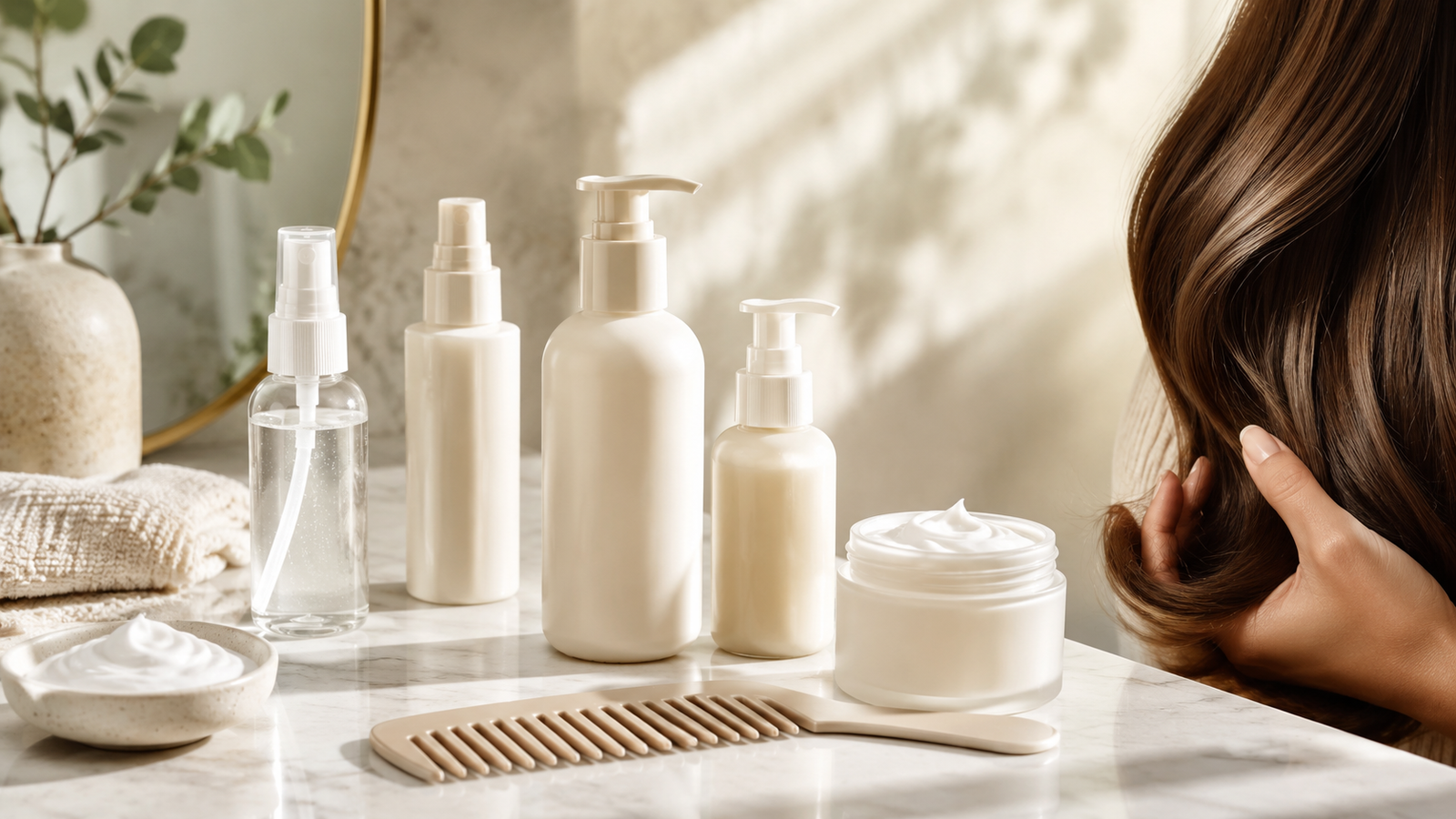
Leave-in conditioner can be one of the most useful additions to a haircare routine when regular conditioner alone does not give enough softness, detangling or frizz control.
It can also be one of the easiest products to overuse.
A lightweight leave-in spray may work beautifully on fine or wavy hair, while a rich cream designed for coarse curls could make the same hair feel flat and greasy. On the other hand, a very light mist may provide almost no noticeable conditioning for thick, dry or highly textured hair.
That is why the most useful question is not:
“Which leave-in conditioner is the best?”
It is:
“How much conditioning does my hair need after washing, and what texture can give me that support without unnecessary weight or buildup?”
The right leave-in should make your hair easier to detangle, style and manage after washing. It should complement the rest of your routine rather than duplicate several other products or leave the hair coated.
This guide explains how to choose a leave-in conditioner based on your hair type, strand thickness, density, dryness, frizz, styling habits and formula preferences.
What Does a Leave-In Conditioner Actually Do?
Unlike a regular conditioner, a leave-in conditioner is designed to remain on the hair after washing rather than being rinsed out.
Depending on the formula, it may help:
- improve detangling;
- reduce friction;
- make hair feel softer;
- control some frizz;
- improve manageability;
- reduce the rough feel of dry ends;
- add slip before styling;
- make curls easier to shape;
- support heat styling when the product specifically provides thermal protection.
The main benefit is additional conditioning after the shower.
For many people, especially those with dry, curly, chemically treated or easily tangled hair, that extra conditioning can make the difference between hair that is easy to manage and hair that becomes difficult to comb as soon as it begins drying.
However, leave-in conditioner is not automatically necessary for everyone.
Do You Need a Leave-In Conditioner?
You are more likely to benefit from one if your hair:
- tangles easily after washing;
- feels dry despite using regular conditioner;
- becomes frizzy while drying;
- is curly, wavy or coily;
- has been coloured or chemically processed;
- feels rough at the ends;
- is difficult to comb;
- experiences a lot of friction during styling.
You may need much less—or none at all—if your hair is:
- naturally smooth;
- very fine;
- low-density;
- easily weighed down;
- already well conditioned by your rinse-out products.
The goal is not to add another product simply because a routine online includes one.
Use leave-in conditioner because it solves a problem.
Leave-In Conditioner vs Regular Conditioner
The two products are related, but they are not identical.
Rinse-Out Conditioner
Usually applied after shampoo and then rinsed away.
Its main jobs are:
- conditioning;
- detangling;
- reducing static;
- softening the hair;
- improving slip.
Leave-In Conditioner
Applied after rinsing and left on the hair.
It can provide additional:
- softness;
- detangling;
- moisture support;
- frizz control;
- styling preparation.
You can use both in the same routine.
A common sequence is:
shampoo → rinse-out conditioner → leave-in conditioner
For very fine hair, you may find that a good rinse-out conditioner is enough.
For dry or textured hair, the extra leave-in step can be more useful.
Understand the Main Leave-In Conditioner Formats
Texture is one of the most important things to compare.
Leave-In Sprays and Mists
These are usually the lightest option.
They can work particularly well for:
- fine hair;
- straight hair;
- mildly wavy hair;
- light detangling;
- people who dislike heavy residue.
Sprays can distribute very evenly and are easy to control.
The downside is that some may be too light for:
- coarse hair;
- very dry hair;
- dense curls;
- heavily processed lengths.
Leave-In Lotions and Milks
These generally sit between sprays and creams.
They can provide:
- more conditioning than a mist;
- easier spreadability than a heavy cream;
- moderate frizz control;
- softness without excessive richness.
They are often a good starting point for medium-density hair.
Leave-In Creams
Cream formulas are usually richer.
They may work well for:
- thick hair;
- coarse hair;
- curls;
- coils;
- dry or damaged lengths;
- hair that needs more detangling support.
The trade-off is weight.
Fine hair may become:
- flat;
- greasy-looking;
- sticky;
- difficult to style;
if too much cream is applied.
Multi-Purpose Leave-Ins
Some formulas combine leave-in conditioning with claims such as:
- heat protection;
- smoothing;
- UV protection;
- anti-frizz;
- detangling;
- curl support.
These can simplify a routine if the benefits genuinely match your needs.
Do not assume a product is better simply because it lists more functions.
Match Leave-In Conditioner to Your Hair Type
A practical starting point:
| Hair type or concern | Leave-in direction to consider |
|---|---|
| Fine straight hair | Lightweight spray or mist |
| Fine wavy hair | Light spray or lotion |
| Medium-density hair | Lotion or lightweight cream |
| Thick hair | Medium to rich cream |
| Coarse hair | Rich conditioning cream |
| Curly hair | Lotion or cream depending on strand thickness |
| Coily hair | Richer leave-in with strong slip |
| Oily roots + dry ends | Apply only to lengths |
| Chemically processed hair | Good conditioning and detangling support |
| Heat-styled hair | Leave-in with explicit heat protection, or separate protectant |
These are starting points rather than rigid rules.
Fine Hair
Fine hair is especially sensitive to product weight.
Look for:
- sprays;
- mists;
- lightweight lotions;
- fast-spreading formulas;
- controlled dosing.
Use less than you think you need initially.
If your fine hair is also dry or damaged, do not assume you need a thick cream.
You may get better results from a lightweight formula applied consistently.
Thick or Coarse Hair
Thick and coarse hair can usually tolerate richer conditioning.
Look for:
- creamy textures;
- stronger slip;
- emollient-rich formulas;
- conditioning ingredients;
- formulas designed for dry or textured hair.
You may also need more product simply because there is more hair to cover.
Wavy Hair
Wavy hair varies enormously.
Fine waves may prefer a mist.
Thick waves may handle a lotion or light cream.
If your waves lose shape or look greasy after using a leave-in, the formula may be too heavy.
Curly and Coily Hair
Leave-in conditioner can be especially useful because textured hair may:
- tangle more easily;
- require more slip;
- experience more friction during styling;
- benefit from additional conditioning before curl products.
A common sequence is:
leave-in conditioner → curl cream or gel → finishing serum/oil if needed
But do not layer products automatically.
If your leave-in already provides enough conditioning and definition support, another rich cream may be unnecessary.
Strand Thickness Matters as Much as Curl Pattern
It is easy to choose leave-in conditioner only based on whether your hair is:
- straight;
- wavy;
- curly;
- coily.
That can be misleading.
Two people with similar curl patterns may need completely different products.
One may have:
- fine strands;
- high density;
while the other has:
- coarse strands;
- lower density.
Fine, dense curls may require enough product for full coverage but still prefer a lighter texture.
Coarse waves may tolerate a richer cream despite having a looser curl pattern.
The best indicator is how the hair feels after it has fully dried.
A good leave-in should improve manageability without making the hair feel coated.
Consider Hair Density
Density refers to how much hair you have overall.
High-density hair often requires:
- more product;
- more careful sectioning;
- better distribution.
Low-density hair may require much less.
This is different from strand thickness.
You can have:
- fine strands with high density;
- coarse strands with low density.
That is why product amount and product richness should be considered separately.
What About Hair Porosity?
Porosity describes how readily hair interacts with water and products.
You do not need to rely on home strand-floating tests.
A more useful approach is to observe your hair.
If products tend to:
- sit on the surface;
- make hair coated quickly;
use lighter formulas or smaller amounts.
If your hair:
- feels dry soon after washing;
- remains rough after conditioning;
- has been heavily chemically processed;
a richer leave-in may be more appropriate.
Different sections of the same head can also behave differently.
Bleached ends may need more conditioning than untreated roots.
What Ingredients Should You Look For?
The complete formula is more important than one “hero” ingredient, but several ingredient groups commonly support leave-in performance.
Conditioning Agents
These are among the most useful ingredients in leave-in products.
They can help:
- reduce static;
- improve slip;
- make detangling easier;
- smooth the hair.
If detangling is your main concern, good conditioning performance should be a priority.
Humectants
Humectants can help attract and retain water.
Common examples may include:
- glycerin;
- propylene glycol;
- panthenol;
- hyaluronic-acid-related ingredients.
Their usefulness depends on the entire formula.
Do not assume a leave-in is automatically highly moisturizing simply because it contains hyaluronic acid or glycerin.
Emollients
Emollients help improve softness and smoothness.
They may include:
- plant oils;
- esters;
- fatty alcohols;
- other conditioning lipids.
The richer the emollient system, the heavier the product may feel.
Fine hair usually needs less.
Silicones
Silicones can be very useful in leave-in conditioners because they can:
- reduce friction;
- improve detangling;
- smooth the cuticle;
- reduce static;
- add shine.
Silicone-free formulas can also work well.
Do not assume one approach is universally better.
Choose based on:
- performance;
- texture;
- buildup;
- your cleansing routine.
Proteins and Amino Acids
Leave-ins marketed for damaged hair may contain:
- hydrolysed proteins;
- keratin derivatives;
- amino-acid blends.
These can be useful in some routines, especially for chemically processed hair.
However, if several other products in your routine already contain protein, you may not need another heavily protein-focused leave-in.
Watch how your hair responds.
Oils and Butters
Richer leave-ins may contain:
- shea butter;
- coconut oil;
- argan oil;
- avocado oil;
- other plant oils.
These can improve softness but may also increase weight.
Again, the complete formula matters more than one highlighted oil.
Fragrance
Because leave-in products remain on the hair, fragrance can last much longer than fragrance from a rinse-out conditioner.
If you:
- dislike strong scent;
- already use perfume;
- have fragrance sensitivity;
check this carefully.
Leave-In Conditioner and Heat Protection
This deserves special attention.
Do not assume that every leave-in conditioner is also a heat protectant.
A leave-in can make the hair easier to blow-dry while providing no specific thermal-protection claim.
If you regularly use:
- blow-dryers;
- straighteners;
- curling irons;
- heated brushes;
look for explicit wording such as:
- heat protection;
- thermal protection;
- heat styling protection.
If your chosen leave-in does not offer this, use a separate heat protectant.
Leave-In Conditioner vs Hair Serum
These products can complement each other.
Leave-In Conditioner
Primarily used for:
- conditioning;
- detangling;
- softness;
- moisture support.
Hair Serum
Primarily used for:
- smoothing;
- shine;
- frizz control;
- finishing.
A practical routine could be:
leave-in conditioner on damp hair → styling → small amount of serum on dry ends
You may not need both if one product already gives the finish you want.
Leave-In Conditioner vs Hair Oil
Leave-in conditioner generally provides more balanced conditioning and detangling.
Hair oil is usually better suited to:
- pre-shampoo routines;
- finishing;
- sealing dry ends;
- adding shine.
For very dry hair, they may be layered carefully.
For example:
leave-in → styling product → tiny amount of oil
Too much of both can cause buildup.
How to Apply Leave-In Conditioner
Unless the product directions say otherwise:
- Shampoo and condition normally.
- Rinse thoroughly.
- Gently remove excess water.
- Apply leave-in to damp hair.
- Concentrate on the mid-lengths and ends.
- Distribute with fingers or a wide-tooth comb.
- Add more only where necessary.
- Style as usual.
Avoid aggressively towel-drying the hair before application.
Hair that is slightly damp is often easier to distribute product through evenly.
How Much Leave-In Conditioner Should You Use?
There is no universal quantity because products vary dramatically.
Start conservatively.
For sprays:
- begin with a few evenly distributed sprays.
For creams:
- start with a pea-sized or small coin-sized amount depending on hair length and density.
Then add more if necessary.
It is easier to add leave-in than remove excess product once the hair is coated.
Sectioning Can Improve Results
Long, thick or curly hair often benefits from sectioning.
Instead of putting a large amount on the outside of the hair:
- divide it into sections;
- apply a small quantity to each;
- distribute evenly.
This gives better coverage without requiring excessive product.
Should You Apply Leave-In Conditioner to the Roots?
Usually not if:
- your scalp is oily;
- your hair becomes flat easily;
- the product is rich.
Most people should concentrate leave-in on:
- mid-lengths;
- ends.
If the product is lightweight and the hair is very dry near the roots, you may apply a small amount higher up.
Avoid direct scalp application unless the product is designed for it.
Can You Apply Leave-In Conditioner to Dry Hair?
Some formulas can be used on dry hair as a refresh.
This may be useful for:
- curls;
- dry ends;
- frizz.
However, use much less than you would on wash day.
Repeatedly layering a rich leave-in between washes can eventually create:
- dullness;
- buildup;
- sticky strands;
- loss of volume.
Refresh only when needed.
How to Layer Leave-In Conditioner With Styling Products
A simple sequence is usually enough.
For example:
- leave-in conditioner for conditioning;
- heat protectant if separate;
- curl cream, mousse or gel if required;
- serum or oil as a finishing step.
You do not need all four products.
Give every product a clear purpose.
If two products make almost identical claims, test them separately before deciding both are necessary.
What Should You Avoid When Choosing Leave-In Conditioner?
Avoid Choosing Only by “Anti-Frizz” Claims
Anti-frizz products can range from extremely light sprays to very heavy creams.
Match the weight to your hair first.
Avoid Assuming Richer Means More Moisturizing
A very rich product can make fine hair look greasy without improving its condition.
The best formula is the one your hair can actually tolerate.
Avoid Treating Every Leave-In as Heat Protection
Always verify the claim.
Avoid Applying Too Much
Overapplication is one of the most common reasons leave-in conditioners fail.
Use less first.
Avoid Using Multiple Products With the Same Function
For example:
- rich conditioner;
- hair mask;
- rich leave-in;
- curl cream;
- oil.
Each may be appropriate individually, but together they may overwhelm the hair.
Avoid Buying Only for a Trendy Ingredient
Ingredients such as:
- argan oil;
- hyaluronic acid;
- keratin;
- shea butter;
can be useful, but they do not determine the whole product.
Common Leave-In Conditioner Buying Mistakes
Choosing Only by Curl Type
Consider strand thickness and density too.
Ignoring Your Existing Conditioner
If your rinse-out conditioner is already very rich, you may need only a light leave-in.
Applying Too Close to the Scalp
This is especially problematic for:
- fine hair;
- oily roots.
Using More Product to Fix Persistent Dryness
If large amounts of leave-in still leave your hair dry, the problem may involve:
- shampoo strength;
- inadequate rinse-out conditioning;
- heat damage;
- chemical processing.
Adding more leave-in may simply create buildup.
Ignoring Climate
Humidity and dry weather can change how a formula feels.
You may prefer:
- lighter leave-in in humid months;
- richer leave-in in drier weather.
Choosing Leave-In Conditioner for Humid Weather
In hot or humid climates, heavy creams may feel:
- sticky;
- greasy;
- difficult to dry.
Consider:
- lighter lotion;
- spray;
- smaller quantity.
If humidity creates frizz, pair the leave-in with a suitable styling product rather than applying more conditioner.
Choosing Leave-In Conditioner for Dry Weather
Dry environments may increase the need for:
- richer conditioning;
- more emollients;
- more attention to dry ends.
You may simply need a slightly larger amount of your existing leave-in rather than an entirely different product.
How to Compare Value for Money
Leave-in conditioners come in very different formats and sizes.
Compare:
- price;
- quantity;
- price per 100 ml;
- number of pumps or sprays per application;
- frequency of use;
- whether it replaces another product.
For example:
A 100 ml leave-in cream may last longer than a 200 ml spray because the amount used per application can differ dramatically.
So cost per use matters alongside cost per 100 ml.
Packaging Matters
Sprays
Useful for:
- even application;
- light dosing;
- fine hair.
Check whether the nozzle creates a fine mist or a concentrated stream.
Pumps
Good for:
- lotions;
- creams;
- predictable dosing.
Tubes
Useful for:
- thicker creams;
- controlled application.
Packaging should make it easy to use the correct amount.
Quick Leave-In Conditioner Decision Guide
| Your priority | What to look for |
|---|---|
| Fine hair | Lightweight spray or mist |
| Wavy hair | Spray or light lotion |
| Thick/coarse hair | Richer lotion or cream |
| Curly/coily hair | Good slip and stronger conditioning |
| Detangling | Conditioning agents + good spreadability |
| Frizz | Conditioning plus smoothing support |
| Heat styling | Explicit thermal-protection claim |
| Oily roots | Apply mainly to lengths |
| Chemically damaged hair | Good slip and conditioning; targeted strengthening if useful |
| Minimal routine | Multipurpose leave-in that solves your main need |
Before You Buy: Final Checklist
Ask yourself:
- What do I want the leave-in to do?
- Is detangling my main concern?
- Is my hair fine, medium or coarse?
- How dense is my hair?
- Does it become weighed down easily?
- Do I need a spray, lotion or cream?
- Am I already using a rich rinse-out conditioner?
- Do I need heat protection?
- Will I layer it with other styling products?
- Is the fragrance level suitable?
- What is the pack size?
- How much will I need per application?
- What is the cost per 100 ml?
- Is this product filling a genuine gap in my routine?
Frequently Asked Questions
Is leave-in conditioner necessary?
Not for everyone. It is most useful if regular conditioner alone does not provide enough detangling, softness or frizz control.
Can leave-in conditioner make hair greasy?
Yes. This usually happens when the formula is too rich or too much product is applied.
Can I use leave-in conditioner every day?
You can if your hair needs it, but daily use is not automatically necessary.
Can leave-in conditioner be used on dry hair?
Some formulas can. Use a small amount and follow the product directions.
Is leave-in conditioner the same as heat protectant?
No. Some leave-ins provide heat protection, but many do not.
Can leave-in conditioner replace regular conditioner?
For some fine or lightly conditioned hair types, possibly. Most dry or textured hair still benefits from rinse-out conditioner first.
Should I apply leave-in conditioner to my scalp?
Generally no. Apply mainly to the lengths and ends unless the product specifically says otherwise.
Can I use leave-in conditioner and hair serum together?
Yes. Leave-in can provide conditioning while serum provides finishing and smoothing.
Can I use leave-in conditioner with hair oil?
Yes, but use small quantities. Too many rich layers can cause buildup.
Is leave-in conditioner useful for curly hair?
Often yes, particularly for detangling, softness and preparing the hair for curl styling products.
How do I know if my leave-in is too heavy?
Common signs include:
- flat hair;
- greasy-looking strands;
- reduced volume;
- sticky texture;
- hair taking unusually long to dry;
- visible residue.
Does leave-in conditioner repair damaged hair?
It can improve softness, slip and manageability, but it cannot return severely damaged hair to its original undamaged condition.
The Physical Glow Takeaway
Choose a leave-in conditioner according to how much additional conditioning your hair needs after washing and how much product weight it can tolerate.
Fine or easily flattened hair usually benefits from lightweight sprays or lotions and smaller amounts. Thick, coarse, curly or very dry hair may need richer creams and stronger detangling support. Strand thickness and density can matter as much as curl pattern, so choose based on how your hair behaves rather than one label alone.
If heat styling is part of your routine, verify that the product explicitly provides thermal protection or use a separate heat protectant. Apply leave-in mainly to the mid-lengths and ends, start with a small amount and add more only where necessary.
Most importantly, avoid turning leave-in conditioner into just another layer in an overloaded routine. A good leave-in should make your hair easier to detangle, easier to style and more comfortable to manage without leaving it heavy, greasy or coated.