Matte, Satin and Gloss Makeup Finishes: What Each Term Describes
Matte, satin, dewy and glossy describe appearance rather than durability. Learn the difference and how lighting, texture and layering change what you see.
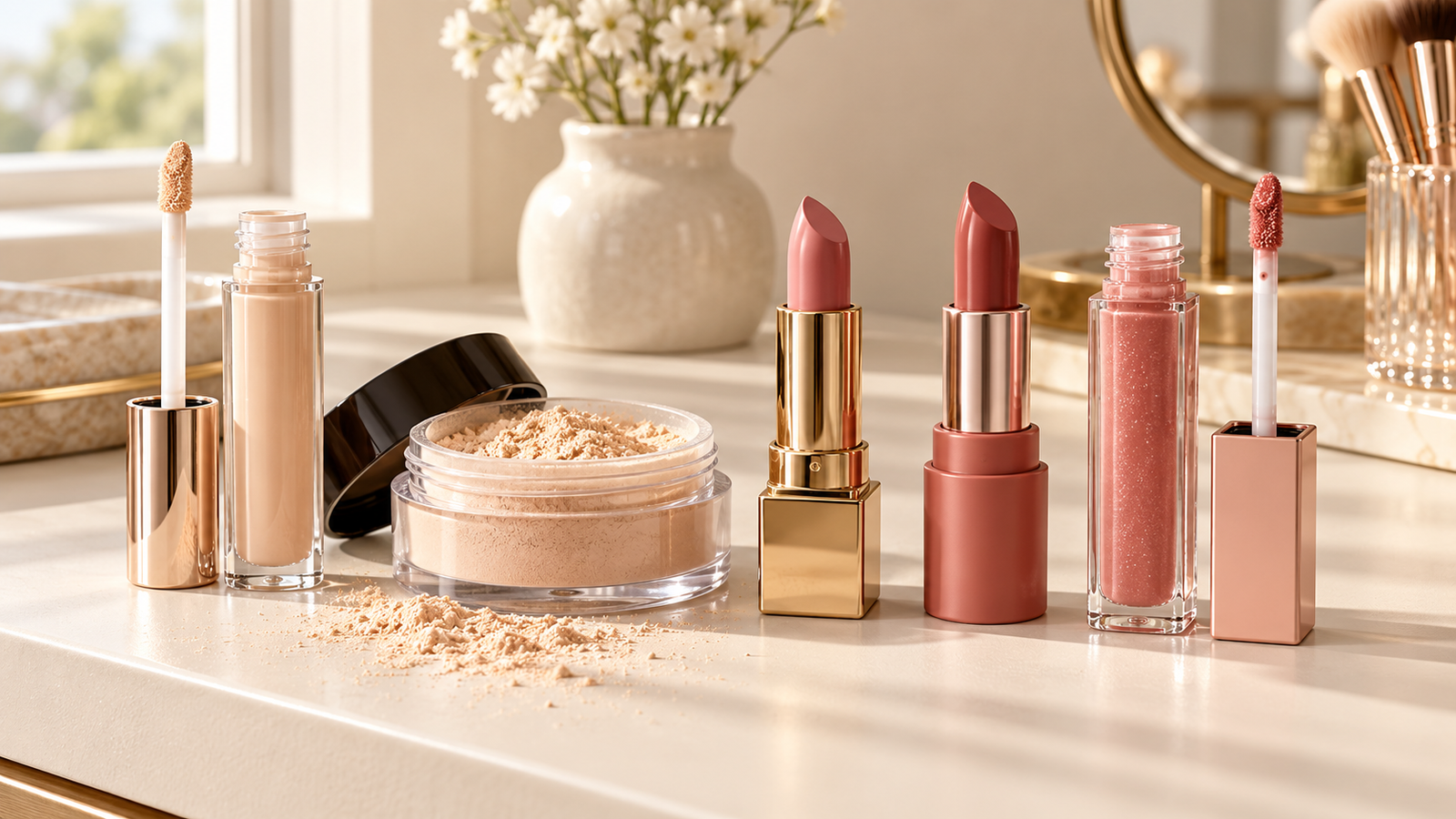
Choosing makeup involves more than finding the right shade. The finish of a product can significantly influence how it looks on your skin, how it interacts with natural light, and how comfortable it feels throughout the day.
When shopping for foundation, lipstick, blush, or other makeup products, you will often encounter descriptions such as matte, satin, glossy, natural, dewy, and luminous.
These terms are everywhere in beauty marketing, but they are not always explained clearly.
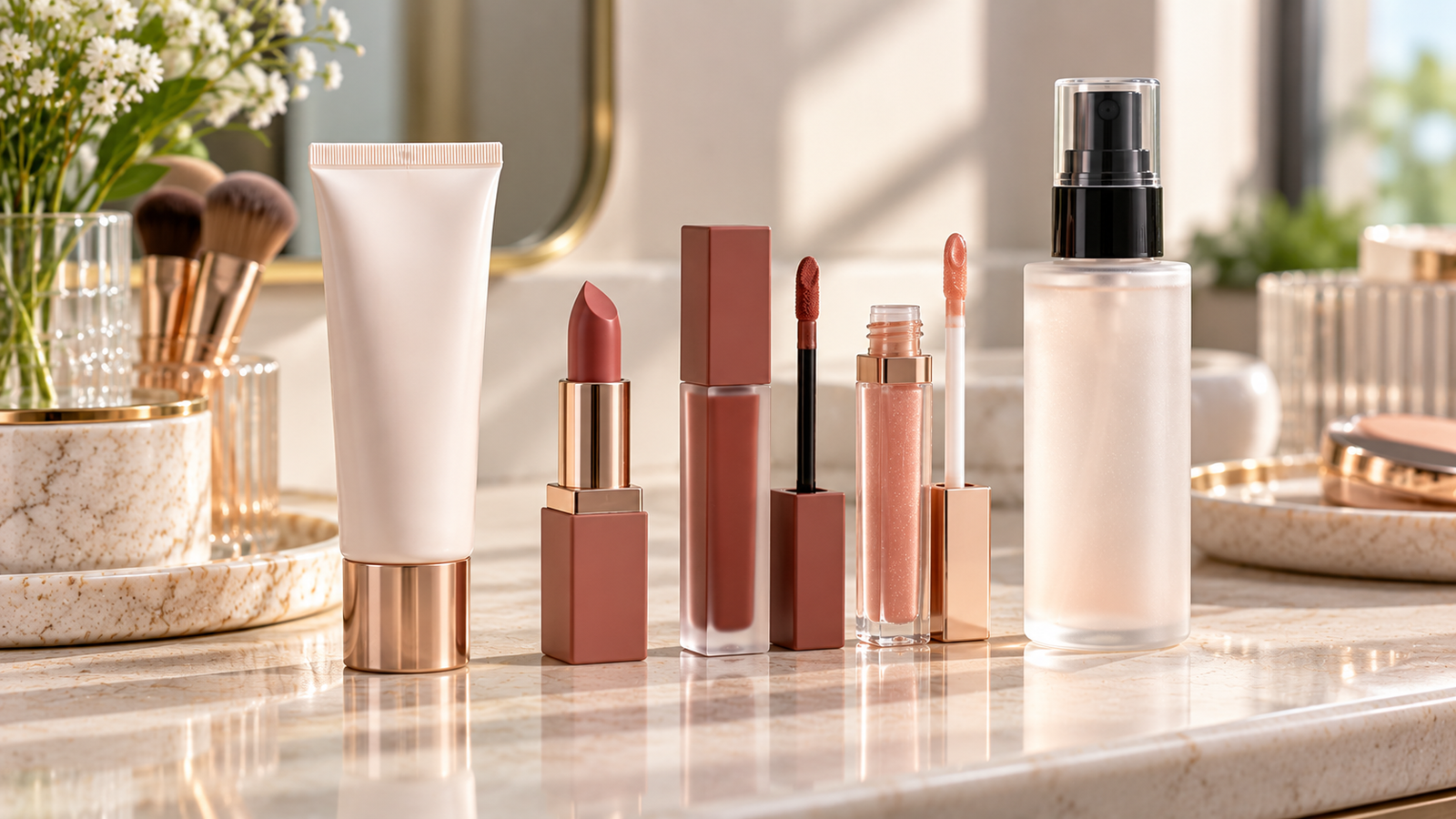
A matte lipstick may promise a smooth, shine-free appearance. A satin lipstick may offer a softer finish with a gentle sheen. A lip gloss may create a reflective surface that catches the light.
Similarly, a matte foundation and a luminous foundation can create noticeably different appearances even when they provide similar colour coverage.
However, makeup finish, product coverage, wear time, and skin comfort are different characteristics. A matte product is not automatically longer-lasting, and a glossy product is not necessarily more moisturizing.
Understanding these distinctions can help you choose products based on the look you want rather than relying entirely on packaging descriptions.
This guide explains what matte, satin, and gloss finishes actually mean, how they differ across makeup categories, and how to select and apply them for a balanced everyday look.
1. What Does Makeup Finish Mean?
In cosmetics, a makeup finish describes the visual appearance a product creates after application.
It is primarily about how the applied product interacts with light.
Some finishes absorb or scatter light in ways that create a less reflective appearance, while others produce a visible sheen or shine.
The role of light reflection
Imagine looking at three lipsticks in a well-lit room.
The first appears smooth and almost shine-free.
The second has a soft, subtle sheen.
The third reflects light strongly and creates a wet-looking surface.
Although all three products may have similar colours, their finishes look different.
The first would generally be described as matte, the second as satin, and the third as glossy.
Finish is not the same as coverage
Coverage describes how much a product conceals or changes the appearance of the underlying skin or lip colour.
A foundation may offer light, medium, or full coverage.
Its finish may be matte, satin, natural, or luminous.
This means a matte foundation can have light coverage, while a satin foundation can provide fuller coverage.
The two characteristics should be evaluated separately.
Finish is not the same as texture
Texture describes how a product feels and behaves physically.
For example, a lipstick may feel creamy, lightweight, waxy, or slippery.
Its finish may still be matte or satin.
Likewise, a foundation may have a fluid or cream texture regardless of how reflective it appears after application.
Finish is not a universal technical standard
Terms such as satin, natural, and soft matte are often used descriptively by cosmetic brands.
The exact appearance may differ between manufacturers and formulations.
One brand’s satin lipstick may look more reflective than another brand’s satin formula.
For that reason, product swatches, application photographs, and formula descriptions can be more informative than the finish name alone.
2. What Is a Matte Makeup Finish?
Matte makeup is designed to create a relatively low-shine appearance.
Rather than reflecting light strongly from the surface, a matte finish generally produces a softer, less glossy visual effect.
It is commonly associated with a smooth, polished appearance.
Matte finishes are found in foundations, concealers, lipsticks, blushes, bronzers, powders, and other colour cosmetics.
How matte makeup looks
A matte product usually has limited visible shine after application.
For example, a matte lipstick tends to appear more opaque and less reflective than a conventional lip gloss.
A matte foundation may create a relatively even-looking complexion without emphasizing a dewy surface.
However, matte products can still vary.
Some create a soft, natural-looking finish, while others appear noticeably powdery or flat.
Different types of matte finishes
Soft matte
A soft-matte finish has a low-shine appearance without necessarily looking completely flat.
It is commonly marketed for everyday makeup.
Full matte
A full-matte finish produces a more distinctly shine-free appearance.
This may be desirable for certain editorial makeup looks or personal preferences.
Powder matte
Powder-matte products often create a diffused surface appearance associated with finely milled powders or powder-like formulas.
Velvet matte
Velvet matte is generally a marketing description for a soft, smooth, low-shine appearance.
It does not refer to one universally standardized formulation.
Who might prefer a matte finish?
Matte makeup may appeal to people who:
- Prefer a relatively shine-free appearance.
- Want a polished or softly diffused makeup look.
- Dislike the appearance of very reflective products.
- Prefer certain matte lipstick styles.
- Want to reduce the appearance of surface shine in selected facial areas.
However, matte makeup is not exclusively for oily skin.
Someone with dry or combination skin may also enjoy matte products when the formulation and skin preparation are suitable.
Limitations of matte makeup
A matte finish does not necessarily hide dryness, fine lines, or uneven texture.
Some matte formulas can make dry patches more noticeable.
Others may remain comfortable because they contain conditioning ingredients.
The outcome depends on the product and application method.
Matte describes a visual effect, not a guarantee of oil control, comfort, or durability.
3. What Is a Satin Makeup Finish?
Satin makeup sits between a strongly matte appearance and a visibly glossy finish.
It usually creates a soft sheen that reflects some light without appearing particularly wet or shiny.
The result is often described as smooth, balanced, or softly luminous.
How satin makeup looks
Imagine the appearance of smooth fabric with a gentle sheen.
A satin makeup finish aims for a similar visual balance.
It reflects light more noticeably than a matte product but usually less intensely than a gloss.
Satin lipstick
Satin lipstick often combines visible colour with a soft sheen.
Depending on the formula, it may feel creamy or smooth.
A satin lip colour can create a polished appearance without the strongly reflective effect of lip gloss.
However, satin does not automatically mean that a lipstick is moisturizing.
Satin foundation
A satin foundation typically aims to create an even complexion with some natural-looking light reflection.
It may look less flat than a strongly matte formula while remaining less reflective than a dewy foundation.
The exact finish depends on the product and the skin beneath it.
Satin blush
A satin blush may create a soft sheen on the cheeks.
Some formulas achieve this effect through subtle light-reflecting ingredients.
Others rely on the natural finish of the product base.
Why satin finishes are popular
Satin products are often chosen when someone wants a middle ground between shine-free and glossy makeup.
They can work well for everyday looks because the finish is noticeable without necessarily becoming the dominant visual feature.
Limitations of satin makeup
Satin is a broad descriptive term.
A product labelled satin may look almost matte, while another may appear moderately luminous.
Skin type, lighting, and the amount applied can also change the final appearance.
4. What Is a Gloss Makeup Finish?
Gloss makeup is designed to create a visibly reflective surface.
This effect is most familiar in lip gloss products, although glossy finishes can also appear in eye makeup, highlighters, and certain editorial facial products.
How gloss interacts with light
A glossy surface reflects light more strongly and often creates distinct highlights.
On the lips, this can produce a smooth, wet-looking appearance.
The amount of shine depends on the formula, application thickness, and lighting.
Clear lip gloss
Clear gloss adds shine without necessarily adding significant colour.
It can be worn alone or layered over compatible lip products.
Tinted lip gloss
Tinted gloss combines colour with a reflective finish.
Some formulas are relatively sheer, while others provide more noticeable pigmentation.
Shimmer gloss
A shimmer gloss contains light-reflecting particles that create visible sparkle or luminosity.
Gloss and shimmer are not the same thing.
A product can be glossy without containing shimmer particles.
Glossy eye makeup
Certain eye products create a shiny or wet-looking appearance.
However, products should only be used in the areas approved by their manufacturers.
A lip gloss should not automatically be applied to the eyelids, particularly because eye-area safety requirements may differ.
Does lip gloss moisturize?
Not necessarily.
A gloss may contain emollient ingredients that improve the feeling of smoothness or comfort.
However, a reflective appearance does not independently prove that the formula increases or maintains lip hydration.
Evaluate the product’s ingredients and intended benefits separately from its finish.
5. Matte vs Satin vs Gloss: Key Differences
Understanding the three finishes side by side can make shopping easier.
| Feature | Matte | Satin | Gloss |
|---|---|---|---|
| Appearance | Low shine | Soft sheen | Noticeable shine |
| Light reflection | Relatively low | Moderate | Relatively high |
| Typical lip appearance | Smooth, less reflective | Softly polished | Wet-looking or reflective |
| Common products | Foundation, lipstick, blush, powder | Lipstick, foundation, blush | Lip gloss, eye gloss, specialty products |
| Texture | Varies by formula | Varies by formula | Often fluid or gel-like |
| Coverage | Can range from sheer to full | Can range from sheer to full | Often sheer, but varies |
| Wear time | Product-dependent | Product-dependent | Product-dependent |
| Comfort | Formula-dependent | Formula-dependent | Formula-dependent |
The most important takeaway is that none of these finishes is universally better.
They create different visual effects.
The right choice depends on your preferred appearance, the product’s formulation, and the occasion.
6. Matte vs Satin Lipstick: Which Should You Choose?
Lipstick is one of the easiest makeup categories for observing differences between finishes.
Two lipsticks with nearly identical shades can look surprisingly different when one is matte and the other is satin.
Matte lipstick appearance
Matte lipstick creates a relatively shine-free lip colour.
This can make the colour appear visually defined.
Some matte formulations deliver strong pigmentation, but pigmentation is not guaranteed by the finish alone.
Satin lipstick appearance
Satin lipstick adds a gentle sheen.
The lips may appear softer or more reflective than they would with a matte finish.
Some users prefer this appearance for everyday wear.
Which feels more comfortable?
Neither finish guarantees greater comfort.
Some matte formulas feel lightweight and flexible.
Others may feel dry or tight.
Similarly, some satin lipsticks feel creamy, while others may feel heavier.
Comfort depends on ingredients, application quantity, and individual preferences.
Which transfers less?
Matte lipsticks are sometimes marketed as transfer-resistant.
However, not every matte product has this property.
Some satin lipsticks may transfer more readily, but the result depends on their specific formulations.
A product’s finish alone cannot establish its transfer resistance.
Which should you choose for daily use?
Choose according to the appearance and feel you prefer.
If you want a defined, low-shine colour, matte may suit your style.
If you prefer a softer sheen, satin may be more appealing.
Both can be appropriate for everyday makeup.
7. Matte Lipstick vs Lip Gloss: Understanding the Visual Difference
Matte lipstick and lip gloss often create contrasting looks.
The difference becomes noticeable even when both products have similar colour tones.
A defined matte lip
Matte lipstick can create an appearance in which the colour and lip shape stand out without strong surface shine.
This may suit a minimal makeup look or a more structured style.
A reflective glossy lip
Lip gloss creates noticeable light reflections.
These highlights may make parts of the lip surface appear more prominent.
However, a glossy finish does not physically increase lip volume.
Can gloss be layered over matte lipstick?
Many people layer a compatible gloss over lipstick to change its finish.
This can create a more reflective appearance.
However, the added product may affect how the original lipstick wears or transfers.
Follow the directions for both products.
Will the matte finish remain underneath?
Once a glossy product is applied over the lipstick, the visible finish generally becomes more reflective.
The underlying lipstick may still provide colour, but the overall appearance is no longer fully matte.
Is layering always necessary?
No.
A single well-chosen product may be enough to achieve the desired effect.
Layering is an option, not a requirement.
8. Matte, Satin and Gloss in Face Makeup
Although these terms are commonly associated with lip products, they also influence foundation and other face makeup.
Matte foundation
Matte foundation creates a relatively low-shine complexion.
It may suit someone who prefers a polished, non-reflective finish.
However, the amount of oil-control performance depends on the formulation.
Satin foundation
Satin foundation creates a soft, balanced sheen.
It generally sits between fully matte and visibly luminous finishes.
Glossy-looking skin
A strongly glossy facial appearance is usually associated with certain highlighters, balms, or editorial makeup products.
Most everyday foundations marketed as dewy or luminous do not necessarily create the same effect as a true gloss.
Natural-finish foundation
Some products are labelled natural finish.
This generally suggests an appearance intended to resemble ordinary skin, but the term is not standardized across brands.
A natural finish may fall somewhere between matte and luminous depending on the formula.
Does foundation finish change coverage?
Not automatically.
A matte foundation may offer light coverage, while a satin foundation may provide full coverage.
Always evaluate coverage and finish separately.
9. How Skin Type Can Influence the Appearance of Makeup
The finish described on the packaging may not look identical on everyone.
Skin characteristics and preparation can influence the final result.
Oily skin
Natural skin oils may change the appearance of foundation during wear.
A matte foundation may develop more visible shine over time.
However, that does not mean everyone with oily skin must choose matte makeup.
Some people prefer a satin finish or use powder selectively.
Dry skin
Dry patches and uneven surface texture can affect how makeup sits.
Some matte formulas may emphasize these areas, while others may remain comfortable with suitable preparation.
A satin or luminous product may create a different appearance, but neither automatically treats dryness.
Combination skin
Combination skin can have different characteristics across the face.
For example, the forehead and nose may develop more visible shine than the cheeks.
Some people prefer applying powder only where needed rather than changing the finish of the entire face.
Skin texture
No makeup finish completely removes the appearance of natural skin texture.
Reflective finishes may highlight certain surface features under direct lighting.
Matte formulas may emphasize dryness or uneven product buildup.
The outcome depends on the particular product, application technique, and lighting.
Sensitive skin
Sensitive skin requires consideration of the complete formulation.
A matte, satin, or gloss label does not establish whether the product will be suitable.
If a cosmetic causes persistent irritation, discontinue use and seek professional advice where appropriate.
Skin type can influence your preference, but it should not become a rigid rule that determines every makeup purchase.
10. Choosing a Finish for Everyday Makeup
Daily makeup often needs to balance appearance, comfort, and practicality.
The ideal finish depends on personal preference rather than a universal beauty standard.
A low-shine everyday look
If you prefer minimal visible reflection, matte foundation or lipstick may appeal to you.
You can also use matte products selectively rather than throughout the entire face.
A softly polished look
Satin products may suit someone who wants a gentle sheen without a strongly glossy appearance.
A satin lipstick or foundation can work as part of a simple makeup routine.
A fresh, reflective look
Glossy lip products can create a noticeable shine.
Luminous face products can add reflection to selected areas.
Be aware that a reflective look may change noticeably under different lighting conditions.
A mixed-finish look
Using one finish does not mean every product must match.
For example, you might combine:
- A matte foundation
- A satin blush
- A softly reflective highlighter
- A glossy lip product
Alternatively, you may prefer a satin complexion with matte lipstick.
There is no requirement to make every part of the face equally matte or equally glossy.
11. How to Apply Matte Makeup Without a Heavy Finish
Matte products can create a polished appearance, but excessive application may make some formulas look uneven or powdery.
Step 1: Prepare your skin
Begin with a skincare routine suitable for your skin.
Allow products to settle as directed before applying makeup.
Avoid assuming that skipping moisturizer is necessary to achieve a matte result.
Step 2: Use an appropriate quantity
Begin with a small amount of foundation or another face product.
Build coverage gradually if the formula permits.
Applying a thick layer immediately can make it harder to maintain a smooth finish.
Step 3: Blend carefully
Use fingers, a sponge, or a brush according to the product’s directions and your preferred application technique.
The tool can influence the finish and coverage.
Step 4: Let the formula settle
Some makeup products change appearance as they set.
Allow the product to settle before deciding whether additional powder is necessary.
Step 5: Apply powder selectively
If you want to reduce visible shine, apply powder only where needed.
Excessive powder can create an overly dry or textured appearance with certain formulas.
Step 6: Check the result in natural light
Indoor lighting can make a matte finish look different from how it appears outdoors.
A quick check in indirect daylight may help reveal uneven blending.
12. How to Apply Satin Makeup for a Balanced Finish
Satin makeup is often chosen for its gentle sheen.
The objective is usually to maintain that soft reflection without making the product excessively matte or glossy.
Begin with suitable skin preparation
Use skincare products appropriate for your skin’s needs.
Let layers settle before applying makeup.
Apply a thin first layer
A modest initial application can help you judge the finish.
Build additional coverage if needed and permitted by the formula.
Blend evenly
Uneven application may produce patches with different levels of reflection.
Blend carefully around the nose, jawline, and other areas where product can accumulate.
Avoid excessive powder
Heavy powder application may reduce the visible sheen of a satin foundation.
If you want to preserve the finish, consider using powder only where necessary.
Evaluate the appearance under different lighting
A satin complexion may look relatively natural in soft daylight and more reflective beneath direct artificial light.
This does not necessarily indicate a product problem.
It reflects how different lighting conditions affect the appearance of makeup.
13. How to Apply Lip Gloss Without Excessive Stickiness
Lip gloss creates shine, but applying too much can make the lips feel overly coated.
The experience depends on the formulation and amount used.
Step 1: Start with clean lips
Remove unwanted residue from previous lip products when appropriate.
Avoid harsh scrubbing.
Step 2: Apply a small amount
Use the applicator supplied with the product.
Begin with a thin layer rather than immediately coating the lips heavily.
Step 3: Spread evenly
Distribute the gloss across the lips according to the manufacturer’s instructions.
Avoid repeatedly layering large amounts in one area.
Step 4: Check the edges
Excess product may collect around the corners of the mouth or extend beyond the lip line.
Remove unwanted excess gently.
Step 5: Reapply when needed
Gloss wear varies by formulation and activity.
Eating, drinking, and touching the lips may affect its appearance.
Reapply according to the product’s directions and your preferences.
Why some glosses feel sticky
Certain formulas have a tacky texture because of the ingredients used to achieve their intended consistency and appearance.
Others are designed to feel relatively lightweight.
The finish name alone cannot predict how sticky a particular gloss will feel.
14. How to Combine Matte and Glossy Finishes
Mixed-finish makeup can create visual contrast.
For example, a matte complexion can emphasize the shine of a lip gloss, while a satin foundation may provide a balanced base for a matte lipstick.
Matte base with glossy lips
This combination places stronger light reflection around the lips while keeping the complexion relatively low-shine.
Satin base with matte lipstick
A softly reflective complexion can contrast with a more defined, low-shine lip colour.
Matte lips with a glossy centre
Some makeup styles use a matte or satin lip product with a small amount of compatible gloss in the centre.
This changes where the strongest reflection appears.
Satin blush with matte foundation
A softly reflective blush can add variation to a low-shine base.
However, the blush should be suitable for use over the selected foundation.
Avoid unnecessary product layering
Using several products with overlapping functions may create buildup or affect wear.
Choose combinations based on the result you want rather than assuming more layers produce better makeup.
15. Matte vs Satin vs Gloss for Different Occasions
Different occasions may encourage different makeup preferences, but no finish is limited to a particular setting.
Office and everyday wear
A matte or satin finish can create a relatively understated appearance.
A light gloss can also be suitable for daily use.
The choice depends on personal style and comfort.
Celebrations and parties
Some people prefer more reflective lip products, satin skin finishes, or visible highlighter for special occasions.
Others may prefer a classic matte lipstick.
Photography
Makeup can appear different under flash, studio lights, or strong daylight.
Reflective products may produce pronounced highlights.
Powders and pigments can also interact with lighting in ways that alter their apparent colour or texture.
A test photograph under similar lighting can be helpful when a particular appearance matters.
Outdoor events
Heat, humidity, and perspiration may affect makeup during wear.
However, choosing matte makeup alone does not guarantee resistance to these conditions.
Look for product-specific wear and application guidance.
Long days
Wear time depends on formulation, skin preparation, activity, and environmental conditions.
Matte does not automatically mean long-lasting, and gloss does not automatically mean short-lasting.
Assess those claims independently.
16. Understanding Other Common Makeup Finish Terms
Matte, satin, and gloss are only three of the descriptions used in cosmetics.
Several related terms appear frequently.
Dewy
Dewy makeup is intended to create a fresh, visibly luminous appearance.
It is most often used to describe complexion products.
Dewy does not necessarily mean the formula hydrates the skin.
Luminous
Luminous products create noticeable light reflection.
This can range from subtle radiance to a more prominent glow.
Radiant
Radiant is a broad marketing term often associated with bright or reflective finishes.
Its meaning depends on the formulation.
Natural
Natural finish generally suggests an appearance intended to resemble ordinary skin.
However, one manufacturer’s natural finish may be more matte or luminous than another’s.
Demi-matte
Demi-matte generally describes a finish between fully matte and a more reflective appearance.
It may be similar to what other brands call soft matte.
Semi-matte
Semi-matte usually indicates reduced shine without a completely flat finish.
The term is not standardized across manufacturers.
Velvet
Velvet often describes a soft, smooth, low-shine appearance.
It may be used for lipstick, foundation, blush, or powder.
Shimmer
Shimmer refers to visible light-reflecting particles.
A product may have a satin or glossy base while also containing shimmer.
Metallic
Metallic makeup creates a reflective effect associated with metal-like pigments or finishes.
It is particularly common in eye and lip products.
Pearlescent
Pearlescent products produce a pearl-like sheen.
The appearance can differ from conventional gloss.
Understanding these terms helps you recognize that makeup finishes exist on a spectrum rather than in three rigid categories.
17. Does Matte Makeup Last Longer Than Glossy Makeup?
This is one of the most common makeup misconceptions.
Finish and wear time are separate characteristics.
Why some matte formulas last well
Certain matte lipsticks and foundations are formulated to set into films that resist transfer or movement.
However, those properties result from the complete formulation rather than the matte appearance alone.
Why some glossy formulas need reapplication
Many traditional lip glosses have fluid textures that may move or transfer during wear.
Nevertheless, their durability varies.
Some formulas are specifically designed for different wear characteristics.
What influences wear time?
Several factors matter:
- Product formulation
- Application thickness
- Skin or lip condition
- Use of other products
- Eating and drinking
- Perspiration
- Touching or rubbing the makeup
- Environmental conditions
What should you check when shopping?
If wear time is important, look for specific claims supported by the product’s intended use.
Do not assume that a lipstick will remain in place simply because it has a matte finish.
Similarly, do not dismiss a satin product as unsuitable for longer wear solely because it has a sheen.
18. Does Glossy Makeup Make Skin or Lips Healthier?
A shiny appearance can make the skin or lips look smoother, but that visual effect should not be confused with an improvement in underlying condition.
Gloss creates reflection
Gloss products primarily create a visual finish.
Some formulas may also contain conditioning ingredients, but their reflective appearance is not proof of hydration.
Satin does not guarantee moisture
A satin lipstick may feel creamy, yet that does not automatically establish moisturizing performance.
Matte does not necessarily cause dryness
Some matte formulas can feel dry or emphasize existing dryness.
Others contain ingredients designed to improve comfort.
The finish itself does not provide enough information to predict the result.
Evaluate skincare and makeup separately
If your skin or lips feel dry, address that concern with suitable care rather than assuming a particular makeup finish will correct it.
Choose cosmetics for both their visual effect and their overall compatibility with your needs.
19. Common Mistakes When Choosing Makeup Finishes
Understanding a few frequent mistakes can make product selection easier.
Mistake 1: Assuming matte means full coverage
A matte foundation can be sheer, medium-coverage, or full-coverage.
Check coverage separately.
Mistake 2: Assuming satin always feels creamy
Satin describes appearance, not one specific physical texture.
Mistake 3: Treating glossy products as moisturizers
Visible shine does not automatically mean that a product provides meaningful hydration.
Mistake 4: Choosing matte products only because you have oily skin
Skin type is one consideration, but personal preference and formula suitability also matter.
Mistake 5: Applying excessive powder over satin foundation
Too much powder may change the intended finish and emphasize texture.
Mistake 6: Assuming every matte lipstick is transfer-proof
Transfer resistance depends on the formulation.
Mistake 7: Layering too much gloss
Heavy gloss application may create an overly coated appearance or uncomfortable feel.
Mistake 8: Ignoring the lighting
Makeup can look different under natural daylight, warm indoor lighting, and camera flash.
Mistake 9: Believing finish determines skin compatibility
A finish name does not identify every potential irritant or establish whether a formula is suitable for sensitive skin.
Mistake 10: Expecting the same finish from every brand
The terms matte, satin, and gloss are used somewhat differently across cosmetic products.
Swatches and product-specific descriptions can help clarify the intended appearance.
20. How to Test a Makeup Finish Before Buying
When possible, evaluating a product beyond its packaging description can reduce the chance of choosing an unsuitable finish.
Examine swatches
Look for product swatches that show the formula under realistic lighting.
Be cautious when images use heavy filters or dramatic editing.
Observe the product after it sets
Some formulas change appearance as they dry or settle.
A foundation that initially looks luminous may become less reflective after setting.
Consider the application method
The same product may look different depending on whether it is applied thinly or layered heavily.
Compare finishes under similar lighting
If comparing two products, try to assess them under comparable conditions.
A glossy product photographed under direct light will not necessarily provide a fair comparison with a matte product photographed in shade.
Avoid unhygienic testers
Use store testers only according to the retailer’s hygiene practices.
Avoid applying shared testers directly to the lips or eyes.
Check return policies and product information
If you cannot evaluate the finish in person, review the manufacturer’s description, application instructions, and available swatches.
No photograph can perfectly predict how a product will look on every person.
21. A Practical Makeup Finish Selection Checklist
Before choosing a matte, satin, or glossy product, consider the following:
- Identify the product category: Are you choosing lipstick, foundation, blush, or another cosmetic?
- Decide how much shine you prefer: Low shine, soft sheen, or strong reflection?
- Check the coverage: Do not confuse finish with pigmentation or coverage.
- Review the texture: Consider how the product is intended to feel during application.
- Think about wear time separately: Look for relevant product-specific information.
- Consider skin or lip comfort: Choose a formula suitable for your needs.
- Check the application directions: Some products require particular techniques.
- Evaluate layering: Consider how the finish will interact with other makeup.
- Look at realistic swatches: Lighting can change the appearance considerably.
- Choose according to preference: No finish is universally the most flattering or appropriate.
A clear understanding of your preferred appearance can make makeup shopping simpler.
Frequently Asked Questions
1. What is the main difference between matte and satin makeup?
Matte makeup creates a relatively low-shine appearance.
Satin makeup produces a softer sheen with more visible light reflection.
The exact difference depends on the product and manufacturer.
2. Is satin lipstick more moisturizing than matte lipstick?
Not necessarily.
A satin lipstick may feel creamy, but the finish does not automatically establish moisturizing performance.
Comfort and conditioning properties depend on the formulation.
3. Does matte foundation control oil better?
Some matte foundations are formulated for oil control, but not every matte product provides the same performance.
The finish alone is not enough to establish oil-control effectiveness.
4. Is satin foundation suitable for oily skin?
It can be, depending on the formulation and personal preference.
People with oily skin are not restricted to matte products.
5. Is gloss the same as shimmer?
No.
Gloss describes a reflective surface finish.
Shimmer generally refers to visible reflective particles.
A product can be glossy without shimmer.
6. Does matte lipstick last longer than satin lipstick?
Not automatically.
Wear time depends on the specific formulation, application, and activities during wear.
7. Can I apply gloss over matte lipstick?
Many compatible products can be layered this way.
The gloss changes the visible finish and may affect how the underlying lipstick wears.
Follow the product directions.
8. Is dewy makeup the same as glossy makeup?
Not exactly.
Dewy usually describes a fresh, luminous complexion appearance.
Gloss typically indicates stronger surface reflection, especially in lip products.
9. Does matte makeup make wrinkles more visible?
Some matte formulas may emphasize dryness or uneven texture, particularly when applied heavily.
However, results vary by product, skin condition, and application technique.
10. Can I combine matte foundation with satin blush?
Yes.
Mixing finishes is a common makeup approach.
Choose products that are suitable for layering and blend them according to their instructions.
11. Which finish is best for everyday makeup?
There is no universally best finish.
Matte, satin, and gloss can all be appropriate for daily wear depending on the product, personal style, and desired appearance.
12. Why does my matte foundation become shiny after a few hours?
Natural skin oils, perspiration, other skincare products, and the foundation’s formulation may influence its appearance during wear.
A matte finish does not guarantee that shine will remain absent throughout the day.
13. Can glossy lipstick make lips look fuller?
Gloss can create light reflections that may make the lips appear more prominent.
It does not physically increase lip volume simply by creating shine.
14. What does soft matte mean?
Soft matte generally refers to a low-shine appearance that is less visually flat than some full-matte finishes.
The term is descriptive and can vary between manufacturers.
15. Is satin the same as a natural makeup finish?
Not necessarily.
Satin typically describes a soft sheen.
Natural finish is a broader term intended to suggest an appearance resembling ordinary skin, but its exact meaning varies.
Final Thoughts
Matte, satin, and gloss describe different visual finishes rather than different levels of makeup quality.
Matte products create a relatively shine-free appearance. Satin products provide a balanced, soft sheen. Glossy products create stronger light reflection and a more noticeably shiny finish.
Each option has its own aesthetic appeal, and none is automatically better for every person or occasion.
The key is to remember that finish, coverage, texture, comfort, and wear time are separate characteristics.
A matte lipstick is not automatically transfer-proof, a satin foundation is not necessarily more comfortable, and a lip gloss does not automatically provide greater hydration.
When selecting makeup, consider the complete product, its intended application, and how it fits your preferences.
You can also combine finishes to create contrast, such as a matte complexion with glossy lips or a satin foundation with a soft-matte blush.
Ultimately, makeup should give you control over the appearance you want rather than forcing you to follow rigid rules about which finish belongs to a particular skin type.
Choose matte when you prefer less shine, satin when you want a subtle sheen, and gloss when you enjoy visible reflection—but always judge the complete formula, not just the finish name.
Editorial note: This article provides general cosmetic education. Makeup finish descriptions are not standardized across all manufacturers. Product appearance, comfort, and wear may vary according to formulation, skin characteristics, application, and environmental conditions.