Sunscreen Stick Coverage: Missed Areas and Reapplication Checks
Sunscreen sticks are portable, but their solid format makes it easy to miss small areas or apply an uneven film.
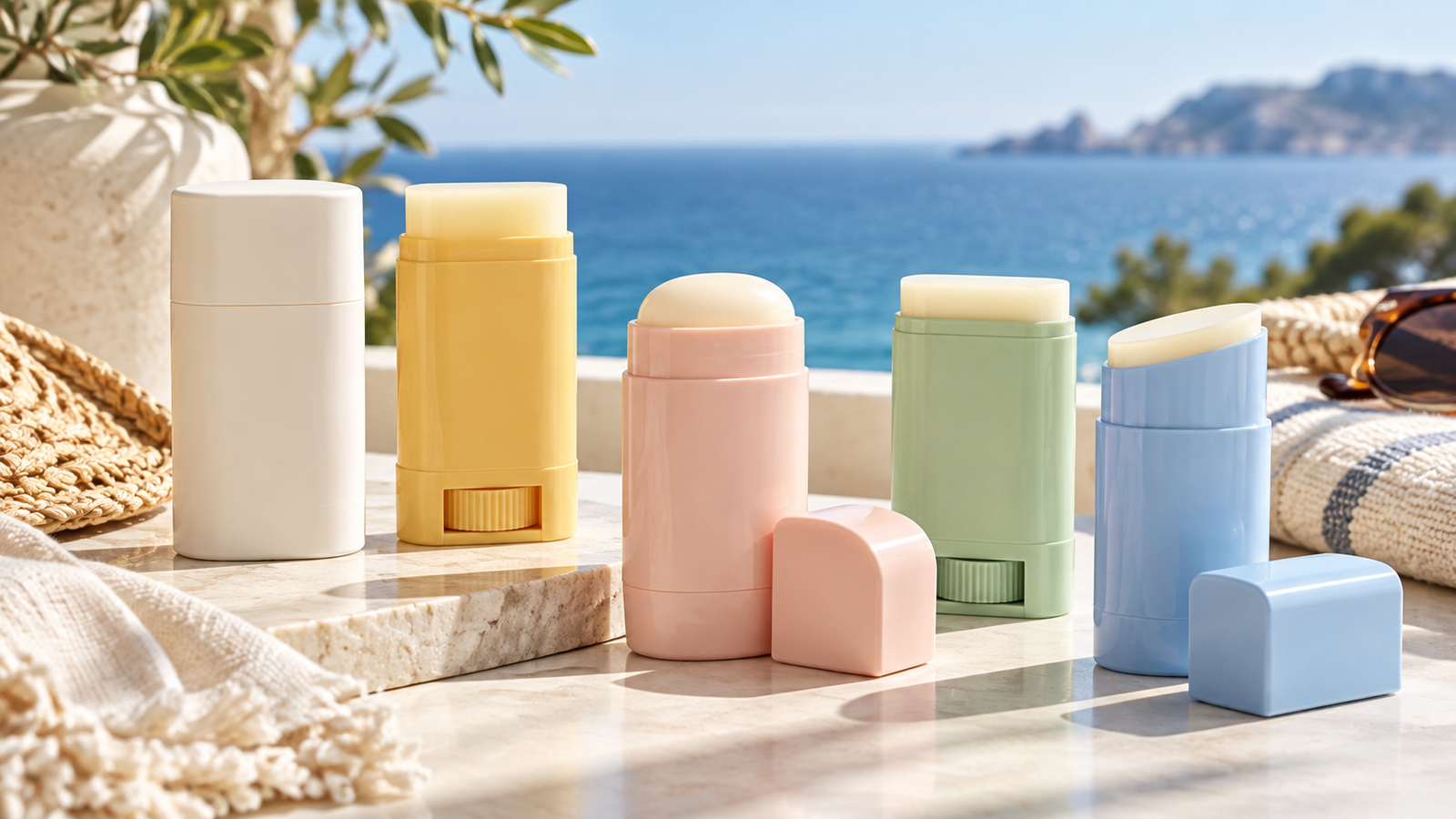
Sunscreen sticks have become a popular option for people who want convenient sun protection while travelling, commuting, exercising or spending time outdoors.
Unlike lotions and creams, a sunscreen stick can be applied directly to the skin without dispensing product into your hands. The format makes it especially appealing for quick facial touch-ups, targeted application and carrying in a handbag or gym bag.
However, convenience introduces an important challenge: a sunscreen stick can feel as though it has covered your face even when some areas have received too little product—or none at all.
The problem is not necessarily the sunscreen formula. It is how a solid applicator makes contact with the skin.
Curved areas such as the sides of the nose, temples, hairline and edges of the jaw can be difficult to cover evenly. Applying one quick swipe may also leave a film that is thinner than the amount used to establish the product’s labelled SPF in laboratory testing.
This matters because the sun protection you receive depends not only on the SPF number printed on the packaging but also on how thoroughly and consistently the product is applied.
This Physical Glow guide explains how to identify missed areas, inspect coverage, use sunscreen sticks more effectively and avoid common reapplication mistakes without turning your routine into a complicated process.
1. Why Sunscreen Stick Coverage Is Different From Lotion
Sunscreen sticks and sunscreen lotions can both provide broad-spectrum sun protection when appropriately formulated and correctly applied.
The difference lies primarily in their physical format and application method.
Sunscreen Lotions and Creams
Lotions can be dispensed onto the hands and spread across the face or body.
This may make it easier to distribute product over broad areas, although uneven coverage and insufficient application are still possible.
Sunscreen Sticks
Sticks contain a relatively solid formulation that transfers to the skin as the applicator moves across it.
They may be particularly convenient for:
- The face.
- Ears.
- Nose.
- Forehead.
- Targeted outdoor reapplication.
- Small exposed areas.
However, the amount transferred depends on the formulation, contact pressure, number of passes and surface shape.
A stick that glides effortlessly across the cheek may not make equally good contact with the creases beside the nose.
The useful distinction is not that sticks are ineffective and lotions are effective. It is that each format requires attention to application technique.
2. What Does SPF Actually Tell You?
SPF stands for Sun Protection Factor.
It primarily describes protection against sunburn-producing UV radiation under standardized testing conditions.
For example, SPF 50 is determined through testing in which sunscreen is applied at a specified amount, typically 2 mg per square centimetre of skin.
This laboratory application quantity is important.
A product labelled SPF 50 does not guarantee the same level of protection when you apply a substantially thinner or uneven layer.
Why One Swipe May Be Insufficient
With a sunscreen stick, the film deposited by one pass may vary significantly.
Factors include:
- How firmly the stick contacts the skin.
- The angle of the applicator.
- The skin’s texture.
- The product’s consistency.
- Temperature and formulation.
- How many overlapping passes you make.
A single swipe does not establish that the skin has received the amount required to achieve the labelled protection.
Repeated, thorough passes may improve coverage, but there is no universal swipe count that guarantees full SPF for every stick.
Follow the particular product’s application instructions.
Broad-Spectrum Protection Matters
SPF primarily reflects UVB-related sunburn protection.
UVA also contributes to skin damage, including photoageing.
Choose an appropriately labelled broad-spectrum sunscreen that meets applicable regulatory requirements.
In India, consumers may also encounter PA ratings used to communicate UVA protection.
SPF and UVA protection should be considered together rather than treating the SPF number as the complete measure of sun protection.
3. The Most Commonly Missed Areas of the Face
The face is not a flat surface.
It has curves, folds, contours and areas partly covered by hair.
A solid sunscreen stick can travel smoothly over prominent surfaces while failing to reach adjacent recessed areas.
Sides of the nose
The curves and creases beside the nostrils are easily missed when the stick mainly touches the bridge and cheeks.
Temples and hairline
Moving the stick across the centre of the forehead may leave the edges near the hairline uncovered.
Ears and jawline
The outer ear, areas near the ear and lower edge of the jaw may receive little product during a quick facial touch-up.
Other easy-to-overlook areas include the upper lip, chin contours and exposed parts of the neck.
Eyelids and skin immediately around the eyes require particular care: use a product suitable for that area and follow its safety directions. Do not apply a stick into the eyes or onto mucous membranes.
Why These Areas Matter
Missed patches remain vulnerable to UV exposure even when nearby skin is covered.
Someone may apply generous sunscreen to both cheeks but still experience sunburn around the temples, nose or ears.
The goal is therefore to create continuous coverage across all exposed skin, not simply to make several swipes across the largest facial surfaces.
4. How Many Passes Should You Make With a Sunscreen Stick?
The American Academy of Dermatology (AAD) recommends applying a sunscreen stick four passes back and forth over each area of skin being protected, then rubbing it in to help achieve an even layer.
aad.org
This is a useful practical recommendation because people often underestimate how much sunscreen a solid applicator deposits.
However, it should not be interpreted as proof that exactly four passes always deliver the labelled SPF.
The amount transferred can vary between formulations, and real facial contours complicate application.
What Counts as a Thorough Pass?
For a broad area such as the cheek:
- Place the stick in comfortable contact with the skin.
- Move across the intended area slowly and deliberately.
- Make overlapping passes rather than leaving gaps.
- Repeat according to the product’s instructions and established dermatological guidance.
- Gently distribute the product where appropriate to improve evenness.
Avoid pushing aggressively against the skin.
A sunscreen stick should not require painful pressure.
Why Overlapping Matters
Imagine painting a wall with a roller.
If each stroke leaves a narrow uncovered strip beside it, the surface remains patchy even though most of the wall looks coated.
Sunscreen stick coverage can have a similar problem.
The stick may deposit product along the centre of its path while leaving small gaps between separate strokes.
Overlapping passes help reduce this risk.
5. A Step-by-Step Sunscreen Stick Coverage Routine
A systematic application method makes missed areas less likely.
Practical full-face coverage sequence
- ForeheadApply overlapping passes across the full forehead, paying attention to the hairline and both temples.
- Right cheekCover the central cheek, then include the area toward the ear and jaw.
- Left cheekRepeat the same process, ensuring that no narrow gaps remain between application paths.
- NoseAddress the bridge, tip and sides separately. The nose’s curved surfaces may require adjusting the stick’s angle.
- Chin and jawlineCover the chin and extend application toward the jaw’s edges.
- Ears and exposed neckApply suitable sunscreen to these areas as well, using a format that allows adequate, comfortable coverage.
- Final coverage checkUse a mirror to inspect likely missed areas and gently distribute the formula as directed.
Apply generously and follow your product’s instructions. This sequence organizes coverage but cannot verify the SPF actually achieved.
A smaller sunscreen stick may make it easier to reach some facial contours, while a wider stick may be quicker for larger surfaces.
However, a narrow stick also requires more overlapping application paths to cover the same area.
Neither width is automatically superior.
6. How to Check for Missed Areas After Application
Unlike some coloured skincare products, most sunscreens do not provide a clear visual indication of how much protection has been applied.
A transparent finish can look uniform even when the layer is thin.
Therefore, coverage checking involves looking for application gaps and maintaining a consistent technique rather than relying entirely on visible product.
Use a Mirror
Check the face from different angles.
Look particularly at:
- Sides of the nose.
- Temples.
- Hairline.
- Jawline.
- Areas near the ears.
- Neck and other exposed skin.
Remember That Shine Is Not a Reliable Measurement
A glossy appearance does not establish sufficient SPF.
Similarly, a matte finish does not prove that coverage is inadequate.
Cosmetic finish depends on the formulation.
Do Not Assume a White Cast Guarantees Protection
Some mineral sunscreens may leave a visible cast.
Although this can make certain uncovered patches easier to notice, visible whiteness does not establish the correct application amount or a particular SPF.
What About UV Cameras?
Specialized UV-imaging devices can sometimes show differences in sunscreen coverage.
However, their performance depends on the camera, sunscreen filters, lighting and interpretation.
A dark-looking area in a UV image does not automatically establish that you achieved SPF 50, nor does every camera work equally well with every sunscreen formulation.
For ordinary users, correct product quantity, thorough application and regular reapplication remain the more dependable foundations.
7. Sunscreen Stick vs Lotion for Coverage
Both formats have practical strengths.
| Factor | Sunscreen stick | Sunscreen lotion or cream |
|---|---|---|
| Portability | Often excellent | Depends on packaging |
| Targeted application | Convenient | Possible but less direct |
| Broad facial coverage | Requires careful overlapping passes | Often easier to spread |
| Neck and larger body areas | Can be time-consuming | Usually more practical |
| Product quantity | Harder to judge visually | Often easier to dispense deliberately |
| Makeup touch-ups | May be convenient | Can disturb makeup |
| Hand contact | Less during direct application | Usually more |
| Main coverage risk | Thin or missed strips | Applying too little or spreading unevenly |
When Lotion May Be the Better Starting Product
A lotion or cream can be a sensible choice for the initial morning application, particularly when you need to protect the entire face, neck and additional exposed areas.
It is often easier to spread generously over a large surface.
When a Stick May Be Particularly Useful
A stick may be useful for:
- Outdoor touch-ups.
- Commuting.
- Travelling.
- Reapplying to smaller exposed areas.
- People who prefer not to dispense lotion while away from home.
Can You Combine Them?
Yes.
Using a lotion for the initial application and a suitable stick for reapplication can be practical.
However, the stick must still be applied thoroughly.
A convenient format does not justify using a negligible amount of sunscreen.
8. How Often Should You Reapply a Sunscreen Stick?
Reapplication depends on sun exposure and the product’s instructions.
The AAD recommends reapplying sunscreen approximately every two hours when outdoors, and after swimming or sweating. The FDA also advises more frequent reapplication in these circumstances and after towel drying.
aad.org
+2
Example: A Day Outdoors
| Situation | Sunscreen action |
|---|---|
| Before going outdoors | Apply broad-spectrum sunscreen generously as directed |
| During prolonged outdoor exposure | Reapply at least every two hours |
| After heavy sweating | Reapply according to the product directions |
| After swimming | Follow water-resistance and reapplication instructions |
| After towel drying | Reapply promptly |
| After wiping or rubbing an exposed area | Restore coverage where the sunscreen may have been removed |
These are practical triggers, not a guarantee that protection remains unchanged between applications.
Does SPF 50 Last Longer Than SPF 30?
Not necessarily.
A higher SPF does not mean sunscreen can be left on indefinitely without reapplication.
The protection achieved in real life depends on application, product wear, UV exposure and other factors.
Do not extend the reapplication interval solely because the label shows a high SPF.
9. Can You Apply a Sunscreen Stick Over Makeup?
This is one of the main reasons people consider sunscreen sticks.
Reapplying a lotion over foundation, concealer or powder can be inconvenient.
A stick may offer a more portable alternative.
However, applying sunscreen over makeup creates additional challenges.
Potential Problems
- Makeup may transfer onto the stick.
- The sunscreen may drag foundation across the skin.
- Product buildup may create streaks.
- Users may avoid sufficient passes to preserve their makeup.
- The stick may skip over heavily powdered areas.
Practical Advice
If using a stick over makeup:
- Avoid applying excessive pressure.
- Make deliberate, overlapping passes.
- Check for areas where the applicator does not contact the skin well.
- Follow the sunscreen’s instructions.
- Accept that a thorough reapplication may alter the makeup finish.
A sunscreen application that looks cosmetically perfect but deposits too little product should not be assumed to deliver the labelled protection.
Should You Blend It With Your Fingers?
Dermatologists recommend rubbing in sunscreen stick applications to improve evenness.
aad.org
If you do this over makeup, use clean hands and avoid excessively wiping away the product.
However, blending is not a substitute for applying enough sunscreen in the first place.
10. Does Makeup With SPF Replace Reapplication?
Foundation, BB cream, concealer and compact powder may contain sun-protective ingredients.
However, the SPF rating of a cosmetic product is established under defined testing conditions.
People often use much less foundation or tinted moisturizer than the quantity required to obtain the labelled SPF.
Therefore, makeup containing SPF should not automatically be treated as sufficient standalone sun protection.
What About SPF Powder?
Powder products can provide some UV protection when formulated and applied appropriately.
However, achieving sufficiently thick and uniform coverage with powder can be difficult during normal cosmetic use.
For dependable outdoor protection, use a suitable sunscreen applied adequately.
A sunscreen stick may provide a practical reapplication format, although it still requires thorough coverage.
11. Sunscreen Stick Reapplication During Exercise
Outdoor exercise introduces additional complications.
Sweat, repeated wiping, hats and helmets can disturb sunscreen coverage.
For activities such as running, cycling and outdoor sports, water resistance becomes especially relevant.
Check Water-Resistance Claims
Some sunscreens are tested for water resistance for specified durations, commonly 40 or 80 minutes under US labelling standards.
These durations describe standardized testing conditions, not permission to ignore application or reapplication.
No sunscreen should be assumed to be completely waterproof.
FDA
After Sweating
If significant sweat has accumulated, follow the product’s directions for reapplication.
When appropriate, gently dry the skin before applying additional product rather than repeatedly dragging the stick across a very wet face.
After Wiping Your Face
Towels and clothing can physically remove sunscreen.
Reapply to affected exposed skin.
Remember Other Protection
Use shade, suitable clothing, hats and sunglasses where practical.
A sunscreen stick is one part of sun protection, not a substitute for these measures.
12. Sunscreen Stick Coverage on the Ears and Neck
The ears and neck are frequently overlooked during sunscreen application.
These areas may also be more difficult to reach thoroughly with a solid applicator.
Ears
Pay attention to the outer surfaces and exposed areas around the ears.
Do not insert sunscreen into the ear canal.
A smaller applicator or lotion may be easier to use on intricate contours.
Neck
The neck often requires more product and broader coverage than a small stick application might suggest.
For larger areas, lotion may be faster and easier to distribute.
Hairline and Exposed Scalp
The hairline can create narrow strips of uncovered skin.
People with thinning hair or exposed scalp should protect those areas with suitable sunscreen or a hat.
Do not assume that surrounding hair provides complete UV protection.
The FDA specifically identifies the ears, nose, neck, lips, hands, feet and hairline as commonly forgotten areas.
FDA
13. How to Choose a Sunscreen Stick for Even Coverage
Not all sunscreen sticks behave the same way.
A product that feels very firm may transfer differently from one with a softer, creamier texture.
Evaluate the complete experience rather than relying on SPF alone.
| Buying factor | What to check |
|---|---|
| Broad-spectrum protection | UVA and UVB protection claims |
| SPF | Appropriate for intended exposure; SPF 30+ is a common dermatological recommendation |
| Applicator width | Suitability for large surfaces and small contours |
| Glide | Whether it moves comfortably without excessive pulling |
| Transfer | Whether it deposits enough product when applied properly |
| Finish | Comfort with shine, residue or white cast |
| Water resistance | Relevant for swimming and sweating |
| Fragrance | Individual skin tolerance |
| Eye-area suitability | Product-specific safety instructions |
| Packaging | Hygiene, cap closure and portability |
| Price per gram | Useful for comparing value |
Is a Matte Stick Better for Oily Skin?
Some people with oily skin prefer a matte finish.
However, a matte appearance does not establish superior sun protection.
Choose a formulation that is comfortable enough to apply generously.
Is a Transparent Stick Better?
Transparent sticks may be more cosmetically convenient.
However, the absence of visible residue also makes it difficult to detect uneven coverage.
Application technique becomes especially important.
Is a Wider Stick Better?
A wide stick may cover cheeks and forehead more quickly.
A narrow stick may be more convenient around the nose and other contours.
Consider your main use case rather than assuming one format is best for everyone.
14. Sunscreen Stick Hygiene: What Happens After Reapplication?
Because a sunscreen stick touches the skin directly, hygiene deserves attention.
During the day, its surface may come into contact with:
- Sweat.
- Skin oils.
- Makeup.
- Dust.
- Other skincare products.
This does not automatically make the stick unsafe, but correct storage and personal use are important.
Practical Hygiene Habits
- Follow the manufacturer’s cleaning instructions.
- Keep the protective cap closed.
- Avoid touching the product to visibly dirty surfaces.
- Do not share a stick casually between multiple users.
- Avoid applying directly over infected or damaged skin.
- Store it away from excessive heat.
- Discontinue use if its appearance, smell or texture changes abnormally.
What If Makeup Transfers Onto the Stick?
Some transfer is possible during reapplication.
Check the manufacturer’s directions rather than attempting to disinfect the product with alcohol or other substances that may damage the formula.
If the surface becomes heavily contaminated, consider whether a different reapplication method would be more practical.
15. Can Sunscreen Sticks Melt in Indian Summer Heat?
Many sunscreen sticks contain waxes, oils and other ingredients that influence their solid consistency.
Excessive heat can affect some formulas.
For example, a stick left in a parked car during hot weather may soften, deform or experience changes in consistency.
The extent of these changes depends on the formulation.
Storage Recommendations
- Keep the product away from direct sunlight when stored.
- Avoid leaving it inside a hot parked vehicle.
- Close the cap securely.
- Follow the manufacturer’s storage conditions.
- Check the product after significant heat exposure.
Do not assume that refrigerating a compromised product restores its original tested properties.
If the stick has visibly separated, melted substantially or changed texture in an unusual way, consult the manufacturer’s guidance and consider replacing it.
16. How Much Sunscreen Stick Will You Actually Use?
Sunscreen sticks vary in size, and the number of applications per package is difficult to predict.
A 15 g stick and a 30 g stick do not necessarily provide proportionally identical application counts.
The amount used depends on:
- Face size.
- Number of passes.
- Surface area covered.
- Frequency of reapplication.
- Formula transfer.
- Whether the stick is also used on the ears and neck.
Why Price Per Gram Matters
Consider two hypothetical products:
| Product | Package size | Price | Price per gram |
|---|---|---|---|
| Stick A | 15 g | ₹450 | ₹30 |
| Stick B | 20 g | ₹500 | ₹25 |
Stick B has a lower price per gram.
However, this does not necessarily mean it provides better value for your needs.
If Stick A is substantially more comfortable and easier to apply thoroughly, the higher unit price may be justified.
The most economical product is not helpful if you consistently underapply it.
17. A Sunscreen Reapplication Checklist
This checklist is intended to help you remember exposed areas, not to measure the SPF achieved.
Coverage reminder
0/9Forehead and hairlineRight cheek and templeLeft cheek and templeBridge, tip and sides of noseChin, upper lip and jawlineOuter ears and surrounding exposed areasNeck and other exposed skinAppropriate amount and overlapping applicationReapplication timing and water-resistance instructions
Check each exposed area during your next application. Reset checklist
Use the checklist to establish a consistent routine until checking the commonly missed areas becomes habitual.
18. Common Sunscreen Stick Mistakes
Mistake 1: Making One Quick Swipe
A single light pass may not deposit enough sunscreen.
Use thorough overlapping application and follow product instructions.
Mistake 2: Ignoring the Sides of the Nose
The stick may glide over the bridge while missing the surrounding creases.
Treat the sides of the nose as separate areas.
Mistake 3: Forgetting the Hairline and Temples
The forehead can appear covered even when its edges remain exposed.
Mistake 4: Applying Only to the Centre of the Face
The jawline, ears and neck also need protection when exposed.
Mistake 5: Avoiding Enough Product to Preserve Makeup
Cosmetic convenience should not replace adequate application.
Mistake 6: Assuming SPF 50 Means All-Day Protection
Higher SPF does not eliminate the need for reapplication during ongoing exposure.
Mistake 7: Using a Non-Water-Resistant Product for Heavy Sweating
Choose sunscreen appropriate for outdoor activities and follow its water-resistance directions.
Mistake 8: Applying Over Dirt or Heavy Sweat Without Considering Coverage
The product may spread unevenly or transfer poorly.
Use the sunscreen according to the manufacturer’s instructions.
Mistake 9: Assuming Transparent Means Even
Invisible finishes make coverage difficult to inspect.
A consistent application method matters.
Mistake 10: Treating a Sunscreen Stick as the Only Sun-Protective Measure
Shade, clothing, a hat and UV-protective sunglasses provide additional protection.
19. A Practical Daily Sunscreen Routine
Morning: Establish protection
- Complete your basic skincare routine.
- Apply a suitable broad-spectrum sunscreen generously to exposed skin.
- Follow product directions, including application timing before sun exposure.
- Check the nose, temples, ears, neck and hairline.
- Use appropriate clothing, shade and other sun-protective measures.
Daytime: Reapply effectively
- Reapply during prolonged outdoor exposure according to the label, generally at least every two hours.
- If using a stick, apply thorough overlapping passes to every exposed area.
- Pay extra attention to curved facial surfaces.
- Restore coverage after sweating, swimming or towel drying as directed.
- Do not assume that a cosmetic touch-up provides adequate protection without enough product.
This routine can be adjusted for your activities, skin tolerance and product instructions.
You do not need to purchase multiple sunscreen formats if one product allows you to apply and reapply protection adequately.
20. When Is a Sunscreen Stick the Wrong Choice?
A stick may not be the most practical option in every situation.
Consider a lotion or another suitable formulation when:
- You need to cover large body areas quickly.
- The stick is too narrow for efficient application.
- It drags uncomfortably across sensitive skin.
- You cannot apply enough without disturbing makeup excessively.
- Its texture creates significant buildup.
- The formulation is unsuitable for your intended activity.
- You find it difficult to inspect coverage.
A convenient travel format should not create a barrier to adequate sunscreen application.
Some people prefer sunscreen lotion for daily use and keep a stick only for occasional touch-ups.
Others use sticks successfully for both applications.
The appropriate choice is the one you can use generously and consistently.
21. Comparing Sunscreen Sticks Before Buying
If you are choosing a sunscreen stick for regular outdoor reapplication, evaluate more than the advertised SPF.
Prioritize a product with suitable UVA and UVB protection, comfortable application, appropriate water resistance and a texture you can use thoroughly.
The applicator should also fit the areas you intend to protect.
For a comparison of specific products, read Physical Glow’s Best Sunscreen Sticks in India: Top 5 for Reapplication guide.
This companion buying guide is useful for comparing product formats and intended use cases, while the present article focuses specifically on application coverage and preventing missed areas.
Frequently Asked Questions
Is one swipe of a sunscreen stick enough?
Do not assume so. A single pass may deposit too little product. Dermatologists recommend several thorough passes and spreading the product for more even coverage.
How many times should I swipe a sunscreen stick?
The American Academy of Dermatology recommends four passes back and forth over each area, followed by rubbing in. However, this should not be interpreted as a universal guarantee of the labelled SPF for every formula.
Can sunscreen sticks provide SPF 50 protection?
Yes, a properly tested sunscreen stick may carry an SPF 50 label. However, achieving the labelled protection depends on applying an adequate, even amount.
Are sunscreen sticks less effective than lotions?
Not inherently. Both can provide UV protection, but sticks may be harder to apply evenly across certain surfaces, especially when used sparingly.
Can I use sunscreen sticks as my only sunscreen?
You can use a suitable sunscreen stick as directed if you are able to apply enough product thoroughly to all exposed areas. For large surfaces, a lotion may be more practical.
Can I reapply a sunscreen stick over makeup?
Yes, although makeup can interfere with transfer and some products may disturb the finish. Thorough coverage remains essential.
Do I need to rub in sunscreen after using a stick?
Dermatologists recommend rubbing it in to improve evenness. Follow the product directions and avoid removing the applied layer.
Which areas are easiest to miss?
The sides of the nose, temples, hairline, ears, jawline and exposed neck are particularly important to check.
How often should I reapply sunscreen outdoors?
Generally, at least every two hours during ongoing outdoor exposure, and more often after swimming, sweating or towel drying according to the label.
Is a matte sunscreen stick better than a dewy one?
Neither finish guarantees better protection. Choose a properly labelled product you can apply adequately.
Does a sunscreen stick work on oily skin?
It can. Suitability depends on the formulation, skin tolerance and cosmetic finish.
Can I store a sunscreen stick in my car?
Avoid leaving it in a hot parked vehicle. Excessive heat may affect product consistency or stability.
Can a UV camera tell me whether I applied enough?
It may reveal some coverage differences, but it cannot reliably establish the actual SPF achieved on your skin in ordinary home use.
Are sunscreen sticks suitable for children?
Some products may be suitable for children when used according to age-specific directions. Ensure thorough adult-assisted coverage, follow the label and seek medical advice about sunscreen for infants younger than six months.
Final Verdict: Thorough Coverage Matters More Than Convenient Packaging
Sunscreen sticks can make reapplication easier, particularly when travelling, commuting or spending time outdoors.
However, the solid applicator introduces a risk of thin, uneven coverage and missed patches.
The most useful approach is to treat the face systematically, apply thorough overlapping passes and pay particular attention to the sides of the nose, temples, hairline, ears and jawline.
Do not assume that one quick swipe delivers the SPF printed on the package.
Follow the product’s application directions, reapply during prolonged outdoor exposure and choose water-resistant protection when appropriate.
For many people, a lotion for the initial application and a sunscreen stick for convenient touch-ups can be a practical combination.
Ultimately, the best sunscreen format is the one that helps you maintain adequate, consistent protection—not simply the one that is quickest to apply.
Editorial References
- American Academy of Dermatology — How to Use Stick and Spray Sunscreens
- US Food and Drug Administration — Sunscreen Application and Reapplication
- US FDA — Sunscreen Labelling and Effectiveness Testing
- US FDA — Tips to Stay Safe in the Sun
Physical Glow Editorial Note: This article provides general sun-protection education. Sunscreen performance depends on the specific formulation, adequate application, reapplication and environmental conditions. People with photosensitivity disorders, a history of skin cancer or other significant dermatological concerns should follow individualized guidance from a qualified dermatologist.