Fixed vs Adjustable Kettlebells: Which Should You Buy?
Compare fixed and adjustable kettlebells by weight changes, handle feel, durability, storage, exercise flow and the way you plan to progress at home.
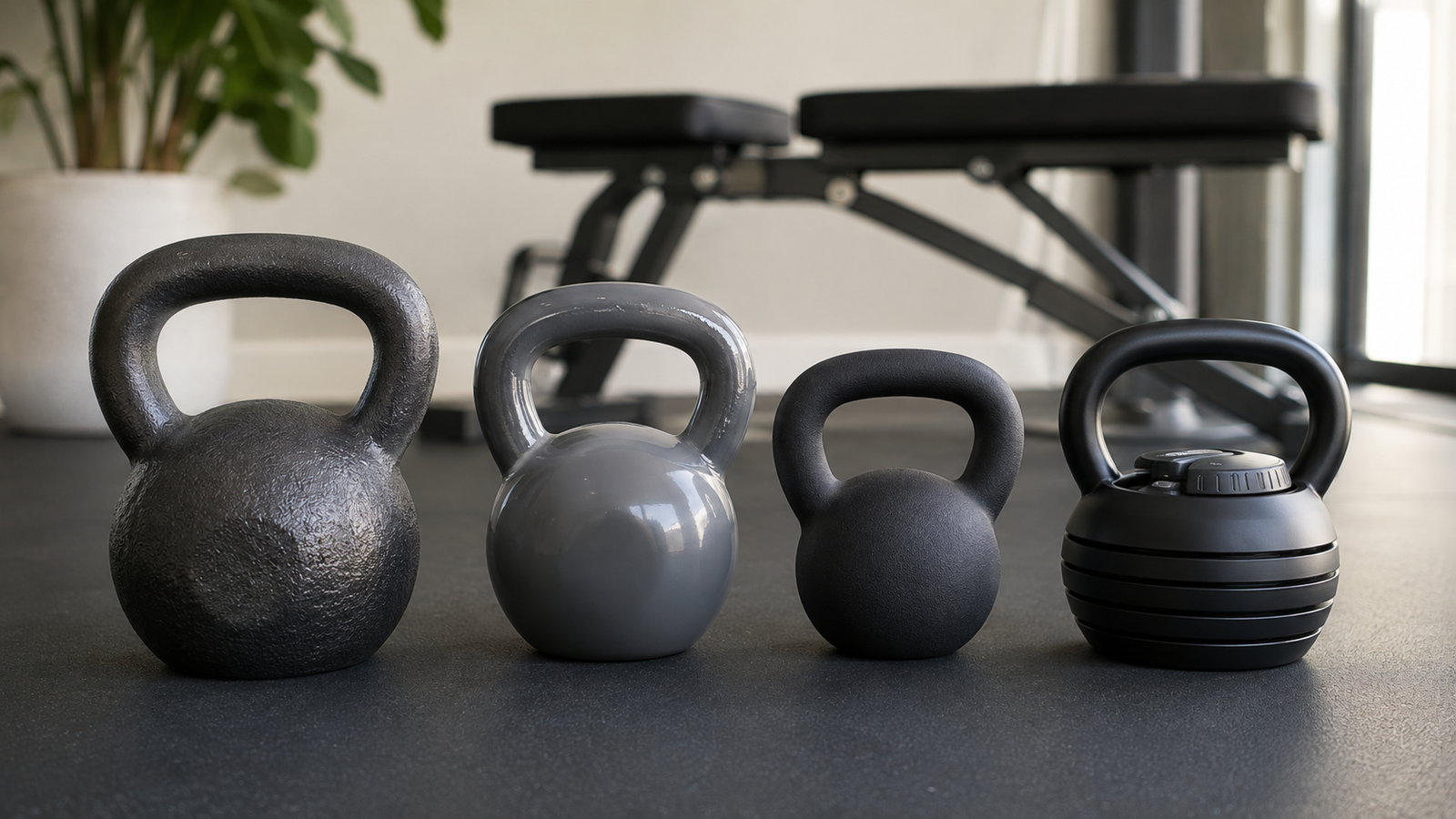
Kettlebells look simple, but the decision between fixed and adjustable designs can affect your training for years. A fixed kettlebell has one permanent weight. An adjustable kettlebell lets you change the load using plates, a selector or another locking system.
Fixed kettlebells usually win for simplicity and workout flow. Adjustable kettlebells usually win for space efficiency and a broader weight range from one piece of equipment.
Fixed vs Adjustable Kettlebells at a Glance
| Factor | Fixed Kettlebell | Adjustable Kettlebell |
|---|---|---|
| Weight | One fixed load | Several selectable loads |
| Storage | More space if you own several | Usually more compact |
| Workout changes | Instant | May require adjustment |
| Shape | Consistent for that bell | May change by design or load |
| Durability | Simple construction | More moving or locking parts |
| Best for | Frequent, fast-paced training | Home gyms with limited space |
Choose Fixed Kettlebells for Simplicity
A fixed bell is ready as soon as you pick it up. There is no selector to change, plate to remove or lock to check between exercises. That is useful in circuits, complexes and sessions where you switch quickly between loads.
The handle and body also stay exactly the same every time you use that kettlebell. For ballistic exercises such as swings and cleans, consistency can make the movement feel more predictable.
Choose Adjustable Kettlebells for Space Efficiency
An adjustable kettlebell can replace several separate bells. That is valuable in apartments or small home gyms where storage space is more limited than training ambition.
It can also make progression easier. Instead of buying a new kettlebell every time you need a heavier load, you can increase the setting within the available range.
Handle Size and Comfort Matter
Do not choose by weight range alone. The handle must feel secure for the exercises you plan to perform. Check handle diameter, usable width and whether both hands fit comfortably for swings.
Some adjustable designs have larger bodies or more complex shapes than traditional fixed bells. That can affect how the kettlebell sits during cleans, presses or rack-position exercises.
Weight Changes During a Workout
If you often alternate between a lighter kettlebell for presses and a heavier one for swings, fixed bells are faster because each load is immediately available.
With an adjustable model, consider how long a weight change takes and whether the mechanism can be operated safely without disrupting the workout. A few seconds may not matter in normal strength sessions, but it can feel inconvenient in timed circuits.
Durability and Mechanism
A traditional cast-iron fixed kettlebell has very few components that can fail. Adjustable models add selectors, locks, internal plates or other moving parts.
That does not make adjustable kettlebells unreliable, but it means build quality and locking security deserve closer attention. Follow the manufacturer’s instructions and confirm that the selected load is fully secured before each set.
Which Is Better for Beginners?
An adjustable kettlebell can be economical for a beginner who expects to progress through several loads. However, a simple fixed bell can be easier to learn with because the shape and weight never change.
The more important beginner decision is choosing an appropriate starting load for the exercises you will perform. A weight that works for deadlifts and swings may be too heavy for overhead pressing.
Which Is Better for a Small Home Gym?
Adjustable wins when floor and shelf space are tight. One adjustable unit can provide several loads without creating a row of separate kettlebells.
If you have adequate storage and train frequently, two or three carefully chosen fixed kettlebells can still be an efficient setup because they allow fast changes during training.
Coating and Floor Protection
Fixed kettlebells may be bare cast iron, vinyl-coated or neoprene-coated. Coatings can make them friendlier to indoor floors, although they do not replace controlled handling and a suitable training surface.
Adjustable designs vary widely. Check whether the base is stable, whether plates can rattle and whether the outer shell remains comfortable against the forearm.
Common Buying Mistakes
- Buying the widest adjustable range without checking handle comfort.
- Choosing one fixed weight for every exercise.
- Ignoring how quickly the adjustable mechanism changes load.
- Assuming a coated kettlebell can be dropped safely on any floor.
- Buying too many fixed weights before understanding your actual progression needs.
Final Verdict
Buy fixed kettlebells if you value simplicity, fast workout transitions and a traditional consistent shape. Buy an adjustable kettlebell if space is limited and you want several usable weight settings without buying a full set.
For most compact home gyms, adjustability offers strong practical value. For frequent kettlebell-focused training, fixed bells can provide the better training experience.