Skipping Rope Handle and Cable Inspection Before Indoor Workouts
Before jumping indoors, check rope handles, cable wear and the surrounding floor. A short inspection can prevent damaged equipment from disrupting workouts.
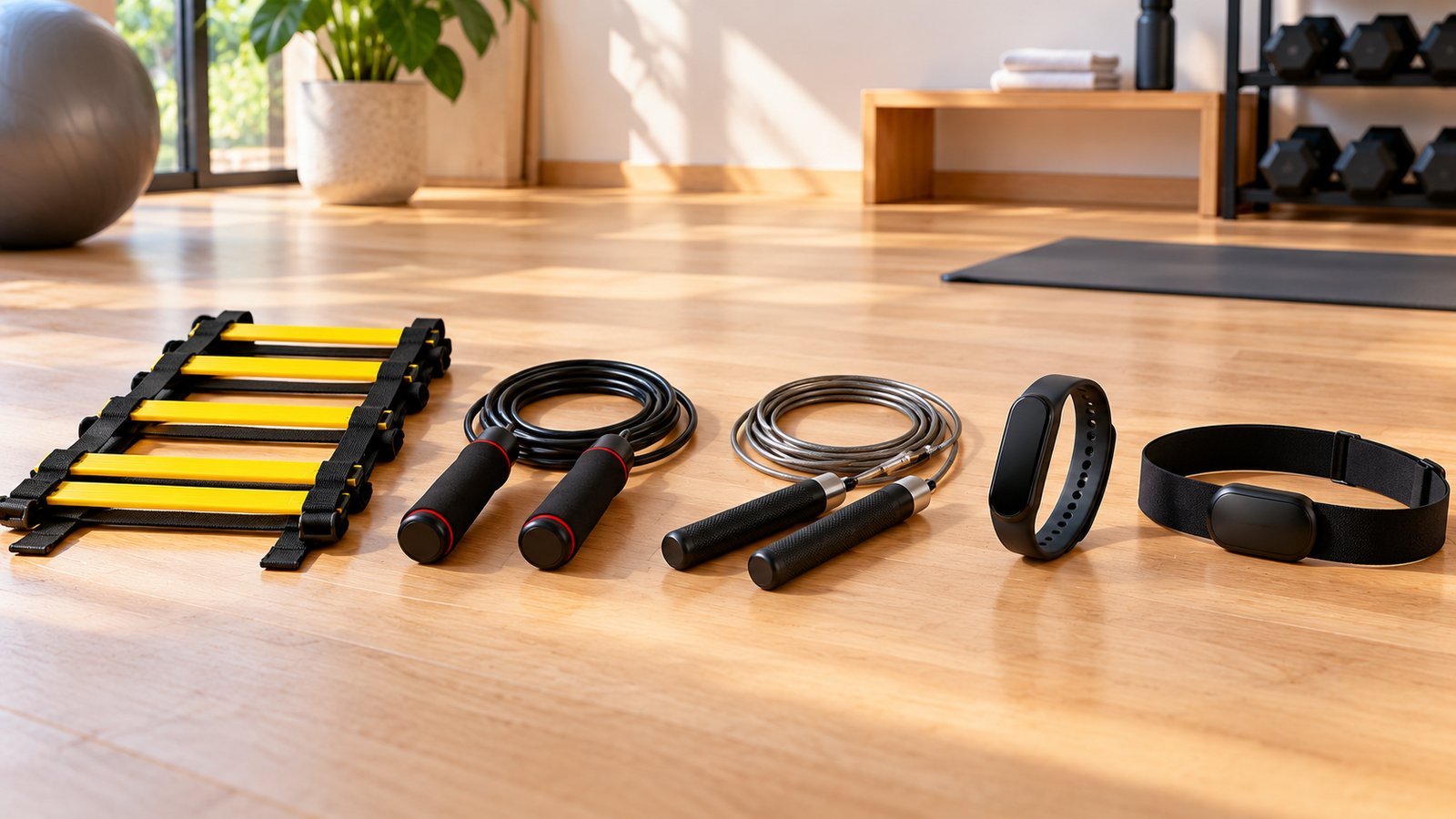
Skipping ropes are among the most convenient pieces of fitness equipment for home workouts. They require relatively little storage space, are available in several designs, and can be used for activities ranging from basic coordination practice to more demanding cardiovascular training.
A skipping rope may look simple, but its performance depends on several connected components.
The handles need to remain secure in your hands. The rope or cable must rotate smoothly without unexpected interruptions. Adjustable connectors must stay properly fastened, and the surrounding workout area must provide enough clearance for the rope to travel freely.
These details become especially important during indoor exercise.
Unlike an outdoor training area, a bedroom, living room, or compact home gym may contain furniture, ceiling fans, light fixtures, slippery flooring, and other obstacles.
A rope that catches an object or develops a mechanical problem during use can interrupt your movement unexpectedly.
Inspecting the handles, cable, adjustment points, and workout space before every session is a practical way to identify avoidable equipment problems.
However, not every skipping rope is constructed in the same way. A lightweight PVC rope has different characteristics from a coated steel speed rope, a beaded rope, or a weighted training rope.
The correct inspection and maintenance methods depend on the specific design.
This guide explains how skipping ropes are constructed, what to check before indoor workouts, how to recognize cable and handle wear, and when equipment should be repaired using an approved method or replaced.
1. Understanding the Different Parts of a Skipping Rope
Before inspecting a rope, it helps to understand how the equipment is assembled.
Although designs vary, many skipping ropes include four main components.
Handles
Handles are the sections held by the user during exercise.
They may be manufactured from:
- Plastic
- Aluminium
- Wood
- Foam-covered materials
- Rubberized materials
- Composite materials
Some handles are compact and lightweight, while others are larger or weighted.
The choice affects grip feel and how the rope rotates.
Rope or cable
The flexible section rotates around the body during skipping.
Depending on the model, it may be made from PVC, synthetic cord, steel cable with a protective coating, or another material.
Different constructions have different flexibility, weight, and wear characteristics.
Handle connections
The rope must be attached securely to the handles.
Some products use fixed connections.
Others have adjustable screws, locking collars, clips, or proprietary attachment mechanisms.
Rotating components
Certain skipping ropes have bearings, bushings, or swivel mechanisms inside the handles.
These components are intended to support smooth rotation.
Other ropes use simpler connections without sophisticated rotating hardware.
Why the entire system matters
A skipping rope is only dependable when its relevant components function together.
A perfectly intact cable does not compensate for a handle connection that is about to detach.
Likewise, smooth bearings do not make a frayed or damaged cable suitable for use.
The full assembly should be inspected rather than checking only the section that touches the floor.
2. Different Skipping Rope Materials and Their Inspection Needs
The material used for the rope or cable influences how it behaves during exercise and which damage signs deserve attention.
PVC skipping ropes
PVC ropes are commonly used for general fitness and basic skipping exercises.
They are available in different thicknesses and levels of flexibility.
Potential inspection concerns include:
- Cuts
- Surface cracking
- Permanent kinks
- Uneven thinning
- Damage near the handles
- Unusual stiffness
- Separation at attachment points
A small surface mark is not necessarily structural damage, but deep cuts and visible deterioration should not be ignored.
Coated steel speed ropes
Some speed ropes use a steel cable covered with a protective polymer coating.
The cable may be relatively thin and is often paired with rotating handles.
Inspection should focus on:
- Fraying or broken metal strands
- Damage to the protective coating
- Sharp exposed wires
- Permanent bends or kinks
- Crimp or locking mechanism security
- Wear where the cable enters the handle
Exposed steel strands are particularly concerning because they may have sharp ends.
Do not handle damaged cable sections with bare fingers or continue using a cable showing broken wires.
Beaded skipping ropes
Beaded ropes generally have individual plastic or similar segments threaded along a flexible internal cord.
The beads can influence rope weight and feedback during use.
Check for:
- Cracked or broken beads
- Sharp edges
- Worn internal cord
- Loose end connections
- Excessive fraying near the handles
An intact outer bead does not establish that the internal cord is undamaged.
Fabric or braided ropes
Some traditional ropes use textile or braided materials.
Repeated floor contact may cause surface abrasion or fibre deterioration.
Inspect the entire length for excessive fraying, thinning, and damaged connections.
Weighted ropes
Weighted skipping ropes may be heavier or incorporate additional resistance through their construction.
These can create greater demands during movement.
Follow the manufacturer’s inspection, load, and exercise instructions.
Do not use the same damage criteria for every rope material. A steel cable, PVC cord, and braided rope can deteriorate in different ways.
3. Why Handle Condition Matters
Handles control the movement of the skipping rope.
During exercise, they experience repeated gripping and rotational forces.
A damaged handle can interfere with movement even when the rope itself remains intact.
Grip security
The handle should remain comfortably secured in the hand during normal use.
Sweat, surface wear, and damaged grip materials may affect this.
Internal construction
Some handles contain rotating mechanisms or a core supporting the cable connection.
Visible damage to the outer casing may expose or affect these internal components.
Cable attachment
The rope should remain connected to the handle according to the product’s design.
An insecure attachment can allow a cable to detach unexpectedly.
Handle balance
Some products use intentionally weighted handles.
Unexpected changes in the condition of a handle may affect how the rope feels during exercise.
Why loose handles are concerning
An unstable handle can make rope movement less predictable.
If a component detaches while the rope is rotating, it may strike the user or nearby objects.
Inspect the handle before applying exercise speed.
4. How to Inspect Skipping Rope Handles
A handle inspection usually takes very little time.
Perform it while the rope is completely stationary.
Step 1: Examine the outer casing
Look for visible cracks, deformation, loose panels, and broken components.
Pay attention to the area where the rope connects to the handle.
Step 2: Check the gripping surface
Examine foam, rubber, or textured sections.
Look for excessive wear, peeling, significant tears, or unexpected movement of the grip covering.
Step 3: Hold the handle normally
Check whether the handle fits securely in your hand.
It should not have sharp edges or damaged sections that create discomfort.
Step 4: Inspect the end connection
Look at the point where the cable or rope enters the handle.
Check for visibly loose fittings or damaged components.
Step 5: Check rotating parts
If the handle contains a bearing or swivel, inspect whether it operates according to the manufacturer’s design.
Do not force the mechanism or apply unnecessary loads.
Step 6: Compare both handles
The two handles should behave as intended.
A noticeable difference in movement or connection security may indicate a problem.
Step 7: Decide whether the rope is suitable
If a handle is cracked, its cable attachment is insecure, or its structural integrity is uncertain, discontinue use until the manufacturer approves an appropriate repair or replacement.
Do not assume that holding the handle more tightly can compensate for damaged hardware.
5. Foam Grips: How to Recognize Wear
Some skipping ropes include foam-covered handles.
Foam can improve comfort and provide a particular grip feel.
However, it is subject to repeated contact and moisture.
Surface compression
Foam may gradually compress where the fingers apply pressure.
Minor changes can occur during ordinary use.
However, extensive compression may affect comfort.
Tears
Deep tears can expose underlying handle components.
They may also cause the grip covering to move.
Loose foam sleeves
If a foam grip slides unexpectedly along the handle, it may interfere with secure handling.
Crumbling material
Foam that breaks apart or leaves significant loose pieces may have deteriorated.
Sweat residue
Perspiration and skin oils may accumulate on the grip.
Cleaning should follow the manufacturer’s instructions.
When should the handle be replaced?
If damage affects the grip’s security, exposes a compromised handle core, or prevents normal operation, discontinue use.
Do not depend on ordinary adhesive tape to restore an unstable grip.
6. Inspecting the Rope or Cable Along Its Entire Length
The rope itself experiences repeated movement and contact with the floor.
Wear may develop gradually.
A systematic inspection is more reliable than looking only at the middle section.
Begin at one handle
Hold the rope in a relaxed position.
Start at the connection point.
Examine the first section
Look for damage where the rope exits the handle.
Repeated bending may concentrate wear near this area.
Follow the entire length
Visually inspect the rope section by section.
Look for:
- Cuts
- Cracks
- Abrasion
- Unusual thinning
- Sharp protrusions
- Permanent kinks
- Frayed fibres or wires
- Changes in surface condition
Pay attention to the middle
The centre of the rope frequently contacts the floor during ordinary skipping.
This area may experience substantial abrasion.
Inspect the opposite end
Check the second handle connection carefully.
Do not assume that both ends wear equally.
Avoid aggressive testing
Do not deliberately stretch, twist, or sharply bend a damaged cable to see whether it will break.
If significant damage is visible, replace the affected component.
The most useful inspection covers the entire cable, including the attachment points and floor-contact area.
7. Why the Middle of a Skipping Rope Wears Out
During ordinary skipping, the rope repeatedly travels beneath the feet.
Depending on technique and design, part of the rope may contact the floor on each rotation.
That contact creates abrasion.
Rough flooring
Concrete and other abrasive surfaces may wear certain ropes more quickly.
The degree of wear depends on the rope material and surface conditions.
Repeated contact at the same point
The centre of the rope often receives substantial floor contact.
Over time, the outer material may become thinner.
Excessive rope length
A rope that is substantially longer than needed may drag more heavily along the floor.
This can increase unnecessary contact.
Technique
Large jumps, unusual hand positions, and inconsistent rope control can affect how the rope meets the floor.
Surface contamination
Small stones, grit, or sharp particles may damage the cable coating.
What should you do?
Inspect the middle section regularly.
Use a floor surface permitted by the manufacturer.
If the protective covering is worn through or the structural material is damaged, discontinue use.
Do not assume that every rope is suitable for rough outdoor concrete simply because it is designed for fitness training.
8. Steel Cable Fraying: A Serious Warning Sign
Steel speed ropes require particular attention because their internal metal strands may become exposed when the protective coating deteriorates.
What does fraying look like?
Possible warning signs include:
- Individual metal strands separating
- Sharp wire ends protruding
- A cable beginning to unravel
- Visible breaks
- Rough sections where the coating has worn away
Why is exposed wire concerning?
A rotating cable can move rapidly.
Exposed metal strands may scratch or cut skin and can indicate that the cable’s construction has deteriorated.
Can you cover a frayed section with tape?
No.
Wrapping damaged cable with tape does not restore its original strength or construction.
It can also hide the problem.
Can the frayed end be cut off?
Do not cut and reconnect a damaged steel cable unless the manufacturer explicitly provides an approved adjustment or replacement procedure.
Improperly terminated cable may detach.
When should a cable be replaced?
If steel strands are broken, exposed, or significantly frayed, remove the cable from use.
Use a compatible manufacturer-approved replacement.
Avoid handling sharp wire ends
Do not run your fingers along a visibly frayed cable.
Handle and dispose of the damaged component carefully.
A steel speed rope with broken or exposed wires should not be used for another workout.
9. What Are Cable Kinks, and Why Do They Matter?
A kink is a localized bend or deformation that remains in a cable or cord.
Some ropes naturally retain slight curves from storage.
However, sharp or permanent kinks can affect movement.
How kinks develop
Potential causes include:
- Tight storage loops
- Sharp folding
- Twisting during adjustment
- Crushing beneath heavy objects
- Incorrect winding
- Improper handling
PVC rope bends
Certain PVC ropes may retain temporary curves.
Follow manufacturer instructions for straightening or conditioning the material.
Avoid applying excessive heat as a general solution.
Steel cable kinks
A sharp permanent bend in steel cable may indicate structural deformation.
Do not repeatedly bend the section back and forth to force it straight.
How kinks affect skipping
A rope with an uneven shape may rotate unpredictably, catch the floor, or strike the legs.
Should every curved rope be replaced?
No.
Some products develop ordinary storage curves without significant damage.
The concern is whether the material has been damaged or the rope no longer operates as intended.
Follow the manufacturer’s guidance.
If a permanent kink compromises the cable, replace it.
10. Checking Adjustable Cable Connectors
Many modern skipping ropes allow the user to change cable length.
Adjustment may be performed using screws, collars, clips, or another mechanism.
The exact system varies.
Why adjustment points matter
An adjustable rope must retain its selected length during exercise.
If a connector loosens, the cable may slip or detach.
Set screws
Some speed ropes use small screws that secure the cable within an attachment.
Check that the screws are present and secured according to the manufacturer’s instructions.
Locking collars
Other systems use collars that hold the cable in position.
Inspect them for cracks, deformation, and incomplete engagement.
Proprietary clips
Certain products use quick-release connectors.
Make sure they are fully engaged according to the manufacturer’s directions.
Avoid overtightening
Applying excessive force to screws can damage threads or cable components.
Use the specified adjustment method and tools.
Do not substitute random hardware
A screw or collar that looks similar may not have the correct dimensions or performance characteristics.
Use compatible approved parts.
Recheck after changing length
Whenever you adjust your rope, verify both ends before beginning exercise.
Do not assume that a connector remains secure simply because the rope appears symmetrical.
11. How to Check Cable Length Before Indoor Skipping
Cable length influences how the rope travels around the body.
An excessively long or short rope can make movement more difficult.
However, the ideal length varies with the rope type, user’s height, technique, and manufacturer guidance.
Why length matters
A rope that is too long may drag along the floor more than intended.
A rope that is too short may strike the feet or require exaggerated movement to clear the body.
Start with the manufacturer’s method
Some brands provide height-based sizing charts.
Others recommend particular adjustment techniques.
Use the guidance for the exact model.
Do not rely on one universal measurement
A lightweight PVC rope and a steel speed rope may require different lengths for different training styles.
The same user may also prefer different adjustments for basic skipping and advanced techniques.
Adjust while the rope is stationary
Do not attempt to change cable length while the rope is moving.
Check both connectors
Ensure the cable is properly secured after adjustment.
Perform a controlled trial
Once the workout space is clear, begin with slow rotations appropriate for your experience.
Check whether the rope passes safely around the body without striking nearby objects.
If the movement is unpredictable, stop and reassess.
12. Why Bearing and Swivel Condition Matters
Some skipping ropes contain rotating mechanisms inside the handles.
These may help the rope turn smoothly.
What are bearings?
Bearings are mechanical components designed to support relative movement between parts.
In a skipping rope, they may help the cable connection rotate.
What are swivels?
Swivel-style components allow a connection to change orientation.
Their construction varies.
Signs of possible problems
Watch for:
- Uneven rotation
- Unusual grinding sounds
- Binding
- Excessive looseness
- Visible component damage
- Unexpected changes in movement
Not every sound indicates a defect.
However, changes from normal operation deserve attention.
Should bearings be lubricated?
Only if the manufacturer specifies a suitable lubricant and maintenance method.
Some bearings are sealed and are not intended for user servicing.
Avoid using household oil
Cooking oil, random lubricants, and cleaning sprays should not be introduced into bearings without manufacturer approval.
Do not dismantle sealed handles
If a handle is not designed for consumer servicing, opening it may damage the mechanism.
Contact the manufacturer when a bearing or swivel malfunctions.
13. How to Check Rope Rotation Before Starting
A brief functional check can help identify obvious issues.
It should be performed without placing the rope under unnecessary force.
Hold the handles securely
Stand in a clear area with the rope stationary.
Inspect the connections
Confirm that the cable is securely attached.
Check for twisting
Look for loops or twists that may interfere with rotation.
Test the intended movement slowly
Follow the product’s instructions for a basic rotation check.
Avoid spinning the rope rapidly near furniture or other people.
Compare handle operation
The handles should operate according to their design.
If one mechanism binds unexpectedly, stop.
Check the cable path
Confirm that the rope does not contain severe kinks or tangles.
Do not force resistance
If the cable does not rotate properly, do not compensate by spinning harder.
Identify and resolve the issue using an approved method.
14. Indoor Ceiling Clearance: What to Check
Indoor skipping requires sufficient vertical space.
This is one of the most commonly overlooked setup considerations.
Ceiling height
The rope travels above the head during ordinary skipping.
There must be enough clearance for the rope and the user’s movement.
The required space depends on the person’s height, rope length, and technique.
Ceiling fans
A ceiling fan can create a serious hazard if the rope reaches its blades or housing.
Do not skip beneath a ceiling fan where the rope could contact it.
Switching the fan off does not remove the physical obstruction.
Choose another location with adequate clearance.
Hanging lights
Pendant lights, decorative fixtures, and low-hanging lamps can interfere with rope movement.
Do not exercise beneath them.
Exposed fixtures
Check for hooks, rods, wiring, and other overhead objects.
Raised-arm movements
Some exercises involve different hand or arm positions.
The chosen space must be suitable for the specific movement.
Practical rule
If you cannot confirm that the rope can travel freely without contacting overhead objects, do not perform full skipping movements in that space.
A compact room is not automatically suitable for skipping simply because there is enough floor space to stand.
15. Side Clearance and Nearby Furniture
Horizontal space matters as much as ceiling clearance.
The rope extends outward from the body during rotation.
Walls
Standing too close to a wall may cause the rope to strike it repeatedly.
Furniture
Chairs, tables, shelves, and other objects can interfere with the rope path.
Glass surfaces
Avoid skipping near glass doors, mirrors, or fragile decorative objects.
Electrical equipment
Keep the rope away from standing fans, lamps, cables, and appliances.
Other people
Maintain suitable separation from anyone nearby.
A rotating rope should not pass through another person’s space.
Children and pets
Do not allow children or pets to enter the exercise area unexpectedly.
Clear the complete movement path
Before starting, identify the area through which the rope will travel.
Remove obstacles rather than assuming you can simply avoid them while skipping.
16. Choosing an Indoor Floor Surface
Flooring affects both the person’s movement and the rope’s condition.
The correct surface should be appropriate for the equipment and exercise.
Tile floors
Tiles are common in Indian homes.
However, polished or wet tiles may be slippery.
Make sure the floor is dry and free from cleaning-product residue.
Wooden flooring
Wooden floors vary in finish and condition.
Check whether the surface is suitable for exercise and whether the rope may mark or damage it.
Concrete
Concrete can be abrasive and relatively unforgiving.
Some rope manufacturers advise against using certain cables on rough surfaces because of excessive wear.
Carpet
Thick carpeting can interfere with rope movement.
The cable may catch or drag differently from how it behaves on a hard surface.
Carpet may also be unsuitable for certain footwork activities.
Exercise mats
A compatible exercise surface may be appropriate for some workouts.
However, a loose, soft, or wrinkled mat can create a trip hazard.
Do not assume every yoga mat is suitable for rope skipping.
Surface selection matters
Choose a level, secure surface suitable for jumping and for the rope material.
Follow manufacturer recommendations for the rope and any protective floor covering.
17. Why Slippery Flooring Is Dangerous During Skipping
Skipping involves repeated coordinated takeoffs and landings.
The feet need predictable contact with the floor.
Moisture
Water or perspiration on the floor may affect grip.
Cleaning residue
Certain floor cleaners or polishes can leave slippery films.
Loose dust
Dust and small particles may reduce reliable contact.
Moving mats
A mat that slides during repeated jumps can create additional instability.
Inappropriate footwear
Some shoe soles may not provide suitable traction on a particular surface.
What should you do?
Inspect the area before beginning.
Clean and dry the floor appropriately.
Avoid exercising on a surface that feels unusually slippery.
Do not try to compensate by jumping faster or shortening your steps.
18. Checking Footwear Before Indoor Workouts
Footwear influences how the feet contact the training surface.
Appropriate shoes depend on the exercise, floor, and individual needs.
Athletic footwear
Suitable exercise shoes may provide cushioning, support, and traction according to their design.
Worn soles
Check for excessive tread wear or damage that may affect grip.
Loose laces
Secure shoelaces so they do not become entangled with the rope or interfere with movement.
Barefoot skipping
Some people practise barefoot skipping, but it changes foot protection and surface contact.
It is not automatically appropriate for every person or floor.
Socks
Ordinary socks can be slippery on certain indoor surfaces.
Do not assume they provide suitable grip.
Follow your training needs
Choose footwear consistent with the exercise, floor, and any relevant professional guidance.
A suitable rope does not compensate for an unsafe landing surface or poor foot traction.
19. Why Cable Coating Damage Should Not Be Ignored
Coated steel ropes depend on the relationship between their protective outer layer and internal cable.
What the coating does
Depending on the design, the coating can affect surface feel, floor contact, and protection of the metal strands.
Normal surface marks
Minor cosmetic marks may develop during use.
However, they should be distinguished from significant coating damage.
Deep abrasion
If the coating wears away extensively, the underlying cable may become exposed.
Cracks
Cracked coating may indicate material deterioration or repeated bending.
Exposed wire
Visible steel strands require immediate attention.
Can coating be replaced at home?
Do not attempt an improvised coating repair using tape, glue, or random tubing.
Use a compatible replacement cable when required.
Preventing unnecessary wear
Use approved flooring, maintain suitable cable length, and avoid dragging the rope across abrasive surfaces when not exercising.
20. How to Store a Skipping Rope Without Damaging It
Poor storage can contribute to tangles, kinks, and unnecessary wear.
Use relaxed loops
Coil the rope loosely according to its manufacturer’s instructions.
Avoid forcing it into extremely tight bends.
Do not tie hard knots
Tight knots can deform some cable materials.
Avoid heavy objects
Do not leave dumbbells, furniture, or other heavy equipment on top of the cable.
Protect the handles
Keep them away from sharp objects and excessive crushing.
Store in a suitable bag
A dedicated rope pouch can help organize the equipment.
However, the rope should be dry and appropriately cleaned before storage.
Avoid excessive heat
Some rope materials and handle components may be affected by high temperatures.
Do not leave the equipment inside a hot parked car or close to heating appliances.
Keep away from direct sunlight when instructed
Prolonged ultraviolet exposure can affect certain materials.
Follow the manufacturer’s care recommendations.
Avoid tightly wrapping the cable around handles
Unless designed for that storage method, tight wrapping may create sharp bends near the connectors.
Inspect after long storage
Before returning to regular use, check the cable, handles, and attachment points.
21. Cleaning Skipping Rope Handles and Cables
Cleaning helps remove perspiration, dust, and other residue.
However, methods vary by material.
Foam handles
Follow the manufacturer’s cleaning guidance.
Avoid unnecessary soaking if the foam or internal handle construction is not designed for it.
Plastic handles
Some plastic surfaces can be wiped using an approved damp cloth.
Avoid harsh solvents that may damage the material.
Metal handles
Check for moisture around bearings and connection points.
Do not immerse sealed mechanisms unless the manufacturer permits it.
PVC ropes
Use the cleaning method recommended for the material.
Avoid aggressive chemicals and excessive heat.
Coated steel cables
Wipe external dirt using the approved method.
Do not allow cleaning liquid to enter mechanisms where prohibited.
Beaded ropes
Remove ordinary surface residue and inspect the internal cord.
Dry thoroughly
Allow the equipment to dry appropriately before storage.
Avoid improvised disinfection
Household disinfectants are not automatically compatible with exercise ropes.
Use only manufacturer-approved products and procedures.
22. How Often Should You Inspect a Skipping Rope?
Inspection frequency should reflect equipment use and condition.
However, a brief pre-workout check is a practical habit.
Before each session
Check:
- Handles
- Grip surfaces
- Cable connections
- Rope condition
- Adjustment mechanisms
- Rotating components
- Workout area
After each session
Look for new damage, especially in the floor-contact section.
During periodic cleaning
Inspect areas that are easy to overlook, such as the cable entry points and handle hardware.
After unusual incidents
Perform a more careful inspection if the rope:
- Becomes caught on an object
- Is sharply kinked
- Is accidentally crushed
- Strikes a hard edge
- Has a connector detach
- Develops unexpected rotation problems
Before reusing stored equipment
Check the full assembly after an extended period without use.
Regular inspection does not guarantee that equipment will never fail, but it can identify visible problems before exercise.
23. When Should You Replace a Skipping Rope Cable?
There is no universal replacement interval for every skipping rope.
Cable life depends on construction, frequency of use, floor contact, storage, and other factors.
Replacement may be necessary when:
- Steel strands are exposed or broken.
- Significant fraying develops.
- The cable has a severe permanent kink.
- A PVC rope has deep cuts or cracking.
- The rope is substantially thinned by abrasion.
- The cable termination is damaged.
- A connector cannot hold the cable correctly.
- Structural damage is visible.
- The rope no longer rotates predictably because of cable deterioration.
Can you replace the cable without replacing the handles?
Some speed ropes are designed with replaceable cables.
In those cases, use an approved cable that is compatible with the handle system.
Can you use a generic steel cable?
Not automatically.
Cable diameter, coating, termination, and connector design may differ.
A cable that physically fits a handle is not necessarily an approved replacement.
Should you continue until the rope breaks?
No.
Replace components showing significant damage before complete failure occurs.
24. When Should Skipping Rope Handles Be Replaced?
Handles may eventually need replacement even when the rope remains usable.
Warning signs include:
Cracked casing
A damaged handle body may compromise its construction.
Loose cable attachment
The connection should remain secure according to the manufacturer’s design.
Failing bearings
A mechanism that binds, develops significant looseness, or no longer rotates as intended may require approved servicing or replacement.
Damaged grip
A grip that slips, exposes broken components, or can no longer be held securely may be unsuitable.
Sharp edges
Broken handles may develop surfaces capable of scratching or cutting the hand.
Failed adjustment hardware
Stripped threads or damaged locking mechanisms may prevent secure cable attachment.
Replacement options
If the manufacturer provides compatible replacement handles or components, follow the approved procedure.
Do not improvise a repair involving load-bearing or rotating parts.
25. Common Skipping Rope Maintenance Mistakes
Several habits can shorten equipment life or create avoidable risks.
Mistake 1: Ignoring cable fraying
Broken strands and significant material damage should not be overlooked.
Mistake 2: Using tape to cover damaged cable
Tape does not restore structural integrity.
Mistake 3: Skipping beneath a ceiling fan
The entire rope path must be clear of fan blades and other overhead obstructions.
Mistake 4: Exercising on wet tiles
Slippery flooring can interfere with safe landing.
Mistake 5: Ignoring adjustment screws
A loose connector may allow the cable to slip.
Mistake 6: Pulling the rope from a tangled bag
Forcing a cable through tight knots can cause deformation.
Untangle it carefully while unloaded.
Mistake 7: Using rough concrete without checking compatibility
Some cables wear quickly on abrasive surfaces.
Mistake 8: Overtightening adjustment hardware
Excessive force can damage screws or fittings.
Mistake 9: Lubricating bearings with random oil
Use only approved maintenance methods.
Mistake 10: Continuing with damaged handles
Cracked or unstable handles should not be trusted.
Mistake 11: Ignoring limited indoor clearance
A room can be too small even when the floor area seems adequate.
Mistake 12: Leaving the rope under heavy equipment
Crushing can damage cables, grips, and connectors.
Mistake 13: Assuming all ropes are interchangeable
PVC, steel, beaded, and weighted ropes have different characteristics.
Mistake 14: Increasing speed when rotation becomes irregular
A rope that stops rotating normally should be inspected, not forced through faster movements.
Mistake 15: Continuing after repeated tripping
Frequent catches may indicate unsuitable length, technique, flooring, fatigue, or equipment problems.
Stop and identify the cause.
26. Indoor Workout Safety for Beginners
Equipment inspection is only one part of a successful skipping routine.
Beginners should also choose exercises appropriate for their current fitness and coordination.
Begin with basic movements
Start with manageable, controlled skipping rather than advanced techniques.
Keep jumps modest
Ordinary skipping generally does not require exaggerated jumping height.
Use a technique suited to your ability and the rope design.
Control the handles
Avoid excessively large arm movements.
The appropriate technique depends on the exercise and equipment.
Maintain awareness of the floor
Keep the area free of obstacles.
Stop when coordination deteriorates
Fatigue can affect movement quality.
If the rope repeatedly catches or you lose control, pause and reassess.
Progress gradually
Increase duration, speed, or complexity only when the current movement is manageable.
Consider individual health needs
People with joint pain, balance problems, cardiovascular conditions, recent injuries, or other relevant health concerns may require professional guidance before beginning repetitive jumping exercise.
Skipping is not the only way to improve cardiovascular fitness.
A different activity may be more suitable in some circumstances.
27. How to Set Up a Small Indoor Skipping Area
A practical workout space does not need elaborate equipment, but it must provide enough room.
Step 1: Choose the location
Select a suitable indoor area away from fragile objects.
Step 2: Check the ceiling
Look for fans, lamps, hooks, and other overhead obstructions.
Step 3: Check side clearance
Make sure the rope will not strike walls, furniture, or other people.
Step 4: Inspect the floor
Confirm that it is level, dry, and suitable for the activity.
Step 5: Remove obstacles
Clear loose mats, cables, weights, shoes, and other objects from the workout area.
Step 6: Check your footwear
Make sure your shoes or other permitted footwear provide appropriate contact with the floor.
Step 7: Inspect the rope
Check handles, cable condition, bearings, and connectors.
Step 8: Confirm cable length
Use the manufacturer’s adjustment guidance.
Step 9: Begin conservatively
Start with controlled movements appropriate for your ability.
Step 10: Stop if the setup changes
If the rope strikes an obstacle, the floor becomes slippery, or equipment behaves unexpectedly, end the movement and reassess.
A safe workout space is defined by clear movement paths and suitable surfaces, not merely by the size of the room.
28. Skipping Rope Handle and Cable Inspection Checklist
Before your next indoor session, review the following.
Handles
- Casing: No significant cracks or structural damage.
- Grip: Secure, comfortable, and free from serious deterioration.
- Connections: Cable properly attached.
- Rotating parts: Bearings or swivels function as intended.
- Hardware: No loose or damaged adjustment components.
Rope or cable
- Full length: No significant cuts, cracks, or thinning.
- Middle section: Check the main floor-contact area.
- Handle ends: No damage at cable entry points.
- Steel strands: No fraying or exposed wires.
- Shape: No severe permanent kinks.
- Length: Adjusted according to manufacturer guidance.
Indoor environment
- Ceiling: Adequate clearance.
- Fans and lights: Outside the rope path.
- Furniture: Sufficient side clearance.
- Floor: Level, dry, and appropriate.
- Footwear: Suitable and securely fastened.
- People and pets: Clear of the exercise area.
- Obstacles: No loose objects in the movement path.
During exercise
- Begin with controlled movements.
- Avoid unnecessary cable dragging.
- Do not continue through repeated catches or irregular rotation.
- Stop if a handle or connector loosens.
- Do not use visibly damaged equipment.
- Maintain a manageable exercise intensity.
This routine can help make rope skipping more consistent and reduce avoidable equipment problems.
Frequently Asked Questions
1. How do I know if my skipping rope needs replacing?
Look for significant cable fraying, exposed steel strands, deep cuts, permanent kinks, damaged handles, or unreliable connectors.
Replace components when damage affects their intended function or violates manufacturer guidance.
2. Is it safe to use a skipping rope with a small cable cut?
A cut may affect cable integrity depending on its depth, location, and construction.
Do not use a rope with significant material damage or exposed structural strands.
Seek manufacturer guidance if the condition is uncertain.
3. Why is my skipping rope cable fraying?
Repeated floor abrasion, damaged coatings, sharp contact points, or other wear may contribute.
The specific cause depends on the cable material and usage conditions.
4. Can I repair a frayed steel speed rope with tape?
No.
Tape does not restore damaged steel strands or the original cable construction.
Replace the damaged cable using an approved compatible component.
5. Why does my skipping rope become twisted?
Possible causes include storage, cable deformation, connector problems, or unsuitable rotation.
Inspect the rope and follow the manufacturer’s maintenance instructions.
6. Are ball-bearing skipping ropes better?
Bearings can support certain rotating handle designs, but they do not automatically make a rope better for everyone.
Overall performance depends on construction, cable type, intended use, and individual preference.
7. Should skipping rope bearings be oiled?
Only if the manufacturer recommends a specific lubrication method.
Some bearings are sealed and not intended for consumer servicing.
8. Can I skip rope on tiles?
Suitability depends on the floor condition, footwear, and rope.
Avoid wet, dusty, or slippery tiles.
Check that the surface is appropriate for repetitive jumping and the specific rope.
9. Can I use a steel speed rope indoors?
It may be suitable when the manufacturer permits the intended floor surface and the workout area provides adequate clearance.
However, steel cables may require particular attention to coating wear and surrounding hazards.
10. Is PVC better for indoor skipping than steel cable?
Neither is universally better.
PVC ropes and coated steel speed ropes have different weight, flexibility, and handling characteristics.
Choose a design appropriate for your experience, space, and intended activity.
11. Can I skip rope beneath a ceiling fan if it is switched off?
Do not skip where the rotating rope can contact the fan.
A switched-off fan remains a physical obstruction.
Use an area with adequate overhead clearance.
12. How much space do I need for indoor skipping?
The required space depends on your height, rope length, technique, and exercise variation.
You need enough vertical and horizontal clearance for the entire rope path.
There is no universal room measurement suitable for everyone.
13. Why does my rope keep hitting the floor?
The rope may be too long, your technique may need adjustment, or the floor-contact pattern may reflect the rope’s design.
Some floor contact is normal for many skipping styles.
Excessive dragging warrants investigation.
14. Can I use a yoga mat for skipping?
Only if the mat is suitable for repetitive jumping and remains secure.
Some yoga mats may shift, wrinkle, or interfere with rope movement.
Follow the relevant equipment instructions.
15. How often should I inspect the handles?
A brief handle and connection inspection before every session is a practical precaution.
Check more carefully if the rope develops unusual movement or has been damaged.
16. What should I do if the handle starts making a grinding sound?
Stop using the rope and inspect the mechanism according to the manufacturer’s instructions.
Do not force it to rotate or introduce random lubricants.
17. Can I shorten a skipping rope myself?
Many adjustable ropes are designed for consumer length adjustment.
Follow the specific manufacturer’s procedure.
Do not cut or modify a non-adjustable cable without approved instructions.
18. Can skipping rope damage wooden floors?
Some ropes or repeated impacts may mark certain surfaces.
Suitability depends on the floor finish, cable material, footwear, and exercise conditions.
Follow flooring and equipment recommendations.
19. Why do foam skipping rope handles become slippery?
Sweat, surface residue, grip wear, or material deterioration may contribute.
Clean them appropriately and replace damaged handles when grip security is affected.
20. Is skipping rope suitable for beginners?
It can be suitable for some beginners when the exercise intensity, equipment, technique, and environment are appropriate.
People with relevant health or mobility concerns may need individualized guidance.
21. Can I use a skipping rope with exposed metal wire?
No.
Exposed or broken steel strands can indicate cable damage and may have sharp edges.
Replace the affected cable.
22. Should I replace the entire rope if one handle breaks?
It depends on the design.
Some models allow approved handle replacements.
Others may require replacing the complete assembly.
Do not improvise attachments using incompatible parts.
Final Thoughts
A skipping rope is compact and straightforward to use, but its simplicity should not lead to neglecting equipment inspection.
The handles, cable, connectors, and rotating components all contribute to predictable movement.
With repeated use, foam grips may deteriorate, PVC may become damaged, steel cables may fray, and adjustment hardware may loosen.
Indoor workouts introduce additional considerations, including overhead clearance, nearby furniture, flooring conditions, and the presence of other people.
The most important habit is to check both the rope and the workout environment before every session.
Inspect the entire cable, pay attention to the areas near the handles and the section that contacts the floor, and make sure adjustment mechanisms remain secure.
Do not continue using equipment with exposed wires, significant fraying, broken handles, or unreliable connections.
Similarly, avoid skipping beneath ceiling fans, near fragile objects, or on slippery surfaces.
A good maintenance routine does not need to be complicated. It involves careful inspection, appropriate cleaning, sensible storage, and timely replacement of damaged components.
Remember that skipping should be challenging because of the workout you choose—not because your rope is malfunctioning or your surroundings are unsuitable.
Keep the handles secure, the cable intact, the floor appropriate, and the full rope path clear.
These simple checks can make indoor rope workouts more predictable and help you concentrate on controlled movement rather than avoidable equipment problems.
Editorial note: This article provides general fitness equipment education. Skipping ropes vary in material, connector design, bearings, permitted surfaces, and maintenance requirements. Always follow the manufacturer’s instructions. Repetitive jumping may not be appropriate for everyone, especially those with certain injuries, balance difficulties, or medical conditions. Seek professional guidance when needed.