GPS Watch vs Chest Strap: Why Heart-Rate Readings Differ
Wrist optical sensors and chest straps do not measure the same signal in the same way.
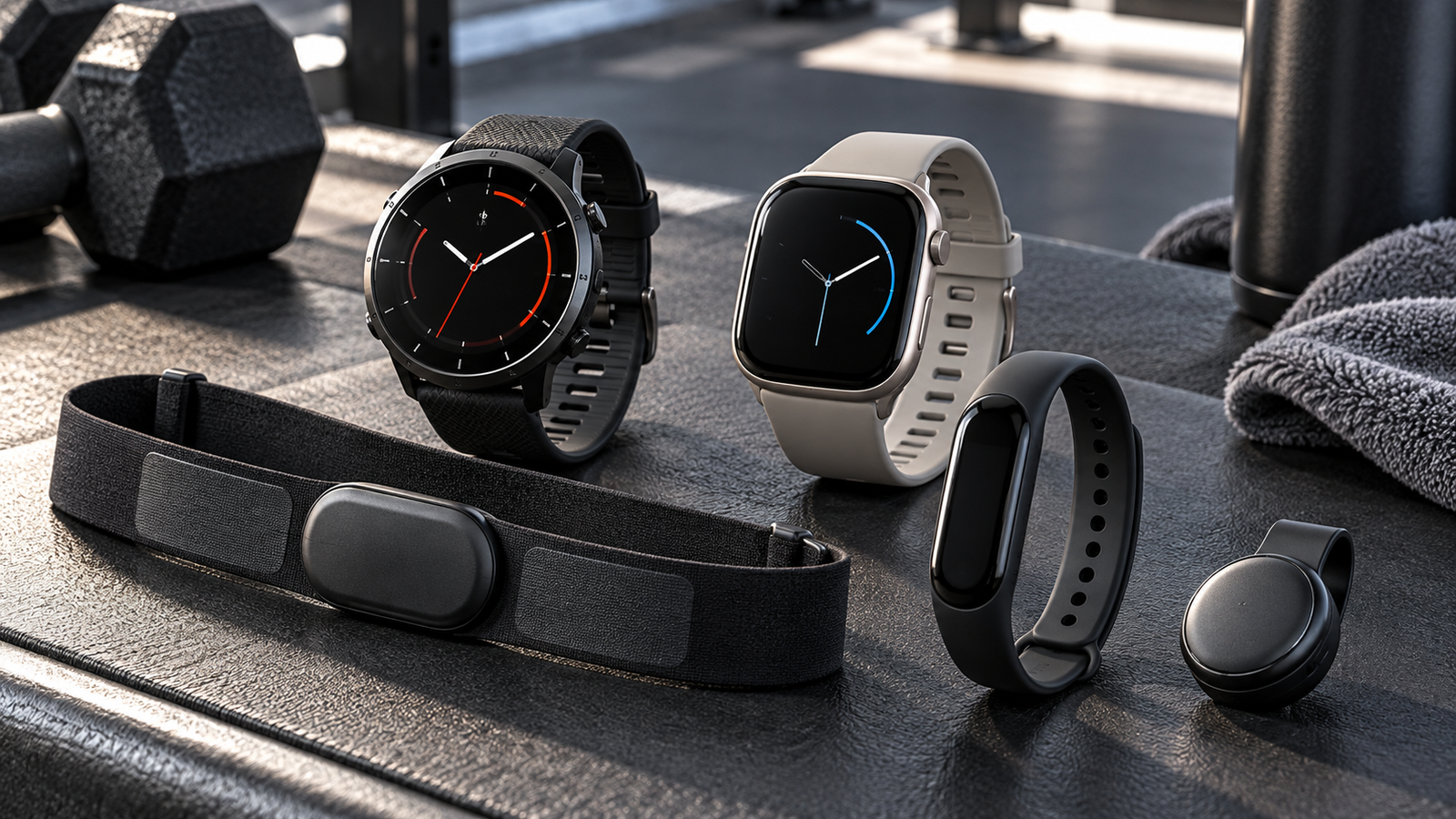
Heart-rate monitoring has become an important part of modern fitness training. Whether you are preparing for your first 5K, improving your running endurance or following a structured training plan, heart-rate data can help you understand how your body responds to exercise.
Smartwatches and GPS running watches make this information conveniently available on your wrist. Many runners use them to monitor training intensity, estimate heart-rate zones and review their performance after each workout.
However, there is a common problem.
Your watch may show a heart rate of 145 beats per minute while a chest strap reports 158 beats per minute. During intervals, your wrist device might react slowly when you begin sprinting, or it may suddenly display a strangely high reading during an easy run.
Does this mean your smartwatch is inaccurate? Is a chest strap always better? And do you really need to purchase another device?
The main difference is how the devices measure heart rate. Most GPS watches use optical sensors on the wrist, while traditional heart-rate chest straps measure electrical signals associated with each heartbeat.
Both technologies can be useful, but their strengths and limitations differ, particularly during running, interval workouts and activities involving substantial arm movement.
This guide explains why the readings differ, when accuracy matters, how to troubleshoot unreliable measurements and whether a chest strap is worth buying.
1. How Does a GPS Watch Measure Heart Rate?
Most modern GPS running watches measure heart rate using a technology called photoplethysmography, commonly abbreviated as PPG.
PPG is an optical technique that estimates changes in blood volume beneath the skin.
The watch typically uses LEDs and light sensors positioned on the underside of the device.
How Optical Heart-Rate Monitoring Works
- LEDs emit light into the skin.
- Some light is absorbed or scattered by the tissue and blood.
- Light sensors detect changes in the returning light.
- The device analyzes patterns associated with the pulse.
- Software estimates heart rate in beats per minute.
Many wrist-based devices use green LEDs for exercise heart-rate monitoring, although some use additional wavelengths.
The important distinction is that the watch is usually detecting a peripheral pulse signal, rather than directly measuring the heart’s electrical activity.
The quality of that signal depends on sensor contact, blood flow, movement and the device’s signal-processing algorithms.
What Does GPS Have to Do With Heart Rate?
GPS itself does not measure heart rate.
A GPS watch combines multiple technologies:
- Satellite positioning for distance, pace and route information.
- Optical sensors for wrist-based heart-rate monitoring.
- Motion sensors for activity detection.
- Software for training metrics and workout analysis.
Therefore, a watch can have excellent GPS accuracy while producing inconsistent heart-rate readings.
These capabilities should be evaluated separately.
2. How Does a Chest Strap Measure Heart Rate?
Traditional heart-rate chest straps use electrodes positioned against the chest.
The electrodes detect electrical activity associated with the heartbeat, using principles similar to electrocardiography, or ECG.
A compatible transmitter processes the signal and sends heart-rate information to a watch, phone or training computer, usually through Bluetooth or ANT+.
Why Electrical Measurement Matters
A chest strap detects the heart’s electrical events close to their source.
This differs from an optical sensor, which must identify pulse-related changes in light signals at the wrist.
Chest straps are generally less affected by arm movement and changes in optical sensor contact.
For this reason, a properly fitted, functioning ECG-based chest strap often provides more reliable heart-rate information during demanding exercise.
However, chest straps are not immune to errors.
Dry electrodes, loose fit, electrical interference, damaged straps or connection problems can produce unreliable readings.
A chest strap’s main advantage is its measurement method—not a guarantee of perfect accuracy under every condition.
3. GPS Watch vs Chest Strap: Key Differences
| Feature | GPS watch with optical HR | ECG-based chest strap |
|---|---|---|
| Measurement method | Optical pulse detection | Electrical heart-signal detection |
| Sensor location | Wrist | Chest |
| Convenience | Usually high | Requires wearing a separate strap |
| During steady running | Often sufficiently accurate | Generally very reliable |
| During rapid intensity changes | May lag or fluctuate | Often responds more consistently |
| Motion interference | Can be significant | Usually less affected by arm movement |
| Fit requirements | Secure wrist contact | Firm electrode contact |
| Overnight monitoring | Often available | Usually not intended for everyday overnight use |
| Standalone workout data | Often GPS, pace, distance and HR | Typically HR only; needs a compatible receiver |
| Maintenance | Charging and sensor cleaning | Electrode care, washing and battery management |
For everyday running, many people find wrist-based heart-rate tracking sufficient.
For training where accurate timing of heart-rate changes matters, a chest strap can provide an advantage.
4. Why Do Wrist Heart-Rate Readings Sometimes Differ?
Several factors influence optical heart-rate accuracy.
4.1 Movement Artifacts
Running involves repeated arm swings, wrist movement and small changes in watch position.
These movements can interfere with the optical signal.
The device must distinguish genuine pulse-related light changes from movement-related changes.
When the signals overlap, the software may temporarily produce an incorrect estimate.
4.2 Poor Sensor Contact
A loose watch can shift during running.
Even slight movement may create changes in the optical signal that make pulse detection more difficult.
However, tightening the watch excessively is not a good solution.
The watch should fit securely without causing discomfort or restricting circulation.
4.3 Cold Weather and Reduced Peripheral Blood Flow
In cold conditions, blood vessels near the skin can constrict.
This may reduce the strength of the pulse signal measured at the wrist.
As a result, some optical sensors may struggle during cold-weather running, particularly before the body has warmed up.
4.4 Skin and Sensor Characteristics
Optical performance can be affected by characteristics such as:
- Skin pigmentation.
- Tattoos beneath the sensor.
- Hair.
- Skin and tissue characteristics.
- Sensor placement.
- LED wavelengths and detector design.
These effects vary substantially across devices and users.
A particular watch may work very well for one person and less consistently for another.
4.5 Signal-Processing Algorithms
Optical sensors rely on algorithms that filter movement interference and estimate heart rate.
Different manufacturers use different approaches.
Some algorithms prioritize stability, while others may respond more quickly to changes.
This can cause differences even when two devices are worn on the same person during the same workout.
5. What Is Cadence Lock?
One of the most recognizable optical heart-rate problems during running is called cadence lock.
Running cadence refers to the number of steps taken per minute.
During a run, repeated arm movement can create signals at frequencies related to running cadence.
In some circumstances, the watch’s heart-rate algorithm may mistake these movement patterns for the pulse signal.
The resulting heart-rate reading may move toward a value close to the runner’s cadence.
Example
Imagine that you are running comfortably with:
- A running cadence of 172 steps per minute.
- An actual heart rate near 140 beats per minute.
Your watch may suddenly begin showing approximately 170–175 beats per minute despite no meaningful increase in effort.
That does not prove cadence lock, but it is one possible explanation.
Signs of Possible Cadence Lock
- The displayed heart rate jumps unexpectedly.
- The reading approaches your running cadence.
- Your breathing and perceived effort remain unchanged.
- The abnormal reading persists for several minutes.
- The reading returns to normal after adjusting the watch.
How to Reduce Cadence Lock
Try the following:
- Position the watch as instructed by the manufacturer, usually slightly above the wrist bone.
- Adjust the strap to minimize movement without overtightening.
- Keep the optical sensor clean.
- Allow time for the watch to establish a good signal.
- Compare readings with a reliable chest strap if the problem occurs frequently.
Cadence lock is not the explanation for every high heart-rate reading.
A genuine rapid or unexpectedly high heart rate can also occur.
If you experience chest pain, faintness, severe breathlessness or unusual palpitations, stop exercising and seek appropriate medical assessment rather than assuming the device is wrong.
6. Why Does a Wrist Watch Lag During Interval Training?
Interval training involves alternating between periods of higher and lower intensity.
For example, a runner might perform:
- 60 seconds of fast running.
- 90 seconds of easy jogging.
- Six repetitions of this pattern.
During the fast intervals, heart rate generally increases. During recovery, it gradually decreases.
However, the physiological heart-rate response is not instantaneous. Even a perfectly accurate monitoring system will show a gradual response rather than an immediate jump.
Optical watches introduce another possible source of delay: sensor processing.
Optical Sensor Delay
A watch must detect pulse-related light changes and filter unwanted movement signals.
Some devices smooth their readings across multiple observations to reduce random fluctuations.
This can make the displayed heart rate respond more slowly during rapid changes in effort.
For example:
| Training stage | Chest strap | Wrist watch |
|---|---|---|
| Easy running | 125 bpm | 125 bpm |
| Early fast interval | 145 bpm | 132 bpm |
| Later fast interval | 165 bpm | 154 bpm |
| Early recovery | 153 bpm | 161 bpm |
| Later recovery | 138 bpm | 145 bpm |
The values above are hypothetical and illustrate possible measurement delay; they are not results from a device test.
A chest strap may track the changing heartbeat more promptly, although communication and display smoothing can also introduce delays.
A 2024 study comparing a wrist-worn optical device against an ECG-based chest strap observed difficulty following abrupt heart-rate changes during transitions between activities.
ScienceDirect
Why It Matters
During short intervals, delayed readings may cause runners to make unnecessary pace adjustments.
For example, someone might accelerate further because their watch has not yet reached the intended heart-rate zone—even though their actual exercise intensity is already high.
For short, intense intervals, pace, perceived effort and the workout’s intended purpose may be more useful immediate guides than trying to force the displayed heart rate to a precise number.
7. Which Is More Accurate During Steady Running?
Steady running is an activity where many modern optical heart-rate monitors perform reasonably well.
When pace, arm movement and heart rate remain relatively consistent, the sensor may have an easier time identifying the pulse signal.
This is different from interval sessions involving rapid acceleration and deceleration.
Research Findings
A 2025 study examining wrist-based optical heart-rate monitoring across several activities found differences in accuracy between walking, cycling, running and rowing. Sensor placement also significantly affected results.
PubMed
Other validation research has found good accuracy for certain wrist-worn devices during running, while identifying larger errors during activities involving irregular arm movement.
ScienceDirect
These findings highlight an important point:
Wrist heart-rate monitors are not universally inaccurate. Their performance depends on the device, exercise and individual wearing conditions.
For recreational runners who mainly perform steady sessions, a well-fitting GPS watch may provide sufficiently useful data without a chest strap.
8. Is a Chest Strap Always More Accurate?
ECG-based chest straps generally provide a more direct method of measuring heartbeat timing than wrist optical sensors.
For exercise monitoring, they are frequently used as reference devices in wearable-validation studies.
However, a chest strap can still malfunction.
Common Chest Strap Problems
Dry electrodes
Some straps work more reliably when electrode areas have adequate moisture and skin contact.
Loose positioning
If the strap shifts during running, the electrical signal may become inconsistent.
Low battery
Weak batteries can cause interruptions or connection problems.
Damaged electrodes or straps
Regular washing, sweat exposure and repeated stretching can eventually affect performance.
Wireless connection issues
The strap may record a signal correctly while the watch temporarily loses the transmitted data.
An Important Distinction
An ECG-based chest strap measures electrical activity for heart-rate monitoring, but it is not automatically equivalent to a clinical multi-lead ECG.
Most consumer chest straps are not designed to diagnose heart disease or determine the cause of abnormal heart rhythms.
9. Can Skin Tone Affect Optical Heart-Rate Accuracy?
Optical technology depends on how light interacts with the skin and underlying tissue.
Melanin influences light absorption, so skin pigmentation is a relevant consideration in sensor design.
However, the effect is not identical across all devices.
Differences in LED wavelengths, sensor arrangements, algorithms and exercise conditions can change performance.
A 2025 study evaluating a wrist monitor during cycling found that the relationship between measurement error, exercise intensity and skin tone was complex rather than uniform.
PMC
It would therefore be inaccurate to conclude that every optical watch performs poorly on darker skin.
The practical approach is to consider independent validation research for the specific device and, where accuracy is important, compare its performance with a suitable reference.
10. How to Improve Wrist Heart-Rate Accuracy
Before purchasing a separate chest strap, check whether your watch is being worn correctly.
Several small adjustments can improve sensor performance.
Step 1: Position the Watch Properly
Follow the manufacturer’s placement instructions.
For many wrist-based devices, positioning the sensor slightly above the wrist bone provides a more stable contact area during exercise.
Do not assume that the location giving the best result for one watch will be ideal for every model.
Step 2: Adjust Strap Tightness
The watch should remain secure during arm movement.
If it slides repeatedly, the optical signal may become inconsistent.
However, a strap that is painfully tight or restricts circulation is not appropriate.
Step 3: Clean the Sensor
Sweat, lotion and debris can interfere with sensor contact.
Clean the watch according to the manufacturer’s instructions.
Avoid abrasive cleaning materials or chemicals that could damage optical components.
Step 4: Warm Up Gradually
A gradual warm-up can help you transition into exercise.
It also provides time for the watch to establish stable readings.
However, warming up does not guarantee that all optical measurement problems will disappear.
Step 5: Examine Unusual Readings
If your watch suddenly reports an unexpectedly high or low value, compare it with:
- Your perceived effort.
- Breathing intensity.
- Recent pace changes.
- Running cadence.
- Previous readings under similar conditions.
Do not dismiss concerning physical symptoms merely because a device may be inaccurate.
Step 6: Check Software Updates
Manufacturers occasionally improve wearable sensor processing through firmware updates.
Keep the device updated according to official instructions.
Step 7: Test an External Sensor
If repeated adjustments do not resolve inconsistent readings, a compatible chest strap or supported upper-arm optical sensor may be worth testing.
Research also indicates that anatomical sensor placement can materially affect optical measurement accuracy during exercise.
PMC
11. GPS Watch vs Chest Strap for Different Running Workouts
The importance of heart-rate accuracy depends on the workout.
| Workout type | Wrist optical HR | Chest strap | Practical priority |
|---|---|---|---|
| Easy recovery run | Often sufficient | Optional | Comfortable effort |
| Long steady run | Often useful | Useful for greater consistency | Sustainable intensity |
| Tempo run | Can be useful | Often more consistent | Pace, effort and HR trends |
| Short intervals | May lag during rapid changes | Often preferable | Interval pace and effort |
| Hill repetitions | Can be affected by movement and intensity changes | Often preferable | Controlled effort |
| Walking | Often reliable | Usually unnecessary | General activity monitoring |
| Fitness assessment | Device-dependent | Often preferable | Consistent measurement protocol |
These are general recommendations rather than absolute rankings.
For example, a high-performing modern wrist sensor can outperform a poorly fitted or malfunctioning chest strap.
12. Do You Need a Chest Strap for Zone 2 Running?
Zone 2 training has become popular among recreational runners and endurance athletes.
However, the term Zone 2 does not always mean exactly the same thing across training systems.
Some systems use five heart-rate zones based on maximum heart rate.
Others use lactate thresholds, ventilatory thresholds or different physiological models.
As a result, Zone 2 on one watch may not correspond precisely to Zone 2 in another training method.
Does Measurement Accuracy Matter?
When a workout depends on remaining within a narrow heart-rate range, unreliable measurements can affect pacing decisions.
For example, a watch that overestimates heart rate may cause someone to slow down unnecessarily.
A watch that underestimates it may encourage them to train harder than intended.
A chest strap can be useful when you depend heavily on heart-rate-guided training.
However, casual endurance runners can also use:
- The talk test.
- Breathing comfort.
- Perceived effort.
- Pace trends.
- Overall workout consistency.
The Talk Test
During moderate-intensity aerobic exercise, many people can speak in sentences but would find singing uncomfortable.
This is a practical intensity indicator, although it does not precisely identify an individual’s lactate-defined Zone 2.
For runners following medically prescribed exercise intensity limits, measurement and training guidance should come from the treating professional.
13. Heart-Rate Zones Are Only as Useful as Their Settings
A perfectly functioning chest strap cannot correct poorly configured training zones.
For example, many watches estimate maximum heart rate using an age-based formula.
These formulas describe population-level relationships and can be inaccurate for particular individuals.
Using an estimated maximum heart rate to define training zones can therefore create errors even when the measured heart rate itself is accurate.
Two Different Sources of Error
Measurement error: The watch displays 160 bpm when the actual heart rate is closer to 145 bpm.
Zone-setting error: The watch correctly displays 145 bpm, but the software assigns it to an inappropriate intensity zone because the maximum-heart-rate estimate is inaccurate.
These problems require different solutions.
A chest strap may improve measurement reliability, but it does not automatically make every training-zone calculation correct.
14. Can You Use a Chest Strap With a GPS Watch?
Many running watches support external heart-rate sensors.
When connected, the watch may use the chest strap’s measurements instead of its own wrist sensor during recorded activities.
However, compatibility varies.
Bluetooth
Bluetooth heart-rate connectivity is common across many watches, phones and exercise devices.
Some straps support multiple simultaneous Bluetooth connections, while others have restrictions.
ANT+
ANT+ is a wireless protocol supported by many sports watches, cycling computers and exercise accessories.
Not every smartwatch supports ANT+ directly.
What to Check Before Buying
- Whether your watch supports external heart-rate sensors.
- Whether the strap supports the required wireless protocol.
- Whether simultaneous device connections are needed.
- Battery type and replacement requirements.
- Strap sizing and comfort.
- Cleaning instructions.
- Manufacturer support and warranty.
Do not assume that every Bluetooth chest strap works with every GPS watch.
Check the exact model compatibility before purchasing.
15. Chest Strap vs Upper-Arm Optical Heart-Rate Monitor
There is a third option that deserves consideration: an optical heart-rate sensor worn on the upper arm or forearm.
These devices also use optical technology, but their placement may reduce some of the challenges associated with wrist movement.
Potential Advantages
- No chest strap around the torso.
- More secure placement during certain activities.
- Less interference from wrist flexion.
- Comfortable use for some people.
Potential Limitations
- Still relies on optical measurement.
- Placement and fit remain important.
- Accuracy varies between devices.
- Requires a separate sensor and charging.
- May not provide all the advanced features of certain ECG chest straps.
A 2026 study found that optical sensors positioned on the upper arm could achieve stronger agreement with a chest-strap reference than certain wrist placements during some demanding activities.
PubMed
This does not mean every upper-arm optical device is superior to every wrist watch.
It does make upper-arm sensors a useful alternative for people who dislike chest straps but want more consistent exercise readings.
16. How to Compare Two Heart-Rate Devices Properly
If you own both a GPS watch and chest strap, compare them during the same workout rather than relying on readings from different days.
Step 1: Wear Both Devices Correctly
Use the manufacturer’s instructions for positioning and sensor contact.
Step 2: Record the Same Activity
If possible, record both signals simultaneously using compatible equipment or separate recording devices.
Step 3: Include Different Intensity Levels
Compare readings during:
- Rest.
- Easy running.
- Steady moderate running.
- Gradual acceleration.
- Recovery.
Step 4: Compare Trends, Not Just One Number
Two devices may show similar average heart rates while behaving differently during rapid intensity changes.
For example, both might report an average of 145 bpm over an entire workout, even though one misses several short peaks.
Step 5: Look for Repeated Problems
A single abnormal reading does not establish that the watch is consistently unreliable.
If the same issue occurs across multiple workouts, it becomes more meaningful.
Example Comparison
Illustrative heart-rate response during an interval
■ Chest strap
■ Wrist watch
Hypothetical readings illustrating possible optical sensor lag. These values are not experimental measurements or a performance comparison of particular products.
The important feature is the timing difference, not simply which device reports a higher number.
17. Does Better Heart-Rate Accuracy Mean Better Fitness Results?
Not automatically.
A chest strap may improve the accuracy and consistency of exercise data.
However, better information only helps when you use it appropriately.
A runner who trains consistently, manages effort sensibly and follows an appropriate progression plan may perform very well using wrist-based heart-rate information.
Conversely, someone with a highly accurate chest strap may make little progress if they:
- Increase training volume too quickly.
- Ignore recovery.
- Perform every session at excessive intensity.
- Follow unsuitable training zones.
- Neglect sleep and nutrition.
- Train inconsistently.
Heart-rate monitoring is one part of a broader training system.
It should support decisions rather than replace judgment about how your body feels.
18. Common Heart-Rate Tracking Mistakes
Trusting Every Wrist Reading Without Question
Unexpected values deserve investigation, especially when they do not match exercise intensity.
Assuming Chest Straps Never Fail
Poor electrode contact, damaged straps and low batteries can create inaccurate readings.
Comparing Devices During Different Workouts
Heart rate naturally varies with temperature, fatigue, hydration, sleep and other factors.
Compare devices simultaneously when possible.
Using Heart Rate as the Only Indicator of Effort
Pace, perceived exertion and breathing can provide useful complementary information.
Confusing GPS Accuracy With Heart-Rate Accuracy
A watch can measure location well while struggling with optical heart-rate detection.
Ignoring Training-Zone Configuration
Inaccurate maximum-heart-rate or threshold estimates can make zones misleading.
Buying a Chest Strap Without Checking Compatibility
Not all watches support every external sensor.
Treating Consumer Wearables as Medical Diagnostic Devices
Most fitness heart-rate monitors are intended for exercise tracking, not diagnosing abnormal cardiac rhythms.
19. When Does a Chest Strap Make Sense Financially?
A chest strap represents an additional expense.
Before purchasing one, consider whether it solves a genuine problem in your training.
A Chest Strap May Be Worth It If:
- You regularly perform structured interval training.
- You rely heavily on heart-rate zones.
- Your wrist watch frequently displays implausible values.
- You participate in endurance training where consistent HR data is useful.
- You want more dependable exercise heart-rate trends.
- You already own a compatible watch.
You May Not Need One If:
- You mainly use your watch for steps and general activity.
- You run recreationally without strict heart-rate targets.
- Your wrist readings are reasonably consistent.
- You prefer convenience over additional equipment.
- Your training decisions rely primarily on pace and perceived effort.
The most expensive solution is not necessarily the most useful.
If simple watch-position adjustments resolve your accuracy problems, purchasing another device may be unnecessary.
20. What to Look for When Choosing a Running Watch
A running watch should not be judged on optical heart-rate accuracy alone.
Other useful characteristics include:
| Feature | Why it matters |
|---|---|
| GPS performance | Helps track pace, route and distance |
| Optical HR reliability | Supports training-intensity estimates |
| External sensor compatibility | Allows chest-strap integration |
| Battery life | Important for longer runs |
| Comfortable fit | Helps maintain stable optical contact |
| Readable display | Useful during exercise |
| Workout features | Supports structured running sessions |
| Training data export | Allows longer-term progress analysis |
| Water resistance | Relevant for rain, sweat and swimming |
| Software support | Influences long-term usability |
For runners comparing wearable categories, Physical Glow’s Top 5 Fitness Wearables in India buying guide provides a broader overview of fitness-tracking options.
Remember that a watch advertised with advanced health metrics is not necessarily more accurate in every measurement.
Evaluate the functions that matter most to your workouts.
Frequently Asked Questions
Is a chest strap more accurate than a smartwatch?
A properly functioning ECG-based chest strap is generally more reliable for exercise heart-rate measurement, particularly during rapid intensity changes. However, some modern wrist watches perform very well during steady exercise.
Why does my GPS watch show a higher heart rate than my chest strap?
Possible causes include optical motion interference, cadence lock, poor sensor contact or signal-processing differences. A malfunctioning chest strap can also produce erroneous readings.
What is cadence lock during running?
Cadence lock occurs when a wrist optical monitor mistakes rhythmic movement-related signals for pulse-related signals, causing its heart-rate estimate to approach running cadence.
Do I need a chest strap for easy runs?
Usually not. Many recreational runners can use wrist-based tracking, perceived effort and breathing to guide easy runs.
Is a chest strap better for interval training?
It is often preferable when consistent measurement during rapid changes in effort is important.
Can a chest strap work without a smartwatch?
Some models can connect to compatible smartphone applications, exercise machines or cycling computers. A compatible receiving device or recording system is generally needed.
Is optical heart rate affected by tattoos?
Tattoos beneath the sensor can interfere with optical readings in some circumstances. The effect depends on the tattoo and device.
Are upper-arm optical monitors more accurate than wrist watches?
Some upper-arm devices perform better during particular activities, but accuracy varies by model, position and exercise.
Does a chest strap measure calories more accurately?
More reliable heart-rate data may improve one input used by a calorie-estimation algorithm, but calorie estimates remain model-based and can still contain substantial errors.
Can heart-rate watches detect heart problems?
Some wearables have specific medically regulated features, but ordinary workout heart-rate monitoring is not a substitute for medical evaluation. Unexpected symptoms should not be ignored because a watch reports a normal number.
Final Verdict: Which Heart-Rate Monitor Should Runners Choose?
Both GPS watches and chest straps can provide useful information for running.
For steady runs, casual training and everyday fitness tracking, modern wrist-based optical heart-rate monitoring is often sufficiently practical.
For structured intervals, rapid intensity changes and training plans that depend heavily on accurate heart-rate readings, a compatible ECG-based chest strap generally offers greater reliability.
The key is understanding the limitations of each measurement method.
GPS accuracy is not the same as heart-rate accuracy, and a chest strap does not automatically make training zones or workout decisions correct.
Before spending money on another sensor, optimize your watch fit, inspect unusual readings and consider how much precision your training actually requires.
For most recreational runners, consistency and an appropriate training plan matter more than obtaining a perfect heart-rate number during every second of exercise.
Research References
This article draws on peer-reviewed research covering exercise-related optical measurement error, sensor positioning and comparison with ECG-based reference devices:
- Optimization and pre-use suitability selection for wrist PPG heart-rate monitoring (2025).
- Validity of heart-rate measurements across skin tones during exercise (2025).
- Impact of anatomical placement on wearable heart-rate accuracy (2026).
- Assessing accuracy over changing levels of activity (2024).
Physical Glow Editorial Note: This article provides general fitness and wearable-technology education. Consumer heart-rate monitors are not substitutes for professional medical assessment or diagnostic ECG testing. People with known cardiac conditions or concerning exercise-related symptoms should follow individualized medical guidance.