Air Purifier vs Humidifier: Which Does Your Home Need?
Air purifiers and humidifiers solve different home-air problems. Compare filtration, humidity, maintenance, room needs and when one, both or neither makes sense.
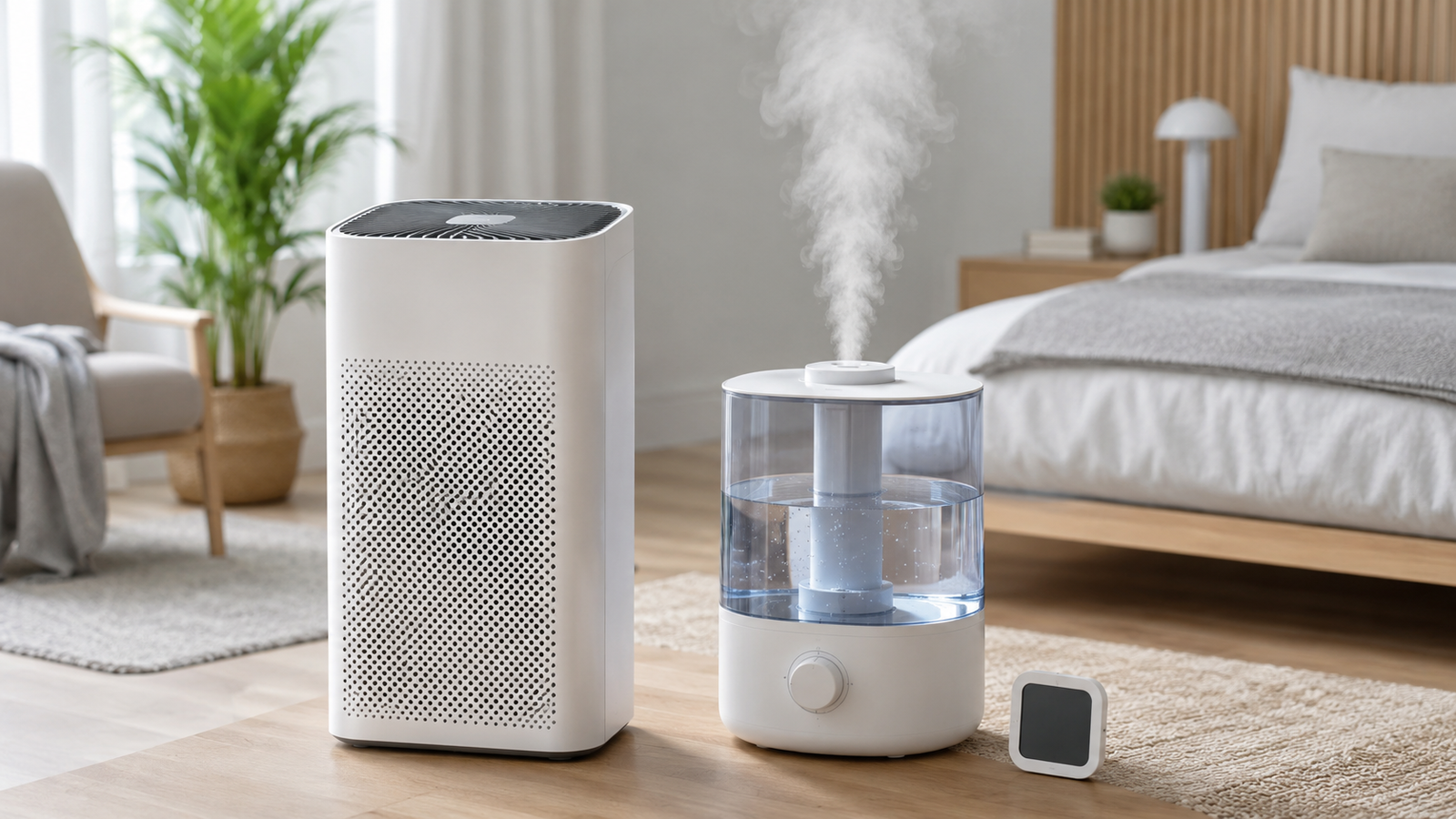
An air purifier and a humidifier can sit in the same room and look like similar wellness appliances, but they do completely different jobs. An air purifier moves air through a filtration system to reduce certain airborne particles. A humidifier adds water vapour or mist to increase indoor humidity.
If your problem is airborne dust, pollen, smoke or other particles, a humidifier is not a substitute for filtration. If your problem is very dry indoor air, an air purifier does not add moisture.
Air Purifier vs Humidifier at a Glance
| Device | Main Job | What to Check |
|---|---|---|
| Air purifier | Filters airborne particles | CADR, filter type, room size, noise, replacement filters |
| Humidifier | Adds moisture to dry air | Tank size, cleaning access, mist type, room size, humidity control |
Choose an Air Purifier for Particle Filtration
An air purifier is the more relevant device when you want to reduce airborne particulate pollution inside a room. Depending on the filter system, this can include dust, pollen and fine particles.
For buying decisions, focus on airflow and room suitability rather than vague “purifies the whole home” marketing. CADR, intended room size, filter design and replacement-filter availability are more useful than a large list of extra modes.
Choose a Humidifier for Dry Indoor Air
A humidifier is designed to raise indoor humidity. This can be useful when the air is uncomfortably dry, but more humidity is not always better.
Use a hygrometer if you need to understand actual room conditions. If windows are collecting condensation or the room already feels damp, adding more moisture can be counterproductive.
Can a Humidifier Clean the Air?
Not in the way an air purifier does. A humidifier adds moisture; it does not replace a filtration system designed to capture airborne particles.
Likewise, an air purifier does not solve low humidity. The two products address different environmental variables.
Can You Use Both in the Same Room?
Yes, if the room genuinely needs both particle filtration and additional humidity. Position them so that humidifier mist is not directed straight into the air purifier or its filter.
Excess moisture near filters or electronics is undesirable. Follow both manufacturers’ placement and cleaning instructions.
Maintenance Is Different
Air purifiers need filter care and replacement. Humidifiers need frequent water-tank cleaning because standing water and wet surfaces can support microbial growth if maintenance is neglected.
Do not buy a humidifier with a tank opening that you cannot comfortably clean. For air purifiers, check the ongoing availability and cost of replacement filters before buying the device.
Bedroom Use
For an air purifier, bedroom priorities often include quiet low-speed operation and enough airflow for the room size. For a humidifier, bedroom priorities include tank capacity, easy cleaning, low noise and sensible humidity control.
Do not place either device where airflow or mist is blocked by curtains, furniture or walls.
Which Device Helps With Allergies?
An air purifier can reduce certain airborne allergens when it has an appropriate filter and enough airflow for the space. A humidifier does not remove allergens from the room.
Humidity can influence comfort, but too much humidity can also encourage conditions that support mould or dust mites. If allergy or respiratory symptoms are persistent, seek professional medical advice rather than relying on a home appliance as treatment.
Which Device Helps With Dry Air?
A humidifier is the relevant device if indoor humidity is genuinely low. Measure conditions rather than assuming dryness from one symptom alone.
If dryness comes mainly from skin or haircare needs, a room humidifier may not be the only or best solution. Consider the full environment and your routine.
Common Buying Mistakes
- Buying a humidifier to solve a particle-pollution problem.
- Buying an air purifier to increase humidity.
- Ignoring replacement-filter cost.
- Ignoring humidifier cleaning requirements.
- Running a humidifier until windows show persistent condensation.
- Choosing either device without measuring the room.
Final Verdict
Buy an air purifier when your main goal is reducing airborne particles. Buy a humidifier when your main problem is genuinely dry indoor air. Use both only when both conditions are present and you are prepared to maintain both devices properly.
The right purchase starts with identifying the environmental problem, not with buying the appliance category that sounds more “healthy”.