Body Wash and Lotion: How to Care for Dry-Feeling Skin
Build an uncomplicated body-care routine with a suitable wash, moisturiser and consistent application habits; compare fragrance and texture thoughtfully.
Dry, rough or tight-feeling skin can make everyday activities uncomfortable. Sometimes your skin feels dry immediately after showering, while on other days it becomes rough or flaky several hours later.
Many people respond by buying more skincare products: moisturising body wash, body lotion, body milk, body butter, body oil and exfoliating scrubs.
But do you actually need all of them?
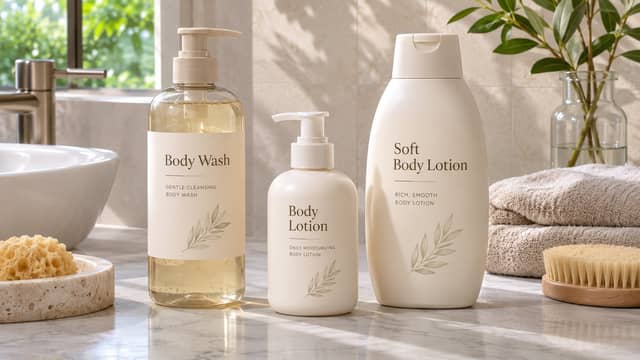
One of the most common questions is whether a moisturising body wash can replace body lotion. Both products may contain ingredients such as glycerin, ceramides or hyaluronic acid, yet they serve different purposes.
Body wash primarily cleanses the skin, while body lotion helps maintain hydration and reduce moisture loss after cleansing.
Understanding this distinction can help you build an effective bodycare routine without spending money on unnecessary products.
This guide explains the difference between body wash and body lotion, how to use them correctly and how to choose suitable products for dry-feeling skin.
Why Does Your Skin Feel Dry After Showering?
Your skin has a protective outer layer called the stratum corneum.
This layer helps limit moisture loss and provides a barrier against external irritants.
The skin barrier contains natural lipids, including ceramides, cholesterol and fatty acids, which help maintain its structure.
When the barrier is disrupted or moisture loss increases, skin may feel:
- Tight after bathing
- Rough or uneven
- Flaky
- Uncomfortable
- Less supple than usual
- Sensitive to certain products
Several factors can contribute to these symptoms.
1. Hot Water
Long showers with very hot water can increase dryness, particularly in people whose skin is already sensitive.
Comfortably warm water is generally a better option.
2. Harsh Cleansing Products
Some cleansing formulas remove more surface oil than your skin needs.
This may leave the skin feeling tight after bathing.
However, not every foaming cleanser is harsh, and not every creamy cleanser is automatically gentle.
The complete formulation matters.
3. Frequent Washing
Repeated washing can contribute to dryness, especially when combined with strong cleansing products.
This may be particularly noticeable on the hands and lower legs.
4. Low Environmental Humidity
Dry weather, winter conditions and prolonged exposure to air-conditioned environments can affect how comfortable the skin feels.
5. Inadequate Moisturising
Some people use a gentle body wash but do not apply any moisturiser afterward.
If the skin is prone to moisture loss, cleansing alone may not maintain sufficient comfort.
Persistent dryness, severe itching, cracking or inflammation can also indicate a skin condition requiring professional assessment.
What Is Body Wash?
Body wash is a liquid cleansing product designed to remove sweat, dirt, excess oil and other impurities from the skin.
Most body washes contain surfactants, which help lift oily substances and allow them to be rinsed away with water.
Different formulations may also contain:
- Glycerin
- Emollients
- Conditioning ingredients
- Fragrance
- Humectants
- Mild exfoliating ingredients
- Skin-conditioning polymers
A body wash marketed as moisturising may leave the skin feeling more comfortable than some traditional cleansing products.
However, a rinse-off cleanser does not necessarily provide the same lasting moisturising effect as a leave-on body lotion.
Much of the cleansing product is removed during rinsing.
Some conditioning ingredients may remain on the skin, but the extent depends on the formulation.
What Is Body Lotion?
Body lotion is a leave-on skincare product designed to help maintain moisture and improve skin comfort.
Unlike body wash, lotion is normally applied after cleansing and remains on the skin.
A typical body lotion may contain a combination of three important ingredient categories.
1. Humectants
Humectants help attract and retain water within the outer skin layers.
Examples include:
- Glycerin
- Hyaluronic acid
- Urea
- Sodium PCA
These ingredients can contribute to skin hydration when included in an appropriate formulation.
2. Emollients
Emollients help smooth the skin surface and improve softness.
They may include certain oils, esters, fatty alcohols and other conditioning ingredients.
Emollients are particularly useful when skin feels rough or uneven.
3. Occlusives
Occlusive ingredients help reduce water loss by forming a protective layer over the skin.
Common examples include petrolatum and mineral oil.
Different occlusives vary in texture and feel.
A well-formulated body lotion may combine humectants, emollients and occlusives rather than relying on only one type of ingredient.
Body Wash vs Body Lotion: Key Differences
Although both products may use similar skincare ingredients, their primary functions are different.
| Feature | Body wash | Body lotion |
|---|---|---|
| Main purpose | Cleansing | Moisturising |
| Application | During bathing | Usually after bathing |
| Rinsed off | Yes | Generally no |
| Primary function | Removes sweat, dirt and oils | Helps maintain moisture and softness |
| Typical texture | Gel, liquid or cream cleanser | Lotion, milk or cream |
| Usage frequency | Based on cleansing needs | Based on skin hydration needs |
| Can replace the other? | Generally no | No |
For dry-feeling skin, a gentle cleanser and suitable leave-on moisturiser may work better together than relying on a moisturising body wash alone.
Can Moisturising Body Wash Replace Body Lotion?
Usually, not completely.
Moisturising body washes may contain ingredients designed to reduce the drying effects of cleansing.
Some formulations deposit conditioning substances on the skin, improving how it feels after rinsing.
However, a body lotion remains in contact with the skin for much longer.
This allows its moisturising ingredients to provide continued benefits after application.
If your skin feels comfortable throughout the day without lotion, an additional moisturiser may not always be necessary.
But if you experience recurring tightness, roughness or flaking after bathing, a leave-on moisturiser may be useful.
The goal is not to use more products. It is to identify whether your skin needs cleansing, moisturising or both.
The Correct Order: Body Wash Before Body Lotion
For most everyday routines, the order is straightforward.
Body wash → Rinse → Pat skin gently → Apply body lotion
Here is how to perform each step.
Step 1: Use Comfortably Warm Water
Begin your shower with lukewarm or comfortably warm water.
Avoid unnecessarily long, hot showers if your skin is prone to dryness.
Step 2: Apply a Suitable Body Wash
Use an amount appropriate for your body and the product’s instructions.
Clean areas where sweat, dirt and body oils accumulate.
Avoid vigorous scrubbing.
A soft washcloth may be suitable for some people, but harsh rubbing is unnecessary.
Step 3: Rinse Thoroughly
Remove the cleanser according to its instructions.
Leaving ordinary rinse-off cleansers on the skin does not automatically increase their benefits.
Step 4: Pat the Skin Gently
After showering, pat your skin with a clean towel instead of rubbing aggressively.
Leaving the skin slightly damp can make moisturiser application convenient.
Step 5: Apply Body Lotion
Spread a suitable amount of lotion over areas that require moisturising.
Pay attention to commonly dry areas such as the arms, elbows, legs and knees.
Applying moisturiser shortly after bathing can help reduce moisture loss.
Step 6: Allow the Product to Settle
Give the lotion time to absorb or settle before dressing, particularly if using a rich formula.
You do not need to apply excessive amounts.
Use enough to cover the skin comfortably.
When Is the Best Time to Apply Body Lotion?
For many people, the most convenient time is immediately after bathing.
This is because the skin has recently been exposed to water, and applying moisturiser can help retain moisture.
A practical approach is to apply lotion within a few minutes after gently drying your skin.
However, body lotion is not restricted to post-shower use.
You can apply it whenever your skin feels dry.
Some people benefit from additional application before bedtime, especially during colder or drier weather.
The right frequency depends on your skin’s needs and the formulation.
How to Choose Body Lotion for Different Skin Types
Different skin types may prefer different textures.
For Dry Skin
Dry skin may benefit from moisturisers containing humectants, emollients and ingredients that reduce water loss.
Look for products that provide lasting comfort without irritation.
Richer lotions or creams may be useful during winter.
For Very Dry Skin
Very dry skin may need a more substantial moisturiser than a lightweight body milk.
Products containing ingredients such as petrolatum, glycerin or ceramides may be appropriate.
If the skin is cracked, inflamed or persistently itchy, seek medical guidance rather than relying only on cosmetic products.
For Normal Skin
People with normal skin may prefer lightweight body lotions that absorb comfortably.
A rich body butter is not necessarily required.
Choose a formulation that fits the climate and personal preference.
For Oily or Acne-Prone Body Skin
Some people experience acne on the back, shoulders or chest.
A lightweight, non-comedogenic moisturiser may be more comfortable for acne-prone areas.
However, product response varies, and the term non-comedogenic does not guarantee that a formula will never cause breakouts.
For Sensitive Skin
Look for gentle formulations and consider avoiding known irritants.
Fragrance-free products may be preferable for people sensitive to fragrance.
Introduce new products gradually and discontinue use if significant irritation develops.
Body Lotion vs Body Milk vs Body Cream
These terms often describe different textures, but there is no universal industry rule that guarantees an exact consistency for each category.
Body Milk
Body milk is generally marketed as a relatively lightweight moisturising product.
It may spread easily over large areas.
Some people prefer body milk during warm weather or when they dislike heavy textures.
Body Lotion
Body lotion usually offers a balance between spreadability and moisturising comfort.
It is a practical everyday format for many skin types.
Body Cream
Body creams are often richer and thicker than lotions.
They may be useful for particularly dry areas or people who prefer substantial moisturising textures.
However, actual effectiveness depends on formulation rather than the label.
| Product type | Common texture | Typical preference |
|---|---|---|
| Body milk | Lightweight, fluid | Daily lightweight moisturising |
| Body lotion | Light to moderately rich | General body hydration |
| Body cream | Often thicker | Dry-feeling areas |
| Body butter | Usually rich and dense | Users preferring heavy moisturising textures |
There is no need to own every category.
One comfortable, well-formulated moisturiser may be enough.
Which Ingredients Should You Look for in Body Lotion?
Understanding a few ingredient categories can make shopping decisions easier.
Glycerin
Glycerin is a widely used humectant.
It helps support hydration in the outer skin layers.
It is commonly found in both body washes and leave-on moisturisers.
Ceramides
Ceramides are naturally occurring components of the skin barrier.
Moisturising products may contain ceramides to support barrier-focused skincare.
However, the performance of a product depends on its complete formulation.
Hyaluronic Acid
Hyaluronic acid is a water-binding ingredient used in many skincare products.
It can contribute to skin hydration.
A formula containing hyaluronic acid is not automatically superior to one containing glycerin or other effective humectants.
Petrolatum
Petrolatum is an effective occlusive ingredient that helps reduce moisture loss.
It may feel rich, which some people prefer for dry areas.
Almond Oil
Almond oil is used as an emollient in certain moisturising products.
It can contribute to skin softness.
People with relevant ingredient allergies should review product labels and consult a professional when necessary.
Niacinamide
Niacinamide is used in various skincare formulations.
It may contribute to barrier support and other cosmetic skin benefits, depending on concentration and formulation.
Do not assume that a body lotion containing niacinamide will produce dramatic skin-tone changes.
How to Choose a Gentle Body Wash for Dry Skin
When skin feels dry after showering, the cleanser deserves attention.
Look beyond terms such as nourishing, hydrating or deep moisture.
Consider the actual formulation and how your skin responds.
Choose a Comfortable Cleansing Formula
A cleanser should remove everyday impurities without consistently leaving the skin tight or irritated.
Avoid Unnecessary Friction
Scrubbing aggressively can increase irritation.
Use gentle hand movements and suitable bathing accessories.
Consider Fragrance Sensitivity
Fragrance may be enjoyable for many users but can cause problems for some sensitive individuals.
If fragrance regularly irritates your skin, consider fragrance-free options.
Be Careful With Exfoliating Body Washes
Some body washes contain ingredients such as alpha-hydroxy acids.
These may provide exfoliating benefits, but they are not necessary for every shower.
Frequent exfoliation can contribute to irritation in certain users.
Follow the product’s instructions and avoid combining several exfoliating treatments unnecessarily.
Comparing Popular Body Washes and Body Lotions in India
Physical Glow readers may encounter products such as Dove Nourishing Body Wash, Vaseline Gluta Hya Dewy Radiance Body Lotion, Vaseline Deep Moisture Body Lotion and NIVEA Nourishing Body Milk.
These products illustrate different cleansing and moisturising formats.
1. Dove Nourishing Body Wash Triple Hydration Serum
This product belongs to the rinse-off body cleanser category.
It may suit shoppers looking for a body wash marketed around a moisturising cleansing experience.
The product is available in different pack sizes, including listings for 300 ml and 825 ml variants.
Before buying, verify the exact variant, ingredient list and current pack size.
2. Vaseline Gluta Hya Dewy Radiance Body Lotion
This is a leave-on body moisturising product.
Its marketing positioning differs from ordinary cleansing products.
Evaluate the formula according to your hydration needs, texture preferences and ingredient tolerance.
Marketing terms should not be treated as evidence of guaranteed brightening results.
3. Vaseline Deep Moisture Body Lotion With Ceramide
This product is positioned as a body moisturiser with ceramide-related marketing.
It may be worth considering when comparing leave-on hydration formats.
However, the presence of ceramides alone does not establish superior performance over every other moisturiser.
4. NIVEA Nourishing Body Milk With Almond Oil
Body milk is another leave-on moisturising format.
This product is marketed around almond-oil-based nourishing care.
Consider the texture, ingredient information and pack size when comparing it with other lotions.
5. Dove Exfoliate Away AHA Serum Body Wash
Unlike a basic cleansing product, an AHA-positioned body wash introduces an exfoliation-focused element.
It should not automatically replace a gentle daily cleanser for everyone.
Review the manufacturer’s frequency recommendations and avoid over-exfoliating sensitive or irritated skin.
Physical Glow has not independently tested these products or verified comparative hydration performance.
Product specifications, prices and availability should always be checked against current retailer listings.
Is a Large Body Lotion Bottle Better Value?
Larger bottles can sometimes offer a lower price per millilitre.
However, this is not guaranteed.
Compare the actual price and quantity.
For example, if two products have different bottle sizes, calculate:
Price per 100 ml = Product price ÷ Bottle volume × 100
This provides a more consistent way to compare pack value.
However, price per millilitre is not the only consideration.
A larger bottle may not be a good purchase if the texture does not suit your skin or the product will remain unused for a long period.
Also check:
- Expiry date
- Storage requirements
- Pump or cap convenience
- Formula preferences
- Household usage
- Current seller offers
Value should reflect usability as well as quantity.
Do You Need Body Lotion in Summer?
Yes, body lotion can still be useful during summer, depending on your skin’s needs.
Hot weather does not mean the skin cannot lose moisture.
Frequent showering, air conditioning and cleansing habits can contribute to dryness.
However, some people prefer lighter lotions during warm weather.
If a heavy cream feels uncomfortable, consider a lightweight body milk or lotion.
You do not have to use the same texture throughout the year.
The goal is to maintain comfortable skin without unnecessary heaviness.
Should You Use Body Lotion at Night?
Night-time moisturising can be useful, especially when skin feels dry after an evening shower.
Some people prefer richer lotions before bedtime because they are less concerned about the product feeling heavy under clothing.
However, there is no requirement to use a separate night-time body lotion.
A suitable everyday moisturiser can often be used both morning and evening.
If your skin feels adequately hydrated with one application, another may not be needed.
Can Body Lotion Replace Sunscreen?
No, unless the product is specifically formulated and labelled to provide suitable sun protection.
Ordinary body lotion does not replace sunscreen.
If your arms, legs or other body areas will be exposed to sunlight, use a suitable broad-spectrum sunscreen according to its instructions.
Body lotion may be applied beforehand when needed.
Allow products to settle appropriately and avoid mixing separate moisturisers and sunscreens together unless instructed by the manufacturer.
A moisturising product without labelled UV protection should never be assumed to provide meaningful sun protection.
Common Bodycare Mistakes to Avoid
1. Using Very Hot Water Every Day
Very hot showers may contribute to dryness.
Choose a comfortable temperature, particularly if your skin feels tight after bathing.
2. Skipping Moisturiser When Skin Feels Dry
If your skin regularly feels rough or uncomfortable, a suitable leave-on moisturiser may help.
3. Applying Excessive Product
More lotion does not necessarily mean better results.
Apply enough to cover the skin comfortably and increase only when needed.
4. Using Too Many Exfoliating Products
Exfoliating body wash, body scrub and acid-based body lotion may overlap in function.
Combining several exfoliating products can increase the risk of irritation.
5. Choosing Products Only by Fragrance
A pleasant fragrance does not guarantee suitability.
Consider skin tolerance and overall formulation.
6. Assuming Every Dry Patch Is Ordinary Dry Skin
Persistent scaly patches, painful cracks, widespread itching or inflamed areas may require medical assessment.
7. Ignoring Product Instructions
Some products are intended for daily use, while exfoliating or specialised products may have different recommendations.
Follow the manufacturer’s directions.
A Simple Bodycare Routine for Dry-Feeling Skin
You do not need an elaborate routine to care for your skin.
Morning Routine
Step 1: Cleanse as needed using a suitable body wash.
Step 2: Gently pat the skin dry.
Step 3: Apply body lotion to areas that need moisture.
Step 4: Apply sunscreen to exposed skin according to the product instructions.
Evening Routine
Step 1: Shower or cleanse if necessary.
Step 2: Avoid aggressive scrubbing.
Step 3: Apply a suitable moisturiser while the skin is still slightly damp.
Step 4: Add a little more moisturiser to particularly dry areas if needed.
For many people, this is sufficient.
Additional treatments should address a specific concern rather than simply increase the number of products used.
Frequently Asked Questions
1. Should I use body wash before body lotion?
Yes. Body wash is normally used during bathing and rinsed away. Body lotion is applied afterward to help maintain skin hydration.
2. Can I use body lotion every day?
Yes. Most ordinary body lotions are designed for regular use. The appropriate frequency depends on the formulation and your skin’s needs.
3. Can moisturising body wash replace lotion?
A moisturising body wash may leave skin feeling comfortable, but it does not necessarily provide the same leave-on moisturising benefits as body lotion.
4. Is body milk better than body lotion?
Not universally. Body milk is often lighter, while body lotion may have a different consistency. Actual performance depends on the formulation.
5. Should I apply lotion to wet or dry skin?
Applying lotion shortly after bathing, when the skin is slightly damp, is a practical approach for many people. Follow the product instructions.
6. Which is better for dry skin: glycerin or hyaluronic acid?
Both are useful humectants. Their effectiveness depends on the overall formulation, concentration and other ingredients. Neither is universally superior.
7. Can body lotion help with flaky skin?
A suitable moisturiser can help improve dryness-related flaking. Persistent or unusual flaking may require professional evaluation.
8. Is body lotion necessary during humid weather?
Not necessarily for everyone. Some people need moisturiser throughout the year, while others require less during humid weather. Adjust according to skin comfort.
9. Does expensive body lotion work better?
Not automatically. A product’s price does not prove better moisturising performance. Consider ingredients, formulation, comfort and actual needs.
10. Can I use an exfoliating body wash every day?
That depends on the product and your skin’s tolerance. Follow manufacturer instructions, and reduce use if irritation or dryness develops.
Final Thoughts
A good bodycare routine begins with understanding the different jobs of cleansing and moisturising products.
Body wash removes everyday impurities.
Body lotion helps maintain hydration and reduce moisture loss.
For dry-feeling skin, a suitable gentle cleanser followed by a comfortable leave-on moisturiser is often a practical foundation.
There is no need to collect several body lotions, oils and scrubs unless each product serves a clear purpose.
Choose products according to your skin’s needs, ingredient tolerance, climate and budget.
Apply moisturiser consistently when needed, avoid unnecessary over-cleansing and pay attention to persistent changes in your skin.
The most useful bodycare routine is not the longest one. It is the routine you can maintain comfortably while keeping your skin clean, hydrated and protected.
Physical Glow Editorial Note: This article provides general skincare education and product-selection guidance. Physical Glow has not independently tested the products mentioned or established comparative moisturising performance. Persistent skin symptoms should be assessed by a qualified healthcare professional. Some related buying guides and product pages may contain affiliate links, through which Physical Glow may earn a commission from qualifying purchases at no additional cost to readers.