Electric Heating Pad vs Hot Water Bag: Which Is Better for Everyday Heat Therapy?
Compare electric heating pads and electric hot water bags by heat control, flexibility, coverage, convenience, safety features and everyday comfort.
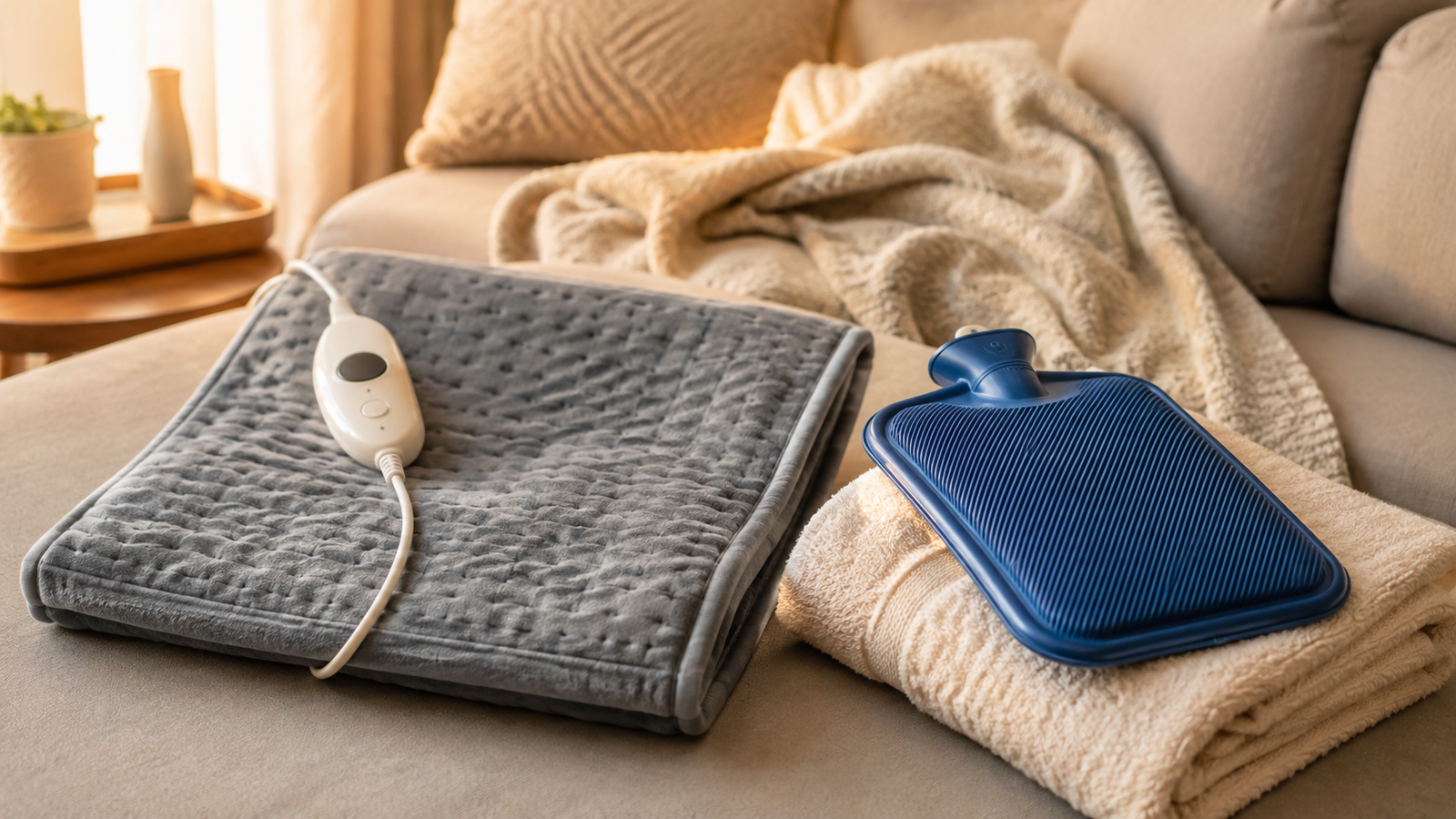
Electric heating pads and electric hot water bags are both designed to provide local warmth, but they differ in how precisely they control heat, how they conform to the body and how they are used.
A heating pad is usually flatter, more flexible and may provide selectable heat settings or timers. An electric hot water bag stores heat in a sealed fluid-filled pouch after electrical heating and is then used unplugged once ready, depending on the design.
Heating Pad vs Electric Hot Water Bag at a Glance
| Factor | Electric Heating Pad | Electric Hot Water Bag |
|---|---|---|
| Heat control | Often multiple settings | Usually less precise |
| Shape | Flat and flexible | Soft pouch |
| Coverage | Can cover larger flat areas | More localised |
| Use | Often used while connected | Heated first, then typically used unplugged |
| Convenience | Consistent powered heat | Portable after heating |
Choose a Heating Pad for More Controlled Heat
A heating pad is generally easier to manage when you want repeatable heat levels over a broader area such as the back, shoulders or abdomen. Models with multiple settings allow more adjustment than a simple heat-retaining bag.
Timer or auto-shutoff features can also be useful because they reduce the chance of leaving the product operating longer than intended. Check the actual safety features of the specific model rather than assuming every pad has them.
Choose an Electric Hot Water Bag for Simple Portable Warmth
An electric hot water bag can be convenient when you want a soft heat source that can be moved around after heating. Once charged according to its instructions, it can usually be used without remaining attached to a power socket.
The trade-off is that heat intensity changes as the bag cools, and temperature control may be less precise than on a pad with several settings.
Coverage and Body Fit
A large heating pad can cover more of the back or another broad area. A hot water bag is smaller and can be useful for a more localised comfort zone.
Do not fold or sharply crease an electric heating pad unless the manufacturer explicitly permits it. Damage to internal heating elements can create a safety risk.
Heat Settings and Timers
If you are sensitive to heat or plan to use the product frequently, adjustable heat settings can be valuable. Start at a lower comfortable level rather than assuming hotter is better.
Auto shutoff is a useful feature, but it does not replace safe use. Do not sleep on top of an electric heating product or use it in a way that traps excessive heat unless the manufacturer specifically states that the product is designed for that use.
Safety Matters More Than Convenience
Heat can cause burns, particularly with prolonged contact or reduced skin sensation. Use a suitable fabric layer when directed and check the skin periodically.
People with reduced sensation, circulation problems or certain medical conditions may need professional advice before using local heat. Do not apply heat to an area with unexplained severe pain, acute injury, significant swelling or broken skin without appropriate guidance.
Cleaning and Maintenance
For a heating pad, check whether the cover is removable and washable and how the electrical components should be kept dry. For an electric hot water bag, inspect the pouch, charging connection and outer cover for wear.
Stop using any electrical heating product that has damaged wiring, leaking fluid, unusual swelling, burning smell or visible deterioration.
Which Is Better for Travel?
An electric hot water bag may be easier to move around after heating, but it still requires a suitable power source for charging. A compact heating pad can also travel well if you have access to the correct electrical supply.
Check voltage, plug and manufacturer instructions before travelling with electrical products.
Common Buying Mistakes
- Choosing the hottest product rather than the safest controllable heat.
- Ignoring auto shutoff and controller quality.
- Buying a pad that is too small for the intended area.
- Using a damaged electric hot water bag because it still heats.
- Sleeping with a heating product used in a way the manufacturer does not permit.
- Treating heat as a substitute for assessment of persistent or severe pain.
Final Verdict
Choose an electric heating pad if you want broader coverage and more precise heat control. Choose an electric hot water bag if you prefer a compact, simple heat-retaining pouch that can be moved after heating.
Whichever format you choose, safety features, build condition and correct use matter more than maximum temperature.