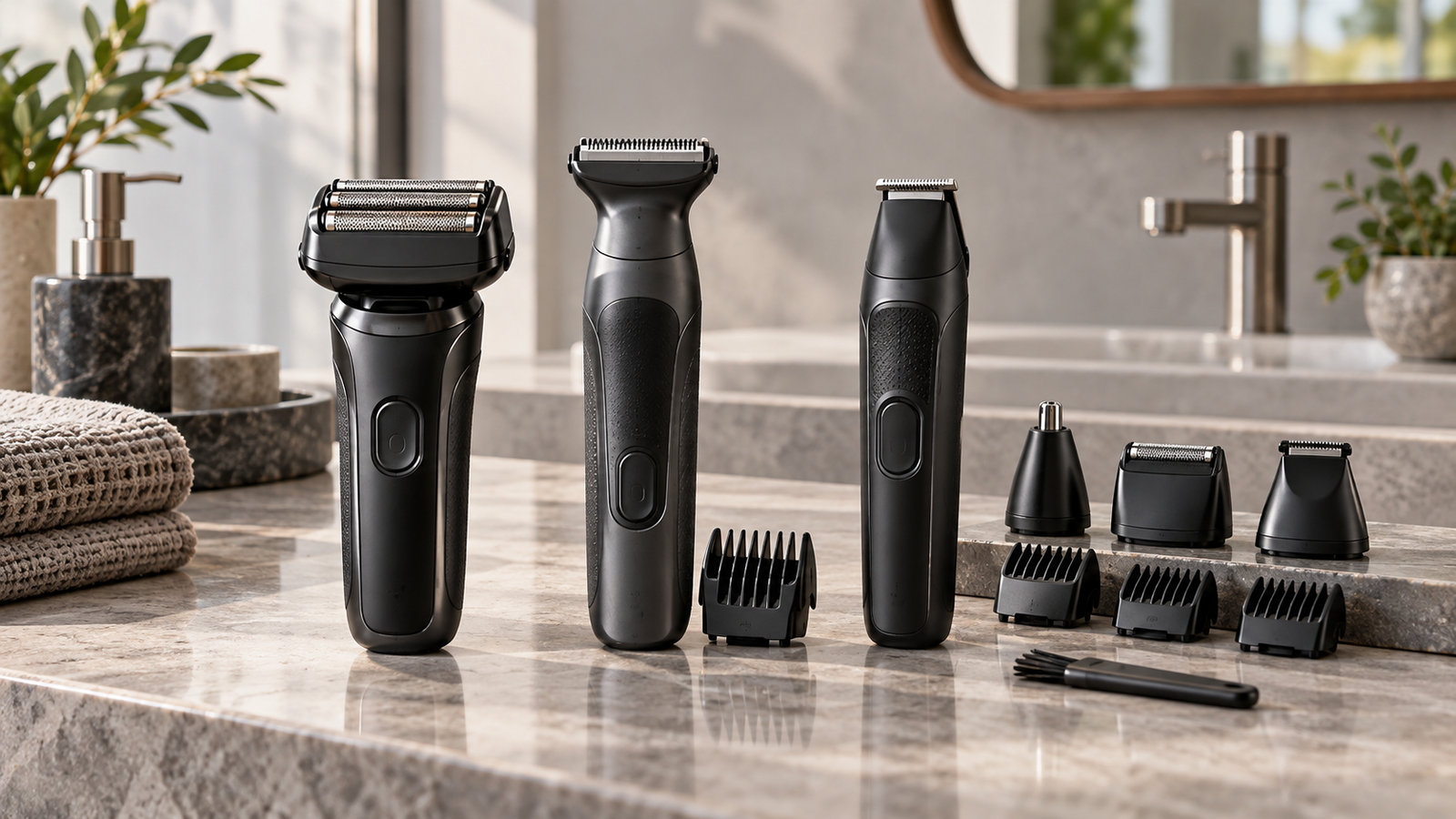
How to Choose a Body Groomer: Guard Combs, Blade Design and Cleaning
Compare body-groomer heads, adjustable guard combs, wet/dry claims, handling and cleaning requirements for different at-home trimming routines.
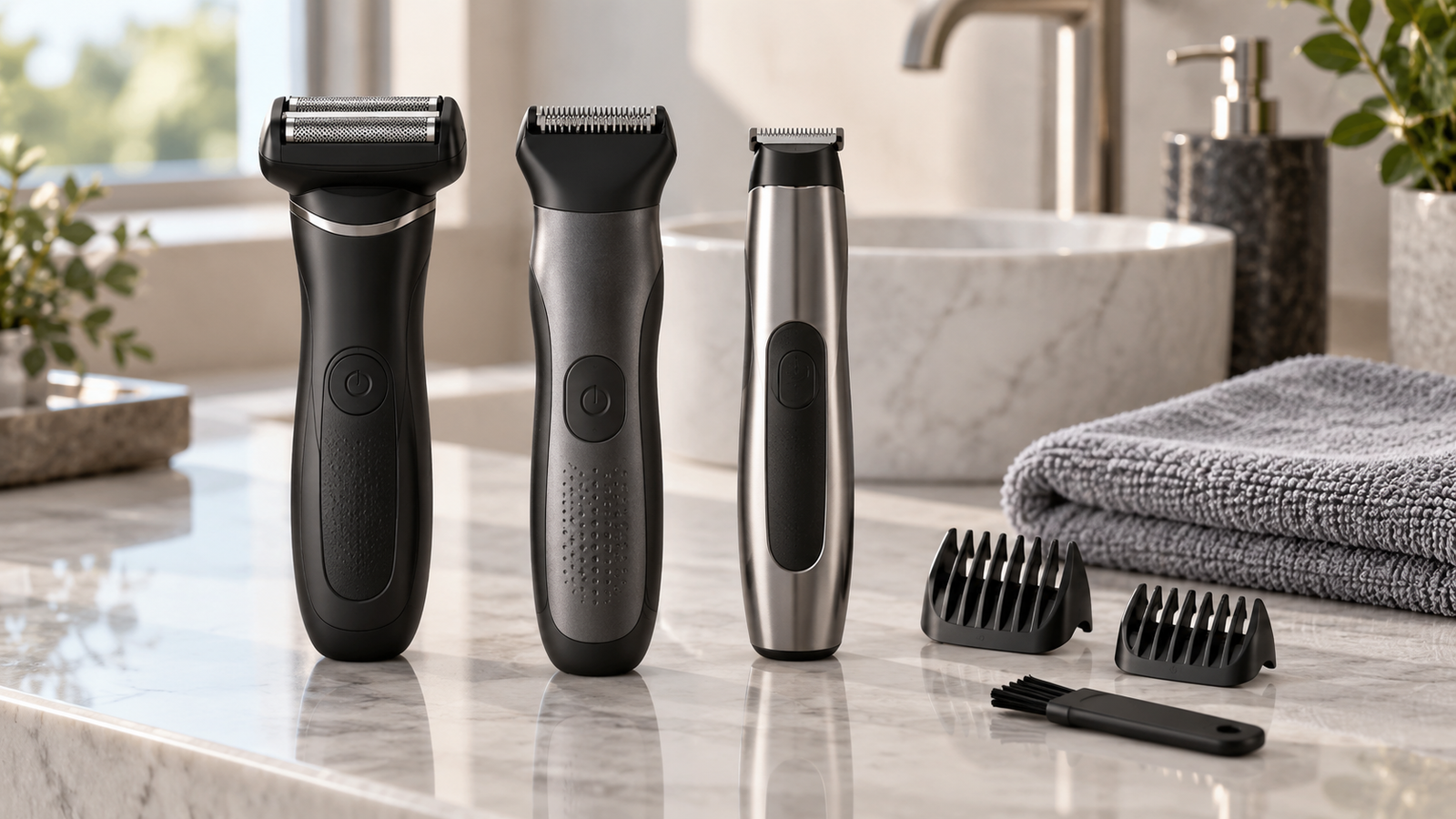
A body groomer is designed to trim or shave hair across areas such as the chest, back, arms, legs, underarms and, on suitable models, more sensitive body areas.
At first glance, most body groomers look similar. The important differences are usually found in the shaving head, guard-comb options, waterproofing, handle design and how easily the device can be cleaned.
The best model is not necessarily the one with the most attachments. It is the one whose cutting system, length settings and cleaning requirements match the areas you actually plan to groom.
What is a body groomer?
A body groomer is an electric personal-care device designed specifically for body-hair trimming.
It may use:
- A foil shaving surface.
- Oscillating cutters.
- Rounded trimming blades.
- Detachable guard combs.
- Adjustable comb attachments.
Some models are designed primarily for shortening longer body hair, while others can trim and then shave closer to the skin.
Body groomers should not automatically be treated as interchangeable with beard trimmers or electric face shavers.
Body groomer vs beard trimmer
A beard trimmer is primarily designed for facial hair.
Its blade geometry, guard sizes and handle shape are usually optimised for:
- Beard length control.
- Moustache trimming.
- Sideburns.
- Jawline detailing.
A body groomer may instead have:
- Wider cutting surfaces.
- Rounded blade edges.
- Skin-protection elements.
- Longer handles.
- Different comb shapes.
A beard trimmer can sometimes be used on the body, but a dedicated body groomer can be more practical when large areas or sensitive regions are involved.
Body groomer vs electric shaver
An electric shaver is designed to cut hair very close to the skin.
Foil shavers typically use thin perforated metal foils over fast-moving cutters.
A body groomer often combines trimming and shaving functions.
This makes it useful if you want to reduce longer hair first rather than attempt a very close shave immediately.
Body groomer vs multi-grooming kit
A multi-grooming kit is designed for several grooming tasks.
It may include attachments for:
- Beard trimming.
- Hair clipping.
- Nose and ear hair.
- Body grooming.
- Precision detailing.
This can be convenient if you want one device for several jobs.
A dedicated body groomer may still be better if body trimming is your main priority because the head and handle are usually designed specifically for that use.
The cutting head is the most important part
Before comparing battery life or accessories, look at how the hair is actually cut.
A body groomer may use a combination of:
Trimming blades
These shorten longer hair before it reaches the shaving surface.
Foil section
This cuts hair closer to the skin.
Rounded blade tips
These are designed to reduce scratching during skin contact.
Skin guards
Some models place a protective structure between the cutter and skin.
The complete cutting system matters more than a single marketing phrase such as “skin safe.”
No electric groomer is guaranteed to prevent all irritation.
Foil-style body groomers
A foil-style body groomer uses a thin metal screen over moving cutters.
Hair enters through the openings and is cut beneath the foil.
This format is useful when you want a relatively close finish.
Foil heads tend to work best on shorter hair.
If the hair is long, trimming it first may improve performance.
Trimmer-style body groomers
Some body groomers look more like traditional electric trimmers.
They use exposed cutting teeth with optional guards.
These are usually better for:
- Leaving visible hair length.
- Managing thicker body hair.
- Large-area trimming.
- Gradual length reduction.
They may not shave as close as a foil system.
Hybrid grooming heads
Many modern body groomers combine both functions.
For example, a head may contain:
- A central foil.
- Trimming teeth on both sides.
The side cutters shorten longer hairs and the foil handles shorter hairs.
This can reduce the need to change attachments repeatedly.
Why rounded blade edges matter
Body skin is not flat.
Areas such as the:
- Underarms.
- Chest.
- Groin.
- Knees.
have curves and folds.
Sharp corners or poorly designed exposed cutters can catch skin more easily.
Rounded blade tips and smooth head edges can make the device easier to move across uneven areas.
However, technique still matters.
What are guard combs?
Guard combs sit over the blade and prevent it from cutting hair below a selected length.
For example, a groomer might include guards around:
- 2 mm.
- 3 mm.
- 5 mm.
- 7 mm.
The exact sizes vary.
The guard controls how much hair remains after trimming.
Why guard length matters
Different users want different finishes.
For example:
Very short trim: useful when you want a neat appearance without shaving to the skin.
Medium trim: useful for chest, arm or leg hair when you want to reduce volume but retain visible hair.
Longer trim: useful when you want a natural appearance with only basic control.
Do not choose a model solely because it has many guards.
Check whether the actual lengths are useful to you.
Fixed guards vs adjustable comb
Fixed guard combs
You attach a separate comb for each length.
Advantages include predictable settings and simple construction.
The downside is that the attachments can be lost.
Adjustable combs
One comb changes length through a dial or sliding mechanism.
This is more convenient for users who switch lengths frequently.
However, the mechanism should lock securely.
Is more length adjustment always better?
No.
A device offering twenty settings is not automatically more useful than one offering four.
Body grooming generally requires fewer precise length increments than detailed beard styling.
A few well-chosen settings may be enough.
Choosing length for different body areas
There is no single ideal setting.
For example, you may want:
- A shorter trim for underarms.
- A moderate length on the chest.
- A longer natural finish on the legs.
Experiment gradually.
It is easier to shorten hair further than to restore length after trimming too close.
Start with a longer guard
If you are using a groomer for the first time, begin with the longest appropriate attachment.
Assess the result.
Then move down one setting if you want a shorter finish.
This reduces the chance of accidentally removing more hair than intended.
Sensitive-area grooming
Not every body groomer is designed for every body area.
Before using a device around sensitive regions, confirm that the manufacturer explicitly approves that use.
Look for:
- Suitable guard attachments.
- Skin-protection features.
- Clear instructions.
Do not assume that “body groomer” automatically means safe for every anatomical area.
Stretching the skin
Keeping the skin relatively flat can make trimming more predictable.
This is especially useful around areas with folds or loose skin.
Move slowly rather than pressing harder.
Pressure does not necessarily produce a closer result and may increase irritation.
Trim longer hair before shaving close
Trying to shave long body hair directly with a foil can:
- Pull hairs.
- Slow the device.
- Require repeated passes.
- Increase discomfort.
If the hair is long, use a guard or trimmer first.
Then use the closer shaving surface if desired.
Trim with or against hair growth?
For general trimming, moving with the direction of hair growth may feel gentler.
Moving against growth can cut closer but may also increase irritation for some users.
The best technique depends on:
- Body area.
- Hair direction.
- Skin sensitivity.
- Device design.
Follow the manufacturer’s recommendations.
Do not repeatedly go over the same area
Multiple passes can irritate skin.
If one area is not trimming cleanly, check whether:
- The blade is clogged.
- The hair is too long.
- The guard is installed incorrectly.
- The battery is low.
- The blade is worn.
Do not simply keep rubbing the same skin repeatedly.
Wet vs dry body grooming
Many body groomers support wet and dry use.
Dry grooming
Advantages include easier cleanup of loose hair and better visibility.
It is often convenient for trimming longer hair.
Wet grooming
Some waterproof devices can be used in the shower.
This may feel more comfortable for some users and makes cleanup easier.
However, wet hair can sometimes lie flatter against the skin, so trimming performance may differ.
Waterproof vs washable
These terms should not be treated as identical.
A washable head may mean only the cutting attachment can be rinsed.
A fully waterproof device may allow the complete groomer to be rinsed or used in the shower.
Check the actual instructions.
Do not immerse a device simply because the blade head can be washed.
IP ratings
Some grooming devices provide an IP water-resistance rating.
This can give more specific information about protection from water.
However, manufacturer instructions remain the main reference for:
- Shower use.
- Full rinsing.
- Immersion.
- Charging around water.
Never charge an electric groomer while using it in a wet environment.
Handle design
Body grooming sometimes requires reaching awkward areas.
A good handle should provide:
- Secure grip.
- Comfortable angle.
- Enough length.
- Control when wet.
Rubberised surfaces can help when using the groomer in the shower.
Extended handles
Some body groomers include long handles or back attachments.
These are useful if you want to groom areas such as the back without assistance.
Check whether the handle:
- Locks securely.
- Maintains enough pressure on the cutting head.
- Is easy to control.
A very long attachment is not useful if the head becomes difficult to position accurately.
Head flexibility
Some grooming heads pivot or flex slightly.
This helps them follow body contours.
A flexible head can be useful on:
- Chest.
- Shoulders.
- Underarms.
- Legs.
However, excessive movement can make detailed trimming less precise.
Corded vs cordless
Most body groomers are cordless.
This provides greater freedom, especially in a bathroom.
Cordless use also avoids having cables around wet environments.
When comparing models, look at both:
- Runtime.
- Charging time.
A very long advertised runtime matters less if you only groom for ten minutes at a time.
Battery runtime
Common battery specifications may range from shorter basic runtimes to more than an hour.
Consider how you actually use the device.
Long runtime is useful if:
- Several areas are groomed in one session.
- You travel frequently.
- Charging access is limited.
For occasional short sessions, moderate battery life may be enough.
Charging time
A device that runs for a long time but takes many hours to charge can be inconvenient.
Look for:
- Full-charge time.
- Quick-charge function.
- Battery indicator.
A quick-charge feature can be useful if you forget to recharge.
USB charging
USB charging can make travel easier.
It reduces the need for a large proprietary adapter.
Check exactly what comes in the box because some products include only a cable, not a wall charger.
Can body groomers work while charging?
Some devices cannot operate while connected to power.
This is often intentional for water-safety reasons.
Check before buying if corded backup use is important to you.
Blade maintenance
Cutting performance gradually declines as blades wear.
Signs of a worn blade may include:
- Pulling hair.
- Requiring more passes.
- Increased noise.
- Rougher feel.
- Uneven trimming.
Some manufacturers sell replacement blades or heads.
Check their availability before buying the device.
Self-sharpening blades
Some trimmers are marketed with self-sharpening blades.
This generally means blade surfaces are designed to maintain their cutting edges through contact during operation.
It does not mean they last forever.
Wear still occurs over time.
Stainless-steel blades
Stainless steel is common because it is:
- Durable.
- Corrosion resistant.
- Suitable for precision cutting.
Blade material alone does not determine comfort.
Geometry, coating and head design also matter.
Ceramic blades
Some grooming tools use ceramic cutters.
They can remain sharp and generate relatively little heat.
However, ceramic components can be more brittle than steel.
They are less common in mainstream body groomers than stainless-steel systems.
Cleaning after every use
Hair buildup can affect cutting performance.
After grooming, clean the head according to the manufacturer’s instructions.
A typical routine is:
- Switch the device off.
- Remove the guard comb.
- Brush away loose hair.
- Rinse washable components if permitted.
- Allow parts to dry before reassembly.
- Store the device in a clean, dry place.
Do not rinse electrical components that are not designed for water exposure.
Why drying matters
Storing damp components can contribute to:
- Odour.
- Residue.
- Corrosion.
- Microbial buildup.
Let washable attachments dry properly before putting them into a closed storage pouch.
Cleaning brushes
Many grooming kits include a small brush.
Use it to remove hair from:
- Blade teeth.
- Foil edges.
- Guard combs.
- Interior attachment areas.
Do not force stiff objects through delicate foils.
Should you disinfect the blade?
Routine cleaning is usually sufficient when the device is used only by one person and manufacturer care instructions are followed.
If a disinfectant is required, use only a product compatible with the blade and device.
Strong chemicals may damage:
- Coatings.
- Plastic parts.
- Foils.
Do not share body groomers
Personal grooming devices can come into contact with:
- Skin oils.
- Sweat.
- Small amounts of blood from accidental nicks.
For hygiene reasons, it is better not to share the same cutting head between users.
Blade oil
Some trimmers require periodic oiling.
Others are designed to operate without added lubricant.
If oil is required, use the recommended type and amount.
Too much oil can attract debris.
Do not use household oils unless the manufacturer permits them.
Cleaning foil heads
Foil screens are thin and can be damaged easily.
Avoid:
- Pressing them inward.
- Scraping them with hard tools.
- Brushing aggressively.
If the foil develops a hole or tear, replace the head.
A damaged foil can expose moving cutters to the skin.
Grooming before or after a shower
Both can work.
Before showering
Advantages:
- Dry hair may stand more upright.
- Loose hair can be washed away afterward.
After showering
Warm water may soften hair.
However, skin may also be more sensitive after prolonged hot water exposure.
Choose whichever approach gives you better comfort and control.
Skin preparation
For most electric body trimming, complicated preparation is unnecessary.
The skin should be:
- Clean.
- Free from heavy oils or lotions.
- Comfortable.
Avoid applying thick moisturiser immediately before dry trimming because it can clog the cutting head.
What to do after grooming
If the skin feels comfortable, minimal aftercare may be enough.
A fragrance-free moisturiser can be useful if the area feels dry.
Avoid applying strongly fragranced or potentially irritating products immediately to freshly groomed sensitive skin if they cause stinging.
Razor bumps and ingrown hairs
Very close hair removal can contribute to ingrown hairs in some people.
If this is a recurring issue, leaving a small amount of hair rather than shaving completely to the skin may help.
Do not repeatedly dig at ingrown hairs.
Persistent painful or inflamed bumps may require professional assessment.
Body groomer and acne-prone skin
Avoid running a grooming head aggressively over:
- Inflamed pimples.
- Open sores.
- Cuts.
This can irritate the area or damage the skin.
Work around active lesions where practical.
Moles and raised skin
Take extra care around raised moles, skin tags and other protrusions.
Do not repeatedly pass exposed blades directly over them.
Using a guard can provide more clearance.
If you are uncertain about a skin growth, have it assessed rather than repeatedly irritating it during grooming.
Can a body groomer cut skin?
Yes.
Electric grooming generally reduces the exposure of the cutting blade compared with a traditional razor, but cuts can still happen.
Risk increases when:
- You press too hard.
- The skin folds into the cutting surface.
- The foil is damaged.
- The blade is worn.
- The device is used on an area it was not designed for.
Body groomer vs manual razor
A manual razor usually provides a closer shave.
A body groomer usually provides:
- Faster length reduction.
- Less need for shaving cream.
- Easier control over remaining length.
- Lower chance of some razor-related irritation for certain users.
The trade-off is that the finish may not be as close.
Close shave vs trimmed finish
Decide before buying what result you want.
If you want a nearly smooth finish, prioritise:
- Foil or close-shaving capability.
- Skin-protection features.
- Replacement head availability.
If you mainly want shorter, neater hair, prioritise:
- Guard selection.
- Blade width.
- Battery life.
- Easy cleaning.
Grooming large areas
For chest, back or legs, a wider head can save time.
A narrow precision trimmer can require many more passes.
However, very wide heads can be harder to manoeuvre around smaller curved areas.
Some users benefit from a device with interchangeable heads.
Grooming underarms
Underarm hair grows in multiple directions.
Use:
- Slow passes.
- Light pressure.
- A clean cutting head.
You may need to approach from more than one direction.
Flatten the area gently when possible.
Grooming the chest
Chest hair can vary greatly in density.
If hair is long, start with a guard.
Move gradually across the area instead of trying to remove everything in one pass.
Pay attention around:
- Nipples.
- Raised skin.
- Bony areas.
Use extra caution around these regions.
Grooming the back
Back grooming can be difficult because visibility and reach are limited.
An extended handle can help.
Use a mirror if practical.
If you cannot maintain stable control of the device, asking for assistance can be safer than trying to reach at an extreme angle.
Travel features
If you travel frequently, useful features include:
- Travel lock.
- Protective cap.
- Storage pouch.
- USB charging.
- Compact guards.
A travel lock prevents the device from switching on accidentally inside luggage.
Noise
Electric groomers vary in motor noise.
This is rarely the most important buying factor, but quieter devices may be preferable if you groom early in the morning or share living space.
Storage
Keep the groomer and accessories somewhere:
- Dry.
- Clean.
- Ventilated.
Avoid leaving detachable parts loose where guards can be lost.
A small storage case can be useful if the device includes several attachments.
What specifications matter most?
When comparing body groomers, focus on practical factors.
| Factor | What to check |
|---|---|
| Cutting system | Trimmer, foil or hybrid |
| Guard lengths | Do they match the finish you want? |
| Sensitive-area suitability | Explicitly approved by manufacturer |
| Wet/dry use | Fully waterproof or only washable head |
| Handle | Grip, reach and control |
| Battery | Runtime and charging time |
| Cleaning | Rinseable head and easy hair removal |
| Replacement parts | Blade and foil availability |
| Travel | Lock, cap and charging system |
| Maintenance | Oiling or blade replacement requirements |
Common body-groomer mistakes
The most common problems usually come from technique rather than the device itself: starting with no guard on long hair, pressing hard because the first pass is not perfectly close, repeatedly passing over irritated skin, using a damaged foil, ignoring cleaning instructions, and assuming a groomer is suitable for every body area.
A slower approach with the correct attachment generally produces a more predictable result.
How often should you groom?
There is no required schedule.
Frequency depends on:
- How quickly your hair grows.
- Preferred hair length.
- Skin sensitivity.
- Areas being groomed.
Some users trim every few days, while others do it every few weeks.
Groom when needed rather than following a fixed timetable.
How to choose a body groomer for sensitive skin
If irritation is a concern, prioritise:
- Rounded cutting edges.
- Protective guards.
- Multiple length settings.
- A clean, undamaged foil.
- Wet-use capability if you prefer it.
- Easy cleaning.
Starting with a short guard rather than a skin-close shave may also reduce irritation.
How to choose for thick body hair
For dense or coarse hair, look for:
- Strong motor performance.
- Wide trimming head.
- Guards that do not clog easily.
- Good battery runtime.
Long hair should usually be shortened before attempting a close shave.
How to choose for light body hair
You may not need a powerful, attachment-heavy model.
A simple washable groomer with a few guard lengths may be sufficient.
Avoid paying for features you are unlikely to use.
Do you need separate devices for face and body?
Not always.
A well-designed multi-groomer can cover both.
However, separate heads are preferable for hygiene and performance.
A device that is excellent for beard detailing may not be ideal for large body areas.
Likewise, a wide body groomer may be awkward around the moustache or sideburns.
Replacement parts affect long-term value
A body groomer is only useful while its cutting system performs properly.
Before purchasing, check whether you can buy:
- Replacement foil.
- Replacement cutting head.
- Guard combs.
- Charging cable.
A slightly more expensive device with readily available parts may offer better long-term value than one that becomes unusable when a small component breaks.
Frequently asked questions
Is a body groomer better than a razor?
They produce different results.
A razor generally gives a closer shave, while a body groomer offers more control over hair length and may be more convenient for large areas.
Can I use a body groomer without a guard?
Yes, if the device is designed for direct skin contact.
Use caution and follow the manufacturer’s directions.
Can body groomers be used in the shower?
Only models explicitly designed for wet use.
How many guard combs do I need?
Only enough to cover the lengths you actually use.
More attachments do not automatically mean better value.
Should I use the shortest setting for the closest trim?
Only if your skin tolerates it.
Starting slightly longer can reduce irritation.
How often should the blade be replaced?
Follow manufacturer guidance and replace it earlier if cutting performance deteriorates or the foil becomes damaged.
Can I use the same groomer for my beard and body?
Some multi-groomers are designed for both, but separate heads are preferable when available.
Why does my body groomer pull hair?
Possible causes include long hair, a dirty cutting head, low battery, worn blades or moving the device too quickly.
Is waterproofing important?
It is valuable if you want shower use or simple rinsing, but it is not essential if you only groom dry and can remove the head for cleaning.
Choosing the right body groomer
Start by deciding what finish you want.
If you mainly want to reduce body-hair length, prioritise a strong trimmer with practical guard sizes.
If you want a closer finish, look for a foil or hybrid shaving head designed for direct skin contact.
After that, compare waterproofing, handle reach, battery runtime, cleaning requirements and replacement-head availability.
The best body groomer is not the one with the largest accessory bundle. It is the one that gives you the right cutting length, works safely on the areas you intend to groom and is easy enough to clean that you will maintain it properly.
Physical Glow’s Top 5 Body Groomers for At-Home Trimming in India comparison looks at several cordless body-grooming designs with different cutting heads, guards and wet/dry capabilities. Use that comparison alongside this guide, then verify the current attachment sizes, approved grooming areas, waterproofing, battery specifications and replacement-part availability for the exact device you plan to buy.