Sunrise Alarm Light Settings: Brightness, Timing and Room Position
Sunrise-style alarm lamps need sensible positioning and timing. Learn practical bedroom setup choices without treating a lamp as a medical sleep treatment.
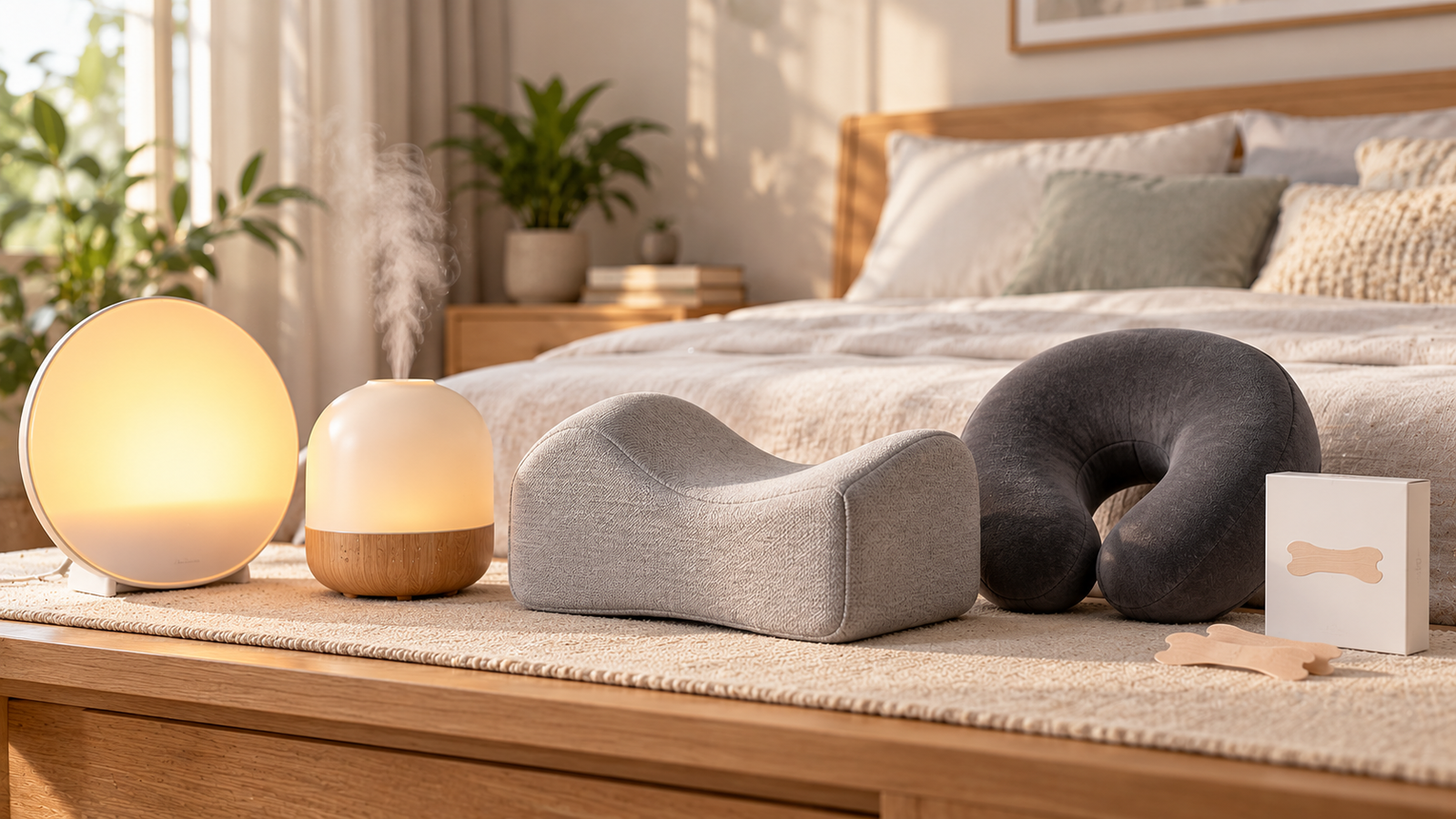
A sunrise alarm light offers a different way to approach morning wake-ups. Instead of relying entirely on a sudden alarm sound, the device gradually increases the amount of light in the bedroom before a scheduled wake-up time.
Some models begin with a dim red or amber glow, transition through warmer colours, and eventually reach a brighter yellow or white light. Others simply increase the brightness of a single-colour lamp.
Many sunrise alarm clocks also include optional sounds, adjustable alarm times, display dimming, sunset simulations, and bedside-light functions.
Although these features may appear straightforward, getting the settings right requires more attention than simply plugging in the device.
A light positioned too far from the bed may provide little noticeable illumination. Excessive brightness may wake someone earlier than intended. A poorly chosen sunrise duration may not match the user’s preferences, and an incorrectly configured alarm may fail to activate at the expected time.
The bedroom environment also matters. Thick curtains, existing room lighting, the position of the bed, and the direction of the lamp can all influence the experience.
The most useful sunrise alarm setup balances three main factors: appropriate brightness, a suitable gradual-light duration, and correct positioning near the sleeping area.
These factors should be adjusted according to the manufacturer’s instructions and the user’s preferences.
This guide explains how sunrise alarm lights work, how to choose brightness and timing settings, where to position the device, and how to troubleshoot common problems.
It also covers sound alarms, display brightness, shared bedrooms, power interruptions, light sensitivity, and the difference between a sunrise alarm and a clinical bright-light therapy lamp.
1. What Is a Sunrise Alarm Light?
A sunrise alarm light, also called a wake-up light or dawn simulator, is an electronic device designed to imitate part of the natural transition from darkness to morning light.
Instead of switching immediately from darkness to full brightness, it gradually increases illumination over a predetermined period.
How a conventional alarm works
A conventional alarm clock usually produces a sound or vibration at the selected wake-up time.
The signal begins relatively suddenly.
How a sunrise alarm works
A sunrise alarm begins its lighting sequence before the scheduled wake-up time.
For example, if a device is configured for a 30-minute sunrise and an alarm time of 7:00 AM, the light may begin brightening at approximately 6:30 AM.
It then gradually increases toward the selected final brightness.
On many models, any enabled alarm sound begins at the scheduled wake-up time.
Common features
Depending on the model, a sunrise alarm may include:
- Adjustable sunrise duration
- Several light-intensity levels
- Gradual colour transitions
- Optional natural wake-up sounds
- FM radio
- Multiple alarm profiles
- Adjustable clock-display brightness
- Snooze functionality
- Sunset simulation
- A low-brightness nightlight
- Smartphone connectivity
- Power-failure backup features
Not every sunrise alarm includes every feature.
What a sunrise alarm is intended to do
The main purpose is to introduce a gradual light signal before waking.
Some people may find this more comfortable than relying solely on a sudden audible alarm.
However, the experience varies between individuals.
A sunrise alarm should not be assumed to cure insomnia, eliminate morning tiredness, or replace adequate sleep.
2. How Sunrise Simulation Works
Natural dawn involves a gradual increase in environmental illumination.
Sunrise alarm lights attempt to reproduce a simplified version of this progression indoors.
Gradual increase in brightness
The device begins at a low light level and becomes brighter over time.
The pattern may be predetermined or adjustable.
Colour changes
Certain models transition through warmer colours.
For example, some Philips SmartSleep and Lumie Bodyclock models use red, orange, and warmer white or yellow tones during the simulated sunrise.
Other products may use a single colour throughout the sequence.
Final brightness
The lamp reaches its selected maximum or target brightness near the scheduled wake-up time.
The precise behaviour depends on the model.
Optional sound
Some alarms introduce a sound at the end of the sunrise.
Others allow the sound to begin at a selected stage or to remain disabled.
Why the timing matters
Light is one of the environmental signals involved in regulating the body’s circadian rhythms.
The CDC explains that light and darkness influence the body’s internal timing system and alertness.
However, the effect of a particular wake-up lamp depends on factors such as illumination, timing, exposure, and individual sensitivity.
Does sunrise simulation guarantee easier waking?
No.
Research has reported potential benefits for alertness and waking experience, but findings vary and some studies have been small.
For example, a study published in the European Journal of Applied Physiology investigated dawn simulation in eight participants and reported improvements in several measures of alertness and performance.
That is useful preliminary evidence, not proof that every device produces the same effect for everyone.
A sunrise alarm is best understood as a configurable wake-up aid rather than a guaranteed sleep treatment.
3. Understanding Sunrise Duration Settings
Sunrise duration is the amount of time over which the lamp gradually increases its brightness before the scheduled wake-up time.
It is one of the most important adjustable features.
Short sunrise duration
A shorter sequence reaches the selected brightness more quickly.
It may suit someone who prefers a relatively brief transition before waking.
Longer sunrise duration
A longer sequence begins earlier and increases illumination more gradually.
Some users prefer this less abrupt progression.
Common manufacturer options
The available duration varies significantly.
For example:
- The Philips SmartSleep HF3520 supports an adjustable sunrise process of approximately 20–40 minutes.
- The Lumie Bodyclock Luxe range includes models supporting sunrise durations from 15 to 90 minutes.
- Other models may provide a fixed 30-minute sequence or a limited number of choices.
These are product-specific examples, not universal requirements.
Longer is not automatically better
A 60-minute simulation is not necessarily more beneficial than a 20-minute simulation.
The most appropriate setting depends on the device and user.
A longer sequence may also introduce light into the room earlier, which can affect people who are sensitive to illumination.
A practical starting point
If your device provides a 30-minute default and you have no specific reason to change it, using that setting initially can be a reasonable starting approach.
Observe the waking experience before making adjustments.
4. How to Set the Correct Sunrise Timing
Many users confuse the sunrise start time with the actual alarm time.
These are not usually the same.
Alarm time
The alarm time is the scheduled time at which the wake-up sequence is intended to conclude or the audible alarm begins, depending on the device.
Sunrise start time
The sunrise start time is when the light begins gradually increasing.
This typically occurs before the scheduled alarm.
Example timing table
| Desired wake-up time | Sunrise duration | Approximate sunrise start |
|---|---|---|
| 6:30 AM | 15 minutes | 6:15 AM |
| 6:30 AM | 30 minutes | 6:00 AM |
| 6:30 AM | 45 minutes | 5:45 AM |
| 7:00 AM | 20 minutes | 6:40 AM |
| 7:00 AM | 30 minutes | 6:30 AM |
| 7:00 AM | 60 minutes | 6:00 AM |
These examples assume the device schedules its lighting sequence to finish at the alarm time.
Some products use different timing behaviour, so the manual should take priority.
Why this distinction matters
If you set a long sunrise duration, the bedroom may begin getting brighter significantly earlier than your scheduled wake-up time.
Avoid changing several settings simultaneously
When testing a new sunrise alarm, begin with the correct clock and alarm time.
Then choose a sunrise duration.
After testing the sequence, adjust brightness or duration individually.
Confirm activation
Some devices require the alarm to be activated every evening.
Others support automatic daily or weekly schedules.
Check that the alarm indicator confirms the intended configuration.
5. Choosing the Right Sunrise Brightness
Brightness determines how much light the device produces during the wake-up sequence.
Many sunrise alarms let users choose the final intensity.
Low brightness
A lower setting may be preferable for someone who is sensitive to light or sleeps close to the lamp.
Medium brightness
A middle setting can provide a useful starting point for evaluating the device.
However, the numerical midpoint of a particular lamp is not a universal recommended brightness.
High brightness
A brighter setting may make the sunrise more noticeable.
However, greater brightness can also create discomfort or wake the user earlier than intended.
What does the brightness number mean?
Some products display levels such as 1–10 or 1–20.
These numbers are internal settings.
They do not necessarily correspond to standardized amounts of light across brands.
Example from Philips
Certain Philips Wake-up Light models provide 20 brightness settings, with model-specific maximum light outputs.
A level of 15 on one device should not be assumed equivalent to level 15 on another.
A sensible adjustment method
- Begin with a moderate setting permitted by the manufacturer.
- Test the full sunrise sequence.
- Observe whether the final brightness is noticeable and comfortable.
- Adjust the level gradually.
- Repeat the evaluation over several mornings.
Signs that brightness may be too high
- You wake significantly earlier than intended.
- The lamp feels glaring.
- You experience eye discomfort.
- Your sleeping partner finds the light disruptive.
- The light makes the room excessively bright.
Signs that brightness may be insufficient
- The lamp produces little noticeable illumination at your sleeping position.
- Nearby furniture blocks most of the light.
- The selected level is too dim for your preferred waking experience.
Choose brightness based on the light reaching your sleeping area, not simply the highest number available.
6. What Is Lux, and Does It Matter?
Lux is a unit used to describe illuminance.
It measures the amount of visible light reaching a surface.
Why lux is relevant
A lamp’s effect on the surrounding environment depends partly on how much light reaches the intended location.
Distance changes illuminance
The illuminance measured at one distance can differ substantially from that measured farther away.
This means that a lamp’s lux specification is meaningful only when the measurement conditions are known.
Manufacturer examples
Certain Philips Wake-up Light models specify an illuminance of approximately 250–300 lux at a stated distance of 40–50 cm.
These figures do not apply to every model.
What about lumens?
Lumens describe luminous flux, or the amount of visible light emitted by a source.
Lux describes light received over a given area.
The two measurements are related but are not interchangeable.
Does more lux always mean better waking?
No.
Light intensity is only one factor.
The duration of exposure, lamp placement, timing, and individual sensitivity also influence the experience.
Sunrise alarms vs clinical light boxes
Bright-light therapy boxes commonly use much higher specified illuminance at defined distances.
A sunrise alarm should not automatically be treated as equivalent to a 10,000-lux therapy lamp.
Their intended applications and exposure methods can differ substantially.
7. Where Should You Place a Sunrise Alarm Light?
Placement has a significant influence on how much light reaches the sleeper.
Most sunrise alarm lights are designed for use near the bed.
However, the exact distance should follow the manufacturer’s guidance.
Bedside table placement
A bedside table is often practical because the lamp can illuminate the sleeping area without requiring wall mounting.
Manufacturer-specific distance
Some Philips SmartSleep manuals recommend placing the device approximately 40–50 cm from the user’s head.
This is guidance for the applicable products, not a universal rule for every sunrise alarm.
Choose a stable surface
The lamp should rest on a flat, secure surface.
It should not be positioned where it can easily fall.
Keep the light unobstructed
Avoid placing the lamp behind books, large decorative items, or other objects that block illumination.
Consider the direction of the lamp
Position the light so that it can illuminate the sleeping area according to the manufacturer’s recommendations.
Avoid inappropriate close placement
Do not place the device directly against bedding or other surfaces where it could become covered.
Consider cable routing
Keep the power cord away from walking paths, bed mechanisms, and places where it could become trapped.
The correct placement allows useful light exposure while maintaining stable, unobstructed, and electrically safe operation.
8. How Distance Affects Sunrise Alarm Performance
A lamp that is too far away may produce less noticeable illumination at the sleeping position.
A lamp positioned very close may feel excessively bright.
Close placement
The lamp may create stronger illumination at the sleeper’s location.
However, proximity can also produce glare or discomfort.
Greater distance
Illumination at the sleeping area may decrease.
The exact change depends on lamp construction and room geometry.
Furniture interference
A tall headboard or bedside object may block part of the light.
Lamp height
The elevation of the lamp relative to the mattress can change the distribution of illumination.
Wall reflections
Light-coloured walls may reflect some light.
Darker surfaces may absorb more.
How to evaluate placement
Use the model’s recommended distance as your starting point.
Run a demonstration mode if available.
Observe whether the light reaches the intended sleeping area.
If necessary, adjust the lamp’s position within the permitted setup guidance.
Do not use arbitrary distances from other models
A setting recommended for one Philips or Lumie device may not suit an unrelated lamp.
Use the actual product’s instructions.
9. Should the Light Face Your Eyes Directly?
A sunrise alarm should illuminate the sleeping area as intended.
However, it should not be positioned in a way that causes uncomfortable glare.
Light exposure and waking
The device is intended to produce a gradual light signal around the sleeping area.
Avoid staring into the light
There is generally no need to stare directly into the lamp.
Follow manufacturer safety instructions.
Sleeping position matters
Someone who sleeps facing the lamp may experience different illumination from someone whose face points away.
Pillows and blankets
Bedding can obstruct the light reaching the face.
Comfort comes first
If the light feels harsh or causes eye discomfort, adjust the permitted brightness or position.
Eye sensitivity
People with certain eye conditions or unusual sensitivity to light should seek appropriate professional guidance before using light-based devices for therapeutic purposes.
Practical approach
Position the lamp so it provides a gradual room-lighting effect without requiring direct viewing of the light source.
10. How Bedroom Darkness Changes the Experience
A sunrise simulation may be more noticeable in a relatively dark bedroom.
Dark bedroom
A gradual increase in light may be easier to distinguish when background illumination is low.
Existing room lights
If a bedside lamp or television is already illuminating the room, the sunrise transition may be less apparent.
Streetlights
Outdoor lighting entering through windows can influence background brightness.
Thick curtains
Curtains can help limit unwanted outdoor light before the scheduled wake-up time.
Early natural sunlight
In some seasons, natural daylight may already enter the bedroom before the sunrise alarm begins.
Why consistency matters
If room lighting varies substantially from day to day, the same sunrise setting may feel different.
General sleep guidance
The CDC recommends keeping bedrooms dark during intended sleep periods.
A sunrise alarm can introduce a scheduled increase in light near the desired waking time, rather than keeping the bedroom bright throughout the night.
Do not leave the lamp on unnecessarily
Unless the device has a nightlight function you specifically intend to use, consider keeping ordinary illumination low during the main sleep period.
11. Display Brightness vs Sunrise Brightness
Many wake-up lights have two distinct brightness controls.
They should not be confused.
Sunrise brightness
This controls the intensity of the light intended to assist waking.
Display brightness
This controls the illumination of the clock display or control panel.
Why the difference matters
You may prefer a relatively bright sunrise but a very dim clock display during the night.
Automatic dimming
Some devices automatically reduce display brightness when the room becomes dark.
Manual dimming
Other models offer settings such as high, low, or off.
Examples
Certain Lumie Bodyclock models permit the display to dim or switch off during darkness.
Some Philips models include automatic display-brightness adjustment.
How to choose
Select a display setting that allows you to check the time when needed without creating unnecessary light throughout the night.
Common mistake
Reducing display brightness may not change the brightness of the actual sunrise sequence.
Check which setting you are adjusting.
12. Warm Colours vs White Light
Some sunrise alarms change colour as the sequence progresses.
Others provide a single-colour light that becomes brighter.
Warm red and amber tones
Certain products begin with a low-intensity warm glow.
Orange and yellow transitions
As the sequence progresses, some devices gradually introduce brighter colours.
White light
Certain models finish with brighter, warmer white illumination.
Does colour guarantee better waking?
No.
A multicolour sunrise may offer a particular visual experience, but the presence of several colours does not automatically establish superior performance.
What about colour temperature?
Colour temperature is commonly described in kelvin.
Lower correlated colour-temperature values generally correspond to warmer-looking white light, while higher values correspond to cooler-looking white light.
However, not every device offers a standardized kelvin adjustment.
Avoid confusing decorative colour modes with sunrise simulation
A lamp that can display several colours does not necessarily produce a controlled dawn-simulation sequence.
Check whether the product actually includes programmable gradual brightening.
Practical recommendation
Choose a product and colour progression that feel comfortable and fit your preferred waking routine.
13. How to Set a Sunrise Alarm for the First Time
A systematic first-time setup can prevent many common mistakes.
Step 1: Read the device instructions
Identify the exact model and its supported features.
Step 2: Choose a bedside location
Place the lamp on a stable surface at the manufacturer-recommended distance.
Step 3: Connect the approved power source
Use the supplied or manufacturer-approved adapter.
Step 4: Set the correct clock time
Confirm the hour and minute.
Check the 12-hour or 24-hour format.
Step 5: Select the wake-up time
Choose the time at which you intend to get out of bed.
Step 6: Set the sunrise duration
Use an available option, such as 20 or 30 minutes, if supported by your model.
Step 7: Choose final brightness
Begin with a reasonable level for your room and light sensitivity.
Step 8: Configure the audible alarm
Enable a suitable sound if you want an additional waking signal.
Step 9: Adjust display brightness
Use a low or automatic setting if the clock display is distracting at night.
Step 10: Activate the alarm
Confirm that the scheduled wake-up mode is enabled.
Step 11: Test the configuration
Use the product’s demonstration mode if available.
Step 12: Recheck before bedtime
Confirm the time, alarm activation, and placement.
A successful setup should be predictable enough that you do not need to adjust several controls immediately before sleeping.
14. Should You Use an Alarm Sound Along with the Sunrise?
Many sunrise alarm lights provide both light and sound.
This combination can be useful when waking at a particular time is important.
Light-only mode
Certain devices allow the sunrise to occur without an audible alarm.
This may appeal to people who dislike sudden sounds.
Light plus sound
The light gradually increases before the scheduled wake-up time.
A sound then begins at or near the chosen time, depending on the model.
Natural sounds
Some products include sounds such as birdsong or gentle environmental audio.
These are optional features rather than required components of sunrise simulation.
FM radio
Certain devices allow radio audio as the wake-up signal.
Gradual sound volume
Some models increase alarm volume progressively.
Others have a fixed or separately adjustable volume.
When sound backup is useful
An audible alarm may be preferable when oversleeping would have important consequences.
Do not rely entirely on light before testing
If you have never used a sunrise alarm, test whether you reliably wake with your chosen settings.
Do not immediately replace an essential alarm with an unfamiliar light-only system.
For important morning obligations, a dependable audible alarm or another suitable backup may be prudent.
15. Two Alarm Profiles: Weekdays and Weekends
Some sunrise alarm clocks support multiple alarm profiles.
This can be convenient for people with different schedules.
Weekday alarm
You may need to wake earlier for work, school, or another obligation.
Weekend alarm
You may prefer a different wake-up time on non-working days.
Two separate profiles
Certain Philips models allow two independently configured alarms.
Other devices use daily or weekly schedules.
Check activation rules
Some alarms require manual activation.
Others remain active according to the programmed schedule.
Watch for accidental overlap
Two enabled profiles may create unexpected alarms.
Avoid large schedule changes when possible
The CDC recommends maintaining consistent sleep and wake times as part of healthy sleep habits.
Occasional schedule changes may be necessary, but a sunrise lamp cannot eliminate the effects of irregular sleep timing.
Practical recommendation
Use multiple profiles for genuine scheduling needs while maintaining a reasonably consistent sleep routine where possible.
16. Why a Sunrise Alarm Might Wake You Too Early
Some users find that they begin waking before the selected alarm time.
This is not necessarily a device malfunction.
Sunrise begins before the alarm
The light is designed to brighten before the scheduled wake-up time.
Brightness may be too high
A strong light level may become noticeable earlier in the sequence.
Duration may be too long
A 60-minute sunrise begins much earlier than a 20-minute sunrise.
Lamp may be too close
Placement can influence the light reaching the face.
Individual sensitivity
Some people respond to relatively small increases in bedroom illumination.
What to adjust
Consider:
- Confirming the correct alarm time.
- Reducing final brightness within the permitted range.
- Choosing a shorter sunrise duration.
- Rechecking the manufacturer’s placement instructions.
- Evaluating whether natural morning light is contributing.
Change one setting at a time.
When early waking persists
If you frequently wake much earlier than intended, reassess the broader sleep schedule and environment.
Do not assume every waking problem can be solved through lamp settings alone.
17. Why the Light May Feel Too Weak
The opposite problem also occurs.
The sunrise may be barely noticeable.
Low brightness setting
The selected final intensity may be insufficient for your preferred experience.
Lamp too far away
The light reaching the sleeping area may be relatively weak.
Obstruction
Furniture, bedding, or a headboard may block illumination.
Bright background environment
A room already exposed to outdoor daylight may make the lamp’s gradual increase less noticeable.
Incorrect alarm activation
The sunrise may not actually be enabled.
Different lamp expectations
A compact wake-up light does not necessarily illuminate a room like a large overhead light fixture.
What to do
Check the device’s brightness and distance recommendations.
Use demonstration mode if available.
Adjust the placement and settings according to the manual.
If the device does not reach its stated brightness under normal conditions, contact the manufacturer.
18. Troubleshooting When the Sunrise Does Not Start
A sunrise alarm may fail to activate for several reasons.
Alarm not enabled
Check the alarm icon or activation indicator.
Incorrect clock time
Verify the hour, minute, and AM/PM setting where applicable.
Sunrise disabled
Some devices permit sound-only alarms or allow sunrise duration to be set to off.
Wrong alarm profile
The device may be configured for a different day or schedule.
Power interruption
An outage may affect clock operation and alarm activation.
Incorrect settings after travel
Some devices require manual clock adjustments after changing time zones.
Device malfunction
A technical fault may prevent the light from operating.
Troubleshooting sequence
- Verify power.
- Confirm clock time.
- Check the selected alarm.
- Confirm sunrise simulation is enabled.
- Review sunrise duration.
- Check the scheduled day.
- Run an approved demonstration.
- Consult the manufacturer’s troubleshooting instructions.
Do not dismantle the lamp or attempt internal electrical repairs.
19. Power Outages and Battery Backup
Power interruptions deserve particular attention because users may depend on the alarm for waking.
Mains-powered devices
Many sunrise alarm lights operate using an external electrical supply.
Backup systems
Certain devices include backup batteries or a short-term clock-memory feature.
Backup does not always mean full functionality
For example, one Lumie Sunrise Alarm manual explains that its battery backup preserves essential clock and sound-alarm functions but does not power the sunrise lighting sequence.
Other models may behave differently.
Clock-memory backup
Some devices retain settings during a short power interruption without providing full alarm operation.
Check the exact specification
Determine whether your device supports:
- Clock backup
- Alarm backup
- Sound-only backup
- Light-function backup
- Saved settings
- Automatic recovery
Do not assume the lamp works during an outage
A device may preserve its alarm time but be unable to illuminate.
Practical recommendation
Where waking on time is essential and power interruptions are possible, maintain an independent backup alarm.
This is particularly useful in households where electrical supply interruptions occasionally occur.
20. Sunrise Alarm Placement in Small Bedrooms
Compact bedrooms require careful positioning.
Limited bedside space
A lamp may compete for space with a phone charger, water bottle, books, or other belongings.
Avoid unstable stacks
Do not place the lamp on piles of books or other makeshift supports.
Keep ventilation openings clear
Some devices have ventilation or heat-dissipation requirements.
Follow manufacturer spacing instructions.
Protect the lamp from liquids
Avoid positioning drinking water where spills could reach electrical components.
Keep cords organized
Do not run the power cable beneath rugs or through locations where it may be crushed.
Avoid blocked illumination
A bedside shelf or tall headboard may obstruct the light.
Shared sleeping areas
Position the lamp with consideration for anyone else in the room.
Safe access
Make sure the alarm can be switched off or adjusted without reaching awkwardly across the bed.
21. Using a Sunrise Alarm in a Shared Bedroom
A sunrise alarm affects the surrounding space rather than only one individual.
This can matter when two people have different wake-up times.
Different schedules
One person may need to wake substantially earlier than the other.
Light spreads through the room
The sunrise may become visible to both sleepers.
Placement adjustments
Positioning may influence how much light reaches each person.
However, light can reflect from walls and other surfaces.
Sound settings
A sound alarm may also disturb the other sleeper.
Avoid excessively bright settings
If the device is placed close to one side of the bed, a lower brightness may be more comfortable for the other person.
Discuss the intended schedule
A sunrise alarm is most practical when both sleepers understand when it will activate.
Consider alternatives
Where wake-up schedules differ substantially, another alarm type may be more suitable.
Practical point
A sunrise alarm cannot provide perfectly isolated light exposure to only one person in a shared room.
22. Sunrise Alarm Lights and Eye Sensitivity
Most consumer wake-up lights are intended for ordinary household use according to their product instructions.
However, light sensitivity varies.
Avoid uncomfortable glare
Position the lamp correctly and avoid staring directly into an intense light source.
Check product warnings
Follow instructions related to safe distance, intended use, and light exposure.
Photosensitive conditions
People with conditions that make them unusually sensitive to light should seek appropriate professional guidance.
Eye disorders
Individuals with relevant retinal or other eye conditions may need advice before using specialized light-based interventions.
Photosensitizing medicines
Certain medications can increase sensitivity to light.
If this is relevant, seek guidance from a healthcare professional.
Bipolar disorder considerations
Bright-light therapy for mood disorders has specific medical precautions, particularly concerning mania or hypomania.
A consumer sunrise alarm is not identical to a clinical bright-light therapy protocol, but anyone intending to use light exposure therapeutically for a mood disorder should obtain individualized medical advice.
Discontinue if discomfort occurs
If the lamp causes persistent headaches, eye discomfort, or other concerning symptoms, stop using it and seek appropriate guidance.
23. Sunrise Alarm vs Bright-Light Therapy Lamp
These devices are sometimes grouped together in online discussions.
However, their typical purposes differ.
Sunrise alarm
A sunrise alarm gradually increases bedroom light around a scheduled wake-up time.
Bright-light therapy lamp
A bright-light therapy device is designed to deliver a specified light exposure under defined conditions.
It may be used as part of a professionally recommended treatment plan for certain conditions.
Exposure differences
Light therapy lamps may specify illuminance at a particular viewing distance.
Their use may involve remaining awake with eyes open during a defined exposure period.
A sunrise alarm operates primarily around sleeping and waking.
Is a sunrise alarm a substitute for treatment?
No.
Do not assume that a consumer wake-up light can replace medical light therapy for seasonal affective disorder, other mood conditions, or circadian rhythm disorders.
Is a therapy lamp a suitable alarm?
Not automatically.
A bright-light therapy lamp may not include the gradual wake-up timing, alarm functions, or bedside safety features of a sunrise alarm.
Why the distinction matters
Products marketed with similar language can serve different purposes.
Choose a sunrise alarm for its intended wake-up function, and seek professional advice before using light devices as medical treatment.
24. What Is Sunset Simulation?
Some sunrise alarm lights include the opposite effect: gradually reducing brightness before bedtime.
This is often called sunset simulation.
How it works
The lamp starts at a selected brightness and becomes dimmer over a programmed period.
Typical options
Depending on the model, sunset duration may be fixed or adjustable.
Intended use
The feature provides a gradual reduction in artificial lighting.
Some users find this comfortable as part of a bedtime routine.
Does it guarantee faster sleep?
No.
A fading lamp is not a guaranteed treatment for sleep-onset difficulties.
How to use it
Follow the manufacturer’s directions.
Choose a brightness and duration that fit your evening routine.
Avoid replacing sleep habits with technology alone
Adequate sleep opportunity, consistent schedules, and a suitable bedroom environment remain important.
Nightlight settings
Some devices can end the sunset with a low-level nightlight rather than complete darkness.
Choose according to your needs and the manufacturer’s options.
25. Can Sunrise Alarms Help During Winter or Dark Mornings?
Sunrise alarms may be particularly appealing when people need to wake before natural daylight.
Winter mornings
Natural sunrise may occur later than the desired waking time.
Dark rooms
Thick curtains or limited window exposure may reduce early-morning light.
Early work schedules
Some people begin work while the bedroom is still dark.
Indoor wake-up signal
A sunrise alarm provides a scheduled source of light independently of outdoor sunrise timing.
Limitations
The device does not replace daylight exposure throughout the day.
The CDC recommends getting adequate natural light, particularly earlier in the day, as part of healthy sleep habits.
Seasonal mood concerns
If seasonal changes are accompanied by persistent low mood or other symptoms, seek appropriate medical advice.
Do not assume a sunrise alarm provides an equivalent treatment to prescribed light therapy.
26. Sunrise Alarm Use During Monsoon and Cloudy Weather
In India, seasonal weather can influence the amount of outdoor light entering bedrooms.
Cloudy mornings
Outdoor illumination may be lower than on clear days.
Heavy curtains
Many households use curtains to reduce external light, heat, and privacy concerns.
Consistent indoor schedule
A programmable lamp can provide a similar timing sequence regardless of cloud cover.
Humidity and electronics
Keep the device within the manufacturer’s permitted environmental conditions.
Do not place it on damp surfaces.
Electrical safety
Avoid locations where water from open windows or air-conditioning condensation could reach the lamp or adapter.
Power interruptions
Check whether the selected model provides any alarm backup.
Practical setup
Use a stable bedside location and maintain a suitable independent alarm when needed.
27. Can You Use a Sunrise Alarm If You Wear a Sleep Mask?
A sleep mask can block much of the light reaching the eyes.
This may reduce the usefulness of a sunrise simulation.
Opaque masks
A strongly light-blocking mask may prevent the wearer from noticing the gradual change.
Partial light transmission
Some masks may allow limited light through gaps or fabric.
The effect varies.
Removing the mask
A sunrise alarm should not depend on the user waking early to remove a mask unless that is intentionally part of their routine.
Sound backup
An audible alarm may remain useful.
Consider the purpose
If maintaining darkness throughout the intended sleep period is your priority, an alternative alarm method may be more practical.
Do not assume the lamp will work through the mask
Test the setup before relying on it for essential wake-up times.
28. Common Sunrise Alarm Setup Mistakes
Mistake 1: Placing the lamp too far away
The light reaching the bed may be insufficient.
Mistake 2: Choosing maximum brightness immediately
A setting that is too bright may be uncomfortable.
Mistake 3: Selecting an unnecessarily long sunrise
The room may become illuminated earlier than desired.
Mistake 4: Confusing the sunrise start with alarm time
The gradual light sequence often begins before the displayed wake-up time.
Mistake 5: Forgetting to activate the alarm
Some models require daily confirmation.
Mistake 6: Ignoring clock format
An incorrect AM/PM setting can cause the alarm to activate at the wrong time.
Mistake 7: Placing the light behind an obstacle
Furniture may block illumination.
Mistake 8: Using display brightness instead of sunrise brightness
These may be separate controls.
Mistake 9: Relying on untested light-only waking
A backup alarm may be important for time-sensitive obligations.
Mistake 10: Assuming backup batteries power the sunrise
Some models preserve only the clock or sound alarm during an outage.
Mistake 11: Using an unapproved adapter
Power accessories must match the manufacturer’s specifications.
Mistake 12: Covering the lamp with fabric
Bedding or other materials may obstruct light and create overheating concerns.
Mistake 13: Changing every setting at once
This makes it difficult to determine which adjustment improved the experience.
Mistake 14: Treating the lamp as a cure for insufficient sleep
A sunrise alarm cannot substitute for adequate sleep duration.
29. Troubleshooting Common Problems
| Problem | Possible reason | Practical check |
|---|---|---|
| Light starts too early | Long sunrise duration | Review the scheduled duration |
| Light is too intense | High final brightness or close placement | Adjust permitted brightness and position |
| Sunrise is barely visible | Low brightness, obstruction, or distance | Check settings and room placement |
| Alarm sound does not play | Sound disabled or volume setting | Review sound configuration |
| Light does not activate | Alarm not enabled or sunrise off | Check activation indicator |
| Clock shows wrong time | Incorrect setting or power interruption | Reset time |
| Display is too bright at night | Display dimming not configured | Adjust display brightness |
| Sleeping partner wakes early | Light spreading across the room | Reconsider placement and brightness |
| Alarm fails during outage | Backup limitations | Review backup specifications |
| Lamp becomes unusually hot | Possible malfunction or ventilation issue | Disconnect safely and consult manufacturer |
| Device loses settings | Backup limitation or fault | Consult product instructions |
| Sunrise is inconsistent | Schedule, profile, or other setting differences | Review programmed alarms |
A single problem may have several possible explanations.
Always follow the troubleshooting procedure for the exact model.
30. How to Maintain a Sunrise Alarm Light
Regular maintenance can help preserve normal operation.
Keep the lamp clean
Dust can collect on the light diffuser and surrounding surfaces.
Use the manufacturer’s approved cleaning method.
Disconnect power before cleaning
Follow the product’s electrical safety instructions.
Avoid abrasive cleaners
Strong chemicals and rough materials may damage the diffuser or housing.
Keep liquids away
Do not immerse the lamp or allow water to enter electrical components.
Check the power cable
Look for fraying, cracking, or damage.
Keep ventilation clear
Do not block openings intended for heat dissipation.
Avoid unsuitable heat exposure
Do not place the device directly beside heating appliances.
Inspect the controls
Buttons and adjustment mechanisms should operate normally.
Check software or app functions where applicable
Connected models may require particular configuration or updates.
Use official manufacturer instructions.
Do not open the device
Internal electrical or lighting components should be serviced only as permitted by the manufacturer.
31. A Practical Sunrise Alarm Setup Checklist
Before first use:
- Model: Identify the exact device.
- Power: Use the approved adapter.
- Placement: Choose a stable bedside surface.
- Distance: Follow the manufacturer’s guidance.
- Clearance: Keep the diffuser unobstructed.
- Clock: Set the correct time.
- Wake-up time: Select the desired alarm time.
- Sunrise duration: Choose an available setting.
- Brightness: Begin at a comfortable level.
- Sound: Enable an appropriate audible alarm if desired.
- Display: Adjust night-time illumination.
- Activation: Confirm the alarm is enabled.
- Backup: Understand power-failure behaviour.
During initial testing:
- Observe the complete sunrise sequence.
- Check whether the final brightness is appropriate.
- Notice whether light reaches the bed.
- Adjust one setting at a time.
- Confirm that the sound begins when expected.
- Check whether the alarm is reliable.
- Consider the effect on anyone sharing the room.
For everyday use:
- Maintain a reasonably consistent wake-up schedule.
- Recheck alarm activation when required.
- Avoid leaving the lamp unnecessarily bright overnight.
- Keep the device and cable secure.
- Use a backup alarm when appropriate.
- Follow cleaning and maintenance instructions.
- Reassess the settings when room conditions or schedules change.
Frequently Asked Questions
1. What is the best brightness setting for a sunrise alarm?
There is no universal brightness level suitable for everyone.
Begin with a comfortable setting and adjust according to the device’s instructions, room conditions, and your sensitivity to light.
2. How long should a sunrise alarm take to brighten?
Many consumer devices offer durations around 20–40 minutes, while some models support shorter or longer sequences.
Use the options available on your particular lamp.
3. Is a 30-minute sunrise a good starting point?
If your device includes a 30-minute default, it can be a practical initial setting.
Adjust it according to your experience.
4. How far should a sunrise alarm be from the bed?
Follow the manufacturer’s recommendations.
Certain Philips SmartSleep models specify approximately 40–50 cm from the user’s head, but this does not apply to all brands.
5. Should a sunrise alarm face my eyes directly?
The lamp should illuminate the sleeping area as intended without causing uncomfortable glare.
There is generally no need to stare directly at the light.
6. Can a sunrise alarm wake someone before the sound starts?
Yes.
The gradual illumination begins before the scheduled audible alarm on many devices.
Some users may wake during this sequence.
7. Can I use a sunrise alarm without sound?
Some models support light-only operation.
However, test its reliability before using it as your only alarm for important obligations.
8. Is a longer sunrise better?
Not necessarily.
A longer sequence begins earlier and may not suit every person.
Choose the duration that provides a comfortable and practical experience.
9. What if my sunrise alarm does not wake me?
Check brightness, duration, placement, and alarm activation.
Consider an audible backup.
Persistent difficulty waking may also relate to sleep duration or other factors.
10. Do I need a completely dark room?
Complete darkness is not always necessary, but strong background lighting may make the sunrise progression less noticeable.
Keep the room suitable for sleep and follow the device’s setup guidance.
11. Can I put a sunrise alarm across the bedroom?
You can position it only where the manufacturer permits, but the light reaching the bed may be reduced at a greater distance.
A bedside position is commonly recommended.
12. Is a sunrise alarm the same as a light therapy lamp?
No.
A wake-up light is designed for gradual illumination around waking, while a clinical bright-light therapy lamp has different intended exposure requirements.
13. Can sunrise lamps treat seasonal depression?
Do not assume that a consumer wake-up light is a substitute for medically recommended treatment.
Seek professional guidance for seasonal mood symptoms or other mental health concerns.
14. Should the clock display remain bright overnight?
Not necessarily.
Many products offer display dimming or automatic adjustment.
Choose a setting that does not unnecessarily disturb sleep.
15. Can I use sunrise simulation and sound together?
Yes, many devices combine gradual light with an audible alarm at the scheduled wake-up time.
Check your model’s settings.
16. Do sunrise alarms work in rooms with blackout curtains?
They can provide a scheduled source of indoor light when outdoor illumination is blocked.
Correct positioning and brightness remain important.
17. Will a sunrise alarm work through a sleep mask?
A highly light-blocking mask may reduce or prevent the wearer from noticing the sunrise.
Use an appropriate backup alarm when needed.
18. Can two people with different schedules use one sunrise alarm?
It depends on the device’s alarm profiles and the household’s preferences.
The light may disturb the person who intends to sleep longer.
19. What happens during a power cut?
Backup behaviour varies.
Some devices retain settings or provide sound-only backup but cannot power the lighting sequence.
Check the manufacturer’s specifications.
20. Can I use the lamp as an ordinary bedside light?
Many sunrise alarm clocks have a manual light function.
Use it according to the product instructions.
21. Does sunset simulation help everyone fall asleep?
No.
Some people find gradual dimming comfortable, but it does not guarantee faster sleep or treat insomnia.
22. Should I use red, amber, or white light?
Choose according to the device’s intended sunrise sequence and your preferences.
The presence of a particular colour does not automatically guarantee superior waking performance.
23. Can I use a phone app instead of a sunrise alarm clock?
Some apps can control compatible smart lighting systems.
However, a phone screen alone may not reproduce the illumination pattern of a dedicated bedside sunrise lamp.
24. How do I know if the lamp is too bright?
Excessive glare, eye discomfort, waking much earlier than intended, or disturbing other sleepers can indicate that the setting needs adjustment.
25. Can a sunrise alarm compensate for sleeping only a few hours?
No.
A wake-up light does not replace adequate sleep.
Adults generally need at least seven hours of sleep, with individual needs varying.
26. Is a sunrise alarm safe to leave plugged in overnight?
Use the device according to its manufacturer-approved operating conditions.
Keep the adapter and cables undamaged, ensure appropriate clearance, and avoid covering or exposing the lamp to moisture.
Final Thoughts
A sunrise alarm light can provide a more gradual transition from a dark bedroom to a scheduled morning wake-up.
However, its usefulness depends on correct configuration.
Brightness determines the final amount of illumination. Sunrise duration determines when that light begins increasing. Placement influences how much of the light reaches the sleeping area.
These factors work together.
A well-configured sunrise alarm should provide noticeable, comfortable illumination at the intended time without unnecessary glare or disruption.
Begin with the manufacturer’s recommended placement and a moderate brightness setting.
Choose a sunrise duration that matches your schedule.
Check that the alarm is activated, understand whether sound is enabled, and verify the device’s power-backup behaviour.
If the sunrise feels too intense or begins disturbing sleep earlier than intended, adjust the settings gradually.
If it is barely noticeable, reconsider placement and brightness within the manufacturer’s recommendations.
Remember that a sunrise alarm is a consumer wake-up aid, not a substitute for adequate sleep or medical treatment.
Consistent sleep schedules, a suitable bedroom environment, and appropriate daytime light exposure remain important.
For everyday use, focus on three practical priorities: comfortable brightness, correct timing, and stable bedside positioning.
Those choices matter more than selecting the highest brightness setting or the most elaborate alarm features.
References and Further Reading
- Philips — SmartSleep Wake-up Light HF3520/60: https://acc.usa.philips.com/c-p/HF3520_60/smartsleep
- Philips — Wake-up Light HF3550/01: https://www.philips.com/c-p/HF3550_01/wake-up-light
- Lumie — Frequently Asked Questions: https://cdn.lumie.com/pages/faqs
- Lumie — Product Support: https://www.lumie.com/pages/support
- CDC — About Sleep: https://www.cdc.gov/sleep/about/index.html
- CDC NIOSH — Create a Good Sleep Environment: https://www.cdc.gov/niosh/work-hour-training-for-nurses/longhours/mod6/02.html
- European Journal of Applied Physiology — Effects of Dawn Simulation on Markers of Sleep Inertia and Post-Waking Performance in Humans: https://pubmed.ncbi.nlm.nih.gov/24509892/
Editorial note: This article provides general consumer sleep-equipment education. Sunrise alarm brightness, distance, duration, colour progression, sound settings, and backup features vary by manufacturer and model. Follow the actual device instructions. Consumer sunrise alarms should not be treated as substitutes for clinical light therapy or professional assessment of persistent sleep, eye, or mood-related concerns.