TENS at Home: Electrode Placement, Contraindications and Expectations
Transcutaneous electrical nerve stimulation (TENS) uses electrical pulses delivered through skin electrodes.
Transcutaneous electrical nerve stimulation, commonly known as TENS, is a non-invasive method of pain management that uses mild electrical pulses delivered through electrodes placed on the skin.
TENS machines are increasingly available for home use. Many are compact, battery-operated devices that include adjustable intensity settings, reusable electrode pads and several stimulation modes.
They are often marketed for back pain, muscle discomfort, joint pain, menstrual cramps and everyday recovery.
But owning a TENS machine does not automatically mean you know how to use it safely.
Unlike a conventional heating pad or manual massager, a TENS machine sends electrical current through the tissues between its electrodes. Where you position those electrodes matters, and certain medical conditions make TENS inappropriate without professional guidance.
There is also an important distinction between temporary pain relief and treating the underlying cause of pain.
TENS may help some people feel more comfortable, but it cannot diagnose an injury, correct structural damage or cure every condition that causes discomfort.
This guide explains how TENS works, the principles of safe electrode placement, important contraindications and what you can realistically expect from home treatment.
1. What Is TENS and How Does It Work?
TENS stands for transcutaneous electrical nerve stimulation.
The term describes the delivery of electrical stimulation through the skin to influence nerve activity.
A typical TENS system consists of a small control unit, connecting wires and adhesive electrode pads. Some newer designs integrate the control unit directly into wearable pads.
The machine generates low-voltage electrical pulses that travel between connected electrodes.
When used correctly, these pulses generally produce a tingling or buzzing sensation.
How Can TENS Reduce Pain?
Researchers have proposed several mechanisms.
Modulation of pain signals: Electrical stimulation may influence how pain-related information is transmitted and processed by the nervous system.
Activation of pain-inhibitory pathways: Certain stimulation patterns may engage the body’s natural systems for reducing pain perception.
Changes in sensory input: A comfortable tingling sensation may compete with or modify the perception of pain.
However, these mechanisms do not guarantee relief for every person or condition.
The NHS describes TENS as a treatment that may provide temporary relief from certain types of pain, while emphasizing that it does not work for everyone.
nhs.uk
2. What Does a Home TENS Machine Include?
Although device designs vary, most home TENS kits contain similar components.
| Component | Function |
|---|---|
| Control unit | Generates and regulates electrical pulses |
| Electrode pads | Transfer stimulation through the skin |
| Lead wires | Connect pads to the controller on wired models |
| Intensity control | Adjusts the strength of stimulation |
| Treatment modes | Changes available stimulation patterns |
| Timer | Limits session duration |
| Battery or charging system | Powers the device |
Some devices are labeled TENS/EMS.
These terms should not be confused.
TENS is primarily intended to modulate pain perception, whereas electrical muscle stimulation (EMS or NMES) is designed to produce muscle contractions for particular purposes.
A device offering both functions may require different settings and electrode arrangements for each mode.
Do not assume that the same instructions apply to TENS and muscle-stimulation modes.
3. What Can TENS Realistically Help With?
TENS is used in several pain-management settings.
Examples include certain musculoskeletal pain conditions, menstrual pain and some rehabilitation or clinical pain-management programs.
However, effectiveness differs across individuals and conditions.
What Research Suggests
A major systematic review published in BMJ Open examined 381 randomized controlled trials involving more than 24,000 participants.
Its findings included moderate-certainty evidence that pain intensity was lower during or immediately after TENS compared with placebo.
However, the authors also identified limitations in the evidence for longer-term outcomes and adverse-event reporting.
pubmed.ncbi.nlm.nih.gov
+1
Research on particular conditions remains mixed. For example, the US National Center for Complementary and Integrative Health reports that evidence for TENS in low-back pain has not consistently established clear benefits.
NCCIH
Realistic Expectations
TENS may:
- Temporarily reduce pain intensity.
- Make some activities more comfortable.
- Offer a non-drug option within a broader pain-management plan.
- Help certain people manage symptoms during treatment sessions.
It should not be expected to:
- Permanently repair damaged tissue.
- Reverse arthritis.
- Heal a slipped disc.
- Correct nerve compression.
- Eliminate the underlying cause of unexplained pain.
- Replace appropriate medical treatment.
Pain relief is a symptom-management outcome, not proof that an injury has healed.
4. Why Electrode Placement Matters
Electrode placement influences which tissues receive electrical stimulation.
The position of the pads affects the direction and distribution of current between them.
It may also influence how comfortable the stimulation feels.
However, there is no single electrode arrangement suitable for every pain condition.
Correct placement depends on:
- The location and cause of the pain.
- The device design.
- The manufacturer’s instructions.
- The number of available channels.
- The person’s medical history.
- The presence of sensitive anatomical structures.
For home users, the safest starting point is to obtain guidance from a physiotherapist or another suitably qualified healthcare professional.
This is particularly important when pain is persistent, unexplained or associated with neurological symptoms.
5. General Principles of Electrode Placement
For a conventional TENS machine, clinicians may position electrodes around or near the painful region, depending on the condition and treatment approach.
However, being near the pain does not automatically make an electrode location safe.
Principle 1: Use Healthy, Intact Skin
Electrodes should be applied only to clean, dry, intact skin.
Avoid areas with:
- Open cuts.
- Active infection.
- Significant irritation.
- Burns.
- Rashes.
- Fragile or damaged skin.
Applying electrodes to damaged skin can worsen irritation.
Principle 2: Keep Pads Separated
Electrodes belonging to a channel must be positioned according to the manufacturer’s minimum spacing requirements.
Pads placed too close together may create uncomfortable concentrated stimulation.
Cambridge University Hospitals advises spacing electrodes apart and avoiding placement over the heart, broken skin and areas of reduced sensation.
CUH
Principle 3: Avoid Sensitive Structures
Do not place pads where current may affect vulnerable anatomical structures.
This includes the front or sides of the neck, head, eyes and chest configurations that could direct current across the heart.
Principle 4: Follow Channel Instructions
Many machines use two pads per channel.
On these devices, a stimulation circuit operates between the connected electrodes.
Never assume that pads from different channels can be arranged arbitrarily.
Principle 5: Do Not Copy Random Internet Diagrams
Electrode diagrams found online may be intended for:
- Different machines.
- Different pain diagnoses.
- Clinical rather than home settings.
- Muscle stimulation instead of TENS.
- Treatment under professional supervision.
A diagram cannot evaluate your medical history or determine whether a painful region is appropriate for electrical stimulation.
6. Where Should TENS Electrodes Never Be Placed?
Certain body regions should be avoided during ordinary home use.
Front and sides of the neck
Avoid the carotid sinus region and other sensitive structures. Stimulation here can cause adverse physiological responses, including faintness.
Across the chest or near the heart
Do not position electrodes so that current passes across the chest or heart. This is particularly dangerous for people with cardiac conditions or implanted electronic devices.
Head, face and eyes
Avoid routine home application to the head, face, eyes or mouth. Specialized neurological stimulation treatments are different procedures requiring specific devices and supervision.
Damaged, infected or numb skin
Avoid wounds, rashes, inflamed skin and regions where sensation is impaired. These conditions may increase the risk of irritation or prevent recognition of excessive stimulation.
Other regions, including the abdomen, pelvis, genitals and areas near implanted devices, may require specific restrictions depending on the condition and device.
Pregnancy-related TENS use, including labour, requires specialized guidance.
The NHS and Cleveland Clinic both identify important restrictions concerning the neck, chest, damaged skin and certain medical conditions.
nhs.uk
+1
7. TENS for Lower-Back Pain: What Should You Know?
Lower-back pain is one of the most common reasons people consider buying a TENS machine.
However, lower-back pain can arise from several different sources, including muscles, joints, discs and nerves.
A TENS machine cannot identify the source.
Before Trying TENS
Consider whether a healthcare professional has assessed the pain and whether TENS is appropriate for your condition.
For ordinary home use, do not place electrodes according to a generic diagram without confirming that the arrangement is suitable.
What About Sciatica?
Sciatica-like symptoms may include pain radiating into the buttock or leg, sometimes accompanied by tingling or numbness.
Such symptoms can indicate nerve involvement.
Electrical stimulation should not be used to mask progressive neurological symptoms.
Seek prompt medical assessment for new or worsening leg weakness, and emergency assessment for bladder or bowel dysfunction, saddle numbness or other concerning neurological changes.
Important Limitation
Even if TENS reduces discomfort, it does not establish that an underlying spinal problem has resolved.
Recovery may require exercise, physiotherapy, activity modification or other treatment depending on the diagnosis.
8. TENS for Knee Pain: Is It Appropriate?
Some people use TENS as part of a pain-management plan for knee discomfort.
Potential causes of knee pain include arthritis, tendon disorders, previous injuries and other conditions.
The suitability of electrical stimulation depends on the diagnosis.
Why Placement Requires Care
The knee contains several structures that are not appropriate targets for arbitrary electrode placement.
Incorrectly applied pads may cause uncomfortable stimulation or interfere with areas where sensation is reduced.
A physiotherapist can advise whether electrodes should be positioned around a particular pain region and demonstrate the appropriate arrangement.
What TENS Cannot Do
TENS does not regenerate worn cartilage or repair a torn ligament.
Temporary pain relief should not encourage you to exceed rehabilitation limits or continue an activity that is worsening an injury.
9. Can TENS Help Menstrual Cramps?
TENS has been used for certain types of menstrual pain.
However, menstrual or pelvic pain may have several causes.
For example, severe or persistent pain can be associated with conditions requiring medical evaluation.
Some TENS approaches for period pain use specialized electrode locations and settings.
Because placement may involve regions where pregnancy status and other pelvic conditions matter, follow product-specific and professional instructions.
Do not self-apply ordinary TENS pads to the abdomen or pelvic area during pregnancy or when pregnancy is possible without medical advice.
If menstrual pain is unusually severe, significantly different from your normal pattern or associated with concerning symptoms, seek clinical assessment.
10. Who Should Not Use TENS Without Medical Clearance?
Contraindications are among the most important parts of home TENS safety.
Important TENS contraindications and precautions
| Condition | Safety concern |
| Pacemaker or implanted defibrillator | Potential interference with implanted electronic devices; do not self-use. |
| Epilepsy or seizure disorder | Requires medical guidance; routine self-use is not recommended. |
| Pregnancy | Avoid unsupervised TENS; labour-specific use is different. |
| Heart disease or rhythm problems | Requires medical assessment; avoid current across the chest. |
| Reduced sensation or neuropathy | May impair recognition of excessive stimulation. |
| Active blood clot or DVT | Avoid treatment in affected regions and seek medical care. |
| Cancer or unexplained mass | Requires individualized clinical clearance. |
| Broken, infected or inflamed skin | Avoid electrode application to affected skin. |
This is not an exhaustive list.
Cleveland Clinic specifically advises against routine TENS use in several conditions, including implanted devices, pregnancy, epilepsy, DVT, bleeding disorders and heart disease.
my.clevelandclinic.org
Pacemakers and Implanted Devices
A particularly important risk is interference with an implanted cardiac device.
People with pacemakers, implantable cardioverter-defibrillators or other implanted electrical devices should not experiment with home TENS.
Device-specific medical evaluation is essential.
Epilepsy
People with epilepsy should not use TENS independently without appropriate medical guidance.
Pregnancy
TENS is sometimes used under professional guidance during labour.
That does not mean an ordinary home unit is appropriate throughout pregnancy.
Reduced Sensation
If an area is numb or you cannot reliably feel the stimulation, you may be unable to judge whether the current is excessive.
This can increase the risk of skin irritation or injury.
11. How Strong Should TENS Feel?
For conventional sensory-level TENS, the desired sensation is generally noticeable but comfortable tingling.
It should not be painfully intense.
Cleveland Clinic describes the goal as electrical stimulation that feels strong but comfortable.
my.clevelandclinic.org
A Practical Starting Approach
When a qualified professional has confirmed that TENS is suitable and demonstrated electrode placement:
- Begin with the device switched off.
- Attach the electrodes according to the approved placement instructions.
- Start at the lowest intensity.
- Increase gradually until a comfortable sensation is noticeable.
- Reduce or stop stimulation if discomfort occurs.
- Follow the recommended treatment duration.
Do not begin with the maximum intensity.
Is Muscle Twitching Normal?
Certain electrical-stimulation modes may produce muscle contractions.
However, conventional sensory-level TENS is not intended to be painful.
Strong involuntary contractions may indicate that the intensity or mode is unsuitable for the intended treatment.
Check the device instructions and consult your treating professional.
12. Does a Higher Frequency or Stronger Pulse Work Better?
TENS units commonly offer adjustable settings.
These may include:
- Pulse frequency.
- Pulse duration or width.
- Intensity.
- Stimulation pattern.
- Session duration.
These controls influence the sensation and electrical characteristics of the treatment.
Frequency
Frequency describes how many electrical pulses are delivered per second, typically measured in hertz.
Different frequencies may produce different sensations and physiological responses.
However, there is no single frequency that has been demonstrated to work best for every pain condition and every individual.
Intensity
Intensity describes the strength of stimulation.
A setting that is uncomfortably strong is not automatically more effective.
Pulse Duration
Pulse duration influences the time course of each electrical pulse and can affect sensation and recruitment of nerve fibers.
Preset Modes
Commercial devices may offer programs labeled:
- Relaxation.
- Acupuncture.
- Massage.
- Kneading.
- Pain Relief.
These names may describe proprietary stimulation patterns rather than clinically standardized treatments.
Do not assume a mode labeled Deep Therapy is more effective than another setting.
For home use, follow the prescribed or professionally recommended settings rather than experimenting with maximum output.
13. How Long Should a TENS Session Last?
There is no universal session duration for all conditions and devices.
Clinical instructions vary according to treatment goals and individual circumstances.
Some programs use short sessions, while certain supervised treatment approaches involve longer periods.
Cambridge University Hospitals and other NHS services provide device- and treatment-specific guidance rather than treating one duration as universally appropriate.
CUH
+1
Why Longer Is Not Necessarily Better
Extended use can create:
- Skin irritation.
- Discomfort beneath electrodes.
- Adhesive-related reactions.
- Difficulty detecting developing skin problems.
Some individuals may also experience diminishing perceived effects during a session.
Follow the device manual and treatment plan.
Do not leave the machine running indefinitely.
Can You Sleep While Using TENS?
Routine use during sleep is not recommended.
You may be unable to monitor pad position, intensity or skin discomfort.
Cambridge University Hospitals advises against sleeping with a TENS machine switched on.
CUH
14. When Should You Stop TENS Immediately?
Stop stimulation if you experience:
- Burning.
- Sharp or increasing pain.
- Dizziness or faintness.
- Palpitations.
- Significant skin irritation.
- Unusual muscle contractions.
- Numbness or neurological symptoms.
- Unexpected discomfort extending beyond the treatment region.
Switch the machine off before attempting to adjust or remove pads.
When to Seek Medical Help
Seek urgent assessment for symptoms such as:
- Chest pain.
- Significant palpitations with faintness.
- Sudden weakness.
- Severe unexplained pain.
- New neurological deficits.
- One-sided leg swelling suggesting a possible blood clot.
TENS should never be used to suppress symptoms that could represent an emergency.
15. Electrode Pad Hygiene and Maintenance
Electrode pads contact the skin directly.
Improper care can reduce their effectiveness or increase irritation.
Clean the Skin First
Apply electrodes to clean, dry skin in accordance with the manufacturer’s instructions.
Excess lotion, sweat or oils may affect adhesion.
Inspect the Pads
Check for:
- Damaged gel surfaces.
- Poor adhesion.
- Exposed conductors.
- Cracks or tears.
- Contamination.
- Worn cables.
Do not continue using visibly damaged accessories.
Replace Pads as Required
Reusable electrodes have a limited service life.
When they stop adhering properly or no longer deliver even stimulation, replace them with compatible products.
Avoid improvising with unsuitable adhesives or conductive materials.
Store Correctly
Return pads to their protective liners or storage surfaces as directed.
Keep them clean and protected from heat, dust and excessive moisture.
Do Not Share Pads Casually
Sharing adhesive electrodes between people may create hygiene problems.
Follow the manufacturer’s personal-use and cleaning instructions.
16. Can TENS Cause Skin Burns or Irritation?
Skin irritation is a recognized adverse effect.
Possible problems include:
- Redness.
- Itching.
- Contact dermatitis.
- Irritation from adhesive materials.
- Uncomfortable localized stimulation.
Although uncommon with appropriate use, electrical or thermal skin injury can occur under unsuitable conditions.
How to Reduce Risk
- Use intact, compatible electrodes.
- Apply them to healthy skin.
- Follow spacing instructions.
- Avoid damaged cables.
- Do not use excessive intensity.
- Observe session limits.
- Check the skin regularly.
- Stop if burning or persistent redness occurs.
NCCIH identifies rashes and electrode-site skin irritation among known TENS adverse effects.
NCCIH
If redness persists, blistering develops or the skin becomes painful, discontinue use and seek medical advice.
17. Can You Use TENS While Walking, Driving or Showering?
Some activities are incompatible with safe electrical stimulation.
| Activity | Practical guidance |
|---|---|
| Sitting while awake | May be appropriate if medically cleared and used as instructed |
| Gentle movement | Depends on device, cables and treatment plan |
| Driving | Do not use |
| Operating machinery | Do not use |
| Showering or bathing | Do not use |
| Swimming | Do not use |
| Sleeping | Do not use |
| Exercising intensely | Avoid unless specifically directed in a supervised protocol |
| Using near water | Follow electrical safety instructions; avoid wet environments |
The NHS and Cambridge University Hospitals specifically warn against operating TENS during driving, bathing or other circumstances where safe control cannot be maintained.
nhs.uk
+1
Even small battery-operated devices require appropriate electrical precautions.
18. TENS vs EMS vs Heat Therapy: Understanding the Differences
These treatment categories are sometimes marketed together.
However, they are not equivalent.
| Feature | TENS | EMS/NMES | Heat therapy |
|---|---|---|---|
| Main mechanism | Electrical nerve stimulation | Electrical muscle activation | Thermal energy |
| Typical purpose | Pain modulation | Muscle contraction or rehabilitation | Warmth and comfort |
| Muscle contraction required | Usually not for sensory-level TENS | Commonly intended | No |
| Electrode pads | Yes | Usually | No, for conventional heating products |
| Main precautions | Electrical contraindications and placement | Electrical contraindications and contraction-related risks | Burns, sensation and temperature risks |
| Replaces medical evaluation | No | No | No |
Which Is Better for Pain?
There is no universally superior choice.
The appropriate option depends on the diagnosis, expected benefit and contraindications.
A heating pad may be more practical for someone seeking simple warmth.
A TENS machine may help selected people with temporary pain relief.
EMS is generally a different intervention and should not be chosen solely because a device advertises stronger electrical pulses.
19. Can TENS Replace Pain Medication?
TENS may form part of an individualized pain-management plan.
For some people, temporary relief may reduce the need for additional symptom-management measures.
However, do not stop, reduce or change prescribed medication without consulting the relevant healthcare professional.
Pain medicines may be prescribed for different purposes.
Some treat inflammation or another underlying condition rather than merely reducing pain perception.
Feeling better during TENS does not establish that medication is no longer necessary.
20. How to Evaluate Whether TENS Is Helping
The value of TENS should be judged by meaningful changes in comfort and function.
Rather than simply recording the highest intensity used, consider:
- Pain level before treatment.
- Pain level during treatment.
- Pain level afterward.
- Whether relief persists.
- Whether daily activities become easier.
- Whether adverse effects occur.
A Simple Pain-Response Log
Illustrative TENS symptom trackerPain before a session
6/10Pain during the session
4/10Pain after the session
5/10
Change during treatment
−2 points
Change after treatment
−1 points
Self-reported pain scales are subjective. A score change does not establish tissue healing, treatment safety or long-term effectiveness. Only use TENS after appropriate suitability and placement guidance.
Look for Consistent Benefit
A single treatment may feel better because of several factors, including normal symptom fluctuation.
If TENS repeatedly provides noticeable short-term relief without adverse effects, it may be a useful part of a professionally advised management plan.
If there is no meaningful benefit, continuing indefinitely may be unnecessary.
Discuss persistent pain with your healthcare professional rather than continually increasing the electrical intensity.
21. What to Look for When Buying a Home TENS Machine
A home TENS machine should be evaluated primarily on safety, controls and usability.
Important buying criteria
| Feature | Why it matters |
| Clear intensity controls | Helps the user make gradual, controlled adjustments. |
| Readable display | Makes settings easier to review. |
| Timer and auto-stop | Supports controlled session duration. |
| Reliable electrode connections | Reduces intermittent or uncomfortable operation. |
| Compatible replacement pads | Important for continued use. |
| Comprehensive instructions | Should explain settings, placement restrictions and contraindications. |
| Warranty and service | Useful if cables, controls or the unit fail. |
| Appropriate regulatory status | Provides a better basis for evaluating device claims and intended use. |
Avoid Buying Based Only on the Number of Modes
Some machines advertise dozens of stimulation programs.
More modes do not automatically improve treatment effectiveness.
For many users, simple controls, reliable operation and appropriate guidance are more important than extensive preset menus.
Check Replacement Electrode Costs
Pads may need periodic replacement.
Consider long-term availability and compatibility rather than only the initial price.
Be Cautious About Marketing Claims
Claims such as permanent pain cure, instant nerve repair or guaranteed recovery are not appropriate expectations for ordinary TENS.
Look for manufacturers that clearly explain intended use, limitations and contraindications.
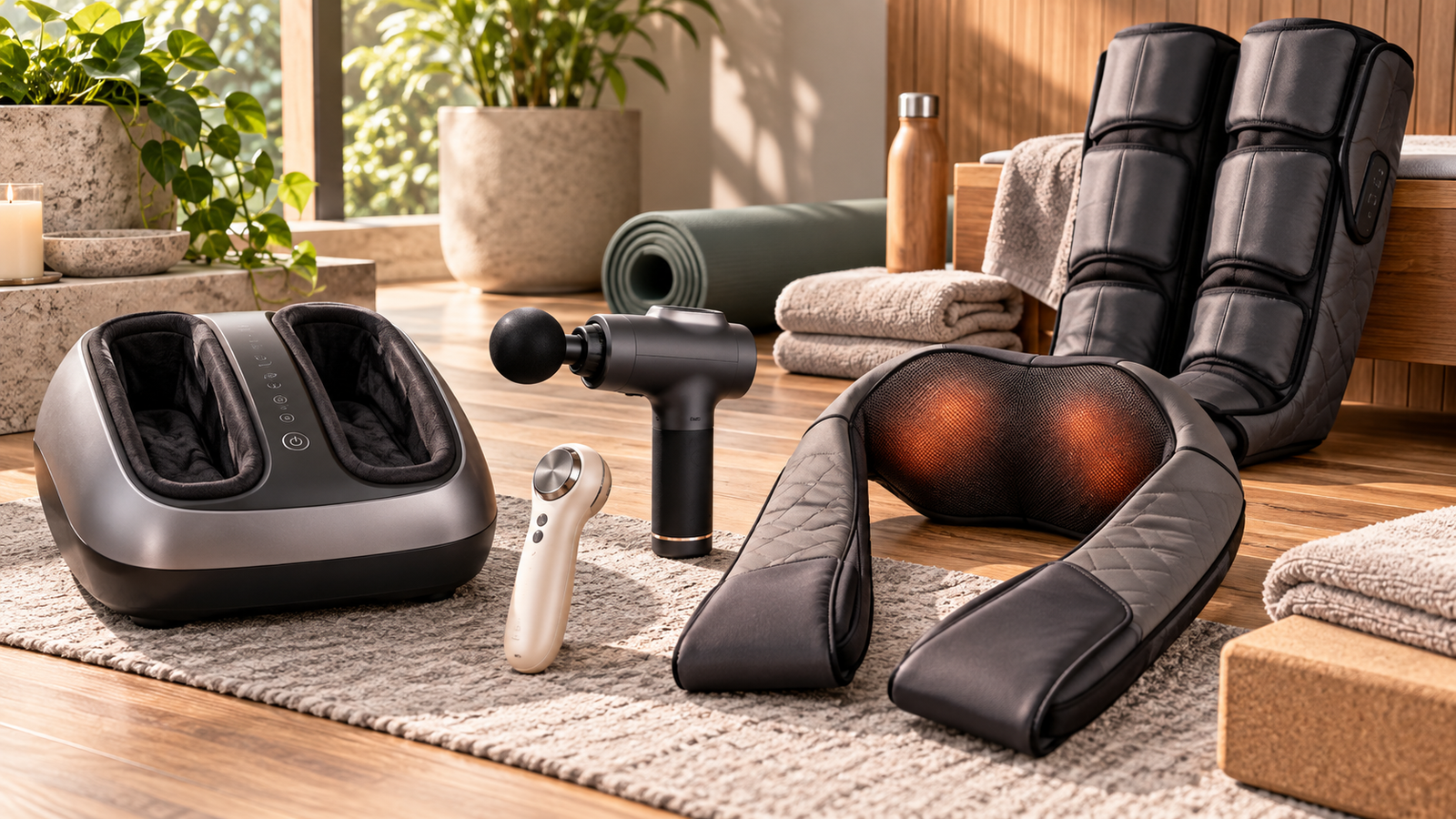
For related home-wellness options, explore Physical Glow’s Best Products and Buying Guides section for comparisons of massagers and recovery tools.
22. Common Home TENS Mistakes
1. Using TENS Without Understanding the Cause of Pain
Pain can be caused by conditions requiring medical attention.
TENS cannot provide a diagnosis.
2. Copying Electrode Placements From Social Media
Online demonstrations may omit contraindications or use different equipment.
3. Increasing Intensity Until It Hurts
Painful stimulation is not required and may increase adverse effects.
4. Placing Pads Across the Chest
This is an unsafe placement because of the possibility of current affecting cardiac structures.
5. Applying Electrodes to Damaged Skin
Broken or irritated skin may be more vulnerable to injury.
6. Using TENS With an Implanted Cardiac Device
This requires specialist medical assessment; do not self-experiment.
7. Sleeping With the Machine Running
You cannot reliably monitor stimulation and electrode position while asleep.
8. Continuing Despite Skin Irritation
Persistent redness or burning is a reason to stop.
9. Confusing TENS With Muscle Stimulation
EMS modes are intended for different applications and may cause contractions.
10. Treating Symptom Relief as Proof of Recovery
Pain relief does not necessarily indicate that a ligament, tendon, nerve or other tissue has healed.
23. A Home TENS Safety Checklist
Before considering use, review the following.
Before using a TENS machine
0/8A healthcare professional has confirmed TENS is suitable for my condition.I have no relevant contraindication, or my treating clinician has specifically cleared the device.I know the approved electrode locations for my condition and device.I am avoiding the neck, chest and other prohibited regions.My electrodes and cables are intact and compatible.I understand how to start, reduce and stop the stimulation.I will remain awake and avoid water, driving and machinery during treatment.I will discontinue use if I experience pain, dizziness, skin irritation or unusual symptoms.
Do not proceed until relevant safety and placement questions have been resolved.
Frequently Asked Questions
Is TENS safe to use at home?
TENS can be suitable for certain people when used correctly. However, medical contraindications, electrode placement and underlying pain conditions must be considered. Seeking professional advice before first use is recommended.
Can TENS permanently cure pain?
No. TENS is primarily a method of modulating pain perception and may provide temporary relief. It does not necessarily treat the underlying cause.
Does TENS hurt?
Appropriate conventional TENS should generally produce a noticeable but comfortable tingling sensation, not sharp or painful stimulation.
Can I put TENS electrodes on my neck?
Do not place electrodes on the front or sides of the neck. Neck-related pain should be evaluated before considering any electrical stimulation, and placement must be professionally directed.
Can I put TENS pads directly over my spine?
Do not invent spinal electrode placements. Any back-treatment arrangement should be demonstrated or confirmed by a qualified professional for the specific diagnosis and device.
Can I use TENS if I have a pacemaker?
Do not self-use TENS with a pacemaker or implanted defibrillator. Seek specialist medical guidance because electrical stimulation may interfere with implanted devices.
Can TENS help with knee arthritis?
Some people may experience temporary relief from certain pain conditions, but results vary. TENS does not reverse cartilage damage or cure arthritis.
Can TENS be used during pregnancy?
Only when specifically recommended and supervised by an appropriate healthcare professional. Labour-related TENS is a distinct clinical application.
Can TENS cause burns?
Skin irritation is more common, but injury can occur with unsuitable electrodes, damaged equipment or improper use. Stop if burning or persistent redness develops.
How often can I use TENS?
Frequency and duration depend on the device, condition and treatment instructions. There is no single safe schedule for everyone.
Should I use TENS on numb skin?
No. Reduced sensation can prevent you from detecting excessive stimulation or injury.
Can I sleep with TENS pads attached?
Routine TENS operation during sleep is not recommended. You may not detect discomfort, electrode movement or unintended setting changes.
Does a stronger TENS setting work better?
Not automatically. Conventional TENS should be strong enough to create the intended comfortable sensation without causing pain. Follow professional and manufacturer guidance.
Is a TENS machine the same as an EMS muscle stimulator?
No. TENS primarily targets pain modulation, whereas EMS is intended to stimulate muscle contractions. Combination devices may provide both functions.
Final Verdict: TENS Can Help, but Correct Placement and Medical Suitability Come First
TENS offers a portable, non-invasive method of electrical nerve stimulation that may provide temporary pain relief for some people.
Research supports possible short-term benefits, but effectiveness varies and TENS is not a cure for underlying injuries or chronic health conditions.
For home users, the most important considerations are not the number of preset programs or the maximum stimulation intensity.
They are:
- Understanding why the pain is occurring.
- Confirming that TENS is appropriate for your medical circumstances.
- Using professionally guided electrode positions.
- Avoiding sensitive anatomical regions.
- Keeping stimulation comfortable.
- Monitoring skin reactions and other symptoms.
- Following the device’s instructions.
A correctly used TENS machine may be a useful part of pain management. An incorrectly placed or unsuitable device can create risks without addressing the real problem.
Before buying or using one, obtain appropriate professional guidance—particularly if you have persistent pain, neurological symptoms, an implanted medical device or another significant health condition.
Research and Clinical References
- NHS — Transcutaneous Electrical Nerve Stimulation
- Cambridge University Hospitals — TENS Usage and Precautions
- Cleveland Clinic — TENS Therapy
- BMJ Open — Meta-TENS Systematic Review and Meta-Analysis
- NCCIH — Low-Back Pain and Complementary Treatments
Physical Glow Editorial Note: This article is intended for general health education and does not provide individualized electrode placement instructions or medical clearance. TENS should be used only after confirming its suitability for your condition and following appropriate clinical and manufacturer guidance. Seek urgent medical attention for emergency warning symptoms.