Choosing One Face Serum Goal: Hydration, Discoloration or Texture
Choose a priority skin concern before buying multiple serums and learn when a moisturizer or sunscreen may be enough.
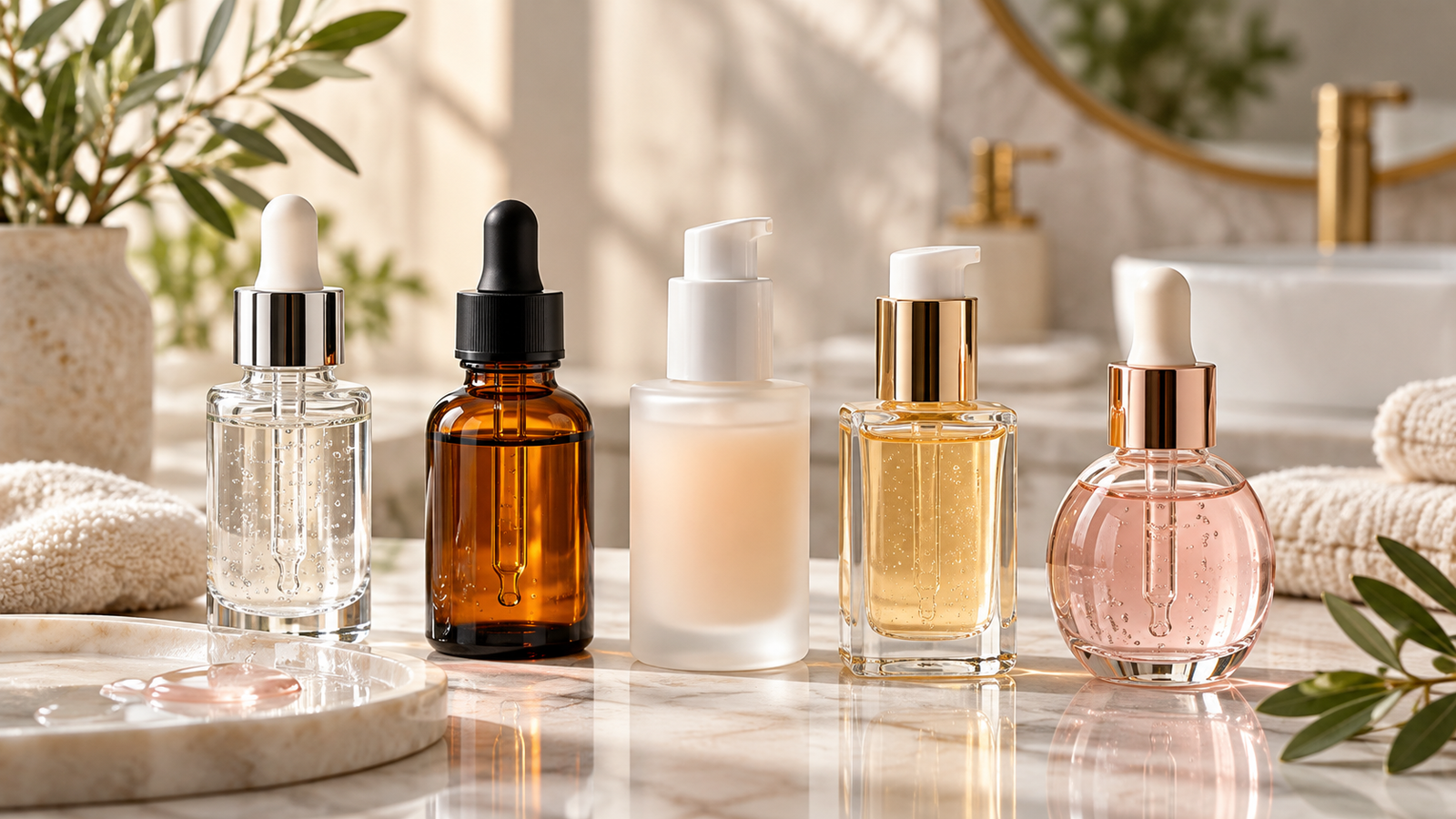
Face serums are among the most heavily marketed skincare products. One promises brighter skin, another promotes hydration, and a third claims to improve uneven texture or visible pores.
With so many ingredients available, it is tempting to combine multiple serums into one routine. Hyaluronic acid in the morning, vitamin C for brightness, niacinamide for oil control, salicylic acid for pores and retinol at night can quickly become an expensive and unnecessarily complicated approach.
More products do not automatically produce better results.
In fact, introducing several active ingredients together can make it difficult to identify which product is helping, which is irritating your skin and whether you need the additional steps at all.
A more practical starting point is to choose one main skincare concern—hydration, discoloration or texture—and select a serum that addresses it.
This approach makes it easier to establish a consistent routine, evaluate results and avoid purchasing products with overlapping purposes.
In this Physical Glow guide, we explain how to identify your primary serum goal, understand the ingredients commonly used for each concern, choose a suitable formulation and build a routine without unnecessary layering.
1. Why Start With Just One Serum Goal?
A serum is a skincare formulation designed to deliver selected ingredients to the skin.
Serums may be water-based, gel-like, creamy or oil-based. Their texture and ingredient concentration vary considerably.
A product being called a serum does not automatically make it more effective than a moisturizer or another skincare format.
The important questions are what the product contains, how it is formulated and whether it addresses a genuine skincare need.
The Problem With Using Too Many Serums
Suppose someone purchases four products at once:
- A hyaluronic acid serum.
- A vitamin C serum.
- A niacinamide serum.
- An exfoliating acid serum.
After several weeks, their skin begins feeling dry and irritated.
Identifying the cause becomes difficult because several products were introduced together.
Even if the routine appears beneficial, it may be unclear which products are actually contributing.
Starting with one serum reduces this uncertainty.
It also helps control skincare spending.
One Goal Does Not Mean One Ingredient Forever
Some ingredients can address more than one concern.
For example, niacinamide may support skin barrier function while also helping with certain aspects of uneven skin tone.
The objective is not to restrict every ingredient to one benefit.
It is to prioritize the result you care about most.
2. Identify Your Main Skin Concern Before Buying
Before selecting a serum, examine what you want to improve.
Hydration, discoloration and texture are different concerns, although they can overlap.
| Your main concern | What you may notice | Primary serum goal |
|---|---|---|
| Dehydration | Tightness, temporary fine lines, lack of plumpness | Increase water-binding and skin comfort |
| Uneven tone | Dark spots, post-acne marks, patchy pigmentation | Gradually reduce the appearance of discoloration |
| Uneven texture | Roughness, clogged pores, surface irregularities | Improve surface smoothness or congestion |
A person can experience more than one concern, but choosing the most important one helps simplify the initial decision.
A Useful Question
If your skin could improve in only one way over the next few months, what would you choose?
Would you prefer skin that feels less tight, dark marks that become less noticeable or a smoother-looking surface?
Your answer provides a practical starting point.
3. Goal One: Hydration — When Skin Feels Tight or Dehydrated
Dehydrated skin lacks sufficient water in the outer skin layers.
It is not the same as having a dry skin type.
Even oily skin can experience dehydration.
Common Signs
Dehydrated skin may feel:
- Tight after cleansing.
- Less comfortable in dry environments.
- Temporarily dull.
- Rough or less supple.
- More visibly lined when the skin is dry.
These signs are not diagnostic. Persistent tightness, scaling or irritation may reflect other skin conditions.
Ingredients Commonly Used for Hydration
Hyaluronic acid: A humectant that helps attract and retain water within a formulation and the outer skin layers.
Glycerin: A widely used humectant that supports skin hydration.
Panthenol: Commonly used in moisturizing formulations and may support skin comfort.
Betaine: A humectant included in some hydrating skincare products.
Is Hyaluronic Acid Necessary?
No.
An effective moisturizer containing glycerin and other suitable ingredients may provide adequate hydration without a separate serum.
A hydrating serum is optional if your existing routine already keeps your skin comfortable.
How to Use a Hydrating Serum
Apply according to the product instructions, generally after cleansing and before moisturizer.
Follow with a suitable moisturizer to support the skin barrier and reduce water loss.
A hydrating serum should not automatically replace moisturizer, particularly if your skin is dry.
What Results Should You Expect?
Hydrating products may improve the feeling of tightness and make skin appear temporarily plumper.
These effects can be noticeable relatively quickly, although sustained comfort depends on the complete routine and environment.
4. Goal Two: Discoloration — When Dark Marks Are the Main Concern
Discoloration can include post-inflammatory hyperpigmentation, sun-related dark spots and other forms of uneven pigmentation.
For example, after a pimple heals, a brown or dark mark may remain.
This is especially relevant for skin tones prone to visible post-inflammatory pigmentation.
However, not every dark spot has the same cause.
Persistent or changing pigmentation may require dermatological assessment.
Ingredients Commonly Used for Uneven Tone
| Ingredient | Potential role | Main consideration |
|---|---|---|
| Vitamin C | Antioxidant activity and support for a more even-looking tone | Stability, formulation and tolerance vary |
| Niacinamide | May support barrier function and improve some pigmentation concerns | High concentrations are not automatically better |
| Alpha arbutin | Used in products targeting uneven pigmentation | Effectiveness depends on formulation |
| Tranexamic acid | Used topically in some pigmentation-focused formulations | Evidence and response vary by condition |
| Azelaic acid | May help acne-associated pigmentation and certain skin concerns | Can cause irritation in some users |
These ingredients are not interchangeable, and their effects are not guaranteed.
How to Choose
For someone new to active skincare, a tolerable formulation with one clearly identified primary ingredient may be easier to evaluate than a product combining multiple high-strength actives.
If you experience post-acne marks alongside sensitivity, aggressive exfoliation may worsen irritation rather than improve the situation.
Sunscreen Is Essential
Discoloration-focused skincare becomes less effective when ongoing ultraviolet exposure continues to trigger pigmentation.
Use a suitable broad-spectrum sunscreen, generally SPF 30 or higher, as part of daily sun protection.
Reapply according to exposure conditions and product instructions.
For people with melasma or pigmentation affected by visible light, tinted sunscreens containing iron oxides may offer additional benefits.
How Long Does Improvement Take?
Pigmentation changes usually require patience.
Some people may notice gradual improvement over several weeks, while more persistent pigmentation can take months.
The timeline depends on the cause, ingredient, formulation, sun exposure and individual skin response.
Do not increase product strength simply because dark marks remain after one week.
5. Goal Three: Texture — When Skin Feels Rough or Looks Uneven
Skin texture includes the appearance and feel of the surface.
Concerns may include rough patches, clogged pores, small bumps or uneven smoothness.
The correct ingredient depends on the underlying issue.
Rough Surface and Dead Skin Buildup
Some exfoliating formulations containing alpha hydroxy acids, or AHAs, may improve superficial roughness.
Common examples include lactic acid and glycolic acid.
However, frequent or excessive use can irritate the skin.
Congested Pores
Salicylic acid, a beta hydroxy acid or BHA, is commonly used for acne-prone skin and clogged pores.
It is oil-soluble and can be useful in formulations designed to address congestion.
Persistent Uneven Texture
Retinoids are used for several skin concerns, including acne and some signs of photoaging.
However, they may cause dryness or irritation, and their suitability depends on the exact product and individual circumstances.
Retinoids should be avoided during pregnancy or when trying to conceive unless a qualified clinician explicitly advises otherwise.
What If Your Texture Is Caused by Acne Scars?
Indented acne scars are structurally different from superficial roughness.
A serum cannot be expected to remove established deep acne scarring.
Professional treatments may be necessary for meaningful improvement.
Start Slowly
Exfoliating acids and retinoids can be irritating.
Follow product instructions, introduce them gradually where appropriate and avoid combining several strong exfoliating products without a clear reason.
6. How to Choose Between Hydration, Discoloration and Texture
The best starting point depends on what your skin needs most.
<box border radius=”lg” padding={3} gap={3}> **Find your primary serum goal**
{@body const [goal,setGoal]=DIL.useState(“hydration”)}
{@body const info={
hydration:{name:”Hydration”,desc:”Prioritize a comfortable, hydrating formulation. Consider humectants such as glycerin or hyaluronic acid, and maintain a suitable moisturizer.”},
pigmentation:{name:”Discoloration”,desc:”Consider a tolerable pigmentation-focused ingredient such as niacinamide or vitamin C, depending on your skin. Consistent sun protection is especially important.”},
texture:{name:”Texture”,desc:”Identify whether the issue is surface roughness, clogged pores or scarring. Selected exfoliants may help some concerns, but deeper scarring requires different treatment.”}
}}
<radio-group direction=”col” value={goal} onChange={setGoal}>
<radio value=”hydration”>My skin feels tight or dehydrated</radio>
<radio value=”pigmentation”>Dark spots and uneven tone bother me most</radio>
<radio value=”texture”>Roughness or clogged pores are my priority</radio>
</radio-group>
<divider color=”subtle”/>
Your starting focus: {info[goal].name}
{info[goal].desc}
<caption>This selector provides general skincare education, not a diagnosis or personalized treatment recommendation.</caption> </box>
If your skin is currently irritated, cracked or unusually sensitive, restoring basic comfort with gentle cleansing, moisturizer and appropriate sun protection may be more important than introducing an active serum.
7. Match the Serum to Your Skin Type
Your main concern determines the goal, while your skin type and tolerance help determine the formulation.
Oily Skin
Lightweight gels and fluid serums may feel more comfortable than rich textures.
However, oily skin still benefits from adequate hydration.
Avoid assuming that every oil-free formula is automatically superior.
Dry Skin
A hydrating serum may complement a richer moisturizer.
If the skin barrier is impaired, strong exfoliants can make discomfort worse.
Combination Skin
You may prefer a lightweight serum followed by a moisturizer adjusted to the needs of different facial areas.
Sensitive Skin
Prioritize tolerability.
Fragrance-free options may be preferable for some people, although fragrance-free does not guarantee that a product will never irritate.
Introduce new products carefully and consider patch testing as directed.
Acne-Prone Skin
Choose products appropriate for acne-prone skin, but do not assume every serum labelled non-comedogenic is guaranteed not to cause breakouts.
Persistent or inflammatory acne may require evidence-based treatment beyond cosmetic serums.
8. Ingredient Concentration: Is Stronger Always Better?
One of the most common serum-buying mistakes is assuming that a higher percentage means better performance.
It does not.
A serum containing a high concentration of an active ingredient may cause more irritation without producing proportionally better results.
Vitamin C
Different vitamin C derivatives and formulations have different properties.
A percentage printed on the bottle does not tell you everything about stability, delivery or tolerability.
Niacinamide
Niacinamide is used across a range of concentrations.
A 10% product is not automatically better than a well-formulated product containing a lower concentration.
Exfoliating Acids
Higher concentrations can increase the risk of irritation.
The final formulation, pH and frequency of application also influence the effect.
Retinoids
Different retinoid forms cannot be compared simply by their numerical percentages.
The ingredient identity and formulation matter.
Choose concentration based on evidence, formulation and tolerance—not the largest number on the packaging.
9. Should You Buy a Multi-Ingredient Serum?
Multi-ingredient serums can be convenient.
For example, a product might contain niacinamide, panthenol and hyaluronic acid.
These ingredients may serve complementary purposes.
The concern is not that all combinations are bad.
The concern is purchasing complex formulas without understanding their intended use.
When a Combination May Make Sense
A formulation combines compatible ingredients to address a defined concern.
For example, a serum may focus on hydration while including supportive barrier ingredients.
When Simpler May Be Better
If you are unsure which ingredient your skin tolerates, a simpler formulation may be easier to evaluate.
Can Ingredients Cancel Each Other Out?
Many popular claims about skincare ingredients being universally incompatible are oversimplified.
Compatibility depends on formulation and usage, not just the ingredient names.
However, combining multiple potentially irritating products can increase discomfort.
10. How to Introduce a New Serum
A consistent testing approach helps you assess whether the product suits your skin.
Begin With a Stable Routine
Your basic skincare routine should be manageable before introducing a new serum.
Add One New Product
Avoid starting several unfamiliar active products simultaneously.
Follow the Instructions
Use the specified amount and frequency.
More product does not necessarily mean better results.
Monitor Your Skin
Look for improvements in the concern you are targeting.
Also watch for:
- Persistent redness.
- Burning.
- Significant itching.
- Swelling.
- Worsening dryness.
- New irritation.
Stop if You Develop a Concerning Reaction
Discontinue the product if significant irritation occurs.
Seek medical advice if symptoms are severe or persistent.
For a possible allergy or recurrent reaction, a dermatologist can help assess the cause.
11. Where Does a Serum Fit in a Skincare Routine?
A simple routine can usually accommodate one serum without becoming complicated.
Morning Routine
- Gentle cleansing, when needed.
- Suitable serum, according to its instructions.
- Moisturizer, if needed.
- Broad-spectrum sunscreen.
Evening Routine
- Cleanse to remove sunscreen, makeup and accumulated residue.
- Apply the selected serum according to instructions.
- Follow with moisturizer.
Not every ingredient is suitable for every time of day.
For example, retinoid products are commonly used at night, while other ingredients may be suitable for morning or evening use.
Follow the product label and professional guidance.
Should You Apply Serum Before Moisturizer?
Many water-based serums are applied before moisturizer.
However, layering instructions vary with formulation.
The manufacturer’s directions are more reliable than assuming one universal order.
12. How to Evaluate Whether Your Serum Is Working
Results depend on what the product is designed to achieve.
Use the right measure for your chosen goal.
| Goal | What to observe | What not to expect |
|---|---|---|
| Hydration | Improved comfort, reduced tightness and a more supple appearance | Permanent correction of every cause of dryness |
| Discoloration | Gradual reduction in the visibility of certain marks | Overnight removal of pigmentation |
| Texture | Smoother feel or improvement in certain clogged-pore concerns | Removal of deep scars or complete elimination of pores |
Use Consistent Conditions
If you take progress photographs, use similar lighting and camera settings.
Different lighting can make skin appear clearer or more uneven.
Do Not Judge Every Day
Minor day-to-day variation is normal.
Review the overall trend rather than repeatedly looking for immediate changes.
When Should You Reconsider the Product?
If the serum causes persistent irritation, does not suit your routine or produces no meaningful benefit after a reasonable trial, reassess whether it deserves a place in your skincare routine.
The appropriate trial period depends on the ingredient and concern.
13. What If You Have More Than One Skin Concern?
Many people have combinations such as dehydration and pigmentation, or oiliness and uneven texture.
You do not necessarily need a separate serum for each concern.
Prioritize Skin Comfort First
If your skin is irritated or dehydrated, introducing aggressive treatment products may worsen the situation.
A stable basic routine is a sensible foundation.
Choose the Most Important Goal
Select the concern that affects you most.
A single suitable product may provide secondary benefits as well.
Introduce Additional Treatment Only When Necessary
Once you understand how the first product performs and your skin tolerates it, you can evaluate whether another product would add meaningful value.
Do not expand the routine simply because new ingredients are trending.
14. Common Face Serum Mistakes
Buying a Serum Because It Is Trending
Popular ingredients are not necessarily the right choice for your skin.
Using Too Many Serums at Once
This makes results and reactions harder to interpret.
Expecting Immediate Pigmentation Results
Discoloration often requires sustained care and sun protection.
Using Exfoliating Products Every Day Without Assessing Tolerance
Overuse may increase dryness and irritation.
Ignoring Moisturizer
A serum does not automatically provide everything your skin barrier needs.
Skipping Sunscreen
UV exposure can undermine efforts to improve discoloration and photoaging-related concerns.
Assuming Higher Concentrations Are More Effective
Formulation and tolerance matter.
Continuing Despite Significant Irritation
Persistent burning, redness or discomfort should not be treated as proof that a serum is working.
Buying Duplicate Products
Two serums marketed for slightly different benefits may contain overlapping ingredients and serve similar purposes.
Believing a Serum Can Treat Every Skin Condition
Cosmetic serums have limitations. Persistent acne, melasma, dermatitis or suspicious skin changes may require professional assessment.
15. How to Compare Face Serums Before Buying
When choosing a serum, focus on its purpose and formulation rather than the number of marketing claims.
| Buying factor | What to check |
|---|---|
| Primary concern | Hydration, discoloration or texture |
| Main ingredients | Suitability for the intended goal |
| Concentration | Whether it is appropriate and tolerable |
| Formulation | Gel, fluid, cream or oil-based texture |
| Fragrance | Personal tolerance and sensitivities |
| Packaging | Suitable protection for ingredients requiring stability |
| Usage instructions | Frequency and layering guidance |
| Product quantity | Realistic use before expiry |
| Price | Cost relative to usefulness |
| Brand information | Transparent ingredients and reliable product details |
Is Expensive Serum Better?
Not necessarily.
A higher price may reflect packaging, marketing, ingredient sourcing or formulation complexity.
It does not guarantee better results.
Is a Serum Necessary at All?
No.
Many people can maintain healthy skin with a gentle cleanser, appropriate moisturizer and sunscreen.
Serums are optional additions for specific needs.
Consider Value per Use
A serum that is comfortable, easy to use and genuinely relevant to your concern may offer better value than several expensive products that remain unused.
16. Frequently Asked Questions
Which serum should a beginner use first?
Choose based on your primary concern. If you mainly need additional hydration, a simple hydrating product may be a reasonable starting point, though a good moisturizer might be sufficient.
Can I use only one face serum?
Yes. One well-chosen serum may be enough to address your primary cosmetic concern.
Which serum is best for dark spots?
Ingredients such as vitamin C, niacinamide, azelaic acid and others may help certain pigmentation concerns. Suitability depends on the cause and formulation.
Is hyaluronic acid suitable for oily skin?
Yes. Hydrating ingredients can be useful for different skin types, including oily skin.
Can niacinamide help both hydration and pigmentation?
Niacinamide has multiple potential skincare benefits, including barrier support and effects on some uneven-tone concerns.
Is salicylic acid useful for rough skin?
It may help certain forms of congestion and acne-prone skin, but not every type of roughness has the same cause.
Can face serums remove open pores?
Pores are normal anatomical structures and cannot be permanently removed with a serum. Certain products may improve their visible appearance.
Should I use vitamin C every morning?
Not necessarily. Follow the product instructions and choose a frequency your skin tolerates.
Can I use serum without moisturizer?
Some formulations may provide sufficient comfort for particular users, but a separate moisturizer is often beneficial, especially for dry skin.
How many drops of serum should I apply?
Use the amount recommended by the manufacturer. Drop count is not standardized across products.
How long does a serum take to work?
Hydrating effects may appear relatively quickly. Pigmentation and texture improvements generally require longer, with timelines depending on the concern and ingredients.
Can I use two serums together?
Sometimes, but additional products should have a clear purpose and be compatible with your skin and routine.
Is a 10% serum better than a 5% serum?
Not automatically. Higher concentration does not guarantee greater benefit.
Should I stop a serum if it burns?
Significant or persistent burning is a reason to discontinue the product and assess the reaction.
Can I use active serums during pregnancy?
Ingredient suitability varies. Retinoids should be avoided during pregnancy and when trying to conceive unless specifically directed by a qualified clinician. Discuss uncertain active ingredients with your healthcare professional.
17. Final Verdict: Choose a Goal Before Choosing a Bottle
The most effective skincare routine is not necessarily the one with the most serums.
A good starting point is to identify the concern you most want to address.
If your skin feels tight or dehydrated, focus on hydration and barrier support.
If uneven tone or dark marks are your primary concern, consider a suitable pigmentation-focused formulation alongside consistent sun protection.
If roughness or clogged pores bother you most, identify the type of texture issue before choosing exfoliating or other active ingredients.
Select a formulation that suits your skin, introduce it carefully and evaluate results over a realistic period.
Avoid purchasing several products simply because each promises a different benefit.
Choose one goal, one suitable serum and a routine you can maintain. Add complexity only when there is a clear reason.
Editorial References and Further Reading
- American Academy of Dermatology (AAD). Skin-care basics and advice on choosing suitable products. https://www.aad.org/public/everyday-care/skin-care-secrets
- American Academy of Dermatology (AAD). Hyperpigmentation and dark-spot guidance. https://www.aad.org/public/diseases/a-z
- DermNet. Topical skincare ingredients and dermatological information. https://dermnetnz.org/
- National Health Service (NHS). Acne and skin-condition information. https://www.nhs.uk/conditions/acne/
- American Academy of Dermatology (AAD). Sunscreen selection and sun protection. https://www.aad.org/public/everyday-care/sun-protection
Physical Glow Editorial Note: This article provides general skincare education. Individual responses to serums vary by formulation, skin condition and tolerance. Cosmetic ingredients should not be expected to treat every dermatological condition. Consult a qualified dermatologist for persistent pigmentation, significant acne, ongoing irritation or unexplained skin changes.