Eye Cream vs Eye Serum vs Face Moisturiser: Do You Need a Separate Product?
Understand the differences between eye creams, eye serums and facial moisturisers, including texture, application area and when a separate eye product may be useful.
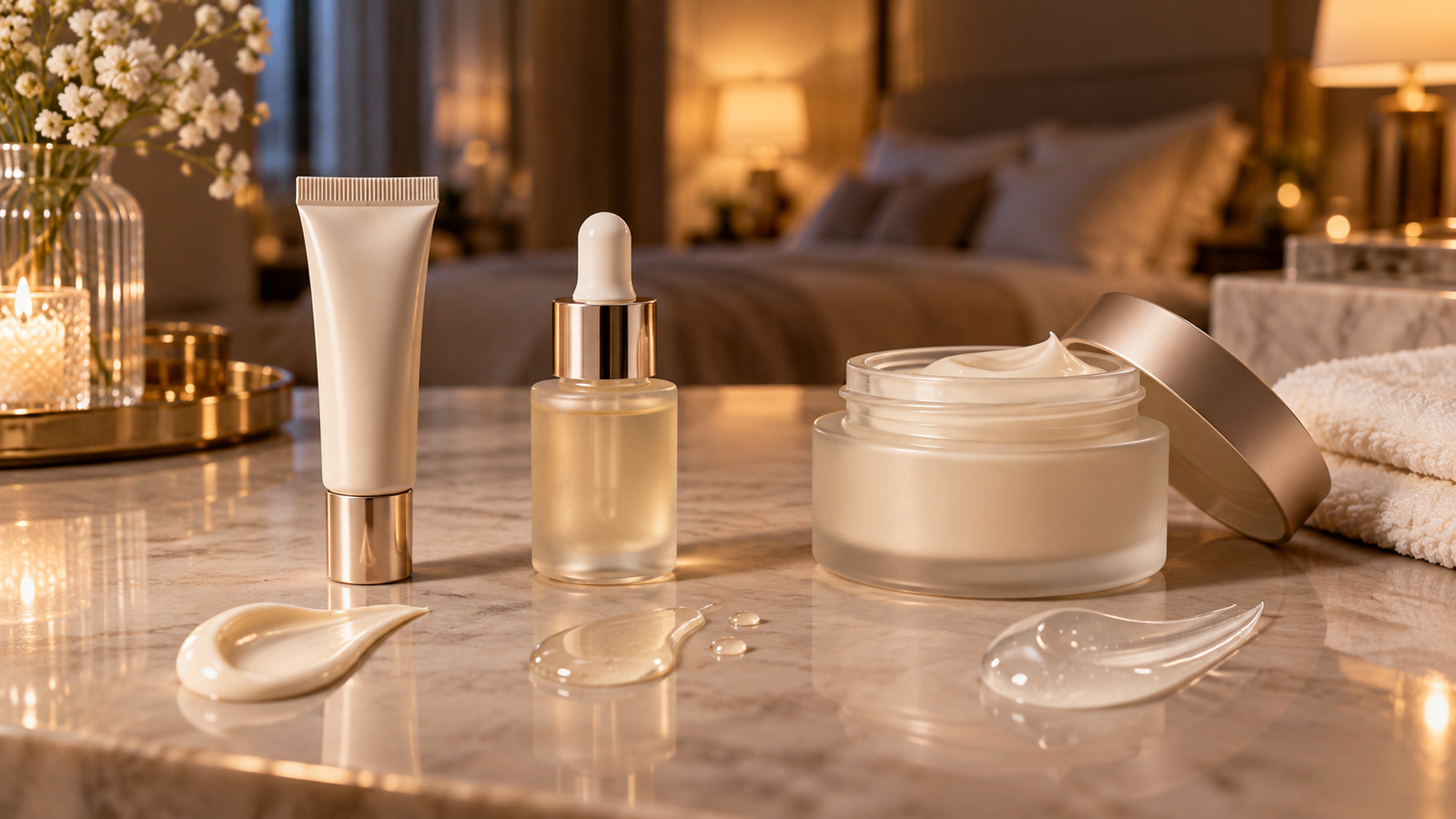
Eye creams, eye serums and face moisturisers are often marketed as separate skincare essentials, but their functions overlap more than the packaging may suggest.
An eye cream is usually formulated to provide moisture and targeted ingredients around the eye area. An eye serum is typically lighter and more treatment-focused. A face moisturiser is designed for broader facial use and may be perfectly suitable around the eyes if the formula is gentle enough and the manufacturer allows it.
The right choice depends less on the product category and more on your actual concern, the ingredients used, the texture you prefer and how sensitive your eye area is.
Why is the skin around the eyes treated differently?
The skin around the eyes is relatively thin and can be more sensitive to irritation than many other areas of the face.
It is also an area where several concerns can appear at once, including:
- Dryness.
- Fine lines.
- Puffiness.
- Dark circles.
- Dehydrated-looking texture.
- Sensitivity.
- Makeup creasing.
Because of this, brands often create dedicated eye products with lighter textures, smaller packaging and ingredients selected for targeted concerns.
That does not automatically mean every person needs a separate eye product.
What is an eye cream?
Eye cream is generally a moisturising product designed for the area around the eyes.
It may contain:
- Humectants.
- Emollients.
- Occlusive ingredients.
- Ceramides.
- Peptides.
- Niacinamide.
- Caffeine.
- Retinoid ingredients.
- Antioxidants.
The exact purpose depends on the formula.
Some eye creams are primarily moisturisers. Others include active ingredients intended to target the appearance of fine lines, puffiness or uneven tone.
What is an eye serum?
Eye serum is usually a lighter, more fluid product designed for targeted treatment.
Common formats include:
- Dropper bottles.
- Pump bottles.
- Roll-on applicators.
- Lightweight gels.
Eye serums may focus on ingredients such as:
- Caffeine.
- Peptides.
- Hyaluronic acid.
- Niacinamide.
- Vitamin C derivatives.
- Retinoids.
Because eye serums are often lighter, they may provide less occlusive moisture than a cream.
Some people therefore use a serum first and a moisturising cream afterward.
What is a face moisturiser?
A face moisturiser is designed to reduce water loss and improve skin comfort across the face.
It may contain many of the same types of ingredients found in eye creams.
Typical moisturiser ingredients include:
- Glycerin.
- Hyaluronic acid.
- Ceramides.
- Squalane.
- Fatty alcohols.
- Plant oils.
- Silicones.
- Petrolatum-like occlusives.
- Niacinamide.
If a facial moisturiser is comfortable around your eyes and the manufacturer does not advise avoiding that area, it may provide all the moisture you need.
Eye cream vs eye serum vs face moisturiser at a glance
| Factor | Eye cream | Eye serum | Face moisturiser |
|---|---|---|---|
| Main role | Moisture plus targeted eye-area care | Lightweight targeted treatment | General facial moisturising |
| Texture | Cream or balm | Serum, gel or lightweight fluid | Lotion, cream or gel |
| Typical packaging | Small tube, jar or pump | Dropper, pump or roller | Jar, tube or pump |
| Target area | Around the eyes | Around the eyes | Whole face |
| Often contains actives | Yes | Yes | Sometimes |
| Can provide moisture | Usually | Sometimes | Yes |
| Is it always necessary? | No | No | Usually useful as part of a basic routine |
Do you actually need an eye cream?
Not necessarily.
If your regular moisturiser:
- Feels comfortable around the eyes.
- Provides enough hydration.
- Does not sting.
- Does not cause swelling or irritation.
- Fits your routine well.
Then a separate eye cream may not be essential.
A dedicated eye cream becomes more useful when you want a particular texture or a product designed around a specific eye-area concern.
Why are eye creams usually sold in smaller packages?
Eye products are applied to a relatively small area.
You generally need much less product than you would for the whole face.
The smaller package can therefore last longer than its size suggests.
However, smaller packaging also means the price per gram or millilitre can be considerably higher than a standard moisturiser.
That makes value an important consideration.
When does an eye serum make sense?
An eye serum can be useful if you want a specific active ingredient in a lightweight texture.
For example, someone may prefer a caffeine serum in the morning because it feels lighter under sunscreen and makeup.
Someone else may prefer a peptide or retinoid-based eye serum at night.
The key is to choose the serum according to its ingredients rather than simply because the product is labelled “eye serum.”
Is eye serum stronger than eye cream?
Not automatically.
Serum does not mean stronger.
Cream does not mean weaker.
The concentration of active ingredients and the complete formulation determine how a product behaves.
A cream can contain potent active ingredients, while a serum may be primarily hydrating.
Always check the ingredient list and directions.
Can face moisturiser be used around the eyes?
Often, yes.
Many gentle moisturisers can be used around the orbital area.
However, this depends on the formula.
Products containing strong exfoliating acids, high concentrations of certain actives or ingredients that cause stinging should not be applied close to the eyes unless specifically directed.
Do not place skincare directly into the eye or along the waterline.
If the product causes burning or persistent watering, stop applying it around the eye area.
What about moisturiser on the eyelids?
This depends on the product.
Some moisturisers may be comfortable on the upper eyelid, while others can migrate into the eye and cause irritation.
Follow the manufacturer’s application instructions.
If the label specifically says to avoid the eye area, do not use it there.
Which is better for dry under-eyes?
For dryness, a cream or moisturiser is often more useful than a lightweight serum alone.
Look for products containing a combination of:
Humectants
These help attract water.
Examples include glycerin and hyaluronic acid.
Emollients
These help smooth and soften the skin.
Examples include squalane, oils and fatty alcohols.
Occlusives
These help reduce water loss.
Examples include petrolatum and silicones.
A serum can be used underneath, but the serum alone may not provide enough moisture for very dry skin.
Which is better for fine lines?
Fine lines can become more visible when the skin is dry.
So basic hydration can make the area look smoother.
Some eye products also contain ingredients such as retinoids or peptides.
Retinoids have stronger evidence for improving the appearance of fine lines than many cosmetic ingredients, but they can also cause irritation.
If you use a retinoid around the eyes:
- Use a product intended for that area.
- Follow the stated frequency.
- Start cautiously.
- Avoid applying too close to the eye.
- Stop if significant irritation occurs.
Higher strength is not automatically better.
What about dark circles?
Dark circles can have several causes.
They may be influenced by:
- Genetics.
- Pigmentation.
- Thin skin showing underlying blood vessels.
- Shadows caused by facial anatomy.
- Allergies.
- Lack of sleep.
- Inflammation.
- Sun exposure.
This means no single eye cream works for every type of dark circle.
A brightening ingredient may help with some pigment-related concerns, but it cannot change bone structure or completely eliminate genetically determined darkness.
Be cautious with products promising to permanently remove dark circles.
Can caffeine help with under-eye puffiness?
Caffeine is commonly used in eye serums because it may temporarily improve the appearance of puffiness in some people.
The effect is generally cosmetic and temporary.
Puffiness can also be affected by:
- Sleep.
- Salt intake.
- Allergies.
- Fluid retention.
- Irritation.
- Genetics.
A caffeine serum can be a reasonable cosmetic option, but persistent or sudden swelling should not simply be treated with skincare.
What about hyaluronic acid eye products?
Hyaluronic acid is a humectant.
It can help improve hydration and make dehydrated skin appear smoother.
However, it is not unique to eye products.
Many face moisturisers already contain hyaluronic acid or similar humectants.
If hydration is your only concern, compare the full formulas before buying a separate product.
Are peptide eye creams worth it?
Peptides are commonly included in products marketed for firmness and fine lines.
Some peptide-containing formulas may improve the appearance or feel of the skin, but the amount and type of evidence vary.
Do not assume that the word “peptide” automatically means the product has strong anti-ageing effects.
Look at the entire formula and your actual skincare goal.
Retinol eye cream vs retinal eye cream
Retinol and retinal are both vitamin A derivatives used in some eye products.
They are not identical ingredients.
A retinal product should not automatically be considered stronger or better simply because retinal is closer to retinoic acid in the conversion pathway.
Finished-product concentration, formulation and tolerance matter.
The eye area can also be particularly sensitive to retinoids.
Introduce these products cautiously.
How much eye product should you use?
You generally need only a small amount.
Using too much can:
- Increase the chance of product migrating into the eyes.
- Make makeup crease.
- Cause pilling.
- Waste product.
- Increase exposure to potentially irritating ingredients.
A small amount distributed between both eye areas is usually sufficient, depending on the product instructions.
Where should you apply eye cream?
A common approach is to apply the product gently around the orbital area rather than directly against the eye.
Use light tapping or spreading rather than vigorous rubbing.
Avoid:
- The waterline.
- Direct contact with the eye.
- Applying too close to the lash line if the product migrates.
- Aggressive massage.
Follow the exact directions supplied with the product.
Morning eye-care routine
A simple morning routine might include:
- Gentle cleansing if needed.
- Eye serum, if you use one.
- Eye cream or moisturiser.
- Facial moisturiser if needed.
- Sunscreen.
Allow each layer to settle before adding the next one.
Too many products around the eyes can increase pilling and interfere with makeup.
Evening eye-care routine
At night:
- Remove makeup gently.
- Cleanse the skin.
- Apply a targeted eye serum if used.
- Apply eye cream or a gentle moisturiser.
- Complete the rest of your night routine.
If you use a retinoid eye treatment, avoid combining several potentially irritating actives around the same area unless specifically advised.
Can you use eye serum and eye cream together?
Yes, if both products suit your skin.
A common order is:
Eye serum first → eye cream second.
The lighter serum is applied first, followed by the cream to provide additional moisture.
However, two products are not automatically better than one.
If one product already meets your needs, adding another may simply increase cost and complexity.
Can eye cream cause milia?
Small white bumps around the eyes are sometimes described as milia.
Very rich products are occasionally blamed, but milia can have multiple causes and are not always caused by eye cream.
If you repeatedly notice small bumps after using a particular product, stop using it and see whether the issue improves.
Persistent bumps can be assessed by a dermatologist.
Do not attempt to extract milia aggressively at home.
Why does eye cream sometimes sting?
Possible reasons include:
- Strong active ingredients.
- Fragrance.
- Product migration into the eye.
- A damaged or irritated skin barrier.
- Applying the product too close to the eye.
- Using too many active products together.
Stinging is not evidence that a skincare product is working.
If a product consistently burns or causes watering, discontinue it around the eye area.
Eye products under makeup
Eye-area skincare can affect how concealer and foundation behave.
Too much rich cream may cause makeup to slide or crease.
Too little hydration may make makeup look dry.
Try:
- Applying a small amount of moisturiser.
- Allowing it to absorb.
- Applying sunscreen.
- Waiting for layers to settle.
- Using concealer sparingly.
Adjust the amount of skincare rather than automatically adding more makeup.
Common eye-care mistakes
Buying a separate eye cream just because you think you must
A dedicated eye cream is optional for many people.
Expecting one product to fix every type of dark circle
Dark circles have different causes.
Applying too much product
More product increases migration and pilling without necessarily improving results.
Using strong facial actives too close to the eyes
Not every facial product is designed for the eye area.
Rubbing aggressively
The eye area does not need vigorous massage for skincare to work.
Using multiple retinoid products around the eyes
This can increase irritation.
Ignoring sunscreen
Sun exposure can contribute to pigmentation and visible ageing around the eyes.
Daytime sun protection remains important.
Which product gives the best value?
This depends on your routine.
Face moisturiser usually offers the best value if:
- Your main concern is dryness.
- The product is suitable around the eyes.
- You do not need targeted actives.
Eye cream may offer better value if:
- You want a richer texture specifically around the eyes.
- You need a smaller amount of a targeted formula.
- Your facial moisturiser is unsuitable for the eye area.
Eye serum may offer better value if:
- You want a specific ingredient.
- You prefer a lightweight texture.
- You already use a separate moisturiser.
Do not evaluate value only by package size. Consider how much product is required per use.
Frequently asked questions
Is eye cream necessary after 30?
No specific age automatically makes eye cream necessary.
Choose skincare according to your concerns, skin condition and routine rather than age alone.
Can I use my normal moisturiser instead of eye cream?
Yes, if it is gentle enough for the area and does not cause irritation.
Is eye serum better than eye cream?
Neither format is universally better.
Serums are generally lighter, while creams tend to provide more moisturising support.
Do I need both eye serum and eye cream?
Not necessarily.
Use both only if each product has a clear role in your routine.
Can I use retinol face cream under my eyes?
Do not assume that a facial retinoid is appropriate for the eye area.
Follow the manufacturer’s instructions. If the product advises avoiding the eye area, do so.
Can eye cream permanently remove dark circles?
No cosmetic eye cream should be assumed to permanently remove all dark circles.
The cause of the darkness matters.
Why does my concealer crease even when I use eye cream?
Creasing can occur because of facial movement, concealer formula, excessive product, too much moisturiser or natural skin texture.
More eye cream is not always the solution.
How to choose what you actually need
Start with your main concern.
If the eye area is simply dry, try a gentle moisturiser or eye cream.
If you want a targeted ingredient such as caffeine or a peptide complex, an eye serum may make sense.
If your regular facial moisturiser already keeps the area comfortable, you may not need a separate eye product at all.
For more targeted concerns such as persistent pigmentation, dermatitis, swelling or significant irritation, professional assessment can be more useful than repeatedly switching cosmetic products.
Physical Glow’s Top 5 Face and Eye Products for Night Routines in India comparison looks at eye creams, eye serums, moisturisers and night-treatment formats. Use that comparison alongside this guide, then confirm the current ingredient list, application area and directions for the exact product you intend to purchase.