How to Use Hair Oils the Right Way
Learn how to use hair oils effectively, with practical guidance on hair type, amount, placement, timing and wash routine. This beginner-friendly guide helps you make a clear, informed choice without unnecessary complexity.
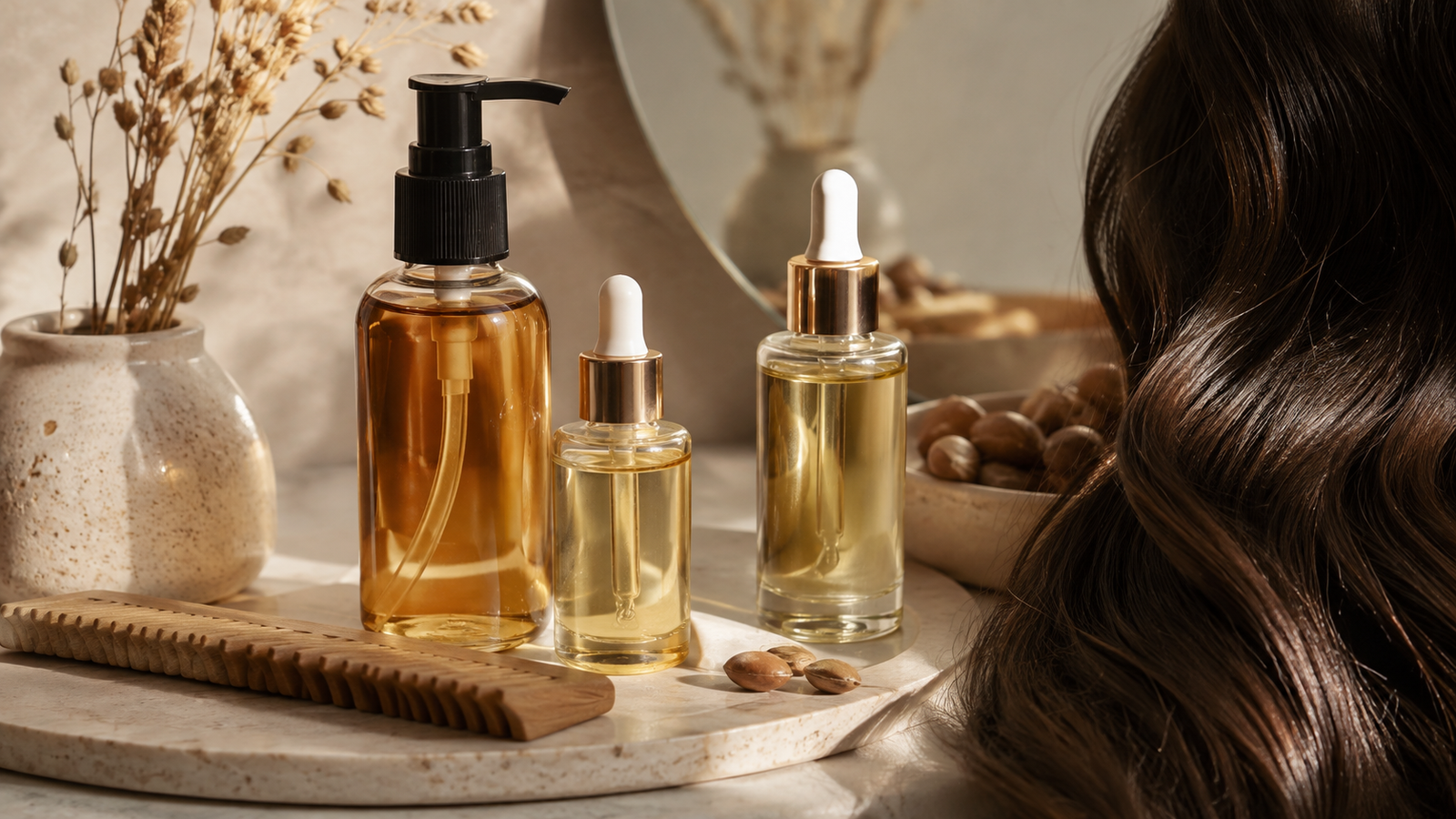
Hair oiling is one of the oldest and most popular haircare practices, but it is also one of the most misunderstood.
Hair oils are often promoted as if they can:
- stop hair fall;
- repair split ends;
- make hair grow faster;
- cure dandruff;
- permanently reverse damage;
- restore severely damaged hair.
That is not what cosmetic hair oils realistically do.
Used correctly, hair oils can help with:
- lubrication;
- softness;
- shine;
- reducing friction;
- improving manageability;
- protecting dry lengths;
- reducing roughness;
- making hair feel smoother.
The best way to use hair oil is therefore not:
apply as much as possible → leave it overnight → shampoo repeatedly
A better approach is:
decide why you are using oil → choose the right type → use the smallest effective amount → apply it to the right area → wash or leave it in according to purpose
Hair oil can be useful.
But it should have a clear job in your routine.
What Does Hair Oil Actually Do?
Hair fibres are constantly exposed to:
- washing;
- drying;
- brushing;
- friction;
- heat styling;
- sunlight;
- environmental exposure;
- chemical treatments.
These processes can make the outer surface of hair feel:
- rough;
- dry;
- tangled;
- frizzy.
Oil can coat the hair fibre and reduce friction between strands.
That may make hair feel:
- smoother;
- softer;
- easier to comb;
- less rough.
Some oils can also penetrate into the hair fibre to different degrees.
The effects depend on:
- oil composition;
- hair condition;
- application time;
- amount used.
Hair Oil Does Not “Feed” the Hair Fibre
The visible part of the hair shaft is not living tissue.
Once hair emerges from the scalp, the fibre itself cannot heal biologically like skin.
Oil may improve:
- appearance;
- lubrication;
- flexibility;
- surface feel.
But it does not bring a damaged hair fibre “back to life.”
This distinction is important.
Hair oil is best viewed as a conditioning tool, not a miracle treatment.
Why Do People Oil Their Hair?
Hair oils are generally used in three main ways.
1. Pre-Shampoo Oil
Applied before washing to reduce dryness and friction.
2. Finishing Oil
A very small amount used after washing or styling to improve:
- shine;
- smoothness;
- frizz control.
3. Scalp Oil
Applied directly to the scalp as part of a traditional or personal routine.
These uses are not the same.
The amount, product and application method should change depending on your goal.
Start With the Question: What Are You Trying to Achieve?
Before buying or applying hair oil, identify your goal.
Possible goals include:
- protecting dry ends before shampooing;
- reducing tangling;
- adding shine;
- controlling frizz;
- improving softness;
- making coarse hair easier to manage;
- supporting a scalp-massage routine.
If you cannot explain what the oil is supposed to do, you may not need it.
Hair Oil for Dryness
Hair oils can be useful when the lengths feel:
- dry;
- rough;
- dull;
- frizzy.
Oil adds lubrication and can reduce moisture loss from the hair surface.
But hair dryness is often affected by:
- shampoo choice;
- conditioner use;
- heat styling;
- chemical processing;
- hair length;
- environment.
Oil should support the routine rather than replace:
- conditioner;
- leave-in conditioner;
- appropriate heat protection.
Hair Oil for Frizz
Frizz often develops when the hair surface is:
- rough;
- dry;
- affected by humidity.
A small amount of oil can help smooth the surface and reduce flyaways.
Finishing oils often contain combinations of:
- lightweight plant oils;
- silicones;
- esters;
- conditioning agents.
These formulas are usually easier to use than applying a heavy pure oil after styling.
Hair Oil for Shine
Oil can increase shine because it helps create a smoother surface.
A smoother surface reflects light more evenly.
However, too much oil can make hair look:
- greasy;
- stringy;
- flat.
For shine, the correct amount is often much smaller than people expect.
Hair Oil for Tangling
Dry and damaged hair often tangles because of increased friction between strands.
Applying oil before shampooing or a small amount after conditioning may help improve slip.
However, conditioner remains one of the most important products for detangling.
Do not replace a suitable conditioner with oil if your hair clearly needs conditioning.
Hair Oil for Breakage
Hair breakage occurs when the fibre snaps.
Oil can potentially help reduce some forms of mechanical breakage by reducing:
- friction;
- roughness;
- combing stress.
This is different from hair shedding from the scalp.
If you see:
- shorter broken pieces;
- frayed ends;
- uneven lengths;
improving conditioning and reducing physical stress may help.
Hair Oil and Hair Fall
This is an important distinction.
Hair oil may improve the condition of the hair fibre.
It does not automatically treat hair loss from the follicle.
Hair shedding can be influenced by many factors, including:
- genetics;
- hormones;
- illness;
- stress;
- nutritional deficiencies;
- medications;
- scalp conditions.
If you are experiencing:
- sudden increased shedding;
- visible thinning;
- bald patches;
- widening part;
- persistent hair loss;
do not rely only on hair oil.
A dermatologist can help investigate the cause.
Does Hair Oil Make Hair Grow Faster?
There is no ordinary cosmetic hair oil that can reliably make human scalp hair grow dramatically faster simply by being applied to the lengths.
Hair growth takes place inside the follicle.
Oil may:
- improve scalp lubrication;
- reduce fibre breakage;
- make hair appear healthier.
Reduced breakage can help you retain length.
That can sometimes be mistaken for faster growth.
But preventing breakage and increasing biological growth rate are different things.
Can Hair Oil Repair Split Ends?
No oil permanently repairs a split end.
Oil may temporarily coat split ends and make them look:
- smoother;
- less frayed;
- shinier.
But once a hair fibre has physically split, trimming is the only permanent way to remove the split portion.
Good conditioning and gentle handling may help reduce additional splitting.
Pre-Shampoo Hair Oiling
Pre-shampoo oiling is one of the most useful ways to use hair oil.
The basic idea is:
apply oil → leave it on for a practical period → shampoo → condition
The oil provides lubrication before washing.
This can be especially useful for:
- dry hair;
- long hair;
- curly hair;
- chemically treated hair;
- easily tangled hair.
Why Use Oil Before Shampoo?
Hair swells when exposed to water.
Repeated cycles of:
wetting → drying → wetting → drying
can contribute to fibre stress.
Some oils can reduce water penetration into the hair to some degree.
Pre-shampoo oiling can also reduce friction during:
- shampooing;
- rinsing;
- detangling.
This may be particularly useful for damaged or porous hair.
Coconut Oil
Coconut oil is one of the most studied traditional hair oils.
Its fatty-acid composition allows it to penetrate the hair fibre more effectively than many oils.
It may help reduce protein loss from hair under certain conditions.
This makes coconut oil particularly useful as:
- pre-wash treatment;
- conditioning oil for some hair types.
However, not everyone likes it.
Some people find coconut oil makes their hair feel:
- stiff;
- heavy;
- coated.
If that happens, use another oil or reduce the amount.
Mineral Oil
Mineral oil mainly coats the hair surface rather than penetrating deeply.
It can help:
- reduce friction;
- add shine;
- reduce roughness.
It is sometimes criticized because it is petroleum-derived, but cosmetic-grade mineral oil is widely used and can be an effective emollient.
A natural ingredient is not automatically better than a synthetic or refined one.
Sunflower Oil
Sunflower oil is relatively lightweight compared with some heavier oils.
It may work well for:
- fine-to-medium hair;
- people who dislike heavy oiling.
It can improve:
- surface lubrication;
- softness;
- shine.
Argan Oil
Argan oil is frequently used in finishing products.
It is popular because it can provide:
- smoothness;
- shine;
- softness.
Many “argan oil” hair serums contain only a small amount of argan oil alongside:
- silicones;
- esters;
- other conditioning agents.
That is not necessarily a problem.
The total formulation often determines performance more than the oil name on the front label.
Jojoba Oil
Jojoba is technically a wax ester rather than a conventional triglyceride oil.
It has a lightweight feel and may work well in:
- scalp oils;
- finishing blends;
- leave-in products.
It is often easier to use in small amounts than very heavy oils.
Olive Oil
Olive oil is relatively rich and heavy.
It may work well for:
- coarse;
- very dry;
- thick hair.
Fine hair may become:
- flat;
- greasy;
- difficult to wash.
If you use olive oil, start with a very small amount.
Avocado Oil
Avocado oil is another relatively rich plant oil.
It can add:
- softness;
- lubrication;
- shine.
It may suit:
- dry;
- coarse;
- curly;
- chemically processed hair.
Again, richness can become excessive on fine hair.
Almond Oil
Sweet almond oil is commonly used in traditional hair-oiling blends.
It provides:
- emollience;
- slip;
- shine.
It may be useful as a lighter alternative to very rich oils.
People with known nut allergies should check ingredients carefully and discuss appropriate cosmetic exposure with a healthcare professional if needed.
Castor Oil
Castor oil is extremely thick.
It is often promoted for hair growth.
However, strong evidence that ordinary topical castor oil significantly accelerates scalp hair growth is lacking.
Its main practical effects are:
- coating;
- shine;
- lubrication.
Because it is so thick, many people prefer blending it with a lighter oil.
Using large amounts can make shampooing difficult.
Rosemary Oil
Rosemary essential oil is frequently promoted online for hair growth.
It should not be treated like a regular carrier oil.
Essential oils are highly concentrated.
Applying undiluted essential oil directly to the scalp can cause:
- irritation;
- allergic reactions;
- burning.
If you choose a cosmetic scalp oil containing rosemary essential oil, use a properly formulated product and follow its instructions.
Do not assume more essential oil means better results.
Onion Oil
Onion-based hair oils are popular in some markets.
Many commercial versions contain:
- plant oils;
- onion extracts;
- fragrance;
- other botanical extracts.
Marketing claims may extend far beyond available evidence.
Treat these as cosmetic hair oils unless a specific therapeutic claim has strong supporting evidence.
If you like how the formula conditions your hair, that is a reasonable reason to use it.
Ayurvedic Hair Oils
Traditional hair oils may contain combinations of:
- coconut oil;
- sesame oil;
- amla;
- bhringraj;
- herbs;
- botanical extracts.
These products can provide normal oil-related benefits such as:
- lubrication;
- softness;
- shine.
Traditional use alone does not prove every marketing claim.
Judge the product on:
- formula;
- tolerance;
- practical results.
Is One Oil Better Than a Blend?
Not necessarily.
Single oils are simple and inexpensive.
Blended products can combine:
- lightweight oils;
- richer oils;
- silicones;
- fragrances;
- conditioning agents.
A well-formulated blend may feel better than a pure oil.
The goal is not ingredient purity.
The goal is performance.
Which Oil Is Best for Fine Hair?
Fine hair is easily weighed down.
Better choices are usually:
- lightweight oils;
- lightweight oil-serum blends;
- very small amounts.
Possible options include:
- argan-based finishing serum;
- jojoba;
- sunflower-based blends.
Avoid saturating fine hair with heavy oils unless you are using them specifically as a pre-shampoo treatment.
Which Oil Is Best for Thick or Coarse Hair?
Thick or coarse strands usually tolerate richer products.
Possible options include:
- coconut oil;
- olive oil;
- avocado oil;
- richer blends.
You may also need a larger amount because there is more hair to coat.
But start conservatively.
Which Oil Is Best for Curly Hair?
Curly hair often benefits from lubrication.
Useful options may include:
- coconut oil;
- argan oil;
- avocado oil;
- blended finishing oils.
Oil can be used:
- before shampoo;
- after leave-in conditioner;
- as a finishing step.
But oil alone is not a replacement for water-based hydration or conditioner.
Which Oil Is Best for Coily Hair?
Coily hair may tolerate richer oils particularly well.
Some people use oil to help:
- reduce friction;
- seal in conditioning products;
- improve softness.
A common routine may be:
leave-in conditioner → cream → small amount of oil
But this type of layering is optional.
Use only what your hair needs.
Too much product can cause:
- buildup;
- dullness;
- greasy feel.
Which Oil Is Best for Dry Hair?
Dry hair can usually tolerate:
- richer oils;
- pre-wash oiling;
- leave-in finishing oil.
But do not treat oil as the only solution.
A better routine may include:
- Appropriate shampoo
- Good conditioner
- Optional leave-in
- Small amount of oil
Oil works best as one part of a complete routine.
Which Oil Is Best for Oily Hair?
An oily scalp does not automatically mean your ends do not need oil.
You can have:
oily scalp + dry ends
In this case:
- avoid heavy scalp oiling;
- apply a very small amount to the ends;
- wash the scalp properly.
Use lightweight products.
Hair Oil for Damaged Hair
Damaged hair often benefits significantly from reducing friction.
Oil may improve:
- smoothness;
- shine;
- combability.
Pre-shampoo oiling can be especially useful.
But damaged hair also benefits from:
- conditioner;
- reduced heat;
- less bleaching;
- careful detangling.
No oil can completely reverse severe chemical damage.
Hair Oil for Bleached Hair
Bleached hair can become highly porous and fragile.
A practical routine might be:
- Small amount of pre-shampoo oil on lengths
- Gentle shampoo
- Rich conditioner
- Leave-in conditioner
- Heat protectant if needed
- Tiny amount of finishing oil
The goal is to minimize further damage.
Should You Oil Your Scalp?
You can, but scalp oiling is not necessary for everyone.
Some people enjoy it because it:
- lubricates the scalp;
- supports massage;
- is part of a cultural routine.
However, the scalp naturally produces sebum.
Adding oil may not be useful if you already have:
- oily scalp;
- scalp acne;
- seborrheic dermatitis;
- heavy dandruff;
- frequent buildup.
Scalp Oil and Dandruff
This requires caution.
Dandruff is commonly associated with:
- scalp oil;
- yeast activity;
- inflammation.
Heavy oiling may make symptoms worse for some people.
If your scalp has persistent:
- flaking;
- itching;
- redness;
using more oil may not be the solution.
An appropriate anti-dandruff shampoo may be more useful.
Scalp Oil and Seborrheic Dermatitis
Seborrheic dermatitis can cause:
- greasy scaling;
- redness;
- itching.
Heavy scalp oiling may worsen the greasy environment for some individuals.
If you have persistent symptoms, seek professional guidance rather than repeatedly applying oil.
Scalp Oil and Acne
Hair oils can sometimes spread onto:
- forehead;
- temples;
- back of neck.
Heavy products may contribute to breakouts in susceptible people.
If you notice acne developing around the hairline after oiling:
- reduce scalp oil;
- avoid very heavy formulas;
- keep hair away from the face;
- wash pillowcases regularly.
Can Scalp Massage Help?
Scalp massage can feel relaxing.
It may temporarily increase local blood flow.
But aggressive massage does not automatically improve hair growth.
Use:
- fingertips;
- gentle pressure.
Avoid:
- scratching with nails;
- pulling hair;
- vigorous rubbing.
If massage causes increased breakage or irritation, reduce pressure.
How Much Hair Oil Should You Use?
Usually less than you think.
The correct amount depends on:
- hair length;
- density;
- thickness;
- oil richness;
- purpose.
For finishing:
- fine hair may need 1–2 drops;
- medium hair may need a few drops;
- thick or curly hair may need more.
Start small.
You can always add another drop.
Removing excess oil is much harder.
How Much Oil for Pre-Shampoo Treatment?
You do not need to completely saturate the hair.
Use enough to lightly coat the lengths.
Pay particular attention to:
- mid-lengths;
- ends.
The hair should feel:
- lubricated;
- coated;
not necessarily dripping.
Excess oil simply requires more shampoo later.
How Long Should You Leave Hair Oil On?
For pre-shampoo use, there is no universal requirement to leave oil overnight.
A practical range might be:
- 20–30 minutes;
- one hour;
- several hours;
depending on the product and your routine.
Longer does not automatically mean better.
If the oil has already coated the hair, keeping it on for another ten hours may provide little additional benefit.
Is Overnight Oiling Necessary?
No.
Overnight oiling is a cultural practice for many people and can be comfortable if it suits them.
But it can also cause:
- greasy pillowcases;
- scalp buildup;
- facial breakouts;
- excessive shampooing the next day.
You can get useful pre-wash conditioning without sleeping in oil.
How Often Should You Oil Your Hair?
Frequency depends on the purpose.
Pre-Shampoo
You might use oil:
- once weekly;
- every few washes;
- whenever the lengths feel dry.
Finishing Oil
You may use a tiny amount:
- after every wash;
- between washes on dry ends.
Scalp Oil
Use only if your scalp tolerates it.
There is no benefit in forcing a daily oiling schedule.
How to Apply Pre-Shampoo Oil Correctly
Step 1 — Start With Dry Hair
Pre-shampoo oiling is usually easiest on dry hair.
Step 2 — Section if Needed
If your hair is thick or curly, divide it into sections.
Step 3 — Apply Oil to the Lengths
Focus especially on:
- older;
- drier;
- damaged ends.
Step 4 — Use Scalp Oil Only if Needed
Do not automatically pour oil onto the scalp.
Step 5 — Distribute Gently
Use:
- fingers;
- wide-tooth comb.
Avoid aggressive brushing.
Step 6 — Leave for a Practical Period
Follow product directions if using a formulated treatment.
Step 7 — Shampoo
Clean the scalp properly.
Let shampoo foam travel through the lengths while rinsing.
Step 8 — Condition
Oil does not automatically replace conditioner.
Use conditioner if your hair needs it.
How to Shampoo After Oiling
Do not immediately assume you need:
- two;
- three;
- four shampoo rounds.
Start with one proper shampoo.
Concentrate on:
- scalp;
- roots.
If significant oil remains, shampoo again.
Using too much oil in the first place often creates the need for aggressive cleansing.
This defeats the purpose.
Should You Shampoo Twice After Oiling?
Sometimes.
If one cleanse leaves:
- very greasy roots;
- obvious residue;
a second gentle shampoo may help.
But if your hair is already clean, do not keep washing just because two shampoos are part of a routine online.
How to Use Hair Oil After Washing
Hair oil can also be used as a finishing product.
A simple method:
Step 1
Start with:
- dry;
- or nearly dry hair.
Step 2
Place a tiny amount in your palm.
Step 3
Rub between hands.
Step 4
Lightly smooth over:
- mid-lengths;
- ends.
Step 5
Avoid roots unless your hair is extremely dry and your scalp tolerates it.
This method can improve shine without making hair greasy.
Can You Apply Oil to Wet Hair?
Yes, but the effect differs.
Applying a small amount to damp hair can help:
- reduce friction;
- improve smoothness;
- seal in some conditioning.
However, pure oil does not hydrate hair by itself in the same way a water-based leave-in conditioner does.
For dry hair, a useful order may be:
leave-in conditioner → oil
rather than oil alone.
Oil vs Hair Serum
These terms overlap in marketing.
Pure Hair Oil
Usually contains mostly:
- plant oils;
- mineral oil;
- oil-soluble ingredients.
Hair Serum
Often contains:
- silicones;
- lightweight oils;
- esters;
- conditioning agents.
Serums may feel less greasy and spread more evenly.
If your goal is:
- shine;
- frizz control;
- lightweight smoothness;
a serum may be easier than pure oil.
Oil vs Leave-In Conditioner
They perform different jobs.
Leave-In Conditioner
Usually contains:
- water;
- conditioning agents;
- humectants;
- emollients.
It can provide:
- hydration;
- detangling;
- softness.
Hair Oil
Primarily provides:
- lubrication;
- surface coating;
- shine.
For very dry hair, using both may be useful.
Hair Oil and Heat Styling
Do not assume every oil is a heat protectant.
Some oils can smoke or degrade at high temperatures.
If you use:
- straightener;
- curling iron;
- blow dryer;
use a product specifically formulated and labelled for heat protection.
A pure kitchen oil is not automatically a suitable heat protectant.
Should You Oil Hair Before Straightening?
Usually not with a heavy pure oil.
Applying heavy oil immediately before high-temperature tools can:
- make hair feel greasy;
- complicate heat exposure.
Use a proper heat-protective product.
Finishing oil can be added after styling.
Hair Oil Before Blow-Drying
Some commercial oil-serum products are specifically designed for blow-drying.
They may contain:
- silicones;
- heat-protective ingredients.
Check the label.
Do not assume every pure plant oil provides adequate heat protection.
Hair Oil After Straightening
A very small amount can help:
- smooth flyaways;
- add shine;
- reduce frizz.
Use minimal product.
Too much can make straightened hair look flat.
Hair Oil and Curly Hair Styling
Oil can be used after styling to:
- break a hard gel cast;
- reduce surface frizz;
- add shine.
For example:
leave-in → curl cream/gel → dry → tiny amount of oil
This is sometimes called “scrunching out the crunch.”
The oil reduces friction between your hands and curls.
Hair Oil and Hair Porosity
High-porosity or damaged hair may tolerate richer oils better because the hair surface is more weathered.
Low-porosity hair may become coated quickly.
But porosity is only one factor.
Also consider:
- strand thickness;
- density;
- curl pattern;
- styling.
Use the amount that works.
Signs You Are Using Too Much Oil
Watch for:
- greasy roots;
- stringy ends;
- flat hair;
- dull coating;
- increased buildup;
- needing repeated shampooing.
If this happens:
- reduce the amount;
- apply farther from the roots;
- switch to a lighter product.
More oil is rarely the solution.
Product Buildup From Hair Oils
Oil can contribute to buildup, particularly when combined with:
- silicones;
- styling creams;
- dry shampoo;
- waxes.
If hair becomes:
- dull;
- coated;
- difficult to style;
use an appropriate cleansing shampoo.
People using heavy products regularly may benefit from occasional clarifying.
Clarifying After Oil Use
A clarifying shampoo removes buildup more effectively.
You do not need it after every oil treatment.
Use it when you notice:
- persistent coating;
- reduced volume;
- heavy residue.
Follow with conditioner because clarifying cleansers may feel stronger.
Does Hair Oil Cause Grey Hair?
There is no normal cosmetic hair oil known to cause hair to turn grey simply through appropriate use.
Grey hair is primarily influenced by:
- genetics;
- age;
- biological changes in pigment production.
Claims that ordinary oil either causes or completely reverses grey hair should be treated cautiously.
Can Hair Oil Reverse Grey Hair?
There is no ordinary cosmetic oil proven to reliably reverse genetically or age-related grey hair.
Some products may temporarily:
- darken;
- coat;
- add shine.
That is not the same as restoring pigment production.
Hair Oil and Dandruff Home Remedies
Some people mix oils with:
- lemon juice;
- essential oils;
- onion;
- herbs.
Be cautious.
Acidic or concentrated ingredients can irritate the scalp.
If you have persistent dandruff, evidence-based anti-dandruff treatments are usually a better starting point than strong homemade mixtures.
Avoid Undiluted Essential Oils
Essential oils are concentrated substances.
Examples include:
- rosemary;
- peppermint;
- tea tree;
- lavender.
Applying them directly can cause:
- irritation;
- burning;
- allergic contact dermatitis.
Use properly formulated cosmetic products or appropriately diluted products.
Do not assume natural means harmless.
Patch Testing Scalp Oils
If you have sensitive skin or are using a botanical-heavy product, consider testing a small area first.
Watch for:
- redness;
- itching;
- burning;
- rash.
Stop using the product if irritation develops.
Hair Oil for Children
Children generally do not need complicated hair-oiling routines.
If oil is used for:
- detangling;
- tradition;
- dryness;
choose a simple product and use a small amount.
Avoid concentrated essential oils unless specifically appropriate and professionally advised.
Hair Oil for Men
Hair oil needs are determined by:
- hair length;
- scalp condition;
- dryness;
- styling;
not gender.
Someone with very short oily hair may need little or no oil.
Someone with:
- curly;
- coarse;
- long;
- dry hair;
may benefit more.
Hair Oil for Short Hair
Short hair usually requires very little.
A drop or two can provide shine.
Heavy application can quickly make short hair appear greasy because oil spreads near the scalp easily.
Hair Oil for Long Hair
Long hair often has drier ends because:
- ends are older;
- they have experienced more washing;
- more brushing;
- more environmental exposure.
Pre-shampoo oiling can be particularly useful for long hair.
Focus on:
mid-lengths → ends
Hair Oil for Coloured Hair
Colour-treated hair may become more porous.
Oil can improve:
- smoothness;
- shine;
- frizz.
But oil does not prevent all colour fading.
Also consider:
- gentle cleansing;
- lower heat;
- reduced washing frequency where practical.
Hair Oil for Swimmers
Pool water can leave hair feeling:
- dry;
- rough.
Applying a small amount of oil or conditioner before swimming may reduce how much pool water the hair absorbs.
A swimming cap is even more effective for reducing exposure.
After swimming:
- rinse;
- cleanse as needed;
- condition.
Hair Oil Before Swimming
A thin coating can provide some barrier effect.
Do not saturate the hair with large amounts of oil before entering shared pools.
Follow pool hygiene rules.
Hair Oil After Swimming
A small amount of finishing oil can improve softness.
But remove chlorine or salt first.
Oil should not simply be layered on top of accumulated residue.
Can Oil Make Hair Waterproof?
No.
Hair can still absorb water.
Some oils can reduce water penetration or swelling.
This is not the same as making hair waterproof.
How to Store Hair Oils
Keep products:
- tightly closed;
- away from excessive heat;
- away from direct sunlight.
Some plant oils oxidize over time.
Signs of degradation may include:
- unpleasant rancid smell;
- changed texture;
- changed colour.
Do not continue using oil that smells spoiled.
Hair Oil Expiry
Check:
- expiry date;
- period-after-opening symbol;
- manufacturer instructions.
Pure oils can still oxidize.
Essential-oil blends may also change over time.
Do not keep old products indefinitely.
Does More Expensive Hair Oil Work Better?
Not necessarily.
Hair oils can range from inexpensive basic oils to luxury blends.
Higher price may reflect:
- fragrance;
- packaging;
- branding;
- rare oils;
- marketing.
Performance depends on:
- formulation;
- your hair;
- your goal.
A simple affordable oil can be excellent for pre-shampoo use.
A more expensive lightweight serum may be worth it if you prefer the finish.
How to Read a Hair Oil Label
Look beyond the product name.
Check:
First Ingredients
If the product is mostly:
- silicones;
- then oils;
it is really more of a smoothing serum.
That can still be effective.
Fragrance
Relevant if your scalp is sensitive.
Essential Oils
Check concentration and whether the product is designed for direct scalp use.
Heat-Protection Claims
Only rely on them when the product specifically states this use.
Directions
Some oils are intended for:
- rinse-out;
- pre-shampoo;
- leave-in.
Use the product as designed.
Common Hair-Oiling Mistakes
Using Too Much Oil
This leads to:
- buildup;
- greasy appearance;
- excessive shampooing.
Applying Every Oil to the Scalp
Not necessary.
Assuming Overnight Is Better
Longer does not always mean more benefit.
Replacing Conditioner With Oil
Oil and conditioner do different jobs.
Using Pure Oil as Heat Protectant
Not every oil is appropriate for high heat.
Applying Essential Oils Undiluted
Can cause irritation.
Treating Hair Oil as a Hair-Loss Cure
Hair loss needs appropriate evaluation.
Using Heavy Oil on Fine Hair
Can make hair flat.
Shampooing Aggressively to Remove Excess Oil
Use less oil in the first place.
Ignoring Scalp Symptoms
Persistent itching or flaking may require treatment rather than more oil.
A Simple Pre-Shampoo Oil Routine
For dry or damaged hair:
Step 1
Apply a small amount of oil to dry mid-lengths and ends.
Step 2
Distribute gently.
Step 3
Leave for approximately:
- 30 minutes;
- or according to your routine/product instructions.
Step 4
Shampoo the scalp.
Step 5
Rinse thoroughly.
Step 6
Condition lengths and ends.
This is enough.
A Simple Finishing Oil Routine
For frizz and shine:
- Style hair normally.
- Place 1–3 drops of oil in palms.
- Rub hands together.
- Smooth lightly through ends.
- Add more only if needed.
Do not start with a palm full of oil.
Example Routine for Fine Hair
Wash Day
- Shampoo
- Lightweight conditioner
- Style
- One small drop of finishing oil if needed
Optional pre-shampoo oil only on dry ends.
Example Routine for Dry Curly Hair
- Pre-shampoo oil on lengths
- Shampoo
- Rich conditioner
- Leave-in conditioner
- Curl product
- Dry
- Tiny amount of oil to finish
Example Routine for Bleached Hair
- Pre-shampoo coconut or suitable conditioning oil
- Gentle shampoo
- Repair-focused conditioner
- Leave-in conditioner
- Heat protection
- Minimal heat
- Lightweight finishing serum
Example Routine for Oily Scalp With Dry Ends
- Shampoo scalp
- Condition mid-lengths and ends
- Dry
- Use 1–2 drops of lightweight oil only on ends
Avoid heavy scalp oiling unless you know your scalp tolerates it.
How to Know Whether Hair Oil Is Helping
Hair oil is useful when it makes the hair:
- easier to comb;
- less rough;
- smoother;
- shinier;
- less frizzy.
It is not helping if your routine results in:
- constant greasiness;
- repeated shampooing;
- scalp irritation;
- heavy buildup;
- breakouts around the hairline.
Adjust the amount or stop using it.
When Should You Stop Scalp Oiling?
Consider reducing or stopping if you notice:
- worsening dandruff;
- scalp pimples;
- itching;
- redness;
- tenderness;
- significant buildup.
Your scalp does not need oil simply because oiling is traditional.
Personal tolerance matters.
When Should You See a Dermatologist?
Seek professional advice if you have:
- sudden hair shedding;
- visible thinning;
- bald patches;
- severe scalp itching;
- persistent dandruff;
- scalp pain;
- sores;
- scarring;
- unexplained hair breakage.
Hair oil can improve the condition of the fibre.
It cannot diagnose or treat every scalp or hair-loss condition.
Hair Oil Checklist
Before buying or applying a hair oil, ask:
1. Why am I using it?
Pre-shampoo protection, shine or scalp massage?
2. Is my hair fine or coarse?
Choose product weight accordingly.
3. Does my scalp become oily easily?
Avoid unnecessary scalp application.
4. Am I using oil instead of conditioner?
You may need both.
5. Am I using too much?
Start small.
6. Is it intended for heat styling?
Do not assume.
7. Does the product contain concentrated essential oils?
Use according to instructions.
8. Does it make my hair easier to manage?
If not, it may not belong in your routine.
The Physical Glow Takeaway
Hair oils are most useful as conditioning and lubrication products, not miracle treatments.
Use them according to purpose:
- pre-shampoo oiling can help reduce friction and dryness;
- finishing oil can improve shine and control frizz;
- scalp oiling is optional and should depend on scalp tolerance.
Coconut oil can be particularly useful as a pre-shampoo oil for some hair types because it can penetrate the hair fibre.
Lighter oils and oil-serum blends often work better for:
- fine hair;
- finishing;
- everyday shine.
Richer oils may suit:
- coarse;
- curly;
- very dry;
- damaged hair.
The most important rule is simple:
use less than you think you need.
Hair should feel:
softer → smoother → easier to manage
not:
greasy → coated → difficult to wash
And remember:
Hair oil can reduce friction and improve the appearance of damaged hair, but it does not permanently repair split ends, cure dandruff or automatically treat hair loss.
Use oil where it genuinely improves your routine—and skip it where it does not.