How to Use a Hair Mask for Healthier Hair
Learn how to use a hair mask as part of a healthy hair routine, with practical guidance on hair condition, frequency, application, rinse-out care and moisture needs. This beginner-friendly guide helps you make a clear, informed choice without unnecessary complexity.
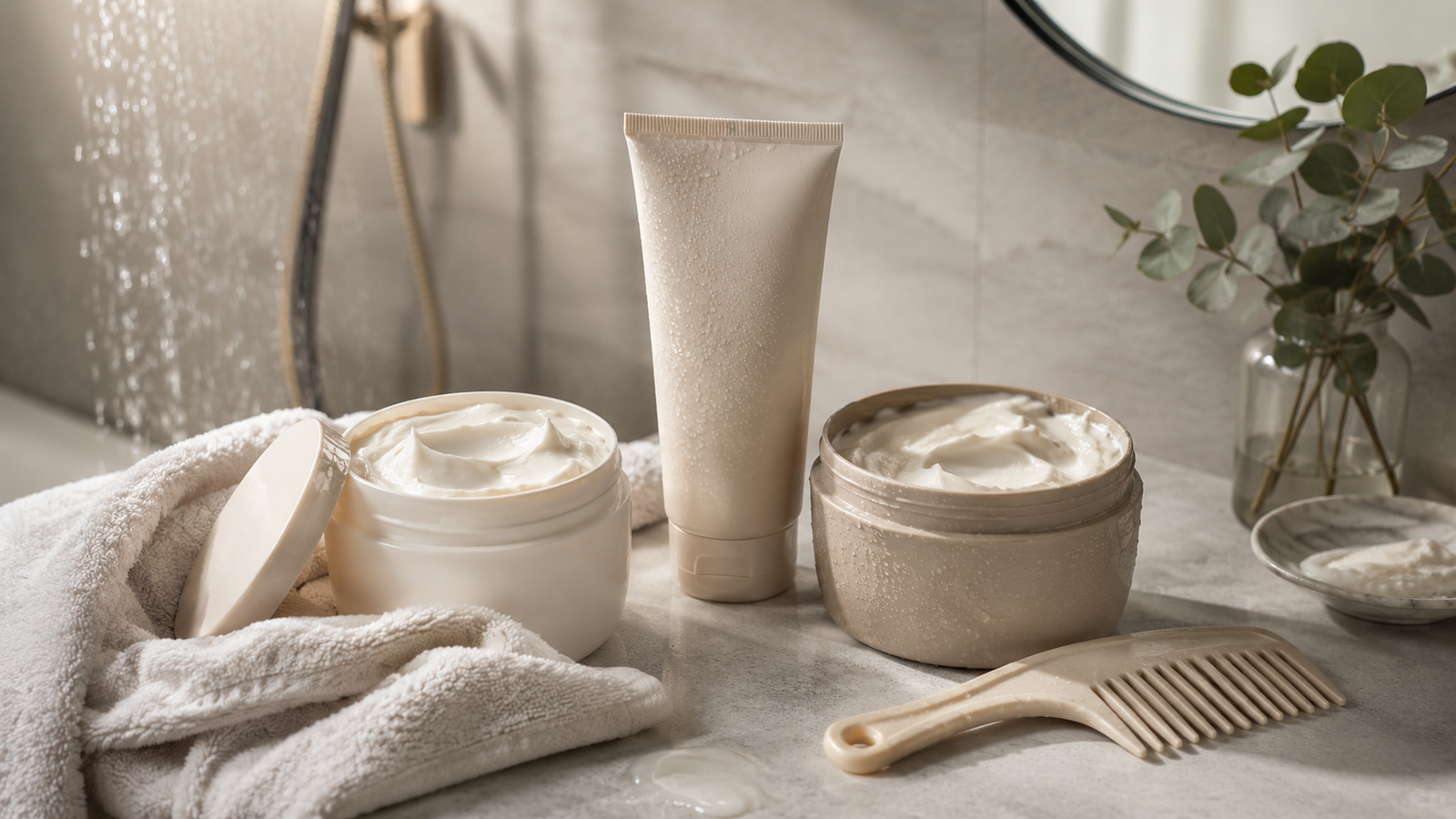
Hair masks are often marketed as intensive treatments that can:
- repair damage;
- restore moisture;
- strengthen weak hair;
- smooth frizz;
- improve shine;
- reduce breakage.
They can be useful, particularly for hair that is:
- dry;
- coarse;
- curly;
- chemically treated;
- bleached;
- heat damaged;
- difficult to detangle.
But a hair mask is not automatically better than a regular conditioner, and leaving one on for hours does not necessarily make it work better.
The most useful approach is:
identify what your hair needs → choose the appropriate mask → use it at the right frequency → apply mainly to the lengths → rinse as directed → judge how your hair responds
A hair mask should make your hair easier to manage.
It should not turn your wash day into an unnecessarily complicated treatment routine.
What Is a Hair Mask?
A hair mask is generally a richer conditioning treatment designed to provide more intensive conditioning than a typical everyday conditioner.
Hair masks may contain higher levels of:
- fatty alcohols;
- conditioning agents;
- silicones;
- oils;
- butters;
- proteins;
- amino acids;
- film-forming ingredients;
- bond-supporting ingredients.
The exact formulation varies significantly.
Some masks are primarily designed for:
moisture and softness
while others emphasize:
damage and strengthening
or:
smoothness and frizz control
The word mask itself does not tell you what the product actually does.
Always look at its intended purpose and formulation.
Hair Mask vs Regular Conditioner
Both products condition the hair.
The main difference is usually intensity.
Regular Conditioner
Designed for frequent use.
Its main jobs are:
- detangling;
- improving slip;
- reducing friction;
- adding softness;
- making hair easier to manage.
Hair Mask
Usually richer and may be designed for:
- occasional deeper conditioning;
- damaged hair;
- very dry hair;
- chemically processed hair.
Some masks contain additional repair-focused ingredients.
But the line between conditioner and mask is not strict.
A rich conditioner can sometimes perform similarly to a lighter mask.
Do You Actually Need a Hair Mask?
Not everyone does.
If your regular conditioner already leaves your hair:
- soft;
- smooth;
- manageable;
- easy to detangle;
you may not gain much from adding a hair mask.
Hair masks become more useful when ordinary conditioning is not quite enough.
For example, if your hair remains:
- rough;
- dry;
- tangled;
- difficult to style;
despite regular conditioning, an occasional richer treatment may help.
Who Benefits Most From Hair Masks?
Hair masks can be particularly useful for:
Dry Hair
If hair lacks softness and flexibility, richer conditioning may improve its feel.
Coarse Hair
Coarse strands often tolerate heavier conditioning products.
Curly and Coily Hair
These hair types may benefit from extra:
- slip;
- softness;
- lubrication.
Bleached Hair
Bleaching can significantly increase porosity and damage.
Masks may help improve:
- manageability;
- smoothness;
- breakage resistance.
Chemically Treated Hair
Hair that has been:
- coloured;
- relaxed;
- permed;
- straightened;
may need more conditioning support.
Heat-Damaged Hair
Frequent use of:
- straighteners;
- curling irons;
- blow dryers;
can increase fibre damage.
Masks can improve the cosmetic feel of that hair.
Hair Masks Cannot Permanently Repair All Damage
Hair fibres are not living tissue.
Once a section of hair is severely damaged, it cannot biologically regenerate.
A mask may:
- coat rough areas;
- improve lubrication;
- temporarily reinforce damaged sections;
- improve appearance.
But it cannot completely restore severely damaged hair to its original undamaged structure.
That distinction is important.
Think of hair masks as:
conditioning + protection + temporary cosmetic repair
rather than complete regeneration.
Hair Mask for Dry Hair
Dry hair is one of the clearest reasons to consider a mask.
Look for formulas containing conditioning ingredients such as:
- cetearyl alcohol;
- cetyl alcohol;
- behentrimonium chloride;
- behentrimonium methosulfate;
- silicones;
- oils;
- butters;
- glycerin.
The goal is to improve:
- softness;
- slip;
- smoothness.
If a mask leaves your hair:
- greasy;
- limp;
- coated;
it may be too rich.
Hair Mask for Fine Hair
Fine hair can benefit from masks, but product weight matters.
A very rich formula may cause:
- flatness;
- loss of volume;
- oily-looking lengths.
For fine hair:
- choose lighter masks;
- use less product;
- focus on the ends;
- use less frequently.
You may only need a mask occasionally.
Hair Mask for Thick Hair
High-density or coarse hair may require more product to coat the lengths adequately.
Richer formulas are often easier to tolerate.
You may benefit from masks containing:
- oils;
- silicones;
- fatty alcohols;
- rich conditioning agents.
Sectioning the hair before application can improve coverage.
Hair Mask for Straight Hair
Straight hair often shows excess product quickly.
If your hair is straight and fine:
- use a lightweight formula;
- keep it away from roots;
- rinse thoroughly.
If your straight hair is:
- coarse;
- damaged;
- bleached;
a richer mask may still be useful.
Texture alone does not determine how much conditioning you need.
Hair Mask for Wavy Hair
Wavy hair often needs a balance between:
conditioning and volume
Too much mask can reduce wave definition.
Consider:
- medium-weight formulas;
- shorter contact time;
- application mainly to lengths.
If waves become flat after masking, reduce:
- amount;
- frequency;
- richness.
Hair Mask for Curly Hair
Curly hair often benefits from stronger conditioning because it can be prone to:
- dryness;
- tangling;
- friction;
- frizz.
A good mask can make detangling easier.
Look for excellent slip.
A routine might be:
shampoo → hair mask → detangle → rinse → leave-in → styling product
You do not necessarily need both:
- regular conditioner;
- hair mask;
in the same wash.
Often the mask can replace the conditioner for that wash.
Hair Mask for Coily Hair
Coily hair may benefit from richer formulas.
Useful qualities include:
- high slip;
- strong conditioning;
- good spreadability;
- softness after rinsing.
Working in sections can help ensure even distribution.
Pay particular attention to:
- ends;
- areas prone to tangling.
Avoid aggressive detangling even when using a mask.
Hair Mask for Oily Hair
An oily scalp does not mean the entire hair fibre is oily.
Long hair may have:
oily roots + dry ends
In this case, apply the mask only to:
mid-lengths → ends
Avoid applying rich masks directly to the scalp unless the product is specifically designed for scalp use.
Hair Mask for Damaged Hair
Damaged hair can benefit from a mask that improves:
- lubrication;
- surface smoothness;
- flexibility.
Repair-focused masks may contain:
- hydrolyzed proteins;
- amino acids;
- silicones;
- bond-supporting ingredients.
The best choice depends on the type and severity of damage.
Hair Mask for Bleached Hair
Bleaching removes pigment through chemical oxidation and can significantly alter the hair structure.
Bleached hair may become:
- porous;
- rough;
- brittle;
- prone to breakage.
A good routine may include:
- Gentle shampoo
- Rich or repair-focused mask
- Leave-in conditioner
- Heat protection
- Reduced heat styling
Masks can improve manageability, but preventing further damage is equally important.
Hair Mask for Coloured Hair
Colour-treated hair may benefit from masks because repeated colouring can increase:
- dryness;
- porosity.
Look for products designed for:
- colour-treated hair;
- damaged hair;
- moisture retention.
But colour longevity is also influenced by:
- washing frequency;
- shampoo strength;
- water temperature;
- heat;
- UV exposure.
A mask is only one part of colour care.
Hair Mask for Heat-Damaged Hair
Heat-damaged hair may feel:
- rough;
- dry;
- brittle.
A conditioning mask can temporarily improve:
- texture;
- flexibility;
- smoothness.
But if you continue using excessive heat, the damage can continue faster than the mask can compensate.
Consider:
- lower temperatures;
- fewer passes;
- heat protectant;
- less frequent styling.
Hair Mask for Frizz
Frizz-control masks often contain:
- silicones;
- conditioning polymers;
- oils;
- fatty alcohols.
These smooth the surface and reduce friction.
However, frizz is also affected by:
- humidity;
- curl pattern;
- styling technique.
A mask can help, but may not completely eliminate frizz.
Hair Mask for Tangled Hair
If tangling is your main problem, prioritize slip.
A good mask should help strands slide past each other more easily.
Detangle while the hair is well conditioned using:
- fingers;
- wide-tooth comb;
- suitable detangling brush.
Work from:
ends → upward
rather than pulling from the roots through knots.
Moisturizing Hair Masks
Moisturizing masks generally focus on softness and flexibility.
They may contain:
- glycerin;
- fatty alcohols;
- oils;
- butters;
- conditioning agents;
- silicones.
These are most useful for:
- dry hair;
- coarse hair;
- curly hair.
The word moisturizing does not mean the product literally adds permanent water to the hair.
Its practical purpose is to improve conditioning and reduce dryness-related roughness.
Protein Hair Masks
Protein masks may contain:
- hydrolyzed keratin;
- hydrolyzed wheat protein;
- silk proteins;
- collagen-derived proteins;
- amino acids.
These proteins can temporarily deposit on damaged regions.
They may improve:
- strength perception;
- manageability;
- surface feel.
But protein masks do not permanently rebuild hair.
Who May Benefit From Protein Masks?
They may be especially useful for:
- bleached hair;
- chemically treated hair;
- highly damaged hair.
But healthy hair may not need frequent protein treatments.
Can You Use Too Much Protein?
Some people find frequent protein-heavy treatments make hair feel:
- stiff;
- rough;
- brittle.
This is sometimes described as protein overload.
The terminology can be oversimplified, but the practical solution is straightforward.
If a protein mask consistently makes your hair feel worse:
- reduce use;
- switch to a more conditioning-focused mask.
Use the result as your guide.
Bond-Repair Hair Masks
Bond-supporting treatments have become increasingly popular.
These products aim to support structures within damaged hair.
Different brands use different technologies.
They may be particularly useful for:
- bleached;
- chemically processed;
- frequently heat-styled hair.
However, the term bond repair is now used very broadly.
Not every product marketed as bond-building uses the same technology or has the same evidence.
Bond Repair vs Protein
They are not the same.
Protein Products
Mainly deposit protein fragments or amino acids onto damaged hair.
Bond-Focused Products
Attempt to interact with structural bonds or related components within the hair.
Both may improve damaged hair, but through different mechanisms.
You do not necessarily need both at every wash.
Oil-Based Hair Masks
Oil-rich masks are usually designed for:
- dryness;
- coarse hair;
- frizz.
They may contain:
- coconut oil;
- argan oil;
- avocado oil;
- olive oil;
- sunflower oil.
These can provide strong lubrication.
Fine hair may find them too heavy.
Butter-Based Masks
Rich masks may contain:
- shea butter;
- mango butter;
- cocoa butter.
These can be especially useful for:
- coarse;
- curly;
- coily;
- very dry hair.
But again, richness must match the hair.
Silicone-Based Masks
Silicones can be extremely useful in hair masks.
They improve:
- slip;
- shine;
- smoothness;
- friction reduction.
Examples may include:
- dimethicone;
- amodimethicone;
- dimethiconol.
There is no need to avoid silicones automatically.
They are particularly helpful for damaged hair.
Are Silicones in Hair Masks Bad?
No.
They can coat the hair and reduce friction.
This helps:
- brushing;
- detangling;
- styling.
Some silicones may build up depending on:
- formulation;
- usage;
- cleansing routine.
If your hair starts feeling coated, an appropriate shampoo can usually remove buildup.
Natural Hair Masks
Commercial products may emphasize ingredients such as:
- aloe vera;
- avocado;
- banana;
- honey;
- coconut;
- herbs.
These ingredients may contribute to the formula, but natural does not automatically mean:
- safer;
- more effective;
- more nourishing.
The overall formulation matters.
A well-formulated conventional mask may outperform a product simply marketed as natural.
Homemade Hair Masks
Popular recipes include:
- egg;
- yogurt;
- banana;
- mayonnaise;
- honey;
- avocado;
- oils.
They can temporarily change how hair feels, but they also come with disadvantages.
Possible issues include:
- difficult rinsing;
- unpleasant smell;
- inconsistent formulation;
- contamination;
- residue.
A properly formulated cosmetic hair mask is generally more predictable.
Egg Hair Masks
Egg is often promoted because it contains protein.
But the proteins in raw egg are very large compared with hydrolyzed proteins used in formulated hair products.
Simply applying raw egg does not mean the protein is effectively repairing hair.
It can also become difficult to remove.
If exposed to hot water, the egg can partially cook in the hair.
A formulated protein treatment is usually more practical.
Yogurt Hair Masks
Yogurt is sometimes used for softness.
But it is not designed or preserved as a hair cosmetic.
Results are inconsistent.
If you want conditioning, a formulated conditioner provides more predictable performance.
Banana Hair Masks
Banana masks may feel moisturizing because of their texture.
But small banana particles can be extremely difficult to rinse from hair.
Again, a cosmetic product is generally easier to use.
Honey Hair Masks
Honey is a humectant.
But pure honey is:
- sticky;
- difficult to distribute;
- difficult to rinse.
Hair products can incorporate humectant ingredients in a much more usable formula.
Aloe Vera Hair Masks
Aloe-based products may feel soothing and hydrating.
Pure aloe gel can work as part of some routines.
But it is not necessarily a substitute for a properly formulated conditioner.
Coconut Oil Hair Mask
Coconut oil is one of the more evidence-supported traditional hair treatments.
It can penetrate the hair fibre to some degree and may help reduce protein loss.
A simple pre-shampoo coconut oil treatment can therefore be useful.
But it is technically closer to:
pre-shampoo oiling
than a conventional water-based hair mask.
When Should You Use a Hair Mask?
Most masks are used after shampooing.
A common routine is:
shampoo → mask → rinse → leave-in/styling
Some treatments are specifically designed for:
- before shampoo;
- before conditioner;
- after conditioner.
Always follow the individual product instructions.
Should Hair Mask Replace Conditioner?
Usually, yes, on the wash when you use it.
If the mask already provides sufficient:
- softness;
- detangling;
- conditioning;
there is little need to add conditioner afterward.
However, some specialized repair treatments are not strongly conditioning.
In those cases, the instructions may tell you to follow with conditioner.
Should You Use Conditioner Before a Hair Mask?
Usually not.
Traditional sequence:
shampoo → mask
is enough.
Applying conditioner first may create an additional coating that can reduce contact between the mask and hair.
But some branded treatment systems use a specific sequence.
Follow the manufacturer’s directions.
Should You Use Conditioner After a Hair Mask?
Only if needed.
If the mask leaves hair:
- soft;
- slippery;
- easy to detangle;
adding conditioner may simply be redundant.
If the treatment is primarily repair-focused and leaves hair rough, conditioner afterward may help.
How to Apply a Hair Mask Properly
Step 1 — Shampoo
Clean the scalp and hair.
This removes:
- oil;
- dirt;
- styling residue.
Step 2 — Remove Excess Water
Gently squeeze out excess water.
Hair should be:
- wet;
- but not dripping heavily.
Too much water can dilute the mask.
Step 3 — Divide Into Sections
Useful for:
- thick hair;
- curly hair;
- long hair.
Sectioning improves even application.
Step 4 — Apply to Mid-Lengths and Ends
Begin with the areas that are:
- oldest;
- driest;
- most damaged.
Step 5 — Distribute Evenly
Use:
- fingers;
- wide-tooth comb;
if appropriate.
Step 6 — Leave for the Recommended Time
Follow the instructions.
Step 7 — Rinse Thoroughly
Use comfortable lukewarm water.
Step 8 — Continue With Leave-In or Styling
Only add additional products if your hair needs them.
Should Hair Masks Be Applied to the Scalp?
Usually not unless specifically formulated for scalp use.
Traditional conditioning masks are designed primarily for the hair fibre.
Applying rich products to the scalp may cause:
- greasiness;
- buildup;
- flat roots.
If you have a dry or irritated scalp, use a product specifically designed for that concern.
Hair Mask on Roots
If your hair is:
- very coarse;
- curly;
- dry from root to end;
you may apply some product higher on the hair lengths.
But avoid coating the actual scalp unless instructed.
Fine or oily hair should generally keep masks farther away from the roots.
How Much Hair Mask Should You Use?
Enough to evenly coat the hair.
Not enough to create a thick visible layer.
Amount depends on:
- hair length;
- density;
- strand thickness.
Short/Fine Hair
A small amount may be sufficient.
Medium-Length Hair
Use enough to cover the mid-lengths and ends.
Long/Thick Hair
Work section by section.
Avoid simply taking a huge scoop.
Excess product often:
- wastes the mask;
- makes rinsing difficult.
How Long Should You Leave a Hair Mask On?
Follow the label.
Common contact times include:
- 3 minutes;
- 5 minutes;
- 10 minutes;
- 20 minutes.
Longer is not automatically better.
Many conditioning ingredients deposit onto the hair relatively quickly.
Leaving a five-minute mask on for two hours may not produce significantly better results.
Is 30 Minutes Better Than 10 Minutes?
Not necessarily.
If the manufacturer formulated the mask for 10 minutes, that is usually sufficient.
Extra contact time may simply:
- inconvenience you;
- cause product buildup;
- leave hair overly conditioned.
Follow the formula rather than assuming longer means stronger.
Can You Leave a Hair Mask Overnight?
Only if the product is specifically designed for overnight use.
A normal rinse-out mask may cause:
- heavy buildup;
- scalp irritation;
- greasy pillowcases.
Wet hair is also more vulnerable to mechanical stress.
Sleeping with wet hair coated in a heavy mask can increase:
- tangling;
- friction.
There is usually no need.
Should You Use Heat With a Hair Mask?
Some people cover the hair with:
- shower cap;
- warm towel;
- heated cap.
Gentle warmth may make the treatment feel more luxurious and can influence product spread.
But strong heat is unnecessary.
Do not use:
- extremely hot towels;
- unsafe heating devices.
Follow product instructions if heat is recommended.
Does Heat “Open the Hair Cuticle”?
This phrase is often oversimplified.
Heat can affect the hair fibre and product behaviour, but the cuticle is not a simple door that opens and closes completely.
You do not need elaborate heating rituals to make a well-formulated mask work.
Should You Rinse Hair Masks With Cold Water?
No special cold rinse is required.
Very cold water does not permanently “seal” the hair.
Use comfortable lukewarm or cool water.
Avoid very hot water if your hair is dry or damaged.
How Often Should You Use a Hair Mask?
There is no universal schedule.
Frequency should depend on:
- hair condition;
- mask richness;
- wash frequency;
- styling habits.
Fine/Healthy Hair
Perhaps:
- every 2–4 weeks;
- or only when needed.
Dry Hair
Possibly:
- once weekly;
- or every few washes.
Curly/Coily Hair
May benefit:
- weekly;
- depending on wash frequency.
Bleached/Damaged Hair
May use:
- once weekly;
- or according to the treatment directions.
If hair becomes:
- limp;
- coated;
- overly soft;
reduce frequency.
Is Weekly Hair Masking Necessary?
No.
Weekly use is a convenient routine, not a biological requirement.
Your hair may need:
- more;
- less;
- none.
Look at the results.
Can You Use a Hair Mask Every Wash?
Some people can.
This is especially possible when:
- hair is very dry;
- mask is not excessively heavy;
- washing occurs infrequently.
Fine or oily hair may not tolerate it.
If every-wash use works without buildup, there is no rule against it.
Can You Overuse Hair Masks?
Yes, practically.
Too much conditioning may result in:
- flat hair;
- greasiness;
- loss of volume;
- coating;
- difficulty holding style.
If this happens:
- reduce frequency;
- use less product;
- switch to a lighter conditioner.
What Is “Moisture Overload”?
The phrase is widely used online.
It usually describes hair that feels:
- overly soft;
- limp;
- difficult to style;
- lacking structure.
The science behind some online explanations is oversimplified.
But the practical response remains useful:
- reduce heavy conditioning;
- shampoo properly;
- use fewer masks.
What Is “Protein Overload”?
Similarly, frequent protein treatments may leave some hair feeling:
- stiff;
- rough;
- brittle.
Reduce protein-heavy products if this happens.
You do not need to perfectly diagnose a protein-moisture balance.
Use how your hair behaves.
Hair Elasticity
Healthy hair has some flexibility.
Damaged hair may:
- stretch excessively;
- snap easily.
If wet hair becomes unusually stretchy or gummy after bleaching, the structure may be significantly compromised.
A repair mask may improve manageability, but severe damage often requires:
- stopping further chemical processing;
- reducing heat;
- trimming damaged sections.
Hair Porosity and Masks
Porosity can influence how hair responds to treatments.
Lower-Porosity Hair
May become coated by rich masks quickly.
Use:
- lighter products;
- smaller amounts.
Higher-Porosity Hair
Often tolerates richer conditioning.
Damaged hair commonly has higher porosity.
But porosity should not be treated as the only factor.
Should Low-Porosity Hair Avoid Protein?
Not automatically.
Some low-porosity hair can tolerate protein.
Some cannot.
The same applies to high-porosity hair.
Use the actual result rather than rigid internet rules.
Hair Mask Before Shampoo
Some products are intended as pre-shampoo masks.
These may include:
- oils;
- treatment creams;
- bond-building products.
This can help reduce washing-related stress.
If the mask says pre-shampoo, follow that instruction.
Do not assume every mask should be applied after shampoo.
Hair Mask on Dry Hair
Certain pre-shampoo masks are designed for dry hair.
This can help distribute oil-based ingredients.
But traditional rinse-out conditioners are usually designed for wet hair.
Follow the product directions.
Hair Mask on Damp Hair
Most conditioning masks work well on freshly shampooed damp hair.
Remove enough water so the product can coat the strands effectively.
Hair Mask on Completely Wet Hair
If the hair is dripping, the mask may become diluted and slide off.
You do not need to towel-dry aggressively.
Simply squeeze out excess water.
Hair Mask for Split Ends
A mask can improve the appearance of split ends by:
- smoothing;
- coating;
- reducing roughness.
But it cannot permanently fuse them.
Trim split ends when needed.
Use conditioning to reduce further damage.
Hair Mask for Hair Growth
Hair masks are primarily treatments for the hair fibre.
They do not automatically increase the biological growth rate of scalp hair.
Improved conditioning can reduce breakage.
That may help you retain length.
But:
length retention ≠ faster follicle growth
Hair Mask for Hair Fall
Do not confuse:
- breakage;
- shedding.
A mask may reduce breakage by improving slip.
It does not treat many causes of excessive hair shedding.
If you have:
- sudden shedding;
- widening part;
- bald patches;
- significant thinning;
seek appropriate evaluation.
Hair Mask for Dandruff
A normal hair mask is not an anti-dandruff treatment.
Applying a rich mask to a flaky scalp may worsen buildup.
Treat dandruff with an appropriate scalp-focused routine.
Use conditioning masks mainly on the lengths.
Hair Mask for Sensitive Scalp
Keep traditional hair masks off the scalp.
Fragrance and botanical ingredients may trigger irritation in susceptible people.
Stop use if you experience:
- itching;
- burning;
- redness.
Hair Mask After Swimming
Swimming can leave hair feeling:
- dry;
- rough;
- tangled.
After swimming:
- Rinse thoroughly.
- Shampoo if needed.
- Apply conditioner or mask.
- Detangle gently.
A mask can be useful after frequent chlorine exposure.
Hair Mask Before Swimming
A mask is generally too heavy for use immediately before swimming.
A small amount of conditioner or protective product may be more practical.
A swim cap offers more reliable physical protection.
Hair Mask After Beach Exposure
Saltwater, sun and wind can increase:
- tangling;
- dryness.
After beach exposure:
- rinse thoroughly;
- cleanse;
- condition.
An occasional rich mask can help restore manageability.
Hair Mask for Hard-Water Buildup
A mask does not remove mineral deposits.
If hard water is leaving hair:
- dull;
- rough;
a chelating treatment may be needed.
Then use a mask afterward for conditioning.
Clarifying Before a Hair Mask
If hair has heavy buildup, clarifying before masking can improve the result.
A routine could be:
clarifying shampoo → mask
This is particularly useful if you regularly use:
- silicones;
- oils;
- dry shampoo;
- styling products.
But do not clarify every wash unless needed.
Can a Hair Mask Cause Buildup?
Yes.
Rich masks can accumulate on:
- fine;
- low-density;
- low-porosity hair.
Signs include:
- heaviness;
- dullness;
- greasiness;
- lack of volume.
Reduce:
- amount;
- frequency.
And cleanse appropriately.
Can a Hair Mask Cause Hair Loss?
A normal hair mask applied to the lengths should not cause true follicular hair loss.
However, you may notice loose hairs during detangling because the mask makes already-shed hairs slide free.
If you experience:
- increased shedding;
- irritation;
- scalp inflammation;
stop the product and investigate the cause.
Hair Masks and Fragrance
Many masks are strongly fragranced.
This can make the experience enjoyable.
If you tolerate fragrance, that is fine.
People with:
- fragrance allergies;
- sensitive scalp;
may prefer fragrance-free formulas.
Performance is not determined by fragrance.
Hair Masks and Essential Oils
Some masks contain essential oils.
These can contribute:
- fragrance;
- botanical marketing claims.
They may irritate some individuals.
Avoid assuming that essential oils make a mask healthier.
Hair Masks and Parabens
“Paraben-free” does not automatically mean better.
Water-based hair masks require preservation to prevent microbial contamination.
Parabens are one category of preservatives.
Other preservatives are used in paraben-free formulas.
The most important point is that the product is properly preserved.
Sulfate-Free Hair Masks
Sulfates are mainly relevant to cleansing products such as shampoos.
A conditioner or mask generally contains very little reason for strong cleansing surfactants.
“Sulfate-free mask” is therefore often not a particularly meaningful selection criterion.
Silicone-Free Hair Masks
Some people prefer silicone-free routines.
That is a valid preference.
But silicones can provide substantial benefits for:
- damaged;
- frizzy;
- coloured;
- bleached hair.
Do not remove them automatically unless you have a specific reason.
How to Choose a Hair Mask by Goal
Goal: More Softness
Look for:
- fatty alcohols;
- conditioning agents;
- oils;
- silicones.
Goal: Less Frizz
Look for:
- silicones;
- smoothing polymers;
- emollients.
Goal: Damaged Hair Support
Look for:
- protein;
- amino acids;
- bond-supporting ingredients;
- silicones.
Goal: Better Detangling
Prioritize:
- excellent slip;
- rich conditioning base.
Goal: Lightweight Conditioning
Choose:
- lighter masks;
- shorter contact time.
Does Expensive Mean Better?
No.
Hair masks can vary dramatically in price.
Premium pricing may reflect:
- fragrance;
- packaging;
- branding;
- salon positioning;
- specialized technology.
But basic conditioning ingredients are available in inexpensive products too.
A budget mask that makes your hair:
- soft;
- manageable;
- easy to detangle;
can be excellent.
When Is a Premium Mask Worth It?
Possibly when it offers:
- a specialized bond technology;
- superior texture;
- very concentrated formulation;
- exceptional performance for your hair.
But price should always be judged against actual results.
How to Read a Hair Mask Label
Check Intended Purpose
Is it marketed for:
- moisture;
- repair;
- colour care;
- frizz?
Check Directions
Does it say:
- 3 minutes;
- 10 minutes;
- pre-shampoo;
- post-shampoo?
Follow them.
Check Formula Weight
Fine hair should be cautious with very rich butter-heavy formulas.
Check Protein
Relevant if your hair is damaged.
Check Scalp Directions
Do not apply to the scalp unless intended.
Signs Your Hair Mask Is Working
After use, hair should be:
- easier to detangle;
- softer;
- smoother;
- more manageable.
When dry, it should ideally feel:
- conditioned;
- not coated.
If you get this result, the mask is useful.
Signs the Mask Is Too Heavy
You may notice:
- flat hair;
- greasy feel;
- reduced volume;
- faster buildup.
Try:
- using less;
- using it less frequently;
- choosing a lighter formula.
Signs the Mask Is Not Conditioning Enough
Hair may still feel:
- rough;
- tangled;
- dry.
You could try:
- richer mask;
- slightly more product;
- better distribution;
- leave-in conditioner afterward.
Signs a Protein Mask May Not Suit Your Hair
You may notice:
- stiffness;
- roughness;
- reduced flexibility.
Reduce protein-heavy products and return to a regular conditioning mask.
Can You Mix Hair Masks?
Usually unnecessary.
Mixing two masks can make it impossible to know which product is helping.
Use one product at a time.
If one mask is not suitable, choose another.
Can You Add Oil to a Hair Mask?
You can, but it is generally unnecessary.
Hair masks are already formulated with a specific balance of:
- water;
- emulsifiers;
- conditioners;
- oils.
Adding large amounts of oil can make the product:
- harder to rinse;
- heavier.
If you want extra oil, use it separately.
Can You Add Protein to a Hair Mask?
Avoid DIY additions such as:
- protein powder;
- raw egg.
Cosmetic hydrolyzed proteins are specifically processed for formulation.
Use a properly formulated protein treatment instead.
Can You Use a Hair Mask With Leave-In Conditioner?
Yes.
For dry or curly hair:
mask → rinse → leave-in
can work well.
Fine hair may find the combination too heavy.
Use only as much layering as your hair needs.
Hair Mask With Hair Oil
A practical approach can be:
pre-shampoo oil → shampoo → hair mask
for very dry or damaged hair.
You probably do not need this every wash.
For finishing, you can add a tiny amount of oil after drying.
Hair Mask With Serum
Yes.
Mask provides deeper conditioning.
Serum provides:
- surface smoothing;
- shine.
Example:
shampoo → mask → heat protectant → style → serum
Hair Mask With Bond Treatment
Follow the manufacturer’s sequence.
Some bond treatments are used:
- before shampoo;
- before conditioner;
- instead of conditioner.
Do not automatically layer several repair products.
Hair Mask With Purple Shampoo
Bleached blonde or grey hair may occasionally use purple shampoo to reduce yellow tones.
Purple shampoos can sometimes feel drying.
A mask afterward may help restore:
- softness;
- manageability.
Do not overuse purple shampoo just to keep hair extremely cool-toned.
Hair Mask With Clarifying Shampoo
This can be an excellent occasional combination:
clarify → deep condition
Clarifying removes buildup.
The mask restores softness afterward.
Useful when hair feels:
- coated;
- dull.
A Simple Hair-Mask Routine for Fine Hair
- Shampoo.
- Squeeze out excess water.
- Apply a small amount of lightweight mask to ends.
- Leave for the recommended time.
- Rinse thoroughly.
- Use minimal leave-in product.
Frequency:
occasionally or when needed
A Simple Hair-Mask Routine for Dry Hair
- Shampoo gently.
- Apply rich mask to lengths and ends.
- Detangle gently.
- Leave for recommended time.
- Rinse.
- Apply leave-in if needed.
Frequency:
approximately weekly or according to need
A Simple Hair-Mask Routine for Curly Hair
- Shampoo or cleanse appropriately.
- Section hair.
- Apply mask generously through lengths.
- Detangle while the hair has slip.
- Leave for recommended time.
- Rinse.
- Apply leave-in and styling product.
A Simple Hair-Mask Routine for Bleached Hair
- Gentle shampoo.
- Repair-focused mask.
- Leave according to instructions.
- Rinse.
- Apply leave-in conditioner.
- Use heat protectant.
- Minimize high-temperature styling.
A Simple Hair-Mask Routine for Oily Roots and Dry Ends
- Shampoo the scalp thoroughly.
- Apply mask only from mid-lengths downward.
- Keep it away from roots.
- Rinse thoroughly.
This allows the ends to receive conditioning without making the scalp heavier.
Common Hair-Mask Mistakes
Using a Mask Because You Think Everyone Needs One
Some hair is perfectly happy with conditioner.
Applying Too Much
More product does not mean better results.
Applying Rich Masks to the Scalp
This can create buildup.
Leaving a Five-Minute Mask Overnight
Longer is not automatically better.
Using Protein Treatments Too Frequently
Can leave some hair feeling stiff.
Using Masks Instead of Conditioner at Every Wash Without Need
Fine hair may become weighed down.
Expecting Permanent Repair
Masks mainly provide temporary conditioning and support.
Trying to Treat Hair Loss With a Mask
Hair masks act mainly on the fibre.
Ignoring Ongoing Heat Damage
A mask cannot make unlimited heat styling harmless.
Continuing Chemical Damage Because You Have a Repair Mask
Prevention still matters.
Hair-Mask Buying Checklist
Before choosing one, ask:
1. What is my main problem?
Dryness, damage, frizz or tangling?
2. Is my regular conditioner already enough?
If yes, you may not need a mask.
3. Is my hair fine or coarse?
Choose product weight accordingly.
4. Is my hair chemically damaged?
Consider repair-focused formulas.
5. Does my hair tolerate protein?
Do not use protein automatically.
6. Does the mask contain silicones?
That can be useful rather than problematic.
7. Is it intended for the scalp?
If not, keep it mainly on the lengths.
8. How long does it need to stay on?
Choose something practical.
9. How frequently will I realistically use it?
Avoid buying treatments that make your routine unnecessarily complicated.
10. Does the product improve manageability?
That is the result that matters.
When Should You Seek Professional Advice?
A hair mask is a cosmetic treatment.
It cannot address every cause of hair or scalp problems.
Seek appropriate professional advice for:
- sudden excessive shedding;
- visible thinning;
- bald patches;
- severe breakage without an obvious cause;
- scalp pain;
- persistent itching;
- sores;
- severe flaking.
A dermatologist can help determine whether the issue involves:
- hair-fibre damage;
- scalp disease;
- nutritional factors;
- hormonal factors;
- other medical causes.
The Physical Glow Takeaway
Hair masks are best used as occasional intensive conditioners, not compulsory steps in every haircare routine.
They are most useful when your normal conditioner is not giving enough:
- softness;
- slip;
- smoothness;
- manageability.
Choose according to your hair:
- fine hair → lightweight mask, used sparingly;
- dry or coarse hair → richer moisturizing mask;
- curly or coily hair → prioritize slip and conditioning;
- bleached or damaged hair → consider repair-focused, protein or bond-supporting formulas when appropriate;
- oily roots with dry ends → apply only to the lengths.
Use the mask for the recommended amount of time.
Do not assume overnight application works better.
And do not expect any mask to permanently restore severely damaged or split hair.
A good mask should produce a simple, noticeable result:
hair that is easier to detangle, softer, smoother and easier to manage.
If your regular conditioner already achieves that, you may not need a mask at all.