Liquid Blush vs Powder Blush: Which Is Better for You?
Liquid and powder blush create different finishes and behave differently over base makeup. Learn which format better suits your routine.
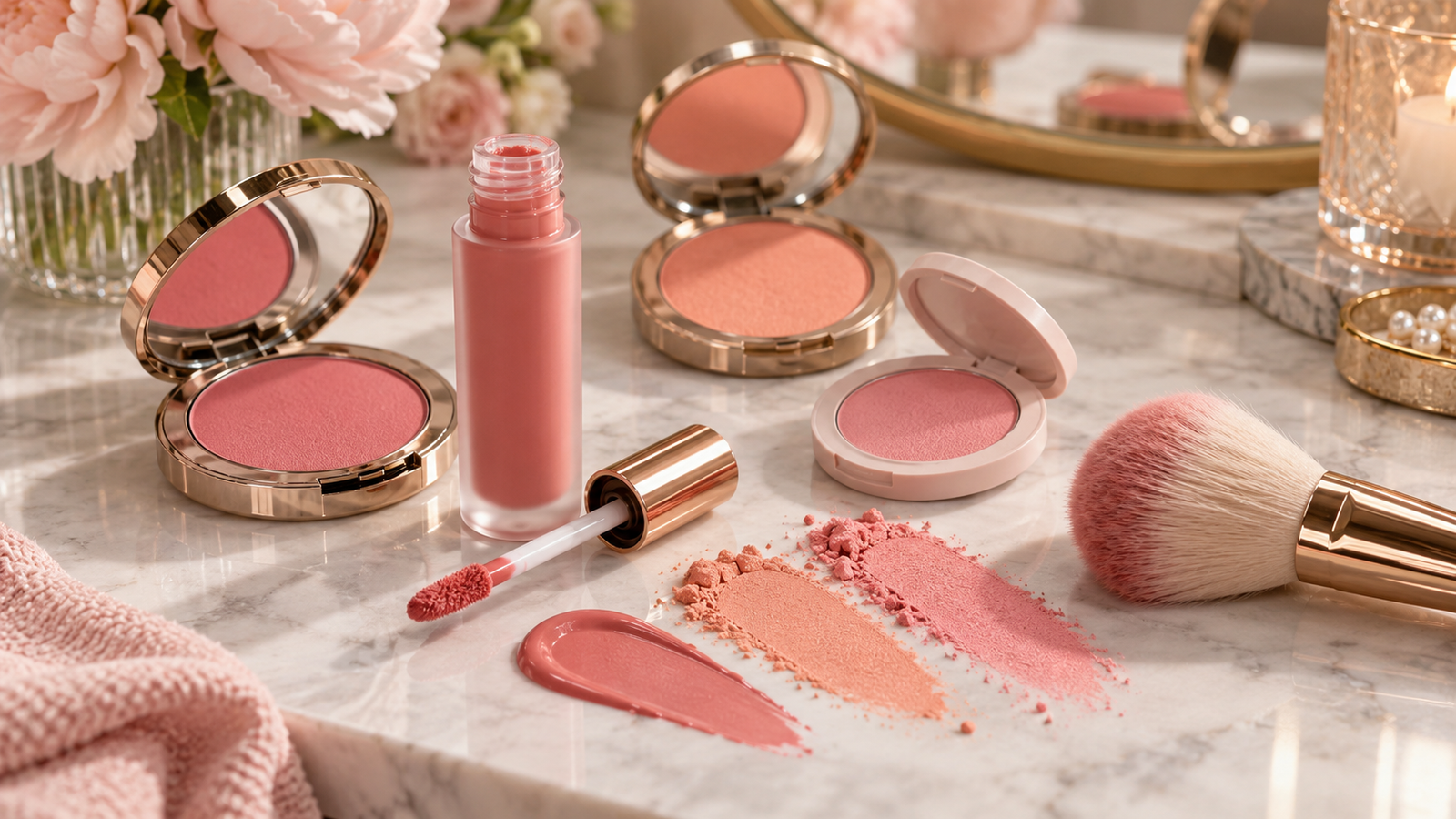
Blush can completely change the balance of a makeup look, but the formula you choose matters just as much as the shade.
Liquid blush and powder blush can both create a natural flush, but they behave differently on the skin. Liquid formulas tend to melt into the base and can look very seamless, while powder formulas are often easier to control over set makeup and can be more convenient for touch-ups.
Neither format is universally better.
The better choice depends on:
- your skin type
- your foundation or base makeup
- how much pigment you prefer
- your application technique
- the finish you want
- how long you need the makeup to last
This guide explains the practical differences between liquid and powder blush and how to choose the right format for your routine.
What Is Liquid Blush?
Liquid blush is a fluid cheek product usually applied with:
- a doe-foot applicator
- dropper
- squeeze tube
- small pump
It is often highly pigmented, so a small amount can create a noticeable result.
Liquid blush can produce finishes such as:
- natural
- dewy
- satin
- soft matte
Because of its fluid texture, it usually blends directly into foundation, skin tint or bare skin.
Advantages of Liquid Blush
Liquid blush can be useful if you want:
- a seamless skin-like finish
- high pigment from a small amount
- easy layering with liquid or cream complexion products
- a fresh or dewy makeup look
- precise placement before blending
It can also work well for minimal makeup because the texture often blends naturally into the skin.
Disadvantages of Liquid Blush
Liquid blush can be harder to control if:
- the formula is extremely pigmented
- you apply too much at once
- your foundation moves easily
- you try to blend it after it has already set
Some formulas dry quickly, so technique matters.
What Is Powder Blush?
Powder blush is pressed into a pan and usually applied with a brush.
It is one of the most traditional blush formats.
Powder blush can come in:
- matte
- satin
- luminous
- baked
- shimmer finishes
It is generally applied after foundation has been set, although technique can vary.
Advantages of Powder Blush
Powder blush is useful if you want:
- predictable application
- gradual buildability
- easy use over powder products
- quick touch-ups
- a wide range of finishes
For many beginners, powder blush is easier to control because pigment can be built slowly.
Disadvantages of Powder Blush
Powder formulas can sometimes:
- emphasise dry texture
- look patchy over a very wet base
- become heavy if layered repeatedly
- appear more obvious on very dry skin
Application technique makes a significant difference.
Liquid Blush vs Powder Blush
| Feature | Liquid Blush | Powder Blush |
|---|---|---|
| Texture | Fluid | Dry pressed powder |
| Finish | Often natural or dewy | Matte, satin or luminous |
| Pigment | Often high | Usually easier to build gradually |
| Best over | Liquid or cream base | Set or powdered base |
| Application | Fingers, sponge or brush | Blush brush |
| Beginner-friendly | Depends on formula | Usually easier |
| Touch-ups | Less convenient | Very convenient |
| Dry skin | Often flattering | Can work if applied lightly |
| Oily skin | Can work well if set | Often practical |
| Longevity | Varies by formula | Usually reliable over set makeup |
Which Is Better for Dry Skin?
Dry skin often looks good with liquid blush because the formula can blend into the base without adding extra powder.
Liquid blush may be particularly useful if your skin tends to show:
- flaking
- rough texture
- dry patches
However, the base underneath still matters.
If foundation is already dry or patchy, liquid blush cannot completely fix it.
Powder blush can still work on dry skin if:
- skincare is well prepared
- foundation is not overly matte
- only a small amount of powder is used
Choose the format based on the overall routine rather than skin type alone.
Which Is Better for Oily Skin?
Oily skin can use both.
Powder blush often feels practical because it works well over a set base and can be easier to refresh during the day.
Liquid blush can also work well, especially if:
- it sets down properly
- the base underneath is stable
- you lightly set the makeup where necessary
Do not assume oily skin must avoid all dewy or liquid formulas.
A controlled application is often more important than format.
Which Is Better for Combination Skin?
Combination skin has flexibility.
You might prefer:
- liquid blush on normal or dry cheek areas
- light powder only where oil develops
- powder blush if your base is already set
The choice often comes down to the finish you want.
Which Is Better for Mature-Looking Skin?
Skin with visible fine lines or texture may benefit from a lighter, more flexible application.
Liquid blush can be useful because it often creates a skin-like finish.
However, strongly dewy products may emphasise texture in some areas.
A finely milled satin powder can also work well if used sparingly.
The key is avoiding heavy layers.
Which Is Better for Beginners?
Powder blush is often easier for beginners because it allows slower buildup.
With a fluffy brush, you can:
- pick up a small amount
- tap off excess
- build gradually
Liquid blush can be more challenging when highly pigmented.
If you are new to liquid blush, start with much less than you think you need.
Pigmentation: More Is Not Always Better
Highly pigmented blush can look appealing because a tiny amount gives strong colour.
But strong pigment is not always easier to use.
For everyday makeup, buildability can be more practical.
A blush that allows you to gradually increase intensity may be easier to control than a formula that becomes too strong with one dot.
How to Apply Liquid Blush
A simple method:
- Apply your foundation or skin tint.
- Place a small amount of liquid blush on the cheek.
- Blend quickly using fingers, sponge or brush.
- Build only if needed.
- Set lightly if necessary.
Start with one small dot.
You can always add more.
Removing excess product is much harder.
Fingers vs Sponge vs Brush for Liquid Blush
Fingers
Fingers can work well because body warmth helps blend the formula.
Use tapping rather than rubbing.
Sponge
A sponge creates a softer, diffused effect.
It is useful if you accidentally apply too much because it can absorb some excess product.
Brush
A synthetic blush brush gives more control and can help blend edges evenly.
Choose a tool based on the formula and how much intensity you want.
How to Apply Powder Blush
A basic method:
- Set your base if necessary.
- Pick up a small amount with a blush brush.
- Tap off excess.
- Apply in light layers.
- Blend the edges.
- Add more only if required.
Avoid loading the brush heavily from the beginning.
Where Should You Apply Blush?
There is no single correct placement.
Placement changes the overall look of the face.
Higher Placement
Applying blush higher on the cheekbones can create a lifted appearance.
Central Placement
Applying blush more toward the apples of the cheeks creates a softer, rounder effect.
Across the Nose
Some makeup styles extend blush lightly across the nose for a sun-kissed look.
Choose placement based on the effect you want rather than following one universal rule.
Liquid Blush Over Powder: Can You Do It?
It is possible, but it can be tricky.
Applying liquid blush over a heavily powdered base can sometimes cause:
- patchiness
- lifting
- uneven blending
If you plan to use liquid blush, it is usually easier to apply it before setting powder.
A common order is:
- foundation
- concealer
- liquid blush
- powder
- optional powder blush
Powder Blush Over Liquid Blush
This technique is easier.
You can use:
- liquid blush first
- powder blush lightly on top
This can increase:
- pigment
- longevity
- dimension
The two shades do not have to match exactly, but they should work together.
Can You Layer Liquid and Powder Blush?
Yes.
Layering can be useful for long-wear makeup.
For example:
- apply liquid blush
- blend fully
- lightly set base
- apply a coordinating powder blush
This creates a stronger cheek colour and can improve wear.
But it is not necessary for everyday makeup.
Choosing the Right Blush Finish
Matte Blush
Matte blush adds colour without extra shine.
It works well for:
- oily skin
- textured skin
- minimal makeup
- people who prefer a more classic finish
Satin Blush
Satin blush gives subtle luminosity without obvious shimmer.
This is often one of the most versatile finishes.
Luminous Blush
Luminous blush contains reflective particles or a glowing finish.
It can create a fresh look but may emphasise texture depending on the formula.
Dewy Liquid Blush
Dewy liquid blush creates a glossy, fresh-cheek effect.
It works well for natural makeup but may need setting if your skin becomes very oily.
How to Choose a Blush Shade
Blush shade depends on:
- skin tone
- undertone
- makeup style
- personal preference
Common shade families include:
- peach
- coral
- rose
- pink
- mauve
- berry
- terracotta
There is no strict rule that certain skin tones can only wear certain shades.
Intensity and undertone matter more.
Blush for Warm Undertones
Warm undertones often pair naturally with:
- peach
- coral
- warm rose
- terracotta
Blush for Cool Undertones
Cool undertones often work well with:
- pink
- berry
- mauve
- cool rose
Blush for Neutral Undertones
Neutral undertones can usually wear a broad range of shades.
Choose based on the rest of your makeup.
How Much Blush Should You Apply?
Start small.
Blush is easier to build than remove.
A common mistake is trying to achieve the final intensity immediately.
Apply one light layer and check the makeup in natural light before adding more.
Why Does Blush Look Patchy?
Patchy blush can happen because of:
- uneven foundation
- applying powder over a wet base
- liquid blush drying before blending
- using too much pigment
- using the wrong brush
- dry skin underneath
Try using less product and blending in thinner layers.
Why Does Liquid Blush Lift Foundation?
This can happen when:
- you rub instead of tap
- foundation has not set
- you apply too much liquid product
- the formulas do not layer well together
Use tapping motions and smaller amounts.
Why Does Powder Blush Look Heavy?
Common causes include:
- too much product on the brush
- repeated layering
- dense brush application
- powder buildup
Switching to a softer brush and lighter layers can help.
How to Make Blush Last Longer
For longer wear:
- apply over a stable base
- use thin layers
- avoid excessive rubbing
- set oily areas
- layer powder blush over liquid blush if needed
Long wear should come from technique, not simply applying more product.
Blush vs Bronzer
Blush and bronzer serve different purposes.
Blush
Adds colour and flush.
Bronzer
Adds warmth and dimension.
You can use both, but you do not have to.
Blush vs Highlighter
Blush adds colour.
Highlighter reflects light.
A luminous blush can provide both effects, reducing the need for separate highlighter.
Common Blush Mistakes
Applying Too Much at Once
Start with less product.
Choosing Formula Without Considering Base Makeup
Liquid products usually blend better before heavy powder.
Ignoring Skin Texture
Very reflective formulas can make texture more noticeable.
Using a Brush That Is Too Dense
Dense brushes can deposit too much pigment.
Applying Blush Too Low
Very low placement can visually drag the face downward.
Following Trends Instead of Your Face
Use placement that suits the look you want.
Liquid vs Powder Blush by Situation
| Situation | Better Starting Option |
|---|---|
| Natural skin-like makeup | Liquid blush |
| Quick everyday routine | Powder blush |
| Very dry skin | Liquid blush |
| Very oily skin | Powder blush |
| Beginner application | Powder blush |
| Long-wear event | Layered liquid + powder |
| Travel touch-ups | Powder blush |
| Dewy makeup | Liquid blush |
| Matte makeup | Powder blush |
These are starting points, not strict rules.
How Much Should You Spend on Blush?
Blush does not need to be expensive to perform well.
Look for:
- blendability
- appropriate pigment
- suitable finish
- shade you will actually use
- compatibility with your base
A premium blush is not automatically better if the formula is difficult to use.
Frequently Asked Questions
Is liquid blush better than powder blush?
Neither is universally better. Liquid blush usually looks more seamless, while powder blush is easier to control and touch up.
Can oily skin use liquid blush?
Yes. Choose a formula that sets well and use light powder where necessary.
Can dry skin use powder blush?
Yes. Apply lightly over well-prepared skin and avoid excessive powder.
Should liquid blush go before powder?
Usually yes. Liquid and cream products generally blend more easily before the base is heavily set.
Can I use both liquid and powder blush?
Yes. Layering both can increase colour intensity and longevity.
Which blush is easier for beginners?
Powder blush is usually easier because it can be built gradually.
Can blush be applied without foundation?
Yes. Both liquid and powder blush can be worn over skincare or sunscreen if they blend well on that base.
Final Takeaway
Liquid blush and powder blush can both create beautiful results, but they suit different routines.
Choose liquid blush if you prefer:
- seamless blending
- fresh or dewy finish
- high pigment
- liquid or cream complexion products
Choose powder blush if you prefer:
- easier control
- gradual buildability
- quick application
- convenient touch-ups
- a matte or satin finish
If you want maximum longevity, layering a small amount of powder blush over liquid blush can also work well.
The best blush is the one that blends easily with your base, gives you the finish you want and allows you to control the intensity without unnecessary effort.
If you are comparing specific options, continue to our Top 5 Blushes in India guide, where we compare liquid, baked and powder blushes for different makeup preferences.