Loose Powder vs Compact Powder vs Powder Foundation
Compare loose powder, compact powder and powder foundation by purpose, coverage, finish, application and portability.
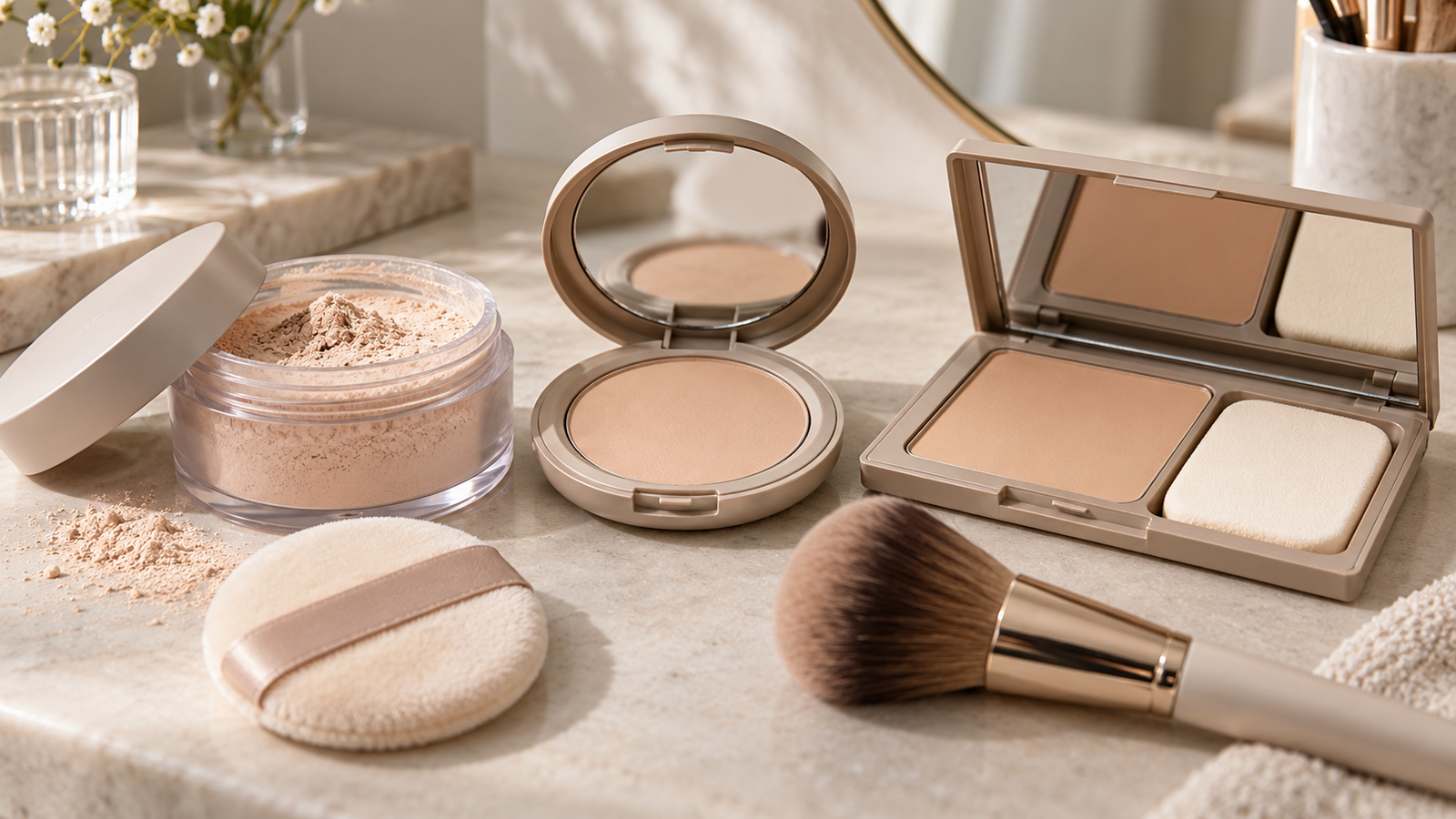
Face powders can look similar in their packaging, but they are not designed to do exactly the same job.
Loose powder is usually used to set makeup and control shine. Compact powder is more portable and convenient for touch-ups. Powder foundation is designed to provide noticeably more complexion coverage.
Choosing the right format becomes much easier when you first decide what you actually need from the product.
This guide explains the differences between loose powder, compact powder and powder foundation, including coverage, finish, portability, skin type and how each one fits into a makeup routine.
What Does Face Powder Do?
Face powder can serve several purposes depending on the formula.
It may help to:
- reduce tackiness after foundation
- control visible shine
- improve makeup longevity
- blur the appearance of texture
- add extra coverage
- make touch-ups easier
- create a more matte finish
The mistake is assuming every powder should do all of these equally well.
Different formats are designed for different priorities.
What Is Loose Powder?
Loose powder is a finely milled powder sold in a jar rather than pressed into a compact.
It is commonly used to:
- set foundation
- set concealer
- reduce shine
- soften tackiness
- create a smoother finish
Loose powders are often available in:
- translucent
- tinted
- brightening
- matte
- soft-focus formats
Because the powder is loose, you can control how much product you pick up with a brush or puff.
Advantages of Loose Powder
Loose powder can be useful because it allows:
- precise control over quantity
- light application
- targeted setting
- easy use with a puff
- minimal extra coverage when translucent
It is especially popular for:
- under-eye setting
- T-zone setting
- full makeup routines
- oily areas
Disadvantages of Loose Powder
Loose powder is less convenient for:
- travel
- quick touch-ups
- handbag use
It can also create mess if too much product is dispensed.
What Is Compact Powder?
Compact powder is pressed into a solid pan.
It is generally designed for:
- portability
- touch-ups
- shine control
- light coverage
- everyday use
Compact powder often comes with:
- mirror
- puff
- sponge
- small applicator
This makes it more practical outside the home.
Advantages of Compact Powder
Compact powder is useful when you want:
- convenient touch-ups
- quick shine control
- portable packaging
- light additional coverage
- easy application without loose powder fallout
Disadvantages of Compact Powder
Applying too much compact powder can create:
- cakiness
- patchiness
- heavy buildup
This can be especially noticeable when repeatedly touching up oily areas without removing excess oil first.
What Is Powder Foundation?
Powder foundation is designed to provide more coverage than a typical setting powder.
It is usually available as a pressed powder, but some loose mineral-style foundations also exist.
Powder foundation is intended to:
- even skin tone
- add complexion coverage
- create a more finished base
- reduce the need for liquid foundation
It can be used:
- alone
- over primer
- over light complexion products
- selectively over areas needing more coverage
Advantages of Powder Foundation
Powder foundation can be useful for people who want:
- faster makeup
- light-to-medium coverage
- a more matte finish
- portable complexion correction
Disadvantages of Powder Foundation
It may be less forgiving on:
- very dry skin
- flaky skin
- heavily textured areas
Because it provides more pigment, applying too much can look heavier than regular setting powder.
Loose Powder vs Compact Powder vs Powder Foundation
| Feature | Loose Powder | Compact Powder | Powder Foundation |
|---|---|---|---|
| Main purpose | Setting | Touch-ups and shine control | Coverage |
| Typical coverage | Minimal | Light | Light to medium or more |
| Portability | Low | High | High |
| Best for touch-ups | Fair | Excellent | Good |
| Best for setting concealer | Excellent | Good | Less ideal |
| Can replace foundation | Usually no | Usually no | Yes, depending on coverage |
| Finish | Often matte or soft-focus | Usually matte or natural | Matte to natural |
| Application | Puff or brush | Puff, sponge or brush | Sponge or dense brush |
Which Powder Should You Choose?
Choose Loose Powder If You Want:
- to set foundation
- to set concealer
- better control over quantity
- lightweight finish
- minimal extra coverage
- targeted shine control
Loose powder is especially useful when you already like your foundation coverage and only want to improve wear.
Choose Compact Powder If You Want:
- easy touch-ups
- portable shine control
- light coverage
- simple everyday use
- something easy to carry
Compact powder is practical when convenience matters more than maximum precision.
Choose Powder Foundation If You Want:
- noticeable coverage
- a quicker complexion routine
- a matte or natural finish
- an alternative to liquid foundation
- portable base makeup
Powder foundation is best thought of as complexion makeup rather than just setting powder.
Which Is Better for Oily Skin?
Oily skin often benefits from loose or compact powder because both can help reduce visible shine.
Loose powder is particularly useful for:
- setting foundation
- T-zone control
- longer makeup wear
Compact powder is useful for:
- midday touch-ups
- travel
- quick shine control
Powder foundation can also work well if you prefer a powder-based complexion routine.
The most important point is not to keep layering powder endlessly.
If the skin becomes very oily during the day, blot excess oil first, then apply a small amount of powder.
Which Is Better for Dry Skin?
Dry skin needs a lighter approach.
Powder can emphasise:
- flakes
- texture
- fine lines
Use less product and focus only on areas that need setting.
For dry skin:
- loose powder can work when applied very lightly
- compact powder should be used sparingly
- powder foundation may require careful skin preparation
You may not need powder across the entire face.
Which Is Better for Combination Skin?
Combination skin often benefits from targeted powdering.
For example:
- loose powder on the T-zone
- no powder on dry cheeks
- compact powder for touch-ups later
This is often more effective than applying the same amount everywhere.
Which Is Better for Mature-Looking Skin?
Skin with visible fine lines or dryness usually looks better with less powder.
Heavy powder can settle into:
- fine lines
- textured areas
- dry patches
Use:
- finely milled powder
- small amounts
- targeted application
Avoid excessive baking unless your skin tolerates it well.
Translucent vs Tinted Powder
Translucent Powder
Translucent powder is designed to add minimal visible colour.
It is useful for:
- setting makeup
- controlling shine
- avoiding extra pigment
However, some translucent powders may still leave a cast depending on formula and skin tone.
Tinted Powder
Tinted powder adds visible colour.
It can help with:
- extra coverage
- evening the complexion
- reducing the appearance of redness
Shade matching becomes more important with tinted products.
What Is Baking?
Baking involves applying a heavier layer of loose powder and leaving it on the skin temporarily before brushing away the excess.
It is often used for:
- under-eyes
- contour cleanup
- long-wear makeup
However, baking can look dry on some skin types.
It is not necessary for everyday makeup.
A light setting technique may look more natural.
How to Apply Loose Powder
A basic method:
- Pick up a small amount of powder.
- Tap off excess.
- Press or lightly sweep over areas that need setting.
- Focus on oily areas rather than automatically covering the whole face.
A puff can provide stronger setting.
A fluffy brush creates a lighter finish.
How to Apply Compact Powder
For touch-ups:
- Blot excess oil if necessary.
- Pick up a small amount with a puff or brush.
- Press lightly onto shiny areas.
- Avoid layering repeatedly over the entire face.
For lighter application, a brush may work better than the included puff.
How to Apply Powder Foundation
Powder foundation coverage depends heavily on the tool.
For Lighter Coverage
Use:
- fluffy brush
- loose circular motions
For Higher Coverage
Use:
- dense brush
- sponge
- puff
Build in thin layers rather than applying a heavy layer immediately.
Should Powder Go Before or After Foundation?
Usually after liquid or cream foundation.
A common sequence is:
- skincare
- sunscreen
- primer if used
- foundation
- concealer
- powder
Powder generally helps set the cream or liquid products underneath.
Powder foundation is different because it may be used as the foundation itself.
Can You Use Powder Without Foundation?
Yes.
You can apply powder directly over:
- sunscreen
- primer
- moisturiser
This can help reduce shine and create a more polished appearance without full foundation.
Powder foundation is especially suitable for this type of routine.
Why Does Powder Look Cakey?
Cakiness can happen because of:
- too much powder
- too much foundation underneath
- repeated touch-ups
- dry skin
- heavy application tools
Try using less product and focusing only on areas that need setting.
Why Does Powder Look Patchy?
Patchiness may happen when:
- foundation underneath is still wet
- skincare has not settled
- powder is pressed heavily into one area
- dry patches are present
Allow the base to settle and apply thinner layers.
Why Does Powder Emphasise Pores?
Too much powder can make texture more visible.
Use:
- finely milled formulas
- small amounts
- gentle pressing
- less product around textured areas
A blurring primer underneath may also help.
Setting Powder vs Finishing Powder
These terms are sometimes used interchangeably, but they can have different purposes.
Setting Powder
Used to:
- set makeup
- control shine
- reduce tackiness
Finishing Powder
Often used as the final step to:
- soften texture
- create a more polished finish
- add subtle blur
Not every finishing powder is designed for strong oil control.
Powder Foundation vs Liquid Foundation
Powder foundation and liquid foundation have different strengths.
Powder Foundation
Advantages:
- fast application
- portable
- matte finish
- easy touch-ups
Liquid Foundation
Advantages:
- broader finish options
- easier for dry skin
- often more flexible coverage
Neither is automatically better.
The best choice depends on skin type and preferred finish.
How Much Powder Should You Use?
Usually less than expected.
You only need enough to:
- reduce tackiness
- control visible shine
- improve wear
Powder does not need to create a thick visible layer.
If your skin starts looking flat or dry, you may be using too much.
Common Powder Mistakes
Applying Powder Everywhere
Not every area needs the same amount.
Target shiny zones.
Using Too Much Powder
Heavy layers can emphasise texture.
Touching Up Without Removing Oil
Blot first, then powder.
Choosing the Wrong Shade
Tinted powders need proper shade matching.
Using Powder Foundation Like Setting Powder
Powder foundation contains more pigment and can become heavy quickly.
Over-Powdering Under the Eyes
Too much powder can make fine lines more noticeable.
Which Powder Is Best for Everyday Makeup?
For many people:
Loose Powder
Best when you already use foundation and want a reliable setting product.
Compact Powder
Best when you want easy touch-ups during the day.
Powder Foundation
Best when you want faster complexion coverage without liquid foundation.
A Simple Decision Guide
Choose loose powder if your main priority is:
- setting makeup
- controlling oil
- reducing tackiness
Choose compact powder if your main priority is:
- portability
- touch-ups
- quick shine control
Choose powder foundation if your main priority is:
- coverage
- fast complexion makeup
- a powder-based alternative to liquid foundation
Frequently Asked Questions
Is loose powder better than compact powder?
Not necessarily. Loose powder gives more control for setting, while compact powder is more convenient for touch-ups.
Can compact powder replace foundation?
Some compact powders provide light coverage, but they are not always designed to replace foundation. Powder foundation is more suitable for that purpose.
Can powder foundation be used over liquid foundation?
Yes, but use a light hand because the extra pigment can make the base look heavy.
Is translucent powder suitable for every skin tone?
Not always. Some formulas can leave a visible cast, especially when applied heavily.
Should dry skin avoid powder?
Not necessarily. Dry skin can use powder sparingly on areas that actually need setting.
Can oily skin use powder foundation?
Yes. Powder foundation can work well for oily skin, especially if you prefer a matte or natural finish.
What is the best powder for under-eyes?
A finely milled loose setting powder used in a very small amount is often easier to control.
Final Takeaway
Loose powder, compact powder and powder foundation are not simply three versions of the same product.
Choose:
- loose powder for controlled setting and shine management
- compact powder for portability and touch-ups
- powder foundation when you want additional complexion coverage
The best choice depends on what role you need the powder to perform.
Use less than you think you need, concentrate product where it is actually useful, and avoid repeatedly layering powder over dry or oily buildup.
If you are comparing specific products, continue to our Top 5 Face Powders in India guide, where we compare loose, compact and powder-foundation options for different makeup needs.