Shampoo and Conditioner Bundle Math: How to Compare Real Value
Learn to compare haircare kits using pack sizes, usage rates, refill needs and shelf space instead of assuming a multi-product bundle saves money.
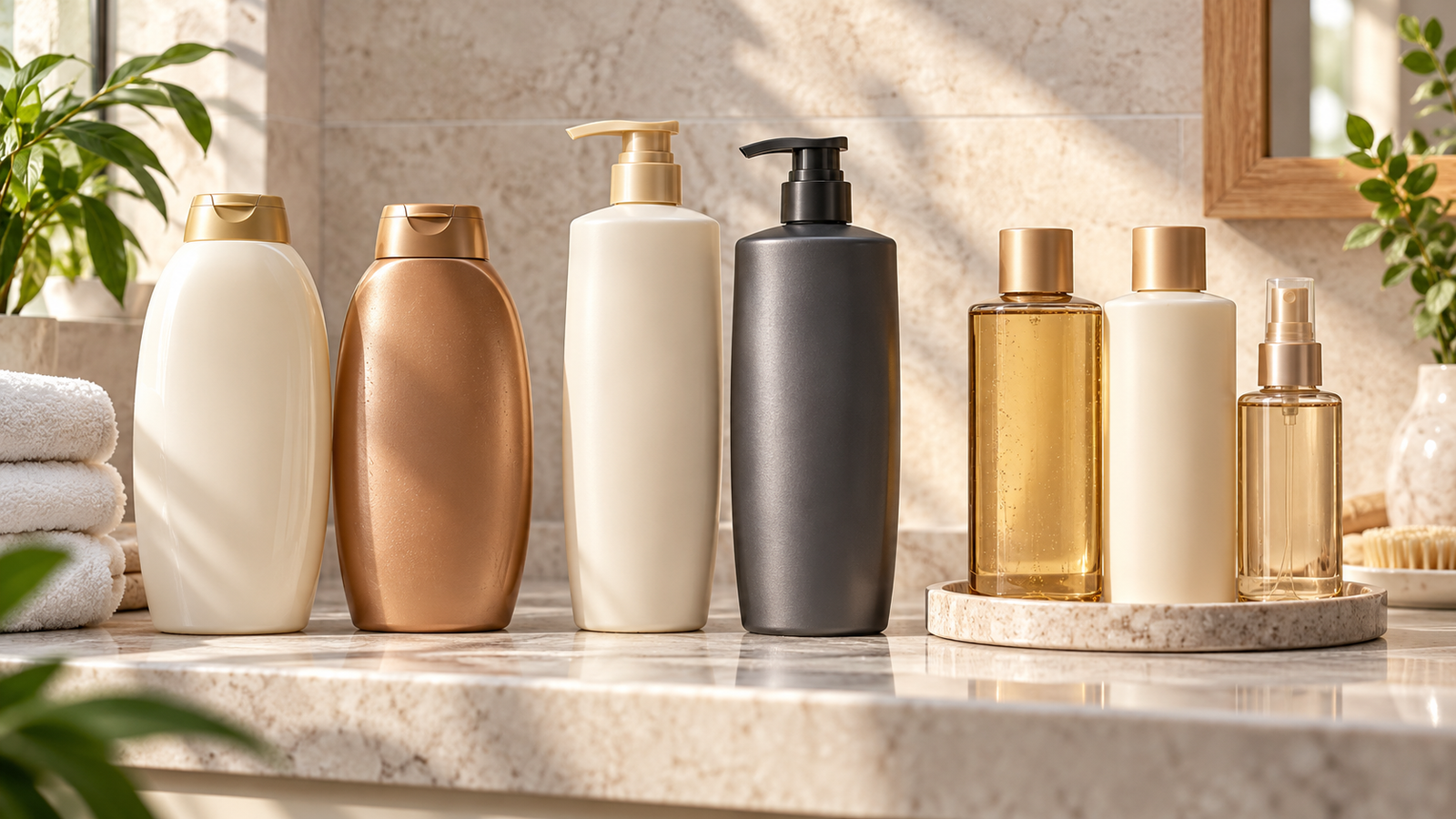
A shampoo and conditioner combo looks like an easy way to save money. Two matching bottles, attractive packaging and a large discount printed on the product listing can make the deal seem worthwhile.
But does buying a haircare bundle actually save money?
Not always. A discounted shampoo and conditioner combo can cost more per use than buying the right individual products.
Bottle sizes, product usage, hair length, washing frequency and the actual selling price all influence value.
For example, a bundle containing 400 ml of shampoo and 200 ml of conditioner may seem balanced in price, but the conditioner could finish much earlier depending on your haircare routine.
Understanding the numbers can help you avoid paying for products you do not need.
This guide explains how to compare shampoo and conditioner bundles using price per 100 ml, estimated cost per wash, product quantities and practical haircare requirements.
1. Why Shampoo and Conditioner Bundles Look Attractive
Haircare brands frequently sell shampoo and conditioner together.
Common bundle formats include:
- Shampoo and conditioner pairs
- Large shampoo with smaller conditioner
- Shampoo, conditioner and hair serum kits
- Shampoo and conditioner with a hair mask
- Professional salon haircare sets
- Multipacks containing several identical bottles
These combinations can be convenient, particularly if you already use both products.
However, convenience and financial value are not necessarily the same.
A bundle might include one product you enjoy and another you rarely use.
It may also contain different quantities, meaning one bottle lasts considerably longer than the other.
The right question is not simply how much the bundle costs, but how much useful product you receive for that price.
2. Understand Price Per 100 ml
One of the simplest ways to compare liquid haircare products is to calculate their price per 100 ml.
This method allows you to compare products sold in different bottle sizes.
Formula
Price per 100 ml = (Selling price ÷ Bottle volume in ml) × 100
For example, imagine two hypothetical shampoos:
| Shampoo | Bottle size | Selling price | Price per 100 ml |
|---|---|---|---|
| Shampoo A | 250 ml | ₹300 | ₹120 |
| Shampoo B | 400 ml | ₹440 | ₹110 |
Although Shampoo B costs more initially, it offers a lower price per 100 ml.
The difference is ₹10 for every 100 ml.
If both shampoos are equally suitable for your hair and scalp, Shampoo B may offer better value.
However, price per 100 ml should not be the only consideration.
A product that irritates your scalp or does not suit your hair is not a good purchase simply because it is cheaper.
Note: All prices and usage quantities in this article are hypothetical examples, not current retail prices.
3. How to Calculate Shampoo and Conditioner Bundle Savings
Suppose you are comparing the following products.
| Product | Individual price |
|---|---|
| Shampoo, 350 ml | ₹280 |
| Conditioner, 250 ml | ₹250 |
| Total if purchased separately | ₹530 |
| Bundle containing both | ₹480 |
The bundle costs ₹50 less than purchasing the same two products separately.
Calculate the savings
Savings = Separate purchase cost − Bundle cost
₹530 − ₹480 = ₹50
Calculate the discount percentage
Discount percentage = (Savings ÷ Separate purchase cost) × 100
(₹50 ÷ ₹530) × 100 = approximately 9.4%
Therefore, the actual bundle discount is approximately 9.4% against the combined individual selling prices.
This is more useful than relying on a promotional percentage calculated against the products’ combined maximum retail prices.
Why MRP-based discounts can mislead
An online listing might advertise a large percentage discount because it compares the bundle price against the printed MRP.
But the same products might already be available individually at reduced selling prices.
Always compare what you would actually pay, including applicable delivery charges and discounts.
4. Why Equal Bottle Sizes Do Not Guarantee Equal Usage
Shampoo and conditioner serve different purposes.
Shampoo is primarily used to cleanse the scalp and remove excess oil, dirt and product buildup.
Conditioner helps improve hair manageability, softness and detangling.
According to the American Academy of Dermatology, shampoo should generally be focused on the scalp, while conditioner application depends on hair type and condition.
For example, someone with fine straight hair might apply conditioner mainly to the ends, while someone with dry or curly hair may use it across more of the hair length.
These differences influence how quickly products are used.
Example: Uneven product consumption
Assume someone uses:
- 7 ml of shampoo per wash
- 10 ml of conditioner per wash
If their bundle contains 350 ml of shampoo and 250 ml of conditioner:
Shampoo: 350 ÷ 7 = 50 washes
Conditioner: 250 ÷ 10 = 25 washes
The conditioner would run out after approximately 25 washes, while about half the shampoo would remain.
This illustrates why a bundle containing both products does not necessarily provide equal numbers of uses.
Actual usage varies considerably with hair length, thickness, scalp condition, product concentration and application habits.
5. How to Calculate Cost Per Wash
Price per 100 ml is useful, but estimated cost per wash can provide another perspective.
Formula
Cost per wash = Amount used per wash × Price per ml
Imagine a hypothetical shampoo with these details:
- Bottle size: 400 ml
- Selling price: ₹480
- Shampoo used per wash: 8 ml
Price per ml:
₹480 ÷ 400 = ₹1.20
Cost per shampoo wash:
8 × ₹1.20 = ₹9.60
Now consider a conditioner:
- Bottle size: 300 ml
- Selling price: ₹360
- Conditioner used per wash: 12 ml
Price per ml:
₹360 ÷ 300 = ₹1.20
Cost per conditioner use:
12 × ₹1.20 = ₹14.40
Combined cost per washing session
₹9.60 + ₹14.40 = ₹24
In this hypothetical example, a complete shampoo-and-conditioner session costs approximately ₹24 in product.
This calculation can be particularly helpful when comparing expensive salon-style formulas with more affordable everyday haircare products.
However, estimated cost per wash is only as reliable as the usage assumptions.
Measure or estimate your usual product usage rather than assuming the same amount works for everyone.
6. Large Bottles vs Small Bottles: Which Is Better Value?
Large bottles often have a lower price per 100 ml.
But that does not automatically make them the better purchase.
Consider this example:
| Bottle | Size | Price | Price per 100 ml |
|---|---|---|---|
| Small shampoo | 250 ml | ₹325 | ₹130 |
| Large shampoo | 650 ml | ₹650 | ₹100 |
The larger bottle is less expensive per 100 ml.
However, the buyer must spend ₹325 more upfront.
If the shampoo suits your hair and you use it regularly, the larger bottle may provide good value.
But if you have never used the formulation, purchasing a smaller bottle first may reduce the risk of being stuck with a large quantity of an unsuitable product.
When larger bottles make sense
Large bottles may be practical when:
- You already know the product suits you.
- Several household members use it.
- Your washing frequency is relatively high.
- The product can be stored correctly.
- You expect to use it within its labeled shelf-life or period-after-opening guidance.
When smaller bottles make sense
Smaller sizes may be preferable when:
- Trying an unfamiliar formulation.
- Managing limited bathroom storage.
- Washing infrequently.
- Traveling regularly.
- Comparing different products before committing to one.
Lower unit cost is valuable only when the product will actually be used.
7. Should You Buy Matching Shampoo and Conditioner?
Brands often design shampoo and conditioner ranges around the same haircare theme.
Examples include:
- Moisturizing shampoo with moisturizing conditioner
- Smoothing shampoo with anti-frizz conditioner
- Clarifying shampoo with lightweight conditioner
- Color-care shampoo with color-care conditioner
- Repair-oriented shampoo with conditioning treatment
Matching products can be convenient, but there is no universal requirement to use shampoo and conditioner from the same brand.
Your scalp and hair lengths can have different needs.
For example, someone with an oily scalp and dry hair ends may prefer a shampoo designed for oil control alongside a richer conditioner for the lengths.
The best combination is one that suits your actual haircare routine.
Does using matching products improve results?
Not necessarily.
Some systems may be formulated and tested together, but that does not establish that every matching pair will outperform a mixed-brand routine.
Consider individual product suitability, ingredients and directions rather than assuming two products must be purchased together.
8. When a Haircare Bundle Is Poor Value
A bundle may appear attractive while offering little practical benefit.
It includes products you will not use
A three-piece kit might contain shampoo, conditioner and serum.
If you do not use finishing serum, its inclusion does not automatically add meaningful value.
The conditioner is too small
A bundle may contain a large shampoo bottle alongside a much smaller conditioner.
If you use conditioner generously, you may need to purchase an additional bottle sooner than expected.
You already have excess stock
Buying another bundle while several products remain unopened can create unnecessary storage and product-expiry concerns.
The products do not suit your hair type
An inexpensive formula that causes discomfort or leaves your hair difficult to manage is not good value.
The discount is smaller than advertised
The advertised savings may use MRP rather than the current individual selling prices.
Compare actual checkout costs before purchasing.
9. Shampoo, Conditioner and Serum Kits: How to Compare Three-Product Bundles
Three-piece haircare kits require a slightly different approach.
Suppose a hypothetical bundle contains:
| Product | Individual selling price |
|---|---|
| Shampoo | ₹400 |
| Conditioner | ₹350 |
| Hair serum | ₹250 |
| Total | ₹1,000 |
The combined bundle sells for ₹850.
The stated saving compared with individual prices is ₹150, or 15%.
But imagine you only need the shampoo and conditioner.
Those two products separately cost ₹750.
Buying the bundle would mean paying ₹100 more to receive an additional serum you may not need.
That might be worthwhile if you genuinely intend to use the serum.
Otherwise, purchasing only the two required products could be the more economical decision.
Ask yourself three questions
- Will I use every product in the bundle?
- Do the included quantities match my normal consumption?
- Is the combined price lower than purchasing only what I need?
These questions are often more valuable than the advertised discount.
10. How to Compare Professional Salon Haircare Bundles
Professional haircare brands frequently offer larger bottles and multi-product systems.
Some kits include specialized treatment sprays, masks or leave-in products.
When evaluating these bundles, check:
Product purpose: Does every item serve a useful function in your routine?
Quantity: Are you comparing equivalent bottle sizes?
Application frequency: Is the treatment intended for every wash or occasional use?
Compatibility: Does the manufacturer recommend using the products together?
Storage: Can you store the products appropriately and use them within the relevant period?
Total cost: Does the kit offer a genuine saving compared with your preferred routine?
Do not assume that professional labeling or a more expensive bundle proves superior performance.
Actual suitability depends on the products and your haircare needs.
11. Check Expiry, Packaging and Storage Before Buying
A low price is less valuable when a product cannot be used within its appropriate shelf life.
Before purchasing a discounted haircare bundle, review available packaging information.
Look for:
- Manufacturing or packaging date, where provided.
- Expiry or use-before information.
- Period-after-opening instructions, where applicable.
- Storage recommendations.
- Exact product size and variant.
- Seller details and product condition.
Discounted bundles may be perfectly legitimate, but the buyer should still review these details.
Avoid purchasing large quantities solely because the advertised price appears unusually low.
If a product changes significantly in smell, color, texture or consistency, consult its manufacturer’s guidance before continuing use.
12. How to Compare Shampoo and Conditioner Prices on Amazon India
When comparing online haircare products, start with the exact variant rather than the headline product image.
Step 1: Confirm the pack contents
Check whether the listing contains one bottle, two bottles or a multiproduct set.
Step 2: Verify the volume
A 200 ml conditioner cannot be directly compared with a 400 ml bottle using only their total prices.
Step 3: Calculate the unit price
Convert the selling price into cost per 100 ml.
For products sold by weight, compare their price per 100 g separately rather than assuming grams and milliliters are interchangeable.
Step 4: Compare actual checkout prices
Account for applicable delivery charges, coupons and other discounts.
Step 5: Check individual listings
Search for the same products sold separately.
Step 6: Consider whether every product is necessary
A bundle is not automatically economical if it includes items you would otherwise skip.
Step 7: Review the seller and return terms
Ensure that the listing matches the intended product and that you understand the applicable purchase conditions.
Prices and availability can change, so repeat the calculation before buying.
13. Common Mistakes When Comparing Haircare Bundles
Mistake 1: Comparing total prices without checking volume
A cheaper bottle might contain substantially less product.
Mistake 2: Assuming the biggest bottle is always best
A large bottle can be wasteful if the formulation does not suit your hair or remains unused.
Mistake 3: Treating all shampoos as interchangeable
Shampoos differ in their cleansing properties and intended use.
A product suitable for an oily scalp may not be ideal for someone with a dry or sensitive scalp.
Mistake 4: Ignoring conditioner consumption
Conditioner usage can vary considerably depending on hair length, density and texture.
Mistake 5: Buying extra products to qualify for a discount
A discount does not save money if it encourages unnecessary purchases.
Mistake 6: Choosing price over tolerability
A product that repeatedly irritates your scalp should not be continued simply because it was purchased in a large bundle.
14. Frequently Asked Questions
Is it cheaper to buy shampoo and conditioner together?
Sometimes. Compare the actual bundle price against the combined current selling prices of the same individual products. The bundle is only cheaper if the total purchase cost is lower.
How do I calculate shampoo price per 100 ml?
Divide the selling price by the bottle volume in milliliters, then multiply by 100.
For example, a 500 ml shampoo costing ₹450 has a unit price of ₹90 per 100 ml.
Is a 1-litre shampoo bottle better value?
It may have a lower unit price, but its value depends on whether the formula suits you and whether you will use the full quantity.
Can I use shampoo and conditioner from different brands?
Yes. Shampoo and conditioner do not universally need to come from the same range. Choose products according to your scalp and hair needs.
Why does my conditioner finish before my shampoo?
You may use a larger amount of conditioner per wash, particularly if you have long, thick or dry hair. Differences in bottle size can also contribute.
Is an expensive salon shampoo worth buying?
Price alone cannot establish performance. Compare formulation suitability, cost per use, quantity and your individual experience.
Should I buy a shampoo, conditioner and serum kit?
Only if the included products fit your routine and the combined price offers acceptable value compared with buying what you need separately.
What is more important: price per 100 ml or cost per wash?
Both are useful. Price per 100 ml compares packaging sizes, while estimated cost per wash considers how much product you actually use.
15. Final Takeaway
Shampoo and conditioner bundles can offer genuine savings, but the advertised discount does not tell the whole story.
The smartest comparison combines price per 100 ml, estimated cost per wash, bottle sizes and your actual haircare needs.
Before purchasing a bundle, check whether you will use every included product and whether its price is lower than buying those items individually.
A larger or more expensive set is not automatically better.
The best-value haircare routine is one that suits your scalp and hair, fits your budget and minimizes unnecessary product purchases.
References and Further Reading
- American Academy of Dermatology — Tips for Healthy Hair
- American Academy of Dermatology — Hair Loss: Tips for Managing
- UK Government — Unit Pricing: Information for Consumers
- Government of India — Unit Sale Price and Packaged Commodities
Editorial note: All product prices, quantities and consumption estimates in this article are illustrative. They do not represent live Amazon India prices, independently tested products or guaranteed usage amounts. Physical Glow may earn a commission from qualifying affiliate purchases at no additional cost to readers.