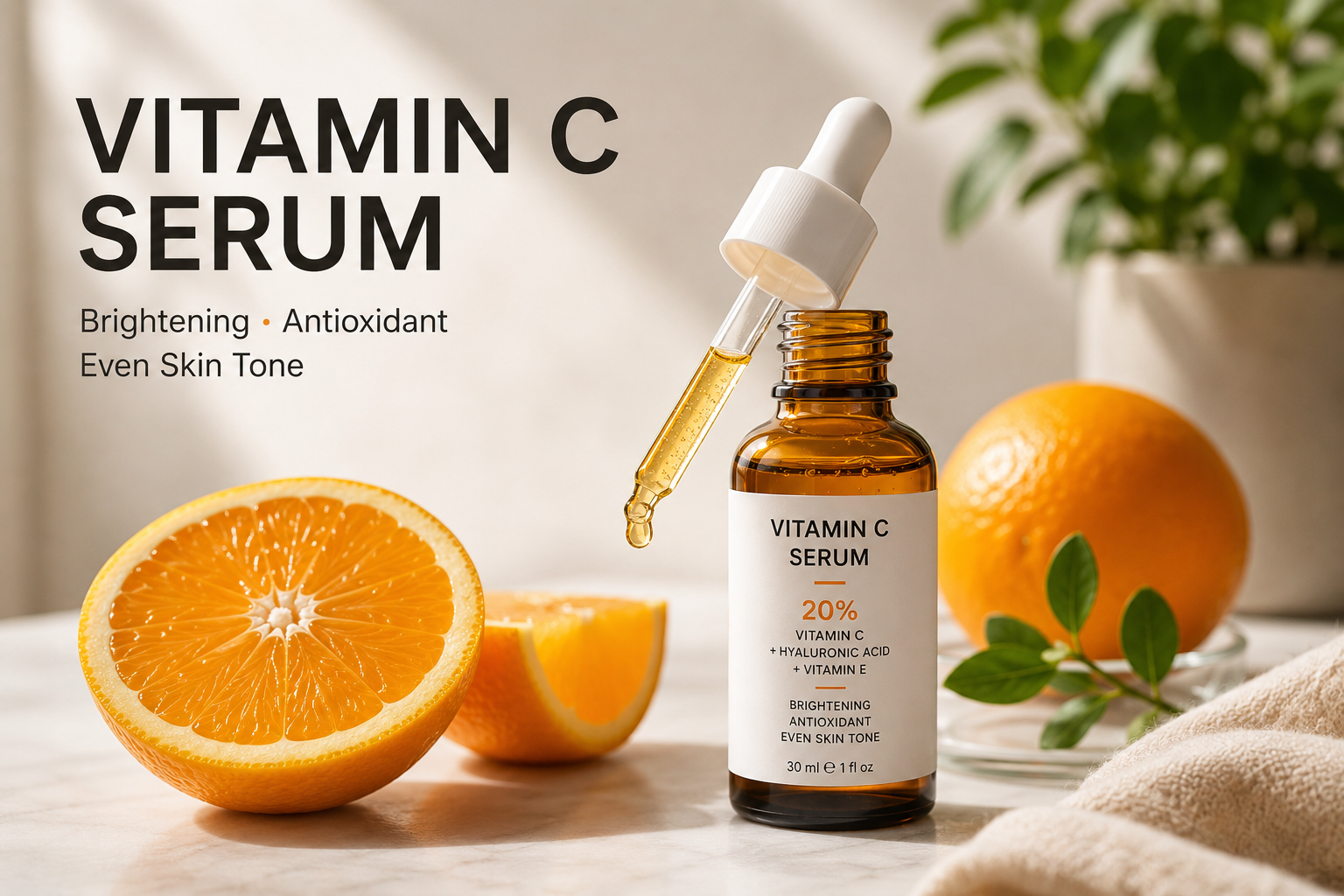
Best Vitamin C Serums: What to Look For
Vitamin C is one of the most widely used antioxidants in skincare. A well-formulated vitamin C serum can help brighten the appearance of dull skin, support a more even-looking skin tone, and protect the skin from oxidative stress caused by environmental factors.
But not every vitamin C serum is formulated the same way. Concentration, the form of vitamin C, packaging, supporting ingredients, and your skin type can all affect which product is right for you.
What Does Vitamin C Do for Your Skin?
Vitamin C is an antioxidant that helps protect the skin against free radicals generated by factors such as UV exposure and pollution.
When used consistently as part of a skincare routine, vitamin C may help:
- Brighten dull-looking skin
- Improve the appearance of uneven skin tone
- Reduce the appearance of some dark spots over time
- Support normal collagen production
- Provide antioxidant protection against environmental stressors
Vitamin C should complement—not replace—daily sunscreen.
What Should You Look for in a Vitamin C Serum?
1. The Form of Vitamin C
L-ascorbic acid is one of the most extensively studied forms of topical vitamin C. However, it can be unstable and may oxidize when exposed to air, light, or heat.
Other formulations use vitamin C derivatives such as:
- Sodium ascorbyl phosphate
- Magnesium ascorbyl phosphate
- Ascorbyl glucoside
- Tetrahexyldecyl ascorbate
These derivatives may offer greater formulation stability, although their properties and supporting evidence differ from those of L-ascorbic acid.
2. Vitamin C Concentration
Higher concentration does not automatically mean a better serum.
L-ascorbic acid products commonly contain concentrations ranging from approximately 5% to 20%.
If you’re new to vitamin C or have sensitive skin, beginning with a lower concentration may reduce the likelihood of irritation.
3. Supporting Antioxidants
Some vitamin C serums combine ingredients such as vitamin E and ferulic acid with vitamin C.
These ingredients can complement an antioxidant-focused formula and, in certain formulations, may help improve vitamin C stability and antioxidant performance.
4. Packaging
Packaging is particularly important for vitamin C products.
Because L-ascorbic acid can degrade when exposed to light and oxygen, look for packaging designed to minimize exposure, such as:
- Dark or opaque bottles
- Air-restrictive containers
- Securely sealed packaging
Store the serum according to the manufacturer’s instructions and avoid unnecessary exposure to heat and sunlight.
How to Choose a Vitamin C Serum for Your Skin Type
Normal Skin
Most well-formulated vitamin C serums can work for normal skin. Choose the concentration and texture based on your skincare goals and personal tolerance.
Oily or Combination Skin
Look for lightweight formulas that layer comfortably under moisturizer and sunscreen.
Dry Skin
Consider formulas containing moisturizing ingredients such as hyaluronic acid, glycerin, or other humectants alongside vitamin C.
Sensitive Skin
Start cautiously. A lower concentration or a well-formulated vitamin C derivative may be easier to tolerate than a strong L-ascorbic acid formula.
Patch testing before widespread use is advisable.
How to Use Vitamin C Serum
A simple morning routine can look like this:
- Cleanse your skin.
- Apply vitamin C serum according to the product instructions.
- Apply moisturizer if needed.
- Finish with broad-spectrum sunscreen.
Allow the serum to absorb before applying subsequent products.
If irritation develops, reduce how frequently you use it or discontinue the product.
How Can You Tell if Vitamin C Has Oxidized?
Vitamin C products—particularly L-ascorbic acid formulas—can oxidize over time.
A significant change in color, smell, or texture may indicate that the formulation has deteriorated. Follow the manufacturer’s storage and replacement recommendations.
Keeping the container tightly closed and away from excessive heat and direct sunlight can help protect the formula.
Common Mistakes to Avoid
- Assuming the highest vitamin C percentage is automatically best
- Skipping sunscreen because you’re using an antioxidant serum
- Introducing several strong active ingredients simultaneously
- Continuing to use a product despite persistent irritation
- Storing an oxidation-sensitive formula improperly
- Expecting immediate results
Skincare improvements generally require consistent use over time.
Final Verdict
The best vitamin C serum isn’t necessarily the strongest or most expensive one.
Look for a stable formulation with an appropriate vitamin C concentration, suitable packaging, complementary ingredients, and a texture that works for your skin type.
Most importantly, choose a product you can use consistently alongside moisturizer and daily broad-spectrum sunscreen.
Editorial note: This article is for general informational purposes and is not a substitute for professional medical or dermatological advice. If you have a skin condition, persistent irritation, or concerns about introducing active ingredients, consult a qualified healthcare professional.