Skipping Rope Indoors: Ceiling Clearance, Flooring and Noise
Indoor rope skipping depends on more than rope length. Check ceiling height, nearby objects, floor grip, noise and jumping space before choosing a safe spot for a session.
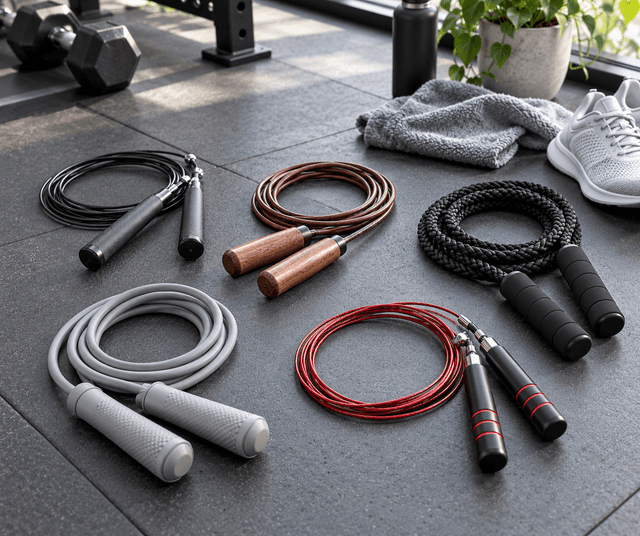
Skipping rope is a convenient way to add cardiovascular exercise to a home fitness routine. It requires relatively little equipment, is easy to carry, and can be incorporated into short exercise sessions.
However, jumping rope inside a house or apartment introduces challenges that are less noticeable outdoors.
The ceiling may be too low for the rope to rotate safely. A ceiling fan, hanging light, or nearby piece of furniture could interfere with movement. Smooth tiles may provide insufficient traction, while repeated jumping can create noise that travels through the floor.
These concerns are particularly relevant in apartments and compact home workout spaces.
Safe indoor rope skipping begins with three checks: sufficient overhead clearance, a stable and appropriate floor, and a realistic plan for controlling noise.
This guide explains how to evaluate an indoor skipping area, choose a suitable rope and exercise surface, reduce unnecessary noise, and recognize when a different cardio exercise may be more appropriate.
Can You Safely Skip Rope Indoors?
Yes, skipping rope indoors can be practical when the available space and conditions are suitable.
However, not every room is appropriate.
A room may look spacious enough when you are standing still but become unsuitable once you begin rotating a rope.
The rope travels in an arc around your body, extending above your head and outward from your hands.
Your feet also leave the ground repeatedly.
This means the exercise requires more clearance than ordinary standing movements.
Before starting, consider:
- Ceiling height
- Ceiling fans and hanging fixtures
- Rope length
- Space around your body
- Nearby furniture
- Floor traction
- Floor hardness
- Footwear
- Noise transmission
- People and pets nearby
- Your fitness level and physical condition
The safest location is not necessarily the largest room.
A smaller room with suitable clearance and a stable floor may be preferable to a larger room containing ceiling fans, fragile objects, or slippery surfaces.
Why Indoor Skipping Rope Requires Special Planning
Outdoor rope skipping often provides more flexibility because there may be fewer overhead obstacles.
Indoors, the environment places additional limits on movement.
1. Limited Overhead Clearance
The rope needs space to pass above the head.
If the ceiling is too low, the rope may strike it during rotation.
2. Nearby Obstacles
Furniture, exercise equipment, lamps, and other objects may be positioned close to the jumping area.
3. Different Flooring Materials
Homes may have polished tiles, marble, wood, laminate, carpet, or concrete floors.
Each surface behaves differently under repeated jumping.
4. Noise Transmission
Repeated foot landings can produce impact noise that travels through building structures.
This is particularly important in multi-storey apartments.
5. Limited Ventilation
A compact room may become warm or uncomfortable during exercise.
Adequate ventilation and temperature control contribute to a more manageable workout environment.
6. Household Activity
Children, pets, and other household members may unexpectedly enter the exercise area.
The rope’s movement can create a hazard for anyone standing nearby.
Indoor skipping should therefore be treated as a planned exercise rather than an activity that can automatically be performed anywhere.
How Much Ceiling Clearance Do You Need for Skipping Rope?
There is no single ceiling-height measurement that guarantees safe rope skipping for everyone.
Required clearance depends on several factors, including:
- Your height
- Your jump height
- Rope length
- Rope type
- Arm and hand position
- Rope rotation technique
- The location of ceiling fixtures
A taller person generally requires more overhead space than a shorter person using a similar technique.
However, individual jumping style and rope configuration also matter.
Why Standing Height Is Not Enough
When standing normally, your head may be comfortably below the ceiling.
During rope skipping, two things change.
First, your body rises slightly with each jump.
Second, the rope rotates above your head.
Both movements require additional space.
A room with adequate standing headroom may therefore still be unsuitable.
The Rope’s Overhead Arc
As the rope rotates, its highest point passes above the head.
The height of this arc depends on the rope and how it is used.
A rope that is excessively long may create a larger arc or become difficult to control.
A rope that is too short may interfere with jumping and cause repeated contact with the feet.
Check Actual Clearance Before Exercise
Do not rely only on the room’s advertised ceiling height.
Look at the usable space above the exact location where you intend to jump.
A ceiling fan, hanging lamp, or exposed fixture can reduce the available clearance considerably.
If you cannot confidently establish that the rope will clear the ceiling and all overhead objects, do not perform full-rope skipping in that location.
How to Check Ceiling Clearance Before Jumping
A deliberate inspection is safer than starting at full speed and seeing whether the rope hits something.
Step 1: Choose the Exact Jumping Position
Stand where you intend to exercise.
Avoid checking clearance from one location and then moving beneath a fixture.
Step 2: Look Directly Above You
Check for:
- Ceiling fans
- Hanging lights
- Chandeliers
- Decorative fixtures
- Exposed wiring
- Low beams
- Hanging decorations
- Storage objects
- Other overhead obstructions
Pay attention to anything extending downward from the ceiling.
Step 3: Check the Rope Length
Use a rope suitable for your height and the manufacturer’s intended adjustment method.
An unnecessarily long rope may be more difficult to control in a compact space.
Step 4: Consider Jump Height
Remember that the body rises during skipping.
The rope must remain clear of the ceiling throughout the movement, not just while you stand still.
Step 5: Assess the Entire Rope Path
The rope also travels in front of and behind your body.
Check for obstacles in these directions.
Step 6: Do Not Swing Toward an Obstruction
Avoid testing clearance by deliberately rotating the rope into a fan, light, or ceiling.
If the available space is uncertain, choose another location or a different exercise.
Step 7: Recheck After Moving Furniture
Changing the workout position can alter overhead clearance.
Always reassess the new area.
Why You Should Never Skip Rope Under a Ceiling Fan
Ceiling fans are common in Indian homes, but they create a major overhead obstacle for rope skipping.
A moving fan presents an obvious hazard.
The rotating rope may strike the blades, and the resulting movement could damage equipment or cause injury.
However, switching the fan off does not automatically make the location safe.
A stationary fan still occupies space above your head.
The rope may catch on a blade, motor housing, or other component.
Important Safety Rules
- Never jump rope beneath a running ceiling fan.
- Do not assume a switched-off fan provides adequate clearance.
- Avoid using the rope near hanging light fixtures.
- Choose a location with an unobstructed overhead path.
- Do not modify or remove ceiling fixtures solely to create a temporary workout area without appropriate professional assistance.
If the only available room has a low ceiling fan directly above the jumping position, select another exercise.
How Much Side Clearance Is Needed?
Overhead clearance is only one part of the space requirement.
The rope also needs room beside, in front of, and behind your body.
During skipping, your hands typically remain near your sides while the rope moves around you.
If furniture is too close, the rope may strike it.
Check Both Sides
Keep enough clear space for the rope and handles to move without contacting walls or furniture.
Do not stand directly beside a cupboard, table, or fragile object.
Check Behind You
The rope travels behind your body during normal forward skipping.
Avoid positioning yourself close to a wall or object that could interrupt this path.
Check in Front
The rope moves forward and downward before passing beneath your feet.
Ensure that the floor area in front of you is unobstructed.
Consider Unexpected Movement
Beginners may occasionally step forward, backward, or sideways after an unsuccessful jump.
The available space should accommodate small balance adjustments.
Keep Other People Clear
Children, pets, and bystanders should remain outside the rope’s movement area.
A skipping rope can strike someone standing nearby.
How to Choose the Correct Skipping Rope Length
Correct rope length can make skipping more comfortable and controlled.
However, the appropriate length depends on the rope’s design, the user’s height, and their technique.
Why Rope Length Matters
A rope that is too long may:
- Strike the floor excessively
- Create unnecessary slack
- Require exaggerated arm movements
- Become harder to control
- Interfere with rhythm
A rope that is too short may:
- Catch against the feet
- Encourage awkward jumping
- Require unnecessary changes in posture
- Make consistent rotation difficult
A Common Starting Check
Some conventional jump-rope instructions recommend standing on the middle of the rope and bringing the handles upward to evaluate length.
This can provide a rough starting point.
However, the suitable handle position varies by rope style and experience.
Speed ropes, beaded ropes, and weighted ropes may have different adjustment recommendations.
Always follow the manufacturer’s sizing method rather than treating one general measurement as universally correct.
Avoid Cutting Too Early
If your rope is adjustable, test the approved adjustment system before permanently shortening it.
Some products cannot be restored after the cable or cord has been cut.
Reassess After Adjusting
A shorter rope changes the way it rotates.
Confirm that the new length remains comfortable and suitable for your technique.
Best Flooring for Skipping Rope Indoors
The floor is one of the most important parts of an indoor skipping setup.
Repeated jumping creates impact forces through the feet and lower limbs.
The surface should provide adequate traction and stability while being appropriate for repetitive exercise.
Different flooring materials offer different advantages and limitations.
Skipping Rope on Tiles
Tiled flooring is common in Indian homes.
It is durable, relatively easy to clean, and often provides a large uninterrupted surface.
However, not all tiles offer the same traction.
Potential Advantages
- Firm, stable surface when properly installed
- Easy to inspect for dirt and moisture
- Convenient for home exercise
- Usually simple to clean
Possible Problems
- Polished tiles may feel slippery.
- Wet tiles can increase slipping risk.
- Hard surfaces provide limited cushioning.
- Rope contact can produce noticeable noise.
- Repeated jumping can create impact sound.
Safer Setup Considerations
Before skipping on tiles:
- Check that the floor is clean and dry.
- Look for damaged or uneven tiles.
- Wear suitable athletic footwear.
- Confirm that your feet have adequate traction.
- Consider an appropriate stable exercise surface where necessary.
- Begin with controlled movements.
Avoid jumping on wet or slippery tile.
If traction is insufficient, do not continue.
Skipping Rope on Marble Flooring
Marble is used in many homes because of its appearance and durability.
However, polished marble may become slippery, particularly when wet or contaminated with cleaning-product residue.
Marble is also a hard surface.
What to Check
- Is the floor dry?
- Is the finish polished or textured?
- Does your footwear grip properly?
- Are there uneven joints or damaged sections?
- Is the jumping area clear?
Should You Skip Rope Directly on Marble?
A stable marble floor may physically support exercise, but hardness and traction concerns deserve attention.
For frequent jumping workouts, an appropriately designed exercise surface may be preferable.
Do not assume a yoga mat automatically resolves the issue.
Some mats slide on polished marble.
Skipping Rope on Wooden Floors
Wooden flooring may provide a different feel from tile or stone.
However, suitability varies according to construction, finish, condition, and the type of exercise.
Potential Considerations
- Surface traction
- Floor finish
- Moisture sensitivity
- Noise transmission
- Protection against rope contact
- Stability of individual boards
Some skipping ropes may leave marks on certain floors, particularly if their cables or beads repeatedly strike the surface.
Follow the flooring manufacturer’s guidance.
Avoid using damaged or unstable wooden flooring.
Skipping Rope on Carpet
Carpet may appear more comfortable than hard flooring, but it has its own limitations.
Potential Advantages
Some carpets provide a softer contact surface.
They may also reduce certain sounds associated with rope contact.
Potential Problems
- Thick carpet can interfere with rope movement.
- The rope may catch on the pile.
- Foot positioning may feel less stable.
- Loose rugs can move.
- Carpet seams may create uneven areas.
- Repeated activity may wear the surface.
What About Thin Carpet?
A securely installed, low-pile carpet may behave differently from a thick, soft rug.
However, it is still important to assess traction, stability, and rope movement.
Do not skip on a loose rug that slides or bunches.
Skipping Rope on Concrete
Concrete provides a firm base, but it is also a hard exercise surface.
Repeated jumping directly on hard concrete may be uncomfortable for some people, particularly during longer sessions.
Other concerns include rough patches, cracks, and surface debris.
A suitable exercise surface and athletic footwear may improve comfort, but they do not eliminate every impact-related concern.
For frequent indoor cardio, choose an appropriate, stable surface rather than assuming bare concrete is ideal.
Carpet vs Tiles vs Exercise Mats: Comparison
| Surface | Main advantage | Main concern | Practical consideration |
|---|---|---|---|
| Polished tiles | Firm and easy to clean | Slipping and hard impact | Check traction and dryness |
| Marble | Stable when properly installed | Smooth finish and limited cushioning | Avoid wet or slippery areas |
| Wooden floor | Can provide a usable indoor surface | Finish damage and noise | Follow floor-care guidance |
| Thick carpet | Softer contact | Rope catching and instability | Avoid deep pile |
| Loose rug | Convenient to move | May slide or bunch | Not a reliable default |
| Concrete | Firm surface | Hard impact and rough areas | Consider appropriate exercise flooring |
| Rubber exercise flooring | Designed for certain fitness activities | Quality and stability vary | Check compatibility and movement |
| Yoga mat | Portable cushioning | May move or compress | Not always suitable for jumping |
No single surface is ideal for every indoor skipping workout.
The best choice depends on traction, stability, cushioning, exercise frequency, and individual comfort.
Should You Use a Mat for Indoor Skipping Rope?
A suitable exercise mat can sometimes make indoor workouts more comfortable.
It may also help protect certain flooring surfaces.
However, choosing the wrong mat can create additional problems.
Potential Advantages
Depending on its construction, a mat may:
- Add cushioning
- Protect the floor from rope contact
- Create a dedicated exercise area
- Reduce some surface noise
- Improve comfort during selected movements
Important Limitations
A mat may also:
- Slide on the floor
- Stretch under the feet
- Bunch up
- Curl at the edges
- Become unstable during repeated jumping
- Allow substantial impact noise to pass through the floor
Is a Yoga Mat Suitable?
Not every yoga mat is designed for repetitive jumping.
Thin or lightweight yoga mats may move during quick footwork.
Very soft mats may reduce stability.
Check whether the manufacturer permits high-impact exercise.
What About Rubber Exercise Mats?
Some rubber exercise surfaces are designed for gym activity.
Their suitability depends on density, thickness, traction, installation, and intended use.
A stable mat designed for exercise may be useful, but it does not guarantee noise-free jumping.
Never continue skipping on a mat that slides, folds, or catches the rope.
Why Skipping Rope Creates Noise Indoors
Indoor rope skipping produces several different sounds.
Understanding the sources can help you decide what can realistically be reduced.
1. Foot Landing Noise
Every jump involves contact between the foot and the floor.
Repeated landings can create impact noise.
This may be particularly noticeable in apartments.
2. Rope Contact Noise
The rope may strike the floor during each rotation.
Some ropes produce a distinct tapping or slapping sound.
3. Footwear Noise
Shoes can make noise as they contact hard flooring.
The sound depends on footwear construction and floor material.
4. Equipment Noise
Certain rope handles or mechanisms may produce additional sounds.
5. Structural Noise Transmission
Impact vibrations can travel through building structures.
This means that exercise may be audible in another room or the apartment below, even when the sound in your own room seems moderate.
How to Reduce Skipping Rope Noise in an Apartment
Noise reduction requires realistic expectations.
You may be able to reduce some sounds, but ordinary home accessories cannot guarantee complete soundproofing.
Choose an Appropriate Exercise Time
Consider household schedules, neighbours, and building rules.
Avoid jumping during designated quiet hours.
Use Controlled, Low Jumps
Jump only as high as necessary for the rope to pass beneath your feet.
Excessive jumping height is generally unnecessary for ordinary skipping and can increase landing impact.
Avoid Heavy Stomping
Try to land with control rather than allowing your feet to strike the floor forcefully.
Do not force an unnatural landing pattern.
Choose Suitable Footwear
Appropriate athletic shoes may improve comfort and control.
However, footwear alone cannot eliminate floor vibration.
Use a Stable Exercise Surface
An appropriate mat or flooring system may reduce certain sounds.
Results depend on the materials and the building structure.
Select the Right Rope
Different rope designs produce different contact sounds.
A beaded rope may sound different from a coated cable or PVC rope.
However, the quietest rope is not always the most suitable for your experience.
Keep Sessions Manageable
Shorter sessions may be easier to fit around household and neighbourhood schedules.
Consider Another Activity When Necessary
If impact noise remains disruptive, choose a lower-impact exercise or relocate the workout.
Does a Ropeless Skipping Rope Reduce Noise?
Ropeless skipping products are designed to simulate some aspects of rope jumping without a full cord passing around the body.
They typically use handles, sometimes with short weighted attachments.
Because there is no full-length rope striking the floor, they may reduce that particular source of sound.
However, ropeless skipping does not eliminate foot landing noise.
The impact of repeated jumping may still travel through an apartment floor.
Potential Advantages
- No full-length rope to contact the ceiling
- Less need for rope clearance around furniture
- Reduced risk of catching a full cord on objects
- Potentially less rope-related noise
- Convenient for compact spaces
Limitations
- Jumping impact still occurs.
- Adequate room for body movement remains necessary.
- Rotating attachments still need clearance.
- Product construction and resistance vary.
- The experience is not identical to conventional rope skipping.
A ropeless design may be useful in some limited spaces, but it is not a universal solution for apartment noise or floor safety.
Speed Rope vs PVC Rope vs Beaded Rope Indoors
Different skipping rope designs behave differently.
| Rope type | Common characteristics | Indoor considerations |
|---|---|---|
| PVC skipping rope | Flexible cord, often used for general fitness | Check floor contact and overhead space |
| Speed rope | Often uses a thinner cable and faster rotation mechanism | Requires good control and suitable clearance |
| Beaded rope | Segmented outer design | May create noticeable floor contact noise |
| Weighted rope | Greater weight depending on construction | Requires appropriate technique and space |
| Ropeless rope | No full-length rotating cord | Less cord clearance needed, but jumping still creates impact |
PVC Rope
A conventional PVC rope may be suitable for many beginners, depending on its length and design.
However, it still requires adequate clearance.
Speed Rope
Speed ropes are often designed for rapid rotation.
Some include coated cables and specialized handles.
They may be less forgiving of poor timing and can be unsuitable for a cramped exercise space.
Beaded Rope
Beaded ropes can provide clear feedback from their movement and floor contact.
However, the beads may produce noticeable noise on hard surfaces.
Weighted Rope
Weighted ropes vary considerably.
Some place added weight in the handles, while others use heavier cords.
They can change exercise demands and should be used according to the manufacturer’s instructions.
Ropeless Rope
Ropeless products may be an alternative where full-cord clearance is unavailable.
However, they do not remove the need for stable flooring and controlled movement.
How to Choose a Skipping Rope for Home Use
When comparing skipping ropes, evaluate practical suitability rather than marketing claims alone.
1. Adjustable Length
An adjustable design may make it easier to find a suitable length.
Check how the adjustment mechanism works.
2. Comfortable Handles
Handles should allow a secure, comfortable grip.
Avoid designs that feel slippery or awkward.
3. Rope Material
Consider the floor surface, experience level, and intended exercise style.
4. Rotation Mechanism
Some ropes use basic handle connections, while others incorporate bearings.
More complex mechanisms are not automatically necessary for beginners.
5. Floor Compatibility
Check whether the rope is suitable for the surface where you plan to exercise.
Certain cables may wear quickly or affect particular floor finishes.
6. Space Requirements
A full-length rope requires overhead and surrounding clearance.
A compact room may limit your choices.
7. Noise Characteristics
Consider both rope contact and foot landing sounds.
8. Product Durability
Inspect cable attachments, handle connections, and adjustment components.
9. Manufacturer Instructions
Clear sizing, usage, and safety instructions are valuable.
10. Your Experience Level
Choose a rope you can control comfortably rather than selecting the fastest or heaviest model available.
How to Skip Rope With Less Unnecessary Impact
Technique affects both comfort and noise.
The objective is controlled movement rather than maximum jumping height.
Keep Jumps Low
For basic skipping, jump only high enough to clear the rope.
Large jumps are generally unnecessary.
Use a Comfortable Upright Posture
Maintain controlled body positioning.
Avoid exaggerated bending or leaning.
Keep Arm Movement Manageable
Many skipping techniques use relatively small wrist movements rather than large arm circles.
Follow appropriate instruction for your rope and skill level.
Land With Control
Avoid intentionally stomping onto the floor.
Use a comfortable landing pattern that allows balance and control.
Maintain a Sustainable Rhythm
Start at a pace you can manage.
Do not increase speed simply because the rope permits rapid rotation.
Stop When Technique Breaks Down
Repeated tripping, loss of balance, or uncontrolled landings are signs to pause and reset.
Do not force yourself to continue through fatigue.
Should You Wear Shoes While Skipping Rope Indoors?
Appropriate athletic footwear is often a practical choice for indoor rope skipping.
However, the correct footwear depends on your exercise surface, physical needs, and the activity.
What to Look For
Consider:
- Secure fit
- Suitable traction
- Comfortable cushioning
- Stable construction
- Appropriate flexibility
- Adequate support for your needs
Why Slippers Are Not Suitable
Loose slippers may shift or detach during jumping.
They can create unnecessary tripping and stability risks.
What About Socks?
Ordinary socks may provide insufficient traction on certain floors, particularly polished tile or marble.
Avoid jumping in footwear that slips.
Can You Skip Barefoot?
Barefoot skipping may be suitable for certain trained individuals under appropriate conditions, but it is not automatically the safest option for everyone.
The floor surface, experience, foot condition, and exercise technique matter.
For general home fitness, properly fitted athletic shoes are a reasonable starting point.
How to Start Skipping Rope Indoors as a Beginner
Beginners should prioritize a safe setup and controlled technique before increasing workout duration.
Step 1: Inspect the Exercise Space
Check the ceiling, nearby furniture, floor, and surrounding area.
Step 2: Choose a Suitable Rope
Follow the manufacturer’s length adjustment instructions.
Step 3: Wear Appropriate Footwear
Confirm that your shoes provide suitable traction.
Step 4: Warm Up
Begin with comfortable movements appropriate to your fitness level.
For example, gentle marching and controlled ankle movements may be useful.
Step 5: Practice Rope Movement
Become familiar with the handles and rotation technique in a clear, safe area.
Do not begin beneath overhead obstacles.
Step 6: Start With Short Intervals
Perform brief periods of skipping at a manageable pace.
Rest when needed.
Step 7: Focus on Controlled Landings
Avoid jumping higher or faster than necessary.
Step 8: Stop When You Lose Control
Pause if you repeatedly catch the rope or struggle to maintain balance.
Step 9: Increase Gradually
Progress according to your fitness, comfort, and recovery.
Step 10: Reassess the Setup
If the floor becomes damp, the mat shifts, or other people enter the area, stop and correct the problem.
A Simple Beginner Indoor Skipping Routine
The following is an illustrative routine for a healthy adult who can comfortably perform repeated low jumps and has confirmed that the indoor space is suitable.
It is not a medical prescription or a universal fitness requirement.
Phase 1: Warm-Up
Begin with a few minutes of comfortable movement.
Examples include gentle marching, easy walking, and controlled lower-body movements.
Phase 2: Familiarization
Practice a small number of controlled rope rotations.
Focus on timing and balance.
Phase 3: Short Skipping Intervals
Try brief intervals of comfortable skipping followed by rest.
For example, some beginners may start with approximately 15–30 seconds of movement followed by sufficient recovery.
This is only a starting example, not a required target.
If the activity feels too demanding, reduce the duration or choose a lower-impact alternative.
Phase 4: Recovery
Walk slowly and allow your breathing to settle.
Phase 5: Review
Check whether you experienced:
- Loss of balance
- Repeated rope contact with obstacles
- Slipping
- Uncomfortable joint impact
- Excessive fatigue
- Unexpected pain
If problems occur, review the technique or environment before another session.
How to Avoid Tripping Over the Rope Indoors
Tripping is a common challenge for beginners.
The main objective is to maintain control and avoid sudden falls.
Check Rope Length
A poorly sized rope can interfere with timing.
Avoid Excessively High Jumps
Large jumps are not necessary for ordinary skipping.
Maintain a Comfortable Rhythm
Do not attempt fast rotations before mastering slower movements.
Keep the Area Clear
Nearby objects can become hazards if you lose balance.
Use Appropriate Shoes
Loose footwear can interfere with foot movement.
Take Breaks
Fatigue may reduce coordination.
Do Not Jump Through Repeated Errors
If the rope catches several times, stop and reset.
Avoid trying to recover balance while the rope continues moving unpredictably.
Common Mistakes When Skipping Rope Indoors
Mistake 1: Ignoring Ceiling Height
A rope may strike the ceiling even when the person can stand comfortably.
Better approach: Assess the complete overhead rope path before exercise.
Mistake 2: Jumping Under a Ceiling Fan
Even a stationary fan is an overhead obstacle.
Better approach: Choose an unobstructed location.
Mistake 3: Using a Rope That Is Too Long
Excess length can create unnecessary floor contact and make rotation harder to control.
Better approach: Adjust the rope according to its instructions.
Mistake 4: Exercising on Wet Tiles
Moisture may reduce traction.
Better approach: Use a clean, dry, stable floor.
Mistake 5: Using a Loose Yoga Mat
A moving mat can create instability.
Better approach: Use only a suitable, secure exercise surface.
Mistake 6: Jumping Too High
Excessive height can increase exercise demands and landing impact.
Better approach: Use controlled jumps appropriate for basic skipping.
Mistake 7: Ignoring Apartment Noise
Repeated impacts may disturb people in nearby rooms or below.
Better approach: Choose suitable times and consider quieter alternatives.
Mistake 8: Skipping Near Furniture
The rope can contact objects, or the user may fall into them.
Better approach: Clear the full movement area.
Mistake 9: Wearing Loose Slippers
Unstable footwear increases the chance of tripping.
Better approach: Choose suitable athletic shoes.
Mistake 10: Continuing Through Pain
Skipping creates repeated loading through the lower limbs.
Better approach: Stop when pain occurs and seek appropriate guidance for persistent symptoms.
When Indoor Skipping Rope May Not Be Suitable
Some spaces are simply not appropriate for full-rope skipping.
Avoid the activity when:
- The ceiling is too low.
- A ceiling fan occupies the rope path.
- Furniture cannot be moved far enough away.
- The floor is slippery.
- The exercise mat moves or folds.
- The area is overcrowded.
- Pets or children cannot be kept clear.
- The building prohibits impact exercise.
- Noise is likely to be disruptive.
- You cannot maintain controlled jumping.
- Pain or an underlying condition makes the activity unsuitable.
In these situations, changing the exercise is more sensible than trying to force rope skipping into the available space.
Alternatives to Skipping Rope in a Small Room
If a full-length rope cannot be used safely, other activities may offer a more practical home cardio option.
Marching in Place
Marching requires no rope and can be adjusted to different fitness levels.
It may also be easier to perform in a compact space.
Low-Impact Step Movements
Controlled side steps or step-touch movements may provide a lower-impact alternative.
They still require a stable, clear floor.
Ropeless Skipping
A ropeless skipping product removes the full-length cord but still involves repeated jumping and requires adequate clearance for its attachments.
Shadow Skipping
Some people simulate the hand and foot rhythm of rope skipping without using a rope.
However, repeated jumping may still create noise.
Stationary Cycling
A suitable exercise bike may be an alternative where space, budget, and equipment availability permit.
Low-Impact Cardio Routines
Walking-based or other low-impact routines may be easier to manage in apartments.
Choose movements appropriate for your physical condition and available space.
Indoor Skipping Rope for Apartment Residents
Apartment living introduces practical concerns beyond exercise technique.
A workout may be physically safe for the person jumping but still create disturbance for others.
Check Building Rules
Some residential buildings have restrictions on noisy activities or equipment.
Follow applicable rules.
Consider the Time of Day
Avoid designated quiet hours.
If noise is a concern, exercise when it is less likely to disturb others.
Evaluate Structural Impact
A mat that reduces audible rope contact may not eliminate vibrations transmitted through the building.
Avoid Assuming a Thick Mat Solves Everything
Noise reduction depends on the floor system, mat material, and type of impact.
There is no universal mat thickness that guarantees silence.
Communicate When Appropriate
If neighbours report repeated disturbance, consider changing the workout location, time, or type of exercise.
Choose Practical Alternatives
If jumping remains disruptive, low-impact cardio may be a better long-term solution.
How to Protect Indoor Flooring From Skipping Rope
Some ropes repeatedly strike the floor during rotation.
The effect on flooring depends on the rope material, floor finish, technique, and frequency of use.
Inspect the Rope
Check for exposed wires, damaged coatings, sharp ends, or other defects.
Keep the Floor Clean
Grit trapped between a rope or mat and the floor may contribute to surface wear.
Use Appropriate Equipment
Choose a rope suitable for the intended surface.
Consider Floor Protection
A manufacturer-approved exercise surface may help protect certain finishes.
Avoid Damaged Cables
A speed rope with exposed metal cable can be unsuitable for some indoor flooring surfaces.
Monitor the Surface
Check for marks, wear, or other changes.
Do not assume a particular floor finish is immune to damage.
How to Maintain Your Skipping Rope
A properly maintained rope is easier to inspect and use.
Check the Cord or Cable
Look for:
- Fraying
- Cuts
- Exposed wire
- Cracks
- Damaged coatings
- Unusual deformation
Inspect the Handles
Check that they remain secure and comfortable.
Examine Attachment Points
Some ropes have swivels, bearings, or adjustable cable connections.
Follow the manufacturer’s inspection instructions.
Clean as Directed
Remove visible dirt using a suitable cleaning method.
Avoid harsh chemicals unless approved.
Dry Before Storage
If the rope becomes wet, follow its drying instructions.
Avoid Tight Bends
Some cables may develop kinks if stored incorrectly.
Follow the recommended storage arrangement.
Keep Away From Heat
Avoid leaving the rope near heaters or inside hot vehicles.
Replace Damaged Components
Do not continue using a rope with exposed wire or compromised attachments.
Troubleshooting Common Indoor Skipping Problems
Problem: The Rope Hits My Ceiling
Possible cause: Inadequate overhead clearance, unsuitable rope length, or the rope’s movement pattern.
What to do: Stop using the rope in that location. Choose a room with adequate clearance or a different exercise.
Problem: The Rope Keeps Hitting Furniture
Possible cause: Insufficient surrounding space.
What to do: Clear a suitable area or relocate the workout.
Problem: My Feet Slip on Tiles
Possible cause: Inadequate traction, moisture, unsuitable footwear, or floor residue.
What to do: Stop immediately. Correct the surface and footwear issue before exercising again.
Problem: The Rope Catches on My Yoga Mat
Possible cause: The mat’s texture, edges, or movement may interfere with the rope.
What to do: Use an appropriate stable surface rather than forcing the rope through the obstruction.
Problem: My Downstairs Neighbour Hears Every Jump
Possible cause: Impact noise is travelling through the floor structure.
What to do: Consider changes to exercise timing, technique, flooring, or activity. A mat cannot guarantee complete sound isolation.
Problem: My Rope Hits the Floor Too Hard
Possible cause: Rope length, rotation technique, or design may contribute.
What to do: Review the rope’s adjustment instructions and practice controlled movement.
Problem: I Keep Tripping Over the Rope
Possible cause: Timing, rope length, fatigue, or technique.
What to do: Pause and return to slow, controlled practice.
Problem: My Knees or Ankles Hurt
Possible cause: Excessive exercise load, technique, unsuitable surface, or a pre-existing issue.
What to do: Stop the activity. Seek professional guidance if pain persists or is significant.
Problem: I Cannot Find a Safe Indoor Location
Possible cause: Insufficient clearance or unsuitable flooring.
What to do: Choose another form of home cardio instead of compromising safety.
Frequently Asked Questions
1. Can I skip rope indoors?
Yes, provided there is sufficient overhead and surrounding clearance, stable flooring, and a safe exercise environment.
2. How high should the ceiling be for indoor skipping rope?
There is no single height suitable for everyone.
Required clearance depends on your height, jumping movement, rope length, and rope rotation.
3. Can I skip rope under a switched-off ceiling fan?
A stationary ceiling fan is still an overhead obstacle.
Do not skip beneath it unless the entire rope path is safely unobstructed; selecting another location is preferable.
4. Can I skip rope on tiled floors?
Tiled floors may be usable if they are dry, stable, and provide sufficient traction.
Consider comfort and repeated impact as well.
5. Is marble flooring suitable for skipping rope?
Polished marble may be slippery and provides limited cushioning.
Evaluate traction carefully and consider a more suitable exercise surface.
6. Can I skip rope on carpet?
Some firmly installed, low-pile carpets may be suitable.
Thick carpet can catch the rope or interfere with foot stability.
7. Should I use a yoga mat for skipping rope?
Only if the mat is suitable for repeated jumping and remains stable.
Many ordinary yoga mats are not ideal for high-impact activity.
8. What is the best mat for indoor skipping?
Choose a stable exercise surface designed for the intended activity, with suitable traction and cushioning.
There is no universally best material or thickness.
9. How can I skip rope quietly in an apartment?
Controlled jumps, suitable flooring, appropriate timing, and quieter equipment may help.
However, repeated jumping can still transmit impact noise.
10. Does a ropeless skipping rope reduce noise?
It may eliminate noise from a full-length rope striking the floor.
However, foot landing noise and structural vibration remain.
11. Is a speed rope suitable for indoor use?
It may be suitable when the user has sufficient control, appropriate flooring, and adequate clearance.
Speed ropes are not automatically ideal for cramped spaces.
12. Is a beaded rope too noisy for indoor use?
Beaded ropes may produce noticeable contact sounds on hard floors.
Noise depends on the design, floor, and technique.
13. Can I skip rope barefoot indoors?
Barefoot skipping is not automatically suitable for everyone.
Appropriate footwear may provide a more practical starting point for general home exercise.
14. Should I jump high when skipping rope?
For basic rope skipping, large jumps are generally unnecessary.
Use controlled jumps high enough for the rope to pass beneath your feet.
15. Can jumping rope damage wooden flooring?
Rope contact, dirt, footwear, and repeated impact may affect certain finishes.
Follow the flooring manufacturer’s guidance.
16. Can beginners skip rope inside a small room?
Only when the room provides adequate clearance and a stable exercise surface.
Beginners may benefit from additional space for balance adjustments.
17. How long should beginners skip rope?
Begin with short, manageable intervals and progress gradually.
The suitable duration depends on individual fitness and comfort.
18. Does skipping rope damage knees?
Skipping places repeated loads on the lower limbs, but it does not automatically cause knee damage.
Technique, training volume, surface, footwear, and individual health conditions matter.
Consult a healthcare professional for persistent pain or relevant medical concerns.
19. Can I skip rope every day?
Frequency depends on training load, recovery, fitness level, and physical condition.
Daily sessions are not necessary for everyone.
20. What if my ceiling is too low?
Do not attempt full-rope skipping in an unsuitable location.
Consider ropeless exercise, marching, or another appropriate cardio activity.
Final Indoor Skipping Rope Safety Checklist
Before starting your workout, confirm the following:
- The ceiling provides sufficient clearance.
- No ceiling fan is in the rope’s path.
- Hanging lights and fixtures are clear.
- The rope has enough space in front and behind.
- Nearby furniture is safely out of the way.
- Children and pets are outside the exercise area.
- The floor is clean and dry.
- Your footwear provides suitable traction.
- Any exercise mat remains stable.
- The rope length is appropriate.
- The cord and handles are undamaged.
- The room has suitable ventilation.
- You have considered apartment noise.
- Your workout complies with building rules.
- You begin at a manageable pace.
- Your jumps remain controlled.
- You avoid unnecessary jumping height.
- You stop if you slip or lose balance.
- You do not continue through pain.
- You choose another exercise if the location is unsuitable.
Final Thoughts
Skipping rope indoors can be a convenient way to include cardiovascular exercise in a home fitness routine.
However, a successful workout depends on more than choosing a rope and finding an empty section of floor.
Ceiling clearance is essential.
A room may provide enough space for ordinary movement but still be unsuitable for a rotating rope, particularly when ceiling fans or hanging fixtures are present.
Flooring also matters.
Tiles and marble may be firm but slippery. Carpets may provide cushioning but interfere with rope movement. Exercise mats can be useful, but only when they remain stable and are designed for the activity.
For apartment residents, noise deserves additional consideration.
The sound of rope contact may be reduced by equipment choice, but repeated foot landings can still transmit vibration through the building.
This means that quieter technique, appropriate exercise timing, and low-impact alternatives may sometimes be more practical than purchasing a thicker mat.
Above all, avoid forcing the activity into an unsuitable space.
If the ceiling is too low, the floor lacks traction, or the available area is unsafe, choose another location or a different exercise.
The best indoor skipping setup combines unobstructed clearance, stable flooring, controlled technique, and consideration for the people sharing your living environment.
With those fundamentals in place, skipping rope can become a manageable part of a home fitness routine without unnecessary equipment or complicated preparation.
Physical Glow editorial note: This article provides general fitness and equipment-safety information. Skipping rope involves repeated impact and may not be appropriate for everyone. Follow equipment manufacturer instructions and consult a qualified healthcare or exercise professional if you have existing injuries, joint pain, balance problems, cardiovascular concerns, or other conditions affecting exercise.
