Top 5 Resistance Bands in India: Best Picks for Strength & Home Workouts
Compare five resistance-band options for home strength training, mobility, pull-up assistance and full-body workouts, with practical picks for different training styles.
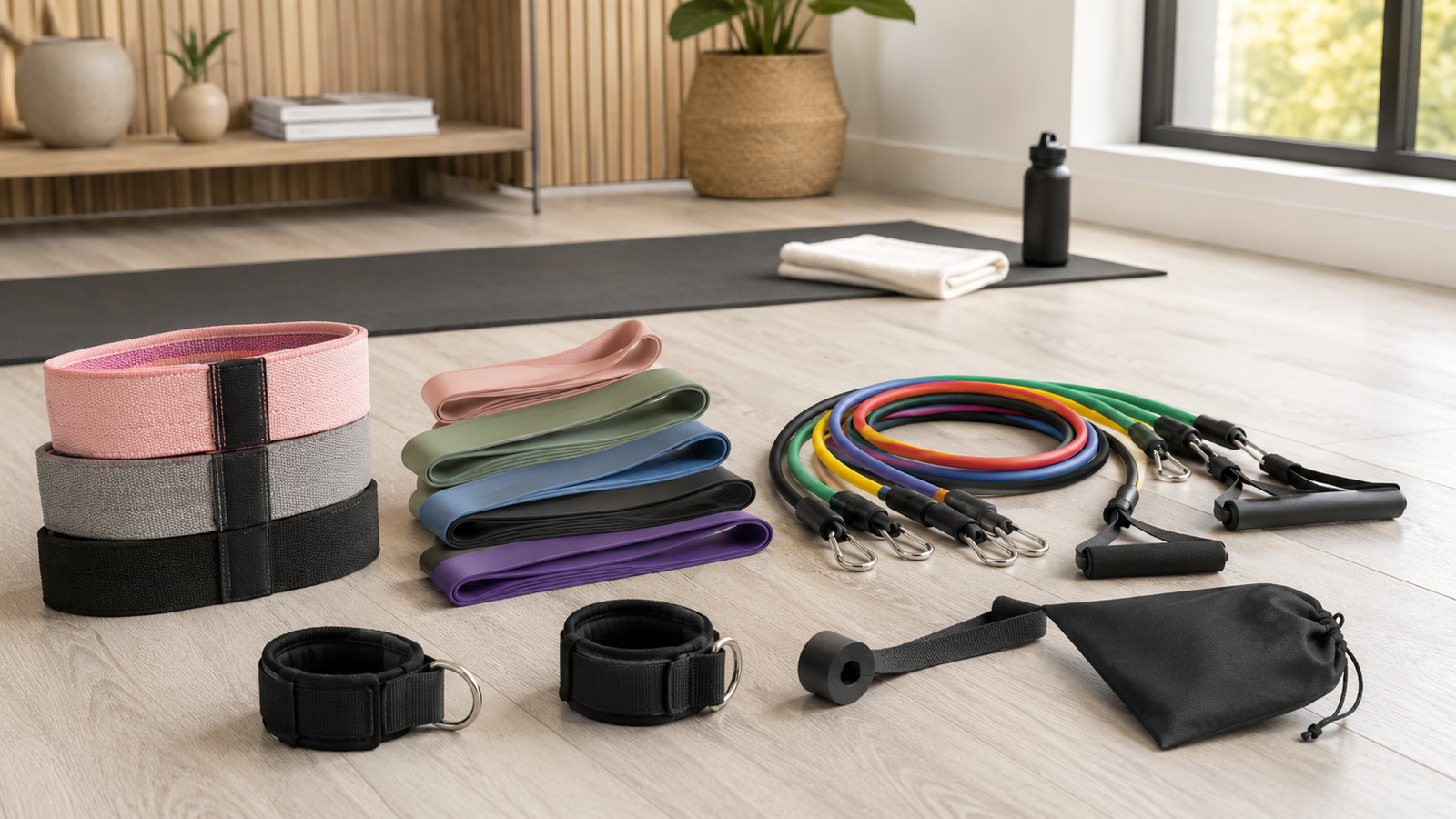
Resistance bands are one of the simplest ways to add progressive resistance to a home workout without filling a room with equipment. They can be used for strength training, mobility, warm-ups, assisted pull-ups and accessory exercises, but the right format depends heavily on how you plan to train.
For this Physical Glow ranking, we compared five shortlisted resistance-band options across versatility, resistance format, exercise range, portability and suitability for different home-training goals. Some are designed as complete sets, some as tubes for general training, and others as heavy loop bands that are particularly useful for pull-up assistance or strength work. We do not treat marketplace popularity or a changing sale price as proof that one option is better than another, and we do not claim hands-on testing where it has not been performed.
Affiliate disclosure: Physical Glow may earn a commission when you purchase through links on this page, at no additional cost to you. Our editorial ranking is independent of affiliate relationships.
Our Top 5 Resistance Bands at a Glance
Here’s a quick comparison of our five picks, including the type of training each option is best suited for and the differences worth considering before you buy.
How We Chose These Resistance Bands
Resistance bands can look interchangeable online, but a tube set, a compact loop band and a heavy pull-up-assist band serve different purposes. We therefore ranked these products around practical use rather than assuming that the highest stated resistance is automatically the best choice.
Training versatility
A versatile resistance setup should support several movement patterns: pushing, pulling, squatting, hinging, arm work and mobility drills. Sets with multiple resistance options can make progression easier, while a single heavy band can be more suitable when you already know exactly what type of exercise you need it for.
Resistance format
Tube bands are convenient for general strength exercises and can often be used with handles or anchors. Long loop bands are useful for pull-up assistance, stretching and compound movements. Multi-band sets are attractive when several resistance levels are needed for different exercises or users.
Progression
Progressive overload still matters when training with bands. A useful setup should let you make an exercise more challenging over time, whether by moving to a stronger band, combining bands, increasing range of motion or choosing a harder exercise variation.
Portability and storage
Bands are naturally space-efficient, but complete sets with handles and accessories take more room than a single loop. If you travel often or want equipment that can be stored in a drawer, portability may be one of the biggest advantages over traditional weights.
Fit for the intended exercise
A heavy assistance band may be excellent for pull-ups but unnecessarily strong for shoulder mobility. A tube may be ideal for rows and presses but less convenient for certain lower-body movements. The best choice is the one that matches the exercises you actually plan to perform.
Which Resistance Band Type Should You Choose?
Choose a multi-band set for the widest exercise range
If you want one package to cover several resistance levels and multiple exercises, a set is usually the most flexible starting point. It can make it easier to use lighter resistance for smaller muscle groups and heavier resistance for legs, rows and compound movements.
Choose resistance tubes for straightforward full-body training
Tubes work particularly well for controlled presses, rows, curls, triceps work and many standing exercises. They are easy to understand and can be a practical bridge for people who want resistance training without dumbbells or machines.
Choose long loops for pull-up assistance and mobility
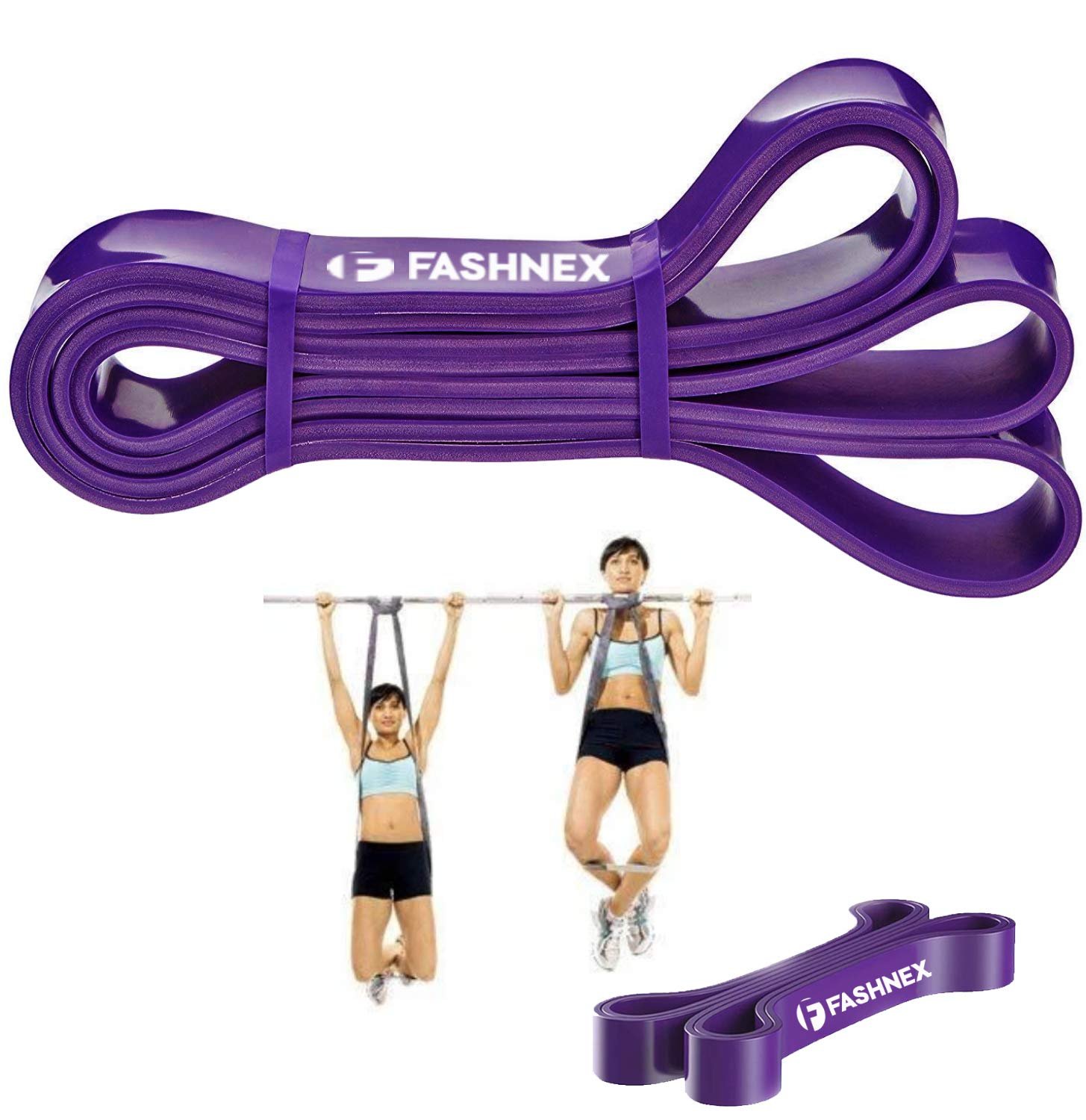
Long loop bands are highly useful for assisted pull-ups, stretching and adding resistance to compound movements. The amount of assistance matters: a stronger band provides more help during a pull-up, while a lighter band asks you to contribute more of your own bodyweight.
How Much Resistance Do You Need?
There is no ideal resistance level for everyone. Your strength, exercise selection and training goal all matter. A band that feels appropriately challenging for a row may be too strong for lateral shoulder work and too light for a squat.
- Beginners: benefit from having at least one lighter option for learning movement patterns and smaller-muscle exercises.
- General home training: is easier with multiple resistance levels so you can match the band to the exercise.
- Pull-up assistance: requires choosing a band that gives enough support to maintain good technique without removing most of the challenge.
- More experienced users: may prefer stronger bands or combinations that create a meaningful training stimulus.
Resistance Bands vs Dumbbells
Resistance bands and dumbbells both work well for home strength training, but they feel different. Dumbbells provide a predictable load through gravity, while bands generally increase tension as they stretch. Bands are easier to store and travel with, while dumbbells can be simpler for tracking a fixed external load.
You do not necessarily have to choose one or the other. Many home gyms benefit from both: dumbbells for fixed-load strength work and bands for warm-ups, mobility, accessory exercises and additional resistance.
Safety and Care
Inspect resistance bands regularly for small tears, cracks, worn areas or damage around attachment points. A damaged band can fail suddenly when stretched. Avoid using bands against sharp edges, and follow the manufacturer’s guidance for anchoring and maximum stretch.
For pull-up assistance, make sure the band is securely positioned before loading your bodyweight. Keep your face away from a stretched band’s direct recoil path and replace equipment that shows meaningful wear.
Mistakes to Avoid When Buying Resistance Bands
- Buying only by the highest resistance number: more resistance is not automatically more useful.
- Ignoring band format: tubes, loops and assistance bands suit different exercises.
- Choosing one resistance for every movement: smaller and larger muscle groups usually need different loads.
- Overlooking durability: inspect bands regularly and stop using damaged equipment.
- Using poor anchor points: an insecure anchor can turn a normal exercise into a safety risk.
Frequently Asked Questions
Are resistance bands good for building strength?
Yes. Resistance bands can provide meaningful muscular resistance when exercises are selected and progressed appropriately. As with other forms of resistance training, consistency, effort, progression and exercise selection matter more than the equipment being compact.
Can beginners use resistance bands?
Yes. Beginners often find bands approachable because resistance can be adjusted by choosing a lighter band, shortening or lengthening the working range, or changing the exercise. A multi-level set can make progression easier.
Are resistance bands useful for pull-ups?
Long loop bands can provide assistance during pull-ups by reducing the effective load you need to lift. Choose enough assistance to maintain controlled technique, then gradually reduce assistance as you become stronger.
Do resistance bands replace weights?
They can cover many home strength exercises, but they do not have to replace weights completely. Some people prefer bands for portability and variable resistance, while others prefer dumbbells or machines for fixed-load progression.
How long do resistance bands last?
There is no fixed lifespan because wear depends on material, frequency of use, storage, stretching and contact with rough surfaces. Inspect them regularly and replace any band that shows cracks, cuts or significant wear.
Should I buy a set or a single band?
A set is generally more versatile if you train several muscle groups or want room to progress. A single band makes more sense when you have a specific purpose such as pull-up assistance or mobility work.
Final Verdict
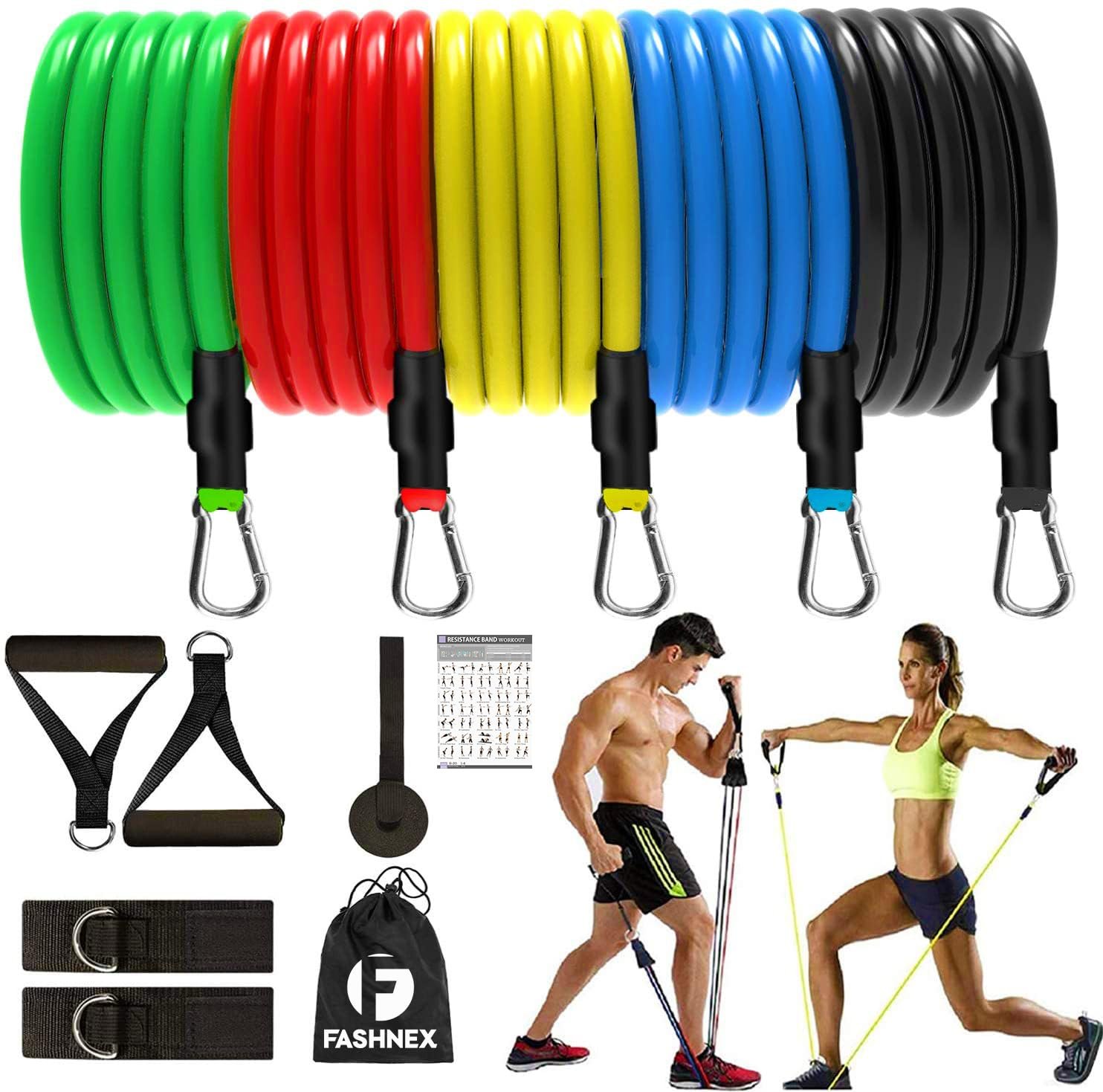
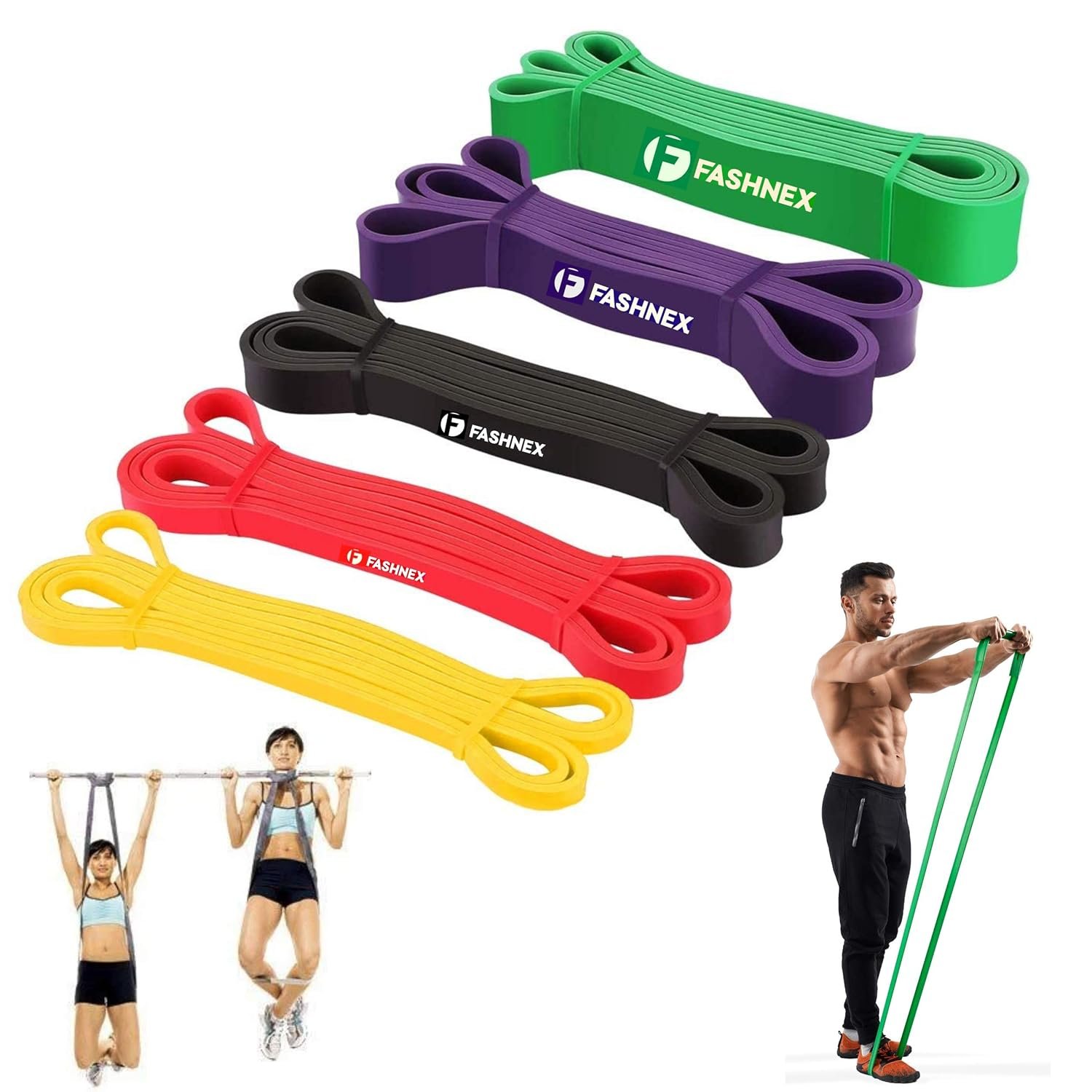
The Fashnex 100LB Resistance Bands Set is our Best Overall pick for this shortlist because a multi-resistance setup offers the broadest flexibility for home strength training and progression.
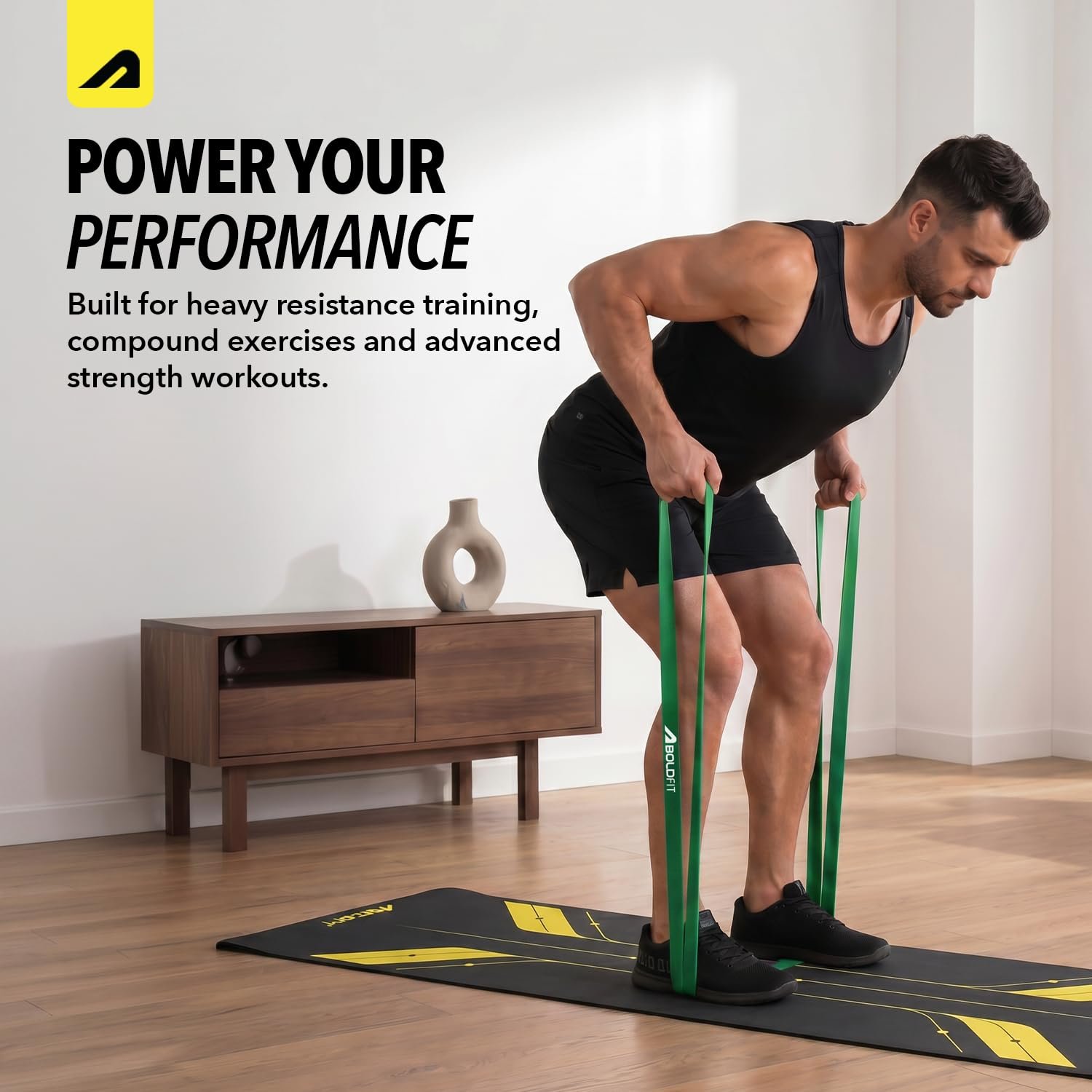
The Slovic Resistance Tube is a straightforward choice for general full-body workouts, while the Boldfit Heavy Resistance Band suits people who prefer a simpler single-band training tool. The two Fashnex pull-up-assist options are more specialised picks for users who specifically want long-loop assistance or heavier resistance.
The best resistance-band purchase is ultimately the one that matches your exercise selection. If you are still discovering how you want to train, choose versatility first. If you already have a specific goal such as assisted pull-ups, a purpose-built loop can make more sense than a large set.