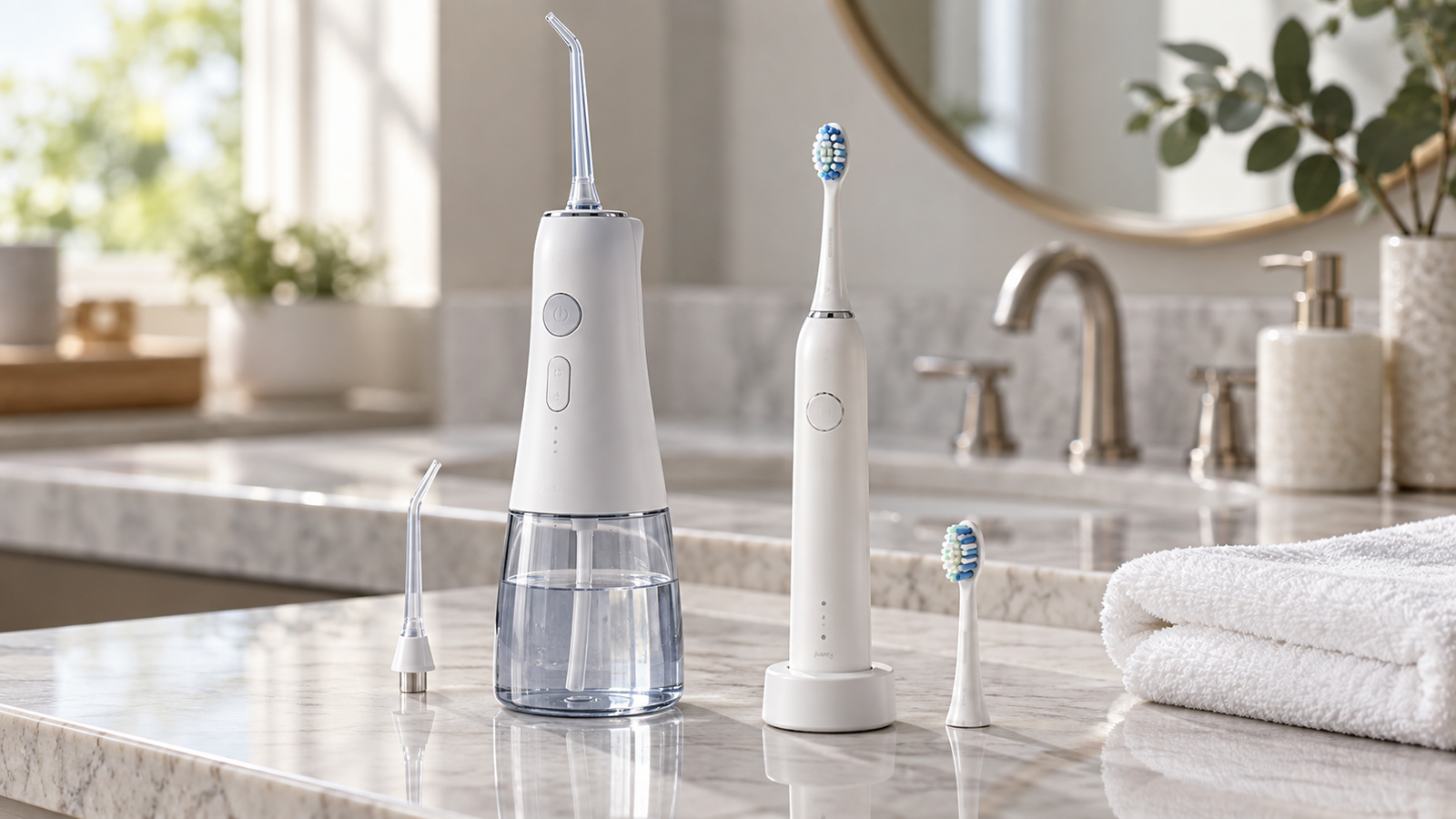
Brushing and Water Flossing Order: A Consistent Oral Care Routine
Understand the purposes of brushing and interdental cleaning, and build an achievable routine without treating a water flosser as a toothbrush replacement.
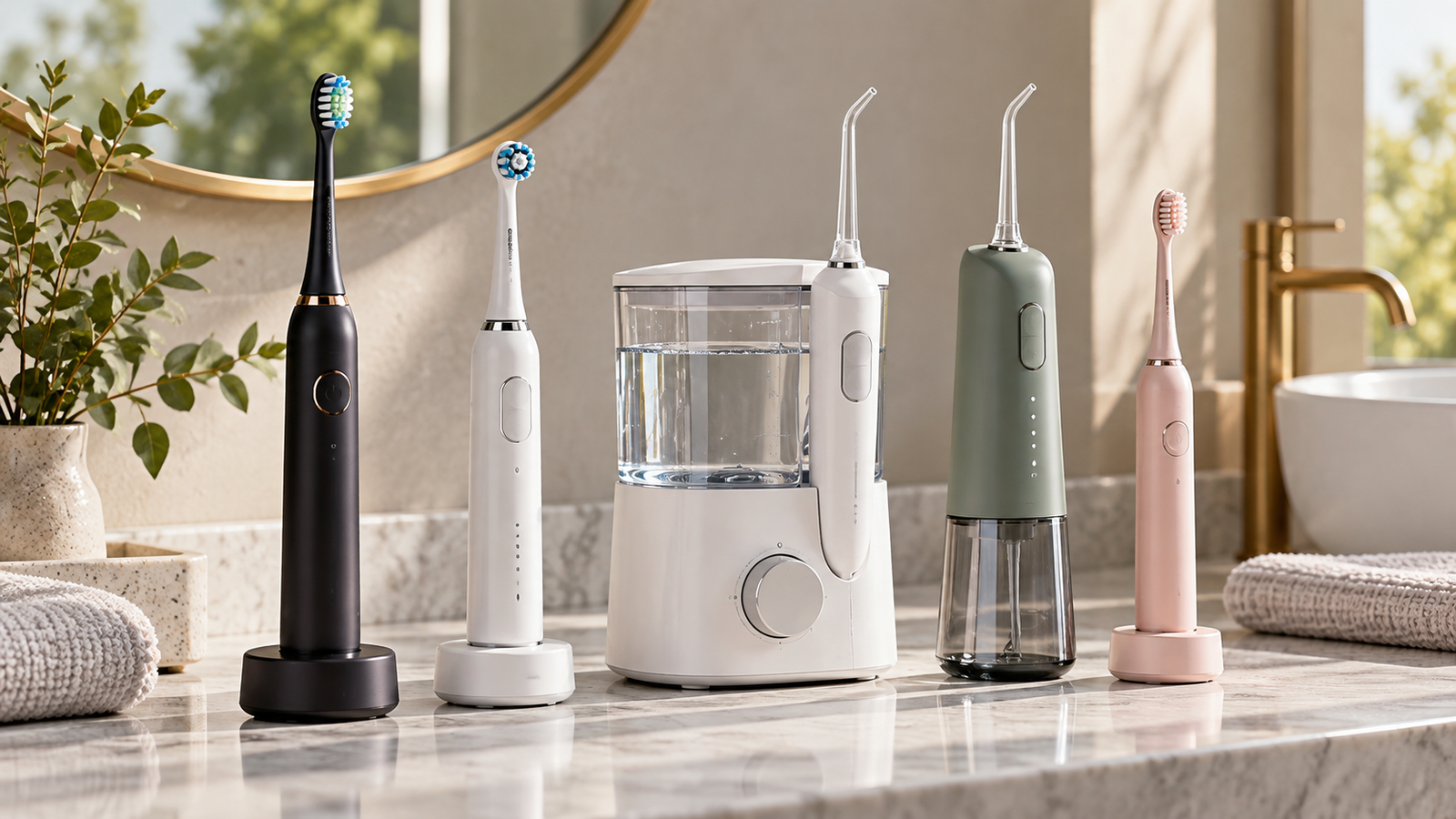
Brushing your teeth twice a day is one of the most familiar oral hygiene recommendations. Yet brushing alone may not adequately clean the spaces between your teeth, particularly where the toothbrush bristles cannot reach.
That is why interdental cleaning is an important part of a complete oral care routine.
Traditional dental floss, interdental brushes and water flossers are among the tools used for this purpose. Water flossers have become increasingly popular because they deliver a controlled stream of water around the teeth and gumline.
But their growing popularity has also created confusion.
Should you use a water flosser before brushing or afterward? Does water flossing remove fluoride from toothpaste? Can it replace string floss? And is it necessary to water floss both morning and night?
The most important factor is not finding a complicated sequence. It is brushing effectively with fluoride toothpaste and cleaning between your teeth consistently using an appropriate method.
The order can influence convenience and how easily you maintain the routine, but evidence has not established one universally superior sequence for every person and device.
This Physical Glow guide explains how to combine brushing and water flossing, choose a practical order, use water pressure comfortably and avoid common mistakes that reduce the effectiveness of daily oral hygiene.
1. Why Brushing Alone May Not Clean Every Surface
A toothbrush is designed to clean accessible tooth surfaces and the gumline.
However, adjacent teeth create narrow spaces that can be difficult for ordinary toothbrush bristles to reach.
These areas can collect dental plaque, a sticky microbial biofilm that forms naturally on teeth.
When plaque is not adequately removed, it can contribute to tooth decay and gum inflammation.
What Brushing Does Well
Effective brushing helps remove plaque and debris from exposed tooth surfaces.
Fluoride toothpaste also helps protect tooth enamel against dental caries.
What Brushing May Miss
A toothbrush may not adequately reach the contact areas between adjacent teeth.
These spaces require additional attention.
Why Interdental Cleaning Matters
Cleaning between teeth helps remove plaque and debris from areas that brushing alone may not address effectively.
The most appropriate tool depends on tooth spacing, dental restorations, gum condition, dexterity and professional advice.
2. What Is a Water Flosser?
A water flosser, sometimes called an oral irrigator, is a device that directs a pressurized stream of water into the mouth.
It usually includes:
- A water reservoir.
- A pump or pressure mechanism.
- A nozzle or specialized tip.
- A handle.
- Adjustable pressure settings on some models.
The water stream is directed along the gumline and between the teeth.
Depending on the device and technique, water flossing may help remove loose debris and reduce gum inflammation or bleeding.
However, its effects on plaque removal differ from those of mechanical interdental cleaning tools.
Does a Water Flosser Scrape Plaque Away?
Not in the same mechanical manner as dental floss or an interdental brush.
String floss contacts and moves against tooth surfaces, while interdental brushes clean through physical contact.
Water flossers work primarily through fluid movement and irrigation.
Different techniques may therefore provide different benefits.
3. Should You Water Floss Before or After Brushing?
Both sequences are used in daily oral care.
The available evidence does not establish that every person should always water floss in one particular order.
Some research involving interdental cleaning suggests that flossing before brushing may offer certain benefits, including improved interdental plaque removal or fluoride retention in particular study conditions.
However, findings involving string floss should not automatically be applied to every water flosser.
Option A: Water Floss Before Brushing
This can be a practical sequence because you clean between teeth before completing the routine with fluoride toothpaste.
Potential advantages include removing loose debris first and avoiding a thorough rinse immediately after brushing.
Option B: Water Floss After Brushing
Some people prefer brushing first and then using the water flosser to remove remaining debris.
This may be convenient, but a substantial rinse after brushing can remove some residual fluoride toothpaste from the mouth.
Which Order Is Better?
For a simple daily routine, water flossing before brushing is a reasonable practical choice, particularly if you want brushing with fluoride toothpaste to be the final step.
However, if your dentist recommends a different sequence for your dental needs, follow that advice.
Consistent, effective cleaning matters more than switching repeatedly between routines.
4. A Simple Daily Brushing and Water Flossing Routine
A practical evening routine can be completed without excessive steps.
Step 1: Prepare the Water Flosser
Fill the reservoir with clean water according to the manufacturer’s instructions.
Use a suitable tip.
Start with a comfortable pressure setting.
Step 2: Clean Between Your Teeth
Position the tip as instructed by the manufacturer.
Move systematically around the teeth and gumline.
Avoid forcing water into sensitive tissues.
Step 3: Empty and Maintain the Device
Follow the instructions for draining or cleaning the reservoir and tip.
Do not leave the device in a condition that encourages contamination.
Step 4: Brush With Fluoride Toothpaste
Brush gently for approximately two minutes using an appropriate toothbrush and fluoride toothpaste.
Clean the outer, inner and chewing surfaces.
Step 5: Spit Out Excess Toothpaste
After brushing, spit out the excess toothpaste.
Avoid rinsing vigorously with water immediately afterward unless your dental professional advises otherwise.
This helps retain fluoride from the toothpaste on the teeth for longer.
Step 6: Continue With Your Normal Routine
If you use prescribed oral products or have orthodontic appliances, follow the instructions provided by your dentist.
5. Why Fluoride Matters When Choosing the Order
Fluoride toothpaste is an important part of tooth-decay prevention.
Fluoride can support remineralization of tooth enamel and reduce the risk of dental caries.
After brushing, some fluoride remains in saliva and on tooth surfaces.
What Happens When You Rinse Immediately?
Rinsing thoroughly with water can reduce the amount of fluoride remaining in the mouth.
This is why many dental health authorities recommend spitting out excess toothpaste without immediately rinsing.
Does Water Flossing Remove All Fluoride?
No such universal claim is supported.
However, water flossing involves introducing water into the mouth, so doing it immediately after brushing could wash away some residual toothpaste.
A Practical Solution
If you prefer to keep your routine simple, water floss first and brush afterward.
This avoids introducing an additional water-cleaning step after fluoride toothpaste application.
What About Mouthwash?
Some fluoride mouthwashes are best used at a different time from brushing to avoid washing away more concentrated toothpaste fluoride.
Follow product instructions and your dentist’s recommendations.
6. Water Flossing vs String Floss: Are They Equivalent?
Water flossing and string flossing are not identical techniques.
Each has particular advantages and limitations.
| Feature | Water flosser | String floss |
|---|---|---|
| Primary mechanism | Pulsed or directed water | Mechanical contact with tooth surfaces |
| Ease around braces | Can be convenient | May require special techniques or threaders |
| Tight tooth contacts | Can irrigate around contacts | Can physically clean contact surfaces |
| Pressure adjustment | Available on many models | Controlled through manual technique |
| Electricity or charging | Usually required | Not required |
| Travel convenience | Depends on device size | Generally compact |
| Main limitation | May not replace all mechanical plaque removal | Technique and dexterity can be challenging |
Can Water Flossing Replace String Floss Completely?
That depends on individual oral conditions and professional recommendations.
A water flosser may be helpful, particularly for people with orthodontic appliances or difficulty using conventional floss.
However, water flossing should not automatically be assumed to replace appropriate mechanical interdental cleaning in every situation.
Some people benefit from interdental brushes, floss or a combination of methods.
What About Interdental Brushes?
For sufficiently open spaces between teeth, appropriately sized interdental brushes may provide effective mechanical plaque removal.
Do not force an interdental brush into a space that is too narrow.
Ask a dental professional which size and method are suitable.
7. Water Flossing With Braces, Bridges and Dental Implants
Certain dental appliances make cleaning more complicated.
A water flosser may improve access around some of these structures, but it must be used correctly.
Braces
Food particles and plaque can collect around brackets and wires.
A water flosser may help remove loose debris from difficult-to-reach areas.
However, orthodontic brushing and other recommended cleaning methods remain important.
Dental Bridges
The area underneath some bridges may require specialized interdental cleaning.
Water irrigation may be a useful addition, but it does not automatically replace bridge-specific cleaning tools.
Dental Implants
Implants require careful cleaning around the surrounding soft tissues.
Appropriate devices and pressure settings depend on the implant restoration and oral condition.
Follow your dentist’s instructions rather than assuming that maximum water pressure is beneficial.
Crowns
A crown does not eliminate the need to clean around the gumline and adjacent tooth surfaces.
Ordinary brushing and suitable interdental cleaning remain relevant.
8. Choosing the Right Water Pressure
A water flosser should feel manageable rather than painful.
Higher pressure is not automatically better.
Start Low
When using a water flosser for the first time, choose a low setting according to the device instructions.
This allows you to become familiar with the sensation.
Increase Only When Comfortable
Some users may prefer a stronger setting for particular cleaning needs.
However, the ideal pressure depends on the device, gum condition and dental professional advice.
Signs the Pressure May Be Too Strong
- Sharp pain.
- Uncomfortable gum impact.
- Increased tenderness.
- Repeated tissue irritation.
- Difficulty controlling the water stream.
What About Gum Bleeding?
Mild bleeding can occur when inflamed gums are first cleaned, but bleeding should not automatically be accepted as normal or ignored.
Persistent, worsening or heavy bleeding requires dental evaluation.
Do not keep increasing pressure to try to eliminate bleeding.
9. Correct Water Flosser Tip Position
The exact technique varies by model and nozzle type.
Follow the device manual.
For many standard water-flosser tips, the manufacturer recommends directing the stream approximately perpendicular to the gumline rather than forcing the nozzle deeply into the gums.
General Technique
Lean over the sink.
Place the tip in your mouth before turning the device on, if instructed.
Keep your lips partly closed to limit splashing while allowing water to drain.
Move gradually along the gumline.
Pause briefly around the spaces between teeth according to the instructions.
Do Not Force the Tip Under the Gums
Certain specialized tips have different instructions, but ordinary tips should not be pushed aggressively into gum tissue.
Avoid Spraying Directly Toward the Throat
Maintain control of the nozzle and water stream.
People with swallowing difficulties or other relevant medical conditions should seek professional guidance before using oral irrigation devices.
10. How Often Should You Water Floss?
Regular interdental cleaning is generally recommended as part of oral hygiene.
For many adults, cleaning between the teeth once daily is a practical goal.
Morning or Evening?
Either can be workable.
An evening routine is often convenient because it provides an opportunity to clean the teeth thoroughly before sleeping.
Is Twice-Daily Water Flossing Necessary?
Not for everyone.
More frequent cleaning is not automatically better if it causes irritation or makes the routine difficult to maintain.
What About After Meals?
Some people use a water flosser to remove trapped food after eating.
This may be convenient, but it does not necessarily replace a complete daily oral hygiene routine.
Follow Individual Dental Advice
People with braces, periodontal disease, implants or other specific dental needs may receive different instructions.
11. Is Bleeding Normal When You Start Water Flossing?
Bleeding gums can occur for different reasons.
One common cause is gum inflammation associated with plaque accumulation.
However, bleeding can also result from excessive pressure, incorrect technique, injury or underlying medical conditions.
What Should You Do?
Review the technique.
Use a comfortable pressure setting.
Continue appropriate gentle oral hygiene unless your dental professional advises otherwise.
When Is Professional Assessment Important?
Arrange a dental examination if bleeding persists, worsens or occurs repeatedly.
Heavy bleeding, significant swelling, pus, severe pain or loose teeth requires prompt professional attention.
Do Not Assume Bleeding Means the Device Is Working
Bleeding is not an indicator of successful cleaning.
The aim is healthy gums, not repeated tissue trauma.
12. Water Flosser Reservoir Hygiene
A water flosser repeatedly holds water and comes into contact with the oral environment.
Proper maintenance helps keep the device in suitable condition.
Empty the Reservoir
Follow manufacturer instructions for emptying unused water after each session.
Allow Components to Dry
Where recommended, leave suitable parts open or separated for drying.
Clean the Reservoir
Use the manufacturer’s approved cleaning method.
Some reservoirs are dishwasher-safe, while others are not.
Avoid Unapproved Additives
Do not add essential oils, concentrated disinfectants or other chemicals unless explicitly permitted.
These substances may damage internal components or irritate oral tissues.
Replace Tips When Required
Nozzles may wear, become damaged or require periodic replacement according to the manufacturer.
Shared Devices
If multiple people use one base unit, each should use an appropriate individual tip.
Do not share oral-contact tips.
13. Can You Put Mouthwash in a Water Flosser?
Some manufacturers permit certain diluted mouthwashes.
Others recommend plain water or restrict additives.
The correct answer depends on the device.
Why Restrictions Matter
Some liquids can damage seals, tubing or internal components.
Alcohol-containing or concentrated solutions may be incompatible with particular devices.
Do Not Use Homemade Chemical Mixtures
Avoid adding bleach, peroxide mixtures, strong disinfectants or other unapproved substances.
What About Salt Water?
Use saline or other solutions only if the manufacturer and your dental professional permit them.
Best Default
Plain clean water is generally the simplest starting point for a compatible water flosser.
Follow the exact product instructions.
14. Common Brushing Mistakes That Water Flossing Cannot Correct
A water flosser is an addition to oral hygiene, not a replacement for effective brushing.
Brushing Too Hard
Aggressive brushing may contribute to gum irritation and tooth-surface wear.
Use a suitable soft-bristled brush unless your dentist advises otherwise.
Brushing for Too Little Time
Rushed brushing may leave important surfaces inadequately cleaned.
A commonly recommended brushing duration is two minutes.
Missing the Gumline
Plaque can accumulate near the junction between teeth and gums.
Use an appropriate gentle technique.
Using a Worn Toothbrush
Replace the toothbrush or electric brush head according to manufacturer guidance, commonly around every three to four months or sooner if bristles become frayed.
Skipping Fluoride Toothpaste
For most people, an appropriately formulated fluoride toothpaste is an important part of cavity prevention.
Follow age-specific and professional guidance about fluoride concentration and amount.
15. Electric Toothbrush and Water Flosser: Do You Need Both?
An electric toothbrush and a water flosser perform different functions.
An electric toothbrush primarily cleans accessible tooth surfaces using powered bristle movement.
A water flosser directs water around the gumline and between teeth.
Does an Electric Toothbrush Replace Interdental Cleaning?
No.
Even a well-designed electric toothbrush may not adequately clean every interproximal surface.
Is a Water Flosser Essential?
Not for everyone.
A person who effectively uses string floss or appropriately sized interdental brushes may not require a water flosser.
Who Might Find One Convenient?
A water flosser may be useful for someone who:
- Has difficulty manipulating string floss.
- Wears braces.
- Has certain bridge designs.
- Prefers powered interdental cleaning.
- Has received a specific dental recommendation.
Convenience can matter because a tool that is used consistently may be more practical than one that remains unused.
16. Building a Routine You Can Actually Maintain
A daily oral care routine should be effective without becoming unnecessarily complicated.
For many adults, the essentials are straightforward:
Morning: Brush with fluoride toothpaste.
Evening: Clean between teeth using an appropriate method, then brush with fluoride toothpaste.
This sequence is a practical option, not a universal clinical requirement.
If your dentist has prescribed an additional cleaning technique, medicated mouthwash or specialized care around dental restorations, incorporate those instructions.
What If You Miss One Session?
Resume your usual routine.
There is no need to compensate by brushing aggressively or using very high water pressure.
Why Consistency Matters
Regular plaque control is more useful than occasional excessive cleaning.
Good oral hygiene should be gentle enough to maintain over time.
17. Interactive Oral Care Routine Builder
Choose how you currently clean between your teeth to view a simple suggested evening routine.
{@body const [method,setMethod]=DIL.useState(“water”)}
{@body const routines={
water:{title:”Water flosser routine”,steps:[“Fill the device with clean water and select a comfortable setting.”,”Clean around the gumline and between teeth according to the device instructions.”,”Maintain and drain the device as directed.”,”Brush with fluoride toothpaste for approximately two minutes.”,”Spit out excess toothpaste without immediately rinsing vigorously.”]},
floss:{title:”String floss routine”,steps:[“Use an appropriate length of floss.”,”Gently guide it between teeth without snapping against the gums.”,”Curve the floss against the tooth and clean each accessible side according to dental guidance.”,”Brush with fluoride toothpaste for approximately two minutes.”,”Spit out excess toothpaste.”]},
brush:{title:”Interdental brush routine”,steps:[“Use an interdental brush size recommended for the relevant spaces.”,”Insert gently without forcing it through tight contacts.”,”Clean accessible spaces with controlled movements.”,”Brush with fluoride toothpaste for approximately two minutes.”,”Spit out excess toothpaste.”]}
}}
<box border radius=”lg” padding={3} gap={3}>
<text weight=”medium”>Your interdental cleaning method</text>
<radio-group direction=”col” value={method} onChange={setMethod}>
<radio value=”water”>Water flosser</radio>
<radio value=”floss”>String floss</radio>
<radio value=”brush”>Interdental brush</radio>
</radio-group>
<divider color=”subtle”/>
{routines[method].title}
<list marker=”number” gap={2}> {#each routines[method].steps as step} <list-item>{step}</list-item> {/each} </list> <caption>This is a general routine example. Use individual instructions from your dentist for periodontal disease, orthodontic appliances, implants or other specific oral conditions.</caption> </box>
18. Choosing a Water Flosser for Daily Use
Water flossers differ in size, design and convenience.
The best model is not necessarily the one with the strongest pressure.
| Feature | What to consider |
|---|---|
| Pressure adjustment | Ability to begin gently and control intensity |
| Reservoir capacity | Frequency of refilling |
| Cordless design | Portability and storage |
| Countertop design | Larger reservoir and available bathroom space |
| Nozzle options | Compatibility with individual dental needs |
| Tip replacement availability | Long-term maintenance |
| Cleaning instructions | Ease of reservoir and component hygiene |
| Battery life | Convenience for cordless models |
| Water resistance | Safe handling and cleaning |
| Warranty and support | Availability of parts and servicing |
Cordless vs Countertop Models
Cordless water flossers can be convenient for smaller bathrooms and travel.
Countertop models may offer larger reservoirs and different pressure-control arrangements.
Neither format is automatically more effective for every user.
Does Higher Pressure Mean Better Cleaning?
No.
The ability to use the device comfortably and correctly is more important than selecting the highest setting.
Are More Tips Always Better?
Not necessarily.
Additional tips are useful only if they are appropriate for your needs.
For people with braces, implants or specific periodontal requirements, confirm nozzle suitability with the dental professional and manufacturer.
19. Water Flosser Buying Mistakes
Choosing by Pressure Alone
Maximum pressure does not establish superior clinical performance.
Ignoring Replacement Tips
A device may be less practical if compatible replacement nozzles are difficult to obtain.
Buying a Reservoir That Is Difficult to Clean
Hygiene and maintenance convenience matter.
Assuming Every Tip Works for Every Condition
Specialized tips should be used according to their intended purpose.
Ignoring the Charging Arrangement
Check whether a cordless model fits your bathroom setup and safe electrical practices.
Believing a Water Flosser Eliminates the Need to Brush
It does not replace twice-daily brushing with fluoride toothpaste.
Assuming a Premium Brand Guarantees the Best Result
Correct technique and regular use are essential regardless of price.
20. Frequently Asked Questions
Should I water floss before or after brushing?
Either sequence can be used, but water flossing before brushing is a practical option that allows fluoride toothpaste to remain the final step.
Does water flossing after brushing wash away fluoride?
A substantial water rinse after brushing may remove some residual fluoride toothpaste. The extent depends on the technique and circumstances.
Can water flossing replace brushing?
No. Continue brushing twice daily with fluoride toothpaste.
Can a water flosser replace string floss?
It may be appropriate for some people, but the methods are not identical. Ask your dentist which interdental cleaning approach suits your teeth and gums.
Is water flossing once a day enough?
Once-daily interdental cleaning is a common general recommendation. Individual needs may differ.
Should I water floss in the morning or evening?
Either time can work. Evening may be convenient for a complete oral care routine.
Is it normal for gums to bleed when water flossing?
Bleeding can reflect gum inflammation or irritation, but persistent or worsening bleeding requires dental evaluation.
What pressure should beginners use?
Begin with a low, comfortable setting according to the manufacturer’s instructions.
Can high water pressure damage gums?
Excessive pressure or incorrect technique may cause irritation or injury.
Is water flossing useful with braces?
It can help remove loose debris around orthodontic appliances, but does not replace recommended brushing and interdental cleaning.
Can I use a water flosser with dental implants?
Some people do, but tip selection and technique should follow their dentist’s guidance.
Should I use warm or cold water?
Lukewarm water may feel more comfortable for sensitive teeth. Follow the device instructions and avoid excessively hot water.
Can I put mouthwash in the reservoir?
Only if the manufacturer permits the specific type and concentration.
Do water flossers remove tartar?
No. Hardened tartar generally requires professional dental cleaning.
Can water flossing whiten teeth?
Water flossing is not a tooth-whitening treatment.
Is a cordless water flosser as good as a countertop model?
Performance depends on the device and user technique. Both formats can be suitable.
Do I need an electric toothbrush if I use a water flosser?
Not necessarily. An effective manual or electric toothbrush can be used alongside appropriate interdental cleaning.
Can children use water flossers?
Suitability depends on age, dexterity, supervision and product instructions. Seek pediatric dental guidance.
Why do my gums hurt after water flossing?
Pressure may be excessive, technique may be unsuitable or an oral condition may be present. Stop if pain occurs and seek dental advice if it persists.
How often should I replace the water flosser tip?
Follow the manufacturer’s recommended replacement schedule or replace it when damaged.
21. Final Verdict: Use a Simple Routine That Protects Your Teeth and Gums
Brushing and interdental cleaning address different parts of oral hygiene.
Brushing with fluoride toothpaste helps clean accessible surfaces and protect against tooth decay.
Water flossing can help irrigate the spaces between teeth and around the gumline, particularly where ordinary cleaning is difficult.
For many people, water flossing before brushing offers a straightforward sequence.
It allows brushing with fluoride toothpaste to be the final step, without immediately washing the mouth thoroughly afterward.
However, the precise order is less important than using appropriate techniques consistently.
Choose a comfortable water pressure, follow the manufacturer’s instructions and avoid treating gum bleeding or pain as signs that more force is necessary.
If you have braces, bridges, implants or periodontal disease, ask your dentist which combination of cleaning tools is appropriate.
The best oral care routine is one that cleans effectively, preserves fluoride exposure and remains comfortable enough to follow every day.
Editorial References and Further Reading
- American Dental Association (ADA). Flossing and Interdental Cleaners. https://www.mouthhealthy.org/
- National Health Service (NHS). How to Keep Your Teeth Clean. https://www.nhs.uk/live-well/healthy-teeth-and-gums/
- Centers for Disease Control and Prevention (CDC). Oral Health. https://www.cdc.gov/oral-health/
- Cochrane Oral Health. Evidence reviews concerning interdental cleaning methods. https://www.cochrane.org/
- Water flosser manufacturer instructions. Model-specific information on pressure, tip placement, compatible liquids, cleaning and replacement.
Physical Glow Editorial Note: This article provides general oral health education and does not replace dental diagnosis or individualized treatment. Oral irrigation methods differ in their effects, and evidence does not establish one universally optimal brushing and water-flossing order. Seek professional advice for persistent gum bleeding, pain, loose teeth, swelling or other concerning oral symptoms.