Heated Eye Mask First Use: Controller and Cable Safety Checklist
Before using a powered eye mask, inspect the lead, controller and washable parts, read the manufacturer instructions and start conservatively rather than assuming all masks work alike.
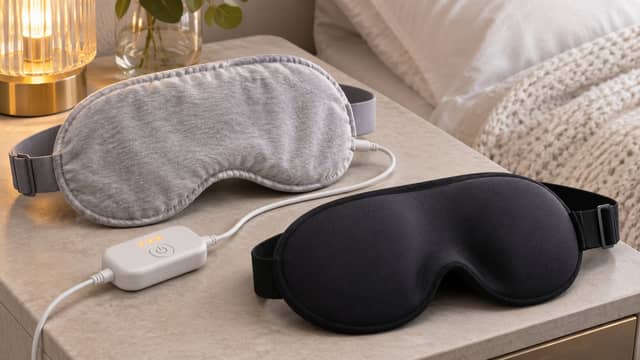
Heated eye masks are becoming a popular addition to home relaxation and personal-care routines. Unlike ordinary blackout sleep masks, these products contain a heating mechanism intended to provide warmth around the closed-eye area.
Some models use a detachable USB cable and a small temperature controller. Others include rechargeable batteries, adjustable heat settings, timers, or removable fabric covers.
These features can make a heated eye mask convenient, but they also introduce important safety considerations.
A heated eye mask is an electrical product used close to one of the most sensitive areas of the body. Incorrect temperatures, damaged cables, unsuitable power supplies, and improper cleaning can create avoidable risks.
For example, a mask may feel comfortable when first switched on but become unpleasantly warm after several minutes. A poorly positioned cable may pull the mask during use, while a damaged controller could make temperature adjustment unreliable.
Before using a heated eye mask for the first time, inspect the mask, controller, cable, and power connection; read the manufacturer’s instructions; and begin with a conservative setting.
This guide explains how to prepare a heated eye mask for its first use, inspect the electrical components, understand temperature controls, maintain hygiene, and store the product safely.
What Is a Heated Eye Mask?
A heated eye mask is a wearable product designed to provide warmth around the eye area.
Depending on its construction, it may contain a flexible heating element positioned inside or behind a fabric layer.
The mask is placed over closed eyes and secured using an adjustable strap or another suitable fastening system.
Many products are designed for relaxation or warm-compress use.
However, their features and intended purposes vary.
Common Heated Eye Mask Components
A typical powered model may include:
- A soft outer fabric
- An internal heating element
- A padded eye-contact surface
- An adjustable head strap
- A power cable
- A temperature controller
- A USB connector or dedicated power connection
- An automatic timer on certain models
- A removable, washable cover on certain models
Some masks also contain rechargeable batteries.
Others require continuous connection to a compatible external power source.
Heated Eye Mask vs Ordinary Sleep Mask
An ordinary sleep mask primarily blocks light.
A heated eye mask introduces warmth through a powered or self-heating mechanism.
These are different product categories.
A blackout sleep mask does not normally require electrical inspection.
A powered heated eye mask does.
For this reason, the two products should not be treated as interchangeable.
Why First-Use Safety Checks Matter
An electrical product may appear simple from the outside, but several components must work together safely.
1. The Heating Element Must Operate Correctly
The heating mechanism should produce warmth according to the manufacturer’s specifications.
Unexpected overheating, uneven heating, or a burning smell may indicate a problem.
2. The Controller Must Respond Properly
The controller may determine the temperature level and operating duration.
If the buttons do not work correctly, the user may be unable to adjust or stop the heating function as intended.
3. The Cable Must Be Undamaged
A damaged electrical cable can create safety risks.
Frayed insulation, exposed wires, and loose connectors should never be ignored.
4. The Power Source Must Be Compatible
Not every heated eye mask supports every USB adapter, power bank, or charger.
Using an unsuitable power supply may affect operation or create electrical hazards.
5. The Mask Must Fit Comfortably
An overly tight strap can create unnecessary pressure around the face.
The mask should not press forcefully against the eyeballs.
6. The User Must Understand the Operating Limits
Some devices have timers or automatic shutoff features.
Others require manual operation.
A user should know the intended heating duration and any restrictions before beginning.
A few minutes spent inspecting the device can help identify obvious problems before it is placed against the face.
Understanding Different Types of Heated Eye Masks
Not all heated eye masks work the same way.
USB-Powered Heated Eye Masks
These models receive electricity through a USB cable connected to a compatible power source.
Some include a small inline controller.
They may require continuous connection throughout use.
Rechargeable Heated Eye Masks
Rechargeable models contain a built-in battery.
They may operate without an attached cable after charging.
However, the battery introduces additional charging, storage, and safety requirements.
Plug-In Heated Eye Masks
Some devices use a dedicated adapter or electrical connection.
These should be used only with the approved power supply.
Self-Heating Disposable Eye Masks
Certain disposable eye masks generate warmth through a chemical reaction rather than an electrical heating element.
They do not normally have controllers or electrical cables.
Their safety instructions and operating durations may differ substantially from those of powered masks.
Reusable Microwavable Eye Masks
Some reusable masks contain materials designed to retain heat after being warmed according to specific instructions.
These are not necessarily electrical devices.
They require careful heating-time and temperature precautions.
This article focuses primarily on powered heated eye masks with a controller and cable.
Step 1: Read the Manufacturer’s Instructions Before Use
The first step is to read the product manual.
Do not assume every heated eye mask operates like another model you have previously used.
The manual should explain:
- Intended use
- Approved power supply
- How to connect the cable
- Temperature settings
- Heating duration
- Automatic shutoff
- Cleaning requirements
- Storage instructions
- Safety warnings
- Contraindications
- Warranty and support information
Check the Product’s Intended Purpose
Some masks are marketed primarily for relaxation.
Others are marketed as warm-compress accessories for particular eye-care routines.
Medical claims should be supported by appropriate evidence and regulatory status where applicable.
Do not assume that a general wellness product is an approved treatment for an eye condition.
Check the Supported Temperature Range
Some manufacturers publish temperature values.
Others use labels such as low, medium, and high.
Do not assume that two products with the same setting labels generate the same temperature.
Check Whether Sleeping Is Permitted
A mask intended for a short warm-compress session should not automatically be used while sleeping.
Unless the manufacturer explicitly permits sleep use under the applicable conditions, remain awake during operation.
Check the Cleaning Instructions
Some masks contain removable fabric covers.
Others have integrated electrical components and cannot be washed.
Understanding this distinction before use helps prevent accidental damage.
Step 2: Inspect the Heated Eye Mask Fabric
Before connecting power, examine the mask itself.
Check the Outer Surface
Look for visible damage, including:
- Tears
- Cuts
- Loose fabric
- Exposed internal components
- Broken seams
- Unusual discoloration
- Damaged fasteners
Inspect the Eye-Contact Surface
The material touching your face should be clean, intact, and appropriate for skin contact.
Look for rough edges or exposed components.
Examine the Strap
Check that the strap adjusts normally.
The fastening system should remain secure without requiring excessive tension.
Check the Heating Area
Do not bend or manipulate the internal heating element beyond what the manufacturer permits.
If the mask contains a flexible heating panel, avoid folding it sharply.
Look for Manufacturing Defects
If the mask appears damaged or incorrectly assembled, do not connect it to power.
Contact the seller or manufacturer for guidance.
Step 3: Inspect the Power Cable
The power cable is one of the most important components to check before first use.
Even a small heated accessory can become unsafe if the cable is damaged.
Examine the Entire Cable Length
Look for:
- Frayed insulation
- Exposed wiring
- Crushed sections
- Sharp bends
- Cuts
- Cracks
- Melted areas
- Unusual discoloration
- Damaged connector housing
Check Both Ends
Inspect the connection near the mask and the connection intended for the power source.
A loose or damaged connector should not be forced into place.
Check the Cable Entry Point
The area where the cable enters the mask or controller may experience repeated movement.
Look for visible strain or separation.
Avoid Improvised Repairs
Do not repair a damaged heated eye mask cable using ordinary tape, glue, or makeshift wiring.
Such repairs may not restore safe electrical operation.
Use Approved Replacement Components
If the cable is damaged, ask the manufacturer whether an approved replacement is available.
If the device is not designed for user replacement, discontinue use.
Never place a powered eye mask on your face when its electrical cable shows visible damage.
Step 4: Inspect the Temperature Controller
Many heated eye masks include a small inline controller.
This component may allow the user to change heat levels or select a timer.
Identify the Buttons
Some models have one button that cycles through settings.
Others include separate temperature and timer controls.
Understand the Indicator Lights
A controller may use coloured lights to indicate heating levels.
For example, one product may use red for its highest setting, while another may use colours differently.
There is no universal colour standard for heated eye mask controllers.
Always read the product instructions.
Check for Physical Damage
Inspect the controller for:
- Cracked housing
- Loose buttons
- Damaged indicator lights
- Exposed components
- Signs of overheating
- Loose cable connections
Test the Controller Without Wearing the Mask
When permitted by the manual, check the controls before placing the mask on your face.
Use the approved power source and observe the device carefully.
Do not leave it running unattended during testing.
Confirm That Power Can Be Switched Off
The user should understand how to stop heating immediately.
If the controller does not respond correctly, discontinue use.
Avoid Unapproved Disassembly
Do not open the controller or attempt to repair internal electronics.
Step 5: Confirm the Correct Power Supply
Some heated eye masks use a standard-looking USB connector.
However, a matching physical connector does not guarantee electrical compatibility.
Check the Voltage Requirements
Read the manufacturer’s power specifications.
Some products use a common USB power input.
Others may require a particular adapter or electrical configuration.
Check Current Requirements
The power source should meet the device’s specified requirements.
Do not assume that every available adapter is appropriate.
Check the Connector Type
Possible connections include:
- USB-A
- USB-C
- Proprietary connectors
- Dedicated DC power connections
Use the specified cable and adapter arrangement.
Avoid Damaged Adapters
Do not use an adapter that has:
- Cracked housing
- Bent pins
- Exposed wiring
- Signs of overheating
- Loose connections
Keep Electrical Connections Dry
Never place a charger or power bank where it may contact spilled water.
Avoid Charging or Operating Near Water
A bathroom sink or damp countertop is not a suitable default location for electrical eye-mask operation.
Follow the Manufacturer’s Power Instructions
Do not use an unverified voltage converter or improvised connector.
Can You Use a Power Bank With a Heated Eye Mask?
Some USB-powered heated eye masks support compatible power banks.
Others may not.
Before using one, confirm that the manufacturer permits this type of power source.
Potential Convenience
A compatible power bank may allow use without remaining close to a wall socket.
However, it also introduces a separate battery-powered device.
Important Precautions
- Use a compatible power bank.
- Inspect its cable and connectors.
- Keep it on a stable surface.
- Do not place it beneath your pillow or body.
- Avoid covering it with bedding.
- Do not use a swollen or damaged battery pack.
- Follow the power bank manufacturer’s safety instructions.
Do Not Assume Every Power Bank Works
Some power banks have automatic shutoff functions or different electrical output capabilities.
Check compatibility before use.
If the device behaves unexpectedly, disconnect it and consult the manufacturer.
Step 6: Check the Temperature Settings
Temperature control is central to safe heated eye mask use.
The skin around the eyes is relatively delicate, and the eye area requires careful handling.
Begin Conservatively
For first use, begin with the lowest appropriate setting permitted by the manufacturer.
Do not automatically select the highest temperature.
Allow Time to Assess Comfort
Warmth may change during operation.
A mask that initially feels mild may become warmer as the heating element reaches its operating condition.
Understand the Setting Labels
Low, medium, and high do not necessarily correspond to identical temperatures across different products.
Do Not Assume More Heat Means Better Results
Higher temperatures may increase discomfort or injury risk.
Any intended therapeutic use should follow appropriate professional and device-specific guidance.
Stop if the Mask Feels Too Hot
Burning, stinging, or uncomfortable heat is a reason to stop immediately.
Do not continue simply because the selected setting is labelled low.
Avoid Estimating Temperature by LED Colour
Controller light colours communicate settings according to the manufacturer’s design.
They are not universal temperature measurements.
Why Excessive Heat Is a Concern Around the Eyes
Heat can cause injury when applied at an unsuitable temperature or for too long.
The risk may increase when a person cannot detect discomfort reliably.
Potential Problems
Excessive or prolonged heat exposure may cause:
- Skin redness
- Burning sensations
- Irritation
- Thermal burns
- Discomfort around the eyelids
- Worsening of certain existing conditions
Temperature and Time Both Matter
Heat-related injury risk depends on more than the selected temperature.
Duration, pressure, contact conditions, and individual sensitivity also matter.
Avoid Direct Heat on the Eyeball
The mask should be worn according to its intended design.
Do not force the heating surface against the eyes.
Do Not Ignore Pain
Heat is not supposed to create painful sensations.
If pain or significant discomfort occurs, stop using the device.
Seek Care for Concerning Symptoms
If you experience persistent eye pain, vision changes, blistering, or significant burns, seek medical attention.
Do not continue experimenting with the mask.
Step 7: Check the Timer and Automatic Shutoff
Some heated eye masks include a built-in timer.
The timer may stop the heating function after a specified period.
Others have multiple duration options.
Why Timers Matter
A timer can help users limit the duration of heating.
However, it is not a substitute for remaining attentive to comfort and safety.
Identify the Available Duration Settings
Read the instructions to understand the choices.
Confirm How the Timer Works
Some devices start counting immediately.
Others may begin after selecting a heating mode.
Check Whether the Mask Turns Off Completely
A timer may stop the heating element while leaving an indicator light active.
The exact behaviour varies.
Avoid Exceeding the Recommended Duration
Do not repeatedly restart the timer to continue heating beyond the manufacturer’s instructions.
Do Not Assume Automatic Shutoff Makes Sleeping Safe
A timed electrical heating device may still be unsuitable for use while asleep.
Follow the manufacturer’s explicit sleep-use guidance.
For first use, a shorter permitted session at a conservative temperature is preferable to beginning with the longest and hottest settings.
Step 8: Check the Fit and Strap
A heated eye mask should sit comfortably over the intended area.
It should not require forceful pressure against the eyes.
Adjust the Strap Before Heating
Put the mask on while it is switched off.
Check whether the fit is comfortable.
Avoid Excessive Tightness
An overly tight strap may cause pressure around the face or head.
Check the Nose Area
Make sure the mask does not create uncomfortable pressure against the bridge of the nose.
Keep the Heating Panel Positioned Correctly
Follow the manufacturer’s positioning instructions.
Avoid Pressing on the Eyeballs
The mask should not be tightened to increase contact pressure.
Check Cable Direction
The cable should not pull the mask sideways or place tension on the strap.
Reassess During Use
If the mask shifts, pulls, or creates pressure, switch it off and adjust it according to the instructions.
Can You Wear Contact Lenses Under a Heated Eye Mask?
Contact lens users should be cautious.
For many heated eye masks, removing contact lenses before use is a sensible precaution, particularly when the manufacturer instructs users to do so.
Contact lenses may be unsuitable during certain warm-compress routines.
Why Instructions Matter
Eye-care requirements depend on the mask, lens type, and individual eye condition.
Do Not Assume Contact Lenses Are Compatible
A mask advertised for relaxation may not have been evaluated for use over contact lenses.
Follow Professional Guidance
If you use contact lenses for a medical or corrective purpose, follow your eye-care professional’s advice.
Stop if Your Eyes Feel Irritated
Do not continue using the mask if you develop discomfort or unusual symptoms.
Should Your Eyes Be Open or Closed?
Heated eye masks are generally intended to be worn over closed eyes, unless the product instructions state otherwise.
Why Closed Eyes Matter
The product is designed to contact the eyelid area rather than the exposed eye surface.
Avoid Looking at Screens During Use
Do not try to wear a closed-eye heated mask while reading or using a phone.
Do Not Force the Eyes Open
If you need to see something, switch off or remove the mask appropriately.
Keep the Mask in Its Intended Position
Do not reposition the heating element onto other facial areas unless the manufacturer permits that use.
Step 9: Prepare a Safe First-Use Location
Where you use the mask matters.
A stable, comfortable environment reduces the need to move around while wearing it.
Choose a Comfortable Seated or Reclined Position
Follow the device’s approved use positions.
Keep the Cable Away From Walkways
A loose cord can become a tripping hazard.
Keep the Controller Accessible
You should be able to switch the heat off without searching for the controls.
Avoid Covering the Controller
Do not trap it beneath pillows, blankets, or heavy objects.
Keep the Power Connection Safe
Use an appropriate socket or approved power source.
Avoid Using the Mask While Walking
A mask covering the eyes obstructs vision.
Remain stationary during use.
Keep Children and Pets Away From the Cable
A pulled cable may move the mask or disconnect the device unexpectedly.
Avoid Operating the Mask Near Water
Choose a dry location away from sinks, bathtubs, and spills.
Step 10: Perform a Conservative First-Use Test
Once the mask, controller, cable, and power supply have been checked, you can begin according to the manufacturer’s instructions.
First: Confirm the Mask Is Clean
Use a clean, dry eye-contact surface.
Second: Confirm the Correct Power Connection
Connect only the approved power supply.
Third: Select the Lowest Appropriate Heat Setting
Start conservatively within the manufacturer’s recommended operating range.
Fourth: Check the Timer
Select a permitted duration.
Avoid automatically choosing the maximum.
Fifth: Place the Mask Correctly
Keep your eyes closed and adjust the strap comfortably.
Sixth: Monitor the Warmth
Pay attention to how the mask feels.
Do not ignore discomfort.
Seventh: Keep the Controller Accessible
You should be able to stop heating immediately.
Eighth: Stop if Anything Feels Wrong
Remove the mask if you experience burning, sharp discomfort, dizziness, or other concerning symptoms.
Ninth: Allow the Device to Finish or Switch It Off
Follow the instructions for stopping operation.
Tenth: Disconnect and Cool
Unplug or power down the product as instructed.
Allow it to cool before cleaning or storage.
How Long Should You Use a Heated Eye Mask?
There is no universal duration suitable for every powered eye mask.
Different products have different operating limits.
Some are designed for short warm-compress sessions.
Others offer multiple timed modes.
What Determines Suitable Duration?
Relevant factors include:
- Product design
- Heating temperature
- Intended use
- Manufacturer instructions
- Individual skin sensitivity
- Eye-care recommendations
- Existing medical conditions
Why Longer Is Not Automatically Better
Prolonged heat exposure may increase irritation or thermal injury risk.
The goal is not to tolerate heat for as long as possible.
Follow the Recommended Session Length
Use the duration stated in the manual.
If a healthcare professional has recommended warm compresses for a specific condition, follow their guidance regarding suitable devices and use.
Avoid Repeated Sessions Without Guidance
Do not repeatedly restart the heater simply to increase total exposure.
Can Heated Eye Masks Help With Dry Eyes?
Warm compresses are sometimes recommended as part of the management of certain eye conditions, including some cases involving meibomian gland dysfunction.
However, this does not mean every consumer heated eye mask is clinically validated for treating dry eye disease.
Warmth and Meibomian Glands
Meibomian glands are located in the eyelids and produce oils that contribute to the tear film.
Warm-compress therapy may be recommended by an eye-care professional for certain gland-related conditions.
Device Suitability Matters
A general wellness mask may not provide the temperature control, distribution, or performance needed for a particular treatment protocol.
Follow Professional Advice
If you have dry eye symptoms, consult an optometrist or ophthalmologist.
They can help determine whether warm compresses are appropriate and which method to use.
Avoid Self-Treating Persistent Symptoms
Burning, redness, eye pain, discharge, or vision changes may have different causes.
Do not rely on a heated mask as a substitute for evaluation.
A heated eye mask marketed for relaxation should not automatically be treated as a medical device.
Who Should Be Especially Careful With Heated Eye Masks?
Some people have conditions that affect their ability to use heat safely.
Reduced Skin Sensation
People with reduced sensation may have difficulty detecting excessive warmth.
This can increase burn risk.
Diabetes-Related Sensory Problems
Individuals with diabetes-related neuropathy or impaired sensation should consult a healthcare professional before using heating products.
Recent Eye Surgery
Do not use a heated eye mask after eye surgery unless your surgeon or eye-care professional permits it.
Eye Infection or Inflammation
Certain eye conditions may require specific treatment.
Seek professional advice rather than applying heat without guidance.
Skin Conditions Around the Eyes
Irritated, damaged, or unusually sensitive eyelid skin may react poorly to heat.
Children
Powered heated eye masks may have age restrictions.
Follow manufacturer guidance and do not allow unsupervised use by children.
People Who Cannot Respond Reliably to Heat
A person who is asleep, heavily sedated, intoxicated, or unable to communicate discomfort may be at greater risk.
Avoid use under such conditions unless a specifically approved medical protocol directs otherwise.
People with Relevant Medical Conditions
If you are uncertain whether heat around the eye area is suitable for you, consult an appropriate healthcare professional.
Why You Should Avoid Falling Asleep With a Heated Eye Mask
Falling asleep while wearing a powered heating product can reduce your ability to notice increasing warmth or discomfort.
The Main Concern
During sleep, you may not recognize early signs of excessive heat or equipment problems.
Timers Have Limitations
Automatic shutoff may reduce operating duration, but it does not guarantee that every hazard is eliminated.
Cable Movement Can Occur
Turning over in bed may pull the cable or shift the mask.
The Mask May Apply Pressure
Sleeping positions may press the heated surface against the face.
A Safer General Approach
Unless the manufacturer explicitly approves sleep use under specified conditions, use the heated mask while awake.
Remove it and disconnect power before sleeping.
If you want a regular sleep mask, consider a separate non-heated blackout mask.
Heated Eye Mask vs Blackout Sleep Mask
These products are designed for different purposes.
| Feature | Heated eye mask | Blackout sleep mask |
|---|---|---|
| Primary function | Provides warmth | Blocks light |
| Electrical components | Present in powered models | Usually absent |
| Controller | May be included | Usually not needed |
| Power cable | Present in some models | Usually absent |
| Temperature settings | May be adjustable | Not applicable |
| Heating duration | Manufacturer-specific | Not applicable |
| Cleaning requirements | Must protect heating components | Depends on fabric |
| Sleep suitability | Must be explicitly confirmed | Depends on product design and comfort |
| Main safety concern | Heat, electricity, pressure, and cables | Fit, hygiene, and comfort |
A heated mask may also block some light, but that does not automatically make it suitable for overnight sleep.
Choose the product according to the actual purpose.
How to Clean a Heated Eye Mask
Cleaning requirements vary significantly between models.
Some products have washable covers.
Others have integrated electrical components that should never be immersed in water.
Step 1: Switch Off and Disconnect Power
Always follow the manufacturer’s electrical safety instructions before cleaning.
Step 2: Allow the Mask to Cool
Do not begin cleaning while the heating element remains hot.
Step 3: Identify Removable Parts
Check whether the fabric cover or eye-contact layer can be detached.
Step 4: Read the Care Label
Some covers may permit handwashing.
Others may have specific temperature or detergent requirements.
Step 5: Keep Electrical Components Dry
Never immerse a powered heating unit in water unless the manufacturer explicitly states that it is safe.
Step 6: Avoid Harsh Cleaning Chemicals
Bleach, strong solvents, and unapproved disinfectants may damage materials.
Use only permitted cleaning methods.
Step 7: Dry Completely
Do not reconnect power while washable or electrical components remain improperly wet.
Step 8: Reassemble Correctly
Return removable covers and components to their intended positions.
Step 9: Inspect Before Reuse
Check the cable, controller, and heating area after cleaning.
Can You Machine-Wash a Heated Eye Mask?
Only if the manufacturer explicitly permits machine washing of the relevant component.
A removable fabric cover may be washable even when the heating unit is not.
These parts should not be confused.
Do Not Wash the Entire Device Without Approval
Water may damage electrical components or create later safety problems.
Do Not Assume a Detachable Cable Makes the Mask Washable
Some devices still contain non-waterproof heating elements after the cable is removed.
Follow the Exact Instructions
If the manufacturer permits washing, check:
- Whether the cover must be removed
- Water-temperature limits
- Suitable detergent
- Permitted washing method
- Drying requirements
- Whether machine drying is allowed
Avoid Reconnecting Power Too Early
Ensure all relevant components meet the manufacturer’s drying requirements before use.
How to Store a Heated Eye Mask Safely
Storage affects the condition of the fabric, cable, and heating components.
Allow Complete Cooling
Do not immediately compress or pack the mask while it remains hot.
Store in a Dry Location
Avoid damp bathrooms and locations exposed to spills.
Protect the Cable
Do not wrap it tightly around the controller or mask.
Avoid Sharp Folds
Some heating elements may be damaged by excessive bending.
Follow the manufacturer’s recommended storage arrangement.
Keep Away From Heavy Objects
Do not stack heavy items on top of the mask.
Protect the Controller
Avoid crushing buttons or connections.
Keep Out of Children’s Reach
Children may mistake the device for an ordinary fabric sleep mask.
Inspect Before the Next Use
Check for wear, damage, or unusual changes.
Travelling With a Heated Eye Mask
A heated eye mask may be convenient during travel, but packing requirements depend on its power system.
USB-Powered Models
Disconnect the cable before packing, when the design permits it.
Protect connectors from damage.
Rechargeable Models
Check the battery type and travel restrictions.
For air travel, confirm the current airline rules for lithium batteries and portable electronic devices.
Avoid Tight Packing
Do not sharply fold or compress heating components.
Protect the Controller
Store it where buttons and cable connections will not be crushed.
Keep the Mask Dry
Avoid packing it beside leaking toiletries.
Check International Power Compatibility
A travel plug adapter does not automatically convert voltage.
Follow the product’s electrical specifications.
Inspect After Travel
Before reconnecting power, check the mask and cable for damage.
Common Heated Eye Mask Mistakes
Mistake 1: Skipping the Manual
Different products have different operating limits.
Better approach: Read the instructions before first use.
Mistake 2: Starting on Maximum Heat
High settings may create unnecessary discomfort.
Better approach: Begin conservatively according to the manual.
Mistake 3: Using an Unverified Charger
A matching connector does not guarantee compatibility.
Better approach: Use an approved power source.
Mistake 4: Ignoring Cable Damage
Frayed or loose connections create electrical concerns.
Better approach: Remove damaged equipment from use.
Mistake 5: Falling Asleep During Heating
Sleep reduces awareness of discomfort.
Better approach: Remain awake unless the device is explicitly approved for sleep use.
Mistake 6: Tightening the Strap Excessively
Unnecessary pressure can cause discomfort around the eyes.
Better approach: Adjust for a secure but comfortable fit.
Mistake 7: Using the Mask Over Contact Lenses Without Guidance
Certain eye-care precautions may apply.
Better approach: Follow manufacturer and eye-care professional instructions.
Mistake 8: Washing the Electrical Unit
Water may damage internal components.
Better approach: Clean only as permitted.
Mistake 9: Folding the Heating Element Sharply
Some internal structures may be damaged.
Better approach: Store according to the manual.
Mistake 10: Assuming the Mask Treats Every Eye Problem
Consumer wellness products have different intended uses and levels of supporting evidence.
Better approach: Seek professional assessment for persistent eye symptoms.
Troubleshooting Common Heated Eye Mask Problems
Problem: The Mask Does Not Heat
Possible causes: Power connection, incompatible adapter, controller setting, or device fault.
What to do: Check the approved setup and manual.
Do not attempt internal repairs.
Problem: The Mask Becomes Too Hot
What to do: Switch it off immediately and remove it.
Discontinue use if the heating appears abnormal.
Problem: The Controller Does Not Respond
Possible causes: Damaged buttons, connection problems, or electronic failure.
What to do: Disconnect power and contact the manufacturer.
Problem: The Cable Feels Unusually Hot
What to do: Stop using the device.
Disconnect it safely and seek manufacturer guidance.
Problem: One Area Feels Much Hotter Than Another
Possible cause: Uneven heating or a component problem.
What to do: Stop use and consult the manufacturer.
Problem: The Mask Has a Burning Smell
What to do: Switch off and disconnect power if safe.
Do not continue using it.
Problem: The Strap Causes Pressure
Possible cause: Incorrect adjustment or unsuitable mask shape.
What to do: Remove the mask and reassess fit.
Problem: My Skin Becomes Red or Irritated
What to do: Stop using the mask.
Seek medical advice if irritation persists or worsens.
Problem: The Mask Became Wet
What to do: Do not connect power.
Follow the manufacturer’s instructions for accidental moisture exposure.
Problem: The Timer Does Not Stop Heating
What to do: Switch off and disconnect the device safely.
Do not rely on a faulty timer.
What to Look for When Buying a Heated Eye Mask
If you are comparing powered eye masks, consider the following.
1. Clear Manufacturer Instructions
The product should provide understandable operating and safety guidance.
2. Suitable Temperature Controls
Check whether adjustable heat settings are available.
3. Documented Heating Duration
Look for clear information about recommended use and timers.
4. Automatic Shutoff
A documented shutoff feature may be useful, although it does not eliminate every risk.
5. Comfortable Fabric
The eye-contact material should be suitable for its intended use.
6. Adjustable Strap
A comfortable fit helps avoid unnecessary pressure.
7. Appropriate Cable Design
The connection should be secure and convenient for the intended use.
8. Compatible Power Supply
Check the input requirements and included accessories.
9. Cleaning Convenience
A removable washable cover may make routine hygiene easier.
10. Storage Requirements
Some masks require careful handling of internal heating components.
11. Product Support
A manufacturer with accessible service and replacement guidance can be helpful.
12. Intended Use
Distinguish between a general relaxation accessory and a device marketed for a medical purpose.
Do not rely on unsupported health claims.
Frequently Asked Questions
1. How do I use a heated eye mask for the first time?
Read the manufacturer’s instructions, inspect the mask and cable, confirm the power supply, choose a conservative permitted setting, and monitor comfort throughout the session.
2. Are heated eye masks safe?
They may be suitable when correctly designed and used as instructed.
However, excessive heat, damaged electrical components, and improper use can cause injury.
3. Should I start on the lowest temperature?
Beginning with the lowest appropriate setting permitted by the manufacturer is a sensible first-use precaution.
4. Can I use a phone charger for a USB heated eye mask?
Only if it meets the device’s specified electrical requirements.
Do not assume every USB adapter is compatible.
5. Can I connect a heated eye mask to a power bank?
Some models permit compatible power banks.
Follow the manufacturer’s guidance.
6. Is it safe to sleep with a heated eye mask?
Do not sleep while wearing a powered heated mask unless its manufacturer explicitly permits that use under the applicable conditions.
7. How long should I wear a heated eye mask?
Follow the product’s recommended session duration.
There is no universal time suitable for every model.
8. Can I use the highest temperature for better results?
More heat does not automatically improve outcomes.
Excessive temperature may increase injury risk.
9. Should my eyes remain closed?
Generally, powered eye masks are designed to be used over closed eyes.
Follow the specific instructions.
10. Can I use a heated eye mask while wearing contact lenses?
Follow the manufacturer’s and eye-care professional’s guidance.
Removing lenses before use is commonly advisable when instructed.
11. Can heated eye masks help dry eyes?
Warm compresses may be recommended for some eye conditions, but not every consumer heated mask is suitable for medical treatment.
Consult an eye-care professional.
12. Can a heated mask burn the skin?
Yes.
Excessive temperature or prolonged contact can cause thermal injury.
13. What if the mask feels unevenly hot?
Stop using it and seek manufacturer guidance.
Do not continue if heating appears abnormal.
14. What do controller light colours mean?
They vary by product.
Read the manual rather than assuming a universal colour system.
15. Does automatic shutoff guarantee safety?
No.
It is one safety feature and does not eliminate overheating, damage, or misuse risks.
16. Can I wash a heated eye mask?
Cleaning requirements vary.
Some models have washable covers, while electrical components must remain dry.
17. Can I machine-wash the mask?
Only when the manufacturer explicitly permits machine washing of the relevant component.
18. Can I use a heated eye mask after eye surgery?
Only with approval from your surgeon or eye-care professional.
19. Can children use heated eye masks?
Follow manufacturer age restrictions.
Do not allow unsupervised use by children.
20. Can a person with reduced skin sensation use one?
Reduced sensation can increase the risk of burns.
Seek healthcare guidance before using heating products.
21. Why does my heated eye mask stop after a few minutes?
It may have a timer, protective shutoff, power issue, or other fault.
Check the instructions.
22. What should I do if the cable is damaged?
Stop using the device and obtain manufacturer-approved replacement or service.
Do not attempt improvised repairs.
23. Can I fold a heated eye mask for travel?
Only in the manner permitted by the manufacturer.
Sharp folding may damage some heating elements.
24. Is a heated eye mask better than a regular sleep mask?
They serve different purposes.
A heated mask provides warmth, while a conventional sleep mask primarily blocks light.
25. What is the most important first-use precaution?
Confirm that the product, controller, cable, and power supply are safe and suitable, then follow the manufacturer’s instructions using conservative settings.
Final Heated Eye Mask First-Use Checklist
Before using a powered heated eye mask, complete the following checks.
Product Inspection
- Read the manufacturer’s instructions.
- Confirm the product’s intended use.
- Inspect the outer fabric.
- Check the eye-contact surface.
- Examine the adjustable strap.
- Look for exposed internal components.
- Check for tears or unusual damage.
Cable and Controller
- Inspect the full cable length.
- Check for exposed wires.
- Inspect both connectors.
- Examine the cable entry point.
- Check the controller housing.
- Identify the control buttons.
- Understand indicator lights.
- Confirm how to switch the heater off.
- Do not use damaged components.
Power Supply
- Confirm electrical compatibility.
- Use an approved adapter.
- Check power bank compatibility when relevant.
- Keep connections dry.
- Avoid damaged chargers.
- Keep cables away from walkways.
- Do not cover power supplies with bedding.
Temperature and Duration
- Check available heat settings.
- Begin with a conservative permitted temperature.
- Understand the timer.
- Follow recommended operating duration.
- Remain awake unless sleep use is explicitly approved.
- Stop if heating becomes uncomfortable.
- Do not repeatedly extend heating beyond instructions.
Fit and Personal Safety
- Adjust the strap comfortably.
- Avoid pressure against the eyeballs.
- Keep the eyes closed as instructed.
- Follow contact lens precautions.
- Do not use on irritated or damaged skin without guidance.
- Consider relevant medical conditions.
- Stop if pain or vision changes occur.
After Use
- Switch off the device.
- Disconnect power as instructed.
- Allow the mask to cool.
- Clean only approved components.
- Keep electrical parts dry.
- Inspect the cable after use.
- Store without excessive folding.
- Protect the controller from damage.
- Keep the mask away from children and pets.
Final Thoughts
A powered heated eye mask can be a convenient accessory for a home relaxation or eye-care routine, but safe operation should begin before the first heating session.
The most important steps are straightforward.
Inspect the fabric, controller, cable, and power connection.
Read the manufacturer’s operating instructions.
Understand the temperature settings and timer.
Check that the mask fits comfortably without placing unnecessary pressure against the eyes.
For first use, begin with a conservative setting and remain attentive to how the warmth feels.
Do not assume that a higher temperature or longer session will produce better results.
Likewise, do not rely on automatic shutoff as permission to sleep while wearing a device that is not specifically approved for that purpose.
Cleaning and storage are equally important.
Some products have removable washable covers, while others contain integrated electrical components that must remain dry.
Follow the care instructions and avoid sharply bending or compressing the heating element.
If the controller stops responding, the cable becomes damaged, or the mask produces unusual heat, discontinue use and seek manufacturer guidance.
Finally, remember that a wellness accessory is not automatically an appropriate medical treatment.
If you have persistent eye symptoms or a condition requiring warm-compress therapy, consult a qualified eye-care professional.
The best heated eye mask routine begins with a careful hardware inspection, correct electrical connections, comfortable temperature settings, and consistent attention to safety.
These habits help make first-time use more manageable while reducing avoidable risks associated with powered heating accessories.
Physical Glow editorial note: This article provides general consumer wellness and electrical-product safety information. Heated eye mask designs, temperature settings, cleaning requirements, and medical suitability vary. Follow the manufacturer’s instructions and seek advice from an ophthalmologist, optometrist, or other qualified healthcare professional for eye-related conditions. Discontinue use if you experience pain, burns, significant irritation, or changes in vision.


