Makeup Basics: A Beginner’s Guide to Building Your First Kit
Starting with makeup does not require a drawer full of products. This beginner-friendly guide explains the essentials, what each product does and how to build a simple kit around your skin, preferences and everyday routine.
Walking into a makeup store for the first time can make a simple routine feel unnecessarily complicated.
Foundation comes in different finishes and coverage levels. Concealers may be designed for the under-eye area, blemishes or both. There are primers, powders, blushes, bronzers, highlighters, complexion boosters, mascaras, liners, brow products and dozens of lip finishes.
The good news is that you do not need all of them.
A useful beginner makeup kit should help you achieve the look you actually want without requiring ten products to correct what the first five created.
For most people, the best place to start is with a few versatile basics and add products only when you understand what role they will play.
Start With the Look You Want
Before buying anything, decide what you want makeup to do for you.
Someone who wants a natural five-minute routine has very different needs from someone interested in full-coverage makeup or more creative eye looks.
Your goal might be:
- evening out the appearance of your complexion;
- covering occasional blemishes;
- making the eyes look more defined;
- adding colour to the cheeks;
- creating a more polished everyday look;
- adding colour or shine to the lips;
- experimenting with makeup as a creative hobby.
There is no requirement to use every category.
A perfectly functional everyday routine might contain only:
skin tint or foundation → blush → mascara → lip product
Another person may prefer:
concealer → brows → mascara → lip balm
Both are valid makeup routines.
Step 1: Decide Whether You Need Foundation
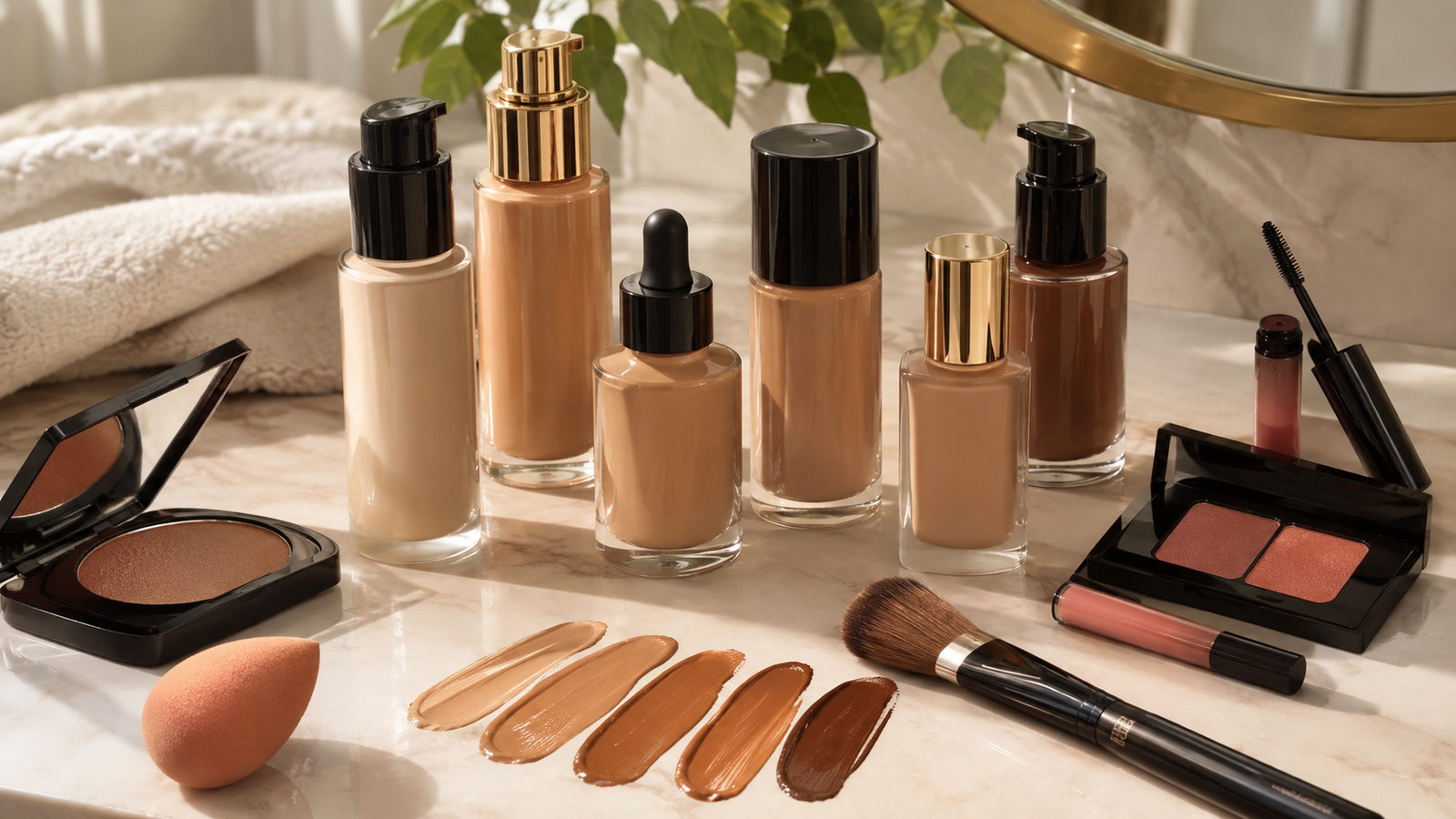
Foundation is designed to make the complexion look more even.
But it is not mandatory.
If you are comfortable with your skin and only want to cover a few areas, concealer alone may be enough.
If you do want foundation, three things matter most:
Coverage
Foundation commonly falls somewhere between:
- sheer;
- light;
- medium;
- full coverage.
Sheer and light formulas allow more of the natural skin to show through.
Medium coverage can even out the complexion while still looking relatively natural.
Full coverage is designed to conceal more visible unevenness.
More coverage is not automatically better. It simply creates a different result.
Finish
Common foundation finishes include:
Matte: designed to reduce the appearance of shine.
Natural: intended to resemble the skin’s normal finish.
Radiant or dewy: designed to create a more luminous appearance.
Your preferred finish is partly aesthetic, although skin type can influence how comfortable a formula feels throughout the day.
Shade
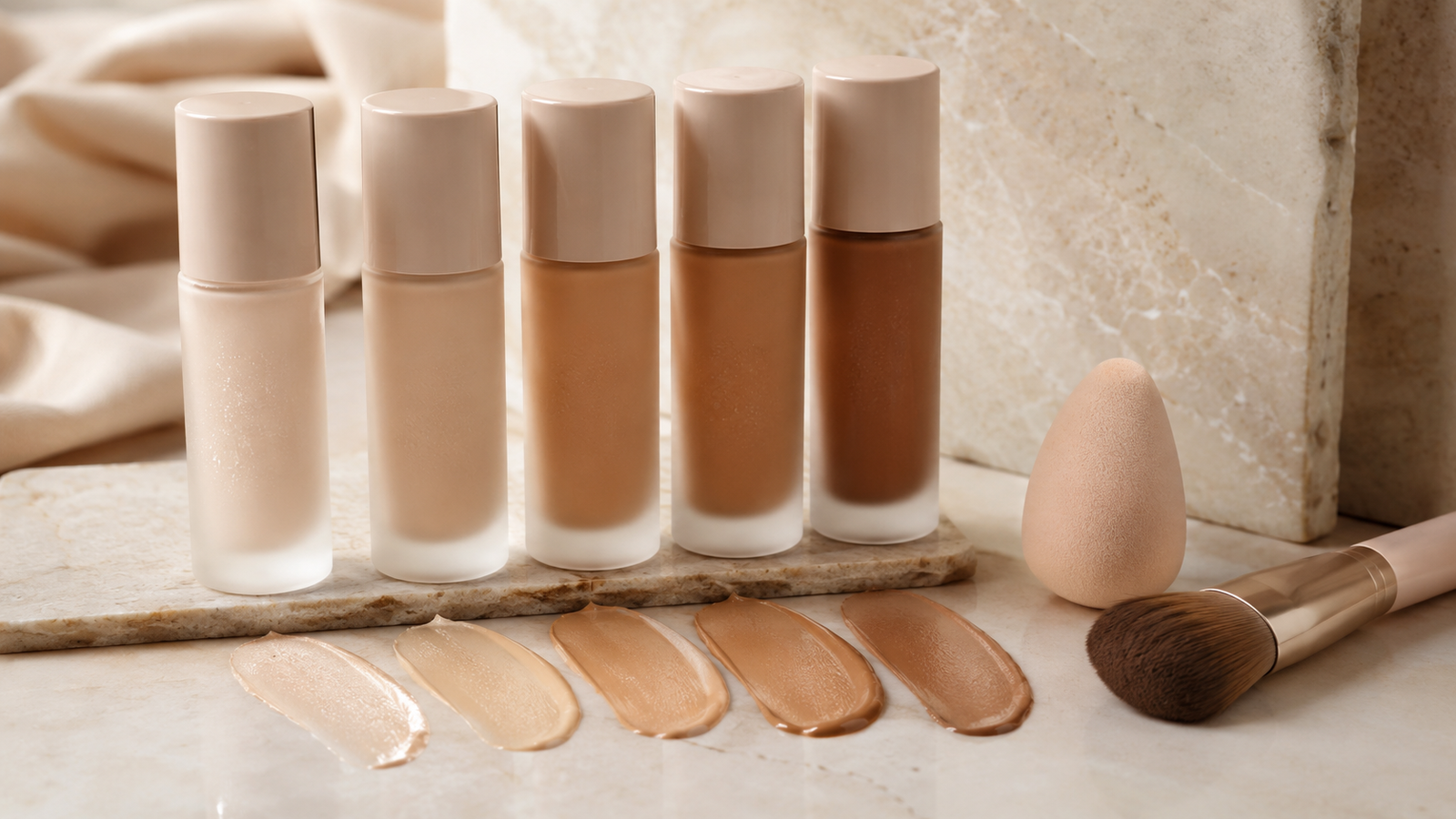
Shade matching is one of the most important parts of choosing foundation.
The goal is usually to find a shade that blends naturally with the face, neck and surrounding skin rather than creating a visible line around the jaw.
Undertone also matters.
Common undertone descriptions include:
- warm;
- cool;
- neutral;
- olive.
These labels are useful starting points, but actual shades can vary considerably between brands.
We will cover foundation selection in detail in a separate guide.
Step 2: Use Concealer Where You Actually Need It
Concealer provides more concentrated coverage in smaller areas.
You might use it for:
- blemishes;
- areas of redness;
- pigmentation;
- under-eye darkness;
- spots that foundation did not fully cover.
Beginners often assume concealer needs to be applied heavily under both eyes.
It does not.
Use as much—or as little—as produces the result you want.
A thin layer placed strategically can often look more natural than a large amount spread across the entire under-eye area.
Step 3: Add Colour Back With Blush
Foundation and concealer can make the complexion look more even, but they can also reduce some of the natural variation in colour.
Blush adds colour back to the cheeks.
Common formats include:
- powder;
- cream;
- liquid;
- stick.
Powder blush is familiar and easy to control with a brush.
Cream and liquid products can create a more skin-like finish but may require slightly different application techniques.
For beginners, the formula you find easiest to control matters more than following trends.
Start with a small amount.
You can always add more.
Removing too much blush after it has been heavily applied is considerably harder.
Step 4: Decide Whether You Need Powder
Powder can help reduce shine, set complexion products and change the finish of makeup.
But not everyone needs to powder the entire face.
If certain areas become shiny—such as the forehead, nose or chin—you might apply powder primarily there.
Someone who prefers a radiant finish may use very little.
Someone with oily skin or who wants makeup to remain more matte may prefer more.
Again, this is a tool rather than an obligatory step.
Step 5: Keep Eye Makeup Simple at First
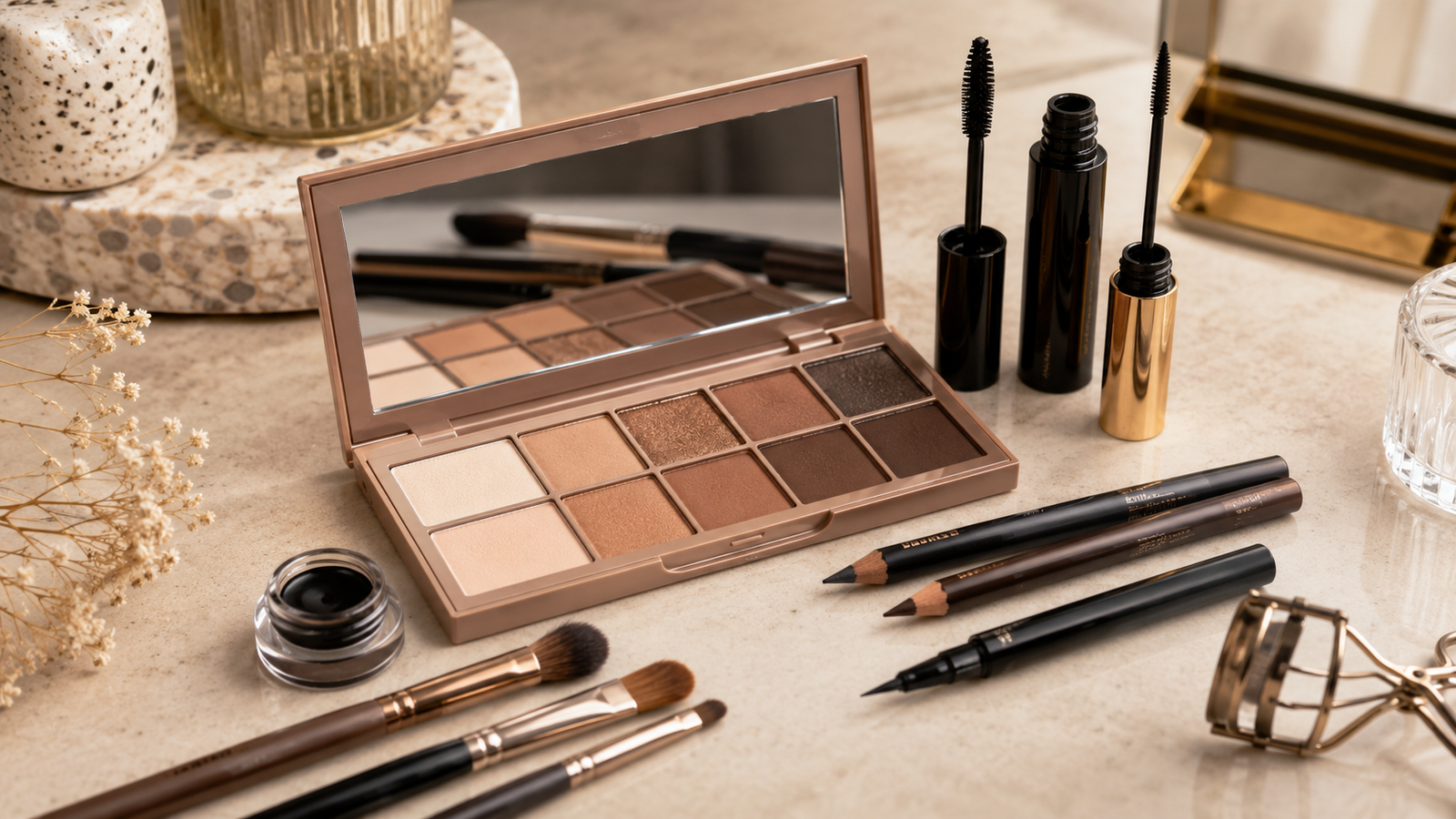
A beginner eye routine does not require a large eyeshadow palette.
Mascara alone can make a noticeable difference to the appearance of the eyes.
If you want more definition, you can gradually add:
- eyeliner;
- neutral eyeshadow;
- brow products.
Mascara
Mascara formulas are commonly positioned around:
- length;
- volume;
- curl;
- definition;
- water resistance.
Think about what you actually want from your lashes.
If they already appear long but you want more fullness, volume may matter more than length.
If your lashes tend to lose their curl, the formula and brush design may become more important.
A separate mascara guide will help break down these differences.
Eyeshadow
For a basic everyday look, one or two neutral shades may be enough.
You do not need a twenty-shade palette simply because it appears to offer better value.
A small selection of colours you actually use can be more practical.
Step 6: Don’t Forget the Brows—But Don’t Overcomplicate Them
Brows can frame the face, but they do not necessarily require dramatic reshaping.
Common brow products include:
- pencils;
- powders;
- gels;
- pomades.
A pencil can fill sparse areas.
Clear or tinted gel can help keep hairs in place.
Pomades generally create a stronger, more defined look.
If your brows already have the shape and density you like, you may not need anything beyond a little grooming.
Step 7: Choose Lip Products Based on Comfort and Wear
Lip products vary enormously.
Common categories include:
- lip balm;
- tinted balm;
- gloss;
- lipstick;
- liquid lipstick;
- lip stain;
- lip liner.
The right product depends partly on how much maintenance you are willing to accept.
Balm and tinted balm
Easy, comfortable and generally simple to reapply.
Gloss
Adds shine and can be worn alone or over colour.
Traditional lipstick
Available in finishes ranging from creamy to matte and offers varying levels of colour intensity.
Liquid lipstick
Often designed for stronger colour and longer wear, although comfort varies considerably between formulas.
Lip stain
Designed to leave longer-lasting colour with less visible product sitting on the lips.
A product that technically lasts longer is not automatically better if you dislike how it feels.
Comfort matters in an everyday makeup routine.
What About Primer?
Primer sits between skincare and makeup and is designed to change how makeup applies or wears.
Different primers may focus on:
- smoothing;
- oil control;
- hydration;
- grip;
- radiance.
You do not automatically need one.
If your foundation already applies well and lasts as long as you need, adding primer simply because makeup tutorials include one may not improve your routine.
Consider primer when you have a specific problem you want it to solve.
What Are Complexion Boosters?
Complexion boosters have become increasingly popular.
Depending on the product, they may be positioned somewhere between:
- makeup;
- illuminating primer;
- sheer complexion product;
- liquid highlighter.
They can be used alone, underneath foundation, mixed with complexion products or applied selectively for additional luminosity.
The category is broad, so the exact purpose depends heavily on the individual formula.
We will cover complexion boosters separately because they should not automatically be treated as either foundation or highlighter.
Brushes, Sponges or Fingers?
All three can work.
Fingers
Convenient for products such as:
- skin tints;
- cream blush;
- certain concealers;
- some complexion products.
The warmth of the fingers can help spread creamy formulas.
Makeup sponge
A damp makeup sponge can create a blended finish with many liquid and cream complexion products.
It does absorb some product, so application technique matters.
Brushes
Different shapes can provide more control for:
- foundation;
- concealer;
- powder;
- blush;
- eyeshadow;
- brows.
You do not need an enormous brush set as a beginner.
A few useful tools are enough.
A Simple Beginner Makeup Kit
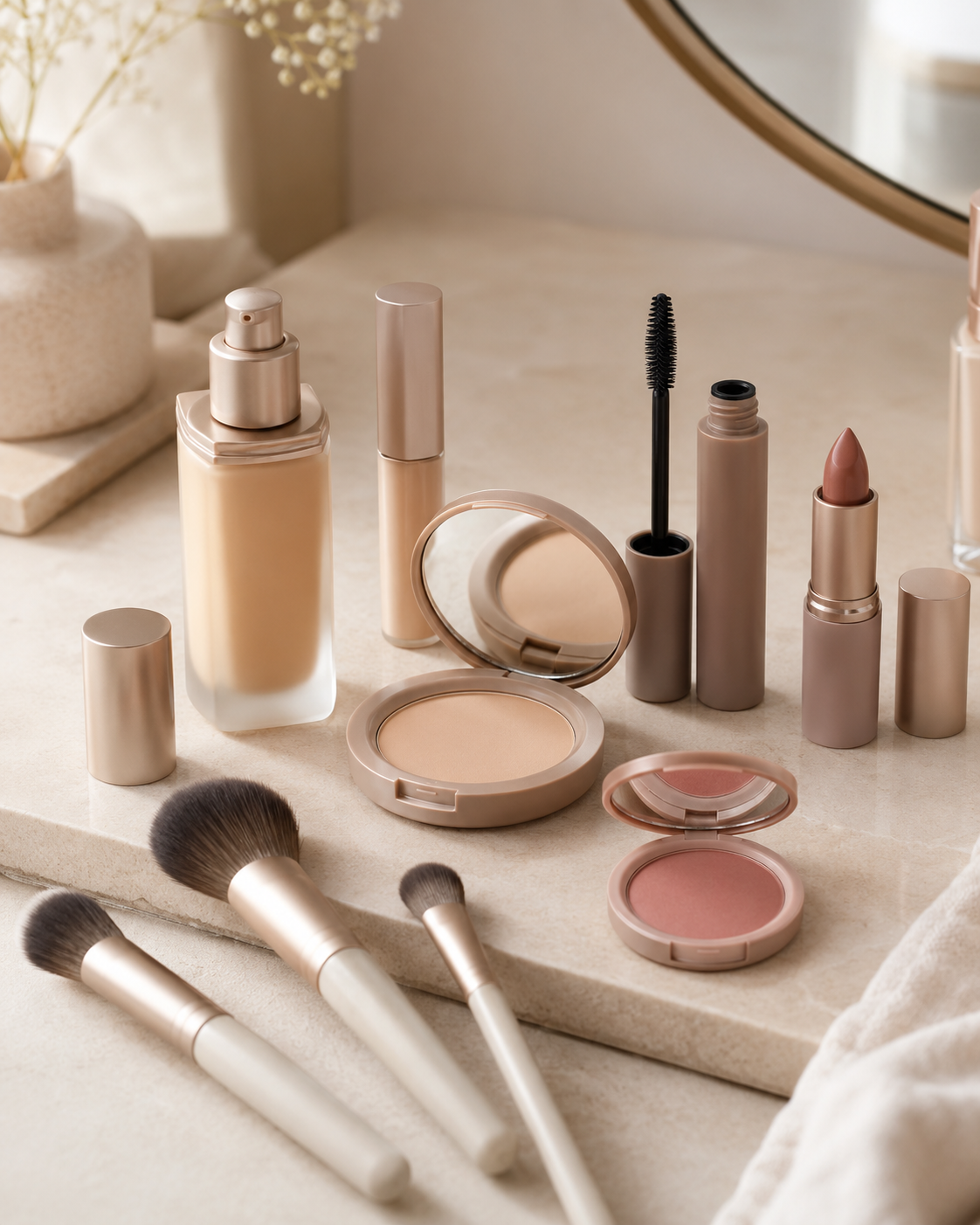
If you are starting from zero, consider beginning with:
Essential for many routines
1. Foundation, skin tint or concealer
Choose according to how much complexion coverage you want.
2. Blush
Adds colour and dimension.
3. Mascara
Provides simple eye definition.
4. Lip product
Choose a balm, tint, gloss or lipstick according to your preference.
That alone can create a complete everyday look.
Optional additions
Add these only if they serve a purpose:
Powder — for shine control or setting.
Brow product — for additional definition.
Eyeliner — for stronger eye definition.
Eyeshadow — for additional colour or dimension.
Primer — if you want to address a specific makeup-wear issue.
Complexion booster or highlighter — for luminosity.
There is no advantage in buying all of them on day one.
A Simple Everyday Makeup Routine
A beginner routine might look like this:
Step 1: Prepare the skin
Start with your normal skincare routine.
Allow products to settle before applying makeup, particularly if you use sunscreen.
Step 2: Apply complexion coverage
Use foundation, skin tint or concealer depending on the coverage you want.
Blend gradually rather than beginning with a heavy layer.
Step 3: Add blush
Apply a small amount and build gradually.
Step 4: Set areas if needed
Use powder where you experience unwanted shine or want extra setting.
Step 5: Define the eyes
Apply mascara.
Add brows, eyeliner or eyeshadow only if desired.
Step 6: Finish with lips
Apply your preferred lip product.
That is already a complete makeup routine.
Common Beginner Makeup Mistakes
Buying too many products at once
A large kit can make it harder to learn what each product actually does.
Start small and add products as your technique develops.
Choosing foundation by online shade names alone
“Medium beige” or “warm nude” can mean very different things between brands.
Shade references, undertone information and real-world testing where possible can help.
Applying maximum coverage immediately
Start with a smaller amount and build only where needed.
This gives you more control over the final appearance.
Following every trend
A product being popular does not mean it has a useful place in your routine.
If you already like your complexion finish, you may not need the newest primer or glow product.
Ignoring comfort
Makeup is worn on your skin, lips and around your eyes for hours.
How a product feels matters.
A formula that looks good but feels unpleasant is unlikely to become an everyday favourite.
Assuming expensive means better
Price can reflect packaging, branding, formulation, distribution and many other factors.
Excellent makeup exists across different price ranges.
The useful question is whether a product performs the function you need at a price that makes sense to you.
How to Grow Your Makeup Kit Over Time
After using a simple routine for a while, you will start noticing what you actually want to change.
Maybe:
- your foundation becomes too shiny;
- mascara smudges;
- you want more lip colour;
- you want stronger brow definition;
- complexion makeup looks too flat;
- you want your makeup to last longer.
Those are good reasons to add or replace products.
This approach is much better than buying products simply because they appear on a generic “makeup essentials” checklist.
The Physical Glow Takeaway
A beginner makeup kit should be built around your desired look, not the maximum number of products you can fit into a routine.
Start with the basics:
complexion coverage if you want it, blush, mascara and a lip product.
Then add powder, brows, eyeshadow, primer, complexion boosters or other products only when they solve a specific need or help create a look you genuinely enjoy.
Once you understand what each category does, choosing individual products becomes much easier—and you are far less likely to spend money on makeup that never leaves the drawer.