How to Choose a Face Serum for Your Skin Concern
Learn how to choose a face serum for your skin concern, with practical guidance on skin concern, active ingredients, texture and routine compatibility. This beginner-friendly guide helps you make a clear, informed choice without unnecessary complexity.
Face serums can be useful, but they are also one of the easiest skincare categories to overcomplicate.
There are serums for:
- hydration;
- dullness;
- uneven tone;
- dark spots;
- acne-prone skin;
- excess oil;
- visible signs of ageing;
- barrier support;
- redness and sensitivity.
That does not mean your skin needs several of them at once.
A serum should have one clear job in your routine.
For most people, the best approach is:
identify your main concern → choose an appropriate active ingredient → check the formula and strength → introduce it gradually → judge how your skin responds
The goal is not to build a collection of serums.
It is to choose the simplest formula that addresses the concern you actually have.
What Is a Face Serum?
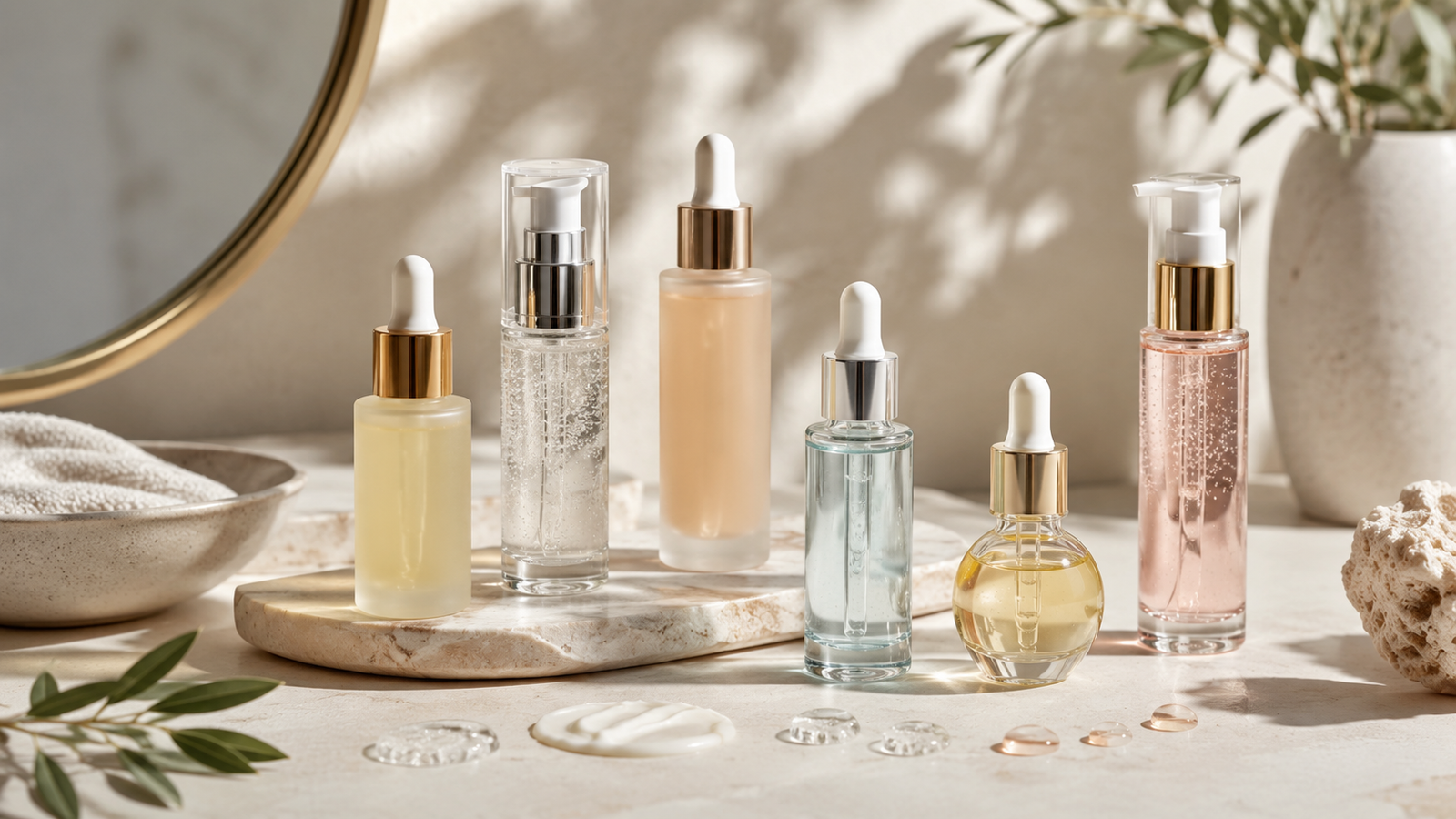
A face serum is generally a lightweight skincare product designed to deliver particular ingredients to the skin.
Serums often have:
- watery;
- gel-like;
- lightweight lotion;
- or thin emulsion textures.
The word serum, however, does not tell you whether a product is effective.
Two serums can have completely different purposes.
One may mainly contain hydrating ingredients.
Another might contain exfoliating acids.
Another may contain vitamin C.
Another may contain a retinoid.
So rather than asking:
“Which serum is best?”
ask:
“Which serum is appropriate for the skin concern I want to address?”
Do You Actually Need a Serum?
Not necessarily.
A basic skincare routine can work perfectly well without one.
The foundation of most routines remains:
cleanser → moisturizer → sunscreen
A serum becomes useful when you have a specific concern that those basic products are not intended to address.
For example:
- your skin regularly feels dehydrated;
- you want to target uneven-looking pigmentation;
- you are dealing with clogged pores;
- you want to introduce an evidence-supported anti-ageing ingredient.
If your skin is comfortable and you have no particular concern, you do not need to add a serum simply because skincare routines online include one.
Start With One Main Skin Concern
Before shopping, decide which issue matters most to you.
Trying to treat five concerns at once usually leads to a complicated routine containing several active ingredients.
That can make it difficult to tell:
- which product is helping;
- which product is irritating your skin;
- whether two products are duplicating the same job;
- whether you actually need every step.
Choose one primary concern first.
Common examples include:
Dehydration
Your skin may feel:
- tight;
- temporarily plumper after moisturizer;
- uncomfortable in dry environments;
- lacking in surface hydration.
Dryness
Dry skin generally produces less oil and may benefit more from an overall routine containing appropriate cleansers and moisturizers rather than relying only on a hydrating serum.
Dullness
Skin can look dull because of:
- dehydration;
- uneven texture;
- pigmentation;
- dryness;
- surface buildup.
Identifying the likely cause matters.
Dark Spots or Uneven Tone
Pigmentation may be influenced by:
- previous acne;
- sun exposure;
- irritation;
- hormonal factors;
- other skin conditions.
Sun protection is especially important when pigmentation is a concern.
Acne or Clogged Pores
You may be dealing with:
- blackheads;
- whiteheads;
- occasional breakouts;
- excess oil;
- persistent inflammatory acne.
Different levels of acne may require very different approaches.
Visible Signs of Ageing
Your concerns might include:
- fine lines;
- uneven tone;
- texture;
- loss of visible radiance.
Again, you do not need several anti-ageing serums simultaneously.
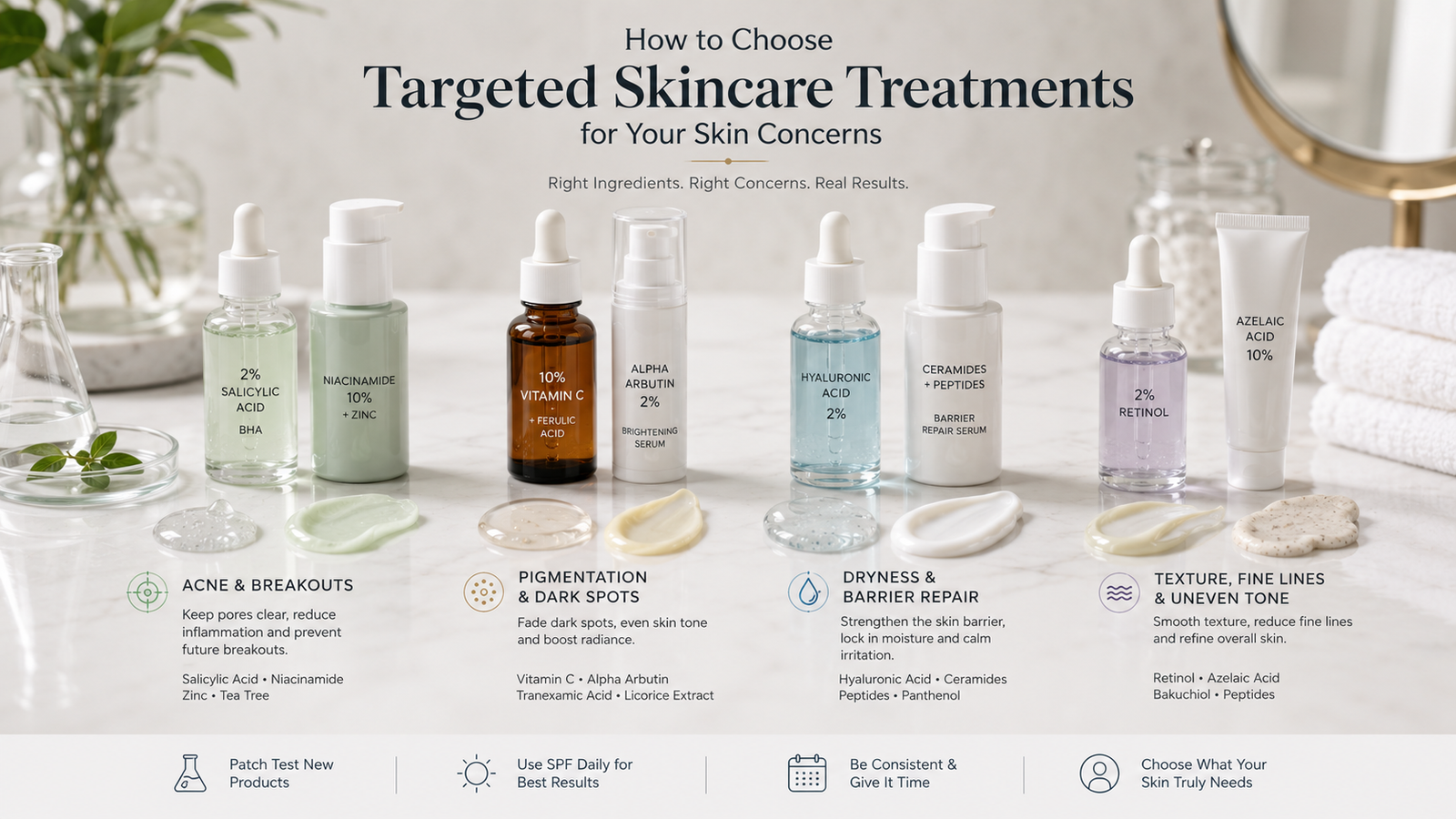
For Dehydration: Look for Humectants
If your main concern is dehydration, look for ingredients that help attract and retain water at the skin surface.
Common examples include:
- glycerin;
- hyaluronic acid;
- sodium hyaluronate;
- panthenol;
- beta-glucan.
Hyaluronic Acid
Hyaluronic acid is one of the most common serum ingredients.
It is a humectant, meaning it helps attract water.
It can make the skin feel:
- more hydrated;
- smoother;
- temporarily plumper.
But hyaluronic acid is not automatically better than every other humectant.
Glycerin, for example, is also an effective and widely used moisturizing ingredient.
You do not need multiple hyaluronic-acid serums simply because they contain different molecular weights or marketing claims.
How to Use a Hydrating Serum
A common routine is:
cleanser → hydrating serum → moisturizer
Applying moisturizer afterward helps support overall hydration.
Some people prefer applying hydrating serums to slightly damp skin.
Follow the product instructions and see what works comfortably for you.
For Dullness: First Identify the Cause
“Dull skin” is a vague term.
Before choosing a brightening serum, ask what might be causing the appearance.
If the skin is dehydrated, a hydrating routine may improve its appearance.
If uneven pigmentation is the issue, a pigment-targeting ingredient may be more appropriate.
If rough surface texture is the issue, gentle exfoliation may sometimes help.
Do not automatically assume that dullness requires a strong acid serum.
For Brightening and Uneven Tone: Consider Vitamin C
Vitamin C is commonly used in skincare for its antioxidant and brightening properties.
One extensively studied form is:
L-ascorbic acid
But vitamin C products vary considerably.
Factors include:
- form of vitamin C;
- concentration;
- pH;
- packaging;
- stability;
- supporting ingredients.
Is a Higher Vitamin C Percentage Better?
Not necessarily.
Higher concentrations can increase irritation without necessarily producing proportionally better results.
If you are new to vitamin C, starting with a well-formulated moderate-strength product may be more practical than immediately choosing the highest concentration available.
Packaging Matters
Vitamin C—particularly L-ascorbic acid—can be unstable.
Packaging that limits exposure to:
- air;
- light;
- heat;
can help preserve the formula.
If a vitamin C serum changes dramatically in colour, smell or texture, check the manufacturer’s guidance regarding stability and storage.
For Uneven Tone and Oil Control: Consider Niacinamide
Niacinamide is a form of vitamin B3 used widely in skincare.
Depending on the formula, it may support:
- skin-barrier function;
- more even-looking tone;
- oil regulation;
- overall skin comfort.
One advantage of niacinamide is that it is often relatively easy to incorporate into routines.
Do You Need 10% or More?
Not necessarily.
Higher percentages are heavily marketed, but they are not automatically more effective.
Some people find high-niacinamide formulas irritating.
If a lower concentration gives you the benefit you want without irritation, there is no reason to increase it simply because another product contains more.
For Dark Spots: Sun Protection Comes First
If pigmentation is your concern, sunscreen should be one of the most consistent parts of your routine.
Without adequate sun protection, pigmentation may:
- become darker;
- return;
- respond more slowly to treatment.
Serums marketed for dark spots may contain ingredients such as:
- vitamin C;
- niacinamide;
- azelaic acid;
- alpha arbutin;
- tranexamic-acid-based cosmetic formulations;
- exfoliating acids;
- retinoid ingredients.
You do not need all of them together.
Choose one appropriate treatment and evaluate it before adding another.
For Acne-Prone or Clogged Skin: Consider Salicylic Acid
Salicylic acid is a beta-hydroxy acid, or BHA.
Because it is oil-soluble, it is commonly used in products targeting:
- clogged pores;
- blackheads;
- excess oil;
- some forms of acne.
Serum or Cleanser?
Salicylic acid appears in both:
- cleansers;
- leave-on treatments.
A cleanser has shorter contact time.
A leave-on serum can provide greater exposure but may also be more irritating.
If you already use salicylic acid elsewhere in your routine, adding another salicylic-acid serum may be unnecessary.
Start Gradually
If you are new to exfoliating acids, you do not necessarily need daily use.
Depending on the product and your tolerance, you might begin less frequently.
Follow the product instructions.
Reduce use if your skin develops:
- persistent burning;
- excessive dryness;
- peeling;
- significant redness.
What About Acne Treatment Serums?
Acne is a medical condition, and its severity varies considerably.
Some over-the-counter skincare ingredients can help with mild acne.
However, if you have:
- painful acne;
- widespread inflammatory acne;
- nodules or cysts;
- acne that is leaving scars;
- acne that does not improve;
seeing a dermatologist can be more useful than continuously adding cosmetic serums.
For Redness or Sensitive-Feeling Skin: Prioritize Simplicity
If your skin becomes irritated easily, look for formulas designed around barrier support and comfort rather than aggressive activity.
Potentially useful ingredients may include:
- panthenol;
- glycerin;
- beta-glucan;
- ceramides;
- centella-derived ingredients;
- soothing humectants and emollients.
But the entire formula matters.
A serum containing a soothing ingredient can still contain another component your skin dislikes.
Avoid Introducing Several Actives at Once
Sensitive-feeling skin often benefits from a controlled routine.
Start with:
gentle cleanser → moisturizer → sunscreen
Then add one serum only if there is a clear need.
For Visible Signs of Ageing: Retinoids Have Strong Evidence
Retinoids are among the most established topical ingredients used for visible signs of skin ageing.
The category includes several vitamin-A-related compounds.
Depending on the product and jurisdiction, you may encounter:
- retinol;
- retinal;
- retinyl esters;
- prescription retinoids.
These are not interchangeable in strength or evidence.
Start Slowly
Retinoid products can cause:
- dryness;
- peeling;
- irritation;
- temporary sensitivity.
If you are new to retinoids, a gradual introduction is often more manageable.
A basic evening routine may look like:
cleanser → retinoid treatment → moisturizer
Follow the specific product directions.
Important Pregnancy Consideration
Topical retinoids are generally avoided during pregnancy.
If you are pregnant, trying to conceive or breastfeeding, discuss appropriate skincare ingredients with your healthcare professional.
Peptides: Useful but Not Magic
Peptides are another common serum category.
They are often marketed for:
- firmness;
- ageing;
- skin repair.
Some peptide ingredients have promising formulation data, but the evidence varies significantly between specific peptides.
A peptide serum may be a reasonable optional product, but it should not automatically replace more established parts of an anti-ageing routine such as:
- sunscreen;
- appropriate retinoid use where suitable;
- basic moisturization.
Ceramide Serums and Barrier Support
Ceramides are lipids naturally found within the skin barrier.
Products containing ceramides can be useful when barrier support is a priority.
However, ceramides are also commonly available in moisturizers.
You therefore may not need a separate ceramide serum if your moisturizer already performs that function effectively.
Remember the principle:
Do not create a separate skincare step when another product already solves the problem.
How to Choose Serum Strength
This is one of the most important decisions.
A higher concentration is not automatically more effective.
Higher strength can sometimes mean:
- greater irritation;
- dryness;
- more difficult layering;
- a higher chance that you stop using the product.
A product you tolerate and use consistently can be more useful than a powerful serum you abandon after a week.
Be Especially Cautious With
- retinoids;
- exfoliating acids;
- strong vitamin C formulations;
- multi-acid products;
- very high concentrations of active ingredients.
Should Beginners Use Multi-Active Serums?
Not necessarily.
A serum containing several complementary ingredients can be convenient.
But formulations containing multiple strong actives can make it difficult to determine what your skin tolerates.
Beginners often benefit from simpler products.
That makes it easier to understand:
- what the serum is doing;
- whether your skin likes it;
- what caused irritation if a problem develops.
What Order Should Serum Go In?
A common skincare order is:
Morning
Cleanser → serum → moisturizer → sunscreen
Evening
Cleanser → serum/treatment → moisturizer
But this is only a general framework.
Always follow instructions for products with specific application requirements.
What if You Use Several Serums?
Ask whether you actually need several.
If you do use multiple products, lighter watery formulas are often applied before heavier creams or oils.
But ingredient compatibility and irritation potential matter more than simply following a “thin to thick” rule.
Can You Use Two Serums Together?
Sometimes.
But compatibility depends on:
- ingredients;
- concentrations;
- your skin;
- how often you use each product.
You may not need to layer them in the same routine.
For example, you could use:
- one serum in the morning;
- another in the evening.
Or use different treatments on alternate days.
This can be easier to tolerate.
Be Careful When Combining Strong Actives
Potentially irritating combinations may include using several of the following at once:
- exfoliating acids;
- retinoids;
- benzoyl peroxide;
- strong vitamin C formulas.
Some ingredients can technically coexist, but that does not mean your skin needs them all simultaneously.
The biggest practical problem is often irritation, not a dramatic chemical incompatibility.
If your routine starts causing discomfort, simplify it.
What Does “Purging” Mean?
Some active ingredients that affect cell turnover may temporarily bring existing clogged pores to the surface more quickly.
But not every breakout after starting a product is “purging.”
If you develop breakouts in areas where you do not normally get them, or irritation keeps worsening, the product may simply not suit you.
Do not continue severe irritation because someone online told you it is normal.
How Long Does a Serum Take to Work?
It depends on the concern.
Hydration
You may notice a difference in skin feel relatively quickly.
Oiliness
Some improvement may become noticeable over several weeks.
Pigmentation
Changes are generally slower and require patience.
Acne
Improvement can take several weeks or longer depending on the treatment and severity.
Visible Signs of Ageing
Meaningful changes generally require consistent long-term use.
Skincare does not need to produce dramatic results within a week to be useful.
Patch Testing New Serums
If you know your skin is reactive, testing a new product on a limited area first can be sensible.
Patch testing cannot guarantee you will never react when applying it to the entire face.
But it may help identify obvious sensitivity.
Introduce new active products one at a time.
That way, if something causes irritation, you have a much better idea of what caused it.
How Much Serum Should You Apply?
More product does not necessarily mean more benefit.
Follow the manufacturer’s recommended amount.
For many facial serums, a small amount can spread across the entire face.
Using excessive amounts can:
- waste product;
- cause pilling;
- make layering difficult;
- increase irritation with active formulations.
Dropper Bottles vs Pumps
Packaging can affect:
- convenience;
- hygiene;
- ingredient stability.
Droppers
Common for:
- oils;
- watery serums;
- vitamin C.
Try not to touch the dropper directly to your skin.
Pumps
Can be convenient and may reduce repeated exposure to air.
Opaque or Airless Packaging
Can be particularly useful for ingredients sensitive to:
- light;
- oxygen.
Do not choose purely by packaging appearance.
Think about whether the packaging protects the formulation.
Fragrance in Face Serums
Fragrance is not automatically harmful to everyone.
Many people tolerate fragranced skincare without difficulty.
However, fragrance can be problematic for some people with sensitive or allergy-prone skin.
If you already know fragrance causes you problems, choose accordingly.
There is no need to avoid an ingredient your skin tolerates simply because it is unpopular online.
Does Expensive Mean Better?
No.
Serum pricing can reflect:
- branding;
- packaging;
- marketing;
- texture;
- ingredient cost;
- research;
- retail positioning.
But price alone cannot tell you how well a serum will perform for your skin.
A relatively inexpensive product with:
- an appropriate active;
- sensible concentration;
- good formulation;
- suitable packaging;
can be more useful than an expensive serum containing ingredients irrelevant to your concern.
How to Read a Serum Label
Focus on practical information.
Active Ingredient
Does the formula contain an ingredient appropriate for your concern?
Concentration
If disclosed, is the strength appropriate for you?
Directions
How often should you use it?
Warnings
Does the product require additional precautions?
Packaging
Is the formula packaged appropriately for sensitive ingredients?
Full Ingredient List
Check for ingredients you already know you do not tolerate.
Signs a Serum Might Not Suit You
Consider stopping or reducing use if you experience:
- persistent burning;
- worsening redness;
- swelling;
- significant peeling;
- prolonged itching;
- a new rash;
- increasing discomfort.
A slight temporary sensation from some active products can occur, but persistent irritation is not a requirement for effectiveness.
A Simple Serum Guide by Concern
Dehydrated Skin
Look for:
- glycerin;
- hyaluronic acid;
- panthenol;
- beta-glucan.
Goal:
increase surface hydration and comfort
Dry Skin
A serum can help, but prioritize:
- gentle cleanser;
- appropriate moisturizer;
- barrier-supporting routine.
Goal:
support the overall routine, not rely on serum alone
Oily Skin
Consider:
- niacinamide;
- salicylic acid when clogged pores are also a concern.
Goal:
manage oil without aggressively stripping skin
Acne-Prone Skin
Potential ingredients include:
- salicylic acid;
- niacinamide;
- other evidence-based acne treatments depending on the situation.
Goal:
address breakouts without overloading the routine
Dark Spots
Potential ingredients include:
- vitamin C;
- niacinamide;
- azelaic acid;
- alpha arbutin;
- other targeted treatments.
Goal:
support more even-looking tone alongside consistent sunscreen
Dullness
Consider:
- hydration;
- vitamin C;
- appropriate exfoliation when needed.
Goal:
identify the reason for dullness rather than using every brightening ingredient
Visible Signs of Ageing
Consider:
- retinoid products where appropriate;
- antioxidants;
- supportive hydration.
Goal:
build a sustainable long-term routine
Example Beginner Serum Routine
If hydration is your main concern:
Morning
- Gentle cleanser
- Hydrating serum
- Moisturizer
- Sunscreen
Evening
- Cleanser
- Hydrating serum
- Moisturizer
That is enough.
You do not need another serum simply because there is room between steps.
Example Routine for Uneven Tone
Morning
- Cleanser
- Vitamin C or another appropriate brightening treatment
- Moisturizer
- Sunscreen
Evening
- Cleanser
- One targeted treatment
- Moisturizer
Again, begin with one treatment before introducing another.
Example Routine for Clogged Pores
Morning
- Gentle cleanser
- Moisturizer
- Sunscreen
Evening
- Cleanser
- Salicylic-acid treatment according to directions
- Moisturizer
If irritation develops, reduce frequency rather than immediately adding products intended to fix the irritation caused by your treatment.
Common Serum Mistakes
Buying by Ingredient Trend
An ingredient being popular does not mean your skin needs it.
Choosing the Highest Percentage
Higher concentration can mean higher irritation.
Using Too Many Serums
Multiple serums can duplicate functions and complicate troubleshooting.
Changing Products Too Quickly
Some skin concerns require weeks or months of consistent care.
Ignoring Sunscreen
Especially problematic if your goal is improving pigmentation or visible signs of ageing.
Using Strong Actives on Irritated Skin
Repair comfort first instead of repeatedly adding more treatment.
Copying Influencer Routines
Someone else’s skin type, environment, concerns and tolerance may be completely different from yours.
When Should You See a Dermatologist?
Consider professional advice if you have:
- persistent or severe acne;
- acne scarring;
- unusual pigmentation changes;
- persistent redness;
- recurrent rashes;
- significant irritation;
- unexplained skin changes;
- a concern that is not improving with appropriate over-the-counter care.
A serum can support a skincare routine.
It cannot diagnose or treat every skin condition.
Face Serum Checklist
Before buying, ask:
1. What is my main skin concern?
If you cannot answer this clearly, do not buy the serum yet.
2. Which ingredient addresses that concern?
Choose the active based on purpose.
3. Is the concentration appropriate?
More is not always better.
4. Do I already use this ingredient somewhere else?
Avoid unnecessary duplication.
5. Will it fit into my current routine?
Do not create ingredient conflicts or excessive complexity.
6. Is the packaging appropriate?
Especially important for unstable ingredients.
7. Can I introduce it gradually?
One new active product at a time is easier to evaluate.
8. Is sunscreen already part of my daytime routine?
Particularly important when addressing pigmentation and photoageing.
The Physical Glow Takeaway
The best face serum is not the one with the longest ingredient list or the highest percentage.
It is the one that addresses your specific skin concern with an appropriate ingredient at a strength your skin can tolerate.
Start by identifying one main concern.
Then choose accordingly:
- hydration → humectants such as glycerin or hyaluronic acid;
- dullness and antioxidant support → vitamin C may be useful;
- oiliness → niacinamide may help;
- clogged pores → salicylic acid may be appropriate;
- dark spots → targeted brightening ingredients alongside sunscreen;
- visible signs of ageing → retinoid products may be useful where appropriate.
Introduce one serum at a time.
Use it consistently.
Pay attention to irritation.
And remember that serums are optional.
A simple routine built around cleanser, moisturizer and sunscreen remains more important than collecting multiple active products.