How to Choose a Makeup Primer for Your Skin and Routine
Learn how to choose a makeup primer for your skin and routine, with practical guidance on skin needs, texture, finish, makeup compatibility and wear. This beginner-friendly guide helps you make a clear, informed choice without unnecessary complexity.
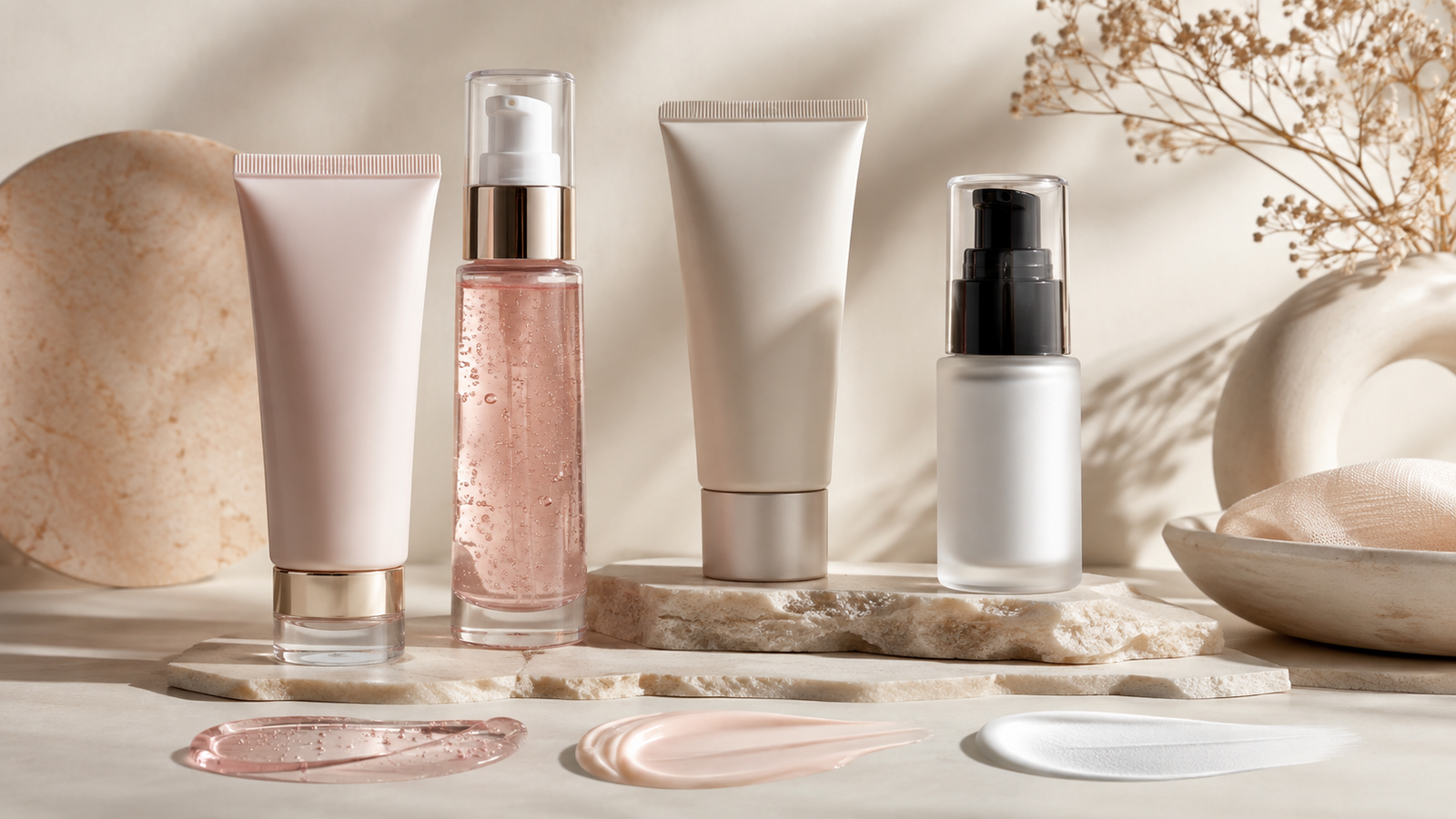
Makeup primer is one of the most optional products in a makeup routine.
Some people find that primer helps:
- foundation apply more smoothly;
- makeup last longer;
- reduce visible shine;
- soften the appearance of pores;
- add hydration;
- create a more even surface.
Others notice very little difference.
That does not mean primer is useless.
It means primer works best when it solves a specific makeup problem.
A practical approach is:
identify what is going wrong with your makeup → choose a primer designed for that problem → match it to your skin type and foundation → use a small amount → judge the finished result
You do not need primer simply because you wear foundation.
If your skincare and foundation already work well together, adding another layer may be unnecessary.
What Is Makeup Primer?
Makeup primer is usually applied:
after skincare and sunscreen → before foundation or other complexion makeup
Its purpose is to prepare the skin for makeup.
Depending on the formulation, primer may help with:
- smoothness;
- hydration;
- oil control;
- grip;
- visible pore blurring;
- radiance;
- colour correction.
Primers come in many textures, including:
- gel;
- cream;
- lotion;
- balm;
- silicone-rich paste;
- serum-like liquid.
The word primer therefore tells you very little by itself.
You need to look at what the product is actually designed to do.
Do You Actually Need a Primer?
Not necessarily.
A primer may be unnecessary if:
- your moisturizer creates a smooth base;
- your sunscreen sits well under makeup;
- foundation applies evenly;
- makeup lasts long enough;
- you are happy with the finish.
In that situation, primer may simply add:
- another product;
- another expense;
- another possible compatibility issue.
Primer is most useful when you can identify a clear problem.
For example:
Problem
Foundation becomes oily quickly.
Possible Primer
Mattifying or oil-control primer.
Problem
Foundation catches on dry areas.
Possible Primer
Hydrating or smoothing primer.
Problem
Pores appear more noticeable under foundation.
Possible Primer
Pore-blurring primer.
Problem
Makeup separates during the day.
Possible Primer
Gripping or long-wear primer.
The reason should come before the product.
Primer Does Not Replace Skincare
Primer can improve the cosmetic surface of the skin.
It does not replace:
- moisturizer;
- treatment;
- sunscreen.
If your skin is severely:
- dry;
- flaky;
- irritated;
a primer cannot completely compensate for poor skin preparation.
Similarly, a mattifying primer does not treat excessive oil production.
It manages how the surface behaves under makeup.
Think of primer as:
makeup preparation
rather than skincare treatment.
Primer vs Moisturizer
These products can overlap, but their main purposes differ.
Moisturizer
Designed primarily to support:
- skin hydration;
- barrier comfort.
Primer
Designed primarily to improve:
- makeup application;
- makeup appearance;
- wear.
Some modern products combine both.
If your moisturizer already creates an excellent makeup base, you may not need primer.
Primer vs Sunscreen
Sunscreen protects the skin from ultraviolet exposure when used correctly.
Primer does not replace it.
Some primers include SPF, but most people apply too little primer to achieve the labelled sun protection uniformly.
If sun protection is needed:
skincare → sunscreen → primer → makeup
is generally the better approach.
Primer vs Setting Spray
Primer is used before makeup.
Setting spray is usually used after makeup.
Primer
Prepares the surface.
Setting Spray
Helps finish the makeup and, depending on the formula, may improve:
- longevity;
- transfer resistance.
They solve different parts of the makeup process.
You do not automatically need both.
Primer vs Face Mist
A face mist generally provides:
- hydration;
- refreshment;
- skin comfort.
Some people use it before makeup.
But it is not automatically a primer.
A primer is usually specifically formulated to influence how makeup behaves on top.
Start With Your Main Makeup Problem
This is the best way to choose.
Ask yourself:
What happens to my makeup that I want to improve?
Common concerns include:
- dryness;
- excess shine;
- enlarged-looking pores;
- makeup separation;
- foundation fading;
- texture;
- redness;
- dullness.
Choose primer based on the main issue.
Hydrating Primer
Hydrating primers are designed to add a more comfortable, flexible base.
They may contain:
- glycerin;
- hyaluronic acid;
- panthenol;
- emollients;
- lightweight oils.
They are particularly useful for:
- dry skin;
- dehydrated skin;
- foundation that looks flaky or tight.
A good hydrating primer should make the skin feel:
- smoother;
- more comfortable;
without becoming excessively slippery.
Who Should Use a Hydrating Primer?
Consider one if:
- foundation catches on dry patches;
- your complexion looks dull;
- your makeup emphasizes dehydration;
- matte foundation feels too dry.
But first make sure your moisturizer is adequate.
You may discover that improving skincare removes the need for a separate hydrating primer.
Mattifying Primer
Mattifying primer helps reduce visible oil and shine.
It may contain ingredients such as:
- silica;
- absorbent powders;
- film-forming ingredients.
Best suited to:
- oily skin;
- oily T-zone;
- humid-weather makeup.
You do not necessarily need it over the whole face.
Targeted Mattifying
Combination skin often benefits from:
mattifying primer on T-zone → hydrating or no primer on cheeks
This is often better than forcing one product to work everywhere.
Apply mattifying primer to areas such as:
- forehead;
- nose;
- chin.
Leave drier areas alone.
Can Mattifying Primer Make Skin Too Dry?
Yes.
If overused, it may make foundation appear:
- cakey;
- tight;
- textured.
Use a thin layer.
If the skin is already dehydrated, aggressive mattification can make the makeup look worse.
Pore-Blurring Primer
Pore-blurring primers are designed to soften the visible appearance of:
- pores;
- fine surface texture.
They often contain:
- silicones;
- powders;
- elastomers.
These create an optical smoothing effect.
They do not physically shrink pores.
Can Primer Really Make Pores Smaller?
Primer can make pores look less noticeable temporarily.
It does not permanently change pore size.
The effect works by:
- smoothing the surface;
- filling some irregularities;
- changing how light reflects.
This is cosmetic, but it can be very effective.
Where Should You Apply Pore Primer?
Usually only where needed.
Common areas:
- sides of nose;
- inner cheeks;
- centre forehead.
Do not automatically cover the entire face with a thick silicone primer.
Targeted application usually looks better.
How to Apply Pore-Blurring Primer
Instead of rubbing aggressively:
- Use a small amount.
- Warm between fingertips if needed.
- Press into the area.
- Smooth lightly.
Pressing often works better than continuously rubbing.
Gripping Primer
Gripping primers are designed to help makeup adhere more strongly to the skin.
They may feel:
- slightly tacky;
- sticky.
They are useful when you want:
- longer wear;
- better foundation adhesion.
Common for:
- events;
- humid weather;
- long days.
Who Benefits From Gripping Primer?
Consider one if makeup:
- fades;
- moves;
- separates;
despite good skin preparation.
But if your foundation already lasts well, extra grip may not be necessary.
How to Use Gripping Primer
Apply:
- thin;
- even layer.
Allow it to become slightly tacky before foundation if the directions recommend that.
Do not apply a very thick layer.
Excess grip can make foundation:
- difficult to spread;
- patchy.
Smoothing Primer
Smoothing primers are designed to create a more even-feeling surface.
They may help with:
- mild texture;
- dry surface roughness;
- uneven foundation application.
Many contain silicones because silicones provide:
- slip;
- smoothness.
These are useful when the makeup itself applies unevenly.
Radiant Primer
Radiant primers contain light-reflective ingredients.
They can create:
- glow;
- luminosity;
- brighter-looking complexion.
They may be worn:
- under foundation;
- mixed with foundation;
- alone.
Best for people who want a less matte finish.
Radiant Primer for Dry Skin
This combination can work very well.
Hydrating radiant primers may help skin look:
- fresher;
- less flat.
But visible shimmer is not the same as hydration.
Choose formulas that provide actual comfort as well as glow if dryness is your concern.
Radiant Primer for Oily Skin
Oily skin can still use radiant primer.
The trick is placement.
For example:
- mattifying primer on T-zone;
- radiant primer on outer cheeks.
This allows controlled glow without increasing shine everywhere.
Illuminating Primer
Illuminating and radiant primers are essentially similar categories.
Some contain:
- pearl pigments;
- mica;
- reflective particles.
If you dislike visible shimmer, choose a more subtle luminous formula.
Colour-Correcting Primer
Colour-correcting primers use tinted pigments to reduce the visible appearance of certain tones.
Common colours include:
- green;
- peach;
- purple/lavender;
- yellow.
These products are usually sheer.
They are designed to create subtle correction rather than full camouflage.
Green Primer
Green helps neutralize visible redness.
It may be useful for:
- widespread redness;
- mild rosacea-like redness;
- redness around nose.
Do not apply excessive green pigment.
The goal is to reduce redness, not turn the face visibly green.
Peach Primer
Peach can add warmth and help reduce:
- dullness;
- grey appearance.
It may be particularly useful on:
- medium;
- tan;
- deeper complexions;
depending on the specific shade.
Purple or Lavender Primer
Lavender tones are sometimes used to counteract a:
- yellow;
- sallow;
- dull appearance.
They can make some complexions appear brighter.
This is a cosmetic effect.
You do not need one unless you specifically notice that issue.
Yellow Primer
Yellow-toned primers may help balance:
- mild redness;
- purple tones.
They can also add warmth.
Again, colour correction should be subtle.
Do You Need a Colour-Correcting Primer?
Only if the colour issue is spread across a relatively large area.
For one:
- blemish;
- dark spot;
targeted corrector is usually more efficient.
A full-face green primer makes more sense when redness is widespread.
Silicone-Based Primer
Silicones are extremely common in primers.
Ingredients may include:
- dimethicone;
- cyclopentasiloxane;
- silicone elastomers.
They provide:
- smoothness;
- slip;
- temporary pore blurring.
They are especially useful for:
- uneven texture;
- visible pores.
Are Silicone Primers Bad for Skin?
No, not inherently.
Silicones are widely used cosmetic ingredients.
They can provide an excellent makeup surface.
If a particular primer causes:
- breakouts;
- irritation;
stop using that formula.
But there is no general reason to avoid silicone purely because it is silicone.
Water-Based Primer
Water-based primers often feel:
- lighter;
- more serum-like.
They may focus on:
- hydration;
- grip.
They can work well with many foundations.
But the common idea that every water-based primer must only be used with water-based foundation is too simplistic.
Does Primer Need to Match Foundation Base?
You may hear rules such as:
silicone primer + silicone foundation
or:
water primer + water foundation
This can sometimes help explain compatibility problems, but it is not a perfect rule.
Most foundations contain:
- water;
- silicones;
- oils;
- emulsifiers;
in combinations.
What matters is whether the finished formulations work together.
The only reliable test is application.
Why Primer and Foundation Sometimes Separate
Separation can happen because of:
- too much skincare;
- sunscreen not set;
- too much primer;
- incompatible formulas;
- excess oil;
- insufficient dry-down time.
Before abandoning the product, try simplifying the layers.
How to Test Primer Compatibility
Try this on one side of the face:
Side A
Skincare → sunscreen → foundation.
Side B
Skincare → sunscreen → primer → foundation.
Compare:
- smoothness;
- separation;
- longevity;
- texture.
If primer does not improve anything, you probably do not need it.
Primer for Dry Skin
Dry skin generally benefits from:
- hydrating;
- smoothing;
- radiant primers.
Look for:
- glycerin;
- humectants;
- emollients.
Avoid very aggressive oil-control formulas.
But remember:
moisturizer remains more important than primer
for actual dryness.
Primer for Dehydrated Skin
Dehydrated skin lacks water rather than necessarily oil.
You may notice:
- tightness;
- fine dehydration lines;
- makeup looking patchy.
A hydrating primer may help.
But you should also evaluate:
- cleanser;
- moisturizer;
- overall skincare.
Primer for Oily Skin
Useful options include:
- mattifying;
- pore-blurring;
- gripping primer.
You may not need one product to do all three.
For example:
pore primer around nose + mattifying primer on forehead
can work better.
Primer for Combination Skin
Use targeted application.
For example:
T-Zone
Mattifying primer.
Cheeks
Hydrating primer or none.
This avoids over-treating either area.
Primer for Normal Skin
If makeup already sits well, primer is optional.
You might choose based on desired finish:
- radiant for glow;
- pore-blurring for smoothness;
- gripping for longevity.
Primer for Sensitive Skin
If you have reactive skin, look for:
- fragrance-free options;
- simple formulas.
Avoid adding another product unless it improves the routine.
Patch testing may be useful.
Stop if you experience:
- burning;
- itching;
- persistent redness.
Primer for Acne-Prone Skin
Acne-prone skin can use primer.
Choose according to:
- oiliness;
- texture;
- comfort.
Do not assume every silicone primer causes acne.
Individual response matters.
Use clean:
- fingers;
- brushes;
- sponges.
Remove makeup thoroughly.
Primer for Mature Skin
Mature skin may benefit from primers that provide:
- hydration;
- light smoothing;
- subtle radiance.
Avoid applying large amounts of thick primer over:
- fine lines;
- textured areas.
A thin flexible layer usually looks better.
Primer for Visible Pores
Pore size is largely determined by:
- genetics;
- sebum;
- skin structure.
Primer can make pores look less visible temporarily.
Best method:
- small amount;
- targeted pressing.
Avoid layering:
thick primer + thick foundation + thick powder
because this often makes texture more obvious.
Primer for Fine Lines
Smoothing primer can temporarily soften the appearance of fine surface lines.
But it cannot remove them.
Apply only a small amount.
Excess product can settle into lines.
Primer for Texture
Primer can help with mild texture, but it cannot make:
- acne scars;
- raised blemishes;
- deep indentations;
completely disappear.
Makeup primarily changes:
- colour;
- light reflection;
- surface finish.
Physical texture remains physical texture.
Primer Over Active Acne
Use gentle technique.
Do not repeatedly press or rub a thick primer over:
- painful;
- inflamed pimples.
The goal should be comfort.
Texture from raised acne cannot be erased with more product.
Primer Over Dry Patches
Do not expect silicone primer to completely hide flaky skin.
Powder and foundation may still cling.
Better preparation is:
- Moisturize.
- Allow skin to settle.
- Use hydrating primer if helpful.
- Apply thin foundation.
Do not aggressively exfoliate immediately before makeup if the skin is irritated.
Primer and Sunscreen
This is an important layering issue.
Sunscreen should generally be the last skincare step before makeup.
A practical order:
- Skincare
- Sunscreen
- Allow sunscreen to settle
- Primer
- Foundation
Use primer gently so you do not unnecessarily disturb the sunscreen film.
How Long Should You Wait After Sunscreen?
There is no universal exact number.
Allow it enough time to:
- spread evenly;
- stop feeling excessively wet.
Then apply primer with:
- pressing;
- gentle smoothing.
If sunscreen starts pilling, adding primer may worsen the problem.
Sunscreen Pilling Under Primer
Pilling means products form:
- small rolls;
- flakes;
- balls.
Possible causes:
- too much skincare;
- incompatible polymers;
- not enough drying time;
- rubbing too much.
Try:
- fewer layers;
- smaller amounts;
- more pressing and less rubbing.
Primer and Moisturizer
If both are hydrating, using large amounts of both can make foundation:
- slippery;
- less stable.
You may need:
- lighter moisturizer;
- less primer.
Do not assume more hydration always improves makeup.
Do You Apply Primer With Fingers?
Yes.
Fingers are one of the easiest methods.
They work well for:
- hydrating primer;
- silicone primer;
- pore primer.
Use clean hands.
Primer With a Brush
A brush can apply:
- radiant;
- liquid;
- serum-like primer.
But it is usually unnecessary.
Hands give good control.
Primer With a Sponge
A damp sponge can distribute some primers lightly.
However, it may absorb product.
Sponges are generally more useful for:
- foundation;
- concealer.
How Much Primer Should You Use?
Usually very little.
A pea-sized amount may be enough for the entire face depending on the formula.
Pore primers often need even less.
Too much primer is one of the most common causes of:
- pilling;
- foundation slipping;
- heavy texture.
Full-Face vs Targeted Primer
You do not always need full-face application.
A very effective routine might be:
- pore primer on nose;
- mattifying primer on forehead;
- hydrating primer on cheeks;
- nothing elsewhere.
Primer should be treated like a tool.
Use it only where the tool is needed.
How to Apply Primer Correctly
Step 1 — Complete Skincare
Use your normal routine.
Step 2 — Apply Sunscreen
If needed.
Step 3 — Allow Skin to Settle
Avoid applying primer over very wet skincare.
Step 4 — Use a Small Amount
Start with less.
Step 5 — Apply to Target Areas
Do not automatically coat the entire face.
Step 6 — Press or Smooth
Avoid aggressive rubbing.
Step 7 — Allow Primer to Set
Follow product instructions.
Step 8 — Apply Foundation
Use thin layers.
Should Primer Feel Sticky?
Gripping primer may feel intentionally:
- tacky.
That helps foundation adhere.
But not every primer should feel sticky.
Hydrating or smoothing primers may feel:
- silky;
- lotion-like.
Judge according to the product type.
Should You Wait Before Applying Foundation?
Often, yes.
Some primers benefit from:
- 30 seconds;
- a minute;
to set.
But follow the product instructions.
If foundation is applied while primer is still very wet, the two may mix unpredictably.
Primer and Foundation Application Technique
If primer is gripping, try:
- tapping foundation;
- pressing with sponge.
Aggressive buffing can disturb the primer.
With smoothing primers, normal brushing may work well.
Primer Under Powder Foundation
Primer can help powder foundation adhere more evenly.
For oily skin:
- mattifying primer may work well.
For dry skin:
- hydrating primer may prevent powder from looking excessively dry.
Allow primer to settle before applying powder.
Primer Without Foundation
You can wear primer alone.
Pore-blurring primers can create:
- smoother-looking skin.
Radiant primers can create:
- glow.
Tinted primers may slightly even complexion.
This can work well for:
- minimal makeup;
- no-foundation days.
Primer Mixed With Foundation
Some people mix primer and foundation.
This can change:
- coverage;
- finish;
- texture.
It may work with certain formulas but can also reduce foundation performance.
If the primer is specifically designed for mixing, follow instructions.
Otherwise, layering separately gives more predictable results.
Hydrating Primer Under Matte Foundation
This can be an excellent combination.
It may help a matte foundation feel:
- more flexible;
- less dry.
This is particularly useful for:
- combination;
- dehydrated skin.
Mattifying Primer Under Dewy Foundation
Also possible.
This can create controlled balance:
- oil control underneath;
- natural luminosity on top.
Makeup products do not need to have matching finishes.
Radiant Primer Under Foundation
Radiant primer beneath foundation creates a more subtle glow than applying highlighter on top.
Best results usually come with:
- light;
- medium coverage foundation.
Full-coverage matte foundation may hide much of the radiance.
Radiant Primer Mixed Into Foundation
This can create a more luminous base.
Use a small amount.
Too much may make foundation:
- sheer;
- slippery.
Pore Primer Under Dewy Foundation
This can help maintain smoother texture while keeping overall glow.
Apply pore primer only to:
- inner cheek;
- nose.
Then use dewy foundation over the face.
Gripping Primer Under Long-Wear Foundation
This combination can be useful for:
- events;
- humid weather.
But it can also become too dry or difficult to blend.
Use very thin layers.
Test before an important event.
Primer for Hot Weather
Hot conditions often increase:
- sweat;
- oil;
- makeup movement.
Useful primers include:
- mattifying;
- gripping;
- pore-control.
Use targeted application.
Do not create an excessively thick base because heat can make multiple layers uncomfortable.
Primer for Humid Weather
Humidity can reduce makeup longevity.
A practical routine might be:
- Lightweight skincare.
- Sunscreen.
- Gripping/mattifying primer where needed.
- Thin long-wear foundation.
- Targeted powder.
- Setting spray.
Longevity usually comes from the whole routine, not primer alone.
Primer for Dry Weather
In dry weather, consider:
- hydrating;
- creamy;
- radiant primers.
Use less powder afterward.
If makeup looks dry, the solution may be to simplify rather than keep adding products.
Primer for Everyday Makeup
For daily use, ask whether it saves you effort.
A useful everyday primer should:
- apply quickly;
- improve finish;
- not require complicated layering.
If primer adds five minutes and gives no visible improvement, skip it.
Primer for Office Makeup
A simple office approach:
- lightweight hydrating primer if dry;
- mattifying primer on T-zone if oily;
- thin foundation.
The goal is reliable, comfortable wear.
Primer for Bridal Makeup
For bridal makeup, longevity becomes more important.
Choose based on:
- skin type;
- foundation compatibility;
- climate.
Test the exact combination before the event.
Do not try a new primer for the first time on the wedding day.
Primer for Photography
Primer itself does not usually cause major flashback in the same way some powders can.
But highly reflective primers may change how the complexion appears under flash.
Test the complete base:
- primer;
- foundation;
- powder;
under the lighting you expect.
Primer for Full-Glam Makeup
Full-glam makeup may benefit from targeted primers because there are more complexion layers.
For example:
- pore primer on inner cheeks;
- gripping primer elsewhere;
- mattifying primer on nose.
But even full glam should avoid unnecessary thickness.
Primer for No-Makeup Makeup
Primer alone can be enough.
Try:
- hydrating primer;
- pore-blurring primer;
- subtle radiant primer.
Then add:
- concealer;
- blush;
only where needed.
Primer and Setting Powder
Primer prepares from underneath.
Powder sets from above.
For oily skin, the combination can improve longevity.
But excessive:
mattifying primer + matte foundation + heavy powder
may make skin appear too flat.
Balance is important.
Primer and Setting Spray
For long wear:
primer → foundation → powder → setting spray
can work well.
But not every setting spray is designed for longevity.
Some are primarily hydrating finishing mists.
Choose accordingly.
Does Primer Make Foundation Last Longer?
Sometimes.
Gripping and oil-control primers may improve wear.
But foundation longevity is also affected by:
- skincare;
- sunscreen;
- skin oil;
- foundation formula;
- powder;
- environment;
- touching the face.
Primer is only one factor.
Does Primer Prevent Makeup Transfer?
It may reduce movement, but it cannot make every foundation completely transfer-proof.
A long-wear system usually relies on:
- appropriate primer;
- long-wear foundation;
- powder;
- setting spray.
Even then, some transfer may still occur.
Does Primer Fill Wrinkles?
No.
It can temporarily soften their visible appearance.
Deep lines remain.
The best strategy is usually:
- thin product;
- minimal powder;
- flexible foundation.
Trying to physically fill lines with thick primer can make them more visible once facial movement occurs.
Does Primer Treat Large Pores?
No.
It only changes their temporary visual appearance under makeup.
If pore appearance concerns you without makeup, skincare may help with:
- oil control;
- texture;
but pores cannot be permanently erased.
Can Primer Cause Breakouts?
A particular product can potentially cause breakouts in an individual.
Possible reasons include:
- formula not suiting your skin;
- irritation;
- incomplete removal.
But primer as a category does not automatically cause acne.
If breakouts consistently appear after introducing a primer:
- stop it;
- return to your previous routine;
- reassess.
Is Primer Comedogenic?
“Comedogenic” behaviour is difficult to predict from one ingredient alone.
A product labelled:
- non-comedogenic;
may be a useful starting point for acne-prone skin.
But individual response remains important.
Fragrance in Primer
Some primers contain fragrance.
Many people tolerate it.
If you have:
- sensitive skin;
- fragrance allergy;
choose fragrance-free if available.
Performance does not depend on fragrance.
Alcohol in Primer
Some primers contain volatile alcohols to create:
- fast dry-down;
- lightweight feel.
These may be useful in oil-control formulas.
Whether they feel drying depends on:
- concentration;
- entire formulation.
Do not judge based on one ingredient alone.
Silica in Primer
Silica may be used to:
- absorb oil;
- blur;
- create smooth texture.
It is common in mattifying primers.
Dry skin may find silica-heavy formulas too absorbing.
Niacinamide in Primer
Some skincare-makeup hybrids contain niacinamide.
It may provide skincare-related benefits over time depending on:
- concentration;
- formulation.
But you do not need primer as your primary source of niacinamide.
If your skincare already contains it, there is no need to seek it in makeup too.
Hyaluronic Acid in Primer
Hydrating primers often market hyaluronic acid.
It can contribute to a hydrated feel.
But the full formula matters more than one ingredient.
A primer with excellent marketing around hyaluronic acid can still feel dry if the overall formulation is not right for your skin.
Primer With SPF
Treat SPF primer as an additional layer, not your only sunscreen.
Most people apply primer far too thinly to achieve the labelled SPF across the entire face.
Use proper sunscreen underneath when needed.
“Clean” Makeup Primer
“Clean” is not a standardized scientific category across the beauty industry.
Different brands exclude different ingredients.
A clean-labelled primer is not automatically:
- safer;
- better;
- more suitable for sensitive skin.
Judge:
- formulation;
- tolerance;
- performance.
Natural Primer
Natural ingredients are not automatically gentler.
Botanical ingredients can also cause:
- irritation;
- allergy.
Synthetic ingredients such as silicones may be extremely useful.
Choose based on performance.
Vegan Primer
Vegan describes ingredient sourcing.
It does not automatically indicate:
- quality;
- skin compatibility;
- longevity.
It may still be important based on personal ethical preferences.
Primer Stick
Primer sticks provide:
- targeted;
- portable application.
They may be useful for:
- pores;
- oily T-zone.
Because they are often more concentrated, avoid applying too much.
Primer Balm
Primer balms tend to be:
- thicker;
- smoothing.
They are useful for:
- pores;
- texture.
Apply a very thin layer.
They can become heavy under foundation if overused.
Primer Spray
Primer sprays are lightweight and fast.
They may provide:
- hydration;
- tackiness;
- refreshment.
They are convenient but may offer less targeted control than:
- gel;
- balm.
Some sprays function as both:
- primer;
- setting spray.
Serum Primer
Serum primers feel lightweight.
They may focus on:
- hydration;
- glow;
- grip.
These can work well for people who dislike heavy silicone textures.
Allow them to settle before applying foundation.
Why Primer Pills
Pilling usually occurs when product layers roll into small flakes or balls.
Common reasons:
- too much product;
- incompatible layers;
- excessive rubbing;
- skincare not settled;
- silicone/polymer interaction.
Try removing one layer.
Primer often works better within a simpler base.
How to Prevent Primer Pilling
Use Less Skincare
Do not overload the face.
Allow Sunscreen to Set
Especially important.
Use Less Primer
A thin layer is enough.
Press Instead of Rub
Particularly with gripping products.
Wait Briefly Before Foundation
Give the primer time to settle.
Why Foundation Slides Over Primer
Possible reasons:
- primer too emollient;
- too much primer;
- heavy moisturizer underneath.
Reduce the product amount.
If the skin feels visibly slippery before foundation, there may be too many emollient layers.
Why Foundation Becomes Patchy Over Primer
Possible causes include:
- primer setting too quickly;
- foundation applied too slowly;
- excessive grip;
- product incompatibility.
Try:
- smaller sections;
- damp sponge;
- thinner primer layer.
Why Primer Makes Makeup Worse
This happens.
Primer can sometimes:
- increase texture;
- cause pilling;
- reduce foundation spread.
If foundation performs better without it, stop using it.
Primer is optional.
There is no reason to force a product into a routine because it is considered a makeup “step.”
How Long Should Primer Last?
The product should remain functional for the period you wear makeup.
But you do not need to judge primer separately from the rest of the base.
Ask:
- Does makeup look better after 4 hours?
- Does foundation separate less?
- Is oil reduced?
- Are dry patches improved?
If the answer is no, the primer may not be useful.
How to Compare Primers Properly
Use a split-face test.
One Side
No primer.
Other Side
Primer.
Keep everything else identical:
- skincare;
- foundation;
- powder.
Check at:
- application;
- 4 hours;
- end of day.
This is much more reliable than assuming primer worked because the product felt nice.
Does Expensive Primer Work Better?
Not necessarily.
A luxury primer may offer:
- elegant texture;
- sophisticated packaging;
- fragrance;
- specialized finish.
But many affordable primers use excellent:
- silicones;
- humectants;
- absorbent ingredients.
The right primer is the one that improves your makeup.
When Is Premium Primer Worth It?
Possibly when it offers a uniquely good:
- texture;
- compatibility;
- finish;
- long-wear performance.
But do not pay more simply because primer is marketed as a luxury base step.
What Makes a Good Primer?
A good primer should:
Solve a Specific Problem
Hydration, oil, pores, grip or radiance.
Work With Your Foundation
No pilling or separation.
Feel Comfortable
No excessive tightness or greasiness.
Require Little Product
A thin layer should be enough.
Improve Makeup
Not merely feel luxurious.
If you cannot see a difference, it may not be worth keeping.
How Many Primers Do You Need?
For most people:
zero or one
is enough.
Combination skin may benefit from two targeted products:
- mattifying;
- hydrating/pore-blurring.
But you do not need separate primers for every foundation.
Choosing Your First Primer
For a beginner:
Dry Skin
Choose:
- lightweight hydrating primer.
Oily Skin
Choose:
- mattifying or pore-control primer.
Combination Skin
Choose:
- lightweight smoothing primer;
- or target only oily areas.
Normal Skin
You may not need primer.
If you want one, choose according to the finish you prefer.
Common Primer Mistakes
Using Primer Because You Think It Is Mandatory
It is not.
Applying Too Much
One of the most common causes of pilling.
Using One Primer Over the Entire Face
Different areas may have different needs.
Expecting Primer to Fix Severe Dryness
Improve skincare first.
Expecting Primer to Permanently Shrink Pores
It only changes their temporary appearance.
Applying Primer Before Sunscreen
Sunscreen should generally remain the final skincare layer.
Rubbing Primer Aggressively Over Sunscreen
May disturb the protective film.
Using Mattifying Primer on Already Dry Areas
Can make foundation look worse.
Layering Hydrating Primer Over Very Heavy Moisturizer
Can make makeup slide.
Assuming Silicone Is Bad
Silicones are excellent cosmetic smoothing ingredients.
Buying Primer Without Identifying a Problem
Start with the need.
A Simple Primer Routine for Dry Skin
- Gentle skincare.
- Moisturizer.
- Sunscreen if needed.
- Allow products to settle.
- Apply thin layer of hydrating primer.
- Apply foundation.
- Powder only where needed.
A Simple Primer Routine for Oily Skin
- Lightweight skincare.
- Sunscreen.
- Allow to settle.
- Apply mattifying primer to:
- forehead;
- nose;
- chin.
- Apply foundation.
- Set T-zone lightly.
A Simple Primer Routine for Combination Skin
- Skincare.
- Sunscreen.
- Hydrating/smoothing primer on cheeks if needed.
- Mattifying primer on T-zone.
- Foundation.
- Targeted powder.
A Simple Routine for Visible Pores
- Skincare.
- Sunscreen.
- Small amount of pore primer.
- Press into:
- nose;
- inner cheeks.
- Apply thin foundation with tapping motions.
- Set lightly.
Avoid multiple thick layers.
A Simple Long-Wear Routine
- Lightweight skincare.
- Sunscreen.
- Gripping primer.
- Long-wear foundation.
- Concealer.
- Targeted setting powder.
- Setting spray.
Use thin layers throughout.
A Simple Radiant Makeup Routine
- Moisturizer.
- Sunscreen.
- Radiant primer on:
- cheeks;
- outer face.
- Foundation.
- Minimal powder.
- Blush.
This keeps the complexion luminous without making the T-zone excessively shiny.
Primer Buying Checklist
Before buying, ask:
1. What problem am I trying to solve?
Dryness, oil, pores, longevity or dullness?
2. Does my foundation already work without primer?
If yes, primer may be unnecessary.
3. What is my skin type?
Choose accordingly.
4. Do I need full-face primer?
Probably not.
5. Does it work with my sunscreen?
Check for pilling.
6. Does it work with my foundation?
Test rather than relying only on ingredient labels.
7. Am I applying too much?
Primer usually works best in a thin layer.
8. Does it improve makeup several hours later?
This matters more than how it feels initially.
9. Am I buying it for skincare claims?
Primer should primarily improve makeup.
10. Would changing moisturizer or foundation solve the problem more simply?
Sometimes the best primer is no primer.
When Should You Stop Using a Primer?
Stop if the product causes:
- persistent burning;
- itching;
- rash;
- worsening irritation.
Also stop if it consistently makes makeup:
- pill;
- separate;
- look more textured.
A product does not belong in your routine simply because it is marketed as a necessary step.
The Physical Glow Takeaway
Makeup primer is best viewed as a problem-solving product, not an essential part of every makeup routine.
Choose primer according to what you actually want to improve:
- dry or dehydrated skin → hydrating primer;
- oily skin → mattifying primer;
- visible pores → pore-blurring primer;
- poor makeup longevity → gripping primer;
- dull complexion → radiant primer;
- widespread redness or tone imbalance → subtle colour-correcting primer.
Apply it only where necessary.
Your entire face does not need the same primer.
And remember:
- primer does not replace moisturizer;
- primer does not replace sunscreen;
- pore primer does not permanently shrink pores;
- mattifying primer does not treat oily skin;
- more primer does not make makeup last longer.
The best test is simple:
Does your foundation look better and wear better with the primer than without it?
If yes, the primer has a useful place in your routine.
If not, skip it.
A good makeup routine is not the one with the most steps.
It is the one where every product has a clear purpose.