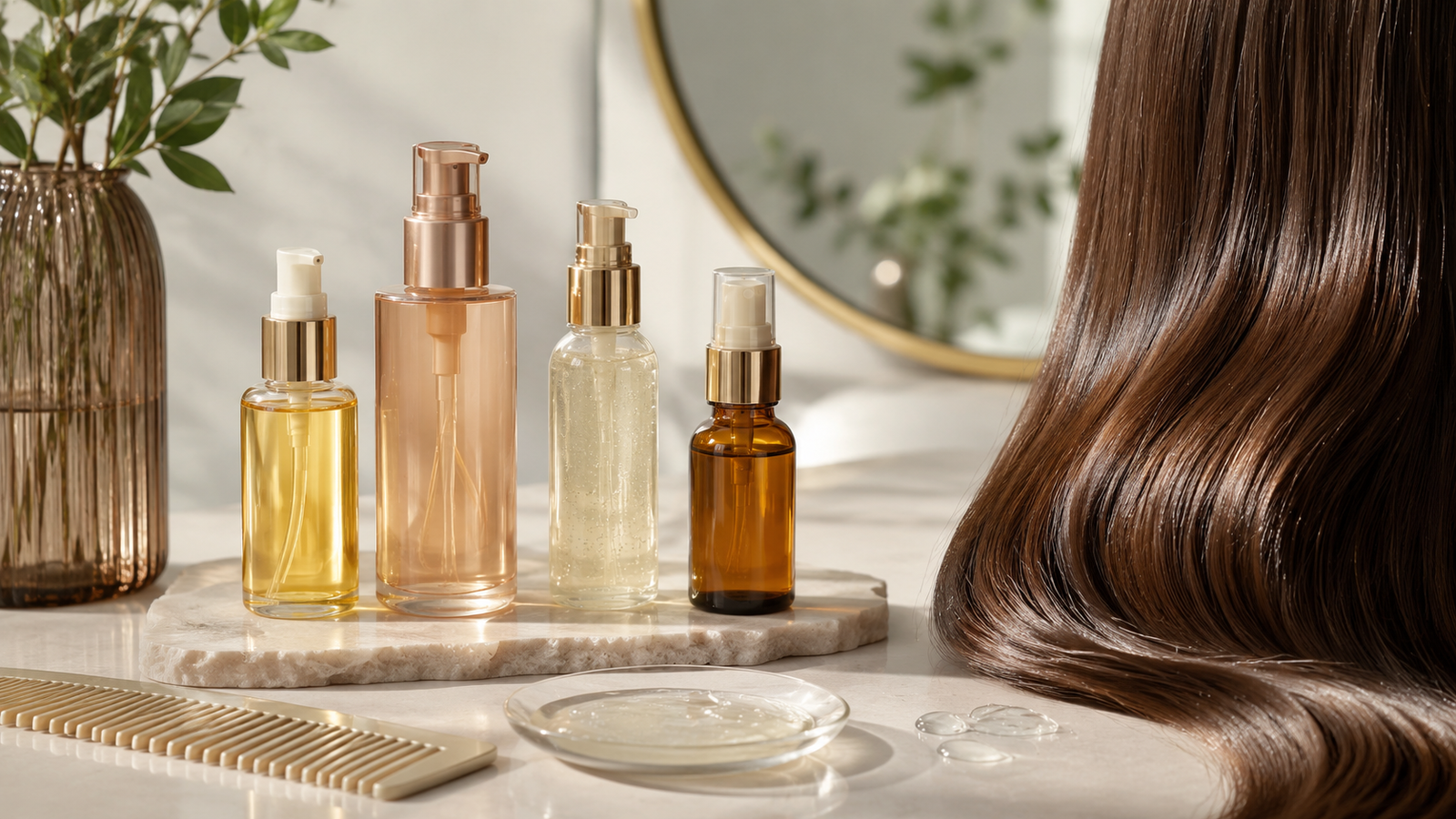
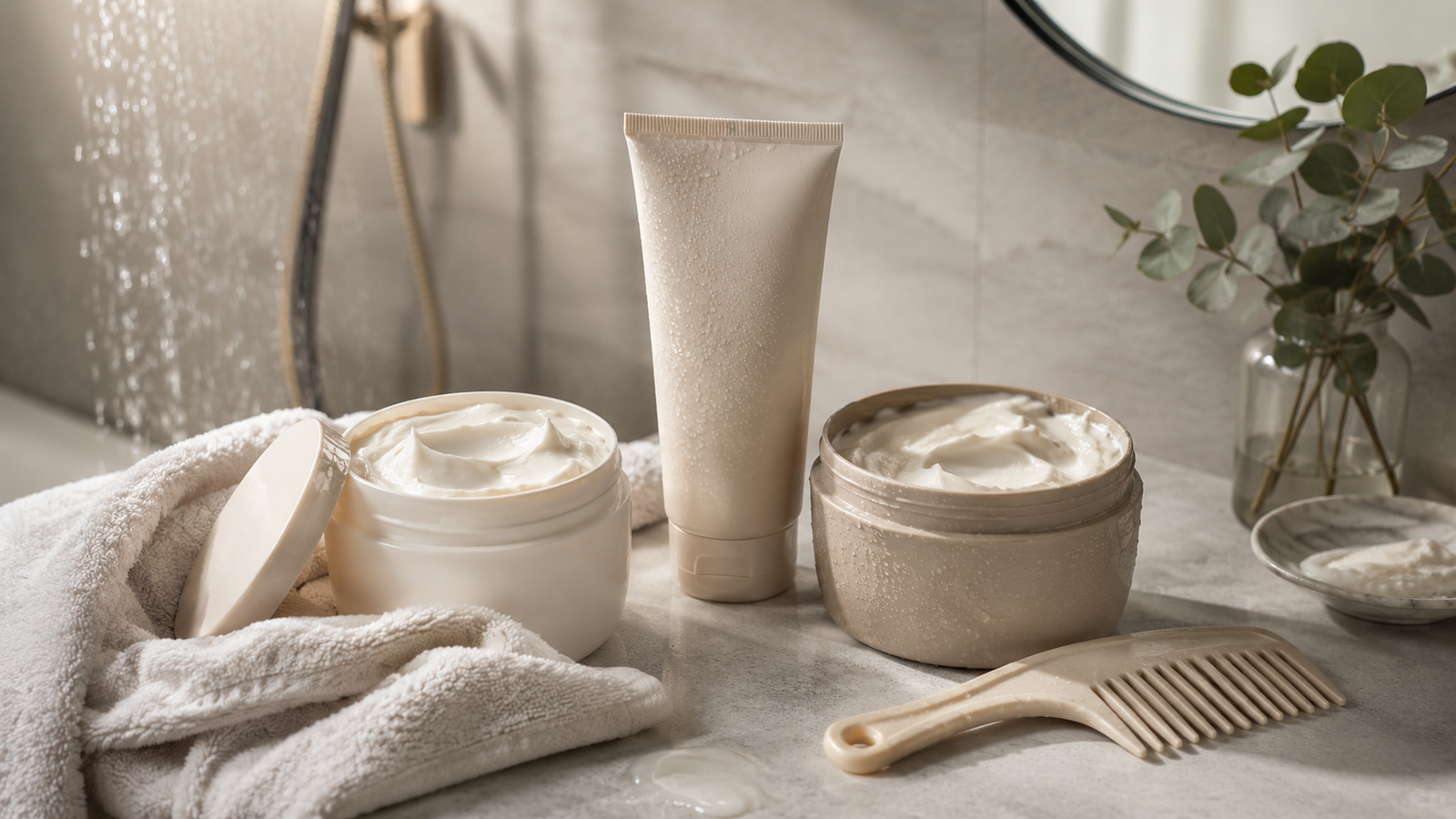
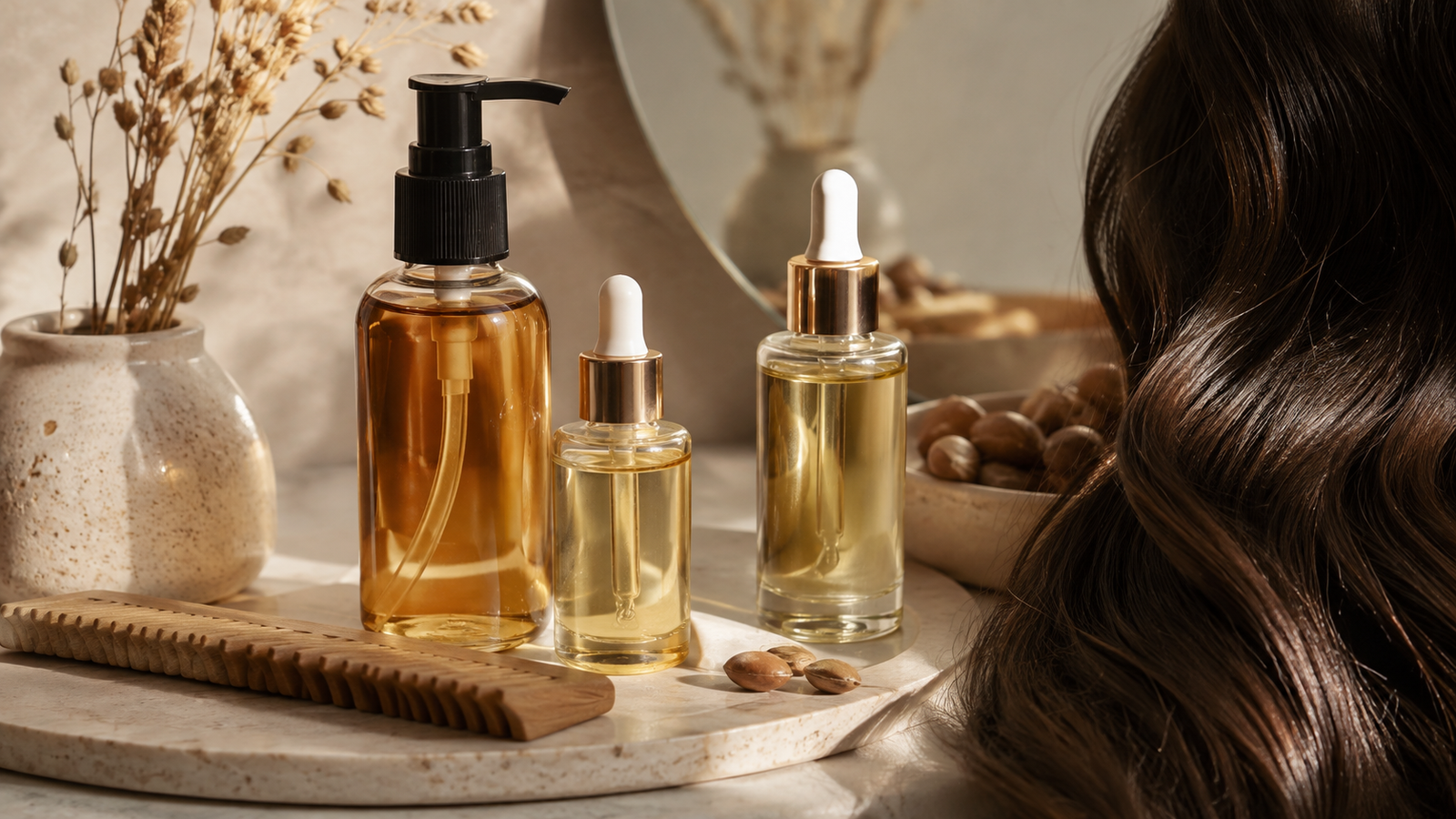
Leave-In Treatments Explained: When and How to Use Them
Learn when leave-in hair treatments are useful and how to use them, with practical guidance on hair texture, moisture, detangling, frizz and heat styling. This beginner-friendly guide helps you make a clear, informed choice without unnecessary complexity.
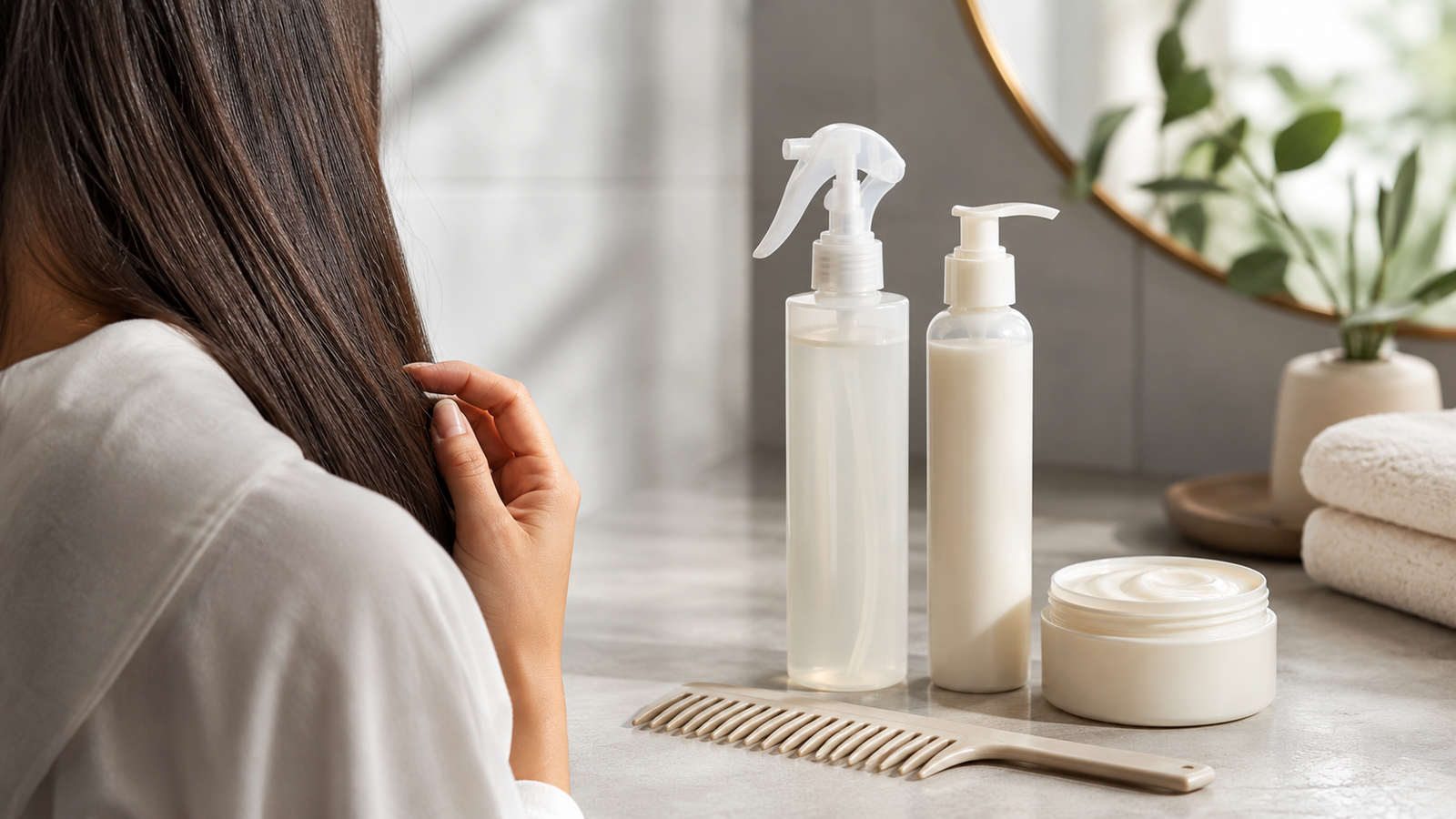
Leave-in treatments can be extremely useful when regular conditioner is not quite enough.
They can help with:
- detangling;
- dryness;
- frizz;
- softness;
- heat protection;
- curl definition;
- reducing friction;
- protecting damaged ends.
But leave-in products are also easy to overuse.
A routine can quickly become:
conditioner → leave-in conditioner → cream → serum → oil → heat protectant → styling product
when the hair may only need one or two of those steps.
The better approach is:
identify what your hair needs → choose the right leave-in format → apply the smallest useful amount → concentrate on the lengths and ends → layer only when each product has a clear job
Leave-in treatments should make your haircare routine easier.
They should not make your hair:
- heavy;
- greasy;
- sticky;
- coated;
- difficult to wash.
What Is a Leave-In Treatment?
A leave-in treatment is a hair product designed to remain on the hair after washing rather than being rinsed away.
Depending on the formula, it may provide:
- conditioning;
- detangling;
- heat protection;
- frizz control;
- smoothing;
- shine;
- temporary strengthening;
- curl support.
Common formats include:
- sprays;
- mists;
- milks;
- lotions;
- creams;
- serums;
- lightweight oils.
The term leave-in treatment is broad.
A lightweight detangling spray and a rich curl cream can both technically be leave-in products even though they behave very differently.
Leave-In Conditioner vs Rinse-Out Conditioner
Rinse-out and leave-in conditioners serve related but different purposes.
Rinse-Out Conditioner
Applied after shampooing and then washed away.
Its main purposes include:
- detangling;
- reducing friction;
- improving softness;
- smoothing the hair.
Leave-In Conditioner
Applied after washing and left on the hair.
Its purpose is to continue providing:
- lubrication;
- conditioning;
- protection;
- manageability;
after the hair begins drying.
Many people benefit from both.
But not everyone needs a leave-in treatment.
Do You Actually Need a Leave-In Product?
Not necessarily.
If your normal routine already leaves your hair:
- soft;
- manageable;
- easy to detangle;
- not excessively frizzy;
you may not need another product.
Leave-in treatment becomes more useful when your hair remains:
- dry;
- tangled;
- frizzy;
- rough;
- difficult to style;
after normal conditioner.
It may also be useful when you regularly:
- blow-dry;
- straighten;
- curl;
- swim;
- colour;
- bleach;
your hair.
Who Benefits Most From Leave-In Treatments?
Leave-ins can be particularly useful for:
Long Hair
Longer hair has older ends that have experienced more:
- washing;
- brushing;
- environmental exposure;
- friction.
Curly Hair
Curly hair can benefit from:
- additional slip;
- moisture;
- frizz control.
Coily Hair
Coily hair may benefit from richer leave-in products because the fibre can be more prone to:
- dryness;
- tangling;
- mechanical breakage.
Bleached Hair
Bleaching can make hair:
- rough;
- porous;
- fragile.
Leave-in products may help reduce friction and improve manageability.
Heat-Styled Hair
A leave-in can be useful if it also provides appropriate heat protection.
Fine Hair
Fine hair can benefit too, but the formula usually needs to be much lighter.
Leave-In Treatments Do Not Repair Hair Permanently
This is important.
Hair outside the scalp is not living tissue.
A leave-in treatment can:
- coat damaged areas;
- reduce friction;
- improve shine;
- improve flexibility;
- make breakage less likely during handling.
Some formulas may temporarily reinforce damaged regions.
But they cannot completely regenerate severely damaged hair.
Think of leave-ins primarily as:
conditioning + protection + styling support
rather than permanent repair.
The Main Types of Leave-In Treatments
There are several major categories.
Leave-In Sprays
Sprays are usually the lightest option.
They can provide:
- detangling;
- light conditioning;
- heat protection;
- reduced static.
Best suited to:
- fine hair;
- straight hair;
- children;
- hair that becomes weighed down easily.
They are easy to distribute evenly.
Leave-In Milks
Hair milks are slightly richer than sprays.
They may provide:
- more softness;
- better detangling;
- light frizz control.
They can work well for:
- fine-to-medium hair;
- waves;
- loose curls.
They usually provide more conditioning without feeling as heavy as a cream.
Leave-In Lotions
Lotions fall somewhere between milk and cream.
They may be suitable for:
- medium hair;
- dry hair;
- wavy hair;
- lightly damaged hair.
They can provide a balance between:
conditioning and weight
Leave-In Creams
Creams are richer.
They usually provide:
- stronger conditioning;
- frizz control;
- softness;
- curl support.
Best suited to:
- thick hair;
- coarse hair;
- curly hair;
- coily hair;
- dry or damaged hair.
Fine hair may find them too heavy.
Leave-In Serums
Serums often emphasize:
- smoothness;
- shine;
- anti-frizz performance;
- heat protection.
Many contain:
- silicones;
- conditioning polymers;
- lightweight oils.
They may be used alone or after another leave-in product.
Leave-In Oils
Oils mainly provide:
- lubrication;
- shine;
- reduced friction.
They usually do not provide the same water-based conditioning as a traditional leave-in conditioner.
For very dry hair, oil may work better after:
leave-in conditioner
rather than instead of it.
Leave-In Treatment for Fine Hair
Fine hair is easy to overload.
The biggest risks are:
- flat roots;
- greasy appearance;
- loss of volume;
- product buildup.
Look for:
- sprays;
- lightweight milks;
- very light serums.
Start with a small amount.
Apply mainly to:
mid-lengths → ends
Avoid heavy creams unless your hair is significantly damaged.
Leave-In Treatment for Medium Hair
Medium hair usually tolerates a wider range of textures.
You may choose:
- milk;
- lotion;
- light cream.
Base the decision on:
- dryness;
- damage;
- styling habits.
If hair becomes heavy, move lighter.
If it remains rough, move richer.
Leave-In Treatment for Coarse Hair
Coarse strands may benefit from:
- creams;
- richer lotions;
- oil-serum blends.
These can improve:
- softness;
- lubrication;
- manageability.
Coarse hair often tolerates more product than fine hair.
But there is still a limit.
Even coarse hair can become coated if too much product is layered.
Leave-In Treatment for Straight Hair
Straight hair often shows product buildup more quickly.
Use leave-ins mainly for:
- detangling;
- heat protection;
- dry ends.
Lightweight products are usually easiest.
Avoid applying rich cream near the scalp.
Leave-In Treatment for Wavy Hair
Wavy hair needs balance.
Too little conditioning may cause:
- frizz;
- tangling.
Too much may make waves:
- flat;
- stretched;
- greasy.
A light milk or spray can work well.
A practical routine might be:
conditioner → light leave-in → mousse or gel
Leave-In Treatment for Curly Hair
Curly hair often benefits from leave-in conditioner because it can improve:
- softness;
- curl separation;
- detangling;
- frizz control.
Common routine:
conditioner → leave-in → curl cream or gel
Not every curly-haired person needs all three.
If your leave-in already provides enough conditioning, you may use only:
leave-in + gel
Leave-In Treatment for Coily Hair
Coily hair may need more conditioning.
A richer leave-in can help support:
- softness;
- detangling;
- flexibility.
Many people use:
leave-in → cream → oil
often called the LOC or LCO method.
But these routines are optional.
If one leave-in plus styling product works well, there is no need to add multiple layers.
What Is the LOC Method?
LOC stands for:
Liquid → Oil → Cream
The idea is to apply:
- water-based leave-in;
- oil;
- cream.
The goal is to improve moisture retention.
Some people prefer:
LCO
meaning:
Liquid → Cream → Oil
Neither method is scientifically mandatory.
Use whichever gives your hair the best result.
Or skip both if they make your hair heavy.
Leave-In Treatment for Dry Hair
Dry hair usually benefits from more conditioning.
Look for:
- creams;
- lotions;
- milks with emollients.
Useful ingredient categories may include:
- fatty alcohols;
- silicones;
- conditioning agents;
- oils;
- humectants.
But leave-in alone cannot compensate for an overly harsh shampoo.
A better routine is:
appropriate shampoo → rinse-out conditioner → leave-in
Leave-In Treatment for Oily Hair
An oily scalp can still have dry ends.
Use a lightweight product only on:
mid-lengths → ends
Avoid:
- roots;
- scalp.
Choose:
- spray;
- light milk.
Do not assume your entire hair length is oily because the scalp becomes greasy.
Leave-In Treatment for Damaged Hair
Damaged hair benefits from reduced friction.
Look for formulas containing:
- silicones;
- proteins;
- amino acids;
- conditioning polymers;
- bond-supporting ingredients.
The goal is to make hair:
- easier to comb;
- more flexible;
- smoother.
But protection from further damage matters just as much.
Leave-In Treatment for Bleached Hair
Bleached hair may benefit significantly from leave-in care.
A useful routine could be:
- Gentle shampoo
- Rich conditioner
- Repair-focused leave-in
- Heat protectant
- Minimal heat styling
- Small amount of serum if needed
Do not use a leave-in as permission to continue aggressive bleaching or heat.
Leave-In Treatment for Colour-Treated Hair
Colour-treated hair may become:
- drier;
- more porous.
Leave-in treatment can help improve:
- smoothness;
- shine;
- frizz control.
Some formulas also contain ingredients designed to reduce:
- UV-related colour fading;
- surface damage.
But overall colour longevity also depends on:
- washing;
- heat;
- sunlight;
- shampoo selection.
Leave-In Treatment for Frizz
For frizz, look for:
- silicones;
- conditioning polymers;
- film-formers;
- lightweight oils.
A leave-in can reduce the roughness that contributes to frizz.
For high humidity, a dedicated anti-humidity product may provide additional support.
Leave-In Treatment for Tangled Hair
This is one of the best uses.
A good leave-in can increase slip and make detangling easier.
Apply to damp hair.
Then detangle from:
ends → upward
using:
- fingers;
- wide-tooth comb;
- appropriate detangling brush.
Do not force through knots.
Leave-In Treatment for Heat Styling
Many leave-ins include heat protection.
This can be convenient because one product performs two jobs.
But not every leave-in protects from heat.
Look for a specific claim such as:
- heat protection;
- thermal protection.
Follow the manufacturer’s instructions.
Leave-In Treatment vs Heat Protectant
Sometimes they are the same product.
Sometimes not.
Leave-In Conditioner
Focuses on:
- conditioning;
- detangling.
Heat Protectant
Focuses on reducing damage during thermal styling.
If your leave-in includes documented thermal protection, you may not need a separate heat protectant.
If it does not, use one separately.
What Does Heat Protectant Actually Do?
Heat-protective products may create a film over the hair.
This can help:
- distribute heat more evenly;
- reduce rapid moisture loss;
- reduce friction.
But heat protectant does not make hair immune to damage.
You should still:
- avoid unnecessarily high temperatures;
- limit repeated passes;
- reduce styling frequency where possible.
Leave-In Treatment Before Blow-Drying
This is a common use.
A basic sequence:
- Shampoo
- Condition
- Gently towel blot
- Apply leave-in
- Apply separate heat protectant if needed
- Blow-dry
Use the smallest amount that provides enough slip.
Leave-In Treatment Before Straightening
If your leave-in is appropriate for high-temperature styling, it can be used before straightening.
But make sure the hair is fully dry before applying a flat iron unless the tool is specifically designed for damp hair.
Using very hot tools on wet hair can cause significant damage.
Leave-In Treatment Before Curling Iron
Same principle.
Use:
- appropriate heat protectant;
- fully dry hair;
- sensible temperature.
Leave-in conditioner itself may help with conditioning, but thermal protection needs to be specifically provided.
Leave-In on Wet vs Damp Hair
Most leave-in products work best on:
damp hair
rather than dripping-wet hair.
Why?
If hair is soaking wet:
- product may become diluted;
- distribution may be uneven.
If hair is too dry:
- some creams become harder to spread.
Damp hair usually provides a good balance.
Can You Apply Leave-In to Dry Hair?
Sometimes.
A small amount may be used to refresh:
- dry ends;
- curls;
- frizz.
However, water-based leave-ins can sometimes make dry hair feel:
- sticky;
- uneven.
Check the product instructions.
For dry finishing, serum or oil may be easier.
How Much Leave-In Should You Use?
This depends on:
- hair length;
- density;
- strand thickness;
- formula richness.
Fine Hair
Start with:
- 1–2 sprays;
- or a very small pea-sized amount.
Medium Hair
Use:
- several sprays;
- small amount of lotion.
Thick or Curly Hair
You may need:
- several pumps;
- more product section-by-section.
Always start smaller.
Add more if needed.
How to Apply Leave-In Conditioner Properly
Step 1 — Wash and Condition
Use your normal routine.
Step 2 — Remove Excess Water
Gently squeeze or towel blot.
Avoid aggressive rubbing.
Step 3 — Apply Product to Hands or Hair
For spray:
- mist evenly.
For cream:
- emulsify between palms first.
Step 4 — Start at the Ends
Ends are generally:
- driest;
- oldest;
- most damaged.
Step 5 — Move Upward
Distribute through mid-lengths.
Step 6 — Avoid Roots Unless Needed
Especially if your scalp becomes oily.
Step 7 — Detangle Gently
Use an appropriate tool.
Step 8 — Style
Add styling product only if necessary.
Should Leave-In Conditioner Go on the Scalp?
Usually no.
Most leave-ins are designed for the hair fibre.
Applying cream directly to the scalp can lead to:
- buildup;
- greasiness;
- flattened roots.
Use scalp products only if specifically formulated for scalp use.
Leave-In Conditioner and Scalp Sensitivity
Some leave-ins can touch:
- hairline;
- ears;
- neck.
If you are sensitive to:
- fragrance;
- essential oils;
- preservatives;
watch for irritation.
Stop if you develop:
- persistent itching;
- rash;
- burning.
Leave-In Treatments and Silicones
Silicones are very useful in leave-in products.
They can help:
- reduce friction;
- increase shine;
- improve combability;
- control frizz.
Common examples include:
- dimethicone;
- amodimethicone;
- dimethiconol.
There is no general reason to avoid them.
Are Silicones Bad for Curly Hair?
Not inherently.
Some curly-hair routines avoid silicones because certain formulations may contribute to buildup.
But many silicones are extremely effective for:
- frizz control;
- detangling;
- reducing mechanical damage.
If you use an appropriate shampoo, buildup can usually be managed.
Choose according to results, not ideology.
Humectants in Leave-In Products
Humectants attract water.
Examples include:
- glycerin;
- propylene glycol;
- panthenol.
They can support a hydrated feel.
However, performance can vary with:
- climate;
- humidity;
- the rest of the formula.
Do not choose based on one ingredient alone.
Oils in Leave-In Products
Leave-ins may contain:
- argan oil;
- coconut oil;
- jojoba oil;
- sunflower oil;
- avocado oil.
These can improve:
- lubrication;
- softness;
- shine.
But the amount matters.
A product can contain oil without being heavy.
Butters in Leave-In Treatments
Rich creams may include:
- shea butter;
- mango butter;
- cocoa butter.
These may suit:
- coarse;
- coily;
- very dry hair.
Fine hair may become weighed down quickly.
Proteins in Leave-In Treatments
Some leave-ins contain:
- hydrolyzed keratin;
- wheat protein;
- silk protein;
- amino acids.
These may temporarily improve:
- damaged areas;
- hair strength perception.
But too many protein-rich products may make some hair feel:
- stiff;
- rough.
If this happens, reduce protein-focused products.
Bond-Supporting Leave-Ins
Some modern treatments contain technologies intended to support damaged hair structure.
These may be useful for:
- bleached;
- chemically processed;
- severely heat-styled hair.
Not all bond-repair claims are equivalent.
Different brands use different technologies.
Treat them as optional repair support rather than magical reversal of damage.
Ceramides in Leave-In Products
Ceramide-like ingredients can help support:
- smoothing;
- surface protection.
They are sometimes included in products for damaged or chemically treated hair.
They can be useful, but no single ingredient determines the product’s quality.
UV Protection for Hair
Some leave-ins contain UV-protective ingredients.
This may be useful for:
- coloured hair;
- extensive outdoor exposure.
However, physical protection such as:
- hat;
- scarf;
provides more reliable coverage.
Leave-In Treatment Before Swimming
You can apply a small amount of conditioner or leave-in before swimming.
A useful routine:
- Wet hair with fresh water.
- Apply a small amount of conditioner/leave-in.
- Wear a swim cap if possible.
This may reduce how much pool water enters the hair.
Leave-In Treatment After Swimming
After swimming:
- Rinse thoroughly.
- Shampoo if needed.
- Condition.
- Apply leave-in.
This can help restore:
- softness;
- detangling.
Leave-In Treatment After Beach Exposure
Sun, wind and saltwater can leave hair:
- dry;
- tangled.
After rinsing and cleansing, a leave-in can improve:
- softness;
- combability.
For prolonged sun exposure, combine leave-in care with physical protection.
Leave-In Treatment and Hard Water
Hard water mineral buildup can make hair feel:
- rough;
- dull.
Leave-in treatment can temporarily improve smoothness.
But it does not remove mineral deposits.
You may need:
- chelating shampoo;
occasionally if buildup is significant.
Leave-In Treatment and Clarifying Shampoo
People who use multiple leave-in products may eventually experience buildup.
Signs include:
- flatness;
- heaviness;
- dullness;
- hair that feels coated.
An occasional clarifying shampoo can help.
Frequency depends on your routine.
You do not need to clarify on a fixed schedule if buildup is not occurring.
Can Leave-In Conditioner Cause Buildup?
Yes.
Particularly if you use:
- rich creams;
- silicones;
- oils;
- styling waxes;
- dry shampoo.
The solution is not necessarily to stop leave-in permanently.
Try:
- using less;
- choosing a lighter formula;
- cleansing appropriately.
Can Leave-In Conditioner Make Hair Greasy?
Yes, if:
- too much is applied;
- formula is too rich;
- product is placed near roots.
For fine or oily hair:
- use spray;
- apply mainly to ends.
Can Leave-In Cause Hair Fall?
Normal leave-in use should not cause true follicular hair loss.
However, scalp irritation from a product may contribute to discomfort.
Also, excess buildup can make hair feel unhealthy.
If you notice:
- persistent scalp irritation;
- sudden shedding;
- thinning;
stop the product and investigate properly.
Leave-In Treatment and Hair Breakage
Leave-ins can help reduce breakage indirectly.
By improving:
- lubrication;
- detangling;
- surface smoothness;
they reduce mechanical stress.
This is particularly useful for:
- long;
- curly;
- bleached;
- fragile hair.
Leave-In Treatment and Split Ends
A leave-in can temporarily smooth split ends.
It can also reduce further friction.
But it cannot permanently repair a split.
Trim split ends when needed.
Can Leave-In Treatment Make Hair Grow Faster?
No ordinary cosmetic leave-in is expected to significantly increase the biological rate of hair growth.
It can reduce breakage.
That may help retain length.
But:
length retention is not the same as faster follicle growth.
Leave-In Conditioner vs Hair Oil
Leave-In Conditioner
Provides:
- water-based conditioning;
- detangling;
- softness.
Hair Oil
Provides:
- lubrication;
- shine;
- surface coating.
For dry hair, a useful order can be:
leave-in → oil
For fine hair, leave-in alone may be enough.
Leave-In Conditioner vs Hair Serum
Leave-In
Best for:
- conditioning;
- detangling.
Serum
Best for:
- smoothing;
- shine;
- frizz.
You may use both:
leave-in → serum
but only if needed.
Leave-In Conditioner vs Curl Cream
Curl cream provides:
- conditioning;
- curl definition;
- styling support.
Many curl creams are already rich enough to function partly as leave-ins.
You may not need both.
Try:
leave-in + gel
or:
curl cream + gel
before automatically using all three.
Leave-In Conditioner vs Mousse
Mousse usually provides:
- volume;
- hold.
Leave-in provides:
- conditioning.
For waves:
light leave-in → mousse
can work well.
Use minimal leave-in if volume is important.
Leave-In Conditioner vs Gel
Gel provides hold.
Leave-in provides conditioning.
For curls:
leave-in → gel
is a common simple routine.
You do not necessarily need a cream between them.
How to Layer Leave-In Products
The usual logic is:
lighter → heavier
For example:
- Leave-in spray
- Styling cream
- Gel
- Serum/oil
But ingredient compatibility and total product amount matter more than rigid rules.
If three products make your hair greasy, simplify.
Do You Need Leave-In + Cream + Oil?
Usually not.
This combination can work for:
- very dry;
- coarse;
- coily hair.
But it may overwhelm:
- fine;
- straight;
- low-density hair.
Use the minimum number of products needed to create the result you want.
Can You Use Leave-In Every Day?
Yes, if your hair benefits.
But daily application is not necessary for everyone.
If your hair still feels conditioned on day two, adding more product may only increase buildup.
Reapply when needed.
Refreshing Curls With Leave-In
You can dilute or lightly mist a leave-in onto curls on non-wash days.
A simple refresh:
- Lightly dampen hair.
- Apply a tiny amount of leave-in.
- Scrunch.
- Add gel if necessary.
- Allow to dry.
Avoid soaking the hair with product every morning.
Refreshing Dry Ends
For dry ends between washes:
- use a very small amount of leave-in;
- or serum/oil.
If a cream makes dry hair sticky, serum may work better.
Leave-In Conditioner at Night
You usually do not need to apply leave-in every night.
If hair is dry:
- protect it from friction;
- use satin/silk-style bonnet or pillowcase if useful;
- apply small amounts only when needed.
Constantly layering product overnight may cause buildup.
Leave-In Treatment and Protective Hairstyles
Leave-ins may support protective hairstyles by improving:
- softness;
- manageability.
But avoid repeatedly adding heavy creams without cleansing.
The scalp still needs appropriate hygiene.
Leave-In Products for Braids
A lightweight mist may help:
- reduce dryness;
- improve comfort.
Heavy creams can accumulate around:
- roots;
- braids.
Use minimally.
Leave-In Products for Extensions
Extensions may need different care depending on:
- attachment method;
- fibre type.
Avoid heavy oil or conditioner near:
- bonds;
- tapes;
- attachment points;
unless recommended.
Follow your stylist or manufacturer guidance.
Leave-In Products for Wigs
Human-hair wigs may benefit from lightweight leave-in products.
Synthetic wigs require products formulated specifically for synthetic fibres.
Do not assume regular human-hair conditioner is appropriate.
Leave-In Treatment for Children’s Hair
Children with:
- long;
- curly;
- easily tangled hair;
may benefit from a light detangling spray.
Use a simple product.
Avoid unnecessarily complex treatment ingredients.
The primary goal should be:
gentle detangling
Fragrance in Leave-In Treatments
Fragrance can remain in the hair much longer than in rinse-out products.
That can be pleasant.
But if you have:
- fragrance allergy;
- sensitive skin;
- scalp irritation;
consider fragrance-free options.
Essential Oils in Leave-Ins
Botanical or natural products may include essential oils.
They can cause sensitivity in some people.
Do not assume they make the product safer.
The complete formulation matters.
Alcohol in Leave-In Treatments
Some lightweight products contain volatile alcohols.
These help the product:
- spread;
- dry quickly.
Whether they are drying depends on:
- amount;
- formula;
- hair type.
Fatty alcohols such as:
- cetyl alcohol;
- cetearyl alcohol;
are completely different and are commonly used for conditioning.
Paraben-Free Leave-Ins
Paraben-free does not automatically mean safer.
Water-based leave-ins require preservation.
The key is appropriate cosmetic preservation.
Do not choose solely based on “free-from” marketing.
Natural Leave-In Conditioner
Natural ingredients can be useful.
But natural does not automatically mean:
- better;
- gentler;
- safer.
Synthetic ingredients such as silicones can provide excellent protection.
Choose according to performance.
Homemade Leave-In Conditioner
People sometimes dilute regular conditioner with water in a spray bottle.
This can create problems.
A commercial rinse-out conditioner may not be preserved for significant dilution and storage.
Adding tap water can alter:
- preservative concentration;
- product stability.
If you want a spray leave-in, use a product formulated for that purpose.
Can You Use Regular Conditioner as Leave-In?
Sometimes people use a tiny amount successfully.
But rinse-out products are not always designed to remain on:
- hair;
- scalp;
- skin.
They may create:
- buildup;
- irritation.
A true leave-in is generally more predictable.
How to Choose a Leave-In for Detangling
Prioritize:
- slip;
- lightweight spread;
- spray or milk format.
Look for conditioning agents.
The product should make it easier to comb without needing excessive force.
How to Choose a Leave-In for Frizz
Look for:
- silicones;
- smoothing polymers;
- anti-humidity claims.
Creams may work better for coarse curls.
Serums may be better for straight or fine hair.
How to Choose a Leave-In for Heat Protection
Look specifically for:
- thermal protection;
- heat-protection directions.
Choose a format suited to your hair.
Sprays work well for fine hair.
Creams may suit coarse or dry hair.
How to Choose a Leave-In for Damaged Hair
Consider:
- conditioning silicones;
- proteins;
- amino acids;
- bond-supporting technology.
The product should improve:
- detangling;
- flexibility.
Avoid formulas that make damaged hair stiff.
How to Choose a Leave-In for Fine Hair
Look for:
- spray;
- mist;
- lightweight milk.
Avoid:
- heavy butter-rich creams.
Use minimal product.
How to Choose a Leave-In for Curly Hair
Look for:
- good slip;
- adequate conditioning;
- compatibility with gel.
If curls become heavy, reduce the amount.
How to Choose a Leave-In for Coily Hair
Look for:
- richer texture;
- long-lasting conditioning;
- good detangling.
Cream leave-ins often work well.
How to Choose a Leave-In for Oily Roots
Prioritize:
- lightweight texture;
- application only on ends.
Avoid the scalp.
Does Expensive Leave-In Work Better?
Not necessarily.
Performance depends on:
- formula;
- hair compatibility;
- amount used.
An affordable leave-in can be excellent if it provides:
- slip;
- softness;
- protection.
Premium products may offer:
- more elegant texture;
- specialized repair ingredients;
- fragrance;
- packaging.
Pay for benefits you will actually use.
How to Read a Leave-In Label
Look for:
Intended Purpose
Is it for:
- detangling;
- heat;
- curls;
- damage?
Hair-Type Guidance
Helpful, though not absolute.
Heat-Protection Claim
Important if you style thermally.
Application Instructions
Some products go on:
- wet;
- damp;
- dry hair.
Amount
Follow the recommendation as a starting point.
Warnings
Important for treatment-style products.
Signs Your Leave-In Is Working
Your hair should become:
- easier to detangle;
- softer;
- smoother;
- less frizzy;
- easier to style.
It should still feel like hair.
Signs You Are Using Too Much
You may notice:
- greasy strands;
- flat roots;
- sticky texture;
- loss of volume;
- faster buildup.
Reduce the amount first.
Signs the Leave-In Is Too Heavy
Even a tiny amount causes:
- limpness;
- greasiness.
Switch to:
- spray;
- lightweight milk.
Signs the Leave-In Is Too Light
Hair may remain:
- rough;
- tangled;
- dry.
Try:
- richer cream;
- stronger rinse-out conditioner.
The problem may not be solved by simply applying more lightweight spray.
Common Leave-In Treatment Mistakes
Using Too Much
Probably the most common mistake.
Applying to the Scalp
Most leave-ins belong on the lengths.
Layering Too Many Products
More products do not guarantee better hair.
Assuming Every Leave-In Protects From Heat
Check the label.
Using Rich Cream on Fine Hair
Match formula weight to hair.
Skipping Conditioner Because You Have Leave-In
Some hair still needs rinse-out conditioner.
Applying More Every Day Without Cleansing
This causes buildup.
Expecting Permanent Repair
Leave-ins mainly condition and protect.
Ignoring Heat Damage
Protection reduces risk; it does not eliminate it.
Using a Product Because It Is Marketed for Your Curl Type
The formula still needs to suit your individual hair.
A Simple Leave-In Routine for Fine Hair
- Shampoo.
- Lightweight conditioner.
- Towel blot.
- Apply a few sprays of leave-in to ends.
- Apply heat protectant if needed.
- Style.
Keep product away from roots.
A Simple Leave-In Routine for Dry Hair
- Gentle shampoo.
- Rich conditioner.
- Apply leave-in cream to damp lengths.
- Detangle.
- Style.
- Add serum if needed.
A Simple Leave-In Routine for Wavy Hair
- Shampoo.
- Lightweight conditioner.
- Small amount of leave-in milk.
- Mousse or gel.
- Scrunch.
- Dry.
Avoid too much cream if waves lose volume.
A Simple Leave-In Routine for Curly Hair
- Cleanse.
- Conditioner.
- Detangle.
- Apply leave-in.
- Add gel or curl cream.
- Dry without excessive touching.
- Finish with a small amount of serum if needed.
A Simple Leave-In Routine for Coily Hair
- Shampoo.
- Rich conditioner.
- Section hair.
- Apply leave-in cream.
- Add styling cream if required.
- Add small amount of oil only if useful.
- Style.
A Simple Leave-In Routine for Bleached Hair
- Gentle shampoo.
- Repair-focused conditioner.
- Leave-in treatment.
- Heat protectant.
- Minimize high-temperature styling.
- Smoothing serum on ends.
A Simple Leave-In Routine for Oily Scalp and Dry Ends
- Shampoo scalp.
- Condition mid-lengths and ends.
- Apply lightweight leave-in only to bottom third of hair.
- Avoid roots completely.
How Often Should You Use Leave-In Treatment?
Use it after washing if your hair benefits.
There is no fixed rule.
Some people use it:
- every wash.
Others only when:
- heat styling;
- hair feels dry;
- detangling is difficult.
If your hair remains conditioned between washes, you do not need to reapply constantly.
When Should You Simplify Your Routine?
Simplify if:
- your hair feels coated;
- styling takes too long;
- you are using several products that perform the same job;
- you cannot tell which product helps;
- hair loses volume.
Try removing one product at a time.
Often:
conditioner + one leave-in + one styling product
is enough.
When Should You Seek Professional Advice?
A leave-in treatment acts primarily on the hair fibre.
It is not a treatment for every scalp or hair-loss condition.
Seek professional guidance for:
- sudden excessive shedding;
- visible thinning;
- bald patches;
- severe unexplained breakage;
- scalp sores;
- persistent redness;
- significant itching;
- painful scalp.
A dermatologist can help distinguish between:
- fibre damage;
- scalp disease;
- follicular hair loss.
Leave-In Treatment Buying Checklist
Before choosing one, ask:
1. Why do I need a leave-in?
Detangling, dryness, frizz, heat or damage?
2. Does my rinse-out conditioner already solve the problem?
If yes, another step may be unnecessary.
3. Is my hair fine or coarse?
Choose product weight accordingly.
4. Do I need heat protection?
Confirm the product actually provides it.
5. Will I use it on wet or dry hair?
Choose the appropriate format.
6. Does my scalp become oily?
Keep it on lengths.
7. Do I already use serum or oil?
Avoid unnecessary duplication.
8. Does my hair become weighed down easily?
Choose spray or milk.
9. Is my hair damaged?
Consider repair-focused ingredients.
10. Does the product make my routine simpler?
If not, reconsider whether you need it.
The Physical Glow Takeaway
Leave-in treatments are most useful when they solve a specific problem after washing.
They can help with:
- detangling;
- dryness;
- frizz;
- heat protection;
- surface damage;
- curl manageability.
Choose the texture according to your hair:
- fine or straight hair → spray or lightweight milk;
- wavy hair → light milk or lotion;
- dry or coarse hair → richer lotion or cream;
- curly/coily hair → conditioning cream with good slip;
- damaged or bleached hair → protective or repair-focused leave-in;
- oily roots → apply only to lengths and ends.
And remember:
You do not need:
leave-in + cream + serum + oil
simply because all four products exist.
Start with one treatment.
Use the smallest effective amount.
Add another product only if it performs a different job.
A good leave-in should leave your hair:
softer → easier to detangle → easier to style → better protected
without making it:
heavy → greasy → coated.
That balance is what makes a leave-in treatment worth keeping in your routine.