Liquid Eyeliner vs Felt-Tip Pen vs Kajal: Which Format Fits Your Routine?
Compare liquid eyeliner, felt-tip pens and kajal pencils by applicator control, finish, smudging and removal so you can choose a format for your routine.
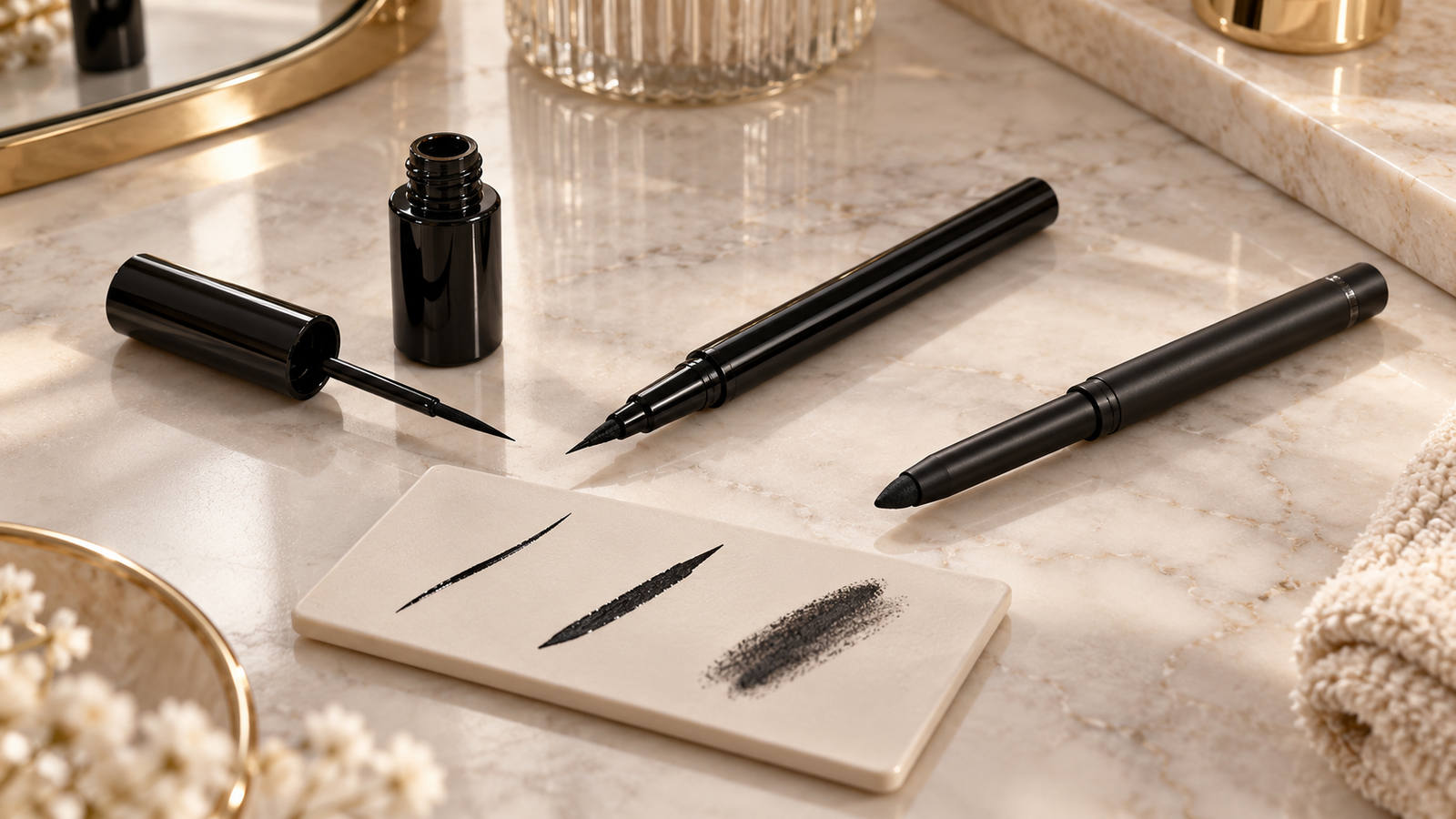
Liquid eyeliner, felt-tip eyeliner pens and kajal can all define the eyes, but they behave very differently during application.
Liquid eyeliner is usually best for sharp, precise lines. Felt-tip pens offer a more controlled, pen-like application. Kajal has a softer texture that works well for the waterline, smudged looks and everyday definition.
The right format depends on the finish you want, how steady your hand is, where you apply the product and how much time you want to spend perfecting the line.
What is liquid eyeliner?
Liquid eyeliner contains a fluid pigment applied with a fine brush, dip applicator or precision tip.
It is usually chosen for:
- Sharp winged eyeliner.
- Fine upper-lash lines.
- Graphic eye makeup.
- High-definition black or coloured lines.
- Clean, polished eye looks.
Liquid liner can create some of the most precise results, but it usually requires more control than a pencil or kajal.
What is a felt-tip eyeliner pen?
A felt-tip or brush-tip eyeliner pen combines a liquid formula with a pen-style applicator.
Instead of dipping a brush into a bottle, the pigment flows through the tip.
This format is often easier for beginners because it feels more like drawing with a marker.
It is commonly used for:
- Thin everyday lines.
- Small wings.
- Tight upper-lash definition.
- Quick application.
- Controlled graphic shapes.
The quality of the tip makes a major difference. A flexible brush tip may create both thin and thick lines, while a firmer felt tip can feel easier to control.
What is kajal?
Kajal is a soft eye pencil or retractable stick traditionally used around the lash line and waterline.
Modern kajal products are available in:
- Wooden pencil formats.
- Retractable pencils.
- Gel-like sticks.
- Waterproof formulas.
- Smudgeable formulas.
Kajal is often chosen for:
- Waterline application.
- Smoky eye looks.
- Soft lash-line definition.
- Lower-lash-line makeup.
- Everyday eye definition.
Its softer texture usually makes it easier to blend than liquid liner.
Liquid eyeliner vs felt-tip pen vs kajal at a glance
| Factor | Liquid eyeliner | Felt-tip eyeliner pen | Kajal |
|---|---|---|---|
| Texture | Fluid | Fluid inside pen applicator | Soft pencil or gel-like stick |
| Precision | Very high | High | Moderate |
| Beginner friendliness | Moderate | Usually high | Usually high |
| Best for wings | Excellent | Excellent | Possible, but softer |
| Best for waterline | Usually no | Usually no | Often yes, if product is approved for waterline use |
| Smudging ability | Low once set | Low once set | High to moderate |
| Finish | Crisp and defined | Crisp and controlled | Soft or smoky |
| Touch-up ease | Moderate | Easy | Easy |
| Common use | Graphic or sharp liner | Everyday precision | Soft definition and waterline |
Which format is easiest for beginners?
For many beginners, felt-tip eyeliner pens are the easiest starting point.
The pen-like body gives more control, and the applicator usually deposits pigment without requiring you to reload a brush.
Kajal is also beginner-friendly because small mistakes can be blended or smudged.
Traditional liquid eyeliner can require more practice because:
- The brush may be very flexible.
- Too much product can collect on the tip.
- Small hand movements are more visible.
- Corrections can be harder once the formula dries.
That said, some users find a fine brush easier than a felt tip. Personal control matters more than the category alone.
Which is best for winged eyeliner?
Liquid liner and felt-tip pens are generally the most practical options.
Liquid eyeliner
Useful if you want:
- Very sharp edges.
- Thin inner-corner lines.
- Strong graphic wings.
- High pigment intensity.
A fine brush can create highly precise shapes, but it requires practice.
Felt-tip pen
Useful if you want:
- Faster application.
- Better hand control.
- Easier wing construction.
- Fewer steps.
For many users, a felt-tip pen is the more convenient everyday wing option.
Kajal
Kajal can create a wing, but the result is usually softer.
It works better for:
- Smoked-out wings.
- Diffused liner.
- Soft outer-corner definition.
If you want a very sharp wing, kajal may require an angled brush or extra cleanup.
Which is better for the waterline?
Kajal is generally the most common choice for the waterline.
Its soft texture makes it easier to apply close to the eye.
However, not every eye pencil is specifically intended for waterline use.
Check the product directions.
Avoid placing products directly inside the eye unless they are designed for that application.
Liquid liner and felt-tip eyeliner are usually better suited to the lash line rather than the waterline.
Why kajal can smudge more easily
Kajal is softer and more blendable than most liquid liners.
That same softness can make it more likely to move.
Smudging may be affected by:
- Oily eyelids.
- Watery eyes.
- Humidity.
- Sweat.
- Rubbing the eyes.
- Application on the lower lash line.
- Formula softness.
Waterproof or long-wear kajal may reduce movement, but no product is guaranteed to remain completely unchanged on every user.
Waterproof vs water-resistant eye makeup
These terms are often used in marketing, but they are not identical.
Water-resistant
The product is designed to tolerate some exposure to moisture.
Waterproof
The product is intended to resist more significant water exposure.
Real-world performance can still vary depending on:
- Skin oil.
- Tears.
- Sweat.
- Rubbing.
- Application thickness.
Do not assume a waterproof formula will be impossible to remove.
Matte vs glossy eyeliner
Liquid eyeliners may dry to:
- Matte.
- Satin.
- Glossy finishes.
Matte liner
Creates a flatter, more modern appearance.
It is often preferred for classic black wings.
Glossy liner
Reflects more light and can look more dramatic.
It may suit evening or graphic eye makeup.
Finish is mainly an aesthetic preference.
It does not automatically indicate better wear.
Black vs coloured eyeliner
Black is the most common shade because it provides strong definition.
But coloured liners can change the overall effect of the eye makeup.
Common options include:
- Brown.
- Navy.
- Blue.
- Burgundy.
- Green.
- Grey.
Brown can create softer everyday definition.
Navy or blue can add colour without being as dramatic as brighter shades.
Choose according to your makeup style rather than assuming black is always the best option.
Pencil kajal vs retractable kajal
Pencil kajal
Advantages:
- Can be sharpened to a fine point.
- Offers good control.
- Usually easy to smudge.
Disadvantages:
- Requires sharpening.
- Can become blunt between uses.
- Wooden casing quality matters.
Retractable kajal
Advantages:
- No sharpener required.
- Convenient for travel.
- Quick everyday application.
Disadvantages:
- Tip may become rounded.
- Some formats cannot be sharpened precisely.
Neither type is automatically better.
The right choice depends on whether precision or convenience matters more to you.
Brush-tip vs felt-tip eyeliner pens
Not all eyeliner pens use the same applicator.
Felt tip
Usually firmer.
It can be easier for beginners because the tip moves less.
Brush tip
Usually more flexible.
It can create:
- Very fine lines.
- Variable thickness.
- More fluid wings.
A brush tip can feel more precise once you become comfortable with it.
If your hand is unsteady, a firmer felt tip may be easier initially.
How to choose eyeliner for hooded eyes
With hooded eyelids, part of the liner may become hidden when the eyes are open.
A few practical techniques can help:
- Keep the inner line thin.
- Create the wing while looking straight ahead.
- Avoid making the entire line unnecessarily thick.
- Allow liquid products to dry before fully opening the eye.
- Use long-wear formulas if transfer is a frequent problem.
The ideal shape depends on your individual eye anatomy.
There is no single wing shape that works for everyone.
How to choose eyeliner for oily eyelids
Oily eyelids can cause liner to transfer or fade.
Look for:
- Long-wear formulas.
- Waterproof or water-resistant claims.
- Fast-setting liquid liner.
- Smudge-resistant kajal.
You can also keep the eyelid relatively dry before application.
Avoid applying heavy moisturiser directly over the area where the liner needs to set.
If you use eye primer or powder, apply only a small amount so the liner does not become patchy.
How to choose eyeliner for sensitive eyes
If your eyes are sensitive, prioritise comfort over intensity or long-wear claims.
Consider:
- Products designed for eye-area use.
- Clear ingredient and usage instructions.
- Avoiding products that repeatedly cause watering or burning.
- Replacing products that are old or contaminated.
Stop using an eyeliner that consistently causes irritation.
Persistent redness, swelling or eye discomfort should be assessed by an eye-care professional.
How to get a thin eyeliner line
For a thin line:
- Keep the applicator close to the lash roots.
- Use short strokes rather than one long movement.
- Start at the middle or outer section if that feels easier.
- Use less pressure.
- Build thickness only where needed.
A fine brush or flexible pen tip usually gives the most control.
How to create a basic wing
A simple wing can be built in small steps.
- Look straight ahead.
- Mark the direction of the wing from the outer corner.
- Draw a short line outward.
- Connect the tip back toward the upper lash line.
- Fill the small triangle.
- Refine the edge only if necessary.
Avoid repeatedly making the line thicker while trying to fix tiny imperfections.
Minor asymmetry is normal.
Why stretching the eyelid can cause problems
Pulling the skin tightly may make application easier temporarily.
But when you release the eyelid, the line can change shape.
Instead, try applying liner with the eye relaxed and partially open.
This gives you a better idea of how the line will look naturally.
How to make kajal look softer
For a smoky finish:
- Apply kajal close to the lash line.
- Use a small smudging brush or cotton swab.
- Blend before the product fully sets.
- Add more only where you need depth.
Work in small sections.
Once a long-wear kajal sets, it may become harder to blend.
Kajal on the lower lash line
Kajal on the lower lash line can make the eyes appear more defined.
However, a very dark full lower line can also make the eye area look heavier.
For a softer effect:
- Apply only to the outer half.
- Blend the edge.
- Use brown or grey instead of black.
- Keep the upper lash line slightly stronger.
The most flattering approach depends on your preferred makeup style.
Can you use eyeliner as kajal?
Only if the product is intended for that area.
A liquid eyeliner designed for the upper lash line should not automatically be used on the waterline.
Check the manufacturer’s directions.
Similarly, a kajal may not create the same sharp finish as a liquid eyeliner even if both are black.
Can kajal be used as eyeliner?
Yes.
Kajal can be applied along the upper lash line for a soft eyeliner effect.
It is especially useful when you want:
- Smoky definition.
- A less precise line.
- Easy blending.
For a sharper result, use a freshly sharpened pencil or refine the edge with a small angled brush.
How to reduce eyeliner smudging
Try these practical steps:
- Apply to clean, dry skin.
- Avoid excess moisturiser on the eyelid.
- Allow the liner to set fully.
- Use thinner layers.
- Avoid rubbing your eyes.
- Choose a long-wear formula if transfer is a recurring issue.
For kajal, a small amount of matching eyeshadow over the line can sometimes help set it, provided the product is being used on the lash line rather than directly in the eye.
Why eyeliner sometimes skips during application
A pen or liquid liner may create gaps because:
- The tip is drying out.
- Eyeshadow or powder is coating the applicator.
- The eyelid has product buildup.
- The liner is nearly empty.
- Too little pressure is being used.
- The formula needs shaking.
If the product instructions say to shake before use, do so with the cap securely closed.
Clean excess eyeshadow from the tip gently if needed.
Why felt-tip pens dry out
Pen-style liners can dry faster than bottle liners if:
- The cap is left loose.
- They are stored incorrectly.
- Product residue blocks the tip.
Close the cap firmly after each use.
Follow the manufacturer’s storage guidance.
Some pens perform better stored horizontally, but this depends on the design.
How to remove liquid eyeliner
Long-wear liquid eyeliner may need more than plain water.
Use a gentle makeup remover suitable for the eye area.
Options may include:
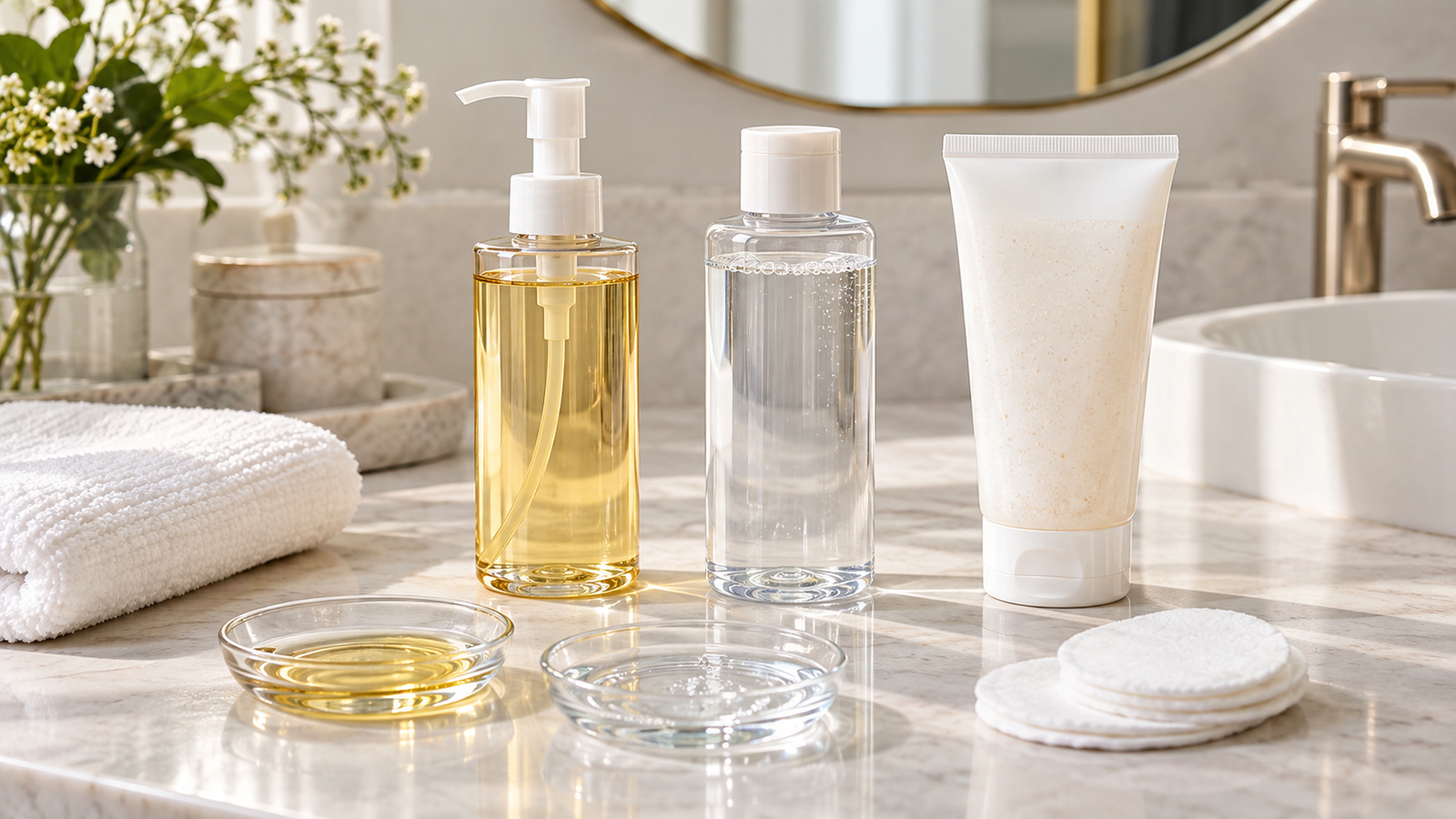
- Micellar water.
- Cleansing oil.
- Biphasic eye makeup remover.
Hold the saturated cotton pad gently against closed eyelids for a few moments before wiping.
Avoid vigorous rubbing.
How to remove waterproof kajal
Waterproof kajal may adhere strongly to the lash line.
A cleansing oil or oil-containing makeup remover can help dissolve the formula.
Use gentle movements, especially around the lower lash line.
If product remains very close to the eye, do not scrape it away.
Eye makeup hygiene matters
Eye products are used close to a sensitive area, so hygiene is important.
Avoid:
- Sharing eyeliner or kajal.
- Using a product after an eye infection without appropriate replacement.
- Adding water to a drying liquid liner.
- Using an applicator that looks contaminated.
- Keeping products indefinitely.
Replace eye makeup according to the manufacturer’s guidance and discard products that change noticeably in smell, texture or performance.
What if eyeliner gets inside the eye?
If cosmetic product enters the eye:
- Stop application.
- Rinse gently with clean water if needed.
- Remove contact lenses if they become contaminated.
- Avoid rubbing.
Seek professional advice if pain, redness, blurred vision or irritation persists.
Common eyeliner mistakes
Making the line too thick immediately
Start thin and build gradually.
Trying to create the entire wing in one stroke
Short controlled strokes are easier to correct.
Using liquid liner on the waterline
Use products specifically designed for that area.
Applying liner over very oily skincare
This can reduce wear.
Repeatedly rubbing kajal to make it darker
Build colour gradually instead.
Using dried-out eye products
Poor flow can make application uneven and may encourage excessive pressure.
Sharing kajal or eyeliner
This increases hygiene risks.
How to compare eye liners before buying
| Factor | What to check |
|---|---|
| Format | Liquid bottle, felt-tip pen or kajal |
| Applicator | Brush tip, firm felt tip or pencil |
| Finish | Matte, satin, glossy or smoky |
| Wear claim | Standard, long-wear, water-resistant or waterproof |
| Main use | Wing, upper lash line, waterline or smoky makeup |
| Colour | Black, brown, blue or another shade |
| Removal | Regular cleanser or dedicated makeup remover |
| Precision | Fine line or soft blendable definition |
| Sensitivity | Suitability for your eye area |
| Value | Product quantity and how quickly the applicator dries |
Which format should you choose?
Choose liquid eyeliner if:
- You want very sharp lines.
- You create graphic eye looks.
- You are comfortable using a fine brush.
- You want a crisp wing.
Choose a felt-tip pen if:
- You want good precision with easier control.
- You are learning winged eyeliner.
- You prefer quick application.
- You want a portable format.
Choose kajal if:
- You use the waterline.
- You prefer softer definition.
- You like smoky eye makeup.
- You want something forgiving and easy to blend.
Many makeup users keep more than one format because each serves a different purpose.
Frequently asked questions
Is kajal the same as eyeliner?
Kajal is one type of eye-defining cosmetic, but it behaves differently from liquid eyeliner.
It is generally softer and more blendable.
Which is best for beginners?
A felt-tip eyeliner pen or kajal is often easier to control than traditional liquid eyeliner.
Which lasts longer?
Long-wear liquid liner often provides very strong lash-line wear, while waterproof kajal can perform well on the waterline.
Actual wear varies by formula and individual skin conditions.
Which is better for a natural look?
Kajal or a thin felt-tip line generally creates a softer everyday effect than a dramatic liquid wing.
Can I use black kajal every day?
Yes, if it is suitable for the intended eye area and does not cause irritation.
Remove it properly at the end of the day.
Why does my kajal disappear from the waterline?
Tears, blinking and the naturally moist environment of the waterline can gradually remove pigment.
A long-wear formula may last better, but complete all-day permanence is difficult in this area.
Why does my eyeliner transfer to my upper eyelid?
Transfer can occur because of oily skin, hooded eyelids or the liner not being fully dry.
Try a quicker-setting formula and allow it to dry before fully opening the eye.
Choosing the right eye makeup format
Start with where you want to apply the product and what finish you want.
If you want a crisp wing, liquid or felt-tip eyeliner usually makes the most sense.
If you want waterline definition or a smoky finish, kajal is generally more practical.
If you want precision without dealing with a separate brush and bottle, a felt-tip pen offers a useful middle ground.
The most expensive option is not necessarily the easiest or longest-lasting. Applicator design, formula, comfort and your own technique matter more.
Physical Glow’s Top 5 Liquid Eyeliners, Pen Liners and Kajal Products in India comparison looks at several eye-definition formats and wear styles. Use that comparison alongside this guide, then verify the current shade, applicator type, water-resistance claims and usage instructions for the exact product you are considering.