How to Choose a Face Primer for Your Skin Type and Foundation
Understand gripping, blurring, matte and luminous primers and how to choose one that works with your skin type and foundation formula.
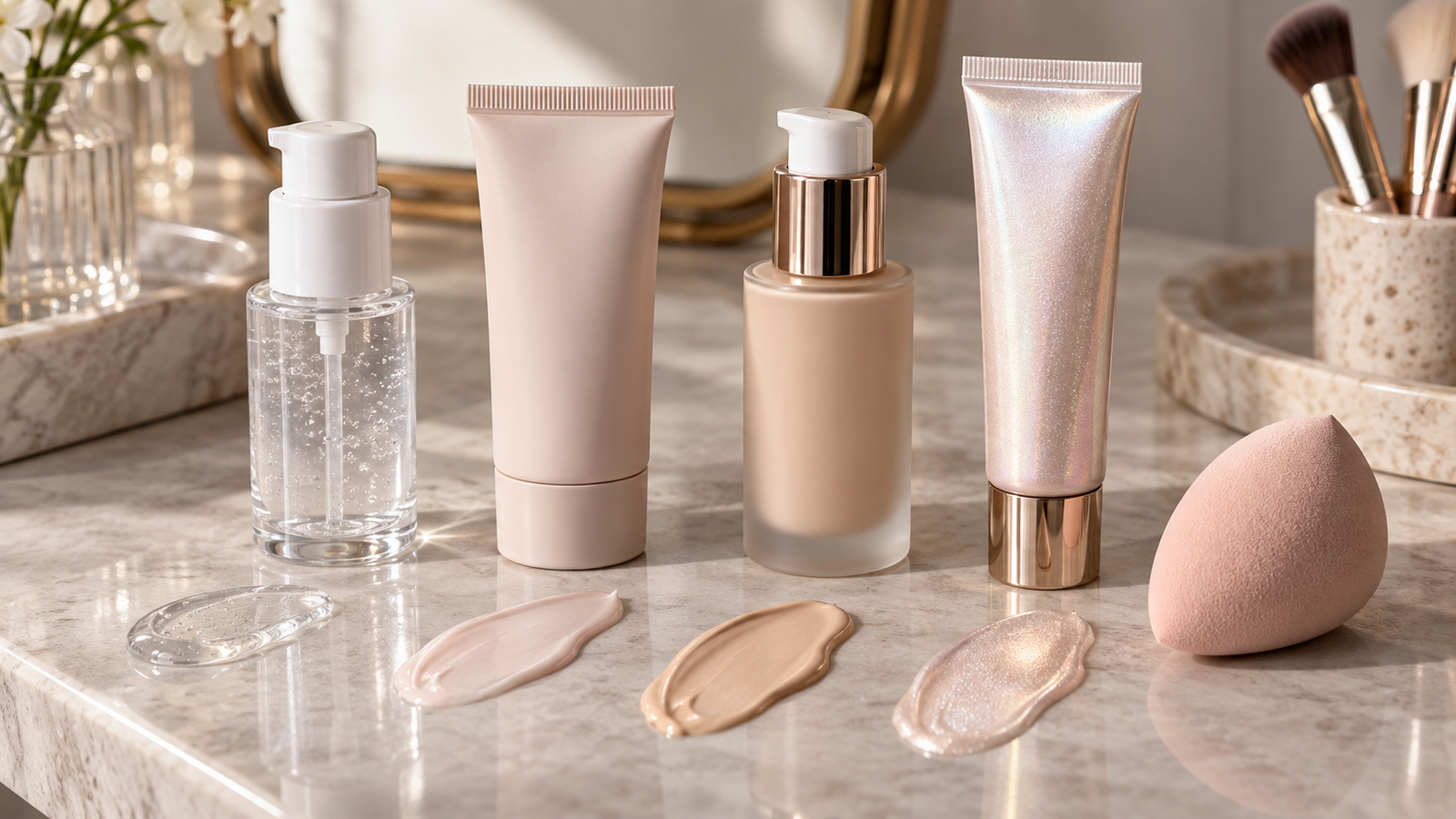
Face primer is often presented as an essential makeup step, but it is not mandatory for everyone.
A good primer should solve a specific problem in your makeup routine. It may help foundation grip better, reduce the appearance of texture, control visible shine, add luminosity or create a smoother base.
The right primer depends on two things:
- your skin type
- the foundation you plan to apply over it
This is important because a primer can work well on its own but still perform poorly when paired with an incompatible base.
The goal is not to add another layer for the sake of it. The goal is to make your makeup apply more evenly and wear more comfortably.
What Does Face Primer Actually Do?
Primer sits between skincare and makeup.
Depending on the formula, it may help with:
- improving foundation grip
- smoothing the appearance of texture
- reducing visible shine
- adding luminosity
- softening the appearance of pores
- creating a more even surface
- helping makeup feel more comfortable over dry areas
Different primers are designed for different jobs.
A gripping primer and a blurring primer may both be called “face primer,” but they are not intended to create the same result.
Do You Actually Need a Face Primer?
Not necessarily.
You may not need primer if:
- your foundation already applies smoothly
- your skincare creates a comfortable base
- your makeup lasts as long as you need it to
- you do not have a specific texture or finish concern
Primer becomes more useful when you want to improve something specific.
For example:
- makeup slides off quickly
- foundation separates around the nose
- pores look more visible
- skin becomes very shiny
- dry areas catch foundation
- you want a more luminous finish
If none of these are a problem, primer may be an unnecessary extra step.
The Main Types of Face Primer
Gripping Primer
Gripping primers are designed to help makeup adhere more strongly to the skin.
They often have:
- gel-like texture
- slightly tacky finish
- flexible feel
These can be useful for:
- longer-wear makeup
- humid conditions
- foundations that tend to move
- people who want stronger base adhesion
The key is using a thin layer.
Too much gripping primer can make foundation difficult to blend.
Blurring Primer
Blurring primers are designed to soften the appearance of:
- visible pores
- fine texture
- uneven-looking surface
They often have a silky or smoothing feel.
Some contain silicone-based ingredients that create a more even cosmetic surface.
These primers are often useful in areas such as:
- sides of the nose
- cheeks
- forehead
- areas with visible texture
You do not necessarily need to apply a blurring primer across the entire face.
Mattifying Primer
Mattifying primers are designed to reduce visible shine.
They can be useful for:
- oily skin
- T-zone oiliness
- humid weather
- matte makeup looks
However, very mattifying formulas can make dry or dehydrated skin look more textured.
They are often best used only where needed.
Hydrating Primer
Hydrating primers are designed to improve comfort and reduce the appearance of dryness under foundation.
They may contain:
- humectants
- emollients
- lightweight moisturising ingredients
These can be useful for:
- dry skin
- dehydration
- foundations that cling to flaky areas
- people who prefer a softer finish
A hydrating primer should not be expected to replace proper skincare.
Luminous Primer
Luminous primers are designed to add glow.
They may contain light-reflecting particles or ingredients that create a dewy finish.
These work well for:
- dull-looking skin
- radiant makeup
- natural-finish foundations
- people who prefer a glowier complexion
If you already have very oily skin, applying a luminous primer everywhere may create more shine than you want.
Colour-Correcting Primer
Some primers include colour-correcting pigments.
Examples include:
- green for visible redness
- peach or apricot for dull or blue-toned areas
- lavender for yellow or sallow-looking tones
These products are usually designed to create a more even-looking base before foundation.
Use them sparingly.
Too much colour correction can make the complexion look unnatural.
How to Choose Primer for Your Skin Type
Primer for Oily Skin
Oily skin often benefits from:
- lightweight texture
- mattifying effect
- good grip
- oil-control focus
Look for formulas that help reduce visible shine without making the skin feel tight.
You may not need mattifying primer across the entire face.
For many people, applying it only to the:
- forehead
- nose
- chin
is enough.
If your cheeks are normal or dry, use less product there.
Primer for Dry Skin
Dry skin usually benefits from:
- hydrating formulas
- creamy or flexible texture
- natural or luminous finish
Avoid heavily mattifying primers unless you only use them in a small oily area.
Before applying primer, make sure your skincare has already created a comfortable base.
Primer cannot fully compensate for:
- flaking
- irritation
- severely dry skin
Primer for Combination Skin
Combination skin often works best with targeted application.
For example:
- mattifying primer on the T-zone
- hydrating primer on dry cheeks
- blurring primer around visible pores
You do not need one primer to solve every issue.
Using different primers in different areas can be more practical.
Primer for Sensitive Skin
Sensitive skin usually benefits from simpler formulas.
Look for:
- comfortable texture
- minimal unnecessary complexity
- products that have previously worked well with your skin
If your skin reacts to fragrance, choose a fragrance-free option.
Stop using a primer if it repeatedly causes:
- burning
- itching
- redness
- swelling
- rash
Primer for Normal Skin
Normal skin has the most flexibility.
Choose according to the finish you want.
For example:
- gripping primer for longevity
- luminous primer for glow
- blurring primer for smoother appearance
- hydrating primer for added comfort
How Primer Should Work With Foundation
Primer and foundation need to work as a system.
This is one of the most important parts of choosing correctly.
If the two layers are incompatible, you may experience:
- pilling
- patchiness
- separation
- uneven blending
- makeup rolling off the skin
Water-Based vs Silicone-Based Makeup
You may hear advice about matching water-based primer with water-based foundation or silicone-based primer with silicone-based foundation.
This can be useful as a rough guideline, but it is not a perfect rule.
Most modern products contain a mix of ingredients.
Instead of relying only on ingredient labels, look at:
- texture
- how quickly the primer sets
- how the foundation blends over it
- whether pilling occurs
Testing the combination is more reliable than following a single ingredient rule.
Choosing Primer by Foundation Type
With Matte Foundation
Matte foundations can sometimes emphasise dry areas.
If your skin is normal to dry, consider:
- hydrating primer
- smoothing primer
If your skin is oily, a lightweight mattifying primer may work well.
Avoid combining an extremely matte primer with an extremely matte foundation unless you genuinely need maximum oil control.
With Dewy Foundation
Dewy foundations already add luminosity.
If you want balanced wear, you may prefer:
- gripping primer
- smoothing primer
- light mattifying primer on oily areas
Using a luminous primer under a dewy foundation can create a very glowing result, which may or may not suit your preference.
With Full-Coverage Foundation
Full-coverage foundations can look heavy if applied over too much primer.
Use a thin layer.
A gripping or smoothing primer is often more useful than layering multiple products.
With Lightweight Skin Tint
Skin tints usually do not need heavy priming.
A lightweight hydrating or gripping primer may be enough.
If your tint already blends well over skincare, primer may be unnecessary.
Primer for Visible Pores
Blurring primers are commonly used around visible pores.
Apply a small amount and press it into the area rather than rubbing aggressively.
Typical areas include:
- nose
- inner cheeks
- forehead
Avoid applying too much.
A thick layer can make foundation sit unnaturally on top of the skin.
Primer for Fine Lines
Primer cannot remove fine lines.
However, a smoothing formula may help makeup sit more evenly over them.
Use:
- thin layers
- less foundation
- minimal powder
Heavy makeup often makes fine lines more visible.
Primer for Long-Wear Makeup
If your priority is longevity, look for:
- gripping formula
- lightweight texture
- thin application
Allow the primer to settle before applying foundation.
Do not assume more primer equals longer wear.
Too much can make the base unstable.
How Much Primer Should You Use?
Usually a small amount.
For the whole face, a pea-sized amount is often enough depending on the product.
Apply more only where needed.
Using too much primer can cause:
- pilling
- sliding
- patchiness
- difficult blending
How to Apply Face Primer
A simple sequence is:
- Cleanse your skin.
- Apply your normal skincare.
- Apply sunscreen during the day.
- Allow skincare to settle.
- Apply a thin layer of primer.
- Wait briefly if the primer is designed to become tacky.
- Apply foundation.
Avoid rubbing primer aggressively into the skin.
Pressing or smoothing gently is usually enough.
How Long Should You Wait Before Foundation?
There is no universal waiting time.
The goal is to let the primer settle.
Some gripping primers benefit from a short pause.
Hydrating primers may blend well almost immediately.
If the foundation starts pilling, try allowing more time between layers.
Why Does Primer Pill?
Pilling happens when products roll into small flakes or balls.
Common causes include:
- too much skincare
- too much primer
- incompatible textures
- rubbing instead of pressing
- applying layers too quickly
- using heavy silicone-like layers together
Try simplifying the base and using smaller amounts.
Why Does Foundation Separate Over Primer?
Separation may happen because of:
- excess oil
- incompatible primer and foundation
- too much product
- skincare not fully absorbed
- foundation layered too heavily
Try:
- thinner skincare
- less primer
- less foundation
- targeted powder
Can Primer Replace Moisturiser?
Usually no.
Primer is a makeup-preparation product.
Moisturiser is designed to support skin hydration and barrier comfort.
Some primers contain hydrating ingredients, but that does not automatically make them a substitute for moisturiser.
Can Primer Replace Sunscreen?
No.
A primer should not replace sunscreen unless the product is specifically formulated and used as a sunscreen according to its directions.
For daytime wear, apply sunscreen first.
Then apply primer if needed.
Common Primer Mistakes
Using Too Much Product
This is one of the most common mistakes.
Primer should create a thin base, not a thick layer.
Using the Wrong Primer for Your Goal
If you want oil control, a luminous primer may not help.
If you have dry skin, an aggressive matte primer may make foundation look worse.
Applying Primer Before Skincare Settles
Heavy skincare under primer can cause pilling.
Give your base time to settle.
Using One Primer Everywhere
Different parts of the face may need different treatment.
Targeted application is often better.
Expecting Primer to Fix Poor Skin Preparation
Primer cannot fully correct:
- severe dryness
- active irritation
- heavy flaking
Good skincare still matters.
Primer Selection by Main Concern
| Main concern | Primer type to consider |
|---|---|
| Oily T-zone | Mattifying primer |
| Dry skin | Hydrating primer |
| Visible pores | Blurring primer |
| Makeup slipping | Gripping primer |
| Dull complexion | Luminous primer |
| Redness | Colour-correcting primer |
| Combination skin | Targeted multi-primer approach |
| No major concern | Primer may not be necessary |
How to Test a Primer Before an Important Event
Do not test a new primer for the first time on the day of:
- a wedding
- a photoshoot
- a long event
- important travel
- a formal occasion
Test it beforehand with the exact:
- skincare
- sunscreen
- foundation
- powder
you plan to use.
This helps you see whether the full combination behaves well.
How Much Should You Spend on Face Primer?
Price alone does not determine performance.
A useful primer needs to:
- suit your skin
- work with your foundation
- solve a specific problem
- feel comfortable
- fit your routine
An expensive primer is not automatically better if it does not work with your base makeup.
Frequently Asked Questions
Is face primer necessary?
No. Primer is optional and most useful when you want a specific effect such as grip, blur, oil control or luminosity.
Should oily skin use primer?
Oily skin can benefit from lightweight mattifying or gripping primers, especially in the T-zone.
Should dry skin use primer?
Hydrating or smoothing primers can help foundation sit more comfortably on dry skin.
Can I use two primers at once?
Yes. You can use different primers on different parts of the face.
Why does primer make my foundation patchy?
You may be using too much product, layering incompatible textures or applying foundation before the primer has settled.
Do I need primer with a skin tint?
Not necessarily. If the skin tint already applies smoothly over skincare, primer may not add much benefit.
Can primer blur pores completely?
No. Blurring primer can soften the appearance of pores but cannot remove or permanently reduce them.
Final Takeaway
The best face primer is the one that solves a specific makeup problem.
Choose:
- gripping primer when longevity is the priority
- blurring primer when visible pores and texture are the concern
- mattifying primer when shine control is important
- hydrating primer when foundation catches on dry areas
- luminous primer when you want more glow
Most importantly, make sure the primer works with your foundation.
Use a thin layer, allow it to settle and avoid adding more product than necessary.
If your makeup already looks smooth and lasts well without primer, you may not need one at all.
If you are comparing specific options, continue to our Top 5 Face Primers in India guide, where we compare gripping, blurring, matte and highlighting primers for different makeup needs.