SPF Lip Balm vs Overnight Lip Mask: What Each Product Does
Compare daytime SPF lip balm, ordinary lip balm and overnight lip masks by purpose, texture and practical use without confusing moisturisation with sun protection.
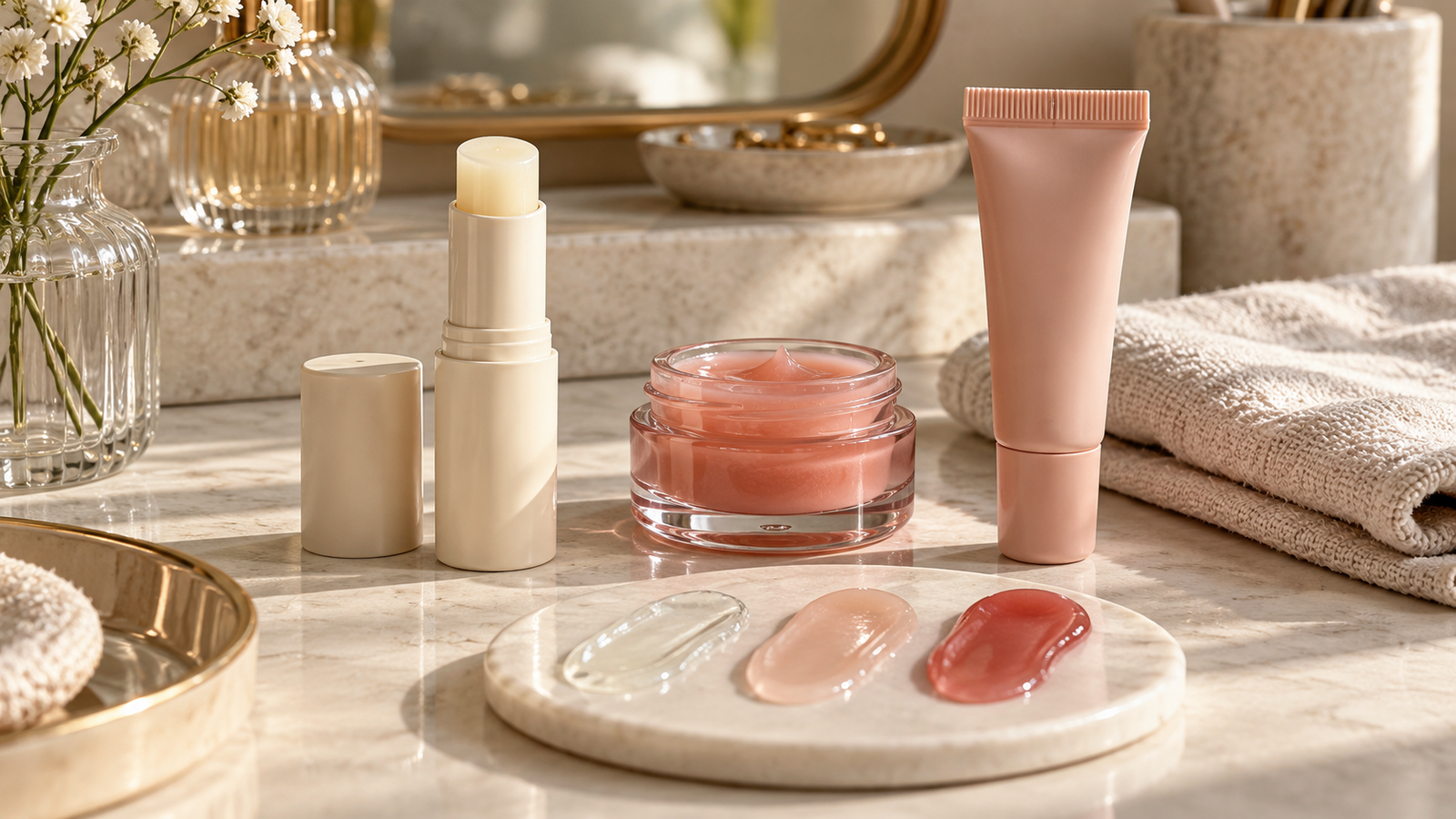
SPF lip balms and overnight lip masks are both designed to support lip comfort, but they solve different problems.
An SPF lip balm is primarily a daytime product. Its main purpose is to help protect the lips from ultraviolet exposure while also providing some moisturising support.
An overnight lip mask is primarily a conditioning product. It is designed to reduce dryness, improve comfort and create a more occlusive layer while you sleep.
Because the two products serve different purposes, one does not automatically replace the other.
Why lip care needs a slightly different approach
The skin on the lips is thinner and behaves differently from much of the rest of the face.
Lips can become dry or uncomfortable due to:
- Sun exposure.
- Wind.
- Dry indoor air.
- Dehydration.
- Lip licking.
- Long-wear lip products.
- Harsh cleansers or exfoliation around the mouth.
- Seasonal weather changes.
A practical lip-care routine should address both protection during the day and moisture retention when needed.
That is where SPF lip balms and overnight lip treatments can complement each other.
What is an SPF lip balm?
An SPF lip balm is a lip product formulated with ultraviolet filters and tested to provide a stated level of sun protection.
Its main role is to help reduce UV exposure on the lips.
Depending on the formula, it may also contain ingredients such as:
- Waxes.
- Oils.
- Butters.
- Humectants.
- Emollients.
- Barrier-supporting ingredients.
- Pigments or tint.
Some SPF lip balms feel like traditional waxy sticks, while others come as softer treatment balms or squeeze tubes.
Why does lip SPF matter?
People often apply sunscreen to the face but forget the lips.
The lips are exposed to sunlight in the same outdoor conditions, and they may receive even less incidental protection because ordinary facial sunscreen is not always applied directly over the lip surface.
Using an SPF lip product can therefore be a practical part of a daytime sun-protection routine.
This is especially relevant when you are:
- Outdoors for extended periods.
- Driving regularly.
- Walking, running or cycling.
- At the beach or pool.
- Spending time at high altitude.
- Using other skincare that makes sun protection more important.
What is an overnight lip mask?
An overnight lip mask is usually a thicker, more occlusive lip treatment designed to remain on the lips for an extended period.
It may contain:
- Petrolatum-like occlusives.
- Waxes.
- Plant oils.
- Butters.
- Ceramides.
- Humectants.
- Emollients.
- Conditioning ingredients.
The objective is not sun protection.
The objective is usually to reduce water loss from the lip surface and improve softness or comfort by morning.
Why are overnight lip masks thicker?
Overnight products are often designed to remain in place for several hours.
A thicker texture can help create a more persistent layer over the lips.
This can be useful if your lips frequently feel dry, rough or tight overnight.
However, thickness alone does not make a product superior.
Some people prefer a simple balm or ointment instead of a dedicated “lip mask,” and the practical effect may be similar if both products provide adequate occlusion and comfort.
SPF lip balm vs overnight lip mask at a glance
| Factor | SPF lip balm | Overnight lip mask |
|---|---|---|
| Main purpose | UV protection plus moisturising support | Moisture retention and conditioning |
| Best time to use | Daytime | Night |
| Contains sunscreen filters | Yes | Usually no |
| Needs reapplication | Yes, especially with eating, drinking or prolonged exposure | Usually applied before sleep |
| Texture | Stick, balm or treatment tube | Usually thicker balm or mask |
| Can replace sunscreen on lips | Yes, if properly labelled and applied as directed | No |
| Can replace night conditioning | Sometimes, if moisturising enough | Usually designed specifically for this role |
Can an overnight lip mask replace SPF lip balm?
No.
An overnight lip mask should not be treated as a substitute for a daytime SPF lip product unless it is specifically labelled and tested as sunscreen.
A thick, glossy or waxy layer does not automatically provide meaningful UV protection.
If sun protection is needed, use a product with a clearly stated SPF and follow its application directions.
Can SPF lip balm replace an overnight lip mask?
Sometimes.
If your SPF lip balm is rich and comfortable enough, you may choose to use it at night too.
However, sunscreen filters are unnecessary while sleeping, and some people prefer a simpler, more occlusive formula for overnight use.
If your lips remain dry even when using SPF balm during the day, adding a separate night treatment can make the routine more comfortable.
What does SPF mean on a lip balm?
SPF indicates protection against UVB radiation under standardised testing conditions.
For practical daily use, look for a lip product with a clearly stated SPF and, where available, broad-spectrum protection.
The exact SPF you choose may depend on your exposure and preferences, but the protection only works as intended if enough product is applied and reapplied.
Why lip balm needs reapplication
Lip products are easily removed.
They can wear off through:
- Eating.
- Drinking.
- Talking.
- Licking the lips.
- Wiping the mouth.
- Swimming.
- Sweating.
This means an SPF lip balm generally needs more frequent reapplication than many people expect.
Apply it according to the product directions and reapply after activities that remove the product.
Tinted vs untinted SPF lip balm
SPF lip balms are available in both tinted and untinted formats.
Untinted SPF balm
An untinted balm is useful if you want protection without adding visible colour.
It may also layer more easily under lipstick.
Tinted SPF balm
A tinted balm can combine sun protection with light cosmetic colour.
It can be convenient for someone who prefers a minimal daytime routine.
However, the tint should not encourage you to apply less product.
If you use only a tiny amount because the colour becomes too strong, you may not be applying enough to obtain the labelled protection.
What about white cast on SPF lip balm?
Some lip products containing mineral UV filters can leave a pale or chalky appearance.
This may be especially visible on deeper lip tones.
Tinted formulas can sometimes reduce this effect, depending on the shade and formulation.
Test the product at the amount you would realistically apply, not just as a very thin swatch.
What ingredients should you look for in an overnight lip mask?
You do not need an extremely complicated ingredient list.
Useful categories may include:
Occlusives
These create a barrier that helps reduce moisture loss.
Examples include petrolatum, waxes and similar barrier-forming ingredients.
Emollients
These help smooth the lip surface and improve softness.
Examples can include oils, esters and butters.
Humectants
These attract water and can support hydration.
Common examples include glycerin and hyaluronic-acid-related ingredients.
Barrier-supporting ingredients
Some formulas include ceramides or other ingredients intended to support a more comfortable barrier.
The complete formula matters more than any single ingredient name.
Is a lip sleeping mask better than petroleum jelly?
Not necessarily.
A simple occlusive product can be very effective at reducing moisture loss.
A lip mask may offer a more elegant texture, additional emollients or a more cosmetically pleasant experience.
The better choice is the one that:
- Keeps your lips comfortable.
- Does not irritate you.
- Stays on adequately overnight.
- Fits your budget.
- Works with your preferred routine.
Premium branding does not automatically mean better lip conditioning.
Do you need lip exfoliation before using a mask?
Usually not.
Frequent lip scrubbing can worsen dryness and irritation.
If your lips have loose flaky skin, aggressive exfoliation may make the area more sensitive.
A gentler approach is often better:
- Apply a moisturising or occlusive treatment.
- Allow the lips to soften.
- Avoid pulling or biting dry skin.
- Let loose flakes shed naturally.
If you do use a lip scrub, keep it infrequent and gentle.
Lip licking and chronic dryness
Lip licking can create a cycle of temporary relief followed by increased dryness.
Saliva evaporates quickly and repeated licking can irritate the lip surface.
If you find yourself frequently licking your lips, keeping a simple balm available can make it easier to maintain a protective layer instead.
How to use SPF lip balm during the day
A simple daytime routine can be:
- Apply the SPF lip balm before going outdoors.
- Apply enough to coat the lips evenly.
- Reapply according to the product directions.
- Reapply after eating or drinking when much of the product has been removed.
- Use additional sun protection such as shade and a hat when exposure is significant.
Do not rely on one morning application for an entire day outdoors.
How to use an overnight lip mask
At night:
- Remove lipstick or other lip products gently.
- Make sure the lips are clean and comfortable.
- Apply a thin but complete layer of the lip mask.
- Avoid excessive rubbing.
- Leave the product on overnight unless the manufacturer directs otherwise.
You do not need to apply a very thick visible layer for the product to be useful.
More product is not always better.
Which product is better for very dry lips?
If your lips are dry mainly because of environmental exposure, you may benefit from both:
- SPF balm during the day.
- A more occlusive treatment at night.
If the lips remain severely dry, cracked, painful or inflamed despite basic care, there may be another cause.
Possible factors can include:
- Irritant or allergic contact reactions.
- Certain lip products.
- Habitual licking.
- Weather.
- Medication.
- Skin conditions around the mouth.
Persistent symptoms should be assessed by a qualified healthcare professional rather than repeatedly layering more cosmetic products.
What if your lips are sensitive?
If your lips react easily, simplify the routine.
Consider avoiding products that cause:
- Burning.
- Tingling.
- Persistent itching.
- Swelling.
- Increasing redness.
Some lip products intentionally create a cooling, plumping or tingling sensation.
That sensation does not necessarily mean the product is working better and may be uncomfortable for sensitive lips.
Fragrance and flavouring can also be irritating for some users.
Common lip-care mistakes
Using an overnight mask as sunscreen
A thick balm without tested SPF is not a substitute for an SPF lip product.
Applying SPF once in the morning
Lip products wear off easily and generally need reapplication.
Scrubbing dry lips every day
Repeated exfoliation can prolong irritation.
Pulling peeling skin
This can cause bleeding and worsen tenderness.
Using too many fragranced or flavoured products
If your lips are irritated, simplifying the routine can help identify whether a product is contributing.
Assuming expensive lip masks are automatically better
A straightforward occlusive balm may perform the basic overnight function perfectly well.
How to build a simple day-and-night lip routine
A practical routine does not need many products.
Morning
Apply an SPF lip balm before sun exposure.
If you use lipstick, allow the balm to settle and then layer compatible lip colour over it.
Through the day
Reapply SPF lip balm when needed, especially after eating or drinking.
Evening
Remove lip colour gently.
If the lips feel comfortable, a regular moisturising balm may be enough.
Before bed
Apply an overnight mask or simple occlusive balm if you need additional moisture retention.
SPF lip balm under lipstick
An SPF balm can be worn underneath lipstick, but product compatibility matters.
A very greasy balm may affect:
- Lipstick adhesion.
- Matte finish.
- Transfer resistance.
- Colour intensity.
Allow the balm to settle before applying colour.
If needed, blot only the excess surface product rather than removing most of the protective layer.
Can lipstick with SPF replace lip balm?
Possibly, if the lipstick is properly labelled with SPF and you apply enough product to achieve the tested protection.
In practice, many people apply lipstick in a thin cosmetic layer.
An SPF lip balm can therefore be easier to reapply generously throughout the day.
If you use both, think of the SPF balm as the protection step and the lipstick as the cosmetic step.
Frequently asked questions
Do I need SPF on my lips every day?
If your lips are exposed to daylight, including SPF lip care is a reasonable part of a broader sun-protection routine.
The need for reapplication depends on your exposure and how quickly the product wears away.
Is SPF 50 lip balm better than SPF 30?
A higher SPF offers greater UVB protection when applied adequately, but the difference is only useful if you apply and reapply the product properly.
A comfortable SPF product that you use consistently can be more practical than one you avoid because you dislike the texture or taste.
Can I use an overnight lip mask during the day?
Yes, but unless it contains tested SPF, it should not replace your daytime sun-protection product.
You can layer it at times when sun protection is not needed if you enjoy the texture.
Can I use SPF lip balm at night?
You can, but the sunscreen filters are unnecessary while you sleep.
A simpler conditioning balm may be more practical.
Are tinted SPF lip balms better?
Not inherently.
They provide cosmetic colour in addition to sun protection, but shade, texture and application amount matter.
Why do my lips still feel dry after using a lip mask?
Possible reasons include frequent lip licking, irritation from another product, environmental dryness, inadequate daytime protection or an underlying skin issue.
If the dryness is persistent or severe, consider professional evaluation.
Choosing the right lip-care product
Choose an SPF lip balm primarily for daytime protection, and judge it by its SPF, comfort, application characteristics and how easily you can reapply it.
Choose an overnight lip mask primarily for moisture retention and conditioning, and judge it by texture, staying power, ingredient tolerability and value.
You do not need to choose one or the other permanently.
For many people, the simplest approach is to use SPF balm during the day and a plain or richer treatment at night.
Physical Glow’s Top 5 SPF Lip Balms and Lip Treatments in India comparison looks at different daytime and overnight lip-care formats. Use that comparison alongside this guide, then confirm the current SPF, shade, ingredient list and directions for the exact product you plan to buy.