Clay Face Masks: How to Choose and Use Them Without Over-Drying Your Skin
Learn how clay face masks fit into a skincare routine, what to check before choosing one, how often to use them and how to reduce unnecessary dryness or irritation.
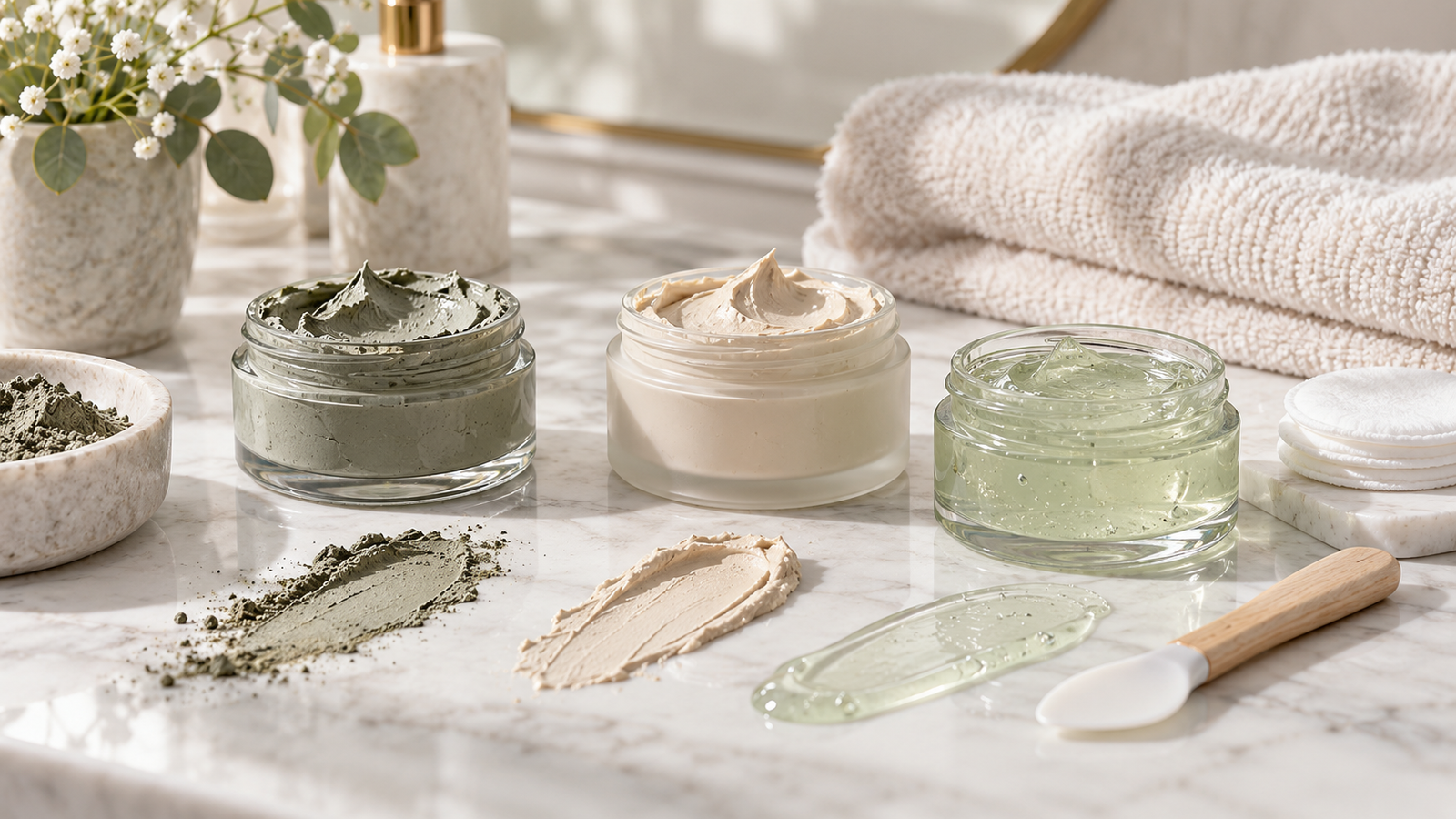
Clay masks can be useful when your skin feels oily, congested or heavy with excess surface sebum, but they are also one of the easiest skincare products to overuse. A mask that leaves your face extremely tight is not necessarily working better. In many cases, that uncomfortable “squeaky clean” feeling simply means the skin has been stripped more aggressively than necessary.
The best clay mask for you depends on your skin type, the rest of your skincare routine, the ingredients combined with the clay, and how frequently you plan to use it.
This guide explains what clay masks actually do, how different formulas vary, how to choose one for your skin and how to use it without unnecessarily drying or irritating your face.
What Does a Clay Face Mask Actually Do?
Clay masks are rinse-off skincare treatments usually designed to absorb some surface oil and help remove residue from the skin.
Common cosmetic clays include:
- Kaolin clay
- Bentonite clay
- Volcanic clay
- Mineral clay blends
The exact performance of a mask depends on far more than the clay itself. A formula may also contain ingredients such as salicylic acid, niacinamide, green tea, humectants, botanical extracts or emollients.
This means two products labelled “clay mask” can behave very differently on the skin.
A clay mask may temporarily make the skin feel:
- Less oily
- Cleaner
- Smoother
- More matte
- Less congested around areas such as the nose and forehead
However, it should not be considered a permanent solution for enlarged pores, acne, blackheads or excessive oil production.
Who May Benefit Most From a Clay Mask?
Clay masks generally make the most sense for people who experience excess oil or congestion.
Oily Skin
People with oily skin may find clay masks useful as an occasional addition to their routine because clay can help absorb excess surface oil.
However, oily skin does not mean that the skin should be aggressively dried out.
Using strong clay treatments too frequently can leave the skin feeling tight or irritated.
Combination Skin
Combination skin is often a good candidate for targeted masking.
Instead of applying the mask everywhere, you can use it mainly on areas that tend to become oily, such as:
- Forehead
- Nose
- Chin
This is sometimes called multi-masking or zone masking.
Drier areas of the face can simply be left untreated.
Acne-Prone or Congestion-Prone Skin
Some clay masks are formulated specifically for acne-prone skin and may contain ingredients such as salicylic acid.
These can be useful for people dealing with clogged pores or excess oil, but they also increase the treatment strength of the product.
If you already use exfoliating acids, retinoids or acne treatments, adding another active mask requires more caution.
Dry or Sensitive Skin
People with dry or sensitive skin do not necessarily need to avoid clay masks completely, but they should be more selective.
Look for:
- Gentler clay formulas
- Creamier textures
- Hydrating ingredients
- Shorter recommended application times
- Less frequent use
If your skin already feels tight after cleansing, a strongly absorbent clay mask may not be the best addition to your routine.
Kaolin vs Bentonite vs Volcanic Clay
Different clays are often marketed as if one is universally superior, but the complete formula matters more than the name of the clay alone.
Kaolin Clay
Kaolin is commonly used in facial masks and is often considered one of the gentler cosmetic clays.
It may suit:
- Combination skin
- Mildly oily skin
- People new to clay masks
That does not mean every kaolin mask will automatically be gentle. Other ingredients still matter.
Bentonite Clay
Bentonite is known for strong oil-absorbing properties and is commonly used in deeply cleansing mask formulas.
It may appeal more to people with very oily skin.
However, highly absorbent formulas may feel too drying for some users.
Volcanic Clay
Volcanic clay is frequently used in pore-focused masks and is especially common in products marketed for oil control.
Again, the term “volcanic” alone does not tell you how strong or gentle the finished product will be.
Compare the entire ingredient list and the intended skin type.
Clay Mask vs Salicylic Acid Clay Mask
This is an important distinction.
A basic clay mask mainly relies on absorbent ingredients.
A salicylic-acid clay mask combines oil-absorbing clay with a chemical exfoliant.
Salicylic acid is a beta-hydroxy acid commonly used in products designed for:
- Oily skin
- Congested pores
- Blackheads
- Acne-prone skin
The combination can make the mask more treatment-oriented, but also increases the possibility of irritation when used alongside other active products.
For example, be cautious if your routine already contains:
- Salicylic acid cleanser
- AHA exfoliant
- BHA serum
- Retinoid
- Benzoyl peroxide
- Strong acne treatments
You do not necessarily need several exfoliating products in the same routine.
What About Green Tea, Ubtan and Coffee Face Masks?
Not every face mask in this category is primarily about clay.
Some products are positioned around ingredients such as green tea, turmeric-based ubtan blends or coffee.
Green Tea Masks
Green tea is frequently included in skincare for its antioxidant and soothing positioning.
A green-tea mask may make sense for users who want an oil-control treatment that feels somewhat more balanced than a very aggressive clay-only formula.
Ubtan Masks
Ubtan-style cosmetic masks often combine ingredients inspired by traditional preparations such as:
- Turmeric
- Chickpea flour
- Botanical powders
- Saffron
- Sandalwood-style ingredients
Commercial products vary significantly in formulation.
Do not assume that a product is automatically gentle or suitable for sensitive skin simply because it uses traditional ingredients.
Coffee or De-Tan Masks
Coffee-based masks are often marketed for brightening, exfoliating or de-tanning.
The term “de-tan” can be misleading if interpreted too literally.
A cosmetic mask cannot replace sun protection and does not reverse ultraviolet damage.
The most important step for preventing tanning and sun-related pigmentation remains appropriate sunscreen use and sun protection.
How to Choose the Right Clay Mask
Instead of choosing based only on the most impressive marketing claim, consider the following factors.
1. Start With Your Skin Type
For very oily skin, a more absorbent clay mask may be appropriate.
For combination skin, look for something that can be used selectively.
For dry or sensitive skin, prioritise comfort and gentler formulations.
The mask should fit your skin rather than forcing your skin to adapt to the product.
2. Check Whether It Contains Other Active Ingredients
A clay mask containing salicylic acid is not equivalent to a simple clay mask.
Similarly, some masks may contain:
- Exfoliating acids
- Essential oils
- Fragrance
- Niacinamide
- Botanical extracts
- Physical exfoliating particles
The stronger the overall formula, the more carefully it should be integrated into your routine.
3. Consider Your Existing Routine
Your mask should complement your routine rather than duplicate several treatment steps.
For example, if you already use:
- Salicylic acid serum
- Retinoid
- Exfoliating toner
you may not need another strong exfoliating mask.
A simpler mask may be easier to tolerate.
4. Think About How Often You Will Actually Use It
A product that requires very specific timing or leaves your skin uncomfortable may end up sitting unused.
A good mask should be easy to incorporate occasionally without turning skincare into a complicated process.
5. Do Not Choose Based Only on “Pore Tightening” Claims
Pores do not permanently open and close like doors.
A clay mask may temporarily reduce surface oil and make pores look less noticeable, but this does not mean the pore itself has permanently shrunk.
Choose the mask for realistic benefits rather than dramatic pore claims.
How Often Should You Use a Clay Mask?
There is no single schedule that works for everyone.
For many people, occasional use may be enough.
A reasonable starting point is usually less frequent use rather than immediately applying the mask several times per week.
The product label should remain your primary guide.
Reduce frequency if you notice:
- Tightness
- Flaking
- Burning
- Redness
- Persistent dryness
- Increased sensitivity
Skin should not need to become irritated for a mask to be effective.
How to Use a Clay Mask Properly
A simple routine is usually best.
Step 1: Cleanse Your Face
Start with clean skin using your usual gentle cleanser.
Avoid aggressive scrubbing beforehand.
Step 2: Apply a Thin, Even Layer
More product does not necessarily improve results.
Apply enough to cover the intended area according to the product directions.
Step 3: Follow the Recommended Time
Do not automatically leave the mask on until it becomes completely cracked and uncomfortable.
Follow the manufacturer’s stated application time.
Longer exposure is not necessarily more beneficial.
Step 4: Rinse Gently
Use lukewarm water.
Avoid vigorously rubbing the skin during removal.
Step 5: Apply Moisturizer
After rinsing, apply a moisturizer appropriate for your skin type.
This can help restore comfort after an oil-absorbing treatment.
Should a Clay Mask Completely Dry on Your Face?
Not necessarily.
A common assumption is that a clay mask must become completely dry, hard and cracked before removal.
That is not always desirable.
Once the mask becomes extremely dry, some people experience significant tightness.
Follow the instructions for the specific product rather than using dryness as the indicator that the mask has “worked.”
Can You Apply Clay Masks Only to the T-Zone?
Yes.
This can be one of the most practical approaches for combination skin.
Apply the mask to areas that become oily, such as:
- Nose
- Forehead
- Chin
and avoid drier areas such as the cheeks if necessary.
There is no requirement to cover the entire face.
What Products Should You Avoid Combining With a Clay Mask?
This depends on the mask.
A simple clay formula is different from a clay mask containing exfoliating acids.
If the mask contains salicylic acid or other strong actives, be careful about using it in the same routine as:
- Strong AHA exfoliants
- BHA serums
- Retinoids
- Benzoyl peroxide
- Harsh scrubs
Using several aggressive treatment steps together can increase irritation.
A simple routine of cleanser, mask and moisturizer is often enough.
Common Clay Mask Mistakes
Using It Too Often
If a mask works well once, that does not mean using it daily will work better.
Overuse may lead to dryness and irritation.
Leaving It on Too Long
Longer treatment time does not automatically mean better results.
Follow the recommended duration.
Scrubbing While Removing It
A clay mask already provides a treatment step.
Aggressive rubbing during removal adds unnecessary friction.
Applying It Over Irritated Skin
If your skin is already peeling, sunburned or irritated from another treatment, it is usually better to allow it to recover.
Using Several Exfoliants on the Same Day
A salicylic-acid clay mask plus an exfoliating toner plus a retinoid may simply be too much for many people.
Expecting It to Cure Acne
Clay masks are cosmetic skincare products.
They may help manage surface oil and provide temporary improvement in skin feel, but persistent acne may require professional treatment.
Are Clay Masks Good for Blackheads?
They may temporarily improve the appearance of areas with surface oil and congestion.
However, blackheads form inside pores and can return.
Products containing salicylic acid may be more relevant for blackhead-prone skin than clay alone because salicylic acid is commonly used in pore-focused skincare.
Still, no mask permanently prevents blackheads.
Are Clay Masks Good for Sensitive Skin?
Some people with sensitive skin can tolerate certain clay masks, but product selection becomes especially important.
Consider:
- Gentler clay types
- Fragrance-free formulas
- Fewer aggressive actives
- Shorter contact time
- Less frequent use
Patch testing can also help when trying a new treatment product.
If a mask causes persistent burning or redness, discontinue use.
Do You Need to Moisturize After a Clay Mask?
For most routines, yes.
Clay masks are often designed to reduce excess oil or residue.
Applying moisturizer afterward can help maintain comfort and hydration.
Choose the moisturizer based on your skin type rather than skipping it simply because your skin is oily.
Oily skin can still benefit from appropriate moisturization.
Do You Need Sunscreen After Using a Face Mask?
Daily sunscreen is important regardless of whether you use a face mask.
It becomes particularly relevant if your mask contains exfoliating ingredients.
A skincare routine aimed at brightening, reducing pigmentation or improving uneven tone will be much less effective if ongoing UV exposure is ignored.
When Should You Avoid Using a Clay Mask?
Consider postponing use if your skin is:
- Sunburned
- Actively peeling
- Severely irritated
- Recently damaged by over-exfoliation
- Reacting to another product
- Experiencing an unexplained rash
You should also stop using the product if it causes significant discomfort.
When to Speak to a Dermatologist
A cosmetic mask is not a substitute for professional evaluation.
Consider seeing a dermatologist if you experience:
- Persistent or severe acne
- Painful cystic breakouts
- Significant redness
- Repeated allergic-type reactions
- Ongoing flaking or burning
- Sudden changes in your skin
- Pigmentation that concerns you
Professional guidance can be especially useful when several active treatments are being used together.
Final Takeaway
A clay mask can be a useful optional step for oily, combination or congestion-prone skin, but stronger is not automatically better.
The best approach is to choose a mask based on:
- Your skin type
- The complete formula
- Other active ingredients
- Your existing skincare routine
- How frequently you plan to use it
- How your skin responds after use
If you have very oily or congested skin, a clay or salicylic-acid clay mask may be appropriate. If your skin is dry or sensitive, a gentler formula and less frequent application usually make more sense.
Most importantly, a clay mask should support the rest of your routine—not leave your skin irritated simply to create the feeling that it is working.