How to Choose a Water Bottle for Workouts and Everyday Hydration
Learn how to choose a water bottle for workouts and everyday hydration, with practical guidance on capacity, material, insulation, lid design, cleaning and portability. This beginner-friendly guide helps you make a clear, informed choice without unnecessary complexity.
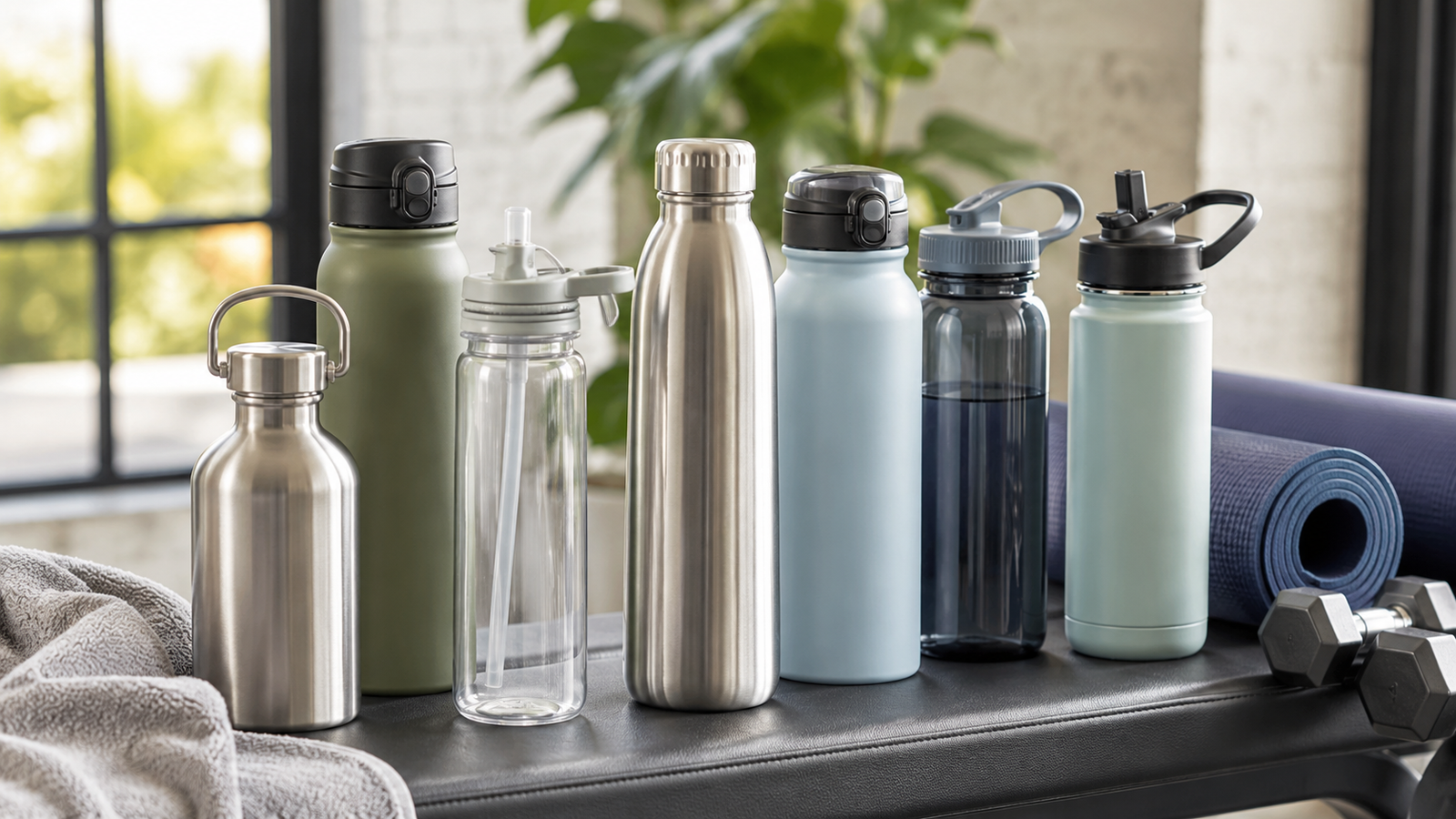
A water bottle is one of the simplest fitness accessories you can own, but the right bottle can make staying hydrated much easier during:
- workouts;
- commuting;
- work;
- travel;
- outdoor activities;
- everyday routines.
Water bottles vary significantly in:
- capacity;
- material;
- insulation;
- lid design;
- drinking mechanism;
- weight;
- portability;
- cleaning requirements;
- durability.
A bottle that works well on a desk may be inconvenient during:
- running;
- cycling;
- gym workouts.
A large insulated bottle may keep water cold for hours but become unnecessarily:
- heavy;
- bulky;
for someone carrying it everywhere.
The practical way to choose a water bottle is:
decide where you will use it → choose an appropriate capacity → select the material → choose the drinking mechanism → consider insulation and portability → make sure it is easy to clean → then evaluate extra features
The best water bottle is not automatically:
- the largest;
- the most heavily insulated;
- the most expensive;
- the one with the most complicated lid.
It is the bottle that makes it easy for you to:
carry water → drink comfortably → refill conveniently → clean properly → use consistently.
Why the Right Water Bottle Matters
Hydration sounds simple:
drink when you need fluid
but convenience affects behaviour.
If your bottle is:
- difficult to carry;
- constantly leaking;
- awkward to open;
- unpleasant to drink from;
- difficult to clean;
you may use it less often.
A good bottle reduces this friction.
That does not mean a specific bottle will automatically make you healthier.
It simply makes regular access to water easier.
Start With How You Will Use the Bottle
Before choosing capacity or material, identify the main situation.
Gym Workouts
Prioritize:
- easy drinking;
- secure lid;
- moderate capacity;
- bottle-holder compatibility.
Strength Training
You may want:
- larger capacity;
- wide base;
- simple one-handed opening.
Treadmill or Cardio Machines
Check whether the bottle fits:
- treadmill holder;
- bike cage;
- elliptical console.
Running
A large normal bottle may be impractical.
Consider:
- handheld running bottles;
- soft flasks;
- hydration belts;
- hydration vests.
Cycling
Use a bottle designed to fit:
- bicycle bottle cages.
Office or Desk
You may prioritize:
- larger capacity;
- insulation;
- attractive design;
- leak resistance.
Commuting
Prioritize:
- secure lid;
- comfortable carrying;
- manageable weight.
Outdoor Activity
Consider:
- durability;
- insulation;
- easy drinking;
- larger capacity where refills are limited.
Travel
Look for:
- leak resistance;
- manageable size;
- wide-mouth refill access.
Your environment determines the best design.
Water Bottle Capacity
Capacity determines how much fluid you can carry before refilling.
Common sizes may include approximately:
- 350–500 mL;
- 600–750 mL;
- 1 litre;
- 1.5 litres or more.
There is no perfect size for everyone.
Small Bottles: Around 350–500 mL
Useful for:
- short workouts;
- children where appropriate;
- small bags;
- short commutes.
Advantages:
- lightweight;
- compact;
- easy to hold.
Disadvantages:
- frequent refilling.
If your gym has accessible water stations, this may be enough.
Medium Bottles: Around 600–750 mL
Often the most versatile size.
They generally provide enough fluid for:
- ordinary gym workouts;
- desk use;
- commuting.
They are still reasonably portable.
For many users, this is the best all-purpose range.
1-Litre Bottles
Useful for:
- longer workouts;
- hot environments;
- people who prefer fewer refills.
Advantages:
- substantial capacity.
Disadvantages:
- heavier when full;
- larger;
- may not fit cup holders.
Remember:
1 litre of water weighs approximately 1 kilogram
before adding the weight of the bottle itself.
Extra-Large Bottles
Bottles of:
- 1.5 L;
- 2 L;
- larger;
can be useful when water access is limited.
But they become:
- heavy;
- cumbersome.
For ordinary gym use, extremely large bottles are often unnecessary.
Bigger Is Not Automatically Better
A huge bottle may encourage you to carry enough fluid.
But it may also:
- stay at home because it is inconvenient;
- not fit your bag;
- be difficult to hold.
Choose the smallest bottle that realistically meets your normal needs.
Refill Access Matters
If water is readily available at:
- gym;
- office;
- home;
you do not need to carry your entire day’s water at once.
A smaller bottle refilled regularly may be:
- lighter;
- easier.
How Much Water Do You Actually Need?
There is no single daily water requirement that applies perfectly to everyone.
Fluid needs vary with:
- body size;
- climate;
- activity level;
- diet;
- pregnancy where relevant;
- health conditions;
- sweating.
Hydration also comes from:
- food;
- other beverages.
Instead of forcing a universal bottle-based target, use:
- thirst;
- normal urine colour;
- exercise demands;
- environmental conditions;
as practical signals.
Do You Need to Drink Eight Glasses Every Day?
Not necessarily.
The common eight-glasses rule is a simplified guideline rather than a universal physiological requirement.
Some people need:
- more.
Others obtain significant fluid from:
- food;
- other drinks.
Individual needs vary.
Thirst Is Useful
For most healthy adults, thirst is an important guide.
But during:
- prolonged exercise;
- very hot weather;
- intense sweating;
you may need to be more deliberate.
Urine Colour as a Rough Indicator
Very dark urine may suggest that you need more fluid.
Pale yellow is often a reasonable sign of hydration.
But urine colour is affected by:
- supplements;
- medications;
- foods.
It should not be used as an exact hydration test.
Clear Urine All Day Is Not Necessarily the Goal
Constantly drinking until urine is completely colourless may indicate unnecessary overhydration.
More water is not always better.
Overhydration Is Possible
Drinking excessive water over a short period can dilute blood sodium.
This can lead to a dangerous condition called:
- hyponatremia.
This is uncommon during normal daily hydration but can occur during prolonged exercise when someone drinks excessively without considering:
- sodium losses;
- actual thirst.
Do not force large amounts of water simply to meet an arbitrary bottle-count target.
Material Is One of the Biggest Choices
Common bottle materials include:
- plastic;
- stainless steel;
- glass;
- aluminium;
- silicone.
Each has advantages.
Plastic Water Bottles
Reusable plastic bottles are popular because they are:
- lightweight;
- affordable;
- widely available.
They can be ideal for:
- gym;
- commuting;
- everyday use.
Advantages of Plastic
- light;
- easy to carry;
- inexpensive;
- often transparent;
- available in many shapes.
Disadvantages of Plastic
Depending on quality, plastic may:
- scratch;
- absorb odours;
- stain.
Some plastics may also become:
- cloudy;
over time.
Food-Contact Plastic
Choose reusable bottles intended specifically for:
- food;
- beverage use.
Do not reuse random disposable containers indefinitely if they were not designed for repeated use.
BPA-Free Plastic
Many modern bottles are labelled:
- BPA-free.
This refers specifically to bisphenol A.
It does not mean the material contains:
- no chemicals at all;
- no other compounds.
The practical priority is choosing a bottle made from a material appropriate for reusable beverage contact.
Transparent Plastic
A major advantage is that you can easily see:
- water level;
- cleanliness.
This can make maintenance easier.
Opaque Plastic
May:
- hide stains;
- protect contents from light.
This usually has little relevance for plain water.
Plastic and Hot Liquids
Do not automatically pour very hot liquid into a plastic bottle.
Check the manufacturer’s:
- temperature limits.
A bottle designed for cold water may warp or become unsafe to handle with very hot fluid.
Plastic Bottle Odours
Some bottles retain smells from:
- sports drinks;
- flavoured water;
- supplements.
Proper cleaning usually helps.
If persistent odour develops despite thorough cleaning, replacement may be appropriate.
Stainless-Steel Water Bottles
Stainless steel is extremely popular for reusable hydration.
Advantages include:
- durability;
- strong structure;
- low odour absorption;
- insulation options.
Single-Wall Stainless Steel
Single-wall steel bottles are:
- relatively light;
- durable.
They do not provide strong thermal insulation.
Cold drinks may create:
- condensation;
on the outside.
Double-Wall Stainless Steel
Insulated bottles use two layers with a vacuum between them.
This can help keep drinks:
- cold;
- hot;
for longer periods.
Advantages of Insulated Steel
- excellent temperature retention;
- durable;
- minimal external condensation;
- useful in hot climates.
Disadvantages of Insulated Steel
- heavier;
- more expensive;
- larger externally for same internal capacity.
A 750 mL insulated bottle may feel significantly bulkier than a 750 mL plastic bottle.
Is Stainless Steel Better Than Plastic?
Not universally.
Choose steel if you value:
- durability;
- insulation.
Choose plastic if you value:
- low weight;
- transparency;
- lower price.
Both can be appropriate.
Stainless Steel and Metallic Taste
Good-quality stainless steel should generally not create strong metallic flavour with plain water.
If a new bottle has an unusual smell or taste:
- wash thoroughly;
- follow manufacturer instructions.
Stainless Steel and Acidic Drinks
Many stainless bottles can hold beverages other than water.
But follow manufacturer guidance for:
- acidic drinks;
- dairy;
- carbonated beverages.
Coatings and lid systems vary.
Glass Water Bottles
Glass provides:
- neutral taste;
- excellent visibility;
- easy cleaning.
Advantages of Glass
- does not usually retain flavour;
- transparent;
- easy to inspect;
- aesthetically appealing.
Disadvantages of Glass
- heavy;
- breakable;
- less suitable for gym floors.
For desk use, glass may be excellent.
For:
- running;
- gym;
- outdoor exercise;
it is generally less practical.
Silicone Sleeves for Glass Bottles
These can improve:
- grip;
- some impact protection.
But they cannot make glass unbreakable.
Aluminium Bottles
Aluminium is:
- lightweight;
- durable.
Because aluminium can react with certain beverages, bottles generally use an internal:
- liner;
- coating.
Advantages of Aluminium
- lighter than many steel bottles;
- strong;
- recyclable.
Disadvantages
The internal liner may:
- scratch;
- degrade.
If the coating becomes damaged, follow manufacturer recommendations regarding replacement.
Silicone Bottles
Some bottles are made from flexible silicone.
They may:
- collapse;
- fold;
for storage.
Advantages of Collapsible Bottles
- compact when empty;
- useful for travel.
Disadvantages
They may feel:
- less rigid;
- harder to drink from;
- less stable when placed upright.
They are specialized rather than ideal everyday bottles for everyone.
Which Material Should You Choose?
Gym / General Use
Plastic or stainless steel.
Hot Climate
Insulated stainless steel can be particularly useful.
Lightweight Carrying
Plastic.
Desk Use
Glass or insulated steel.
Travel With Limited Space
Collapsible silicone.
Cycling
Light plastic sports bottle.
Insulation: Do You Need It?
Insulation is useful if temperature matters.
It becomes particularly valuable if:
- you exercise outdoors;
- you live in a hot climate;
- you dislike warm water;
- refills are infrequent.
When Insulation Is Probably Unnecessary
If you:
- refill frequently;
- drink room-temperature water;
- use the bottle only for short gym sessions;
a lighter non-insulated bottle may be better.
How Long Does Insulation Last?
Manufacturers may advertise:
- 12 hours;
- 24 hours;
- longer.
Actual temperature retention depends on:
- starting water temperature;
- room temperature;
- ice;
- lid design;
- how often bottle is opened.
Treat claims as approximate.
Ice Compatibility
If you regularly use ice, choose:
- wide mouth.
A narrow neck may not fit standard cubes.
External Condensation
Cold water in a single-wall bottle may create condensation.
This can make the bottle:
- slippery;
- wet the gym bag.
Double-wall vacuum insulation largely reduces this.
Lid Design Matters as Much as the Bottle
Most usability problems come from the lid.
Common styles include:
- screw cap;
- flip-top;
- straw lid;
- sports squeeze nozzle;
- chug cap.
Screw-Cap Bottles
Simple screw caps provide:
- reliable sealing;
- minimal parts.
Advantages
- easy to clean;
- strong leak resistance;
- durable.
Disadvantages
You need to:
- unscrew;
- hold or place the cap somewhere.
This can be inconvenient during workouts.
Attached Screw Caps
Some bottles tether the lid to the bottle.
Useful because you cannot:
- drop;
- lose the cap.
Flip-Top Lids
These can usually be opened:
- one-handed.
Useful during:
- gym;
- walking.
Advantages
- quick access;
- convenient.
Disadvantages
- more hinges;
- more seals;
- more cleaning areas.
Make sure the cap locks securely.
Straw Lids
These allow drinking through:
- built-in straw.
They can make frequent sipping very easy.
Advantages of Straw Bottles
- drink without tilting bottle;
- useful while driving or working;
- easy during cardio machines.
Disadvantages
- more cleaning;
- straw may trap residue;
- possible leakage if poorly designed.
Straw Bottles for Gym Workouts
They can be extremely convenient during:
- treadmill walking;
- stationary cycling.
But use a bottle with a secure closure to prevent:
- accidental spills.
Chug Caps
These provide a larger drinking opening but smaller than the full bottle mouth.
Useful for:
- fast drinking.
They often combine:
- wide mouth for cleaning;
- narrow spout for drinking.
This is one of the most versatile designs.
Sports Squeeze Bottles
These are common for:
- cycling;
- team sports.
You squeeze the body to push fluid through the nozzle.
Advantages
- quick;
- one-handed;
- lightweight.
Disadvantages
- usually not insulated;
- may leak if nozzle is poor;
- can become scratched.
For cycling, they remain one of the most practical designs.
Push-Button Lids
Some bottles use a button to release the cap.
These can be very convenient.
But they contain:
- springs;
- hinges;
- seals.
More complexity means more areas requiring cleaning.
Locking Mechanisms
A lock can prevent the lid opening inside:
- gym bag;
- backpack.
Useful for flip-top bottles.
Leakproof vs Leak-Resistant
Do not assume marketing language guarantees perfection.
A bottle may leak if:
- cap is not fully closed;
- gasket is dirty;
- threads are misaligned;
- straw vent is open.
Test before carrying with electronics.
Test a New Bottle
A simple leak test:
- Fill with water.
- Close securely.
- Turn upside down.
- Shake.
- Check lid and spout.
Do this before putting it beside:
- laptop;
- phone.
Gaskets and Seals
Many bottle lids use silicone:
- O-rings;
- gaskets.
These help prevent leaks.
They also trap:
- moisture;
- residue.
Removable Gaskets
A removable seal is easier to clean thoroughly.
But remember to reinstall it correctly.
A missing gasket can make a previously leakproof bottle suddenly leak.
Lid Hinges
Hinges can collect:
- dirt;
- sweat;
- residue.
Choose lids that are easy to reach with:
- small brush.
Wide Mouth vs Narrow Mouth
This affects:
- drinking;
- cleaning;
- ice.
Wide-Mouth Bottles
Advantages:
- easier cleaning;
- easier ice addition;
- easy refill.
Disadvantages:
- can spill water quickly if drinking directly.
Narrow-Mouth Bottles
Advantages:
- easier controlled drinking.
Disadvantages:
- harder to clean internally;
- harder to add ice.
A chug-cap design can combine both advantages.
Bottle Opening and Powdered Drinks
If you occasionally add:
- electrolytes;
- powdered hydration;
a wider opening makes adding powder easier.
Bottle Shape
Bottle shape influences:
- grip;
- cup-holder compatibility;
- storage.
Straight Cylindrical Bottles
Simple and easy to clean.
But large models may be too wide for:
- cup holders.
Narrow-Base Bottles
Designed to fit:
- car cup holders.
They may widen toward the top.
This can be useful for commuters.
Contoured Grip
A narrow middle section can make a large bottle easier to hold.
Handle or Carry Loop
Useful for:
- walking;
- commuting;
- gym.
A large bottle without a handle can become awkward when full.
Handle Strength
Do not assume every lid loop is designed to carry a fully loaded 1.5 L bottle repeatedly.
Check construction.
Detachable Handles
Some bottles include:
- removable carrying strap;
- sleeve.
Useful but optional.
Bottle Weight
Consider both:
- empty bottle;
- water.
Example:
A 1 L steel bottle may weigh:
- several hundred grams empty;
plus:
- 1 kg of water.
This can become significant during a long commute.
Lightweight vs Durable
Very lightweight bottles are easy to carry.
But they may use:
- thinner plastic;
- thinner metal.
This does not automatically mean poor durability, but balance matters.
Bottle Base
A stable base reduces tipping.
This is particularly useful around:
- gym benches;
- office desks;
- electronics.
Rubber Base
Some steel bottles use a silicone boot.
Advantages:
- improved grip;
- quieter placement;
- protects base from dents.
Optional but useful.
Bottle Noise
A metal bottle placed on gym flooring or desk can make:
- substantial noise.
A silicone base reduces this.
Bottle Diameter
This matters for:
- car cup holders;
- treadmill holders;
- bicycle cages.
Always check if compatibility is important.
Car Cup Holders
Many large insulated bottles do not fit.
A bottle designed with a tapered base may be more practical.
Treadmill Bottle Holders
These often accept:
- medium bottles.
Very tall or wide bottles may:
- fall;
- obstruct controls.
Exercise-Bike Bottle Holders
Check dimensions.
Some home bikes have narrow holders intended for traditional sports bottles.
Bicycle Bottle Cages
Use bottles specifically designed for standard:
- bike cages.
A heavy stainless bottle can:
- rattle;
- fall out;
- damage the cage.
Running Hydration Bottles
Regular rigid bottles are often inconvenient while running.
Specialized options include:
- handheld flask;
- soft flask;
- waist belt;
- vest.
Handheld Running Bottles
Usually around:
- smaller capacities.
They include straps that secure the bottle to your hand.
Useful for:
- short-to-medium runs.
Soft Flasks
These collapse as you drink.
Advantages:
- less sloshing;
- lightweight;
- compact.
Common in:
- running vests.
Hydration Belts
Carry one or more bottles around the waist.
Useful when you want fluid without carrying it by hand.
Hydration Vests
Designed for:
- long-distance running;
- trail running;
- hiking.
They may hold:
- soft flasks;
- water reservoir;
- gear.
For ordinary gym workouts, they are unnecessary.
Hydration Bladders
A bladder sits inside a backpack or vest and connects to a:
- drinking tube.
Useful for:
- hiking;
- cycling;
- long outdoor activities.
Bladder Cleaning
These systems require careful cleaning because:
- tubing;
- reservoirs;
can trap moisture.
Plain water is easier to maintain than sugary drinks.
Water Bottle for Strength Training
A larger bottle can be practical because you generally:
- stay in one area;
- do not carry the bottle continuously.
A 750 mL–1 L bottle may work well.
Water Bottle for Cardio Machines
Prioritize:
- holder fit;
- quick access.
A straw or chug lid can be useful.
Water Bottle for Yoga
A moderate-size bottle is enough for most classes.
Avoid a giant bottle that:
- takes excessive floor space;
- easily gets knocked over.
Water Bottle for HIIT
Look for:
- secure lid;
- wide stable base.
You do not want the bottle rolling across the floor during:
- burpees;
- circuits.
Water Bottle for Outdoor Walking
A 500–750 mL bottle may be enough for many ordinary walks.
For long distances or hot conditions, you may need more.
Water Bottle for Hiking
Capacity depends heavily on:
- route length;
- weather;
- refill availability.
A combination of:
- bottles;
- reservoir;
may work better than one huge bottle.
Do Not Rely on Streams Without a Treatment Plan
Backcountry water can contain:
- microorganisms;
- contaminants.
Use appropriate:
- filtration;
- purification;
for the environment.
A water bottle alone does not make natural water safe to drink.
Filter Bottles
Some bottles include built-in filters.
These may reduce certain:
- contaminants;
- tastes;
- microorganisms;
depending on design.
Not All Filters Do the Same Thing
Some remove mainly:
- chlorine taste.
Others may filter:
- bacteria;
- protozoa.
Some do not remove:
- viruses;
- dissolved chemicals.
Read the specific certification and intended use.
Activated Carbon Filters
Often help reduce:
- chlorine;
- taste;
- odour.
They are not automatically sufficient for unsafe wilderness water.
Membrane Filters
Certain outdoor filters can physically remove:
- bacteria;
- protozoa.
Capabilities vary by pore size and certification.
Filter Lifespan
Filters eventually need replacement.
Manufacturers may specify lifespan by:
- litres;
- months.
Do not continue indefinitely after recommended replacement.
Filter Bottle Maintenance
The bottle and filter must both be maintained.
A dirty filter can:
- clog;
- reduce flow;
- develop odour.
UV Purification Bottles
Some bottles use UV light to help disinfect water.
These require:
- battery;
- correct exposure;
- appropriate water clarity.
They do not necessarily remove:
- chemicals;
- heavy metals;
- sediment.
Technology does not replace understanding water quality.
Self-Cleaning Bottle Claims
Some UV bottles are marketed as:
- self-cleaning.
They may reduce certain microorganisms on exposed surfaces.
They do not eliminate the need to:
- wash lid;
- clean bottle;
- remove physical residue.
Infuser Bottles
These include compartments for:
- fruit;
- herbs.
They can make water more appealing.
Are Infuser Bottles Useful?
Yes, if flavour helps you drink more water.
But fruit pieces add:
- sugar;
- organic residue.
Cleaning becomes more important.
Fruit-Infused Water
Refrigerate appropriately if prepared in advance.
Do not leave fruit sitting warm in a bottle for an entire day without considering:
- food safety.
Time-Marker Bottles
Some bottles include printed lines such as:
- 8 AM;
- 10 AM;
- 12 PM.
These are meant to encourage regular drinking.
Are Time Markers Useful?
They can help some people remember to drink.
But they should not be treated as a mandatory schedule.
Hydration needs are individual.
Do not force water simply because the printed line says you are behind.
Motivational Bottles
Phrases such as:
- keep going;
- almost there;
may improve adherence for some users.
They add no physiological benefit.
Smart Water Bottles
Some bottles can track:
- drinking frequency;
- estimated intake.
They may connect to:
- smartphone apps;
- smartwatches.
Advantages
- reminders;
- habit tracking.
Disadvantages
- cost;
- charging;
- electronics;
- cleaning limitations.
For most people, smart bottles are unnecessary.
Do Smart Bottles Measure Intake Accurately?
Accuracy depends on:
- sensors;
- bottle position;
- refill behaviour.
They should be considered:
- behavioural tools;
rather than precise medical hydration monitors.
Water Bottle Reminders
A phone or smartwatch reminder can provide nearly the same function without requiring a smart bottle.
Do You Need Electrolytes in Your Water Bottle?
Not for every workout.
For ordinary:
- short;
- moderate exercise;
plain water is usually enough.
When Electrolytes May Be Useful
They can become more relevant during:
- prolonged exercise;
- heavy sweating;
- hot weather;
- repeated long training sessions.
Sodium is particularly important when large amounts are lost through sweat.
Sports Drinks
Sports drinks may provide:
- fluid;
- sodium;
- carbohydrate.
They can be useful during prolonged endurance exercise.
For ordinary gym sessions, they are often unnecessary.
Sugary Drinks and Bottle Hygiene
Sugar creates residue that can support:
- microbial growth;
- odour.
If you put sports drink in your bottle:
- rinse;
- wash promptly.
Electrolyte Tablets
These can be convenient.
Some are:
- low-calorie;
- sugar-free.
Check actual ingredients.
Not every person needs supplemental electrolytes daily.
Salt Tablets
These are specialized products.
Do not use them casually because you think:
- more sodium prevents all cramps.
Exercise-associated cramping has multiple causes.
Excess sodium can also be inappropriate for some individuals.
Hydration and Muscle Cramps
Dehydration may contribute to some cramping situations, but cramps are not simply caused by:
- lack of water.
Fatigue and neuromuscular factors can also be involved.
A bottle of electrolyte water does not guarantee cramp prevention.
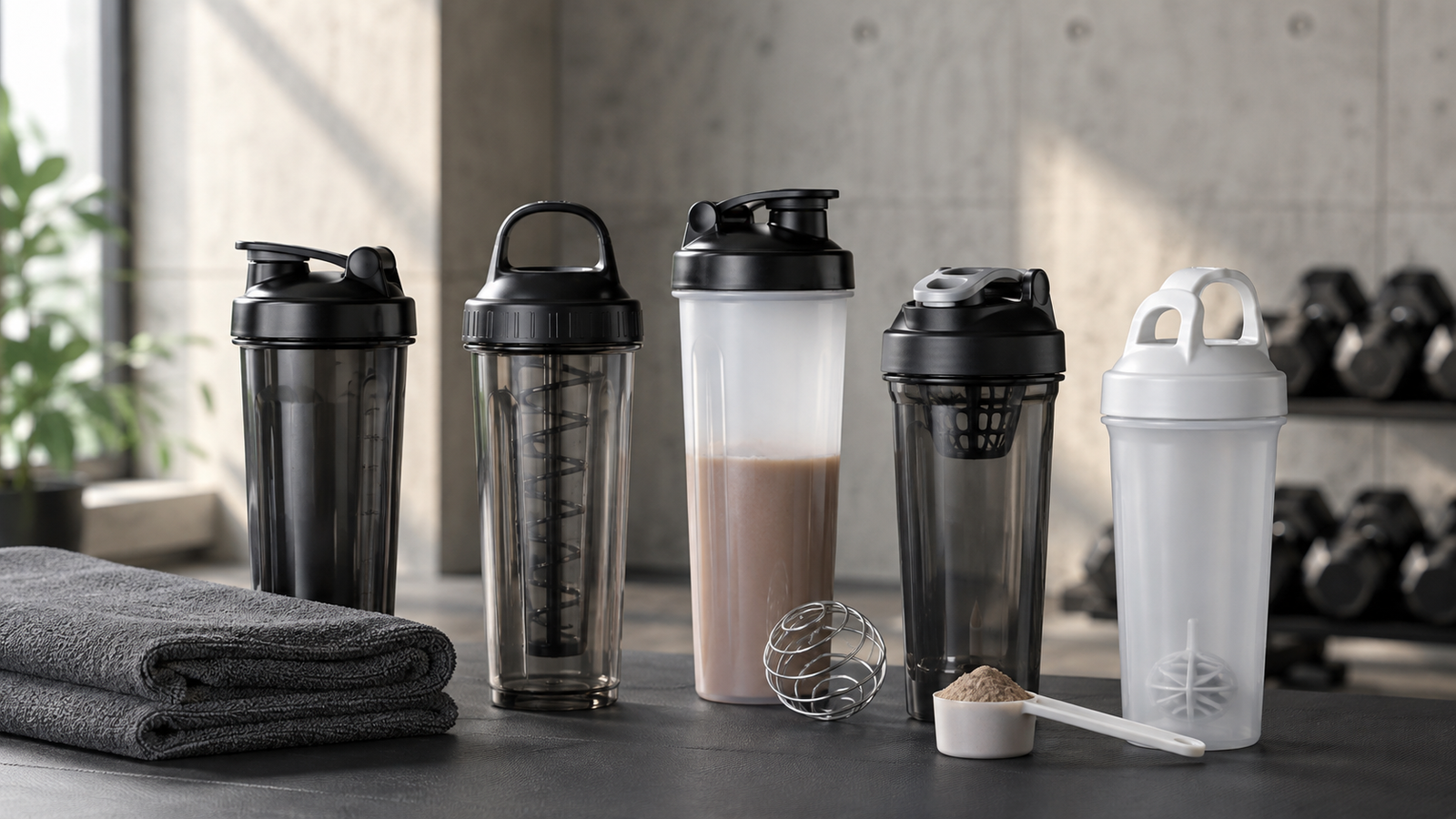
Protein Drinks in a Water Bottle
If the bottle is primarily designed for water, protein powder may be difficult to mix.
Use a:
- shaker bottle;
when powder mixing is frequent.
Protein residue can also permanently affect:
- taste;
- odour;
of an everyday water bottle.
Should You Have Separate Water and Shaker Bottles?
Often, yes.
A dedicated water bottle stays:
- cleaner;
- more neutral tasting.
A shaker can handle:
- protein;
- supplements.
This is a simple two-bottle system.
Carbonated Water
Some bottles are not designed for carbonation.
Pressure may build in:
- sealed bottles.
Use a bottle specifically approved for:
- carbonated beverages.
Straws and Carbonated Drinks
Pressure may force liquid through:
- straw;
- vent.
Again, follow manufacturer recommendations.
Hot Beverages
Some insulated bottles support:
- tea;
- coffee.
But check:
- temperature rating;
- lid design.
A straw lid is generally inappropriate for very hot beverages because hot fluid can cause burns.
Hot Water in Plastic Bottles
Only use temperatures specifically allowed by the manufacturer.
A cold-water sports bottle should not automatically be used for boiling water.
Bottle Cleaning Is Critical
Even plain water bottles can develop:
- biofilm;
- odour;
when rarely cleaned.
A bottle is not clean simply because it only contains water.
How Often Should You Wash a Water Bottle?
If used daily, washing:
- daily;
is a sensible routine, especially around the mouthpiece.
If you use drinks containing:
- sugar;
- electrolytes;
- fruit;
wash promptly after use.
Basic Cleaning
- Empty the bottle.
- Add warm water and mild dish soap.
- Clean the inside.
- Clean the lid.
- Clean straw if present.
- Rinse thoroughly.
- Air dry fully.
Bottle Brushes
Useful for:
- tall;
- narrow bottles.
A brush should reach:
- base;
- side walls.
Straw Brushes
Essential if using:
- narrow straws;
- drinking tubes.
Water passing through the straw does not automatically clean it.
Clean the Mouthpiece
The mouthpiece comes into direct contact with:
- lips;
- hands.
It often requires more frequent cleaning than the main bottle.
Hidden Lid Areas
Check:
- gasket channels;
- hinges;
- vent holes;
- threads.
These are common places for residue accumulation.
Removable Lid Components
If the manufacturer allows disassembly:
- remove;
- clean;
- dry.
Follow instructions so seals are reassembled correctly.
Dishwasher Safety
Check whether:
- body;
- lid;
- straw;
are dishwasher-safe.
Sometimes only some parts can go in the dishwasher.
Plastic in Dishwashers
Some bottles are marked:
- top-rack only.
High temperatures near heating elements can cause:
- warping.
Follow manufacturer directions.
Insulated Bottles and Dishwashers
Some modern steel bottles are dishwasher safe.
Others require hand washing to protect:
- coatings;
- seals.
Check the specific product.
Air Drying
Let the bottle dry:
- open;
- upside down where appropriate.
Do not seal it while still wet.
Storing the Bottle
When storing for long periods:
- leave lid loose or open.
This allows airflow.
Bottle Odour
If the bottle develops odour:
- Clean thoroughly.
- Inspect lid.
- Remove gasket where possible.
- Clean straw.
- Dry completely.
The lid is often the main source.
Baking Soda for Odour
A mild baking-soda solution can sometimes help.
Follow material-specific manufacturer guidance.
Vinegar Cleaning
Diluted vinegar may help remove some odours or deposits.
Again, make sure it is compatible with:
- metal;
- coatings;
- seals.
Bleach
Do not improvise concentrated bleach cleaning.
Some manufacturers provide specific sanitizing instructions.
Follow them carefully if used.
Mold-Like Growth
If you see visible:
- dark spots;
- fuzzy growth;
- unexplained residue;
deep clean the bottle.
If affected parts cannot be properly cleaned or replaced, discard the bottle.
Straw Valves
Sports bottle valves can trap residue internally.
Some can be:
- disassembled.
If not, follow the manufacturer’s cleaning procedure.
Bottle Scratches
Deep scratches inside plastic can make cleaning more difficult.
Consider replacement if the bottle becomes:
- heavily scratched;
- degraded.
Cracked Plastic
Replace bottles that are:
- cracked;
- structurally damaged.
A crack can:
- leak;
- trap residue.
Dented Stainless Steel
Minor cosmetic dents may not matter.
But severe damage to a vacuum-insulated bottle may compromise:
- insulation;
- seal integrity.
Vacuum Insulation Failure
A sign may be that the exterior suddenly becomes:
- very cold;
- very hot;
when the bottle contains extreme temperatures.
This may indicate loss of vacuum insulation.
Rust
Good stainless steel is corrosion-resistant, not completely immune under all conditions.
Rust spots may occur due to:
- salt;
- contamination;
- damaged surfaces.
Follow the manufacturer’s cleaning instructions.
Persistent corrosion may warrant replacement.
Glass Bottle Cracks
Do not continue using cracked glass.
Even a small crack can lead to sudden breakage.
Lid Replacement
A good bottle brand may sell replacement:
- caps;
- straws;
- gaskets.
This can significantly extend bottle life.
Replaceable Parts Are Valuable
Often the bottle body is still fine when the lid wears out.
Replacing a small component is:
- cheaper;
- less wasteful.
Water Bottle Durability
Consider how you treat the bottle.
Desk User
Glass may be fine.
Gym User
Steel or durable plastic.
Outdoor User
Impact-resistant construction.
Cyclist
Flexible plastic sports bottle.
Drop Resistance
Steel bottles may:
- dent.
Plastic may:
- crack.
Glass may:
- shatter.
No bottle is indestructible.
Powder-Coated Steel
Powder coating adds:
- grip;
- colour;
- surface protection.
It may eventually:
- chip;
- scratch.
This is often cosmetic.
Paint and Coating Wear
Does not automatically mean the bottle is unsafe.
But if the internal food-contact coating is damaged, manufacturer guidance becomes more important.
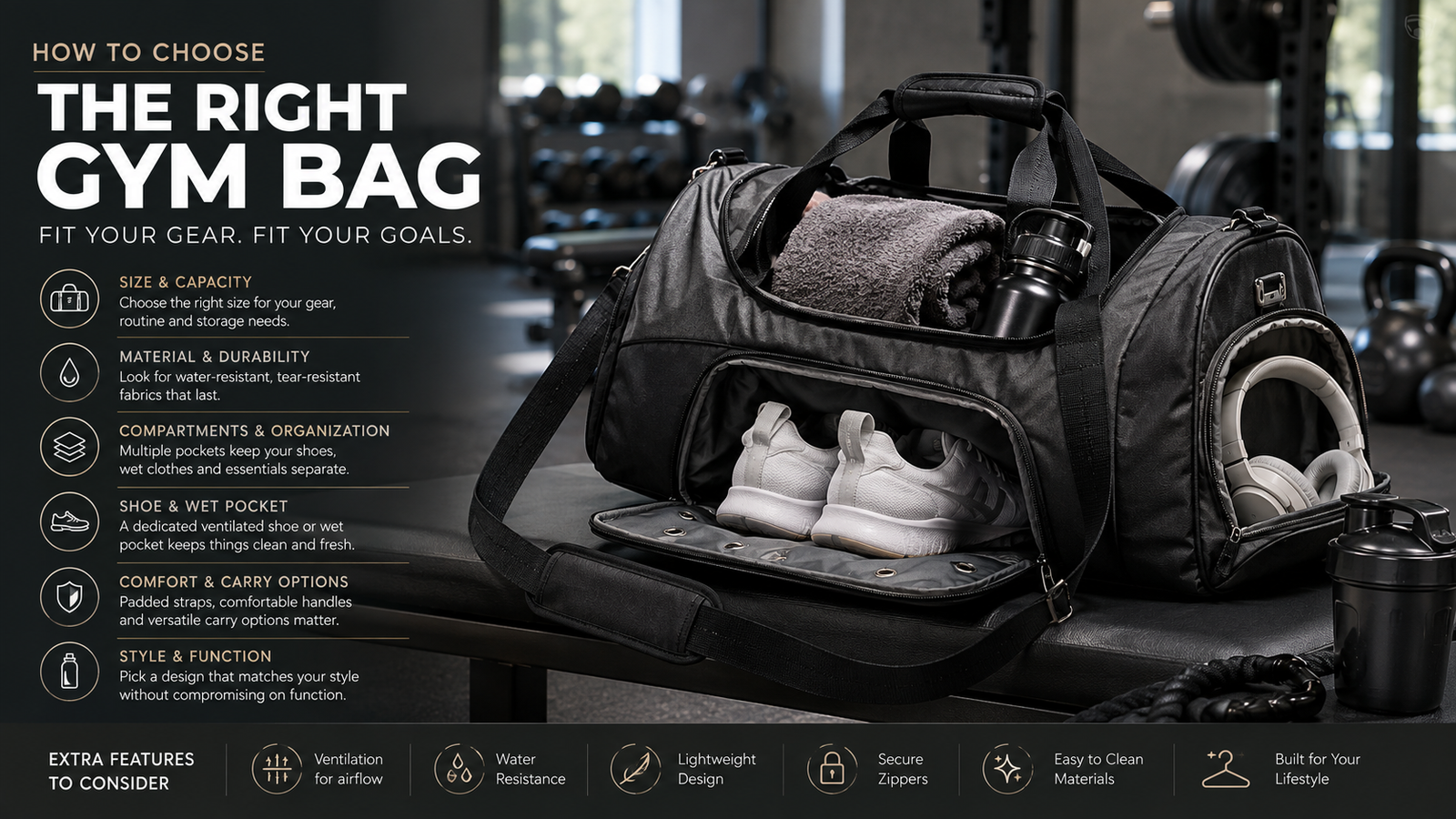
Carrying Bottle in a Gym Bag
Use a bottle with:
- secure seal.
Ideally keep it:
- upright;
- in external pocket.
Avoid placing it beside:
- electronics;
until you trust the lid.
Bottle Pockets
Make sure the bottle does not:
- fall out;
- stretch pocket excessively.
Tall heavy bottles need secure storage.
Carabiner Attachment
Some bottles can clip to a backpack.
This can be useful for hiking.
But repeated swinging can:
- damage bag;
- become annoying.
A dedicated pocket may be better.
Everyday Desk Hydration
For office use, a larger insulated bottle may reduce:
- frequent refilling.
But if a large bottle makes you feel pressured to finish it, use a smaller bottle instead.
Hydration should not become a competition.
Bottle Placement and Drinking Habits
Keeping the bottle:
- visible;
- within reach;
may encourage regular drinking.
Behavioural convenience often matters more than complex tracking.
Drinking During Workouts
You do not need to drink after every exercise set.
Drink according to:
- thirst;
- session duration;
- heat;
- sweat.
Short Workout
For a brief:
- 30–45 minute;
moderate indoor workout, you may need only modest fluid depending on individual conditions.
Longer Workout
For:
- prolonged exercise;
fluid becomes more important.
Hot Environment
Heat increases:
- sweat;
- fluid loss.
You may need to drink more frequently.
Cold Weather
You can still lose fluid even when you do not feel:
- very sweaty.
Do not completely ignore hydration because the environment is cold.
Sweat Rate
People vary enormously.
Some individuals sweat:
- heavily.
Others:
- relatively little.
This is one reason fixed hydration rules do not work perfectly.
Estimating Sweat Loss
Endurance athletes sometimes compare:
- body weight before exercise;
- body weight after exercise;
- fluid consumed.
This can help estimate sweat losses.
Most recreational exercisers do not need this level of precision.
Body Weight After Exercise
A significant short-term weight drop during a long workout generally reflects:
- fluid loss;
rather than fat loss.
Do Not Try to Lose Weight Through Dehydration
Sweating more does not mean greater fat loss.
Temporary water loss returns after:
- rehydration.
Avoid deliberately restricting fluids to make the scale lower.
Water Bottles With Ounce Markings
These can help people who prefer:
- measured intake.
But exact tracking is unnecessary for most healthy adults.
Metric Markings
For users accustomed to:
- mL;
- litres;
metric markings are easier.
In India, litres and millilitres are generally more intuitive than ounces.
Bottle Colour and Temperature
Dark bottles placed in direct sunlight may absorb more heat than lighter surfaces.
But insulation and environment usually matter more.
Transparent Bottle and Sunlight
Leaving water in direct sunlight for prolonged periods can make it:
- warm;
- unpleasant.
Keep bottles out of excessive heat.
Leaving Bottles in Hot Cars
Avoid prolonged storage in extremely hot vehicles, particularly for:
- plastic bottles;
- prepared drinks.
Heat can affect:
- materials;
- flavour;
- food safety.
Freezing Water Bottles
Not all bottles are designed for freezing.
Water expands when frozen.
This can:
- distort;
- crack;
- damage the bottle.
Follow manufacturer guidance.
Freezing Stainless-Steel Bottles
Vacuum-insulated bottles generally should not be frozen unless explicitly approved.
Expansion can damage:
- seals;
- structure.
Ice Water Instead of Freezing the Bottle
A safer option is usually:
- add ice cubes.
Bottle Safety Around Children
Choose age-appropriate bottles.
For children, consider:
- manageable weight;
- easy lid;
- spill resistance.
Very large steel bottles can be heavy.
Bottle Safety During Driving
Do not:
- unscrew complicated lids;
- refill;
- shake powder drinks;
while driving.
Use a design you can safely drink from when the vehicle is stopped or as local laws permit.
Bottle Safety in Gym
Do not leave bottles where they create:
- trip hazards.
Place them beside:
- equipment;
- wall;
- designated holder.
Glass in Commercial Gyms
Some gyms prohibit glass bottles because of:
- breakage risk.
Check facility rules.
Bottle for Outdoor Sports
A squeeze sports bottle may be more practical than a heavy insulated bottle because you can drink:
- quickly;
- one-handed.
Function matters more than temperature retention in some sports.
Cycling Bottle Design
A good cycling bottle should:
- fit standard cage;
- squeeze easily;
- provide fast flow;
- close securely.
Valve Types
Some cycling bottles use:
- self-sealing valves;
- pull nozzles.
Self-sealing systems can reduce:
- spills.
But they require thorough cleaning.
Sports Bottle Nozzle Hygiene
Nozzles can accumulate:
- dirt;
- road spray;
- saliva residue.
Clean them regularly.
Running Bottle Sloshing
Soft flasks reduce sloshing because they:
- collapse as water is consumed.
Rigid bottles leave empty space where water can move.
Bottle for Hiking and Trekking
Consider using more than one container.
Advantages:
- backup if one leaks;
- easier weight distribution;
- ability to separate treated/untreated water.
Redundancy Outdoors
In remote environments, relying on a single bottle creates risk if it:
- breaks;
- leaks.
A second container can be valuable.
Collapsible Backup Bottle
A lightweight collapsible flask can serve as:
- emergency extra capacity.
Useful for travel and hiking.
Water Bottle for Airports
Reusable bottles can usually be taken through security when:
- empty;
subject to local rules.
You can refill after security.
Check current airport regulations.
Travel Bottle Hygiene
Water quality varies by destination.
In places where tap water may be unsafe, use:
- safe bottled water;
- properly treated water.
A reusable bottle does not improve unsafe source water by itself.
Water Bottle for School or College
Useful characteristics:
- moderate capacity;
- leakproof lid;
- lightweight body;
- easy cleaning.
A bulky steel bottle may be unnecessarily heavy in a backpack.
Water Bottle for Office
Potential ideal features:
- 700 mL–1 L;
- insulated;
- stable base;
- comfortable sip lid.
Water Bottle for Home
You may not need insulation if water is readily available.
A simple washable bottle is enough.
Multiple Bottles
Some people benefit from having:
- one home bottle;
- one gym bottle;
- one work bottle.
This reduces forgetting.
But you do not need a large collection.
One High-Quality Bottle vs Many Cheap Bottles
A durable bottle that you use for years can be more practical than constantly replacing inexpensive bottles.
But high price does not guarantee durability.
Sustainability
Reusable bottles can reduce reliance on:
- single-use plastic bottles.
Their environmental value improves the longer you actually use them.
Reusable Bottle Life
You do not need to replace a bottle simply because:
- a newer design;
- new colour;
was released.
Continue using it while it remains:
- functional;
- safe;
- cleanable.
Recycling
End-of-life recycling depends on:
- bottle material;
- local facilities.
Mixed-material lids may be harder to recycle.
Recycled Plastic Bottles
Some reusable bottles use recycled materials.
This can reduce virgin plastic use.
But you should still evaluate:
- durability;
- food-contact suitability.
Common Water Bottle Marketing Claims
Be cautious with phrases such as:
- detox water;
- alkaline healing;
- hydrogen miracle bottle;
- structured water;
- immune-boosting water.
A bottle can:
- store;
- filter;
- insulate;
- flavour water.
It does not transform water into a cure-all health product.
Alkaline Water Bottles
Some products claim to increase water pH.
For most healthy people, your body tightly regulates blood pH through:
- lungs;
- kidneys.
Drinking alkaline water does not simply make your body “alkaline.”
Hydrogen Water Bottles
Some devices generate molecular hydrogen.
Research into specific potential effects exists, but broad marketing claims often exceed established evidence.
Do not buy one expecting:
- detoxification;
- disease prevention;
- dramatic athletic performance improvements.
For everyday hydration, ordinary safe water is sufficient.
“Mineralizing” Bottles
Products may contain:
- stones;
- cartridges;
claimed to add minerals.
Quality and evidence vary.
If the goal is hydration, plain potable water works.
Copper Bottles
Copper vessels are traditionally used in some cultures.
Copper is an essential nutrient, but more is not necessarily better.
Acidic drinks should generally not be stored in reactive metals without appropriate guidance.
Choose bottles specifically intended for safe beverage use.
Do Copper Bottles Purify All Water?
No.
Do not assume storing unsafe water in a copper bottle automatically makes it safe to drink.
Use appropriate water treatment.
Glass Crystal Bottles
Some bottles contain decorative:
- crystals;
- stones.
These do not have established effects on hydration beyond holding water.
Make sure decorative elements are:
- safely enclosed;
- food-contact appropriate.
Water Bottle With Filter vs Regular Bottle
Choose a filter only if you have a real need such as:
- taste reduction;
- uncertain water source;
- outdoor use.
Filters add:
- cost;
- maintenance;
- flow resistance.
For Safe Tap Water
A normal reusable bottle is generally enough.
You do not need to filter water repeatedly unless you:
- prefer the taste;
- have a specific water-quality concern.
Home Water Quality
If you are concerned about local water contamination, the correct approach is to understand:
- source;
- local testing;
- treatment needs.
Do not assume a generic bottle filter removes everything.
Hard Water
Hard water contains higher levels of minerals such as:
- calcium;
- magnesium.
It may leave:
- white deposits;
- scale.
This is primarily an aesthetic/maintenance issue in many contexts rather than automatically making the water unsafe.
Removing Mineral Scale
For compatible bottles, diluted vinegar may help dissolve mineral deposits.
Follow manufacturer care instructions.
Bottle Cleaning in Hard-Water Areas
Mineral deposits can accumulate around:
- lids;
- threads.
Periodic deep cleaning may help.
Water Bottle Buying Checklist
Before purchasing, ask:
1. Where will I use it most?
Gym, office, running, cycling or travel?
2. What capacity do I realistically need?
Do not buy oversized automatically.
3. Will I refill during the day?
If yes, a smaller bottle may be better.
4. What material suits my routine?
Plastic, stainless steel, glass or silicone?
5. Do I need insulation?
Useful in hot environments, unnecessary for everyone.
6. Is the bottle comfortable to hold?
Especially when full.
7. Does the lid open easily during exercise?
One-handed access may matter.
8. Is the lid genuinely secure?
Test for leaks.
9. Can I clean every part properly?
Critical for long-term use.
10. Is the gasket removable?
Useful for deep cleaning.
11. Does it fit my car or gym equipment holder?
Check diameter.
12. Do I need a straw?
Useful for frequent sipping but adds cleaning.
13. Will I use ice?
Choose a wide mouth.
14. Do I need a carry handle?
Useful for larger bottles.
15. Is the empty bottle too heavy?
Remember water adds significant weight.
16. Are replacement lids or seals available?
This can extend product life.
17. Am I paying for a health claim rather than useful design?
Prioritize function.
18. Will I actually carry and refill this bottle every day?
The most important question.
A Simple Choice by Workout
Strength Training
Choose:
750 mL–1 L bottle with secure lid
Treadmill / Elliptical
Choose:
500–750 mL bottle that fits the holder
Exercise Bike
Choose:
standard-size sports bottle
Running
Choose:
handheld bottle, soft flask, belt or vest
Cycling
Choose:
cage-compatible squeeze bottle
Yoga
Choose:
500–750 mL simple bottle
Long Outdoor Workouts
Choose:
larger insulated bottle or hydration system
A Simple Choice by Material
Lightweight
Choose:
plastic
Cold Water for Hours
Choose:
double-wall stainless steel
Desk Use and Neutral Taste
Choose:
glass
Travel Space Saving
Choose:
collapsible silicone
A Simple Choice by Lid
Maximum Simplicity
Screw cap.
Fast Gym Access
Flip-top or chug lid.
Frequent Small Sips
Straw lid.
Cycling
Squeeze nozzle.
A Simple Choice by Climate
Cool Indoor Environment
Non-insulated bottle is usually enough.
Hot Gym / Summer
Insulated bottle may improve comfort.
Outdoor Heat
Insulated steel can be valuable.
Long-Distance Activity
Prioritize capacity and refill strategy over insulation alone.
A Simple Choice for Everyday Use
For many people, an ideal general-purpose bottle might be:
- 600–750 mL;
- leak-resistant;
- easy-to-clean;
- one-handed drinking;
- moderate weight.
You do not need anything more complicated.
Common Water Bottle Buying Mistakes
Buying the Largest Bottle Available
It may be too heavy.
Choosing Insulated Steel Without Considering Weight
Temperature retention comes with bulk.
Ignoring Cup-Holder Size
Large bottles may not fit.
Choosing a Complicated Lid
More parts mean more cleaning.
Assuming Straw Bottles Clean Themselves
They do not.
Buying Glass for a High-Impact Gym Environment
Breakage risk matters.
Choosing a Bottle for Marketing Claims
Hydration does not require special water technology.
Ignoring Replacement Parts
A worn lid can make an otherwise good bottle useless.
Buying a Filter Without Understanding What It Removes
Filter capabilities vary.
Common Water Bottle Use Mistakes
Rarely Washing It Because It Only Contains Water
Biofilm can still develop.
Leaving Sports Drink Inside Overnight
Sugar and residue create odour.
Ignoring Straw Cleaning
Hidden contamination can accumulate.
Sealing the Bottle While Wet
Allow it to dry.
Using Damaged Plastic
Replace heavily cracked bottles.
Putting Boiling Water Into a Cold-Water Bottle
Check temperature rating.
Freezing a Bottle Not Designed for It
Expansion can damage it.
Leaving It in a Hot Car
Avoid prolonged extreme heat.
Drinking Excessive Water to “Detox”
More is not automatically healthier.
How to Use a Water Bottle More Effectively
Step 1 — Fill It Before You Need It
Prepare before:
- gym;
- work;
- travel.
Step 2 — Keep It Visible
Place it somewhere you naturally notice.
Step 3 — Refill When Convenient
Do not wait until completely empty if refills are limited.
Step 4 — Drink According to Need
Use:
- thirst;
- exercise;
- heat;
as guides.
Step 5 — Clean It Daily
Especially the lid.
Step 6 — Dry It Open
Do not store damp and sealed.
This simple routine is more valuable than buying a smart hydration gadget.
When Should Hydration Need Medical Guidance?
Some people should not follow generic advice about simply drinking more water.
Individualized guidance may be needed if you have conditions affecting:
- kidney function;
- heart function;
- fluid balance;
- sodium balance.
Certain medications can also influence:
- fluid;
- electrolyte needs.
If a clinician has given you a specific:
- fluid restriction;
- hydration target;
follow that rather than general fitness advice.
When to Seek Medical Attention During Exercise
Dehydration and overheating can become serious.
Stop exercising and seek appropriate help if you develop concerning symptoms such as:
- fainting;
- confusion;
- severe weakness;
- inability to cool down;
- severe dizziness.
Likewise, excessive water intake associated with:
- headache;
- confusion;
- vomiting;
- severe symptoms;
can be dangerous.
Hydration should support exercise, not become an extreme target.
The Physical Glow Takeaway
Choosing a water bottle should begin with where you will actually use it.
For many people:
- gym and everyday use → 600–750 mL bottle;
- longer training or fewer refills → 750 mL–1 L;
- running → handheld bottle, soft flask or hydration system;
- cycling → cage-compatible squeeze bottle;
- hot climates → insulated stainless steel may be worth the extra weight.
Then prioritize practical features:
- capacity → enough without becoming cumbersome;
- material → plastic for light weight, steel for durability and insulation;
- lid → secure, comfortable and appropriate for your activity;
- leak resistance → especially important inside a gym or work bag;
- cleaning → every lid, straw and gasket should be accessible;
- portability → bottle should fit your hand, bag and equipment holders;
- replacement parts → extend useful life.
Do not choose based on exaggerated claims about:
- detoxification;
- alkaline transformation;
- miracle minerals;
- fat burning;
- special hydration technology.
For everyday fitness, the fundamentals remain simple:
safe drinking water → an appropriate amount based on your needs → convenient access → proper bottle hygiene
The best bottle is the one you are comfortable carrying, refilling and cleaning every day.
A simple, reliable bottle used consistently will usually support your hydration routine better than a complicated bottle full of features you rarely use.