How to Choose the Right Gym Bag Size
Learn how to estimate the gym bag capacity you actually need based on clothing, shoes, towel, toiletries, locker space and commuting.
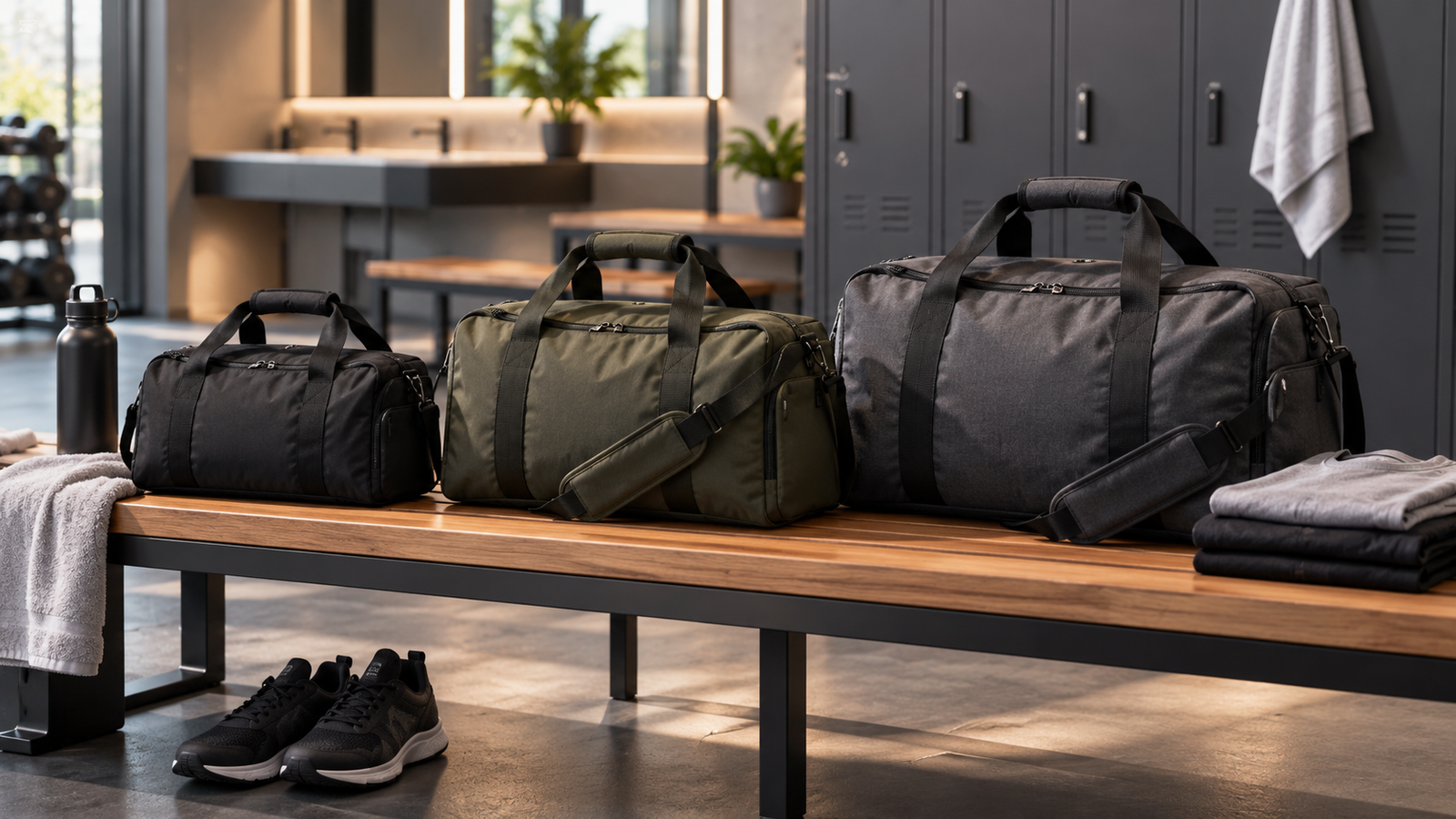
A gym bag should be large enough to carry everything you genuinely use, but not so large that you end up carrying unnecessary weight or struggling to store it.
The right size depends on:
- how long you spend at the gym
- whether you shower or change there
- the type of training you do
- whether you carry shoes separately
- whether the bag is also used for work or travel
- how you normally reach the gym
Someone carrying only a water bottle, towel and lifting gloves needs a very different bag from someone carrying shoes, a full change of clothes, toiletries, supplements and training accessories.
This guide explains how to choose the right gym bag size, layout and features for your routine.
What Size Gym Bag Do You Actually Need?
Gym bags are commonly described by capacity in litres.
A useful general guide is:
| Capacity | Best suited for |
|---|---|
| Under 20 L | Minimal gym essentials |
| 20–30 L | Regular everyday workouts |
| 30–40 L | Clothing, shoes and shower gear |
| 40–50 L | Larger training kit or gym + work use |
| Over 50 L | Sports equipment, travel or extensive gear |
These ranges are only starting points.
Internal layout can make two bags with the same stated capacity feel very different.
Small Gym Bags: Under 20 Litres
A compact gym bag may be enough if you carry only:
- water bottle
- small towel
- headphones
- workout gloves
- resistance band
- phone and wallet
This size works well for people who:
- arrive already wearing gym clothes
- shower at home
- do not carry separate shoes
- want a lightweight bag
A small bag is also easier to carry on:
- public transport
- motorcycles
- scooters
- crowded commutes
The main limitation is flexibility.
Once you add shoes and a full clothing change, space can disappear quickly.
Medium Gym Bags: Around 20–30 Litres
For many people, this is the most practical everyday size.
A medium gym bag can usually accommodate:
- gym clothing
- towel
- water bottle
- small toiletries
- gloves or straps
- shaker bottle
- headphones
- small accessories
Depending on the design, it may also hold a pair of training shoes.
This size is a good starting point if you want enough room without carrying a bulky duffel.
30–40 Litre Gym Bags
A bag in this range becomes useful if you regularly:
- change at the gym
- carry separate shoes
- shower after training
- carry a larger towel
- bring several accessories
It can also work well if you go directly:
- from work to the gym
- from the gym to work
- to sports practice after another activity
This is often a good balance between everyday gym use and occasional overnight use.
40–50 Litre Gym Bags
A larger gym bag may make sense if you carry:
- full clothing changes
- large shoes
- shower kit
- lifting belt
- knee sleeves
- several training accessories
- work items
It can also suit people who combine:
- gym
- swimming
- sports
- short travel
However, a larger bag can become inconvenient if you only use half of the available space.
Gym Bags Over 50 Litres
Very large bags are usually more suitable for:
- team sports
- multiple sets of clothing
- extensive strength-training equipment
- overnight travel
- specialised sporting equipment
For a normal one-hour gym session, this size is often unnecessary.
Large bags also take up more room in:
- lockers
- cars
- home storage
- public transport
Start With What You Actually Carry
Before choosing a size, place your normal gym items together.
For example:
- shoes
- T-shirt
- shorts or leggings
- towel
- water bottle
- shaker
- headphones
- toiletries
- lifting accessories
This gives you a better idea of your actual space requirement than choosing a bag based only on appearance.
Do You Carry Gym Shoes?
Shoes are one of the biggest factors affecting bag size.
A pair of training shoes occupies much more space than small accessories.
If you regularly change shoes at the gym, look for:
- enough internal capacity
- dedicated shoe compartment
- ventilation
- easy-clean lining
A separate compartment also helps keep shoe soles away from clean clothing.
Dedicated Shoe Compartment: Is It Worth It?
For many users, yes.
A shoe compartment can help organise:
- training shoes
- used clothing
- other items you want separated
However, remember that the shoe compartment still uses part of the bag’s total internal space.
A 25 L bag with a large shoe compartment may have less usable main storage than expected.
Check the actual design rather than capacity alone.
Wet Compartment
Some gym bags include a water-resistant or lined compartment.
This can be useful for:
- sweaty clothes
- damp towels
- swimming gear
It helps separate moisture from clean items.
However, wet clothing should not remain sealed inside the bag for long periods.
Remove damp items after your workout and allow the bag to dry.
Gym Bag for a Basic Workout
If you arrive wearing your workout clothes and leave without showering, you may only need:
- water bottle
- towel
- headphones
- gloves
- phone
- keys
A bag around 15–25 L may be sufficient.
There is little benefit in carrying a large duffel if most of it stays empty.
Gym Bag for Changing at the Gym
If you carry:
- workout clothing
- separate shoes
- towel
- toiletries
a 25–35 L bag is often more practical.
The extra room also makes packing easier because items do not have to be compressed tightly.
Gym Bag for Showering at the Gym
If you shower after training, your bag may need space for:
- large towel
- toiletries
- fresh underwear
- fresh clothes
- shower footwear
- used clothing
A 30–40 L bag can provide more practical room.
A wet compartment becomes especially useful.
Gym Bag for Strength Training
Strength-training equipment can take up significant space.
You may carry:
- lifting belt
- wrist wraps
- straps
- gloves
- knee sleeves
- resistance bands
- chalk accessories
- shoes
If you regularly carry a lifting belt, a larger bag may be worthwhile.
A 30–45 L bag can work well depending on the amount of equipment.
Gym Bag for Cardio or General Fitness
Cardio-focused workouts often require less gear.
You may only carry:
- towel
- bottle
- clothing
- shoes
- headphones
A 20–30 L bag is usually sufficient for many users.
Gym Bag for Yoga
For yoga, bag requirements depend heavily on whether the yoga mat is carried separately.
Useful features include:
- mat strap
- external mat holder
- long side straps
- room for blocks or towel
If the bag needs to carry blocks as well, consider a larger capacity.
A normal gym duffel may not be the most convenient shape for carrying a full yoga mat internally.
Gym Bag for Swimming
Swimming usually requires more separation between wet and dry items.
Look for:
- waterproof or water-resistant wet compartment
- ventilated storage
- easy-clean lining
- enough room for towel
- separate footwear area
A 25–40 L bag may work depending on towel size and clothing needs.
Gym Bag for Gym and Office
If you go directly from work to the gym, you may need space for both.
Items might include:
- gym clothes
- shoes
- toiletries
- laptop
- charger
- work accessories
In this case, capacity alone is not enough.
Look for a bag with:
- padded laptop compartment
- separate clothing area
- organised small pockets
- shoe storage
A 30–45 L gym-work hybrid bag can be more useful than a basic duffel.
Gym Bag for Motorcycle or Scooter Commuting
A large duffel can be inconvenient on two-wheelers.
A backpack-style gym bag may be more practical because it keeps your hands free.
Look for:
- secure shoulder straps
- compact profile
- balanced weight distribution
- water-resistant exterior
- strong zippers
Do not carry a bag in a way that interferes with safe riding.
Duffel Bag vs Gym Backpack
Both can work well.
Gym Duffel
Advantages:
- wide opening
- easy access
- good for shoes and clothing
- usually offers more open storage
Disadvantages:
- weight carried on one side
- less comfortable for long walks
- can feel bulky during commuting
Gym Backpack
Advantages:
- balanced weight distribution
- easier for walking or commuting
- hands-free
- often includes laptop storage
Disadvantages:
- narrower opening
- shoes may take up a large amount of internal space
- packing can feel more vertical
Choose based on how you travel to the gym.
Convertible Gym Bags
Some bags can be carried as both:
- backpack
- duffel
This can be useful if your routine varies.
For example, you may:
- carry it as a backpack during a commute
- use the handles inside the gym
Check whether the straps can be stored neatly when not in use.
Capacity Is Not the Same as Dimensions
Litres tell you approximate internal volume.
They do not tell you whether the bag will fit:
- your shoes
- your locker
- your lifting belt
- your laptop
Check physical dimensions such as:
- length
- width
- height
A long narrow bag may hold certain equipment better than a shorter deep bag with the same capacity.
Check Your Gym Locker Size
This is easy to overlook.
A large bag may hold everything comfortably but fail to fit inside the available locker.
If your gym provides lockers, consider:
- locker width
- locker depth
- whether the bag needs to stand vertically
A slightly smaller bag can be much more convenient if it fits properly.
Compartments vs One Large Compartment
Multiple Compartments
Advantages:
- easier organisation
- clean and dirty items can be separated
- quicker access to small items
Disadvantages:
- dividers reduce flexible space
- bag can become heavier
One Large Compartment
Advantages:
- maximum flexibility
- easier for bulky items
- simple packing
Disadvantages:
- small items become harder to find
- shoes and clothing may mix
For everyday gym use, a combination works well:
- one large main section
- shoe compartment
- small valuables pocket
- bottle pocket
Water Bottle Pocket
An external bottle pocket can be surprisingly useful.
It prevents the bottle from:
- taking up internal space
- leaking directly onto clothing
- becoming difficult to reach
Make sure the pocket fits the bottle size you actually use.
Large bottles may not fit narrow elastic pockets.
Shaker Bottle Storage
If you carry a protein shaker, consider:
- upright storage
- external pocket
- leak resistance
Do not assume a shaker is completely leak-proof.
Keeping liquids away from:
- electronics
- clean clothing
- documents
is sensible.
Small Accessory Pockets
Small pockets are useful for:
- keys
- wallet
- earphones
- lock
- fitness tracker accessories
- membership cards
Without these pockets, small items can disappear into the bottom of a large duffel.
Valuables Pocket
A zippered internal pocket provides a dedicated area for:
- phone
- cash
- cards
- jewellery removed before training
It does not replace secure locker storage, but it improves organisation.
Laptop Compartment
Only prioritise a laptop section if you genuinely carry one.
If you do, look for:
- padding
- secure fit
- separation from wet gym gear
Do not place electronics directly beside damp towels or leaking bottles.
Material Matters
Gym bags are exposed to:
- sweat
- damp clothing
- floors
- locker rooms
- frequent handling
Common materials include:
- polyester
- nylon
- synthetic fabric
- coated textiles
Look for:
- durability
- ease of cleaning
- water resistance
- reinforced stitching
Water-Resistant vs Waterproof
These terms are not identical.
Water-Resistant
Designed to resist light moisture or splashes.
Waterproof
Implies substantially greater resistance to water penetration, depending on construction.
A water-resistant fabric does not automatically mean the entire bag is waterproof.
Water can still enter through:
- seams
- zippers
- openings
For normal gym use, water resistance is usually sufficient.
Bag Base
The bottom of a gym bag experiences significant wear.
Look for:
- reinforced material
- thicker base
- water-resistant coating
- good stitching
This is especially useful if bags are placed on gym or locker-room floors.
Zipper Quality
Zippers are one of the most common failure points.
Look for:
- smooth movement
- substantial zipper pulls
- reinforced stitching
- openings large enough for easy packing
A durable bag with a weak zipper will still have a short useful life.
Shoulder Strap Comfort
If you use a duffel, check the shoulder strap.
Useful features include:
- padding
- adjustable length
- strong attachment points
- removable design
A thin strap can become uncomfortable when the bag is heavily loaded.
Handles
Carry handles should be:
- securely stitched
- comfortable to hold
- long enough to grip easily
Some bags include a padded wrap that joins the handles together.
This can improve comfort when carrying heavier loads.
Ventilation
Ventilation is especially useful around:
- shoe compartments
- wet sections
- used clothing areas
Mesh panels or small ventilation openings can reduce trapped moisture.
However, ventilation does not replace proper drying.
Always remove sweaty gear after training.
Why You Should Empty Your Gym Bag
Leaving used gear in a closed bag can lead to:
- odour
- moisture accumulation
- bacterial growth on damp items
- deterioration of fabrics
After training:
- remove wet towels
- remove used clothing
- open the bag
- allow it to dry
This simple habit can significantly improve hygiene.
How to Clean a Gym Bag
Follow the manufacturer’s instructions.
Depending on the bag, cleaning may involve:
- wiping the interior
- hand washing
- machine washing
- spot cleaning
Pay particular attention to:
- base
- shoe compartment
- wet compartment
- bottle pockets
Allow the bag to dry fully before repacking it.
How Much Weight Should You Carry?
Just because a bag can hold more does not mean you should fill it.
Carrying unnecessary equipment adds:
- weight
- bulk
- inconvenience
Review what you actually use.
Items that have remained untouched in your gym bag for weeks probably do not need to be carried every day.
What Should Be in a Basic Gym Bag?
A simple setup might include:
- water bottle
- workout towel
- headphones
- spare T-shirt
- deodorant
- gym lock
- small training accessories
Your own list may be shorter or longer.
What Should Be in a Strength-Training Gym Bag?
Depending on your training, you may carry:
- lifting belt
- wrist wraps
- lifting straps
- gloves
- knee sleeves
- resistance bands
- water bottle
- towel
Carry only equipment relevant to your program.
Do You Need a Separate Shoe Bag?
Not necessarily.
A built-in shoe compartment is often easier.
A separate shoe pouch can be useful if:
- your main bag does not include one
- you want removable storage
- shoes are especially dirty
Make sure any shoe pouch has adequate ventilation where appropriate.
Should You Buy a Larger Bag for Future Needs?
Some extra capacity is useful.
Too much is not.
A good approach is to choose a bag with enough space for your normal kit plus a small amount of extra room.
Avoid buying a 50 L bag for a 15 L routine simply because you might someday need more space.
How to Avoid Overpacking
Before leaving for the gym, divide items into:
Essential
Things you definitely use.
Sometimes Needed
Items for specific workouts.
Unnecessary
Items you repeatedly carry but never use.
This keeps the bag lighter and easier to organise.
Common Gym Bag Buying Mistakes
Choosing Only by Appearance
A stylish bag is not useful if it lacks practical storage.
Buying Too Small
If every item has to be compressed into place, packing becomes frustrating.
Buying Too Large
Large bags encourage unnecessary packing.
Ignoring Shoe Storage
Shoes can consume a significant amount of main-compartment space.
Ignoring Locker Dimensions
Check that the bag fits where you need to store it.
Ignoring Cleaning
A gym bag should be easy to maintain.
Too Many Compartments
Organisation is useful, but excessive dividers can reduce practical capacity.
How to Choose the Right Size Step by Step
Step 1: List Your Normal Items
Include everything you carry at least several times per week.
Step 2: Add Shoes if Required
Shoes significantly increase volume requirements.
Step 3: Decide Whether You Shower at the Gym
A towel and toiletries increase capacity needs.
Step 4: Consider Training Equipment
A lifting belt or yoga equipment may require extra room.
Step 5: Check Your Commute
Choose a backpack if carrying comfort matters more than open storage.
Step 6: Check Locker Space
Make sure the physical dimensions fit.
Step 7: Add a Little Extra Capacity
Leave room for occasional items without oversizing the bag dramatically.
Gym Bag Size by Typical Routine
| Routine | Suggested Starting Size |
|---|---|
| Minimal workout essentials | 15–20 L |
| Everyday general gym | 20–30 L |
| Clothes + shoes | 25–35 L |
| Shower + full clothing change | 30–40 L |
| Strength accessories | 30–45 L |
| Gym + office | 30–45 L |
| Sport or overnight use | 40–50+ L |
These are practical starting ranges, not strict requirements.
Which Size Is Best for Most People?
For a typical gym routine, 20–35 litres is often the most useful range.
It provides enough room for:
- clothes
- towel
- bottle
- small accessories
- possibly shoes
without becoming unnecessarily bulky.
If you shower at the gym or carry substantial strength equipment, moving toward 30–40 litres can make packing easier.
How Much Should You Spend on a Gym Bag?
Price should reflect the features you genuinely need.
Prioritise:
- suitable capacity
- durable construction
- comfortable carrying
- strong zippers
- useful compartments
- easy cleaning
Features such as elaborate organisation or premium appearance are secondary if the basic bag is uncomfortable or poorly made.
Simple Gym Bag Buying Checklist
Before buying, check:
Capacity
Is it large enough for your normal kit?
Dimensions
Will it fit your locker and storage space?
Shoe Compartment
Do you carry separate gym shoes?
Wet Storage
Do you shower or swim?
Carry Style
Duffel, backpack or convertible?
Bottle Pocket
Does it fit your normal bottle?
Material
Is it durable and easy to clean?
Ventilation
Can damp items and shoes breathe?
Zippers
Do they feel durable and easy to use?
Weight
Is the empty bag already unnecessarily heavy?
Frequently Asked Questions
What size gym bag is best for everyday use?
For many people, approximately 20–30 L provides enough room for normal workout essentials without excessive bulk.
Is a 20 L gym bag big enough?
It can be if you carry minimal equipment and do not need a large towel, shoes and a complete change of clothing.
Is a 30 L gym bag big enough?
For many everyday gym routines, yes. It usually provides a useful balance between capacity and portability.
Is a 40 L gym bag too big?
Not if you carry shoes, shower equipment, a full clothing change or lifting gear. For minimalist routines, it may be larger than necessary.
Should a gym bag have a shoe compartment?
It is useful if you regularly carry separate shoes because it keeps them away from clean clothing.
Is a backpack or duffel better for the gym?
A backpack is usually more comfortable for commuting, while a duffel provides easier access to clothing and bulky equipment.
Can I use a normal travel duffel as a gym bag?
Yes, provided the size, organisation, ventilation and cleaning requirements suit your routine.
How often should I clean my gym bag?
Clean it based on use and visible dirt or odour, and remove damp clothing after every workout rather than leaving it inside.
Final Takeaway
Choosing the right gym bag starts with your actual routine, not the largest capacity or longest feature list.
For most everyday users:
- 15–20 L works for minimal essentials.
- 20–30 L works well for general gym use.
- 30–40 L is better when you carry shoes, shower gear or a full clothing change.
- 40 L and above is more appropriate for extensive training gear, sport or combined travel use.
Beyond size, look for:
- durable zippers
- comfortable straps
- useful organisation
- shoe or wet compartments when needed
- easy-to-clean materials
- dimensions that fit your gym locker
The best gym bag is large enough to keep your equipment organised without encouraging you to carry things you never use.
If you are comparing specific options, continue to our Top 5 Gym Bags in India guide, where we compare compact, duffel and backpack-style gym bags for different workout and storage needs.