How to Choose the Right Jump Rope for Your Workout
Learn how to choose the right jump rope for your workout, with practical guidance on rope length, material, handle design, speed and training goal. This beginner-friendly guide helps you make a clear, informed choice without unnecessary complexity.
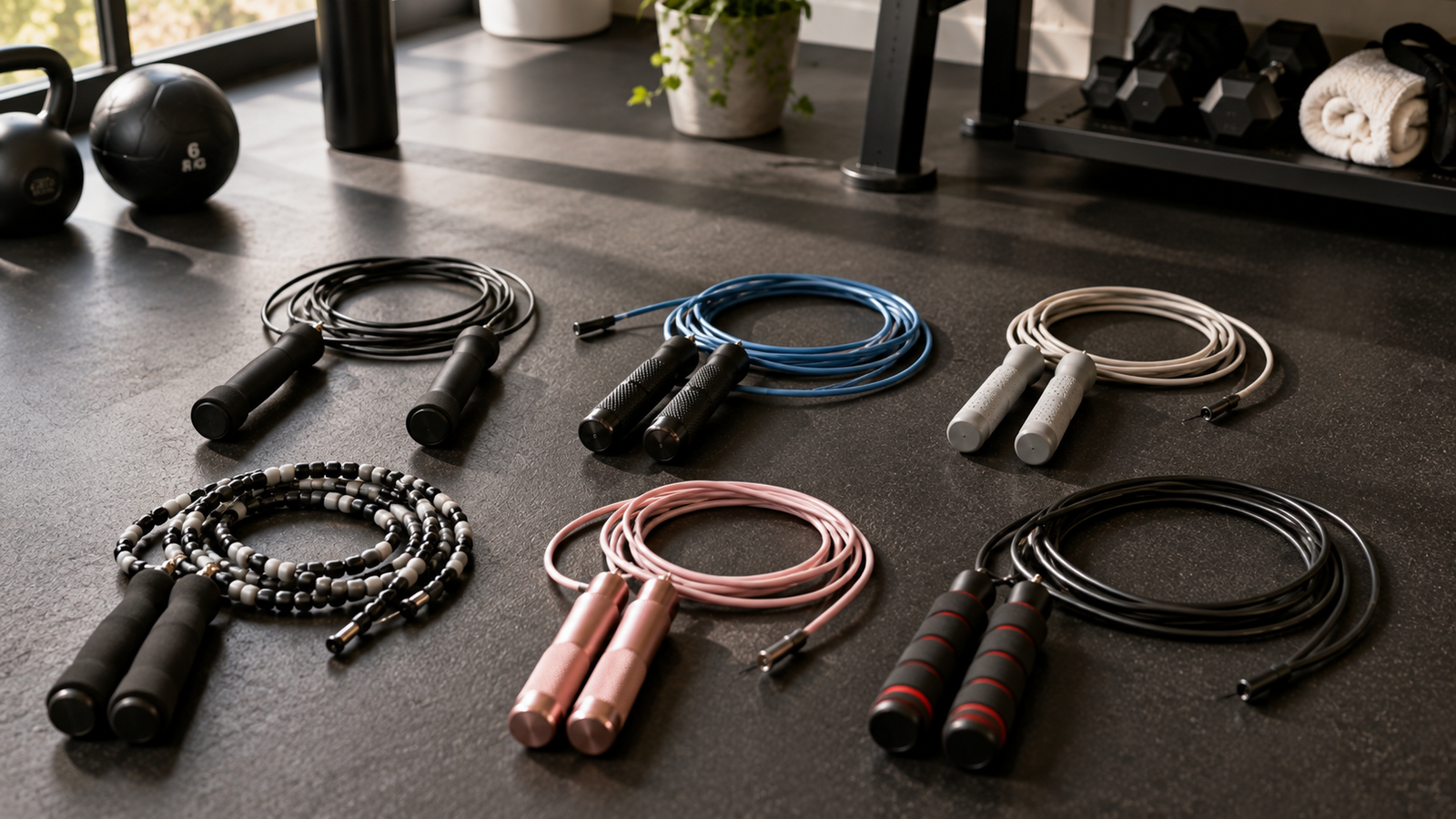
A jump rope is one of the simplest pieces of fitness equipment you can own, yet choosing the right one can make a major difference to:
- comfort;
- rhythm;
- control;
- workout intensity;
- skill development;
- durability.
Jump ropes can be used for:
- general cardio;
- warm-ups;
- interval training;
- boxing-style conditioning;
- coordination;
- footwork;
- double-unders;
- speed training;
- short home workouts.
They are also:
- inexpensive;
- portable;
- easy to store;
- usable almost anywhere with enough clearance.
But not every rope is suitable for every purpose.
A lightweight steel-cable speed rope can be excellent for fast double-unders but frustrating for a beginner who is still learning basic timing.
A heavy rope can provide strong feedback and greater muscular demand but may be unnecessarily tiring for someone who simply wants comfortable cardio.
The most practical way to choose a jump rope is:
decide how you plan to use it → choose the appropriate rope type and weight → size it correctly → make sure the handles feel comfortable → use it on a suitable surface → progress gradually
The best jump rope is not necessarily the:
- fastest;
- heaviest;
- most expensive;
- most technologically advanced.
It is the rope that lets you develop a smooth, repeatable rhythm without constantly fighting the equipment.
What Is Jump-Rope Training?
Jump-rope training involves repeatedly rotating a rope around the body while timing small jumps so the rope passes underneath the feet.
That simple movement can create substantial cardiovascular demand.
Depending on:
- speed;
- rope weight;
- jumping style;
- interval structure;
jump rope can range from:
- light warm-up;
to:
- very intense conditioning.
It also requires:
- rhythm;
- coordination;
- ankle stiffness;
- balance;
- timing.
This makes it different from machines such as:
- treadmills;
- exercise bikes;
- ellipticals.
What Does Jump Rope Train?
Jump rope primarily challenges:
- cardiovascular system;
- calves;
- ankles;
- feet;
- lower legs;
- coordination.
Other muscles contribute to stabilization, including:
- quadriceps;
- glutes;
- core;
- shoulders;
- forearms.
If you use a heavier rope, upper-body demand may increase.
However, jump rope should still be considered primarily:
cardio + coordination equipment
rather than a complete strength-training tool.
Is Jump Rope Good Cardio?
Yes.
Continuous jumping can raise:
- heart rate;
- breathing rate;
- cardiovascular demand;
very quickly.
Because the movement is repetitive and can be performed at relatively high cadence, even short sessions may feel challenging.
You do not need to jump for:
- 30;
- 45;
- 60 minutes;
continuously to benefit.
Short intervals can be very effective.
Is Jump Rope High Impact?
Compared with:
- cycling;
- rowing;
- elliptical training;
jump rope involves greater repeated impact because the feet leave the ground and land repeatedly.
However, good jump-rope technique usually uses:
- small jumps;
- relatively soft landings.
You should not be jumping several inches into the air for every rope rotation.
Even so, the movement places repeated load on:
- feet;
- ankles;
- calves;
- Achilles tendons;
- knees.
This means progression matters.
Who Might Enjoy Jump-Rope Training?
Jump rope can be particularly useful if you want:
- portable cardio;
- short intense workouts;
- athletic footwork;
- coordination training;
- inexpensive equipment;
- minimal storage needs.
It is also useful for people who become bored with:
- steady treadmill walking;
- stationary cycling.
The skill component can make training more engaging.
Who May Prefer Another Cardio Option?
Jump rope may not be the most practical option if you have significant:
- balance limitations;
- foot pain;
- Achilles problems;
- uncontrolled joint pain;
- very limited ceiling clearance.
If jumping repeatedly is uncomfortable, consider lower-impact cardio such as:
- exercise bike;
- elliptical;
- walking.
Low-impact training can still be very effective.
Start With Your Goal
Before choosing a rope, decide what you actually want from it.
General Fitness
Choose:
- PVC;
- beaded;
- moderately weighted rope.
Beginner Learning
Choose:
- slightly heavier PVC or beaded rope.
Speed Training
Choose:
- light cable speed rope.
Double-Unders
Choose:
- bearing-based speed rope.
Boxing-Style Conditioning
Choose:
- PVC;
- leather;
- moderately light rope.
Weighted Conditioning
Choose:
- weighted rope.
Outdoor Durability
Consider:
- durable PVC;
- beaded rope.
Freestyle and Tricks
Consider:
- beaded rope;
- freestyle PVC rope.
Choosing the correct category makes learning significantly easier.
Main Types of Jump Ropes
Common categories include:
- PVC ropes
- Beaded ropes
- Speed ropes
- Weighted ropes
- Leather ropes
- Freestyle ropes
Each has different strengths.
PVC Jump Ropes
PVC ropes use a flexible plastic cord.
They are among the most common options for:
- beginners;
- general cardio.
They tend to provide a useful balance of:
- weight;
- feedback;
- flexibility.
Why PVC Ropes Work Well for Beginners
A beginner needs to feel where the rope is during each rotation.
A rope that is too light may provide very little feedback.
PVC ropes generally move slowly enough to help you develop:
- timing;
- rhythm.
They can also be inexpensive.
Advantages of PVC Ropes
Common advantages include:
- affordable;
- versatile;
- easy to control;
- suitable for general cardio;
- useful for basic skills.
Limitations of PVC Ropes
Depending on quality, PVC may:
- develop bends;
- become stiff in cold conditions;
- wear on rough surfaces.
Very light PVC ropes may also become affected by:
- wind.
Beaded Jump Ropes
Beaded ropes use a cord threaded through short plastic beads.
The beads create:
- additional weight;
- shape;
- momentum.
They are popular for:
- beginners;
- freestyle;
- trick training.
Why Beaded Ropes Are Beginner-Friendly
They provide strong feedback.
You can often:
- hear;
- feel;
the rope contacting the ground.
That can help you understand:
- timing.
They also tend to maintain a useful arcing shape while rotating.
Advantages of Beaded Ropes
- excellent feedback;
- durable;
- good for learning;
- useful for freestyle;
- visible rope path.
They can also be relatively resistant to tangling.
Disadvantages of Beaded Ropes
They are generally not as fast as:
- steel-cable speed ropes.
They can also make more:
- noise;
when hitting the floor.
Speed Ropes
Speed ropes usually use a thin cable, often:
- steel cable coated or uncoated.
They typically have handles with:
- bearings;
- smooth rotation systems.
They are designed for:
- high rotational speed.
Who Should Use a Speed Rope?
They are particularly useful for:
- double-unders;
- competitive functional fitness;
- fast skipping;
- advanced interval work.
They are less ideal for someone still learning:
- basic single jumps.
Why Speed Ropes Can Be Difficult for Beginners
Because the cable is very light, it provides limited feedback.
If timing is slightly wrong, the rope may:
- catch the feet;
- whip the legs.
Beginners may struggle to understand where the rope is during rotation.
A heavier rope usually teaches timing more effectively.
Advantages of Speed Ropes
- fast rotation;
- low air resistance;
- efficient double-unders;
- lightweight;
- often highly adjustable.
Disadvantages of Speed Ropes
- less feedback;
- can sting when missed;
- thin cables wear quickly on rough surfaces;
- may kink if stored poorly.
They are specialized tools.
Weighted Jump Ropes
Weighted ropes increase resistance through:
- heavier rope;
- heavier handles;
- or both.
These can substantially change the workout.
Rope-Weighted vs Handle-Weighted Ropes
This distinction matters.
Rope-Weighted
The actual cord has more mass.
This increases resistance throughout the rotation and gives stronger feedback.
Handle-Weighted
Most of the extra mass is located in the handles.
This increases load on the hands and arms but may not provide the same rotational feel.
For general weighted-rope training, rope-distributed weight often feels more natural.
Advantages of Weighted Ropes
They can increase demand on:
- shoulders;
- forearms;
- grip;
- upper back.
They also provide strong rope feedback.
This can make moderate-speed jumping surprisingly challenging.
Disadvantages of Weighted Ropes
They can:
- fatigue shoulders quickly;
- reduce jumping speed;
- increase technique breakdown if too heavy.
A beginner does not need a very heavy rope.
Start modestly.
How Heavy Should a Weighted Rope Be?
There is no universal ideal.
For general fitness, a modest increase in rope weight is usually enough to create a meaningful difference.
Extremely heavy ropes are specialized conditioning tools.
Do not assume:
heavier = better cardio
A rope should still allow:
- smooth rotation;
- good posture;
- controlled jumping.
Leather Jump Ropes
Leather ropes have a traditional feel.
They are often associated with:
- boxing training.
They may use:
- wooden;
- plastic;
- metal handles.
Advantages of Leather Ropes
They can provide:
- moderate weight;
- smooth rhythm;
- classic feel.
Limitations of Leather Ropes
They may require more care.
Leather can be affected by:
- moisture;
- rough surfaces.
They are generally less convenient than modern PVC or cable ropes for many users.
Freestyle Jump Ropes
Freestyle ropes are designed for:
- crosses;
- side swings;
- releases;
- wraps;
- trick combinations.
They typically use:
- flexible PVC;
- beaded cords.
What Makes a Rope Good for Freestyle?
Useful characteristics include:
- enough rope weight for feedback;
- flexible cord;
- handles that allow controlled movement;
- durable construction.
An ultra-light speed rope is usually not ideal for complex freestyle because it provides less feedback and may kink.
Which Rope Is Best for Beginners?
For most beginners:
PVC or beaded rope
is the easiest place to start.
Look for a rope with:
- noticeable but not excessive weight;
- easy length adjustment;
- comfortable handles.
Avoid buying an ultra-thin speed cable as your first rope unless your primary goal is specifically:
- double-under training;
and you already have basic skipping skill.
Which Rope Is Best for General Cardio?
A good-quality PVC rope works well.
It provides enough:
- weight;
- speed;
- control;
for:
- steady skipping;
- intervals;
- basic skills.
You do not need specialized competition equipment.
Which Rope Is Best for Double-Unders?
A speed rope is usually best.
Look for:
- thin cable;
- smooth bearings;
- adjustable length;
- lightweight handles.
But learn consistent:
- single unders;
first.
Trying double-unders before developing basic timing often creates:
- frustration;
- inefficient technique.
Which Rope Is Best for Boxing Workouts?
Boxers traditionally use several rope styles.
A moderately light:
- PVC;
- leather rope;
can work well.
Boxing-style rope work often emphasizes:
- rhythm;
- footwork;
- relaxed movement;
- endurance.
You do not need the fastest possible cable.
Which Rope Is Best for Weight Loss?
No specific jump rope causes fat loss more effectively by itself.
Body-weight change depends on:
- overall energy balance;
- nutrition;
- total activity;
- consistency.
A rope that you enjoy using regularly is more useful than one marketed as:
maximum calorie-burning rope
Choose according to training style.
Does a Weighted Rope Burn More Calories?
It may increase exercise demand at the same jumping pace because you are moving more resistance.
But:
- cadence may slow;
- fatigue may increase;
- workout duration may decrease.
There is no simple rule that a heavier rope always produces greater total calorie expenditure.
Use weighted ropes for:
- variety;
- conditioning;
not because of exaggerated calorie claims.
Rope Material Matters
The rope itself may be made from:
- PVC;
- steel cable;
- plastic beads;
- leather;
- woven material.
Material affects:
- speed;
- feedback;
- durability;
- surface compatibility.
PVC Thickness
Thicker PVC usually provides:
- more weight;
- more feedback.
Thinner PVC may rotate:
- faster.
Beginners often benefit from moderate thickness.
Steel Cable
Steel cable is commonly used in speed ropes.
Advantages:
- very fast;
- thin;
- precise.
But exposed or lightly coated cable can be damaged quickly on:
- concrete;
- rough pavement.
Use an appropriate surface.
Coated Steel Cable
A plastic coating can protect the cable somewhat.
But repeated contact with rough surfaces will still wear through the coating.
Once the steel is exposed:
- fraying;
- cable damage;
may occur.
Beads
Plastic beads protect the internal cord from direct floor contact.
This makes beaded ropes relatively durable on:
- various surfaces.
They are still not indestructible.
Cloth Ropes
Some inexpensive ropes use:
- woven fabric;
- cotton.
These can be soft and inexpensive.
But they often have:
- poor rotational consistency;
- low durability;
- high air resistance.
They are usually less useful for serious jump-rope training.
Rope Weight and Feedback
A useful concept is rope feedback.
This means how clearly you can feel the rope rotating around your body.
More rope weight generally creates more feedback.
Beginners usually benefit from:
- moderate feedback.
Advanced speed athletes may prefer:
- minimal weight.
Why Feedback Matters
To learn timing, your nervous system needs to understand where the rope is.
A rope with a little more mass gives you information through:
- hands;
- wrists;
- sound.
This is why a beginner may learn faster with a beaded rope than a professional speed cable.
Jump-Rope Length Is Critical
A rope that is too long can:
- slap heavily against the floor;
- slow rotation;
- encourage wide arms.
A rope that is too short can:
- catch your feet;
- force excessive jumping;
- require perfect timing.
Correct length makes learning much easier.
How to Size a Jump Rope
There are several methods.
A common beginner method is:
- Stand on the centre of the rope with one foot.
- Pull the handles upward alongside the body.
- Assess where the handle ends reach.
For many beginners, the handles may reach approximately:
- around armpit or upper chest level;
depending on rope design and jumping style.
This is only a starting point.
Height-Based Sizing
Manufacturers often provide length recommendations based on:
- user height.
For example, they may suggest adding a certain amount of rope beyond your height.
Use the specific manufacturer’s guide.
Rope construction and handle geometry can alter effective length.
Why Beginners Often Need a Slightly Longer Rope
A slightly longer rope provides:
- larger arc;
- more timing margin.
This can make basic jumping easier.
As technique improves, you may shorten the rope for:
- faster rotation;
- greater efficiency.
Advanced Rope Length
Experienced jumpers often use shorter ropes because their technique keeps:
- hands closer to body;
- jumps lower;
- rotations tighter.
Do not copy an advanced athlete’s short rope immediately.
A rope that is technically efficient for them may be extremely difficult for a beginner.
Signs Your Rope Is Too Long
Common signs include:
- excessive rope slap;
- rope bouncing off floor;
- slow rotation;
- hands moving very wide;
- repeated tangling.
You may feel as if you are dragging the rope around the body.
Signs Your Rope Is Too Short
Common signs:
- rope repeatedly catches toes;
- you need unusually high jumps;
- shoulders feel elevated;
- arms must stay extremely close;
- rope strikes the top of the feet.
Shorten only gradually.
Adjustable Jump Ropes
Most modern ropes can be adjusted.
Adjustment systems may include:
- cutting cable;
- sliding locks;
- screws;
- internal handle mechanisms.
Cut-to-Length Ropes
Some speed ropes require you to:
- Set the cable length.
- Tighten the locking system.
- Cut excess cable.
Measure carefully.
Once cut too short, the cable cannot be restored.
Leave some extra length during initial setup if possible.
Tool-Free Adjustment
Some ropes allow quick adjustment without tools.
This is useful for:
- households with multiple users;
- beginners experimenting with length.
It may be less secure on some designs, so check build quality.
Multi-User Ropes
If several people of different heights will use one rope, avoid designs requiring:
- permanent cable cutting.
Choose an easily adjustable system.
For frequent use, separate ropes fitted to each user may ultimately be more convenient.
Handle Length
Handles can be:
- short;
- medium;
- long.
Different lengths suit different styles.
Short Handles
Common in:
- speed ropes.
They reduce weight and work well for fast wrist-driven rotation.
Longer Handles
Popular for:
- freestyle;
- beginners.
They may make certain:
- crosses;
- tricks;
easier.
Handle Diameter
A handle that is too thick may fatigue small hands.
A handle that is too thin may feel insecure.
Look for a diameter that allows:
- relaxed grip;
- control.
Handle Material
Common materials include:
- plastic;
- aluminium;
- foam-covered plastic;
- wood.
Plastic Handles
Advantages:
- lightweight;
- inexpensive.
Quality varies.
Aluminium Handles
Common on premium speed ropes.
Advantages:
- durable;
- precise;
- premium feel.
Potential downside:
- heavier;
- more expensive.
Foam Handles
Foam may improve:
- comfort;
- sweat absorption.
But foam can:
- wear;
- absorb moisture;
- deteriorate.
It is not essential.
Wooden Handles
Often used with traditional:
- leather ropes.
They can feel comfortable and durable.
They generally do not provide the bearing speed of modern cable systems.
Handle Grip
The handle should stay secure without requiring a death grip.
Useful features may include:
- texture;
- knurling;
- rubber inserts.
If your forearms fatigue excessively, you may be:
- gripping too tightly.
Bearings
Premium ropes often use bearings to reduce rotational friction.
This is particularly useful for:
- high-speed jumping;
- double-unders.
Do Beginners Need Bearings?
No.
A good simple swivel system is sufficient for learning:
- single jumps.
Bearings become more valuable when rotational speed increases.
Do not pay substantially more for precision bearings if your main goal is:
- casual cardio.
Ball Bearings vs Bushings
Different ropes use:
- ball bearings;
- bushings;
- swivel joints.
Quality of implementation matters more than the marketing label.
A cheap bearing system can feel worse than a well-designed simple swivel.
90-Degree Cable Entry
Some speed-rope handles hold the cable at approximately:
- 90 degrees to the handle.
This can help maintain fast, controlled rotation.
It is common in competitive speed ropes.
Freely Rotating Swivel
Other ropes use a connection that allows the rope to:
- pivot;
- rotate freely.
This can reduce:
- twisting;
- tangling.
It is useful for general training.
Rope Memory and Kinking
Some cords retain the shape in which they were stored.
This can create:
- coils;
- kinks.
These interfere with smooth rotation.
PVC and cable quality influence how much memory develops.
How to Store a Jump Rope
Avoid tightly wrapping the rope around the handles.
Instead:
- Form a loose coil.
- Avoid sharp bends.
- Store flat or hanging where possible.
Speed cables require particular care because sharp bends may create permanent:
- kinks.
Should You Hang Your Rope?
Hanging can be useful.
It allows the cord to remain:
- relatively straight.
Make sure the rope is not under excessive tension.
Jump-Rope Surface Matters
The surface you jump on affects:
- rope durability;
- impact;
- traction.
Good surfaces may include:
- rubber gym flooring;
- wooden sports flooring;
- smooth exercise mats designed for jumping.
Concrete
Concrete is:
- hard;
- abrasive.
It can increase:
- rope wear;
- impact.
Steel speed cables can deteriorate quickly on concrete.
If you must jump there, use a more durable rope and keep sessions controlled.
Asphalt
Asphalt is also abrasive.
It can rapidly damage:
- PVC;
- cable coatings.
A beaded rope may tolerate it better but will still wear.
Carpet
Thick carpet can slow the rope and make timing difficult.
It may also create:
- unstable landings.
A very low-pile firm carpet may be usable, but smoother flooring is generally better.
Tile
Tile can be:
- hard;
- slippery.
It may not be ideal for repetitive jumping.
There is also risk of damaging the flooring with heavier ropes.
Wooden Floor
Wood can provide a comfortable jumping surface, particularly if designed for:
- sport;
- exercise.
But check that rope contact will not damage the finish.
Rubber Gym Flooring
Usually one of the best options.
It provides:
- grip;
- some impact absorption;
- rope protection.
Avoid excessively soft mats that make landing unstable.
Jump-Rope Mats
Special jump-rope mats can:
- protect rope;
- provide grip;
- reduce floor impact somewhat.
They can be useful if you train frequently.
How Thick Should a Jump-Rope Mat Be?
It should provide some cushioning without becoming:
- excessively soft;
- unstable.
A very thick foam mat may make rhythm difficult.
Choose a dense exercise surface.
Ceiling Height
You need overhead clearance.
The rope passes above your head during each rotation.
Standard indoor rooms may be sufficient for shorter users, but taller users need more space.
Check:
- your height;
- rope arc;
- any overhead fans;
- lights.
Ceiling Fans
Do not jump rope under a:
- running ceiling fan.
Even if the rope seems to clear it, this creates an obvious safety risk.
Use another area.
Side Clearance
You also need enough space:
- in front;
- behind;
- beside you.
The rope should not strike:
- furniture;
- walls;
- people.
Outdoor Jumping
Outdoor training can be convenient.
But consider:
- surface;
- wind;
- temperature.
Light ropes may be difficult to control in strong wind.
PVC may become:
- stiffer in cold weather.
Wind and Speed Ropes
Very light cable ropes can be significantly affected by:
- crosswind.
A slightly heavier rope may work better outdoors.
Shoes for Jump Rope
You do not need specialized jump-rope shoes.
Look for athletic shoes that provide:
- secure fit;
- comfortable forefoot;
- adequate traction;
- stable landing.
Cross-training shoes often work well.
Running Shoes for Jump Rope
Running shoes can work.
However, very:
- soft;
- high-stack;
- unstable shoes;
may feel less controlled during fast jumping.
Choose footwear that feels stable.
Minimal Shoes
Some experienced jumpers prefer flatter shoes.
But minimal cushioning increases demand on:
- feet;
- calves.
Do not suddenly switch to minimal shoes and increase jump volume at the same time.
Barefoot Jump Rope
Barefoot jumping increases direct loading through the:
- feet;
- calves;
- Achilles tendons.
The rope can also strike bare skin painfully.
Beginners are generally better using:
- suitable athletic footwear.
Jump-Rope Technique Starts With Posture
Stand:
- tall;
- relaxed.
Keep:
- shoulders down;
- head neutral;
- elbows relatively close to body.
Avoid exaggerated:
- arm circles.
Use the Wrists, Not the Whole Arms
The rope should primarily rotate from:
- wrists;
- small forearm movements.
A common beginner mistake is making huge circles with the arms.
This wastes energy and makes timing less consistent.
Elbow Position
Keep elbows generally:
- near the sides.
If your arms drift far outward, the effective rope length becomes shorter.
This often leads to:
- tripping.
Hand Position
Hands should usually stay around:
- hip level;
- slightly forward.
If they move upward, the rope arc changes and may catch your feet.
Jump Height
You only need enough clearance for the rope.
For basic single-unders, jumps can be:
- small;
- efficient.
Avoid jumping dramatically high.
High jumping wastes energy and increases:
- impact.
Landing Technique
Land softly through the:
- forefoot/midfoot region;
with controlled ankle and knee movement.
Avoid heavy, noisy landings.
The heels may gently approach the floor depending on style, but do not slam them down.
Keep Knees Soft
Your knees should not be:
- completely locked.
Use small natural flexion.
But jump rope is not a squat.
Avoid deeply bending the knees on every jump.
Common Beginner Mistake: Tucking the Knees
Some beginners jump high and pull the feet upward.
This is unnecessary.
Keep jumps:
- small;
- vertical.
Common Beginner Mistake: Donkey Kicking
This occurs when the heels kick backward dramatically.
It wastes energy.
Aim to keep the feet relatively underneath you.
Common Beginner Mistake: Pike Jumping
Some people extend the feet forward.
This changes timing and wastes energy.
Keep the body stacked vertically.
Common Beginner Mistake: Jumping Too High
You usually need only enough height for the rope to pass beneath the feet.
Reducing jump height improves:
- efficiency;
- endurance.
Common Beginner Mistake: Looking at the Feet
Look forward.
Looking down can alter:
- posture;
- balance.
Use feel and sound to develop rhythm.
Common Beginner Mistake: Spinning Too Fast
Beginners often panic and rotate the rope extremely quickly.
Slow down.
A moderately weighted rope can help establish:
- consistent timing.
Common Beginner Mistake: Double Jumping
Some beginners make two small hops for every rope rotation.
This can help temporarily while learning rhythm, but the goal is generally:
one jump per rope rotation
for efficient basic skipping.
How to Learn Basic Jump Rope
Start without trying to jump continuously.
Step 1 — Side Swing
Swing the rope beside the body.
Learn the rhythm.
Step 2 — Rope Turn Without Jumping
Rotate the rope and let it hit the floor in front of your feet.
Listen for:
- rope contact.
Step 3 — Single Jump
Rotate once and jump once.
Stop.
Step 4 — Two to Five Jumps
Build small sets.
Step 5 — Continuous Rhythm
Gradually increase.
This reduces frustration.
The Importance of Rope Sound
A slightly heavier rope hitting the ground creates a useful sound cue.
You can learn to jump just after the rope:
- contacts the floor in front.
This develops timing.
Basic Bounce
The basic bounce is:
- both feet together;
- one jump per rope rotation.
This should be your first skill.
Do not rush into:
- crossovers;
- double-unders;
before mastering basic rhythm.
Alternate-Foot Step
Once basic bouncing is easy, alternate feet similar to:
- light jogging.
This can reduce continuous load on both feet at the same time and creates a more relaxed rhythm.
Boxer Step
The boxer step shifts weight gently from:
- one foot;
- the other.
It is popular because it can make longer skipping sessions feel less tiring.
It also adds rhythm and footwork variety.
Side-to-Side Step
Shift gently between:
- left;
- right.
Keep movements small.
Large lateral jumps are unnecessary.
High Knees
High-knee skipping significantly increases intensity.
Use only after basic coordination is strong.
It increases:
- cardiovascular demand;
- hip-flexor demand.
Criss-Cross
A crossover involves briefly crossing the arms so the rope forms a loop the body passes through.
This is a freestyle skill.
Learn it after maintaining consistent basic jumping.
Side Swings
Side swings allow the rope to rotate beside the body without passing under the feet.
They can be used for:
- rhythm;
- transitions;
- rest.
Double-Unders
A double-under occurs when the rope passes beneath the feet:
twice during one jump
This requires:
- faster rope rotation;
- slightly higher jump;
- precise timing.
Do Double-Unders Require Very High Jumps?
No.
You need slightly more air time than a normal single jump, but excessive jumping wastes energy.
The main difference should come from:
- faster wrist rotation;
- efficient rebound.
Double-Under Progression
Before attempting double-unders, aim for:
- 50+ relaxed single-unders;
- stable posture;
- efficient low jumps.
Then practice:
- Single-single-high jump.
- Faster wrist rotation.
- Individual double-under attempts.
- Gradually connect repetitions.
Common Double-Under Mistake: Donkey Kick
Do not bend the knees and kick the heels backward.
Stay:
- tall;
- vertical.
Common Double-Under Mistake: Huge Arm Circles
Speed should come from:
- wrists.
Large arms shorten the effective rope and increase fatigue.
Common Double-Under Mistake: Starting With a Rope Too Short
Advanced athletes often use short ropes.
Beginners learning double-unders may need slightly more margin.
Do not copy competition rope length immediately.
Weighted Rope Technique
A heavier rope requires more controlled rotation.
Keep shoulders:
- relaxed.
Do not compensate by making giant arm circles.
Let the rope’s momentum help maintain rotation.
Does Weighted Rope Build Shoulders?
It can increase shoulder and forearm endurance.
But it is not an optimal substitute for:
- presses;
- rows;
- raises;
if muscular strength or hypertrophy is the goal.
Think of weighted rope as:
conditioning with additional upper-body demand
Jump Rope for Boxing
Jump rope is commonly associated with boxing because it can develop:
- rhythm;
- footwork;
- conditioning;
- coordination.
Boxers often use relaxed variations such as:
- alternate feet;
- boxer step;
- side-to-side movement.
The goal is not always maximum speed.
Boxing Rope Length
Boxing-style skipping often benefits from enough rope length for:
- relaxed rhythm;
- footwork variations.
An extremely short competition speed rope may feel unnecessarily restrictive.
Jump Rope for Functional Fitness
Functional fitness and CrossFit-style workouts commonly use:
- double-unders.
This makes speed ropes popular.
If this is your goal, choose a rope with:
- adjustable cable;
- smooth bearings;
- durable handles.
Still learn singles first.
Jump Rope for Warm-Ups
A rope can be excellent before:
- strength training;
- sport;
- boxing.
Keep intensity moderate.
Example:
3–5 Minutes
Easy basic bounce or alternating feet.
You should feel:
- warm;
- prepared;
not exhausted.
Jump Rope Before Strength Training
If strength is the main goal, avoid a hard jump-rope workout before lifting.
Use it as a:
- brief warm-up.
A long intense session may fatigue:
- calves;
- legs;
- cardiovascular system.
Jump Rope After Strength Training
You can use jump rope as a cardio finisher.
For example:
5 Rounds
- 30 seconds jumping;
- 30 seconds rest.
But consider lower-body fatigue.
After heavy:
- squats;
- calf work;
your landing quality may deteriorate.
Jump Rope on Recovery Days
Light rope work is still impact exercise.
If your:
- calves;
- Achilles tendons;
- feet;
are sore, walking or cycling may be more appropriate.
A recovery workout should actually support recovery.
How Long Should Beginners Jump?
Start small.
For example:
Session 1
10 rounds:
- 20 seconds jumping;
- 40 seconds rest.
Total jumping time:
- just over 3 minutes.
That can be enough initially.
Why Beginners Should Not Start With 30 Minutes
Your cardiovascular system may tolerate the workout before your:
- feet;
- calves;
- tendons;
have adapted.
Tendons adapt more slowly than your breathing fitness.
Gradual progression can reduce overuse problems.
Beginner Jump-Rope Workout
Warm-Up
5 minutes of:
- walking;
- ankle movement;
- gentle bodyweight exercise.
Main Session
10 rounds:
- 30 seconds jump rope;
- 30–60 seconds rest.
Cool-Down
Easy walking.
Focus on:
- rhythm;
- technique.
Beginner Progression
Week 1
20–30-second intervals.
Week 2
30–45 seconds.
Week 3
45–60 seconds.
Week 4
Reduce rest slightly.
Increase only if:
- calves;
- feet;
- Achilles;
feel comfortable.
Continuous Jumping
Once you can maintain:
- several minutes;
comfortably, you may build longer continuous sets.
For example:
3 Rounds
- 3 minutes jumping;
- 1 minute rest.
This resembles classic boxing-style rounds.
Boxing-Style Jump-Rope Workout
Round 1
3 minutes basic bounce.
Rest
1 minute.
Round 2
3 minutes boxer step.
Rest
1 minute.
Round 3
3 minutes alternate feet.
Keep rhythm relaxed.
Interval Cardio Workout
Warm-Up
5 minutes.
Main Set
10 rounds:
- 40 seconds jumping;
- 20 seconds rest.
Cool-Down
5 minutes easy movement.
This can become demanding quickly.
HIIT Jump-Rope Workout
For experienced users:
Warm-Up
5–10 minutes.
Main Set
8 rounds:
- 20 seconds hard;
- 40 seconds easy/rest.
Use:
- faster singles;
- high knees;
- double-unders;
depending on skill.
HIIT does not require all-out maximal jumping.
Weighted-Rope Workout
Warm-Up
Use a lighter rope.
Main Set
6 rounds:
- 45 seconds weighted rope;
- 45 seconds rest.
Keep rotation controlled.
Weighted ropes can fatigue shoulders surprisingly quickly.
Speed-Rope Workout
For experienced users:
5 Rounds
- 1 minute fast singles;
- 1 minute easy.
Maintain efficient:
- wrist action;
- low jumps.
Double-Under Workout
Once technically competent:
10 Rounds
- 20 double-unders;
- rest as needed.
Quality is more important than racing.
If technique deteriorates, return to:
- singles.
Jump Rope and Weight Management
Jump rope can contribute to:
- energy expenditure;
- cardiovascular fitness;
- weekly activity.
But it does not independently create weight loss.
Fat loss depends primarily on long-term:
- energy balance;
- nutrition;
- activity.
A rope is simply an efficient exercise tool.
Does Jump Rope Burn Belly Fat?
No.
Jumping does not selectively remove fat from the:
- abdomen.
Spot reduction is not how body-fat loss works.
Jump rope can contribute to overall calorie expenditure, which may support fat loss when combined with appropriate nutrition.
How Many Calories Does Jump Rope Burn?
Calorie expenditure varies according to:
- body weight;
- cadence;
- rope weight;
- technique;
- intensity;
- duration.
Online calculators are estimates.
Do not choose a rope based on claims such as:
1,000 calories per hour
without context.
The actual number varies widely.
Jump Rope vs Running
Both can provide high-intensity cardio.
Jump Rope
Advantages:
- portable;
- coordination component;
- small equipment cost.
Running
Advantages:
- easier continuous endurance;
- less technical;
- sport-specific for runners.
Jump rope generally concentrates more impact repetitions into a small area, particularly through:
- calves;
- ankles.
Jump Rope vs Cycling
Jump Rope
- higher impact;
- portable;
- more coordination.
Cycling
- lower impact;
- easier for long sessions;
- seated.
If your joints or tendons do not tolerate jumping well, cycling may be better.
Jump Rope vs Elliptical
Elliptical provides:
- lower-impact repetitive cardio.
Jump rope provides:
- greater coordination;
- portability;
- higher impact.
Neither is automatically more effective.
Jump Rope vs Stepper
Both can fit into relatively small spaces.
Jump Rope
- cheaper;
- more portable;
- greater impact.
Stepper
- lower impact;
- easier rhythm;
- more lower-body climbing emphasis.
Jump Rope vs Rowing
Jump Rope
- minimal equipment;
- more impact;
- high coordination.
Rowing
- low impact;
- more whole-body muscular involvement;
- much larger machine.
Jump Rope for Runners
Jump rope can complement running by adding:
- coordination;
- ankle stiffness;
- cardiovascular variety.
But it also adds more impact volume.
If you already run frequently, introduce rope carefully.
Do not suddenly add hundreds of daily jumps on top of high running mileage.
Jump Rope for Strength Athletes
Rope skipping can provide:
- conditioning;
- warm-up;
- short cardio finishers.
Because it is easy to perform in a home gym, it can be useful between:
- lifting days.
But monitor calf fatigue if your strength program already includes:
- heavy lower-body work.
Jump Rope for Combat Sports
It can complement:
- boxing;
- kickboxing;
- martial arts;
through:
- rhythm;
- endurance;
- footwork.
But rope skipping alone does not reproduce sport-specific movement and conditioning.
Use it as supplementary training.
Jump Rope for Basketball or Court Sports
Jumping and coordination may complement athletic preparation.
But excessive jump-rope volume can add considerable load to:
- calves;
- Achilles tendons.
Court athletes already perform substantial:
- jumping;
- sprinting.
Manage total load.
Jump Rope and Calf Soreness
Calf soreness is common when beginners start.
The calves repeatedly help create:
- rebound;
- landing control.
Mild muscular soreness can be expected.
Sharp pain is different.
How to Reduce Excessive Calf Soreness
- start with short sessions;
- keep jumps low;
- avoid jumping every day initially;
- use appropriate shoes;
- use a reasonable surface.
Increase volume gradually.
Jump Rope and Achilles Tendon
The Achilles tendon stores and releases energy during repeated jumping.
This can create substantial repetitive load.
People with:
- current Achilles pain;
- previous tendon injury;
should be cautious.
Achilles Pain
Do not continue jumping through persistent:
- tendon pain;
- morning stiffness;
- worsening soreness.
Reduce load and seek appropriate evaluation.
Jump Rope and Knee Pain
Jump rope can be well tolerated when:
- jumps are low;
- landings are controlled.
But knee pain can occur from:
- too much volume;
- poor surface;
- high jumps;
- existing problems.
Do not assume pain is normal.
Jump Rope and Shin Pain
Repeated jumping can contribute to lower-leg discomfort.
Potential factors include:
- sudden volume increase;
- hard surfaces;
- poor load tolerance.
Reduce training if symptoms appear.
Persistent shin pain deserves assessment.
Jump Rope and Plantar Fascia
The feet absorb repeated load.
People with plantar-fascia pain may find jumping uncomfortable.
Do not use jump rope as a way to “push through” active foot pain.
Choose lower-impact training while addressing the issue.
Jump Rope and Ankle Stability
Rope skipping requires repeated ankle control.
It may improve coordination over time.
But people with recent:
- ankle sprains;
- instability;
should return to jumping gradually.
Jump Rope and Pelvic Floor Considerations
Repeated jumping increases impact and abdominal-pressure demands.
Some people may experience:
- urinary leakage;
- pelvic heaviness;
- discomfort.
These symptoms are common but should not simply be ignored.
A pelvic-health physiotherapist can help assess:
- technique;
- pelvic-floor function;
- exercise modification.
Jump Rope During Pregnancy
Jumping may or may not be appropriate during pregnancy depending on:
- prior training;
- pregnancy stage;
- symptoms;
- medical circumstances.
Someone who was already an experienced jumper may have different considerations from a beginner starting during pregnancy.
Discuss impact exercise with an appropriate healthcare professional.
Jump Rope After Pregnancy
Returning to impact should be gradual.
If jumping causes:
- leakage;
- pelvic pressure;
- pain;
seek pelvic-health guidance rather than forcing progression.
Jump Rope for Older Adults
Some older adults can jump rope safely if they have:
- good balance;
- adequate bone and joint health;
- prior exercise experience.
But many may prefer lower-impact alternatives.
The age number itself does not decide suitability.
Individual function does.
Jump Rope and Osteoporosis
High-impact exercise may have potential bone-loading benefits in some people, but jump rope is not automatically appropriate for someone with:
- osteoporosis;
- fracture risk.
Exercise selection should be individualized.
Jump Rope and Cardiovascular Conditions
Jump rope can raise heart rate very quickly.
People with known cardiovascular disease or significant exercise limitations may need individualized guidance regarding:
- intensity;
- duration.
When to Stop Jumping
Stop and seek appropriate medical evaluation if exercise causes concerning symptoms such as:
- chest pain;
- fainting;
- severe unexplained breathlessness;
- significant dizziness;
- unusual neurological symptoms.
Also stop if you develop:
- sharp joint pain;
- severe tendon pain.
Warm-Up Before Jump Rope
A practical warm-up can include:
3–5 Minutes
Easy walking or marching.
Then:
- ankle circles;
- calf raises;
- gentle bodyweight squats;
- a few low pogo-style jumps if appropriate.
Then begin:
- slow rope work.
You do not need a complicated 20-minute warm-up.
Should You Stretch Calves Before Jumping?
Long static stretching immediately before explosive jumping is not necessary.
A better warm-up includes:
- dynamic ankle movement;
- light calf raises;
- easy bouncing.
Static stretching can be done separately if useful.
Cool-Down
After a hard rope session:
- walk for several minutes;
- allow breathing to settle.
There is no need for a highly elaborate cool-down.
How Often Should Beginners Jump Rope?
A reasonable start may be:
- 2–3 sessions per week.
This gives the lower legs time to adapt.
As tolerance improves, frequency can increase.
Do not copy someone performing:
- 30 minutes daily;
if you have never jumped before.
Daily Jump Rope
Experienced users may tolerate frequent sessions.
But daily jumping is not required.
Your optimal frequency depends on:
- volume;
- intensity;
- running;
- sports;
- lower-body training.
Manage total impact.
How to Progress Safely
Increase one variable at a time:
- total jumping time;
- interval length;
- cadence;
- rope weight;
- skill difficulty.
Do not simultaneously add:
- heavier rope;
- double-unders;
- twice the workout volume.
Volume by Jumps vs Time
You can track jump-rope volume using:
- total jumps;
- total minutes.
Time is often simpler.
For example:
Week 1
5 total minutes of jumping.
Week 2
7 minutes.
Week 3
10 minutes.
Progress according to recovery.
Technique Before Volume
Poor technique becomes harder to correct when practiced for:
- thousands of repetitions.
Focus early on:
- low jumps;
- wrist rotation;
- relaxed shoulders.
Quality matters.
Rope Speed
You can increase speed by:
- improving wrist rotation;
- shortening rope slightly;
- using lighter rope.
Do not simply jump higher and swing arms harder.
Do You Need a Counter?
Some smart jump ropes count:
- jumps;
- calories;
- workout duration.
These can be motivating.
They are not necessary.
A simple rope and:
- timer;
is enough for excellent training.
Smart Jump Ropes
Smart ropes may connect to:
- phone apps;
- Bluetooth.
They may track:
- repetitions;
- streaks;
- workout history.
Advantages of Smart Ropes
They can improve:
- motivation;
- tracking.
Useful if you enjoy data.
Disadvantages of Smart Ropes
Potential issues:
- higher price;
- battery dependence;
- inaccurate counts;
- app support;
- unnecessary complexity.
Do not prioritize electronics over rope quality.
Cordless Jump Ropes
Cordless systems use handles with short cords and weighted balls.
They simulate some wrist movement without a rope passing under the feet.
Are Cordless Jump Ropes Equivalent?
Not completely.
They can help provide:
- rhythm;
- arm movement;
- low-space cardio.
But they remove several important jump-rope skills:
- rope clearance;
- real timing;
- foot coordination.
They may be useful where ceiling or space is limited, but they do not fully replicate actual rope skipping.
Cordless Rope for Beginners
It may help someone practice:
- bouncing rhythm.
But eventually a real rope is needed if the goal is to learn:
- jump-rope skill.
Ropeless Jumping
Simply jumping without a rope can still provide:
- cardiovascular exercise.
But the rope adds:
- coordination;
- timing;
- feedback.
If space is limited, simulated jumping can still be useful.
Jump Rope for Small Apartments
The equipment is small.
The movement is not necessarily apartment-friendly.
Consider:
- floor impact;
- downstairs neighbours;
- ceiling clearance.
A jump-rope mat may reduce some vibration, but repeated jumping can still transmit sound.
Noise
Jump rope creates noise from:
- foot landing;
- rope hitting floor.
Beaded ropes can be especially audible.
If you live above someone, consider:
- workout timing;
- alternative cardio.
Jump Rope Outdoors
Outdoor use solves:
- ceiling;
- noise;
issues.
But choose a smooth surface and appropriate rope.
A rough driveway can destroy a speed cable quickly.
Jump-Rope Durability
Durability depends strongly on:
- rope material;
- surface;
- storage.
A premium cable rope can wear faster than a cheap beaded rope if repeatedly used on:
- concrete.
Replace Worn Ropes
Inspect for:
- fraying;
- exposed steel cable;
- cracked PVC;
- damaged beads;
- loose handle connections.
A broken rope during high-speed rotation can cause injury.
Cable Fraying
If a steel cable begins to fray:
- stop using it.
Thin steel strands can:
- cut skin.
Replace the cable.
Handle Maintenance
Check:
- bearing movement;
- screws;
- adjustment locks.
A loose cable connection can fail during exercise.
Bearings Maintenance
Most sealed bearings require little maintenance.
Avoid applying random oil unless the manufacturer recommends it.
Dust can damage exposed mechanisms.
Rope Cleaning
PVC or beaded ropes can usually be wiped with:
- damp cloth.
Avoid soaking bearing handles.
For leather ropes, follow material-specific care instructions.
Leather Care
Keep leather ropes away from prolonged:
- moisture;
- water.
They may require occasional conditioning depending on manufacturer guidance.
Storage in Hot Cars
Extreme heat can affect some:
- PVC;
- plastic parts.
Avoid storing equipment long-term in extreme temperatures when possible.
Jump Rope and Children
Jump ropes are simple but still require safe space.
Children should avoid jumping near:
- furniture;
- other people;
- ceiling fans.
Appropriate supervision is useful.
Rope Length for Children
Use ropes sized specifically for:
- child’s height.
An adult-length rope can be difficult to control.
Common Jump-Rope Buying Mistakes
Buying a Speed Rope as a First Rope
Too little feedback for many beginners.
Choosing a Rope Only by Height Chart
Fine-tune actual length.
Cutting the Cable Too Short Immediately
Leave margin during setup.
Buying the Heaviest Rope for “More Calories”
Heavier is not automatically better.
Ignoring Surface Durability
Concrete can destroy cables.
Choosing Handles That Are Too Large or Small
Grip comfort matters.
Paying for Bearings You Do Not Need
Basic cardio does not require competition hardware.
Buying a Rope That Cannot Be Adjusted
Particularly problematic for beginners.
Choosing an Ultra-Light Rope for Outdoor Wind
A slightly heavier rope may be easier.
Believing Weighted Handles Equal Weighted Rope
They create a different training feel.
Common Jump-Rope Training Mistakes
Jumping Too High
Keep jumps small.
Swinging From the Shoulders
Use wrists.
Spreading the Arms Wide
Keep elbows closer to body.
Looking Down
Look forward.
Landing Heavily
Aim for quiet, controlled landings.
Starting With Long Daily Sessions
Build impact tolerance gradually.
Trying Double-Unders Immediately
Master singles first.
Using a Rope That Is Too Short
Technique becomes unnecessarily difficult.
Jumping on Hard Concrete Every Day
Increases rope wear and impact.
Ignoring Calf or Achilles Pain
Do not push through tendon symptoms.
How to Test a Rope Before Buying
If buying in person, try:
- holding the handles;
- rotating the rope;
- testing length.
Check:
Grip
Do handles feel secure?
Weight
Can you feel the rope?
Rotation
Does it spin smoothly?
Length
Can it be adjusted?
Cord Shape
Does it kink easily?
For Beginners, Ask Yourself
Can I clearly feel the rope moving?
If the rope feels almost weightless, it may make learning harder.
For Speed Training, Ask
Does the cable rotate smoothly without twisting?
Do the bearings remain stable at high speed?
Can the length be adjusted precisely?
For Weighted Training, Ask
Where is the weight located?
If you want true rope resistance, choose a rope where meaningful weight is distributed through the:
- cord;
rather than only the handles.
Jump-Rope Buying Checklist
Before purchasing, ask:
1. What is my main goal?
General cardio, speed, double-unders, boxing, freestyle or weighted conditioning?
2. Am I a beginner?
If yes, prioritize feedback over speed.
3. What rope material suits my goal?
PVC, beaded, cable or weighted?
4. Can the rope be adjusted to my height?
Essential.
5. Is the adjustment reversible?
Useful for beginners and shared use.
6. Does the rope have enough weight for me to feel it?
Important for learning.
7. Are the handles comfortable?
You should be able to grip them lightly.
8. Do I actually need premium bearings?
Mainly useful for high-speed work.
9. Where will I use it?
Indoor gym floor, outdoors or concrete?
10. Is the rope durable enough for that surface?
Speed cables need protection.
11. Do I have enough ceiling and side clearance?
Check before training indoors.
12. Do I need a mat?
Useful for frequent home training.
13. Is the rope easy to store without kinking?
Especially for cables.
14. Is the weight appropriate for my fitness level?
Do not start excessively heavy.
15. Will I actually enjoy using it?
Consistency matters more than specifications.
A Simple Choice by Goal
Beginner
Choose:
PVC or beaded rope
General Cardio
Choose:
PVC rope
Boxing-Style Skipping
Choose:
PVC or leather rope
Double-Unders
Choose:
speed cable rope
Freestyle Tricks
Choose:
beaded or freestyle PVC rope
Weighted Conditioning
Choose:
rope-weighted jump rope
A Simple Choice by Experience Level
New Jumper
Prioritize:
- feedback;
- slightly longer rope;
- easy adjustment.
Intermediate
You can move toward:
- lighter PVC;
- freestyle;
- moderate weighted ropes.
Advanced Speed Athlete
Prioritize:
- precise cable length;
- bearings;
- low rope weight.
A Simple Choice by Surface
Rubber Gym Floor
Nearly any rope.
Wooden Sports Floor
PVC, beaded, speed rope with care.
Concrete
Durable beaded/PVC preferred.
Avoid expensive exposed cables.
Rough Asphalt
Use a durable rope and expect wear.
Thick Carpet
Generally not ideal.
A Simple Choice by Workout Style
Long Relaxed Skipping
PVC.
Fast Intervals
Speed rope.
Skill Practice
Beaded rope.
Hard Upper-Body Conditioning
Weighted rope.
Travel
Light adjustable PVC or cable rope.
Example Beginner 10-Minute Workout
Warm-Up
2 minutes marching and easy ankle movement.
Main Set
8 rounds:
- 30 seconds basic jumps;
- 30 seconds rest.
Cool-Down
2 minutes walking.
Focus on:
- low jumps;
- relaxed shoulders.
Example 20-Minute Cardio Workout
Warm-Up
5 minutes.
Main Set
10 rounds:
- 1 minute jump rope;
- 30 seconds rest.
Use:
- basic bounce;
- alternate feet.
Cool-Down
5 minutes.
Example Boxing-Style Workout
Round 1
3 minutes boxer step.
Rest
1 minute.
Round 2
3 minutes alternating feet.
Rest
1 minute.
Round 3
3 minutes mixed basic steps.
Focus on smooth rhythm rather than maximum speed.
Example HIIT Workout
For experienced users:
Warm-Up
5 minutes.
Main Set
10 rounds:
- 30 seconds hard;
- 30 seconds easy.
Cool-Down
5 minutes.
Hard intervals may use:
- faster singles;
- double-unders.
Example Weighted-Rope Workout
Warm-Up
5 minutes with a light rope.
Main Set
6 rounds:
- 45 seconds weighted rope;
- 45 seconds rest.
Cool-Down
Easy movement.
Stop before shoulder fatigue destroys technique.
Example Double-Under Practice Session
Warm-Up
5 minutes singles.
Skill Work
10 rounds:
- 20 relaxed singles;
- 1–3 double-under attempts;
- rest.
Finish before technique becomes chaotic.
Skill practice improves faster when:
- fresh;
- controlled.
How to Know Your Rope Is Right for You
A good rope should allow you to:
- feel the rotation;
- maintain relaxed shoulders;
- keep arms close;
- jump low;
- develop rhythm.
You should not constantly need to compensate by:
- jumping extremely high;
- swinging arms widely.
If basic technique feels unnecessarily difficult, check:
- length;
- rope weight;
before assuming you lack coordination.
When Should You Choose a Different Rope?
Switch if:
- your beginner rope feels too slow for advanced speed work;
- your speed rope provides too little feedback for learning;
- your heavy rope limits workout duration too much;
- your cable keeps getting destroyed by your training surface.
Many experienced users eventually own:
- one general rope;
- one specialized rope.
That is more useful than trying to find one rope that is perfect for everything.
When Should You Seek Professional Guidance?
Individualized exercise or medical guidance may be appropriate if you have:
- significant foot or ankle problems;
- Achilles tendon pain;
- persistent knee pain;
- major balance limitations;
- recent lower-body surgery;
- known cardiovascular disease;
- pelvic-floor symptoms during jumping;
- unexplained exercise-related symptoms.
A qualified trainer can also help if you repeatedly struggle with:
- rope timing;
- double-under technique;
- inefficient jumping mechanics.
The Physical Glow Takeaway
Choosing a jump rope should begin with how you plan to train, not with which rope spins the fastest.
For most people:
- beginner → slightly weighted PVC or beaded rope;
- general cardio → versatile PVC rope;
- boxing-style conditioning → PVC or traditional leather rope;
- freestyle → beaded or freestyle rope;
- double-unders and speed → lightweight cable speed rope;
- additional resistance → weighted rope.
Then make sure the rope fits you correctly.
A good setup should allow you to:
- keep your elbows relatively close;
- rotate mainly from the wrists;
- jump only high enough for the rope to pass;
- maintain a relaxed rhythm.
And remember that the training surface matters almost as much as the rope.
A premium steel cable repeatedly used on:
- rough concrete;
may wear much faster than an inexpensive beaded rope used on proper gym flooring.
Most importantly, progress the exercise itself gradually.
Your breathing fitness may improve faster than your:
- calves;
- feet;
- ankles;
- Achilles tendons;
adapt to repeated jumping.
Start with short intervals.
Build technique.
Increase volume slowly.
You do not need to perform:
- hundreds of double-unders;
- 30 minutes of continuous skipping;
- maximal weighted-rope intervals;
to make jump-rope training worthwhile.
A simple rope used consistently for controlled, technically sound workouts can provide an exceptionally practical combination of:
cardiovascular training → coordination → portability → workout variety
without requiring a large home gym or expensive cardio machine.