How to Choose a Weight Bench for Your Home Gym
Choose a weight bench by comparing stability, adjustability, dimensions, exercise range, storage needs and manufacturer load guidance.
A weight bench is one of the most useful pieces of strength-training equipment you can add to a home gym.
It can expand the number of exercises you can perform with:
- dumbbells
- barbells
- resistance bands
- bodyweight movements
But not every bench is suitable for every type of training.
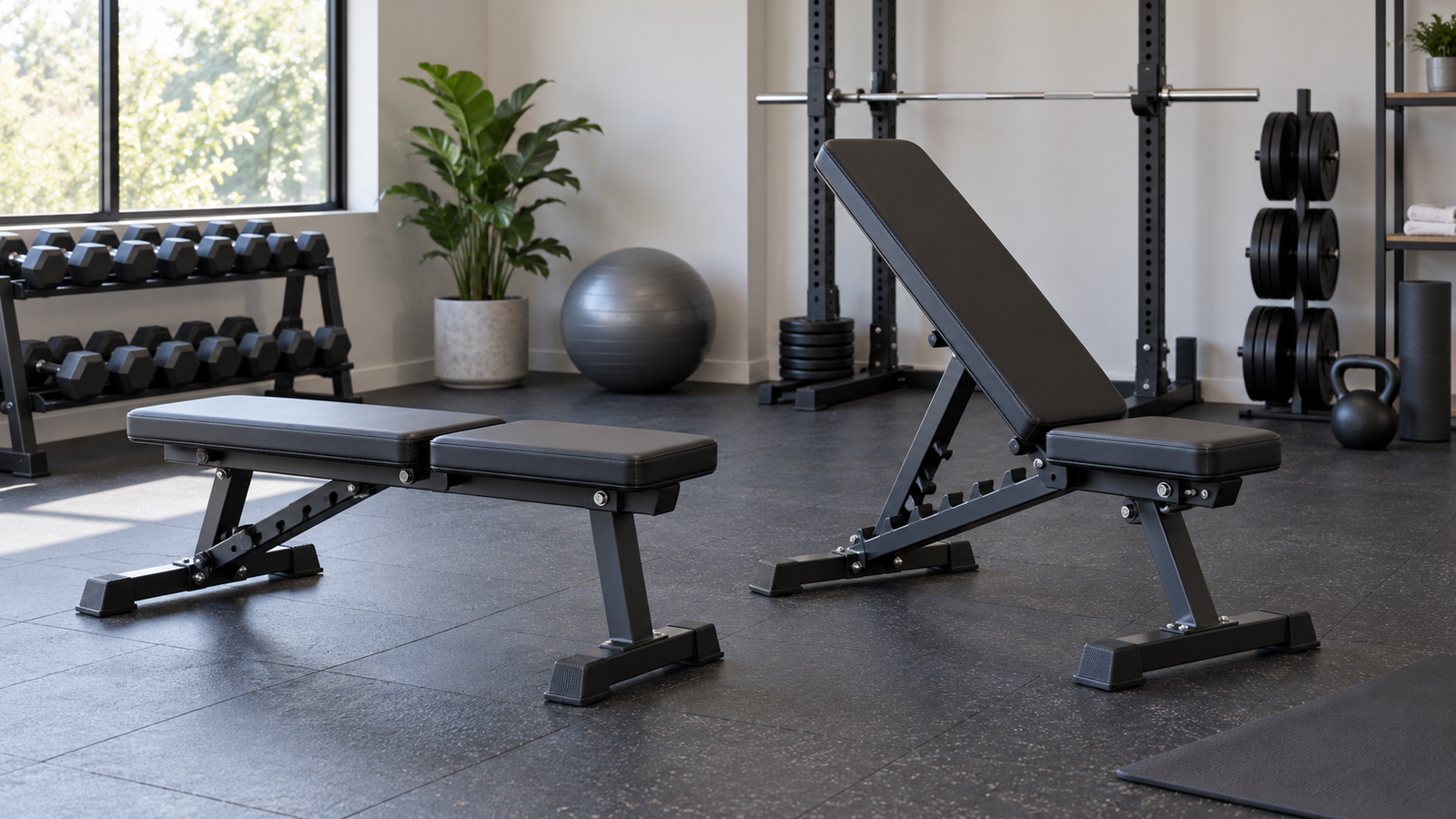
Some benches are simple and flat. Others offer several incline and decline positions. Some fold for storage, while heavier models prioritise stability over portability.
The right choice depends on:
- the exercises you plan to perform
- the amount of space you have
- your body size
- the weight you expect to use
- how often the bench needs to be moved
- whether you need incline or decline positions
This guide explains how to choose a weight bench that is stable, practical and appropriate for your home-gym setup.
What Is a Weight Bench Used For?
A weight bench provides a stable support surface for strength-training exercises.
Depending on the design, it can be used for movements such as:
- dumbbell bench press
- incline dumbbell press
- seated shoulder press
- one-arm dumbbell row
- chest-supported row
- dumbbell pullover
- Bulgarian split squat
- step-up variations
- hip thrusts
- seated curls
- triceps exercises
- supported core work
An adjustable bench increases the number of possible exercise angles.
However, more adjustment positions do not automatically mean a better bench.
A bench still needs to be stable and easy to use.
The Main Types of Weight Bench
Flat Bench
A flat bench has a fixed horizontal surface.
It is usually the simplest design.
Advantages
- simple construction
- stable
- often lighter
- usually easier to move
- useful for basic dumbbell exercises
- often takes less space
Limitations
It does not provide incline or decline positions.
If you want a broader range of pressing angles, an adjustable bench may be more suitable.
Adjustable Bench
An adjustable bench allows the backrest to move through different angles.
Common positions may include:
- flat
- low incline
- medium incline
- upright seated position
Some benches also include decline settings.
Adjustable benches are useful for people who want more exercise variety.
Incline Bench
An incline bench raises the backrest above horizontal.
This is commonly used for:
- incline dumbbell press
- shoulder pressing
- incline curls
- seated exercises
An adjustable bench normally provides several incline angles rather than one fixed position.
Decline Bench
A decline bench lowers the upper body below the hips.
It may be used for:
- decline pressing
- certain abdominal exercises
Decline is less important for many home users than flat and incline positions.
Do not choose a complicated decline model unless you know you will use that function.
Folding Bench
A folding bench is designed to take up less storage space.
It may suit:
- apartments
- bedrooms
- multipurpose rooms
- smaller home gyms
The trade-off is that folding mechanisms can introduce more moving parts.
Check stability carefully.
Multipurpose Bench
Some benches include additional features such as:
- preacher curl pad
- leg developer
- resistance-band attachments
- dip handles
- exercise stations
These can increase exercise variety.
However, extra features can also make the bench:
- larger
- heavier
- more complicated
- harder to store
Only pay for attachments you are likely to use.
Flat Bench vs Adjustable Bench
For most home-gym users, this is the main decision.
Choose a Flat Bench If:
- you mainly use dumbbells
- you perform basic strength training
- stability is your top priority
- you want simple equipment
- space is limited
- you do not need multiple angles
Choose an Adjustable Bench If:
- you want incline pressing
- you perform seated shoulder exercises
- you want more exercise variety
- the bench will be used frequently
- you have enough storage space
An adjustable bench is generally more versatile, but a good flat bench can still support an effective training program.
Stability Should Be Your First Priority
A weight bench should feel secure before anything else.
Poor stability can affect both confidence and exercise safety.
Look at:
- frame construction
- base width
- foot placement
- adjustment mechanism
- floor contact
- overall movement under load
A bench should not rock noticeably during normal use.
If it moves easily before you even add weights, it may become more unstable during training.
Check the Manufacturer’s Load Rating
Never guess how much weight a bench can support.
Check the manufacturer’s stated load capacity.
Remember that the total load may include:
- your body weight
- dumbbells
- barbell weight
- any additional equipment
For example, if a person weighs 80 kg and uses two 30 kg dumbbells, the bench is supporting more than 80 kg.
The exact way manufacturers calculate load ratings can vary, so follow the product guidance.
Do not exceed the specified limit.
How Much Weight Capacity Do You Need?
Choose capacity based on realistic training needs.
A beginner using moderate dumbbells may not need an extremely high-capacity commercial bench.
However, people planning to progress to heavier training should leave enough margin.
Consider:
- current body weight
- current working weights
- likely future progression
Buying a bench that becomes inadequate after a few months can be poor value.
Bench Dimensions Matter
A bench can look large in a product photo but feel very different in person.
Important dimensions include:
- total length
- backrest length
- pad width
- bench height
- base width
These measurements affect:
- comfort
- foot position
- upper-back support
- storage
- exercise setup
Bench Height
Bench height is especially important for pressing exercises.
When lying on the bench, you should generally be able to place your feet securely on the floor or on an appropriate support according to your technique.
A bench that is too high can make stable foot positioning difficult for shorter users.
A very low bench may feel less natural for taller users.
Check the dimensions rather than assuming all benches are standard.
Bench Width
The pad should provide enough support without restricting shoulder movement.
A very narrow bench may feel unstable.
A very wide bench may interfere with comfortable shoulder positioning during pressing exercises.
Body size matters.
Backrest Length
For incline and seated exercises, the backrest should provide sufficient support.
Taller users should pay particular attention to:
- backrest length
- head support
- shoulder position
A compact folding bench may be practical but too short for some users.
How Much Space Does a Weight Bench Need?
Do not measure only the physical bench.
You also need enough room around it for exercises.
Allow space for:
- dumbbell movement
- getting on and off safely
- adjusting the bench
- walking around equipment
- barbell setup if applicable
A bench that fits into the room but leaves no training space is not useful.
Measure Before Buying
Before ordering, measure:
- available floor length
- available floor width
- ceiling height if doing seated overhead exercises
- storage location
- clearance around nearby equipment
Marking the bench dimensions on the floor with tape can help you visualise how much space it will occupy.
Adjustable Backrest Positions
More angles can increase exercise options.
Useful positions may include:
- flat
- low incline
- moderate incline
- steep incline
- upright
You do not necessarily need ten or more positions.
A few well-spaced angles may be enough.
The most important factor is whether the adjustment system locks securely.
Ladder Adjustment vs Pin Adjustment
Adjustable benches often use different locking systems.
Ladder-Style Adjustment
The backrest rests within a series of metal slots.
Advantages:
- fast to change
- simple mechanism
- easy to see whether it is seated correctly
Pin Adjustment
A pin passes through selected holes or positions.
Advantages:
- secure when correctly inserted
- compact design
Either system can work well when properly built.
Check that the mechanism is easy to operate and locks firmly.
Seat Adjustment
Some adjustable benches also allow the seat angle to change.
This can be useful during incline pressing because a slightly raised seat may help prevent the body from sliding downward.
Not every user needs an adjustable seat, but it can improve comfort on steeper incline settings.
Padding and Upholstery
The bench pad needs to balance comfort with support.
Very soft padding may feel comfortable initially but can reduce stability.
Very hard padding may be uncomfortable during longer sessions.
Look for:
- firm cushioning
- durable upholstery
- even surface
- secure stitching
The surface should provide enough grip that you do not slide excessively.
Thick Padding Is Not Always Better
Extra-thick foam may look premium but can compress under load.
For strength training, firmness and stability usually matter more than plush softness.
Upholstery Durability
A home-gym bench is exposed to:
- sweat
- friction
- cleaning
- dumbbell contact
Look for upholstery that appears:
- durable
- easy to wipe
- securely attached
Avoid placing sharp equipment directly on the pad.
Bench Frame Construction
The frame is the structural core of the bench.
Most benches use steel frames.
Look at:
- frame thickness
- weld quality
- base design
- adjustment hardware
- bolts and fasteners
You do not need to judge engineering visually, but flimsy joints or excessive flex are warning signs.
Weight of the Bench
Bench weight affects both stability and portability.
Heavier Bench
Advantages:
- often feels more stable
- moves less during training
Disadvantages:
- harder to relocate
- harder to store
Lighter Bench
Advantages:
- easier to move
- easier to store
Disadvantages:
- may shift more easily
If you train in one permanent home-gym location, a heavier bench may be more practical.
If you need to move the bench after every workout, portability matters more.
Wheels and Handles
Some benches include:
- transport wheels
- front handle
This can be useful for heavier benches.
Instead of lifting the entire bench, you can tilt and roll it into position.
For small home gyms, this feature can make daily use much easier.
Folding Mechanism
If storage is important, inspect how the bench folds.
Ask:
- Does it fold quickly?
- Does it stand vertically?
- Does it fit under a bed?
- Is the folded structure stable?
- Does the hinge introduce movement?
A folding bench is only valuable if you will actually use the storage feature.
Weight Bench for Dumbbell Training
If your main equipment is dumbbells, prioritise:
- stable frame
- flat position
- several incline angles
- enough pad length
- manageable size
You probably do not need:
- barbell rack
- elaborate attachments
A good adjustable bench and dumbbells can support a broad training program.
Weight Bench for Barbell Training
Barbell bench pressing requires more than a bench.
You also need:
- suitable rack or stands
- appropriate safety setup
- sufficient floor space
- proper technique
Do not attempt heavy barbell pressing on a bench without suitable support equipment.
For solo training, safety arms or other appropriate safeguards are important.
Weight Bench for Beginners
Beginners should focus on:
- stability
- ease of adjustment
- basic flat and incline positions
- suitable dimensions
- straightforward setup
A complex multipurpose bench is not automatically better.
Mastering basic exercises is more important than having many attachments.
Weight Bench for Advanced Users
More experienced lifters may care more about:
- high load capacity
- minimal frame movement
- bench dimensions
- pad grip
- precise incline angles
- compatibility with racks
At higher training loads, construction quality becomes increasingly important.
Exercises You Can Do With a Flat Bench
A flat bench can support many exercises.
Examples include:
- dumbbell bench press
- dumbbell pullover
- one-arm dumbbell row
- seated curls
- triceps extensions
- Bulgarian split squats
- step-ups
- hip thrusts
You do not need incline adjustment to perform effective full-body training.
Exercises an Adjustable Bench Adds
Adjustable positions may allow:
- incline dumbbell press
- seated shoulder press
- incline dumbbell curl
- chest-supported row
- incline rear-delt work
This extra versatility is the main reason many home-gym users prefer adjustable benches.
Do You Need a Decline Position?
Many users do not.
Flat and incline positions cover most common home-gym bench exercises.
Decline may be useful if you specifically perform:
- decline pressing
- decline abdominal exercises
Do not prioritise decline at the expense of overall stability.
Can You Use a Bench for Step-Ups?
Only if the manufacturer indicates that the bench and setup are suitable for that type of use.
A narrow or unstable bench may not be safe for stepping exercises.
A dedicated plyometric box is often more appropriate.
Can You Use a Weight Bench for Hip Thrusts?
Many people use benches for hip thrusts, but the bench needs to be:
- stable
- properly positioned
- at an appropriate height
Make sure it cannot slide backward.
Use suitable padding and technique.
Home Gym Flooring Matters
Even a good bench may move if placed on an unsuitable surface.
Rubber gym flooring can help with:
- equipment stability
- floor protection
- noise reduction
Avoid unstable or uneven surfaces.
Common Weight Bench Buying Mistakes
Choosing Only by Number of Positions
Ten adjustment positions are not useful if the bench is unstable.
Ignoring Dimensions
Always check:
- length
- height
- width
Ignoring Load Capacity
Know the manufacturer’s stated limits.
Buying a Bench Too Large for the Room
Measure both the bench and the exercise clearance.
Prioritising Folding Over Stability
Compact storage is useful, but not if the bench moves during training.
Paying for Attachments You Will Never Use
Multipurpose features can increase cost and size.
Ignoring Your Future Training
If you plan to increase strength significantly, choose equipment that can support reasonable progression.
How to Evaluate a Weight Bench Before Buying
Use this checklist:
Stability
Does the frame appear wide and secure?
Capacity
Is the manufacturer’s load rating sufficient?
Dimensions
Will your body fit comfortably?
Adjustability
Does it provide the angles you actually need?
Space
Will it fit with enough exercise clearance?
Storage
Do you need folding capability or wheels?
Padding
Is the pad firm enough for support?
Construction
Are the adjustment points and frame substantial?
Training Goal
Does the bench support your planned exercises?
Weight Bench Feature Comparison
| Feature | Why It Matters |
|---|---|
| Load rating | Determines stated operating limit |
| Flat position | Essential for many exercises |
| Incline positions | Adds exercise variety |
| Decline position | Useful for selected exercises |
| Bench height | Affects foot stability |
| Pad width | Influences support and shoulder comfort |
| Backrest length | Important for taller users |
| Wheels | Easier movement |
| Folding design | Easier storage |
| Frame stability | Critical during loaded exercise |
What Should You Prioritise on a Budget?
If your budget is limited, prioritise:
- stable frame
- sufficient load rating
- useful dimensions
- flat position
- a few secure incline positions
Features such as:
- decorative finishes
- excessive adjustment angles
- unnecessary attachments
should come later.
When a Flat Bench May Be the Better Value
Choose a flat bench if:
- your program is simple
- you value stability
- you use dumbbells and bodyweight exercises
- you have limited storage
- you do not perform incline pressing
A quality flat bench can be more useful than a poorly built adjustable bench.
When an Adjustable Bench Is Worth Paying More For
An adjustable bench is worth considering if you regularly perform:
- incline pressing
- seated shoulder pressing
- chest-supported work
- incline curls
The extra cost should buy useful versatility and stable construction rather than just more moving parts.
Basic Safety Before Every Workout
Before using the bench:
- check that adjustment pins are fully engaged
- confirm ladder positions are seated correctly
- tighten any loose hardware according to manufacturer guidance
- place the bench on a stable surface
- check that the pad is secure
- confirm the bench is not rocking
Do not begin a heavy set if the bench does not feel stable.
Barbell Bench Press Safety
Barbell pressing introduces additional risks.
Use:
- suitable rack
- appropriate safeties
- secure bench placement
- collars where appropriate
- sensible weight selection
If training without reliable safety equipment, consider dumbbell alternatives or other exercises.
Frequently Asked Questions
Is an adjustable bench better than a flat bench?
It is more versatile, but not automatically better. A flat bench may offer better simplicity, stability and value for basic training.
What weight capacity should a bench have?
Choose a manufacturer-rated capacity that safely covers your body weight plus the weights you expect to use, with room for progression.
Do beginners need an adjustable bench?
Not necessarily. A flat bench can support many effective exercises. An adjustable model adds useful variety.
Is a folding weight bench safe?
It can be when properly designed and used within the manufacturer’s limits. Check that the folding and locking mechanisms are secure.
Do I need decline adjustment?
Most home users can train effectively with flat and incline positions. Decline is useful only for selected exercises.
Can I use a weight bench for barbell bench press?
Yes, but you also need an appropriate rack and safety setup. A bench alone is not sufficient for safe heavy barbell pressing.
How much room should I leave around a bench?
Enough to move safely, handle dumbbells and adjust the bench without striking walls or nearby equipment.
Is a heavier bench better?
A heavier bench often feels more stable, but it is harder to move. The right choice depends on your space and whether you need frequent storage.
Final Takeaway
A good home-gym weight bench does not need dozens of features.
Prioritise:
- stable construction
- adequate manufacturer-rated load capacity
- suitable dimensions
- secure adjustment mechanisms
- the positions your training actually requires
- enough room to exercise safely
Choose a flat bench if you value simplicity, stability and basic strength training.
Choose an adjustable bench if incline and seated exercises are important to your program.
Choose a folding bench only when storage is a genuine priority and the design remains stable enough for your planned training.
The best bench is not the model with the longest feature list. It is the one that fits your body, room and training plan while providing a stable platform for progressive strength work.
If you are comparing specific options, continue to our Top 5 Weight Benches in India guide, where we compare adjustable home-gym benches for different training and space requirements.