Magnetic vs Hydraulic Rowing Machines: Which Is Better for Home Use?
Compare magnetic and hydraulic rowing machines by resistance feel, noise, footprint, adjustment, maintenance and the type of home cardio setup each suits.
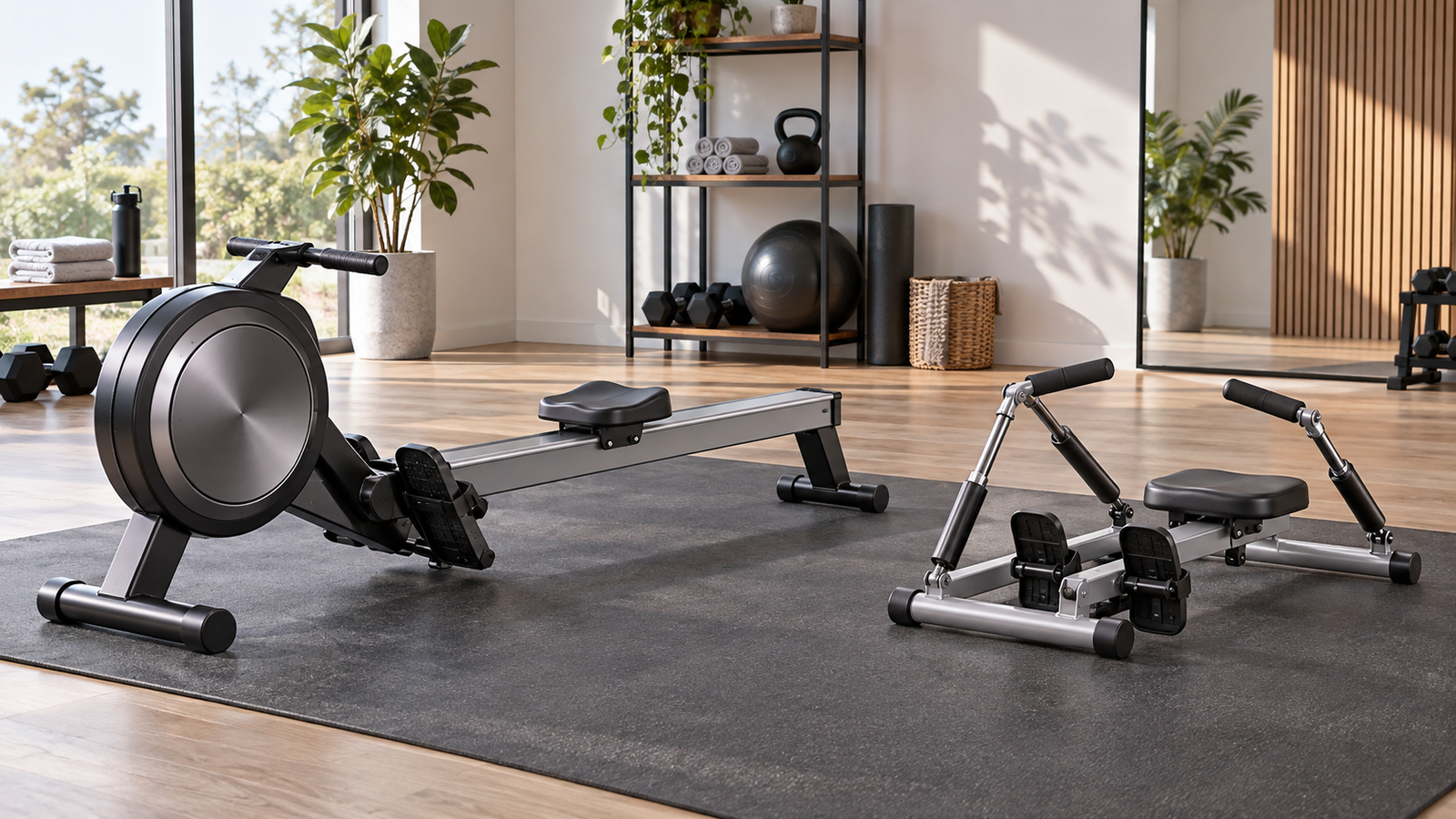
A rowing machine can be an efficient home-cardio option because it combines repetitive cardiovascular work with movement involving the legs, hips, back and arms.
But not all home rowers feel the same.
Two common options are:
- Magnetic rowing machines
- Hydraulic rowing machines
Both can provide useful workouts, but they differ in resistance feel, noise, footprint, adjustment and overall training experience.
The better option depends on your available space, budget, preferred rowing feel and how frequently you expect to use the machine.
This guide explains the practical differences between magnetic and hydraulic rowing machines so you can decide which type fits your home setup.
How Does a Magnetic Rowing Machine Work?
A magnetic rowing machine uses magnets to create resistance around a flywheel or resistance mechanism.
As you change the resistance setting, the magnetic force changes.
Depending on the machine, resistance may be adjusted through:
- A manual dial
- A lever
- Electronic controls
- Preset workout programs
One of the main advantages of magnetic resistance is that it does not require parts to rub directly against each other to create resistance.
This generally contributes to relatively smooth and quiet operation.
How Does a Hydraulic Rowing Machine Work?
Hydraulic rowing machines use resistance cylinders or pistons.
As you pull or move the handles, hydraulic fluid or another internal mechanism creates resistance.
Hydraulic rowers are often designed to be relatively compact.
Some use:
- A single central hydraulic cylinder
- Two separate resistance arms
- Adjustable piston resistance
The rowing feel can be quite different from a magnetic machine.
Instead of pulling against a flywheel system, you are working against hydraulic resistance throughout the stroke.
Magnetic vs Hydraulic Rowing Machines: Main Difference
The biggest difference is the resistance mechanism.
A magnetic machine usually uses:
- Flywheel-style resistance
- A central rowing handle
- A longer rail
- Adjustable magnetic resistance
A hydraulic rower usually uses:
- Pistons or cylinders
- More compact construction
- Mechanical resistance arms or handles
- Less reliance on a large flywheel
Both can provide cardio exercise, but the experience may feel noticeably different.
Which Type Is Quieter?
Noise is an important consideration for home equipment.
Magnetic Rowing Machine
Magnetic resistance is generally one of the quieter home-rowing systems.
Because there is less direct friction involved in generating resistance, the machine may produce mostly:
- Seat movement
- Belt or chain noise
- General mechanical sound
This can make magnetic rowers appealing for:
- Apartments
- Shared homes
- Early-morning workouts
- Evening workouts
Hydraulic Rowing Machine
Hydraulic rowers can also be relatively quiet.
However, you may hear:
- Piston movement
- Mechanical arm movement
- Frame movement
The actual noise level depends heavily on the specific machine.
A well-built hydraulic rower can still be perfectly suitable for home use.
Which Takes Up Less Space?
Hydraulic rowers often have an advantage here.
Because they do not necessarily require a large flywheel housing and long resistance mechanism, some models are relatively compact.
That can make them practical for:
- Small apartments
- Bedrooms
- Multi-purpose rooms
- Compact home gyms
Magnetic rowers frequently have longer rails and larger front resistance housings.
Before buying either type, check the complete dimensions while the machine is actually in use.
Do not rely only on folded or storage dimensions.
Which Is Easier to Store?
This depends more on machine design than resistance type.
Some magnetic rowers offer:
- Folding rails
- Upright storage
- Transport wheels
Some hydraulic machines are small enough to slide under furniture or stand against a wall.
Before buying, check:
- Folded dimensions
- Machine weight
- Transport wheels
- Whether upright storage is permitted
- Whether the rail folds
- How much effort is required to move it
A theoretically foldable rower is not very useful if it is too heavy for you to move regularly.
Resistance Feel
The resistance sensation is one of the most important differences.
Magnetic Resistance
Magnetic rowing often feels relatively consistent through the stroke.
This can make it suitable for:
- Steady cardio
- Interval sessions
- Longer workouts
- Repeated indoor training
The resistance does not necessarily increase simply because you pull harder.
Instead, the resistance level is usually selected through the machine’s adjustment system.
Hydraulic Resistance
Hydraulic resistance can feel more mechanical.
On dual-arm machines, the movement may also feel slightly different from the single-handle rowing motion used by many magnetic rowers.
Some users like the controlled resistance of hydraulic systems.
Others prefer the smoother continuous pull of a magnetic machine.
Neither preference is wrong.
Resistance Adjustment
Many magnetic rowers offer several clearly defined resistance levels.
For example, a machine may provide:
- 8 levels
- 12 levels
- 16 levels
The number itself does not tell you whether the machine is better.
What matters is whether the resistance range provides:
- Comfortable warm-up settings
- Moderate steady-state resistance
- More challenging levels for progression
Hydraulic rowers may also offer adjustable resistance.
On some models, the piston or cylinder has several adjustment settings.
On others, the resistance system may be less convenient to adjust during a workout.
Check how the specific machine changes resistance rather than comparing only the advertised number of levels.
Rowing Motion
A magnetic rower usually uses a central handle connected to the resistance system.
The basic movement involves:
- Leg drive
- Hip and torso movement
- Arm pull
- Controlled return
Many users find this closer to the familiar indoor rowing-machine format.
Hydraulic machines may use:
- A central handle
or
- Two independent rowing arms
Dual-arm models can provide a different movement pattern.
If possible, understand which design the machine uses before buying.
Which Feels More Like Traditional Rowing?
Neither home resistance system perfectly reproduces rowing a boat on water.
However, magnetic rowers with a central handle generally follow the familiar indoor rowing pattern more closely than many compact dual-arm hydraulic designs.
That can matter if you want:
- Consistent rowing technique
- Structured rowing workouts
- Stroke-rate training
- Longer cardio sessions
If your goal is simply compact home exercise, this difference may be less important.
Which Is Better for Beginners?
Either can work for a beginner.
The most important beginner factors are:
- Stable machine construction
- Comfortable seat
- Secure footrests
- Manageable resistance
- Clear instructions
- Appropriate rail length
- Easy mounting and dismounting
A magnetic rower may feel more intuitive if you are used to commercial gym rowing machines.
A hydraulic rower may appeal more if:
- Your space is limited
- Your budget is lower
- You want a compact machine
- You mainly want short home workouts
The best beginner machine is the one you can use consistently with good technique.
Which Is Better for Longer Workouts?
Magnetic machines are often better suited to longer rowing sessions.
Reasons may include:
- Smoother resistance
- More natural central-handle movement
- More consistent stroke rhythm
- Wider resistance range on many models
That does not mean hydraulic rowers cannot be used for longer sessions.
Seat comfort, rail movement and ergonomics still matter more than resistance type alone.
Which Is Better for Short Home Cardio Sessions?
Both can work.
A compact hydraulic rower may be very practical for 10–20 minute sessions when:
- Space is limited
- You want simple equipment
- You do not need advanced electronics
A magnetic rower may be preferable if you want:
- Structured intervals
- More resistance adjustment
- Longer sessions
- A more conventional rowing motion
Footrest Design Matters
The resistance system receives most of the attention, but footrests can strongly affect comfort.
Look for:
- Secure straps
- Enough surface area
- Stable heel support
- Comfortable foot angle
Your feet should remain secure without requiring excessive tightening.
Loose or poorly positioned footrests can make rowing feel unstable.
Seat Comfort
A rowing machine requires repeated movement along the rail.
Seat design therefore matters.
Check for:
- Adequate padding
- Smooth seat rollers
- Stable tracking
- Enough seat width
- No excessive rocking
A thick seat is not automatically more comfortable.
Shape and support matter too.
If you plan longer workouts, seat comfort becomes increasingly important.
Rail Length
The rail needs to allow you to move through a comfortable stroke.
This is especially important for taller users.
A rail that is too short can restrict leg extension.
Before buying, check:
- Recommended user height
- Rail dimensions
- Product reviews discussing tall-user fit
- Manufacturer specifications
Do not assume every rower fits every body size.
User Weight Capacity
Always check the manufacturer’s stated user-weight limit.
Choose a machine with sufficient capacity for everyone who will use it.
Do not treat the maximum figure as a performance target.
A machine that feels stable well below its stated maximum may be more comfortable for regular use.
Weight capacity should be considered alongside:
- Frame construction
- Floor stability
- Rail support
- Seat mechanism
Magnetic Resistance Levels: More Is Not Always Better
A machine with 16 resistance levels is not automatically superior to one with 8.
The quality of the range matters more.
For example, useful resistance should allow:
- Easy recovery work
- Moderate steady rowing
- More demanding sessions
If several neighbouring levels feel nearly identical, a larger number does not provide much practical benefit.
Choose based on usable adjustment rather than marketing numbers.
Does Resistance Increase When You Row Faster?
This depends on the resistance system.
On many magnetic machines, resistance is primarily determined by the selected magnetic setting.
Increasing your stroke rate still increases overall workout intensity because you perform more work per minute.
However, the resistance itself may not increase dramatically simply because you pull harder.
Hydraulic resistance can behave differently depending on cylinder design.
Do not assume either system automatically replicates water resistance.
Display and Workout Tracking
Rowing machines may include displays showing:
- Time
- Stroke count
- Distance
- Calories
- Stroke rate
- Heart-rate information
These features can help track workouts, but do not choose a machine only because the display shows more numbers.
Prioritise:
- Comfortable rowing movement
- Stable construction
- Suitable resistance
- Correct dimensions
- User fit
A sophisticated console cannot fix an uncomfortable machine.
Smart Features
Some magnetic rowers may offer:
- Bluetooth
- App connectivity
- Guided workouts
- Training programs
- Performance history
These can be useful for motivation.
However, ask yourself whether you will actually use them.
Smart features may also introduce dependence on:
- Phone apps
- Software updates
- Account registration
- Subscription services
Check what works without a paid subscription.
Maintenance
Both systems require some care.
Magnetic Rowing Machine Maintenance
Typical care may include:
- Cleaning the rail
- Wiping sweat from the frame
- Inspecting belt or chain condition
- Checking bolts
- Cleaning seat rollers
Follow the manufacturer’s instructions for lubrication where applicable.
Hydraulic Rowing Machine Maintenance
Hydraulic machines may require attention to:
- Resistance cylinders
- Moving joints
- Arm pivots
- Bolts
- Frame connections
If you notice leaking fluid from a hydraulic cylinder, stop using the machine and consult the manufacturer or service provider.
Heat in Hydraulic Cylinders
Hydraulic resistance components can become warmer during extended use.
This is normal to a degree because energy is being dissipated through the resistance mechanism.
However, users should avoid touching very hot components and should follow manufacturer guidance regarding:
- Maximum continuous-use time
- Cooling periods
- Maintenance
This becomes particularly important during long sessions.
Floor Protection
Rowing machines move repeatedly during use and can place concentrated pressure on the floor.
A suitable exercise-equipment mat can help:
- Protect flooring
- Reduce movement
- Reduce vibration
- Catch sweat
- Make cleaning easier
This is useful for both magnetic and hydraulic machines.
Which Is Better for Apartments?
Magnetic rowing machines often appeal to apartment users because of relatively quiet resistance.
However, machine size can be a disadvantage.
Hydraulic rowers may be:
- Smaller
- Easier to move
- Easier to store
So the decision becomes a trade-off.
Choose magnetic if quiet, smooth rowing is the priority and you have enough room.
Choose hydraulic if compact storage is more important.
Which Is Better for a Dedicated Home Gym?
A magnetic rowing machine is often the more natural fit in a dedicated gym room.
If you have enough space, you may benefit from:
- Longer rail
- Central rowing handle
- Wider resistance range
- More substantial frame
- Workout console
- Smart features
The larger footprint becomes less of a disadvantage when equipment does not need to be packed away after every workout.
Which Is Better for a Bedroom or Small Room?
A compact hydraulic rower may make more sense.
Before buying, measure:
- Machine length
- Machine width
- Available movement space
- Storage area
Remember that you need room to sit down, extend your legs and get off the machine safely.
Do not place a rower into a space where every stroke brings you close to furniture or walls.
Can a Rowing Machine Build Muscle?
Rowing uses many muscle groups, including:
- Quadriceps
- Glutes
- Hamstrings
- Back
- Shoulders
- Arms
- Core musculature
However, rowing should primarily be considered cardiovascular and muscular-endurance training.
It does not replace progressive resistance training if your main goal is building maximum strength or muscle mass.
A balanced fitness program may combine rowing with exercises such as:
- Squats
- Hinges
- Presses
- Rows
- Pulling movements
Can Rowing Help With Weight Loss?
Rowing can contribute to total physical activity and energy expenditure.
However, no machine independently guarantees weight loss.
Body-weight changes depend on several factors, including:
- Food intake
- Overall activity
- Training consistency
- Sleep
- Individual metabolism
Choose a rower because it helps you exercise consistently rather than because of advertised calorie figures.
Are the Calorie Numbers on Rowing Machines Accurate?
Treat them as estimates.
A machine may calculate calorie expenditure using:
- Time
- Stroke rate
- Resistance
- Body-weight input
- Generic formulas
These numbers are useful for comparing your own sessions but should not be treated as exact measurements.
Proper Rowing Technique
Regardless of machine type, technique matters.
A simple rowing sequence is:
1. Catch
Start with:
- Knees bent
- Arms extended
- Torso controlled
- Feet secured
2. Drive
Push through the legs first.
Avoid immediately pulling hard with the arms.
3. Finish
As the legs extend:
- Lean back slightly
- Pull the handle toward the lower chest or upper abdomen
4. Recovery
Reverse the sequence:
- Arms extend
- Torso moves forward
- Knees bend
A controlled recovery is just as important as the pull.
Common Rowing Technique Mistakes
Pulling With the Arms Too Early
The legs should provide much of the initial drive.
Rounding the Lower Back
Maintain a controlled neutral posture rather than collapsing forward.
Leaning Too Far Back
The finish does not require an exaggerated backward lean.
Rowing With Excessive Resistance
High resistance can encourage poor technique.
Start lower and build gradually.
Moving Too Fast
A very high stroke rate with poor control is not automatically a better workout.
Focus on consistency and technique first.
How Long Should a Beginner Row?
There is no universal starting duration.
A beginner might start with a manageable session such as:
- 5–10 minutes of easy rowing
and gradually progress toward longer sessions.
The important point is maintaining good technique.
A shorter controlled session is more useful than a long workout performed with deteriorating form.
Is More Resistance Better?
No.
One of the most common mistakes with rowing machines is assuming maximum resistance creates the best workout.
Excessive resistance can:
- Slow the stroke
- Encourage arm-dominant pulling
- Increase fatigue
- Make technique harder to maintain
Use enough resistance to create a challenge while preserving smooth movement.
Common Rowing Machine Buying Mistakes
Choosing Only by Resistance Levels
Sixteen levels are not automatically better than eight.
Ignoring Rail Length
A machine can be uncomfortable if the rail does not suit your height.
Forgetting Storage Dimensions
A rower may fit while folded but require much more floor space during use.
Buying Based Only on Maximum User Weight
Capacity is important, but it does not reveal everything about stability or comfort.
Ignoring Seat and Footrests
These small components strongly affect everyday usability.
Paying for Smart Features You Will Not Use
App connectivity has little value if your main goal is simple cardio.
Choosing the Cheapest Machine Without Considering Service
Large fitness equipment may eventually require parts or support.
Check warranty and service availability before buying.
Magnetic vs Hydraulic: Which Requires Less Maintenance?
Neither type is completely maintenance-free.
Magnetic machines have more components around the flywheel and drive system.
Hydraulic machines rely on cylinders and mechanical joints.
The more important question is whether the manufacturer provides:
- Clear maintenance instructions
- Warranty support
- Replacement parts
- Local service
A well-supported machine is often more valuable than one with a theoretically simpler resistance system.
Magnetic vs Hydraulic Rowing Machine: Quick Comparison
Choose a Magnetic Rower If You Want:
- Relatively quiet operation
- Smooth resistance
- Conventional central-handle rowing
- More resistance adjustment
- Longer regular workouts
- A dedicated home-cardio machine
- Smart or digital features
Choose a Hydraulic Rower If You Want:
- Compact size
- Easier storage
- Simpler construction
- Shorter home workouts
- Lower-space requirements
- A potentially lower-cost entry point
Frequently Asked Questions
Is Magnetic Rowing Better Than Hydraulic Rowing?
Not universally.
Magnetic rowing is often better for users prioritising smooth, quiet and conventional indoor rowing.
Hydraulic rowing may be better when compact size and storage are the main concerns.
Are Hydraulic Rowers Good for Beginners?
Yes, provided the machine fits the user and offers stable, manageable resistance.
Learning proper technique still matters.
Are Magnetic Rowers Silent?
No rowing machine is completely silent.
Seat rollers, belts, chains and moving components still generate some sound.
Magnetic resistance itself is generally relatively quiet.
Do Hydraulic Rowers Get Hot?
The hydraulic cylinders can warm during extended use.
Follow manufacturer instructions regarding session duration and cooling.
Is a Magnetic Rower Better for Apartments?
It can be because magnetic resistance is generally quiet.
However, a hydraulic rower may occupy less space.
Consider both noise and dimensions.
Can You Use a Rowing Machine Every Day?
That depends on workout intensity, recovery, fitness level and overall training program.
Daily movement can be appropriate for some people, but hard rowing sessions do not necessarily need to be performed every day.
Is a Rowing Machine Good for the Whole Body?
Rowing involves both the lower and upper body, but it should not be interpreted as a complete substitute for every type of exercise.
Strength training, mobility work and other forms of activity may still be useful.
Final Takeaway
Magnetic and hydraulic rowing machines can both work well for home exercise, but they solve slightly different problems.
A magnetic rowing machine generally makes more sense if you want:
- Smooth resistance
- Lower workout noise
- A traditional indoor rowing motion
- More structured resistance adjustment
- Longer cardio sessions
A hydraulic rowing machine may be the better choice if you prioritise:
- Compact dimensions
- Easier storage
- Simpler home workouts
- Limited room
- A smaller equipment footprint
Whichever type you choose, pay close attention to:
- Machine dimensions
- User-weight capacity
- Rail length
- Footrest design
- Seat comfort
- Resistance adjustment
- Storage
- Warranty and support
The resistance technology matters, but the best rowing machine is ultimately the one that fits your body, your room and the type of workouts you are likely to perform consistently.