Push-Up Bars vs Pull-Up Bars: Space, Grip and Home Workout Setup
Compare push-up bars and pull-up bars by training movement, grip design, mounting requirements and floor or doorway space in a home gym.
Push-up bars and pull-up bars are both simple bodyweight-training tools, but they support completely different movement patterns.
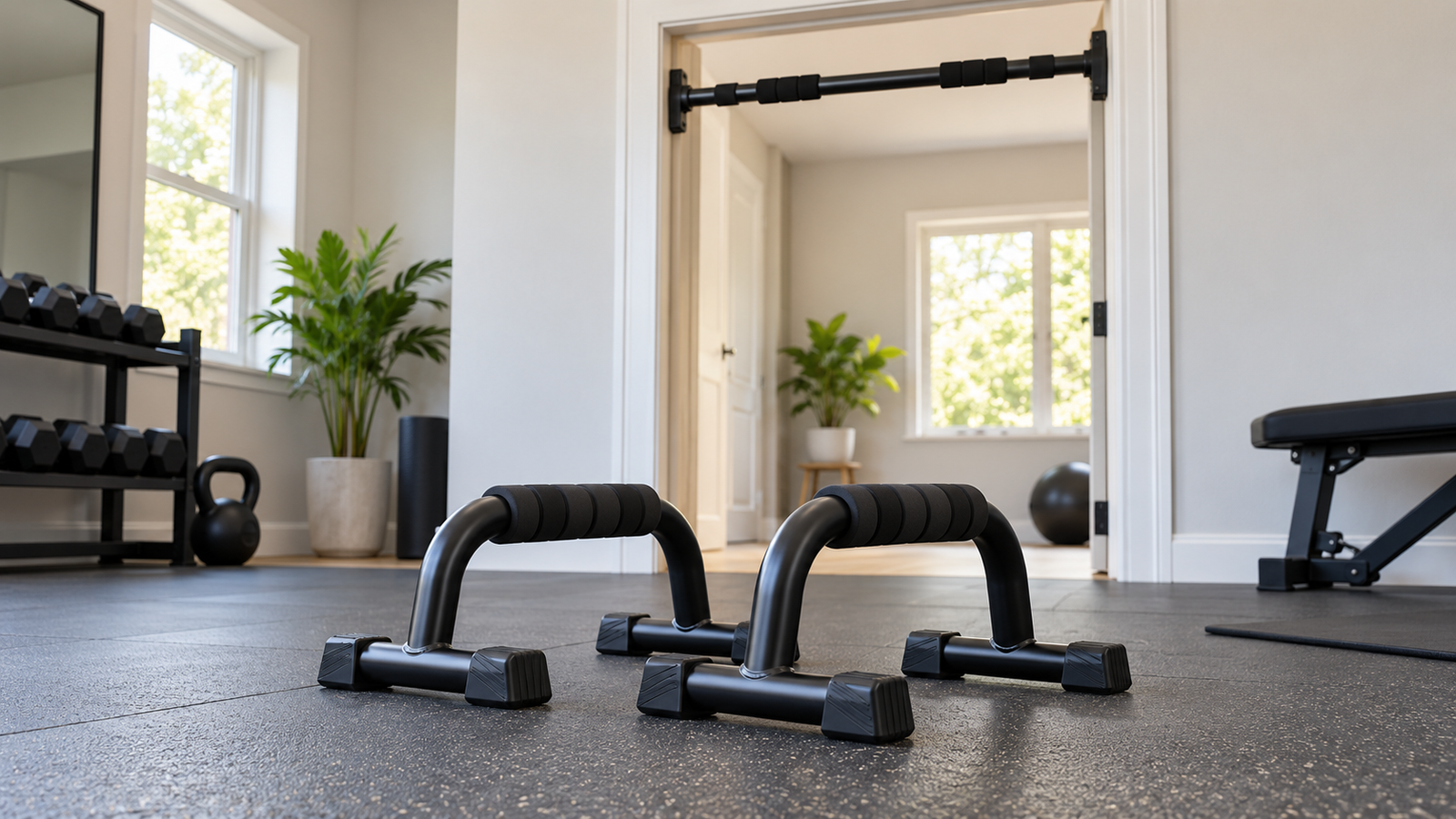
Push-up bars sit on the floor and raise your hands during pressing exercises. Pull-up bars are mounted in a doorway or on a wall and support hanging and pulling exercises.
One mainly helps with horizontal pushing. The other is built for vertical pulling.
If you are setting up a small home gym, choosing between them depends on the muscles you want to train, how much space you have, whether installation is possible and whether you already perform bodyweight exercises without equipment.
What are push-up bars?
Push-up bars are small elevated handles placed on the floor.
They allow you to grip a neutral handle instead of placing your palms flat on the ground.
Common designs include:
- Straight steel bars.
- Angled handles.
- Rotating push-up handles.
- Foldable bars.
- Compact plastic or metal stands.
They are mainly used for:
- Push-ups.
- Incline or decline push-up variations.
- L-sit progressions on suitable models.
- Some plank variations.
Their main practical advantage is changing hand and wrist position during pressing exercises.
What is a pull-up bar?
A pull-up bar is a horizontal bar used for hanging and pulling exercises.
Common designs include:
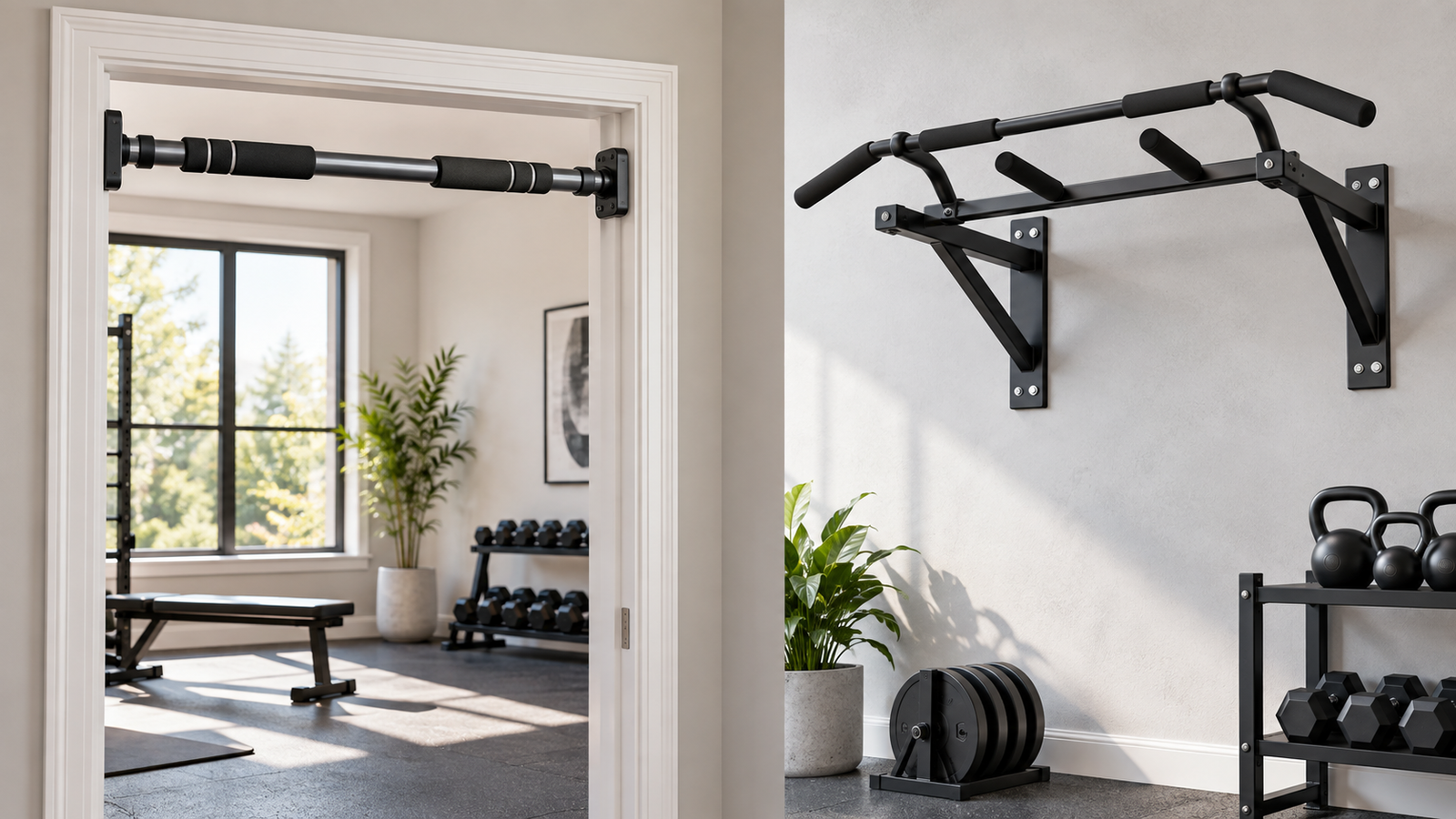
- Adjustable doorway bars.
- Leverage-style doorway bars.
- Wall-mounted bars.
- Multi-grip pull-up stations.
They can be used for:
- Pull-ups.
- Chin-ups.
- Dead hangs.
- Assisted pull-ups.
- Knee raises.
- Some core exercises.
Unlike push-up bars, pull-up bars usually need a suitable mounting point.
Push-up bars vs pull-up bars at a glance
| Factor | Push-up bars | Pull-up bars |
|---|---|---|
| Main movement | Pushing | Pulling |
| Main muscles | Chest, shoulders, triceps, core | Back, biceps, forearms, core |
| Installation | None | Usually required |
| Space needed | Very little | Doorway or wall space |
| Portability | Excellent | Varies |
| Beginner access | High | Moderate |
| Wrist position | Neutral grip | Hanging grip |
| Exercise difficulty | Easy to scale | Can be demanding initially |
| Best for | Floor pressing | Vertical pulling |
What do push-up bars change compared with regular push-ups?
A standard push-up places the hands flat on the floor.
This requires the wrists to extend.
Push-up bars allow you to grip a handle instead.
That usually creates a more neutral wrist position.
For some users, this can feel more comfortable.
The handles also raise the hands off the floor, which may allow a slightly greater range of motion if shoulder mobility and control allow it.
Do push-up bars make push-ups harder?
They can.
The extra height may let your chest travel lower between the handles.
This increases the movement range.
A deeper push-up can increase the challenge, but only if you maintain control.
Do not force extra depth simply because the bars allow it.
If your shoulders feel uncomfortable at the bottom, reduce the range.
Push-up bars and wrist comfort
One of the most common reasons people buy push-up bars is wrist discomfort during floor push-ups.
A neutral grip can reduce the amount of wrist extension required.
However, wrist pain can have many causes.
If push-ups cause persistent or sharp wrist pain, do not assume the bars alone will solve the problem.
Technique, loading and existing injury may also matter.
What muscles do push-up bars train?
The main muscles remain similar to standard push-ups.
These include:
- Chest.
- Triceps.
- Front shoulders.
- Core.
- Serratus anterior.
Changing bar position can shift emphasis slightly, but the exercise remains a pressing movement.
Narrow vs wide push-up bar position
Narrow position
Placing the bars closer together generally increases triceps involvement.
Standard position
A shoulder-width or slightly wider position gives a balanced pressing setup.
Wide position
A wider position changes shoulder and chest mechanics.
Very wide placement is not automatically better and may be uncomfortable for some users.
Angled push-up bars
Some bars are angled rather than parallel.
The angle can change:
- Wrist position.
- Shoulder rotation.
- Elbow path.
Some users find angled bars more comfortable.
Others prefer straight handles.
There is no universally correct handle angle.
Rotating push-up handles
Rotating handles allow the hands to turn as you move.
They can feel more natural to some users.
However, they also add instability and moving parts.
For basic home workouts, fixed bars are usually simpler.
Push-up bar height
Handle height affects range of motion.
Low-profile bars provide only a modest lift.
Taller bars can allow a deeper descent.
More height is not automatically better.
Choose a height that gives you:
- Stable support.
- Comfortable grip.
- Controlled movement.
Base stability matters
Push-up bars should not slide or tip.
Look for:
- Wide bases.
- Rubber feet.
- Non-slip pads.
- Solid construction.
A bar that moves during pressing can become unsafe.
Use them on a flat, stable floor.
Push-up bars on tiles
Smooth tiles can be slippery.
Rubber feet help.
Before training, press down on the bars and check whether they move.
Do not use them on a wet floor.
Push-up bars on mats
They can work well on firm exercise mats.
Very soft foam mats may allow the base to sink or tilt.
A stable surface is preferable.
What do pull-up bars train?
Pull-up bars focus on vertical pulling.
Depending on grip and exercise, they can train:
- Latissimus dorsi.
- Upper back.
- Biceps.
- Forearms.
- Grip.
- Core.
This makes them a useful complement to push-up training.
Push-ups and pull-ups together provide both pressing and pulling patterns.
Pull-up vs chin-up
A pull-up usually uses an overhand grip.
A chin-up usually uses an underhand grip.
Both train the back and arms.
Chin-ups often feel easier for beginners because the biceps contribute strongly.
Some bars also offer neutral-grip handles.
Doorway pull-up bars
Doorway bars are popular because they require little permanent space.
Common versions include:
- Pressure-mounted bars.
- Telescopic bars.
- Leverage bars that hook around the doorframe.
They are practical for apartments and small rooms.
However, they depend heavily on the condition and dimensions of the doorframe.
Wall-mounted pull-up bars
Wall-mounted models use brackets and fasteners.
They usually provide:
- Greater permanence.
- More grip positions.
- More clearance.
- A more dedicated training setup.
They require proper installation and a suitable structural surface.
Which is easier for beginners?
Push-up bars are generally easier to start with.
Almost everyone can scale a push-up by changing body angle.
For example:
- Wall push-up.
- Counter-height push-up.
- Knee push-up.
- Standard push-up.
Pull-ups are harder to scale because you must move much of your bodyweight.
Beginners may need assistance.
Assisted pull-ups
Common beginner options include:
- Resistance-band assistance.
- Negative pull-ups.
- Foot-supported pull-ups.
- Assisted machines at a gym.
A pull-up bar can still be useful even before you can complete a full repetition.
Negative pull-ups
A negative pull-up focuses on the lowering phase.
You begin near the top and lower slowly.
This can help build strength for full pull-ups.
Use a stable step to reach the top rather than jumping uncontrollably.
Dead hangs
A dead hang is simply hanging from the bar.
This trains:
- Grip.
- Shoulder tolerance.
- Basic hanging control.
However, hanging is not comfortable for everyone.
If you have shoulder instability or pain, proceed cautiously.
Scapular pull-ups
Scapular pull-ups involve a small controlled shoulder-blade movement while hanging.
They can help develop control before full pull-ups.
The elbows remain mostly straight.
This exercise still requires a secure bar and comfortable shoulders.
Can push-up bars train the back?
Not effectively in the same way a pull-up bar does.
Push-up bars mainly support pushing exercises.
They do not provide a true pulling movement.
If your home programme contains only push-ups, your back may receive relatively little direct training.
Can a pull-up bar train the chest?
Not as a primary movement.
Pull-up bars mainly train pulling muscles.
Some advanced calisthenics movements involve pressing and transition skills, but for basic home training, push-ups are the more direct chest exercise.
Why pushing and pulling balance matters
A basic bodyweight programme benefits from training both directions.
Pushing exercises work muscles such as:
- Chest.
- Triceps.
- Front shoulders.
Pulling exercises work muscles such as:
- Back.
- Biceps.
- Forearms.
Having both tools can create a more balanced upper-body routine.
Do you need both?
Not necessarily.
If you already have another pulling option, such as resistance bands or dumbbell rows, push-up bars may be enough.
If you already perform floor push-ups comfortably, a pull-up bar may add more training variety.
Choose based on what your current routine is missing.
Push-up bars for small apartments
Push-up bars are ideal for small spaces because they:
- Require no installation.
- Take up little storage room.
- Can be placed in a cupboard.
- Can be moved easily.
They are one of the simplest home-gym accessories.
Pull-up bars for small apartments
A doorway bar can also work well in an apartment.
However, you need:
- Compatible doorway dimensions.
- A strong frame.
- Enough headroom.
- Enough body clearance.
Do not assume every rental property is suitable.
Renters: which is better?
Push-up bars are generally easier for renters.
They create no permanent modifications.
A no-drill doorway pull-up bar can also be renter-friendly, but it can still mark or stress the frame.
Inspect the doorframe regularly.
Which is more portable?
Push-up bars are usually more portable.
Many are compact enough to carry in:
- Gym bags.
- Car boots.
- Travel luggage.
Pull-up bars are longer and bulkier.
Some doorway models can be removed and transported, but they are less convenient.
Which is better for home travel workouts?
Push-up bars are easier.
However, push-ups can also be performed without any equipment.
That means the real value of carrying push-up bars is mainly wrist comfort and extra range.
A pull-up bar is harder to replace during travel because pulling movements are more difficult to perform without equipment.
Build quality in push-up bars
Look for:
- Steel or reinforced construction.
- Solid welds.
- Non-slip feet.
- Secure handles.
- No flex under load.
Lightweight plastic bars may be adequate for some users, but inspect their load rating.
Foam grips
Foam handles can improve comfort.
Advantages include:
- Softer palm contact.
- Better grip.
- Reduced pressure.
Potential drawbacks:
- Sweat absorption.
- Tearing.
- Rotation around the metal handle.
Rubber or textured handles can be more durable.
Build quality in pull-up bars
Check:
- Steel tubing.
- Welds.
- Locking mechanism.
- Mounting brackets.
- Fasteners.
- Grip material.
For doorway bars, also check the pressure or leverage mechanism.
A high claimed load capacity is meaningless if the mounting system is weak.
Load capacity
Both push-up and pull-up bars may list maximum user weight.
Treat this as a specification, not a guarantee.
For pull-up bars especially, loading changes when the body swings.
Dynamic movement can create greater forces than a static hang.
Use controlled movements unless the bar is specifically designed for dynamic training.
Dynamic exercises
Movements such as kipping pull-ups create more force.
Many home doorway bars are not designed for this.
Avoid:
- Swinging.
- Jerking.
- Explosive transitions.
unless the equipment and mounting are explicitly suitable.
Push-up bar technique
A basic push-up-bar setup:
- Place the bars securely.
- Grip them firmly.
- Set the shoulders and core.
- Keep the body in a straight line.
- Lower under control.
- Stop before shoulder position becomes uncomfortable.
- Press back up.
Do not let the hips sag.
Elbow position during push-ups
Elbows do not need to be pinned tightly against the body, nor should they flare directly sideways.
A moderate angle is usually more comfortable.
Bar placement affects elbow path.
Experiment with a position that allows smooth shoulder movement.
Range of motion
Push-up bars can increase depth.
But your range should be controlled by mobility and comfort.
More depth is useful only if you can maintain:
- Shoulder control.
- Core tension.
- Stable bar contact.
Stop before pain.
Pull-up technique
A basic pull-up:
- Grip the bar securely.
- Begin from a controlled hang.
- Brace the trunk.
- Pull the elbows downward.
- Raise the body.
- Lower under control.
Avoid using excessive momentum when learning.
Grip width
For pull-ups, extremely wide grip is not necessary.
A moderate shoulder-width or slightly wider grip is generally practical.
Very wide grips can reduce range and may be uncomfortable.
Neutral grip
If the pull-up bar includes parallel handles, neutral grip may feel comfortable for some users.
It allows the palms to face each other.
This can reduce rotational demand at the shoulders.
Grip comfort
Foam-covered pull-up bars feel softer but can wear.
Bare textured steel is durable but harsher on the hands.
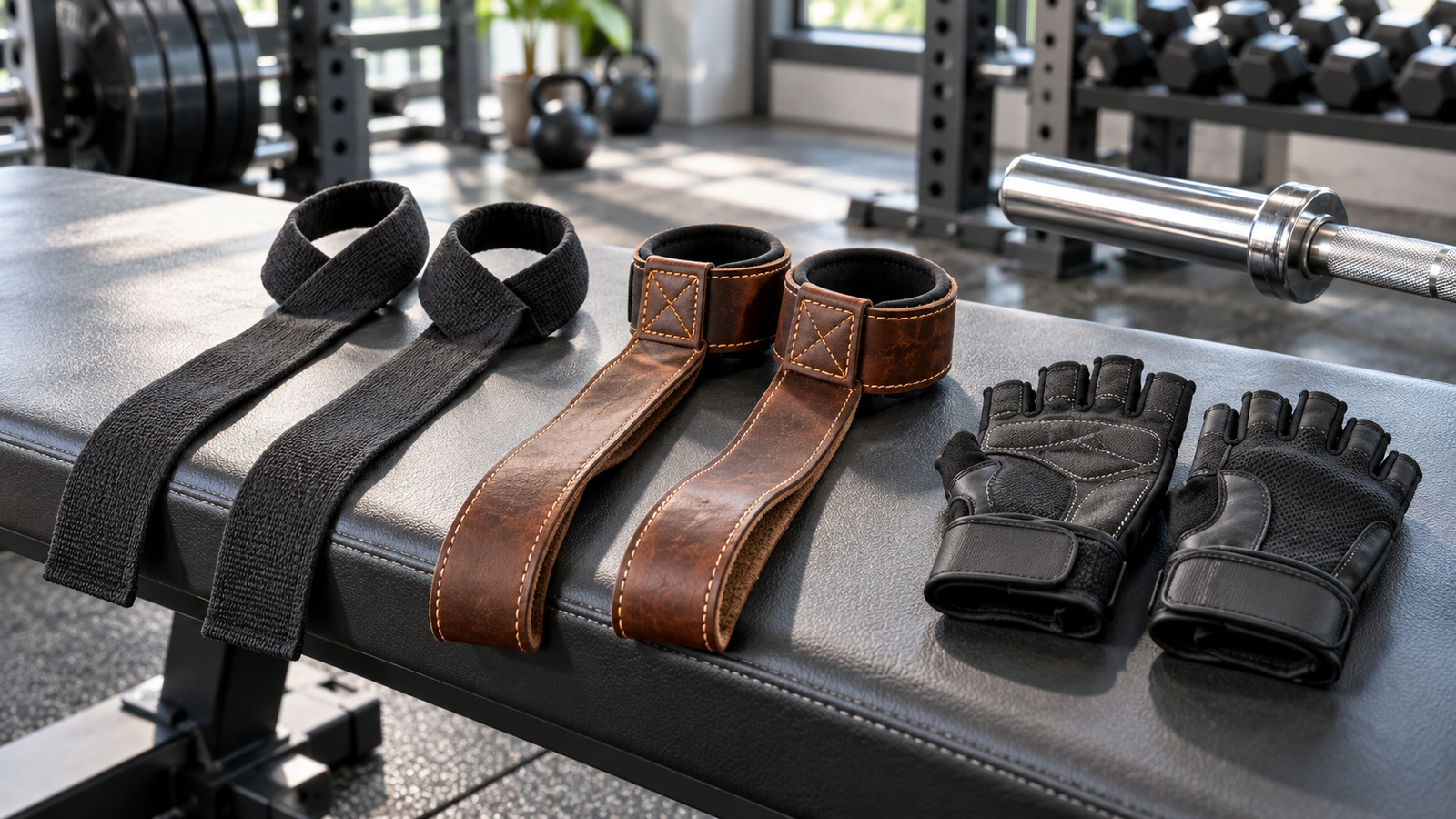
Training gloves or chalk may help if needed.
Check gym or home cleanliness if using chalk.
Calluses
Both push-up bars and pull-up bars can create hand pressure.
Pull-ups are more likely to develop calluses because your bodyweight hangs from the hands.
Moderate calluses are normal.
Keep them smooth to reduce tearing.
Which is better for core training?
Both involve the core.
Push-ups require trunk stability.
Pull-up bars can support:
- Knee raises.
- Leg raises.
- Hanging holds.
For direct core exercise variety, a pull-up bar usually offers more options.
Hanging knee raises
A basic hanging knee raise involves lifting the knees while hanging.
The main challenge is avoiding excessive swinging.
Start with controlled repetitions.
If grip fails first, reduce the set length.
Can push-up bars be used for L-sits?
Some sturdy designs can.
You place the hands on the bars and lift the body from the floor.
This requires significant:
- Core strength.
- Shoulder strength.
- Hip-flexor strength.
Check the bar stability before attempting.
Can pull-up bars be used for stretching?
Some people use hanging for shoulder and upper-body stretching.
This may feel comfortable.
However, it should not be treated as a guaranteed solution for back or shoulder pain.
Stop if you develop pain, numbness or instability.
Push-up bars vs parallettes
Parallettes are usually taller and longer than standard push-up bars.
They are designed for calisthenics movements such as:
- L-sits.
- Handstand progressions.
- Planche progressions.
Standard push-up bars are primarily for push-ups.
If advanced calisthenics is your goal, parallettes may be more versatile.
Pull-up bar vs power tower
A power tower usually includes:
- Pull-up station.
- Dip handles.
- Knee-raise supports.
It offers more exercises but takes up much more floor space.
A simple pull-up bar is more appropriate for compact home setups.
Push-up bars vs push-up board
A push-up board uses a flat base with multiple handle slots.
The slots are often labelled for different hand positions.
This can help beginners vary placement.
However, coloured muscle labels should not be interpreted too literally.
Changing hand position alters emphasis, but it does not isolate one muscle completely.
Push-up bars for wrist pain
A neutral handle may reduce wrist extension.
This can make push-ups more comfortable for some users.
However, if you have:
- Recent wrist injury.
- Persistent pain.
- Swelling.
- Numbness.
avoid forcing the movement and seek appropriate assessment.
Pull-up bars and shoulder pain
Pull-ups place significant load on the shoulders.
If overhead hanging is painful, do not simply keep training through it.
Alternative pulling exercises such as:
- Resistance-band rows.
- Dumbbell rows.
- Cable rows.
may be more comfortable while the problem is assessed.
Common push-up bar mistakes
Typical mistakes include placing the bars on a slippery surface, going too deep too quickly, using an excessively wide hand position, allowing the handles to tilt, and treating wrist comfort as permission to ignore shoulder pain.
The bars should make the movement more controlled, not less.
Common pull-up bar mistakes
Common problems include poor installation, excessive swinging, using a grip that is too wide, failing to inspect the bar before training and attempting advanced movements before basic pull-ups are controlled.
Installation safety is especially important.
How to compare push-up bars before buying
| Factor | What to check |
|---|---|
| Construction | Steel, reinforced plastic or other rigid material |
| Handle angle | Straight or angled |
| Height | Affects range of motion |
| Grip | Foam, rubber or textured surface |
| Base | Width and anti-slip protection |
| Load rating | Suitable for your bodyweight |
| Portability | Foldable or compact |
| Stability | No rocking or flexing |
How to compare pull-up bars before buying
| Factor | What to check |
|---|---|
| Installation | Doorway, pressure or wall-mounted |
| Dimensions | Compatible with your space |
| Load rating | Within manufacturer limits |
| Grip options | Overhand, underhand and neutral |
| Bar diameter | Comfortable for your hands |
| Padding | Foam or bare steel |
| Mounting hardware | Appropriate for the structure |
| Clearance | Enough head and leg room |
Which should a beginner buy first?
If you cannot yet perform basic push-ups comfortably, push-up bars can be a simple starting accessory.
If you can already perform push-ups but have no pulling movement in your routine, a pull-up bar may add more value.
The best first purchase is usually the one that adds a movement pattern you are currently missing.
Which is better for strength?
Both can build strength.
Push-up bars build pressing strength.
Pull-up bars build pulling strength.
Neither is universally better because they train different patterns.
Which is better for muscle development?
Again, they target different muscle groups.
Push-up bars mainly support chest, shoulder and triceps training.
Pull-up bars mainly support back and biceps training.
For balanced upper-body development, combining pushing and pulling is more useful than choosing only one category.
Which is better for weight loss?
Neither tool directly causes weight loss.
They can be part of a broader exercise programme.
Bodyweight training can contribute to energy expenditure, but fat loss depends primarily on overall energy balance.
Which is better for daily use?
Push-up bars are simple enough for frequent light use.
Pull-ups usually create more demanding upper-body fatigue.
Training frequency should depend on:
- Volume.
- Intensity.
- Recovery.
- Experience.
You do not need to train either movement every day.
A simple home routine with both
If you own both tools, a basic upper-body session could include pushing and pulling in the same workout.
For example, you might perform controlled push-ups, assisted or full pull-ups, a core exercise and lower-body movements such as squats or lunges.
You do not need a complicated routine.
Consistency and gradual progression matter more.
Progressing push-ups
You can make push-ups harder by:
- Increasing repetitions.
- Slowing the lowering phase.
- Pausing at the bottom.
- Elevating the feet.
- Increasing controlled range.
- Adding external resistance where appropriate.
Progressing pull-ups
You can progress by:
- Reducing band assistance.
- Increasing repetitions.
- Adding controlled pauses.
- Slowing the lowering phase.
- Adding external load once bodyweight repetitions are strong.
Progress gradually.
Frequently asked questions
Are push-up bars better than normal push-ups?
Not necessarily.
They provide a neutral wrist position and can increase range of motion, but floor push-ups remain effective.
Do push-up bars build more chest?
They can increase range of motion, which may make the exercise more challenging, but they do not automatically produce greater muscle growth.
Are pull-up bars suitable for beginners?
Yes, but many beginners need assistance before performing full pull-ups.
Can I build an upper body with only push-ups and pull-ups?
They provide strong pushing and pulling foundations, but a more complete programme can include additional movement patterns and lower-body training.
Which is better for small homes?
Push-up bars require less space and no installation.
A doorway pull-up bar can also work well if the frame is suitable.
Do I need a wall-mounted pull-up bar?
No.
A doorway model may be sufficient for controlled home training.
Can push-up bars reduce wrist strain?
They may feel more comfortable because they keep the wrist closer to neutral.
Can a pull-up bar damage a doorframe?
Yes, depending on the design, installation and frame construction.
Inspect the mounting area regularly.
Is it safe to swing on a doorway pull-up bar?
Not unless the product specifically supports dynamic movement.
Controlled pull-ups are more appropriate for most doorway bars.
Should I buy both?
If you want compact equipment for both pushing and pulling, owning both can create a useful basic upper-body setup.
Choosing between push-up bars and pull-up bars
Choose according to the movement your home workout needs.
A push-up bar is the simpler option if you want improved wrist positioning, extra push-up range and equipment that requires no installation.
A pull-up bar provides something much harder to reproduce on the floor: a true vertical pulling movement.
For someone who already performs regular floor push-ups comfortably, a pull-up bar may add more new capability to a home gym. For someone who finds floor push-ups uncomfortable at the wrists or wants a compact pressing accessory, push-up bars can be worthwhile.
If space and budget allow, the two tools complement each other well rather than competing for exactly the same role.
Physical Glow’s Top 5 Push-Up Bars and Home Bodyweight Training Tools in India comparison looks at several push-up-bar and pull-up-bar designs for compact home workouts. Use that comparison alongside this guide, then verify the current dimensions, grip construction, load rating, mounting requirements and floor or doorway compatibility for the exact equipment you plan to buy.