Shoe Fit After a Walk: Toe Space, Heel Slip and Hot Spots
Check shoe fit after actual walking, including toe room, heel security and friction points that cause blisters.
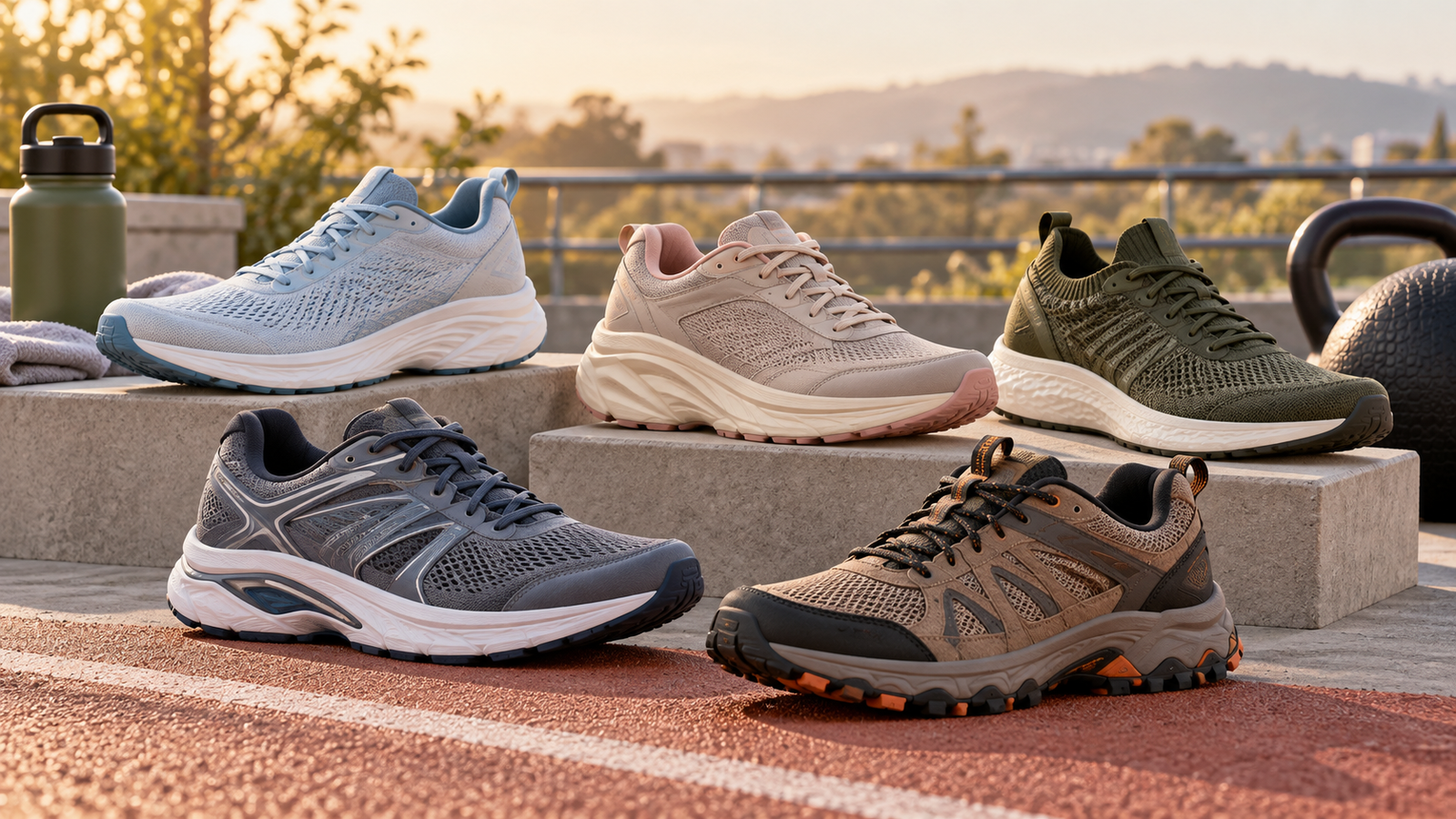
A pair of walking or running shoes can feel comfortable when you first try them on, yet become uncomfortable after just twenty minutes of walking.
Your toes may begin pressing against the front of the shoe. Your heel might move up and down with every step. You may notice rubbing near the little toe, pressure across the top of your foot or a warm spot developing beneath the arch.
These problems are often blamed on shoe quality, but even a well-made shoe can be uncomfortable when its shape, size or fit does not suit your foot.
The best way to evaluate footwear is not simply to stand in it for a few seconds. It is to observe how the shoe fits and behaves during movement.
Walking places repeated demands on the foot. As you move, your toes spread, your foot changes shape under load and different parts of the shoe interact with your skin.
A fit that appears acceptable while standing still may become problematic after several thousand steps.
This Physical Glow guide explains how to evaluate shoe fit after walking, identify insufficient toe space, assess heel slip, recognize friction hot spots and decide whether a shoe needs adjustment or replacement.
1. Why Shoe Fit Changes When You Walk
Your feet are not rigid structures.
During walking, they absorb forces, support body weight and help propel you forward.
Different phases of the walking cycle change how pressure is distributed beneath the foot.
As the foot bears weight, its shape and dimensions can change slightly. The toes also need room to move during push-off.
This explains why a shoe that seems comfortable while sitting may feel restrictive during a longer walk.
Three Important Fit Zones

Toe box
The front section of the shoe must provide adequate length, width and height for your toes.

Heel and rearfoot
The heel should feel secure without uncomfortable rubbing, pinching or excessive movement.

Midfoot and lacing
The shoe should hold your foot comfortably without excessive pressure across the arch or top of the foot.
A shoe must balance all three zones.
For example, buying a larger shoe may create additional toe space but also introduce heel movement.
Similarly, tightening the laces may reduce heel slip while creating uncomfortable pressure over the top of the foot.
Good fit requires a balance rather than maximizing tightness or looseness.
2. How Much Toe Space Should Walking Shoes Have?
Adequate toe space is essential because your toes move and spread during walking.
A common fitting guideline is to leave approximately a thumb’s width between the longest toe and the front of the shoe.
This is a useful starting point, not a precise measurement suitable for every person or shoe.
Why the Longest Toe Matters
Your big toe is not necessarily your longest toe.
For some people, the second toe extends farther.
Measure clearance from whichever toe is longest.
Signs of Insufficient Length
- Toes repeatedly touch the shoe’s front.
- Toenails feel pressured.
- Discomfort increases when walking downhill.
- Toes begin curling to fit.
- The front of the foot becomes sore after walking.
Can Too Much Toe Space Be a Problem?
Yes.
Excessive length may allow the foot to slide, especially if the shoe does not secure the midfoot properly.
This can increase rubbing and reduce control.
Check Toe Width and Height Too
A shoe can have enough length but still squeeze the toes sideways.
The toe box should accommodate the natural shape of your forefoot.
If your toes feel compressed together, a wider or differently shaped shoe may be more appropriate.
3. Why Your Toes Hurt After a Walk
Toe discomfort can originate from several fit problems.
| Symptom | Possible shoe-related explanation |
|---|---|
| Toes press against the front | Insufficient length or forward sliding |
| Little toe rubs against the side | Toe box may be too narrow |
| Toenails become sore | Front pressure or downward toe compression |
| Toes feel cramped | Insufficient width or height |
| Tingling develops | Possible pressure on nerves or tissues |
| Forefoot feels squeezed | Tight upper or unsuitable shoe shape |
These symptoms are not enough to diagnose the cause.
For example, toe tingling can also arise from medical conditions unrelated to footwear.
What Should You Check First?
Remove the shoe and inspect the foot.
Identify the exact location of the discomfort.
Then consider whether the shoe has adequate room in that area.
If the toes are clearly compressed, simply waiting for the shoe to stretch may not be appropriate.
Do Running Shoes Need More Toe Space?
Running often creates repetitive forward and vertical movement, so suitable toe clearance is important.
However, the correct amount depends on the person’s foot, shoe design and intended activity.
Avoid assuming that every running shoe must be purchased exactly one size larger.
4. What Is Heel Slip?
Heel slip describes movement of the heel relative to the back of the shoe.
Some movement can occur during walking, especially in certain footwear designs.
But excessive heel lift can cause instability, friction and discomfort.
How It Feels
You might notice:
- The heel rising inside the shoe.
- Repeated rubbing against the heel collar.
- A sensation that the shoe is coming off.
- The need to grip with your toes.
- Blisters near the back of the heel.
Is All Heel Movement Bad?
Not necessarily.
A small amount of movement may occur in some shoes.
The concern is persistent or substantial movement that affects comfort or control.
What Causes Heel Slip?
Common factors include:
- Shoe length is excessive.
- Heel shape does not match the shoe.
- Laces are insufficiently secured.
- Midfoot fit is loose.
- Socks affect friction.
- The shoe’s rear construction does not suit your foot.
Importantly, heel slip does not always mean you need a smaller size.
A smaller shoe might reduce heel movement but compress your toes.
5. How to Check Heel Slip During Walking
Heel security is best evaluated during movement.
Step 1: Wear Your Normal Walking Socks
Sock thickness influences how the shoe fits.
Use the type of socks you intend to wear regularly.
Step 2: Lace the Shoes Normally
The shoe should feel secure but not painfully tight.
Step 3: Walk on a Safe, Level Surface
Take several minutes to assess the initial fit.
Notice whether the heel lifts excessively.
Step 4: Change Your Walking Pace Slightly
Walk at your usual comfortable pace, then a little faster if safe.
Observe whether heel movement increases.
Step 5: Assess the Result
Ask:
- Does my heel stay reasonably secure?
- Am I experiencing friction?
- Do I feel the shoe moving independently of my foot?
- Am I tightening the laces excessively to compensate?
If the heel repeatedly slips even after appropriate lacing, the shoe’s shape may not suit your foot.
6. Can a Runner’s Loop Reduce Heel Slip?
Some lace-up shoes have an additional eyelet near the ankle.
This can be used for a lacing technique often called a runner’s loop or heel lock.
The technique may help secure the rearfoot by changing lace tension around the upper part of the shoe.
Basic Principle
A small loop is created on each side using the final eyelets.
The lace ends are passed through the opposite loops and tightened comfortably before tying.
When It May Help
- Mild heel movement.
- A shoe that otherwise fits well.
- Slightly loose rearfoot hold.
- A need for more controlled upper-foot tension.
When It Will Not Fix the Problem
A runner’s loop cannot reliably correct:
- A substantially oversized shoe.
- A heel shape that is fundamentally unsuitable.
- A badly worn heel counter.
- Serious forefoot compression.
- A damaged shoe.
Important Caution
Do not tighten the laces so much that they create pain, numbness or excessive pressure across the ankle.
A more secure heel should not come at the expense of circulation or comfort.
7. What Are Hot Spots on Your Feet?
A hot spot is an area of localized rubbing or irritation that may develop before a blister forms.
It can feel warm, tender, sensitive or slightly painful.
Hot spots commonly occur during repeated walking or running when friction and pressure affect the skin.
Common Locations
Areas where walking-shoe friction may occurIllustrative foot diagram showing potential friction zones. Symptoms can have causes other than shoe fit.
Why They Matter
A hot spot can be an early indication that friction is becoming excessive.
Ignoring it during a long walk may allow skin irritation to progress to a blister.
What Should You Do?
Stop when it is safe.
Check the affected area, socks and shoe.
Look for:
- Folded or wrinkled socks.
- Moisture.
- Debris inside the shoe.
- Excessive heel movement.
- Tight areas pressing against the foot.
Correcting the source of friction is more useful than repeatedly covering the same area without addressing the cause.
8. Why Do Shoes Cause Blisters?
Blisters commonly develop when repeated frictional forces affect the skin.
The risk can increase when the foot moves excessively inside the shoe or when a particular area repeatedly rubs against the upper.
Moisture can also influence skin friction.
Common Contributing Factors
- Poor shoe fit.
- Heel slip.
- Tight toe boxes.
- Damp socks.
- Excessive walking before adapting to new footwear.
- Internal seams.
- Rough shoe materials.
- Repeated pressure at a specific location.
Does a Blister Mean the Shoe Is Too Small?
Not always.
A shoe that is too large can also cause blisters because of excessive movement.
The location of the blister can provide clues about the fit problem.
Should You Continue Walking With a Hot Spot?
If possible, address the friction before continuing.
Persistent rubbing can worsen the injury.
For people with diabetes, neuropathy, poor circulation or reduced foot sensation, even relatively minor foot injuries deserve particular caution and may require prompt professional care.
9. Can Socks Improve Shoe Fit?
Socks affect how the shoe interacts with your foot.
The right sock cannot fix a fundamentally unsuitable shoe, but it can improve comfort.
Sock Thickness
Thicker socks occupy more space inside the shoe.
They may reduce minor looseness but can worsen pressure if the shoe is already tight.
Moisture Management
Socks designed to manage moisture may help keep feet more comfortable during prolonged activity.
However, no material guarantees that blisters will be prevented.
Seams
Prominent seams near the toes may create pressure or friction for some wearers.
Sock Fit
Wrinkled or oversized socks can create additional friction points.
Choose socks that remain smooth against the foot.
Should You Wear Cotton Socks?
Cotton socks may be comfortable for short everyday use.
For prolonged sweaty activity, some people prefer moisture-managing synthetic or wool-blend socks.
The best option depends on comfort, climate and individual needs.
10. Why Shoes Feel Tighter Later in the Day
Many people notice that shoes feel more restrictive after several hours of activity.
Foot dimensions can change throughout the day due to weight-bearing, fluid accumulation and other factors.
This is why trying shoes later in the day is often recommended.
What Changes?
You may experience:
- Increased forefoot tightness.
- Pressure across the toes.
- Greater discomfort along the sides.
- A tighter feeling around the instep.
Does Everyone’s Foot Swell the Same Amount?
No.
The degree of change depends on several factors, including activity, health and individual physiology.
When Should You Try Shoes?
Trying shoes when your feet are closer to their usual active-day size can help.
For many people, afternoon or evening fitting is practical.
Important Health Distinction
Mild changes in foot size after activity are different from unexplained significant swelling.
Sudden, painful or one-sided swelling requires medical attention rather than a shoe-size adjustment.
11. How to Evaluate Shoes After a 20-Minute Walk
A short wear test can reveal problems that are not noticeable during a brief fitting.
If a retailer allows it, walk indoors on a clean, safe surface while evaluating comfort.
For shoes you already own, use a familiar and appropriate walking route.
Twenty-minute shoe-fit assessment
- Minutes 0–5: Initial comfortNotice toe clearance, heel security and pressure across the top of the foot.
- Minutes 5–10: Walking rhythmAssess whether your foot moves excessively inside the shoe.
- Minutes 10–15: Emerging discomfortLook for warmth, rubbing, numbness or pressure.
- Minutes 15–20: Overall evaluationConsider whether comfort has remained stable or deteriorated.
- After the walk: Inspect your feetCheck for redness, tenderness, hot spots or other signs of friction.
Twenty minutes is an illustrative trial period, not a validated test that guarantees long-term footwear suitability. Stop immediately if you develop pain, numbness or concerning symptoms.
What Is a Good Result?
Ideally, the shoes remain comfortable throughout the walk.
You should not need to repeatedly adjust your stride to avoid discomfort.
What Is a Warning Sign?
A developing hot spot, persistent toe pressure or worsening heel rubbing suggests the fit or shoe design needs reassessment.
Do not assume painful footwear will automatically become comfortable after several weeks.
12. Shoe Width: Why Length Alone Is Not Enough
Two shoes with identical labelled sizes may have different shapes.
One may have a narrow forefoot and rounded heel.
Another may offer additional toe room but a relatively broad rearfoot.
Signs of a Shoe That Is Too Narrow
- Pressure against the little toe.
- Toes feel compressed.
- The upper bulges significantly around the forefoot.
- Discomfort develops along the sides.
- The foot feels squeezed even when length is adequate.
Signs of Excessive Width
- The foot shifts sideways.
- Laces must be tightened excessively.
- The upper folds significantly.
- Heel or midfoot security is poor.
Should You Buy a Larger Size for More Width?
Sometimes a longer size may feel more comfortable, but it can introduce heel slip and excessive front clearance.
If width is the main issue, consider a wider fit or a shoe with a more suitable shape.
Some manufacturers offer multiple width options.
However, width designations are not completely uniform across brands.
13. How to Check Midfoot Fit
The midfoot is the area between the forefoot and heel.
It plays an important role in how securely a shoe holds your foot.
Too Tight
You may notice:
- Pressure from the laces.
- Discomfort over the top of the foot.
- Tingling.
- A squeezing sensation around the arch.
- Red marks that remain uncomfortable.
Too Loose
You may experience:
- Foot movement within the shoe.
- Reduced stability.
- Heel slip.
- Repeated adjustment of the laces.
What Can Lacing Fix?
Lacing can help adjust pressure and security within a limited range.
However, it cannot turn a fundamentally unsuitable shoe shape into a perfect fit.
What About Elastic Laces?
Elastic laces can be convenient, but they may change how securely a shoe holds the foot.
Their suitability depends on the shoe, intended activity and user’s needs.
14. Walking Shoes vs Running Shoes: Does Fit Differ?
Walking and running involve different movement patterns and impact conditions.
However, many well-fitting running shoes can also be comfortable for walking.
Walking Shoes
Common priorities include:
- Comfortable everyday fit.
- Flexibility appropriate to the walking movement.
- Stable heel and midfoot hold.
- Suitable cushioning.
- Durable outsole.
Running Shoes
Running shoes may be designed around:
- Repetitive running impact.
- Specific cushioning systems.
- Heel-to-toe geometry.
- Running gait characteristics.
- Weight and responsiveness.
Is More Cushioning Always Better?
No.
A softer shoe is not necessarily more comfortable or appropriate for every user.
Excessive softness may feel unstable to some people.
Likewise, a firmer shoe is not automatically more supportive.
Does Shoe Fit Change Between Walking and Running?
A shoe should accommodate the movements of the intended activity.
If you plan to run regularly, test it with appropriate running movement when possible.
Do not rely solely on a standing fit check.
15. Can Insoles Correct Poor Shoe Fit?
Insoles can change how a shoe supports and accommodates the foot.
However, they also occupy space inside the shoe.
Potential Benefits
Depending on the product and individual needs, insoles may change:
- Cushioning.
- Pressure distribution.
- Arch contact.
- Heel positioning.
- Perceived comfort.
Potential Problems
An insole may make an already tight shoe more restrictive.
It can reduce vertical toe space and alter heel position.
Can Insoles Fix a Shoe That Is Too Big?
They may reduce some excess volume, but they do not reliably correct every sizing problem.
A shoe that is significantly too long or wide may still fit poorly.
What About Orthotic Insoles?
People with specific foot conditions may benefit from professionally recommended orthoses.
A generic insole should not be assumed to treat foot pain or biomechanical problems.
16. When Should You Replace Shoes That Cause Discomfort?
Not every fit issue requires replacement.
Some problems may be addressed by adjusting laces, socks or the intended use of the shoe.
However, certain problems indicate a more fundamental mismatch.
| Problem | Possible adjustment | When replacement may be better |
|---|---|---|
| Mild heel movement | Check lacing and sock fit | Persistent slip despite proper adjustment |
| Toes hit the front | Check sizing and foot positioning | Insufficient shoe length |
| Little toe pressure | Consider a wider fit | Persistent forefoot compression |
| Mild pressure from laces | Adjust lacing technique | Upper shape remains painful |
| Hot spots | Identify friction source | Repeated rubbing despite adjustments |
| Uneven or worn outsole | Inspect condition | Significant wear affecting comfort or traction |
| Damaged heel counter | Limited adjustment possible | Heel structure is compromised |
What About Breaking Shoes In?
Some shoe materials become more flexible with wear.
However, breaking in should not be used as an excuse to tolerate significant pain.
A shoe that compresses your toes or causes repeated blisters may not be an appropriate choice.
17. An Interactive Shoe-Fit Self-Check
Use this checklist after trying a shoe or completing a short walk.
Post-walk fit checklist
0/10There’s comfortable space ahead of my longest toe.My toes are not squeezed together.The shoe does not create painful pressure across the forefoot.My heel stays reasonably secure while walking.I do not have to overtighten the laces.The shoe does not rub repeatedly at one location.I have not developed hot spots or blisters.My feet do not become numb or tingly.The shoes remain comfortable at my normal walking pace.I tested them with the socks I normally wear.
Review the unchecked points before deciding whether the shoes suit your feet. Pain, numbness and repeated rubbing should not be ignored.
Reset checklistThis self-check cannot diagnose foot conditions or guarantee injury prevention.
18. How to Choose Walking and Running Shoes Online
Buying footwear online introduces additional uncertainty because you cannot physically test the fit before purchase.
Check the Brand’s Size Guide
Do not assume your size is identical across every manufacturer.
Where available, use the brand’s foot-length measurements.
Measure Both Feet
Feet can differ slightly in size.
Use the larger foot when assessing required length, while also considering width and overall fit.
Read Width Information
If you regularly experience pressure around the little toe or forefoot, width may be especially important.
Review the Return Policy
Confirm whether the retailer allows size exchanges and under what conditions.
Avoid Choosing Only by Customer Ratings
A shoe with thousands of positive reviews may still be unsuitable for your foot shape.
Ratings can provide information about durability and general comfort, but they do not replace individual fit.
Consider Intended Activity
A shoe primarily designed for casual walking may not meet your needs for regular running.
Choose according to the activities you actually perform.
19. Comparing Popular Walking and Running Shoe Options
Physical Glow’s Best Walking and Running Shoes in India: Top 5 Models guide compares footwear options from brands such as ASICS, adidas, Nike and Skechers.
These products serve different combinations of walking, everyday use and running.
However, a product’s popularity does not guarantee fit.
When comparing shoes, prioritize the following:
| Factor | Why it matters |
|---|---|
| Length | Prevents excessive toe pressure |
| Toe-box width | Allows comfortable forefoot positioning |
| Heel fit | Helps reduce unwanted movement |
| Midfoot hold | Supports secure movement |
| Cushioning | Influences perceived underfoot comfort |
| Outsole | Affects traction and durability |
| Upper construction | Influences breathability and local pressure |
| Shoe weight | May affect personal comfort |
| Intended use | Walking, running or casual activity |
| Return policy | Important when buying online |
Should You Choose the Most Expensive Shoe?
Not automatically.
A more expensive model may offer advanced materials or construction features, but a suitable fit is more important than price alone.
An affordable shoe that fits comfortably may be a better purchase than a premium model that repeatedly causes blisters.
20. Common Shoe-Fitting Mistakes
Mistake 1: Choosing Shoes That Fit Exactly Against the Toes
Your toes need adequate room during movement.
Mistake 2: Buying a Bigger Size to Fix a Narrow Toe Box
Extra length may create heel slip without solving the underlying shape mismatch.
Mistake 3: Ignoring Heel Movement
Repeated heel slip can contribute to friction and discomfort.
Mistake 4: Assuming Blisters Are Normal During Break-In
Some materials soften with use, but repeated blistering is a warning sign.
Mistake 5: Testing Shoes Only While Sitting
Weight-bearing and walking can reveal different fit problems.
Mistake 6: Trying Shoes Without Normal Socks
Sock thickness affects fit.
Mistake 7: Ignoring Foot Changes During the Day
Shoes may feel tighter after prolonged activity.
Mistake 8: Overtightening Laces to Correct Poor Fit
Excessive pressure can create new discomfort.
Mistake 9: Choosing by Appearance Alone
A stylish shoe may not suit your foot shape or intended activity.
Mistake 10: Ignoring Numbness or Persistent Pain
These symptoms may require footwear changes or medical evaluation.
21. Frequently Asked Questions
How much room should there be in the toe box?
Approximately a thumb’s width ahead of the longest toe is a commonly used starting guideline. The appropriate fit depends on your foot and shoe design.
Should my toes touch the front of walking shoes?
Your toes should not repeatedly strike or feel compressed against the front during normal walking.
Is heel slip normal in new shoes?
A small amount of movement can occur, but substantial or repeated heel slip that creates rubbing or instability is a concern.
Can heel-lock lacing stop heel slip?
It may help mild heel movement in compatible lace-up shoes, but it cannot fix a fundamentally incorrect shoe size or shape.
Why do my feet hurt after twenty minutes of walking?
Possible causes include poor shoe fit, localized pressure, friction, overuse or an underlying foot condition. Persistent symptoms deserve evaluation.
Why does my little toe hurt in new shoes?
The toe box may be too narrow or shaped differently from your forefoot.
Are wide shoes better for everyone?
No. The width should suit your individual foot.
Should walking shoes fit tightly?
They should feel secure but not painfully tight or restrictive.
Can shoes be too loose?
Yes. Excessive movement can affect stability and increase friction.
Why do my shoes feel tighter in the evening?
Foot dimensions may change with activity and fluid accumulation throughout the day.
Should I buy shoes one size bigger for running?
Not automatically. Choose according to measured foot dimensions, toe clearance and actual running fit.
Do thick socks prevent blisters?
They may change cushioning and fit, but they do not guarantee blister prevention. Excess thickness can worsen a tight shoe.
What is a foot hot spot?
It is an area of localized irritation or rubbing that may precede a blister.
Should I continue walking when a hot spot develops?
Address the friction as soon as it is safe. Continuing may worsen skin injury.
Can insoles make shoes fit better?
Sometimes, but they can also reduce internal space and create pressure.
Do expensive shoes fit better?
Not necessarily. Fit depends on individual foot shape and shoe construction.
Can I wear running shoes for walking?
Many running shoes are suitable for walking if they fit comfortably and meet your needs.
How long does it take to break in shoes?
It varies by material and design. Shoes should not require prolonged painful wear to become usable.
Can a shoe cause toenail problems?
Repeated pressure or impact against the toe box can contribute to toenail discomfort and injury.
When should I consult a podiatrist or doctor?
Seek professional advice for persistent pain, numbness, repeated blisters, unexplained swelling or other ongoing foot symptoms.
22. Final Verdict: Judge Shoe Fit After Movement, Not Just in the Store
The best shoe is not necessarily the softest, most expensive or highest-rated model.
It is the shoe that accommodates your foot comfortably during the activity you intend to perform.
For walking and running footwear, pay particular attention to three areas.
First, ensure that your toes have enough space in both length and width.
Second, check that your heel remains reasonably secure without requiring excessive lace tension.
Third, watch for developing hot spots, rubbing and discomfort during movement.
A short walking trial can reveal fit problems that are easy to miss while standing still.
If a shoe repeatedly causes toe pressure, heel slip, numbness or blisters, do not assume that it will eventually become suitable through extended painful wear.
Adjustments such as socks or lacing may help minor fit problems, but they cannot correct every mismatch.
The right pair of shoes should remain comfortable as you walk—not just when you first put them on.
Editorial References and Further Reading
- American Podiatric Medical Association — Footwear selection, foot health and fitting guidance.
- American Academy of Orthopaedic Surgeons — OrthoInfo — Foot and ankle conditions, footwear considerations and overuse injuries.
- NHS — Blisters — Blister causes, prevention and care.
- Centers for Disease Control and Prevention — Diabetes — Foot-care considerations for people with diabetes.
Physical Glow Editorial Note: This article provides general footwear and fitness education. Shoe fit varies with foot anatomy, activity and product design. Persistent pain, numbness, wounds or significant swelling should be assessed by an appropriate healthcare professional. People with diabetes, neuropathy or circulation problems may require individualized footwear guidance.