Yoga Mat Thickness Explained: Choosing 4mm or 6mm for Home Practice
Compare 4mm and 6mm yoga mats for floor feel, balance, portability and cleaning, with a clear guide to TPE, EVA and PVC product labels.
Choosing a yoga mat might seem simple until you start comparing different thicknesses, materials and designs.
Should you buy a 4mm or 6mm yoga mat? Is a thicker mat always more comfortable? Does a 6mm yoga mat provide better cushioning for your knees? And which thickness works best for beginners practising yoga at home?
These questions matter because your yoga mat influences how comfortably and confidently you perform different movements.
The best yoga mat is not necessarily the thickest one. It is the mat that provides a suitable balance of cushioning, stability, grip and comfort for your practice.
This guide explains the differences between 4mm and 6mm yoga mats, how materials affect performance and what to consider before buying a yoga mat in India.
Why Does Yoga Mat Thickness Matter?
Yoga mats create a surface between your body and the floor.
Depending on the design, a mat can provide cushioning, traction and a more comfortable space for stretching, standing poses and floor exercises.
Thickness is one important characteristic because it affects how much material separates your body from the ground.
A thinner mat may provide a firmer floor feel, while a thicker mat may offer additional cushioning.
However, thickness alone does not determine comfort or performance.
Other important factors include:
- Material density
- Surface texture
- Grip
- Compression under body weight
- Overall dimensions
- Floor surface
- Durability
- Weight and portability
For example, a dense 4mm mat may feel firmer and more supportive than a very soft 6mm mat.
Similarly, a high-density 6mm mat may provide better stability than a poorly constructed thinner alternative.
This is why comparing yoga mats only by millimetres can be misleading.
4mm vs 6mm Yoga Mat: Key Differences
Both thicknesses are commonly used for yoga and general exercise.
The main distinction is the amount of material between your body and the floor.
| Feature | 4mm yoga mat | 6mm yoga mat |
|---|---|---|
| Thickness | 4 millimetres | 6 millimetres |
| Floor feel | Generally firmer | Generally more cushioned |
| Balance poses | May provide a more direct floor feel | Depends more on density and compression |
| Kneeling comfort | Less material beneath joints | More material beneath joints |
| Portability | Often easier to pack | Usually slightly bulkier |
| Weight | Depends on material and size | Depends on material and size |
| Home practice | Suitable for many routines | Suitable for many routines |
| Best choice | Firmness and portability preference | Additional cushioning preference |
A 6mm mat is 50% thicker than a 4mm mat, but that does not mean it provides 50% more comfort or protection.
Cushioning depends on the actual construction and how the material behaves under pressure.
What Is a 4mm Yoga Mat?
A 4mm yoga mat is a relatively thin exercise surface commonly used for yoga, stretching and certain floor-based movements.
Its main attraction is the balance between portability and a relatively firm surface.
Advantages of a 4mm Yoga Mat
1. Firmer contact with the floor
A thinner mat may allow users to feel the floor more directly.
Some people prefer this sensation when practising standing yoga poses.
2. Easier portability
When two mats use similar materials and dimensions, the 4mm option will generally have less material and may be lighter and easier to roll.
This can be useful for people attending yoga classes or travelling with their mats.
3. Less storage bulk
A thinner mat usually forms a smaller roll, making storage easier in compact homes.
4. Suitable for many standing poses
Users who prefer a firm surface may find a thinner mat comfortable during balance-focused practice.
Disadvantages of a 4mm Yoga Mat
The main limitation is reduced cushioning compared with a thicker mat of otherwise similar construction.
Kneeling positions, prolonged seated poses or floor exercises may feel uncomfortable on hard surfaces.
However, the experience depends heavily on the user’s body, the floor and the mat’s density.
Who Should Consider a 4mm Yoga Mat?
A 4mm mat may be worth considering if you:
- Prefer a firm surface.
- Regularly practise standing yoga poses.
- Carry your mat to classes.
- Have limited storage space.
- Want a compact mat for travel.
- Do not require substantial additional cushioning.
It is not automatically the best option for every beginner or experienced yoga practitioner.
What Is a 6mm Yoga Mat?
A 6mm yoga mat provides two additional millimetres of material compared with a 4mm mat.
This may offer a more cushioned feel, depending on the material and density.
Many people choose 6mm mats for general home yoga, stretching and floor exercises.
Advantages of a 6mm Yoga Mat
1. Additional cushioning potential
A thicker mat can provide more material beneath the knees, elbows and other contact points.
This may improve comfort during floor-based positions.
2. Suitable for mixed routines
A 6mm mat may be useful for someone combining yoga, stretching and light floor exercises.
3. Comfortable for longer floor sessions
People who spend considerable time sitting, kneeling or lying on their mat may prefer additional padding.
4. Convenient for home practice
If you rarely carry your mat outside the house, the slightly larger rolled size may not matter.
Disadvantages of a 6mm Yoga Mat
A thicker mat can feel less stable when the material is very soft or compresses significantly.
During balancing poses, excessive compression may make it harder to maintain a consistent contact surface.
A 6mm mat can also be bulkier than a comparable 4mm option.
Who Should Consider a 6mm Yoga Mat?
A 6mm mat may suit users who:
- Practise yoga mainly at home.
- Prefer extra cushioning.
- Perform frequent floor-based stretches.
- Combine yoga with light exercise.
- Use their mat on hard flooring.
- Do not prioritise maximum portability.
However, material density and grip remain important.
Which Yoga Mat Is Better for Beginners?
Beginners can use either thickness.
There is no universal rule that beginners must choose a 6mm mat.
The better choice depends on the movements you plan to practise.
Choose 4mm When You Prefer Stability
If your sessions involve standing poses and balance-focused movements, a firmer mat may feel more predictable.
However, surface grip and mat density are just as important as thickness.
Choose 6mm When You Prefer Cushioning
If you spend more time kneeling, stretching or performing seated exercises, a thicker mat may provide additional comfort.
The mat should still feel stable when you shift your body weight.
For general home yoga, a well-constructed 6mm mat is a practical starting option for many beginners, provided it offers adequate stability and traction.
Someone who strongly prefers a firm floor feel may be happier with 4mm.
Which Thickness Is Better for Knee Comfort?
Yoga poses that place weight on the knees may feel uncomfortable on a hard floor.
A thicker mat may reduce the sensation of pressure by providing additional material between the knees and the floor.
However, there is an important limitation.
Not all 6mm mats provide the same cushioning.
A dense mat and a soft, easily compressed mat behave differently.
A softer mat may initially feel comfortable but compress significantly under pressure.
For additional knee comfort, consider:
- Mat thickness
- Density and compression
- Floor hardness
- Duration of the pose
- Individual comfort
- Whether extra knee support is appropriate
A folded blanket or dedicated yoga knee pad may provide targeted cushioning when needed.
Persistent knee pain should not be managed solely by buying a thicker yoga mat. Seek appropriate professional guidance if discomfort continues.
Which Yoga Mat Is Better for Balance Poses?
Balance poses require a stable contact surface.
Examples include tree pose, warrior variations and other standing movements.
A thinner mat may provide a firmer floor feel because less material separates the feet from the ground.
However, a 6mm mat can also provide excellent stability if it is sufficiently dense and does not compress excessively.
Therefore, thickness alone cannot determine balance performance.
What Matters More Than Thickness?
Surface grip: The mat should provide reliable traction under your hands and feet.
Density: Excessive compression may create an unstable feeling.
Floor contact: The mat should lie flat without sliding or bunching.
Material construction: Different materials may respond differently under pressure.
User preference: Some people prefer more cushioning, while others prefer direct floor contact.
If balance is a priority, examine these factors alongside thickness.
TPE vs EVA vs PVC Yoga Mats
Yoga mat materials influence weight, flexibility, texture, durability and cleaning requirements.
Three common material categories are TPE, EVA and PVC.
1. TPE Yoga Mats
TPE stands for thermoplastic elastomer.
It describes a broad group of materials that can be formulated with different flexibility and cushioning properties.
TPE yoga mats are commonly marketed as lightweight and flexible.
However, characteristics vary across manufacturers.
A mat labelled TPE is not automatically more durable, safer or more environmentally friendly than every other mat.
Check actual specifications and substantiated manufacturer claims.
2. EVA Yoga Mats
EVA stands for ethylene-vinyl acetate.
EVA foam is widely used in exercise equipment and cushioning products.
Depending on its density and construction, EVA may provide a soft, lightweight feel.
Some EVA yoga mats compress more noticeably than others.
Therefore, consider the mat’s density and intended use rather than assuming every EVA mat performs identically.
3. PVC Yoga Mats
PVC stands for polyvinyl chloride.
PVC is used in many yoga mats because it can be manufactured with different textures, densities and flexibility characteristics.
The grip, weight and durability depend on the formulation and construction.
A PVC mat is not automatically better or worse for home yoga simply because of its material label.
Material Comparison
| Material | Common characteristics | What to verify |
|---|---|---|
| TPE | Flexible, available in various textures | Density, grip and care instructions |
| EVA | Often lightweight and cushioned | Compression and durability |
| PVC | Available in many surface finishes | Grip, weight and construction |
The material name is only one part of the buying decision.
Is a Non-Slip Yoga Mat More Important Than Thickness?
For many yoga practices, traction is one of the most important characteristics.
A mat that slides across the floor or allows your hands to slip can interfere with controlled movement.
However, non-slip is a broad marketing description rather than a guarantee of identical performance in every condition.
Grip may change depending on:
- Surface texture
- Moisture and sweat
- Floor material
- Dust and residue
- Cleaning products
- Wear over time
A yoga mat that performs adequately during a dry stretching session may feel different during a more demanding, sweat-intensive routine.
Check manufacturer guidance and credible product information before purchasing.
Avoid assuming that thicker mats automatically provide better grip.
Yoga Mat Size: Why Length and Width Matter
Thickness often receives the most attention, but mat dimensions are equally important.
A mat that is too short or narrow may limit comfortable positioning.
Before buying, consider your height and the space required for your preferred poses.
Length
The mat should comfortably accommodate your body during lying and stretching positions.
Taller users may benefit from longer mats.
Width
A sufficiently wide mat provides more room for movement.
This may matter during side stretches, floor exercises and transitions between poses.
Available Floor Space
Measure the space where you normally practise.
Ensure there is enough clearance around the mat for arm and leg movements.
Weight
If you attend classes or travel frequently, compare the actual listed weight.
A thicker mat may be heavier, but a denser 4mm mat can weigh more than a lightweight 6mm mat.
Do not estimate portability from thickness alone.
Comparing Popular 4mm and 6mm Yoga Mat Formats in India
Physical Glow readers may encounter several yoga mat options with different materials and thicknesses.
The following products illustrate the main buying categories.
1. Boldfit EVA Yoga Mat 4mm Green
A 4mm EVA format worth considering for buyers who prefer a relatively thin mat.
Check the current listing for dimensions, density and included accessories.
2. Lifelong LLYM92 EVA Yoga Mat 4mm Grey
Another 4mm EVA option.
Compare its listed dimensions, surface texture and construction against other mats rather than assuming identical performance from the shared thickness.
3. Cult EVA Yoga Mat 6mm Grey With Strap
A 6mm EVA mat with a carrying strap specified in the product name.
It may appeal to buyers seeking additional cushioning while retaining carrying convenience.
Confirm the precise dimensions and included accessories on the current listing.
4. Boldfit TPE Yoga Mat 6mm Black Grey
A 6mm TPE option.
Its material and thickness make it a useful comparison against similarly sized EVA mats.
Actual grip and durability should be assessed using reliable product information.
5. Amazon Basics PVC Yoga Mat 6mm Black
A 6mm PVC format that offers another material choice.
Compare manufacturer specifications, mat dimensions, care directions and current seller information before purchasing.
These examples are product-format comparisons, not independent hands-on performance rankings.
Physical Glow does not claim to have tested their grip, cushioning or durability.
How to Choose a Yoga Mat for Different Activities
For Traditional Yoga Practice
Choose a mat that provides comfortable floor contact and sufficient traction.
Both 4mm and 6mm options may be suitable.
For Stretching
If your routine contains frequent seated and floor-based stretches, additional cushioning may feel more comfortable.
A 6mm mat may be worth considering.
For Balance-Focused Yoga
A dense mat with reliable grip may be preferable to a very soft surface.
A 4mm option may suit those who prefer firmer floor contact.
For Home Workouts
A yoga mat may be useful for floor-based exercise, but it is not a substitute for a specialised gym mat when equipment, impact or heavy loading requires additional protection.
For Travel
A thinner, lighter mat may be more convenient to carry.
Compare the actual rolled dimensions and weight.
For Small Apartments
Choose a mat that fits your available space and can be stored conveniently.
A 4mm mat may form a more compact roll, all else being equal.
How to Clean and Maintain Your Yoga Mat
Regular cleaning can help remove sweat, dust and surface residue.
However, different materials require different cleaning methods.
Step 1: Check the Manufacturer’s Instructions
Before using soap, sprays or disinfectants, confirm what cleaning products are suitable.
Harsh cleaners may damage certain mat materials.
Step 2: Clean the Surface Gently
When permitted by the manufacturer, wipe the surface using an appropriate soft cloth and recommended cleaning solution.
Avoid aggressive scrubbing.
Step 3: Allow the Mat to Dry
Dry the mat according to its care instructions before rolling it for storage.
Storing a damp mat may encourage unpleasant odours or moisture buildup.
Step 4: Store Properly
Avoid prolonged exposure to high heat or direct sunlight when the manufacturer advises against it.
Some materials may deform or deteriorate under unsuitable storage conditions.
Step 5: Inspect for Wear
Check for tears, crumbling material, permanent deformation or damaged surfaces.
Replace the mat if wear affects comfort or safe use.
Common Mistakes When Buying a Yoga Mat
1. Choosing Only by Thickness
A thicker mat is not automatically more comfortable or stable.
Material and density matter.
2. Ignoring Grip
A slippery mat can interfere with controlled practice regardless of thickness.
3. Buying Without Checking Dimensions
A mat may be too short or narrow for your preferred movements.
Always review the listed size.
4. Assuming All TPE Mats Are Identical
TPE describes a material category, not a universal level of quality.
5. Choosing the Softest Mat Available
Excessive softness may reduce stability during some standing poses.
6. Ignoring Cleaning Requirements
Some mat materials require specific cleaning and drying methods.
Choose a product you can maintain conveniently.
7. Believing Every Environmental Claim
Terms such as eco-friendly, sustainable and non-toxic should be supported by specific, credible information.
Do not assume these characteristics solely from material names.
A Practical Checklist Before Buying
Before ordering a yoga mat, consider these questions:
- Will I use the mat mainly for yoga, stretching or floor exercises?
- Do I prefer a firm surface or additional cushioning?
- Does the material provide suitable grip for my practice?
- Are the dimensions appropriate for my height?
- Will I carry the mat frequently?
- Does it fit my available storage space?
- Are the manufacturer’s cleaning instructions practical?
- Is the exact material and thickness clearly listed?
- Does the current seller listing provide sufficient product information?
- Am I choosing a mat for my actual routine rather than marketing claims?
Answering these questions can help narrow your selection without buying several overlapping products.
Frequently Asked Questions
1. Is a 4mm or 6mm yoga mat better for beginners?
Both can be suitable. A 6mm mat may appeal to beginners seeking additional cushioning, while a 4mm mat may suit those preferring firmer floor contact. Density and grip also matter.
2. Is a 6mm yoga mat too thick for balance poses?
Not necessarily. A dense, stable 6mm mat may work well for balance poses. Problems are more likely when the mat compresses excessively or provides insufficient traction.
3. Is a 4mm yoga mat comfortable for kneeling?
It can be, depending on the material, floor and individual comfort. Some users may prefer additional cushioning for prolonged kneeling.
4. Which is better, a TPE or EVA yoga mat?
Neither material is universally better. Compare the specific product’s density, dimensions, traction, weight and care instructions.
5. Can I use a 6mm yoga mat for home workouts?
Yes, for many compatible floor-based activities. However, heavy equipment and high-impact exercise may require a more specialised exercise surface.
6. Are thicker yoga mats always more expensive?
No. Price depends on material, construction, brand, dimensions and other factors. Thickness alone does not determine cost.
7. How long does a yoga mat last?
Lifespan varies with material quality, frequency of use, storage, cleaning and wear. Replace a mat when its condition affects grip, cushioning or safe use.
8. Is a 4mm yoga mat easier to carry?
Generally, a 4mm mat will be less bulky than a 6mm mat of similar size and material. However, actual weight depends on density and construction.
9. Can a thick yoga mat prevent knee pain?
Additional cushioning may improve comfort, but no yoga mat can guarantee prevention or treatment of knee pain. Persistent pain requires appropriate assessment.
10. Should I buy a yoga mat with alignment markings?
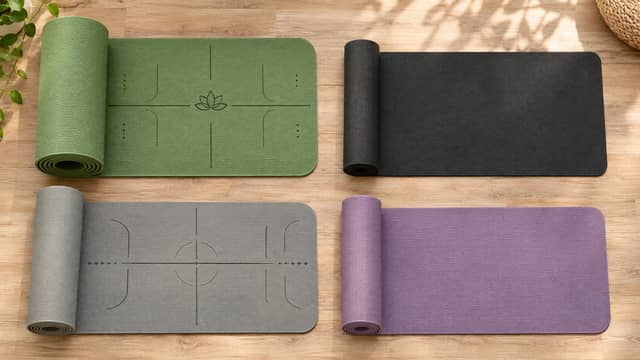
Alignment markings may provide useful visual references for some practitioners, but they do not guarantee correct posture. Proper technique and individual body proportions remain important.
Final Thoughts
The difference between a 4mm and 6mm yoga mat is not simply about choosing more or less cushioning.
A 4mm mat may offer a firmer floor feel, convenient portability and compact storage.
A 6mm mat may provide additional cushioning for floor-based movements and home yoga practice.
However, material density, grip, dimensions and comfort are just as important as thickness.
For many beginners practising yoga at home, a stable 6mm mat can be a practical starting choice. Those who prioritise portability and a firmer surface may prefer 4mm.
There is no need to buy multiple mats until you identify a specific limitation in your existing one.
Choose a mat that supports your actual routine, feels comfortable during movement and remains practical to clean and store.
Physical Glow Editorial Note: This article provides general fitness and yoga-equipment guidance. Product examples are included for educational comparison and have not been independently tested by Physical Glow. Actual specifications, prices and availability may vary. Some related buying guides and product pages contain affiliate links, through which Physical Glow may earn a commission from qualifying purchases at no additional cost to readers.