Air Purifier Filter Changes: Replacement Timing, Smell and False Alerts
Learn why filter life varies with dust and usage, how indicators work and why cleaning a non-washable HEPA filter can damage it.
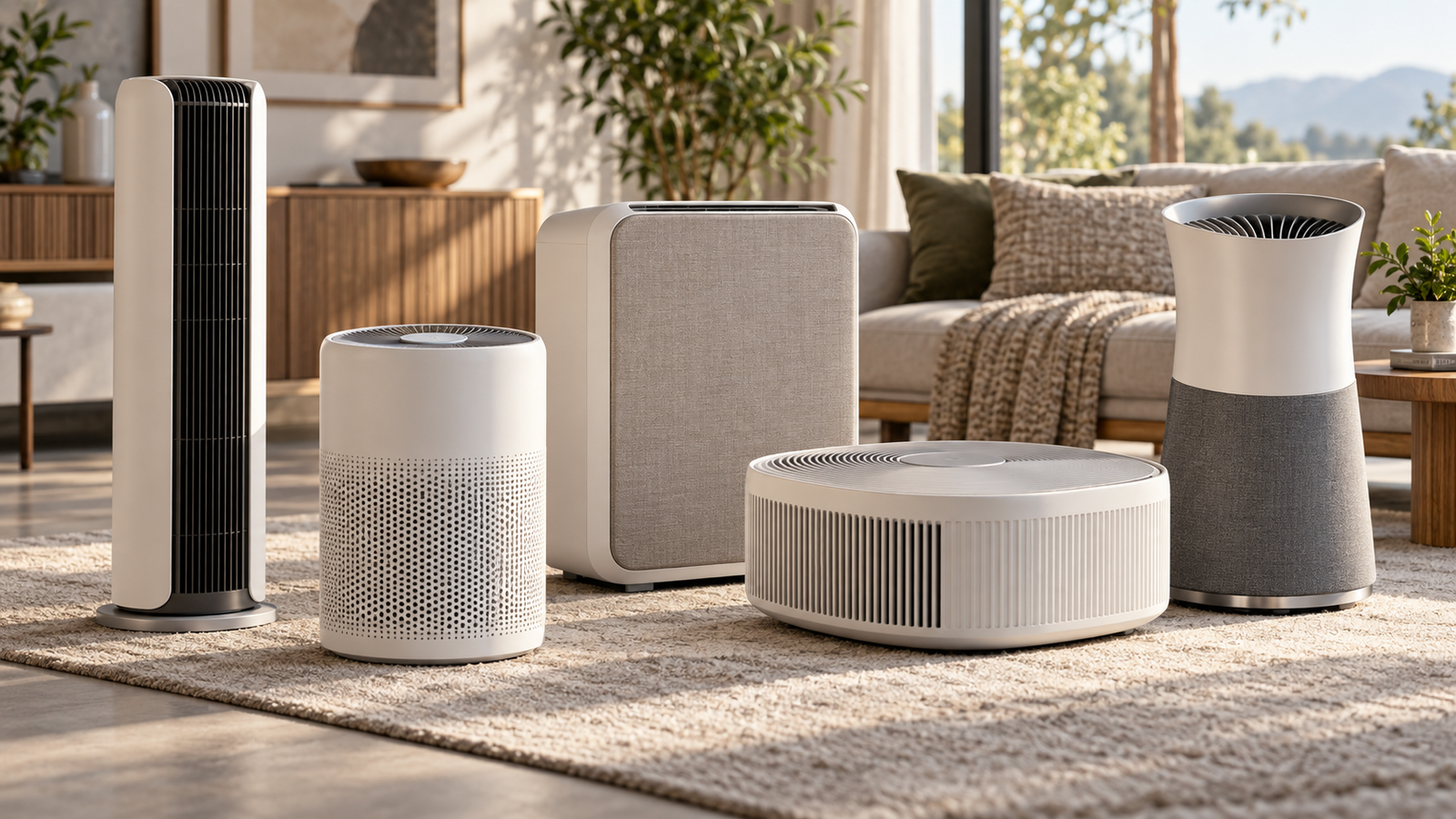
An air purifier can run quietly in the background for months, removing airborne particles as air passes through its filtration system. But eventually, its filters need attention.
The difficult question is knowing exactly when to replace them.
Some manufacturers recommend replacing filters every six months. Others suggest twelve months or longer. Certain models provide an automatic filter-life indicator, while others rely on a timer or basic maintenance reminders.
You may also notice changes that seem to indicate a problem: an unpleasant smell when the purifier starts, weaker airflow, a filter warning light or a higher pollution reading than usual.
But none of these signs always means the same thing.
A filter alert may be based on accumulated operating hours rather than actual filter condition. An unpleasant smell may come from a saturated activated-carbon filter, moisture, accumulated debris or something else in the room.
The right time to replace an air purifier filter depends on the filter type, the manufacturer’s instructions, the environment and how the purifier has been used—not simply whether it looks dirty.
This Physical Glow guide explains how HEPA and carbon filters age, what replacement indicators mean, how to distinguish genuine maintenance needs from misleading alerts and how to maintain your purifier without damaging its filtration system.
1. Why Do Air Purifier Filters Need Replacement?
Air purifiers use various technologies to reduce airborne pollutants.
Many household models use mechanical filtration, which captures particles as air passes through filter media.
Others include activated carbon to reduce certain gases and odours.
Over time, the filtration system changes as it collects particles or adsorbs chemical substances.
Particle Filter Loading
A mechanical particle filter gradually accumulates dust and other captured material.
As the filter loads, resistance to airflow can increase.
Depending on the fan and filter design, this may reduce the amount of air moving through the system.
Activated Carbon Saturation
Activated carbon works through adsorption, in which certain gas molecules are retained on the surface of the carbon material.
The carbon has a limited capacity for the substances it can adsorb.
As its effective capacity becomes exhausted, odour and gas-removal performance can decline.
Other Components Also Need Maintenance
Some purifiers contain:
- Washable pre-filters.
- Disposable particle filters.
- Activated-carbon sheets or cartridges.
- Combined HEPA-and-carbon cartridges.
- Air-quality sensors.
- Air inlet and outlet grilles.
Each component may have a different maintenance requirement.
Replacing a particle filter does not automatically restore a saturated carbon filter unless both are included in the same replacement cartridge.
2. HEPA Filters vs Activated Carbon Filters: What Is the Difference?
Understanding the filter type is essential because particulate filtration and gas adsorption address different problems.
| Filter type | Main purpose | Typical maintenance concern |
|---|---|---|
| Pre-filter | Captures larger dust, fibres and hair | Accumulated debris |
| HEPA or other mechanical particle filter | Captures airborne particles | Filter loading and airflow resistance |
| Activated carbon | Adsorbs certain gases and odours | Adsorption capacity and breakthrough |
| Combined filter cartridge | May address particles and selected gases | Replacement of the integrated unit |
| Washable mesh | Captures larger debris | Cleaning and physical damage |
HEPA Filters
HEPA stands for high-efficiency particulate air.
True HEPA filtration is defined by performance standards, and exact classifications vary between regulatory and testing systems.
A HEPA filter is designed to capture particles rather than neutralize every gas or smell in a room.
Activated Carbon Filters
Activated carbon is used to reduce certain gaseous contaminants and odours.
However, performance depends on carbon quantity, type, residence time, contaminant and environmental conditions.
A thin carbon-coated sheet may not perform like a substantial carbon bed.
Why This Matters for Replacement
If your main problem is an odour returning, the relevant issue may be the carbon component rather than the particle filter.
If airflow has declined, a loaded particle filter or obstructed pre-filter may be involved.
3. How Often Should You Replace an Air Purifier Filter?
There is no universal replacement interval for all air purifiers.
A manufacturer may suggest replacement after a specific number of months or operating hours under assumed conditions.
But real-world filter life is influenced by the amount and type of pollution passing through the purifier.
Factors That Affect Replacement Timing
- Hours of daily operation.
- Indoor dust concentration.
- Outdoor pollution entering the home.
- Room size.
- Fan speed.
- Filter dimensions and construction.
- Smoking or other indoor combustion.
- Cooking activity.
- Pets.
- Construction or renovation dust.
- Humidity and moisture exposure.
- Filter maintenance practices.
A purifier operating continuously in a dusty environment may load its filter differently from the same model running occasionally in a relatively clean room.
Common Manufacturer Intervals
Household purifier manuals may recommend filter replacement at intervals ranging from several months to a year or longer.
These are product-specific maintenance recommendations, not guarantees of continued performance.
Use the interval specified for your exact model as the starting point, then follow any additional instructions concerning unusually polluted environments or reduced performance.
4. Why Running Hours Matter More Than Calendar Age Alone
Two households may purchase the same purifier on the same day but use it very differently.
One operates the purifier for four hours each evening.
The other leaves it running continuously.
The second unit moves air through its filter for considerably more time.
However, operating hours alone still do not determine actual filter condition.
What an Hour-Based Indicator Can Tell You
It can estimate how much use the filter has received.
What It Cannot Necessarily Tell You
It may not directly measure:
- The amount of dust captured.
- Activated-carbon saturation.
- Individual filter-fibre condition.
- All changes in filtration performance.
Why Pollution Concentration Matters
One hundred hours of operation in a heavily polluted environment may expose the filter to a different contaminant load from one hundred hours in cleaner air.
Therefore, a timer can be useful for maintenance planning without being a precise measure of remaining filter capacity.
5. What Does an Air Purifier Filter Warning Light Mean?
Many air purifiers have a filter replacement indicator.
This may appear as a light, symbol, notification or remaining-life percentage.
But different models calculate these alerts differently.
Timer-Based Alerts
Some devices activate the indicator after a predetermined number of operating hours.
They may not directly assess the physical condition of the filter.
Algorithm-Based Estimates
Other purifiers may consider operating conditions such as fan speed, usage time or sensor readings.
The algorithm remains an estimate based on the manufacturer’s design.
More Direct Monitoring
Certain systems may use measurements related to airflow or pressure.
However, this capability should not be assumed without documented evidence.
Why the Distinction Matters
A warning light does not automatically prove that a filter has failed.
At the same time, a filter may need attention even before the light activates if the manufacturer identifies specific conditions requiring earlier replacement.
Do not ignore a warning simply because the filter looks clean.
6. Why a Filter Alert Can Be Misleading
A misleading alert is not necessarily a defective alert.
Sometimes the notification is functioning exactly as designed but is being interpreted incorrectly.
Example 1: Timer Reaches Its Limit
The filter-life counter reaches its programmed interval.
The device requests replacement even though the filter has not been physically examined.
Example 2: Filter Was Replaced but the Counter Was Not Reset
The purifier may continue displaying a warning because the replacement process was not completed in the software.
Example 3: Filter Counter Was Reset Without Replacement
The warning disappears, but the old filter remains installed.
Resetting the timer does not clean or restore the filter.
Example 4: A New Filter Is Not Recognized
Some models use a recognition system or specific replacement procedure.
An incorrect or incompatible replacement cartridge may trigger an alert.
Example 5: The Warning Concerns a Different Component
Some purifiers have separate alerts for pre-filter cleaning and main-filter replacement.
Read the exact message rather than assuming every warning requires purchasing a new HEPA filter.
7. How to Respond to a Filter Replacement Alert
Follow a structured approach rather than immediately resetting the device.
- Check the exact warning on the display or app.
- Identify which filter or component requires attention.
- Review the model-specific maintenance instructions.
- Confirm when the filter was last installed.
- Inspect any user-serviceable pre-filter.
- Replace the relevant component when indicated by the manufacturer.
- Install the replacement correctly.
- Reset the indicator only as directed.
- Confirm that the warning has cleared.
If the alert remains after a correct replacement and reset, consult the manufacturer’s troubleshooting instructions.
Avoid bypassing filter-recognition systems or modifying the purifier to suppress warnings.
8. Can You Tell If a HEPA Filter Is Worn Out by Looking at It?
Visual inspection can reveal some problems, but it is not a reliable complete measure of filter performance.
A particle filter may become visibly grey or dusty over time.
However, the amount of visible dirt does not directly establish its remaining capacity, particle-capture efficiency or airflow resistance.
What Visual Inspection Can Identify
- Large dust accumulation.
- Tears.
- Deformed pleats.
- Moisture damage.
- Physical damage.
- Incorrect installation.
- Loose seals.
What It Cannot Reliably Determine
Visual appearance alone generally cannot tell you exactly how much useful filter life remains.
A relatively clean-looking filter may still be due for replacement under the manufacturer’s maintenance schedule.
Likewise, visible dust does not necessarily mean that the filter has stopped capturing particles.
Avoid Touching the Filter Media Unnecessarily
Some filter media are delicate.
Pressing, rubbing or brushing the pleats can damage them.
Follow the manufacturer’s procedure for inspection.
9. Why Airflow May Become Weaker Over Time
Reduced airflow may indicate that air is encountering greater resistance as it passes through the purifier.
However, a loaded filter is only one possible cause.
Potential Causes
- Dirty pre-filter.
- Loaded main filter.
- Blocked air inlet.
- Obstructed outlet.
- Incorrect fan setting.
- Malfunctioning fan.
- Incorrectly installed cartridge.
- Foreign objects inside the airflow path.
What Should You Check?
Begin with the accessible grilles and user-serviceable components.
Make sure furniture, curtains or other objects are not obstructing the purifier.
Inspect the pre-filter according to the manual.
If the main filter is due for replacement, use the appropriate replacement procedure.
Should You Increase Fan Speed?
Increasing fan speed may temporarily increase airflow, but it is not a substitute for required filter maintenance.
If the unit is mechanically malfunctioning, forcing continued operation at a higher setting may not resolve the problem.
10. Why Does an Air Purifier Sometimes Smell Bad?
An unpleasant smell coming from a purifier can have several explanations.
Identifying the type and source of odour can help narrow the possibilities.
| Smell or symptom | Possible explanation | Appropriate response |
|---|---|---|
| Stale or musty smell | Moisture, contamination or environmental odour | Check for moisture and follow maintenance guidance |
| Cooking odours persist | Carbon capacity may be insufficient or exhausted | Check ventilation and carbon-filter requirements |
| Dusty smell | Accumulated dust or nearby environmental sources | Inspect accessible components |
| Chemical or plastic-like smell | Materials, environmental contaminants or device issues | Follow manufacturer guidance and investigate source |
| Burning or electrical smell | Possible overheating or electrical fault | Stop use immediately and disconnect safely |
| Odour appears only when running | Air movement may be distributing an existing odour | Investigate both purifier and room |
Important Distinction
A purifier can circulate odours that originate elsewhere in the home.
For example, an odour near a kitchen may become more noticeable when air is moving.
The smell does not automatically mean that the HEPA filter itself is releasing pollutants.
11. What to Do If the Purifier Smells Musty
A musty smell may suggest moisture or microbial contamination somewhere in the environment or equipment.
Do not automatically assume that replacing the filter alone will solve it.
Start by Checking the Room
Look for:
- Water leaks.
- Damp walls.
- Condensation.
- Wet carpets.
- Plumbing problems.
- Poorly dried fabrics.
- Moisture around the purifier.
Inspect the Purifier Safely
Switch it off and disconnect power before carrying out permitted maintenance.
Check whether the accessible filter or housing shows signs of moisture.
Avoid Running a Wet Filter
A filter that has become wet may require replacement, depending on its design and the manufacturer’s instructions.
Do Not Spray Fragrance Into the Unit
Perfumes, air fresheners and cleaning sprays are not substitutes for removing the underlying cause.
Some products may damage the filter or create additional airborne contaminants.
When Professional Help Is Needed
Persistent moisture problems or suspected mould contamination should be addressed at the source.
An air purifier is not a replacement for repairing leaks or controlling humidity.
12. Can Activated Carbon Filters Remove Every Smell?
No.
Activated carbon can be effective for certain gases and odours, but performance varies.
Important factors include:
- The chemical being adsorbed.
- Carbon type.
- Carbon mass.
- Contact time.
- Airflow rate.
- Temperature.
- Humidity.
- Previous contaminant exposure.
Some gases are not captured efficiently by ordinary activated carbon.
Why Carbon Filters Eventually Stop Helping
As adsorption sites become occupied, the effective capacity for particular contaminants may decline.
A smell that was previously reduced may become noticeable again.
However, odour perception is subjective and can change with the source’s strength.
Is More Carbon Always Better?
A substantial carbon bed may provide greater capacity for certain applications than a thin carbon sheet, but complete performance depends on system design.
Carbon quantity alone is not sufficient to judge effectiveness.
Should You Replace Carbon and HEPA Filters Together?
Only if the purifier uses a combined cartridge or the manufacturer instructs you to do so.
Some models have separate replacement schedules.
13. Can You Wash a HEPA Filter?
This is one of the most important maintenance questions.
Do not wash a HEPA filter unless the manufacturer explicitly states that the exact filter is washable and provides an approved procedure.
Many household HEPA filters are not intended to be washed.
Water can damage the filter medium, alter its structure or affect its performance.
What About Vacuuming a HEPA Filter?
Some manufacturers permit limited cleaning of particular filter components.
Others prohibit vacuuming the main HEPA filter.
Do not assume that removing visible dust restores the filter’s original filtration performance.
Pre-Filters Are Different
A washable pre-filter may be designed to collect larger particles and tolerate cleaning.
But washable pre-filter instructions should not be applied automatically to a non-washable main filter.
What About Leaving a Filter in the Sun?
Sunlight exposure is not a validated method for restoring a saturated particle filter or activated-carbon cartridge.
UV exposure or heat may also damage certain materials.
Follow the manufacturer’s instructions rather than attempting to regenerate filters through improvised methods.
14. Cleaning the Pre-Filter: Why It Matters
The pre-filter captures relatively large debris before air reaches the main filtration stages.
Depending on the design, it may collect:
- Hair.
- Lint.
- Larger dust particles.
- Fibres.
- Pet hair.
Cleaning a user-serviceable pre-filter may help maintain airflow.
General Procedure
- Switch off and unplug the purifier.
- Open the filter compartment according to the manual.
- Remove the pre-filter if the design permits.
- Clean using the approved method.
- Dry completely when washing is allowed.
- Reinstall securely.
- Close the unit before restarting.
Do Not Clean Every Pre-Filter the Same Way
Some can be washed.
Others should only be vacuumed or gently brushed.
Certain disposable pre-filters must be replaced.
The product instructions take priority.
15. Air Quality Sensor Alerts vs Filter Replacement Alerts
Air-quality sensors and filter-life indicators serve different purposes.
Confusing them can lead to unnecessary purchases.
Air Quality Sensor
A built-in sensor may estimate the concentration of airborne particles or other measured substances.
Some purifiers display numerical PM2.5 estimates.
Others use coloured indicators.
Filter-Life Indicator
This estimates or tracks when maintenance or replacement is due.
Why Air Quality May Remain High After Replacing a Filter
The purifier may still be operating in a polluted room.
Possible reasons include:
- Ongoing cooking emissions.
- Outdoor pollution entering the space.
- Open windows during polluted conditions.
- Insufficient purifier capacity.
- Poor placement.
- Sensor contamination.
- An unrelated sensor fault.
A new filter does not guarantee that air-quality readings will immediately become low.
Why Air Quality May Look Good With an Old Filter
The sensor may indicate a low measured particle concentration while the filter is approaching its recommended replacement interval.
Some devices measure only selected pollutants.
Therefore, a low displayed PM2.5 value does not prove that every filter component is in good condition.
16. What Causes False Air Quality Alerts?
A purifier may display a sudden spike in air pollution even when there is no obvious smoke or dust.
Sometimes the spike represents a real event that is simply not visible.
In other situations, sensor limitations may contribute.
Cooking
Frying, grilling and other cooking activities can generate airborne particles.
Candles and Incense
Combustion products can affect indoor particle readings.
Sprays
Certain aerosols can influence optical particle sensors.
Humidity
Some particle sensors may respond differently when humidity is high, depending on their design.
Dust Near the Sensor
Accumulated debris may interfere with measurement.
Sensor Limitations
Low-cost particle sensors estimate concentrations indirectly and may not be equally accurate across every particle type and environment.
What Should You Do?
Observe whether the alert corresponds with a plausible indoor activity.
Check the manufacturer’s sensor-cleaning guidance.
Do not disassemble or clean sensitive sensor components using unapproved methods.
If readings remain abnormal, contact the manufacturer.
17. How to Tell Whether a Filter Alert Is Genuine
Use this decision framework to evaluate the situation.
| Situation | Likely next step |
|---|---|
| Filter has reached the specified replacement interval | Replace according to the manual |
| Filter is visibly torn or damaged | Remove from service and replace |
| Filter became wet and is not washable | Follow manufacturer guidance, which may require replacement |
| New filter installed but alert remains | Complete the approved reset or recognition process |
| Alert returns immediately after reset | Review installation and contact support if unresolved |
| Airflow becomes unusually weak | Check obstruction, pre-filter and main-filter condition |
| Odour returns | Investigate environmental source and carbon-filter condition |
| PM2.5 reading increases suddenly | Investigate indoor sources and sensor behaviour |
Avoid Resetting Alerts Without Investigation
A reset typically changes the device’s maintenance counter or status.
It does not restore filter performance.
Avoid Replacing Filters Solely Because of One Unusual PM2.5 Reading
Particle concentration and filter life are related but different measurements.
Investigate the cause of the reading before assuming that the main filter has failed.
18. Interactive Air Purifier Maintenance Troubleshooter
Choose the main problem you are experiencing.
{@body const [issue,setIssue]=DIL.useState(“alert”)}
{@body const advice={
alert:{title:”Filter replacement indicator is active”,steps:[“Check whether the alert concerns the pre-filter, particle filter or carbon filter.”,”Review the manufacturer’s replacement interval and your filter installation date.”,”Replace the relevant filter when required.”,”Reset the indicator only after completing the prescribed procedure.”]},
smell:{title:”Unpleasant odour during operation”,steps:[“Determine whether the odour is present elsewhere in the room.”,”Check for moisture, accumulated debris and ventilation problems.”,”Review the carbon-filter condition and maintenance instructions.”,”Stop use immediately if there is a burning or electrical smell.”]},
airflow:{title:”Airflow seems weaker than normal”,steps:[“Confirm the fan speed has not been changed.”,”Check for blocked air inlets or outlets.”,”Clean the pre-filter if permitted.”,”Check whether the main filter is due for replacement or whether servicing is needed.”]},
reading:{title:”Air-quality readings seem abnormal”,steps:[“Check for cooking, incense, sprays or other pollution sources.”,”Consider whether humidity or environmental changes may be affecting the sensor.”,”Follow the manufacturer’s approved sensor-maintenance procedure.”,”Contact support if readings remain abnormal.”]}
}}
<box border radius=”lg” padding={3} gap={3}>
<text weight=”medium”>What are you noticing?</text>
<radio-group direction=”col” value={issue} onChange={setIssue}>
<radio value=”alert”>Filter warning light or notification</radio>
<radio value=”smell”>Unpleasant smell</radio>
<radio value=”airflow”>Weak airflow</radio>
<radio value=”reading”>Unusual air-quality reading</radio>
</radio-group>
<divider color=”subtle”/>
{advice[issue].title}
<list marker=”number” gap={2}> {#each advice[issue].steps as step} <list-item>{step}</list-item> {/each} </list> <caption>This tool provides general troubleshooting guidance. It cannot diagnose an electrical fault, measure filter performance or replace the manufacturer’s instructions.</caption> </box>
19. Air Purifier Maintenance in Indian Homes
Indoor air quality can vary considerably across Indian households.
Several environmental conditions may influence filter loading and maintenance needs.
Outdoor PM2.5 Pollution
In areas experiencing high particulate pollution, an air purifier may capture substantial amounts of airborne material when outdoor air enters the home.
Filter loading may increase depending on air exchange, operating hours and purifier characteristics.
Road Dust
Homes near busy roads or construction activity may experience additional dust deposition.
Cooking Emissions
Frying, high-temperature cooking and certain fuels can generate airborne contaminants.
Kitchen exhaust and source control are important.
An ordinary room air purifier is not a substitute for appropriate cooking ventilation.
Incense and Candles
Burning incense or candles can increase indoor particle concentrations.
Reducing the source may be more effective than relying only on filtration.
Pet Hair and Dander
A pre-filter may capture larger hair and debris, while a suitable particle filter can capture airborne particles within its effective operating conditions.
Seasonal Changes
Pollution conditions, humidity and ventilation patterns may change through the year.
Your purifier’s filter life may therefore vary between seasons.
20. Does Running an Air Purifier 24 Hours a Day Wear Out Filters Faster?
Continuous operation increases the total amount of air passing through the filter compared with occasional operation at the same airflow rate.
However, filter loading also depends on pollutant concentration.
Continuous Operation
May provide more consistent particle removal when the purifier is appropriately sized and operated.
It also accumulates operating hours.
Intermittent Operation
May extend calendar time between hour-based replacement alerts.
However, air pollution may increase while the device is off.
Should You Switch the Purifier Off to Save the Filter?
Not automatically.
The main purpose of an air purifier is to improve indoor air quality.
Reducing operation solely to delay filter replacement may reduce the benefit you purchased it for.
Use a Suitable Operating Strategy
Follow the manufacturer’s guidance and consider your indoor pollution conditions.
Automatic modes can be convenient, but their effectiveness depends on sensor design and control settings.
21. Does Fan Speed Affect Filter Life?
Fan speed changes how much air the purifier moves through its filtration system.
Higher airflow may increase the amount of airborne material reaching the filter over a given period.
However, the relationship between fan speed and replacement timing is not always straightforward.
High Speed
May increase particle removal rate when the device is functioning properly.
It can also increase noise and energy consumption.
Low Speed
May reduce airflow and noise.
But it may also reduce the rate at which airborne particles are removed from the room.
Auto Mode
Some devices adjust fan speed based on sensor readings.
This can help respond to changing conditions, although sensor limitations still apply.
The Practical Principle
Choose an operating mode that provides appropriate air cleaning rather than minimizing fan speed solely to preserve the filter.
22. How to Buy the Correct Replacement Filter
Replacement filters are not universally interchangeable.
Even filters from the same manufacturer may differ by model or production generation.
Confirm the Exact Model Number
Check the purifier’s label, manual or official support information.
Review the Filter Part Number
The compatible filter cartridge may have its own product code.
Check Filter Dimensions
Similar-looking cartridges may differ slightly in size or seal design.
Consider Seal Integrity
A poorly fitting filter may allow air to bypass the intended filtration path.
Verify the Claims
If a replacement is advertised as HEPA or activated carbon, review the manufacturer’s specifications.
Avoid Assuming Every Compatible-Looking Product Is Equivalent
Third-party filters may vary in media, airflow resistance, sealing and gas-removal capacity.
A lower-cost replacement is not automatically equivalent to the original filter.
Check Packaging Before Installation
Some replacement filters arrive sealed in protective plastic.
Remove any packaging as instructed before use.
Running the purifier with a sealed filter can obstruct airflow.
23. A Practical Air Purifier Maintenance Log
Keeping a simple record can prevent confusion about when a filter was last changed.
| Maintenance item | Date | Notes |
|---|---|---|
| Main particle filter installed | — | Record model and filter part number |
| Carbon filter installed | — | Record if separate |
| Pre-filter cleaned | — | Follow approved cleaning method |
| Sensor maintenance | — | Only if permitted by manufacturer |
| Unusual odour observed | — | Note conditions |
| Airflow problem observed | — | Note fan speed and obstruction checks |
| Next scheduled review | — | Follow product instructions |
Why a Log Helps
Many households use an air purifier continuously without keeping track of filter replacement dates.
A maintenance log helps distinguish a genuinely old filter from one recently installed.
It is especially useful when several family members operate the same appliance.
24. Common Air Purifier Filter Maintenance Mistakes
Mistake 1: Waiting Until the Filter Looks Completely Dirty
Visual appearance does not reliably establish remaining performance.
Mistake 2: Washing a Non-Washable HEPA Filter
Water may damage the filter medium.
Mistake 3: Resetting the Filter Counter Without Replacement
A software reset does not restore filtration capacity.
Mistake 4: Assuming Every Bad Smell Comes From the HEPA Filter
Odours can originate from the room, carbon component, moisture or other sources.
Mistake 5: Replacing the Main Filter Because PM2.5 Increased
A high sensor reading may reflect ongoing indoor pollution rather than filter failure.
Mistake 6: Ignoring Pre-Filter Maintenance
Accumulated debris can obstruct airflow.
Mistake 7: Buying the Wrong Filter Size
Poor fit can affect sealing and performance.
Mistake 8: Leaving Protective Packaging on a New Filter
Packaging may obstruct airflow.
Mistake 9: Spraying Perfume Into the Purifier
This may introduce contaminants or damage components.
Mistake 10: Ignoring a Burning Smell
A suspected electrical fault requires immediate attention, not routine filter cleaning.
25. Frequently Asked Questions
How often should I replace an air purifier HEPA filter?
Follow the manufacturer’s recommendation for your exact model. Replacement timing varies with filter design, operating hours and environmental conditions.
Can a HEPA filter last longer than twelve months?
Some filters may have longer recommended service intervals, while others need earlier replacement. Do not assume a universal lifespan.
Does a dirty-looking HEPA filter mean it has stopped working?
Not necessarily. Visible dust does not directly measure filtration efficiency or remaining service life.
Can I wash my air purifier HEPA filter?
Only if the manufacturer explicitly identifies the exact filter as washable and provides an approved procedure.
Can I vacuum a HEPA filter to extend its life?
Do not do so unless the manufacturer permits it. Vacuuming can damage some filter media and does not necessarily restore original performance.
Why does my purifier smell bad when I turn it on?
Potential causes include room odours, accumulated debris, moisture or a carbon filter requiring attention.
Does activated carbon remove all household smells?
No. Its performance depends on the contaminant and filter design.
Why is my filter light still on after replacement?
The counter may need the approved reset procedure, or the filter may not be recognized or installed correctly.
Can I ignore a filter replacement light?
Do not ignore it without reviewing the manufacturer’s instructions. The alert may indicate that prescribed maintenance is due.
Does resetting the filter light clean the filter?
No. Resetting changes the maintenance indicator, not the physical condition of the filter.
Why does my purifier show high PM2.5 with a new filter?
Possible reasons include ongoing indoor pollution, inadequate airflow, placement issues or sensor-related factors.
Does high humidity affect air purifier sensors?
It can affect some particle-sensor technologies. The impact depends on the design.
Is a carbon filter necessary if I already have a HEPA filter?
HEPA filters primarily target particles, while activated carbon may help reduce certain gaseous contaminants. Whether carbon is useful depends on your needs.
Can an air purifier remove cooking smells?
A suitable carbon system may reduce certain cooking odours, but source control and ventilation remain important.
Should I replace the carbon filter and HEPA filter together?
Only if the product uses a combined cartridge or the manufacturer specifies that schedule.
Can I use a third-party replacement filter?
Compatibility and performance vary. Verify the exact model, specifications and sealing before considering alternatives.
Does running my air purifier continuously shorten filter life?
Continuous operation accumulates more operating hours, but actual filter loading also depends on pollution and airflow.
Can I clean the air-quality sensor myself?
Only using the procedure approved for the exact model.
Why is airflow weaker than before?
Possible causes include blocked grilles, pre-filter debris, main-filter loading or mechanical problems.
Can a wet HEPA filter be reused after drying?
Do not assume so. Follow the manufacturer’s instructions; many non-washable filters require replacement after becoming wet.
When should I seek professional servicing?
If the purifier produces a burning smell, exhibits electrical problems, repeatedly malfunctions or continues showing unexplained faults after approved troubleshooting, stop use and contact authorized support.
26. Final Verdict: Replace Filters Based on Evidence, Not Guesswork
Air purifier filter maintenance is more nuanced than simply replacing every filter after a fixed number of months.
Particle filters gradually accumulate captured material, while activated carbon has limited capacity for certain gases and odours.
Operating hours, pollution levels, fan speed and environmental conditions can all influence maintenance requirements.
A filter-life indicator can be useful, but it may rely on a timer or algorithm rather than directly measuring filtration capacity.
Similarly, an unusual smell or a sudden PM2.5 increase does not automatically prove that the HEPA filter has failed.
Begin with the manufacturer’s instructions.
Identify the exact filter type.
Maintain the pre-filter correctly, investigate airflow changes and avoid washing or vacuuming components that are not designed for it.
Use properly fitting replacement cartridges, and reset maintenance indicators only after completing the required procedure.
Most importantly, address indoor pollution sources and moisture problems rather than expecting filtration alone to solve every air-quality issue.
The best replacement schedule is the one that follows your purifier’s design, responds to actual operating conditions and maintains reliable airflow and filtration—not the one that simply waits for a filter to look dirty.
Editorial References and Further Reading
- US Environmental Protection Agency (EPA). Guide to Air Cleaners in the Home. https://www.epa.gov/indoor-air-quality-iaq/guide-air-cleaners-home
- US EPA. Air Cleaners and Air Filters in the Home. https://www.epa.gov/indoor-air-quality-iaq/air-cleaners-and-air-filters-home
- US EPA. Improving Indoor Air Quality. https://www.epa.gov/indoor-air-quality-iaq
- ASHRAE. Filtration and Air Cleaning Resources. https://www.ashrae.org/
- Manufacturer manuals and replacement-filter specifications. The primary sources for individual model compatibility, filter replacement intervals, washing restrictions and maintenance-alert reset procedures.
Physical Glow Editorial Note: This article provides general consumer air-quality and appliance-maintenance education. It does not certify a specific filter’s remaining life or performance. Follow manufacturer instructions for filter replacement, electrical safety and cleaning. Air purifiers supplement, but do not replace, source control and adequate ventilation. For serious indoor contamination or electrical faults, seek qualified assistance.