Home Blood Pressure Reading Errors: Cuff Size, Posture and Timing
Reduce common home-monitoring errors by reviewing cuff fit, seating position, rest time and repeat-reading habits.
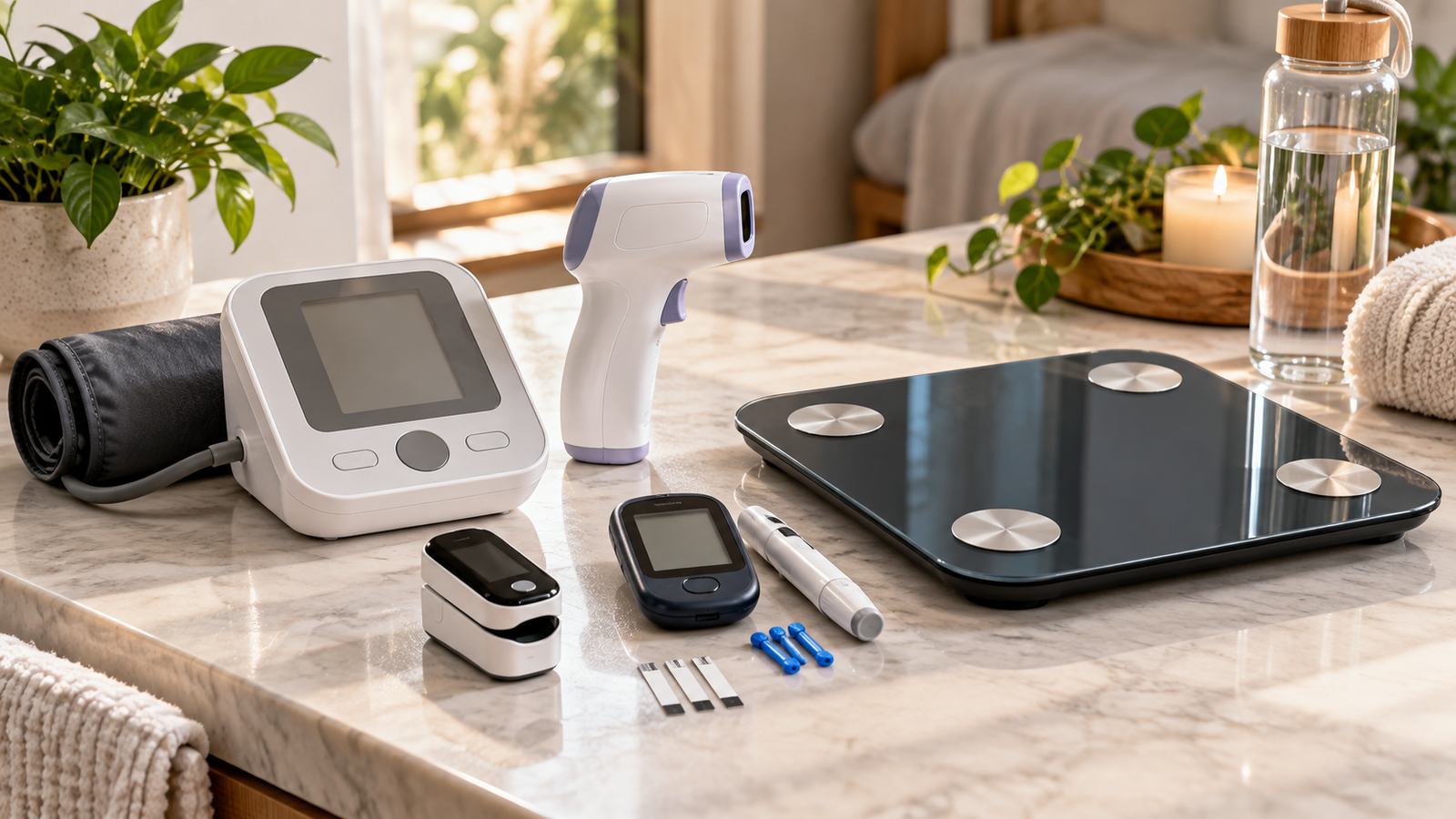
Home blood pressure monitors make it easier to track blood pressure without visiting a clinic for every measurement. But the numbers shown on the screen are only useful when the measurement is taken correctly.
A reading of 145/90 mmHg may seem concerning, while 118/76 mmHg may appear reassuring. Yet either result can be misleading if the cuff is the wrong size, your arm is unsupported, you have just climbed a flight of stairs or you are talking during the measurement.
Even relatively small measurement errors can affect how blood pressure readings are interpreted.
This matters because blood pressure is used to assess cardiovascular health and guide decisions about medical treatment.
An accurate home blood pressure reading depends on three essential factors: using a suitable cuff, maintaining the correct body position and measuring under consistent conditions.
This Physical Glow guide explains the most common home blood pressure measurement errors, how to position your arm, when to take readings, how to choose the correct cuff and when unusual results require medical attention.
1. Understanding What Your Blood Pressure Monitor Measures
Blood pressure is the force exerted by circulating blood against the walls of the arteries.
It is recorded using two numbers.
For example:
120/80 mmHg
The first number is the systolic pressure.
The second number is the diastolic pressure.
Systolic Blood Pressure
Systolic pressure represents arterial pressure when the heart contracts and pumps blood.
Diastolic Blood Pressure
Diastolic pressure represents arterial pressure when the heart relaxes between contractions.
What Does mmHg Mean?
The abbreviation mmHg stands for millimetres of mercury.
It is the conventional unit used for blood pressure measurement.
Why Both Numbers Matter
Systolic and diastolic pressure both provide information about cardiovascular health.
A person may have elevated systolic pressure while their diastolic pressure remains within a different range.
Blood pressure interpretation depends on the applicable clinical guidelines, individual circumstances and repeated reliable measurements.
One reading alone does not establish a diagnosis of hypertension.
2. Why Home Blood Pressure Readings Can Be Incorrect
Most automatic home monitors estimate blood pressure by detecting pressure changes in an inflatable cuff.
This process is known as oscillometric measurement.
The device uses an algorithm to estimate systolic and diastolic pressures.
However, the result can be influenced by factors that have little to do with your usual resting blood pressure.
Common sources of error include:
- Incorrect cuff size.
- Incorrect cuff placement.
- Unsupported arm position.
- Legs crossed during measurement.
- Feet not resting on the floor.
- Talking or moving.
- Measuring immediately after physical activity.
- Recent caffeine or nicotine use.
- Measuring over clothing.
- Insufficient resting time.
- An unsuitable or unvalidated monitor.
Some errors produce higher readings, while others can cause unpredictable differences.
The goal is to standardize your measurement technique so that readings taken on different days are meaningfully comparable.
3. Cuff Size: Why It Is More Important Than Many People Realize
One of the most significant sources of blood pressure measurement error is using a cuff that does not fit the upper arm properly.
A cuff that is too small may produce an inaccurately high reading.
A cuff that is too large may produce an inaccurately low reading.
The degree of error depends on the cuff, arm dimensions and monitor.
How to Find Your Cuff Size
Measure the circumference of your upper arm using a flexible measuring tape.
Follow the blood pressure monitor manufacturer’s instructions for where the measurement should be taken.
Compare your measurement with the circumference range printed on the cuff or specified in the manual.
Do not choose a cuff solely by labels such as small, medium or large.
These categories are not necessarily identical across manufacturers.
Example
Suppose your upper-arm circumference is 34 cm.
You should choose a compatible cuff whose approved arm-circumference range includes 34 cm.
A cuff designed only for substantially smaller arms would not be appropriate simply because you can fasten it.
Does a Universal Cuff Fit Everyone?
No.
Some cuffs cover a broad range of arm circumferences, but every model has specified limits.
A person with a very large or unusually shaped upper arm may require a specialized compatible cuff.
4. How to Position the Cuff Correctly
Correct positioning helps the monitor detect pressure changes reliably.
Use Bare Skin
Place an upper-arm cuff directly against the skin unless the manufacturer specifies otherwise.
Avoid measuring over shirts, sweaters or jackets.
Position It According to the Manual
The cuff normally sits around the upper arm above the elbow.
Many cuff designs include an artery-position marker.
Follow the manufacturer’s placement instructions rather than assuming every cuff is identical.
Keep It Snug
The cuff should fit securely without being excessively tight before inflation.
Avoid Rolled-Up Sleeves That Compress the Arm
A tightly rolled sleeve above the cuff can compress the upper arm and interfere with the measurement.
Remove the sleeve or wear clothing that allows proper cuff placement.
Check the Tubing
Make sure the tube is not kinked, pulled or positioned in a way that interferes with the monitor.
If the cuff repeatedly slips or cannot be positioned correctly, verify that its size and design are suitable.
5. Arm Position: The Heart-Level Rule
Arm position can influence blood pressure readings.
For standard seated upper-arm measurement, the cuff should be supported approximately at heart level, in accordance with the device instructions.
What Happens When the Arm Hangs Down?
If the arm is unsupported and positioned below heart level, the reading may be higher than it would be with correct positioning.
What If the Arm Is Too High?
Positioning the cuff above heart level can affect the measurement in the opposite direction.
The Correct Approach
Sit in a chair beside a table.
Rest your forearm on the table or a suitable support.
Keep the arm relaxed.
Adjust support height so the cuff is approximately level with your heart.
Do not hold the arm up using muscular effort.
Why Support Matters
Holding your arm in position without support requires muscle activity.
This can affect the measurement.
A pillow or cushion may be useful when adjusting the arm to an appropriate height.
6. The Correct Sitting Posture for Blood Pressure Measurement
Body position matters more than many people expect.
For a standard seated home measurement, use the following setup.
| Body part | Recommended position |
|---|---|
| Back | Supported against the chair |
| Feet | Flat on the floor |
| Legs | Uncrossed |
| Arm | Relaxed and supported |
| Cuff | On bare upper arm, approximately at heart level |
| Shoulders | Relaxed |
| Mouth | No talking during measurement |
| Body | Remain still |
Avoid Sitting on the Edge of the Bed
A bed may not provide the same back and foot support as a chair.
If a medical professional has instructed you to measure in another position, follow that guidance.
Do Not Cross Your Legs
Crossed legs may influence blood pressure measurement.
Keep both feet resting comfortably on the floor.
Avoid Talking
Conversation during the measurement can affect readings.
Do not talk to another person, answer phone calls or read aloud while the cuff is inflating and deflating.
Stay Still
Moving your arm or shifting repeatedly may interfere with the monitor’s detection process.
7. Why You Should Rest Before Taking a Reading
Blood pressure responds dynamically to physical activity, emotional stress and other stimuli.
It is not a permanently fixed number.
Measuring immediately after rushing across the house may produce a different result from measuring after a calm period of sitting.
The American Heart Association recommends sitting quietly for at least five minutes before a routine home blood pressure measurement.
What Does Resting Mean?
Sit comfortably with your back supported.
Avoid conversation and unnecessary movement.
Allow yourself to settle before beginning.
Should You Lie Down to Relax?
Not for a standard seated reading unless your clinician has instructed you to measure while lying down.
Measurements taken in different body positions may not be directly comparable.
What If You Feel Anxious?
Anxiety can influence blood pressure.
Try to maintain a calm, consistent environment.
If you feel particularly anxious about the numbers, discuss a structured monitoring plan with your healthcare professional.
8. Timing: When Is the Best Time to Measure Blood Pressure?
Consistency is usually more important than finding one universally perfect clock time.
Healthcare professionals often recommend measuring blood pressure at similar times each day.
For many patients, this involves morning and evening readings during a specified monitoring period.
However, the exact schedule should follow your clinician’s advice.
Morning Measurements
Morning measurements may be taken after waking, using the bathroom and sitting quietly.
If you take blood pressure medication, ask your clinician whether the reading should be taken before or after your dose.
Do not independently change medication timing.
Evening Measurements
Evening readings can provide information about blood pressure later in the day.
Choose a consistent time when you can sit quietly without immediately following exercise or another activity that may influence the result.
Why Different Times Produce Different Numbers
Blood pressure follows daily physiological patterns and responds to activity.
A morning result may differ from an evening result even when both readings were taken correctly.
That does not automatically mean the monitor is inaccurate.
9. Caffeine, Exercise and Nicotine: What to Avoid Before Measuring
The American Heart Association advises avoiding caffeine, exercise and smoking for at least 30 minutes before a routine blood pressure measurement.
These factors can temporarily influence blood pressure.
Coffee and Tea
Caffeinated drinks can cause temporary blood pressure changes in some people.
Individual responses vary.
Exercise
Physical activity affects cardiovascular function.
Taking a routine resting measurement immediately after a workout may not reflect your usual seated resting blood pressure.
Nicotine
Nicotine can temporarily influence blood pressure and heart rate.
Avoid smoking or using nicotine shortly before measurement.
Alcohol
Alcohol consumption can affect blood pressure, especially with heavier or repeated intake.
For reliable monitoring, follow your clinician’s guidance about timing and disclosure of alcohol use.
Meals
Blood pressure may change after eating in some individuals.
When tracking trends, aim for consistent conditions and follow any specific clinician instructions concerning meals.
10. Does a Full Bladder Affect Blood Pressure?
Yes.
A full bladder can influence blood pressure readings.
This is a frequently overlooked source of error.
Before taking your measurement, use the bathroom if needed.
Then sit quietly and complete the normal resting period.
Why This Matters
Discomfort and physiological responses associated with bladder fullness can affect the measurement.
Practical Advice
Do not rush to measure your blood pressure immediately after waking if you need to use the bathroom.
Establish a consistent morning sequence that allows you to sit comfortably before measuring.
11. Should You Take One Reading or Multiple Readings?
Blood pressure naturally fluctuates.
Because of this, a single measurement may not represent your usual resting level.
Many home-monitoring protocols recommend taking two readings approximately one minute apart and recording the results.
Some clinical protocols use additional readings or specific schedules.
Follow the plan recommended by your clinician.
Why Repeat Measurements?
A second reading can help identify short-term variation.
The first measurement may sometimes be higher than subsequent readings.
However, the first reading should not automatically be discarded unless your monitoring protocol instructs you to do so.
What If the Numbers Are Different?
Small differences are common.
If readings differ substantially, check your technique, remain seated and follow your clinician’s measurement protocol.
Should You Measure Ten Times Until You Get a Lower Number?
No.
Repeatedly measuring until a preferred result appears can create a misleading record and increase anxiety.
Use a consistent method and record results accurately.
12. Example of a Seven-Day Blood Pressure Log
A structured log helps your clinician understand patterns rather than relying on one isolated reading.
| Day | Morning reading 1 | Morning reading 2 | Evening reading 1 | Evening reading 2 |
|---|---|---|---|---|
| Monday | — | — | — | — |
| Tuesday | — | — | — | — |
| Wednesday | — | — | — | — |
| Thursday | — | — | — | — |
| Friday | — | — | — | — |
| Saturday | — | — | — | — |
| Sunday | — | — | — | — |
Record both systolic and diastolic values in mmHg.
You may also note factors that could influence readings, such as illness, unusual stress, medication changes or measurement difficulties.
How Long Should You Track?
Your clinician may recommend several days or longer.
Some protocols use seven-day home monitoring with morning and evening readings, but this is not a universal requirement.
The monitoring period should reflect why the measurements are being taken.
13. Interactive Blood Pressure Measurement Checklist
Before relying on a home blood pressure result, review the following steps.
{@body const items=[“My monitor uses a suitable upper-arm cuff.”,”The cuff is positioned correctly on bare skin.”,”I avoided caffeine, exercise and nicotine for at least 30 minutes.”,”I used the bathroom if needed.”,”I rested quietly for at least five minutes.”,”My back is supported against the chair.”,”My feet are flat on the floor and my legs are uncrossed.”,”My arm is supported with the cuff approximately at heart level.”,”I remained still and did not talk.”,”I recorded the readings according to my monitoring plan.”]}
{@body const [completed,setCompleted]=DIL.useState([])}
<box border radius=”lg” padding={3} gap={3}>
<row align=”center” justify=”between”>
Home blood pressure checklist
<text weight=”medium” color=”secondary” tabularNums>{completed.length}/{items.length}</text>
</row>
{#each items as item,i}
<checkbox key={i} checked={completed.includes(i)} onChange={v=>setCompleted(s=>v?[…s,i].filter(j=>j!==i))} lineThrough={false}>{item}</checkbox>
{/each}
<divider color=”subtle”/>
{#if completed.length===items.length}
<row align=”start” gap={2}>
<icon name=”check-circle” color=”success”/>
<text size=”sm”>The basic measurement steps have been reviewed. Continue following your monitor’s instructions and any clinician-specific protocol.</text>
</row>
{}
<text color=”secondary” size=”sm”>Review the remaining items before taking or interpreting your measurement.</text>
{/if}
<button variant=”outline” color=”secondary” block onClick={()=>setCompleted([])}>
<icon name=”rotate-ccw” inline/> Reset checklist
</button>
<caption>This checklist supports proper technique but cannot confirm monitor accuracy or diagnose a medical condition.</caption> </box>
14. Upper-Arm vs Wrist Blood Pressure Monitors
Home blood pressure devices come in several formats.
The most familiar are upper-arm and wrist monitors.
Upper-Arm Monitors
Validated automatic upper-arm monitors are generally preferred for routine home blood pressure monitoring.
They are commonly recommended by major cardiovascular organizations.
Wrist Monitors
Wrist monitors can be convenient, particularly when an appropriate upper-arm cuff cannot be used.
However, wrist position is especially important.
If the wrist is not held at the required level, readings may be inaccurate.
Some wrist devices are validated, but not all products have equivalent evidence.
Finger Monitors
Finger-based blood pressure devices are generally not recommended as substitutes for validated upper-arm monitors for routine clinical decision-making.
Which Should You Buy?
For most adults, a clinically validated automatic upper-arm monitor with a correctly sized cuff is a sensible starting point.
If an upper-arm device is unsuitable, discuss alternatives with a healthcare professional.
15. How to Check Whether a Blood Pressure Monitor Is Validated
A digital display and medical-looking packaging do not automatically establish clinical accuracy.
Some manufacturers test devices under recognized validation protocols.
What Does Clinical Validation Mean?
A validated monitor has undergone an assessment of measurement performance using an accepted testing protocol.
This is different from a claim that the device has many features or a high customer rating.
Where Can You Check?
Independent validation resources such as STRIDE BP provide information about blood pressure measurement devices.
You can also review the manufacturer’s documented validation evidence.
Does Validation Guarantee Every Reading Is Correct?
No.
Correct cuff size, positioning and device condition still matter.
Some monitors may perform less reliably in particular circumstances, including certain heart rhythm disturbances.
Bring Your Monitor to a Medical Appointment
The American Heart Association recommends having your healthcare professional check your home monitor and technique.
This can help identify discrepancies or user errors.
16. Why Irregular Heart Rhythm Can Affect Readings
Many automatic home blood pressure monitors rely on the detection of pressure oscillations.
Irregular heart rhythms can affect the pattern of these signals.
Some devices may produce inconsistent measurements or display an irregular-heartbeat indicator.
What Does the Warning Mean?
It may indicate that the device detected an irregular pulse pattern during measurement.
However, it does not automatically diagnose atrial fibrillation or another arrhythmia.
Should You Ignore It?
If the warning occurs repeatedly, discuss it with a healthcare professional.
What About Very Different Readings?
If your measurements are repeatedly inconsistent despite correct technique, your clinician may recommend a different monitor or measurement method.
Do not attempt to diagnose a rhythm disorder based solely on the screen of a consumer blood pressure monitor.
17. Why Your Home Reading May Differ From the Doctor’s Office
It is common for blood pressure readings to differ between home and clinic settings.
Several factors can contribute.
White-Coat Effect
Some people have higher blood pressure readings in healthcare settings than they do at home.
Anxiety or other situational factors may contribute.
Masked Hypertension
Other people may have relatively normal clinic readings but elevated blood pressure outside the clinic.
Measurement Technique
Differences in cuff size, rest time, positioning and equipment can also affect results.
Time of Day
A morning home reading may not be directly comparable with an afternoon clinic measurement.
What Should You Do?
Provide your clinician with a properly recorded home blood pressure log.
In some cases, ambulatory blood pressure monitoring may be recommended.
Ambulatory monitoring uses a device that records measurements at intervals during normal daily activities and sleep.
It can provide information not captured by isolated office readings.
18. Understanding Blood Pressure Categories
Blood pressure classification systems vary between medical organizations and countries.
For example, the American Heart Association uses the following adult categories.
| Category | Systolic | Diastolic |
|---|---|---|
| Normal | Below 120 | And below 80 |
| Elevated | 120–129 | And below 80 |
| Stage 1 hypertension | 130–139 | Or 80–89 |
| Stage 2 hypertension | 140 or higher | Or 90 or higher |
These are American Heart Association clinical categories.
Other guidelines may use different diagnostic thresholds, particularly for home measurements.
Important Interpretation
A single measurement in one of these ranges does not automatically establish a diagnosis.
Diagnosis and treatment decisions require appropriate clinical assessment.
What About Low Blood Pressure?
Low blood pressure may be relevant when accompanied by symptoms such as dizziness, fainting or weakness.
The significance depends on the individual and circumstances.
If you repeatedly experience symptoms alongside low readings, seek professional advice.
19. What to Do When You Get an Unexpectedly High Reading
An isolated high number can be alarming.
However, an unexpected result should first be considered in context.
If You Feel Well
Check whether you followed the correct measurement technique.
Sit quietly and repeat the measurement according to appropriate guidance.
Do not rapidly take repeated readings for an extended period.
Record the result accurately.
Contact your healthcare professional for guidance when readings are persistently above your advised range.
If the Reading Is Extremely High
The American Heart Association advises special attention to readings above 180 systolic and/or above 120 diastolic.
Wait at least one minute and recheck.
If the reading remains in this range, seek immediate medical guidance.
If You Have Concerning Symptoms
If very high blood pressure is accompanied by symptoms such as chest pain, shortness of breath, severe headache, weakness, numbness, changes in vision or difficulty speaking, seek emergency medical care immediately.
In India, emergency assistance can be requested through 112.
Do not delay emergency care while repeatedly checking the monitor.
20. Should You Adjust Blood Pressure Medication Based on Home Readings?
Do not independently stop, increase or reduce prescribed blood pressure medication based on isolated readings.
Medication decisions depend on several factors, including:
- Repeated blood pressure measurements.
- Medical history.
- Kidney function.
- Other conditions.
- Current medications.
- Treatment goals.
- Potential side effects.
What if Your Blood Pressure Looks Normal?
A normal reading while taking medication may indicate that the treatment is working.
It does not automatically mean medication is no longer necessary.
What if Readings Remain Elevated?
Share your log with your clinician.
They may review technique, medication timing or other factors.
What if You Feel Dizzy After Medication?
Seek medical advice, especially if symptoms persist or are associated with fainting.
Do not make medication changes without appropriate guidance.
21. Maintaining Your Home Blood Pressure Monitor
Reliable monitoring requires the device to remain in suitable condition.
Inspect the Cuff
Look for:
- Damaged fabric.
- Worn fastening material.
- Cracks.
- Loose tubing.
- Leaks.
- Other visible deterioration.
Check the Batteries
Low batteries may interfere with reliable operation in some devices.
Follow the manufacturer’s instructions.
Store the Monitor Properly
Avoid extreme temperatures, excessive moisture and conditions outside the manufacturer’s storage limits.
Keep It Clean
Use the recommended cleaning method.
Do not immerse components unless the device is specifically designed for that purpose.
Check Accuracy Periodically
Follow the manufacturer’s servicing or verification instructions and discuss device checks with your healthcare provider.
Do not assume that every monitor can be recalibrated by the user.
22. What to Look for When Buying a Home Blood Pressure Monitor
A blood pressure monitor should be selected primarily for reliable measurement rather than a large collection of convenience features.
| Buying factor | Why it matters |
|---|---|
| Clinical validation | Supports confidence in measurement performance |
| Correct cuff size | Helps avoid systematic measurement error |
| Upper-arm design | Generally preferred for routine home monitoring |
| Clear display | Improves readability |
| Memory storage | Supports tracking over time |
| Multiple-user profiles | Useful for shared household devices |
| Average-reading function | Can assist structured monitoring |
| Battery or power options | Affects convenience |
| Ease of cuff placement | Helps with consistent technique |
| Manufacturer support | Useful for faults, accessories and servicing |
Are Bluetooth Monitors Better?
Bluetooth connectivity can make logging more convenient.
However, it does not automatically improve blood pressure accuracy.
Are Expensive Monitors More Accurate?
Not necessarily.
Clinical validation, cuff compatibility and correct technique matter more than price alone.
Can Two People Share One Monitor?
Yes, if the monitor is appropriate for both users and each has a correctly sized compatible cuff.
Some models offer separate memory profiles.
Comparing Options in India
For relevant product comparisons, explore Physical Glow’s home health monitoring buying guides within the Wellness section.
Prioritize validated devices from established manufacturers and verify cuff compatibility before purchasing.
23. Common Home Blood Pressure Measurement Mistakes
Mistake 1: Using the Wrong Cuff Size
An unsuitable cuff can produce misleading readings.
Mistake 2: Measuring Over Clothing
Fabric can interfere with correct cuff placement and measurement.
Mistake 3: Leaving the Arm Unsupported
Muscle activity and incorrect arm height may affect the result.
Mistake 4: Crossing Your Legs
This can influence blood pressure.
Mistake 5: Measuring Immediately After Exercise
The result may not reflect resting blood pressure.
Mistake 6: Talking During the Measurement
Conversation can alter readings.
Mistake 7: Ignoring the Five-Minute Rest Period
Rushing into the measurement can reduce consistency.
Mistake 8: Repeating Measurements Until a Preferred Number Appears
This creates a potentially misleading record.
Mistake 9: Comparing Readings Taken Under Different Conditions
Variations in timing, posture and activity make trends harder to interpret.
Mistake 10: Choosing a Monitor Based Only on Features or Reviews
Clinical validation and correct cuff sizing are more important than additional convenience features.
24. Frequently Asked Questions
What is the correct way to measure blood pressure at home?
Use a suitable validated monitor, sit with your back supported and feet flat, rest quietly for five minutes, position the cuff correctly on a supported arm at heart level and remain still and silent.
Can a cuff that is too small cause a high reading?
Yes. An undersized cuff can cause blood pressure to be overestimated.
Can a cuff that is too large cause a low reading?
It may underestimate pressure, depending on the cuff and circumstances.
Should I measure blood pressure on my left or right arm?
At an initial clinical assessment, both arms may be checked. For ongoing monitoring, use the arm recommended by your clinician and keep the measurement method consistent.
Should I measure blood pressure before or after breakfast?
Follow your clinician’s instructions. Consistent timing and conditions help improve comparability.
How long should I rest before taking a reading?
For routine seated home measurement, at least five minutes of quiet rest is commonly recommended.
Can drinking coffee affect my reading?
Yes. Caffeine can temporarily affect blood pressure in some people.
How long should I wait after exercise?
For routine resting measurements, major cardiovascular guidance recommends avoiding exercise for at least 30 minutes beforehand.
Does a full bladder increase blood pressure?
It can influence readings. Use the bathroom before the measurement if needed.
Does talking affect blood pressure measurement?
Yes. Remain silent during the reading.
Should my arm be above or below heart level?
For routine seated upper-arm measurement, support the cuff approximately at heart level.
Why is my second blood pressure reading lower?
Blood pressure varies naturally, and settling during repeated measurements may contribute. Record readings according to your monitoring protocol.
Is a wrist blood pressure monitor accurate?
Some wrist monitors are validated, but positioning is particularly important. A validated upper-arm monitor is generally preferred.
Can I take blood pressure while lying down?
Blood pressure can be measured in different positions for particular clinical reasons, but use the position prescribed in your monitoring protocol.
Why is my home reading lower than my clinic reading?
Possible explanations include the white-coat effect, timing and measurement differences.
Is 140/90 always hypertension?
A reading at or above 140/90 is elevated under many clinical frameworks, but a diagnosis requires appropriate assessment rather than one isolated result.
Can anxiety increase blood pressure temporarily?
Yes. Emotional stress may affect readings.
How many readings should I take each time?
Many home protocols use two measurements approximately one minute apart, but follow your clinician’s instructions.
Should I stop medication when my readings become normal?
No. Do not stop prescribed medication without consulting your healthcare professional.
How often should I replace my monitor?
There is no universal replacement schedule. Follow manufacturer servicing guidance and replace or repair equipment when reliability or condition becomes questionable.
25. Final Verdict: Consistency Is the Foundation of Accurate Home Monitoring
Home blood pressure monitoring can provide useful information about cardiovascular health, but the reliability of that information depends on proper technique.
Start with a clinically validated monitor and a cuff that matches your upper-arm circumference.
Position the cuff correctly on bare skin.
Sit comfortably with your back supported, feet flat and arm resting at heart level.
Avoid caffeine, exercise and nicotine shortly before routine measurements, and allow at least five minutes of quiet rest.
Take readings at consistent times and maintain an accurate record.
Do not focus excessively on a single number.
Instead, work with your healthcare professional to interpret patterns over time.
The best home blood pressure monitor is not necessarily the one with the most features. It is a suitable, validated device used correctly and consistently.
Accurate technique makes your readings more meaningful and helps healthcare professionals make better-informed decisions about your care.
Editorial References and Further Reading
- American Heart Association. Home Blood Pressure Monitoring. https://www.heart.org/en/health-topics/high-blood-pressure/understanding-blood-pressure-readings/monitoring-your-blood-pressure-at-home
- American Heart Association. Understanding Blood Pressure Readings. https://www.heart.org/en/health-topics/high-blood-pressure/understanding-blood-pressure-readings
- STRIDE BP. Independent resources concerning validated blood pressure monitors. https://www.stridebp.org/
- Centers for Disease Control and Prevention. High Blood Pressure. https://www.cdc.gov/high-blood-pressure/
- European Society of Hypertension. Clinical guidance and resources on blood pressure measurement. https://www.eshonline.org/
Physical Glow Editorial Note: This article provides general health education and does not replace medical diagnosis or treatment. Home blood pressure readings should be interpreted with a qualified healthcare professional. Seek urgent medical attention for severely elevated readings accompanied by concerning symptoms. Never independently change prescribed medication based on isolated home readings.